Can You Drive It? Richardson Checks for a Clunk Over Bumps
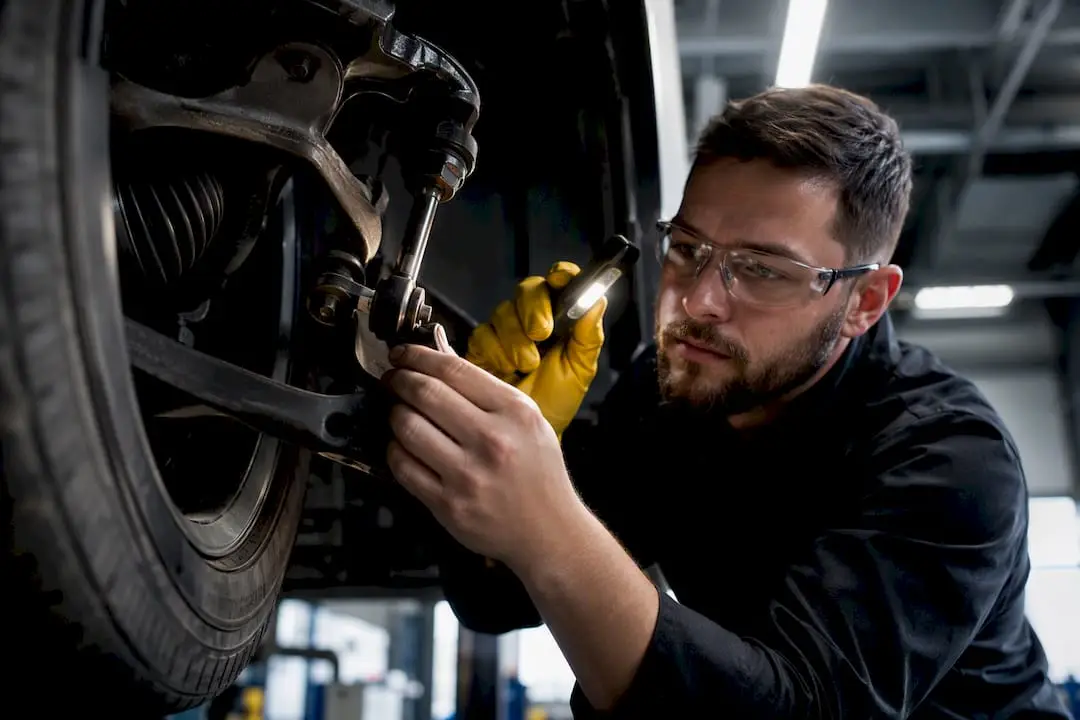
A clunk over bumps usually points to a worn sway bar link, a failing strut mount, or a loose ball joint, the three most common culprits behind that jarring knock. If the steering feels vague or you notice play at the wheel, stop driving and arrange a tow. If the noise is steady and handling feels normal, driving carefully to a shop is typically fine.
TL;DR:
- Clunking over bumps is most often caused by worn sway bar links, which produce a sharp metallic noise and are the easiest and cheapest to repair.
- Worn strut mounts or leaking shocks cause dull thuds and a softer ride, often accompanied by visible fluid leaks or cracked bushings.
- Excessive play in wheel wiggle tests indicates issues with ball joints or tie rod ends, which can be safety hazards and require immediate inspection.
- Safety risks escalate if steering feels vague, loose, or if the vehicle pulls to one side, necessitating prompt professional diagnosis and repair.
- Repair costs range from under $200 for sway bar links to over $1,200 per corner for extensive suspension work, with follow-up wheel alignments often required.
Table of Contents
- What Causes a Suspension Clunk Sound Over Bumps?
- How Do You Find Which Wheel Is Clunking?
- Is It Safe to Drive With a Clunking Noise?
- What Does It Cost to Fix a Suspension Clunk?
- What Does a Professional Suspension Inspection Include?
- What Actually Matters When You Hear a Clunk
- Book a Suspension Diagnostic in Richardson
- Sources
- FAQ
What Causes a Suspension Clunk Sound Over Bumps?
Most clunking sounds trace back to a handful of parts, and each one clunks for a different mechanical reason. Sway bar links connect your stabilizer bar to the suspension and pivot like small ball joints; when the bushings wear out or the link itself loosens, you get a sharp, quick metallic knock, usually on smaller bumps and expansion joints. This is the most frequently cited cause of clunking over bumps, and it also happens to be one of the cheapest to fix.
Strut mounts and shocks tell a different story. A worn strut mount lets the top of the strut shift slightly under load, producing a duller thud along with a noticeably softer, wallowing ride. Leaking shock fluid or cracked mount bushings are visible warning signs worth checking before you assume the noise is something worse.
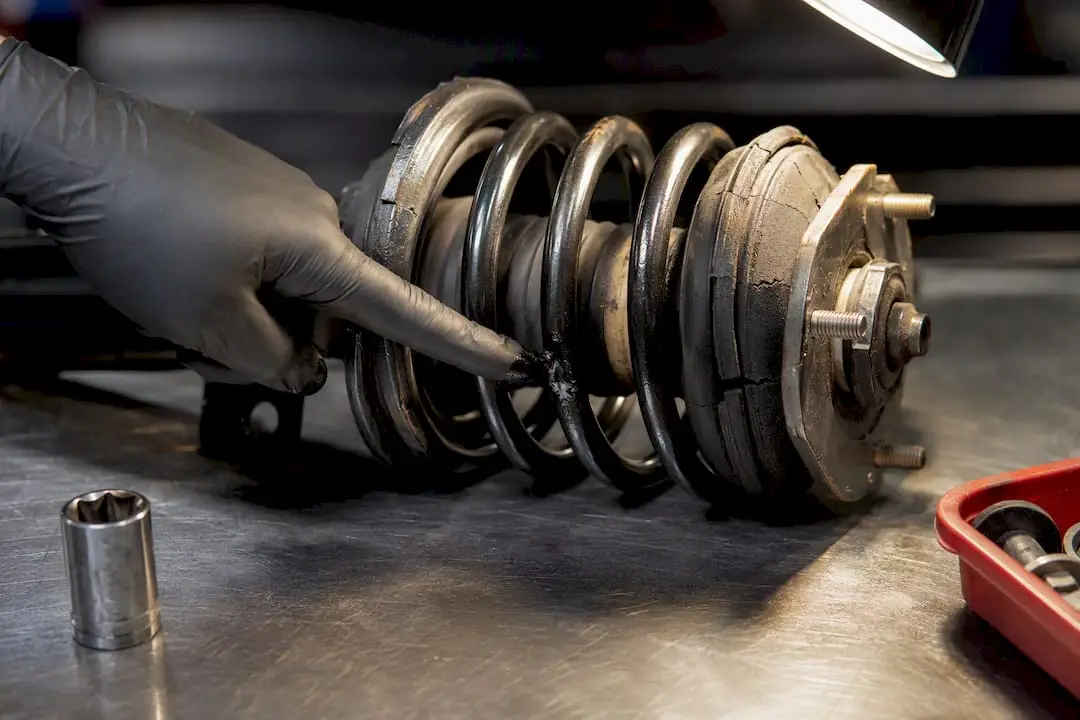
Control arm bushings and ball joints deserve more caution. A worn ball joint creates play that lets the wheel move in ways it shouldn’t, and because these joints can eventually separate and cause the wheel to collapse, any looseness here is a safety issue, not just a comfort one.
Other sources worth ruling out:
- A broken or shifted coil spring, which often produces an off-center, uneven clunk on one side
- Loose subframe or crossmember bolts, common on higher-mileage vehicles
- Failed exhaust hangers, which let the pipe swing and strike the chassis, mimicking a suspension clunk at a fraction of the repair cost
The sound itself is a clue. A sharp metallic knock points toward sway bar links or loose hardware. A dull thud suggests mounts, bushings, or shocks. And whether the noise comes from the front or rear helps narrow it down further, since front and rear suspension components fail differently and rarely produce identical sounds.
How Do You Find Which Wheel Is Clunking?
You don’t need a lift to narrow down a bump noise when driving on uneven roads. Work through these checks in order, starting with the safest and simplest.
- Do a walk-around first. Look for loose items in the trunk, visibly cracked bushings, sagging exhaust hangers, or a shock that’s obviously wet with fluid. Confirm your tire pressure is correct, since underinflated tires can produce their own thumping.
- Push down and release each corner. Lean your body weight on the bumper or fender at each wheel, then let go. A healthy shock resists and settles smoothly. A clunk, a bounce that continues, or a hollow knock during this test points toward a worn strut mount or a failing shock.
- Road test with a helper. Have someone stand curbside while you drive slowly over the same speed bump or pothole a few times, aiming one specific wheel at it each pass. Ask them to call out which corner they hear the clunk from.
- Jack up one wheel and wiggle it. With the car safely supported on a jack stand, grab the tire at the 12 and 6 o’clock positions and rock it. Excess play here suggests a wheel bearing. Try 3 and 9 o’clock next; play in that direction often points to tie rod ends or ball joints.
- Isolate stubborn rattles. Mechanics often grab the strut shaft directly and try to move it side to side, or use a long screwdriver like a stethoscope, pressing the tip against suspect components while the engine runs to hear exactly where a noise originates.
Pro Tip: Record a short video on your phone during the road test, capturing both the sound and roughly where on the road you hit the bump. Bringing that clip to a shop saves diagnostic time and often lowers your labor cost, since the technician isn’t hunting blind.
If the jack-and-wiggle test reveals noticeable play at any wheel, stop testing and move straight to a professional inspection.
Is It Safe to Drive With a Clunking Noise?
Not every clunk means the same level of urgency, and knowing the difference matters more than identifying the exact part.
Treat these as urgent, get the car inspected before driving it further:
- Steering that feels vague, loose, or delayed
- A sudden increase in play you notice at the wheel or steering column
- Clunking paired with the car pulling to one side
- Visible sag, an uneven ride height, or a wheel that looks tilted
Lower-urgency signs, worth scheduling soon but not necessarily towing for, include an isolated clunk with zero change in handling, such as a loose sway bar link or a rattling heat shield.
If you’re facing an urgent sign, slow down, avoid highway speeds, and skip the trip entirely if steering feels affected. Secure any loose cargo, turn on your hazards if you must limp somewhere, and call for a tow rather than risk a wheel losing contact with a joint that’s already failing.
What Does It Cost to Fix a Suspension Clunk?
Repair costs swing widely depending on which part failed and how far the wear has spread. Sway bar links and bushings sit at the low end, often under $200, which is exactly why catching one early pays off. Shocks, struts, and their mounts fall in the moderate range, while control arm or ball joint replacement tends to cost more once you factor in labor and parts together.
Several repairs also require a follow-up alignment, since the geometry between the wheel and body shifts once you replace a control arm, tie rod, or strut. Skip that step and you risk uneven tire wear within weeks.
- Sway bar links/bushings: lower cost, often under $200
- Shocks/struts and mounts: moderate cost, varies by vehicle
- Control arms, ball joints, and tie rods: higher cost, usually paired with an alignment
- Extensive suspension work on some vehicles: can exceed $1,200 per corner
Letting a worn part ride too long creates a snowball effect: a failing strut accelerates wear on nearby bushings, ball joints, and even tires, turning a cheap fix into a multi-part repair. Before your appointment, jot down which test produced the clunk, which corner it came from, and bring any video you captured.
What Does a Professional Suspension Inspection Include?
A driveway test tells you where to look. A lift inspection tells you exactly what’s worn and how much life it has left. At Kwik Kar Oil Change & Auto Care, ASE-certified technicians start with a full lift inspection paired with a torque check on suspension hardware, then confirm findings with a test drive over rough pavement.
The inspection covers the components most likely to clunk:
- Sway bar links, bushings, and mounting hardware
- Strut mounts, shocks, and struts, checked for leaks and play
- Ball joints and tie-rod ends, checked for excess movement
- Exhaust hangers and subframe fasteners, since loose hardware here mimics suspension noise
Kwik Kar Oil Change & Auto Care is recognized by both RepairPal and CARFAX, and every inspection ends with a transparent digital report showing exactly what a technician found, photographed, and measured. You’ll walk away with a written estimate, any applicable warranty details, and a clear next step, whether that’s booking a repair or simply confirming everything checked out fine.
What Actually Matters When You Hear a Clunk
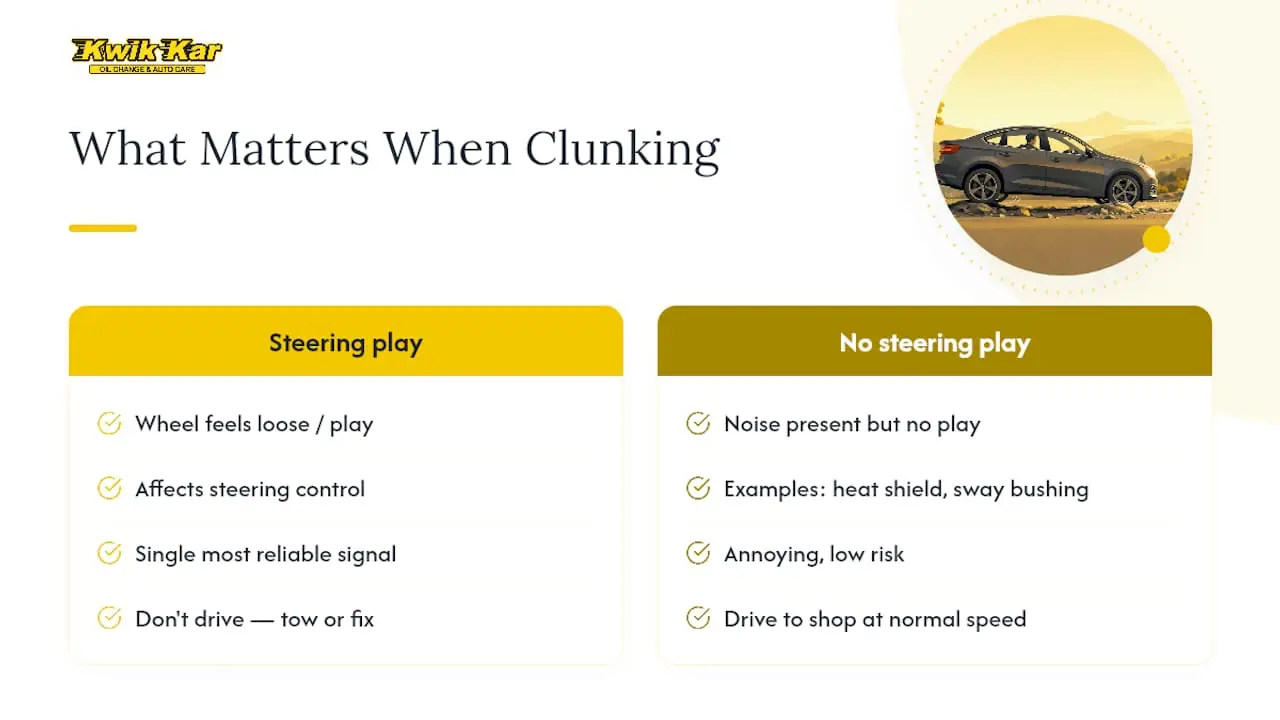
Most drivers overcorrect in one of two directions: they either ignore a clunk for months because the car “still drives fine,” or they panic and assume the worst the first time they hear it. Neither instinct serves you well. A sway bar link clunking on a speed bump and a ball joint with dangerous play can sound almost identical to an untrained ear, and that’s precisely why the jack-and-wiggle test matters more than most advice columns give it credit for. Feeling actual play at the wheel is the single most reliable signal that separates “get to it this month” from “don’t drive it again.”
Conventional wisdom tends to treat every clunk as a suspension emergency, and that overstates the risk for a huge share of cases. A loose heat shield or a worn sway bar bushing is annoying, not dangerous, and driving it to a shop at normal speed poses little risk. The real priority is learning to distinguish steering-affecting play from a cosmetic rattle, because that distinction, not the noise itself, determines whether you drive there or call a tow truck.
— Kwik Kar
Book a Suspension Diagnostic in Richardson
Guessing at a clunk from the driveway only gets you so far. Kwik Kar Oil Change & Auto Care gives Richardson drivers what a bounce test can’t: a lift inspection, a torque check, and a written report showing exactly which component is worn, backed by ASE-certified technicians and transparent pricing you can see before any work begins.
A suspension diagnostic appointment typically runs through the same checks covered above, sway bar links, strut mounts, ball joints, tie rods, and exhaust hangers, and most inspections wrap up within an hour. Because Kwik Kar Oil Change & Auto Care is recognized by both RepairPal and CARFAX, you’re getting dealership-level diagnostic depth without dealership overhead, plus discounts available for military personnel and first responders. If your steering feels off or that clunk hasn’t gone away, schedule a suspension inspection at Kwik Kar Richardson or call the shop directly to ask about same-week availability.
Sources
- 10 Reasons Your Suspension Clunks Only Over Bumps (With Solutions) | The Motor Guy
- Autoadvises
- How to diagnose suspension noise | Popular Mechanics
- Car Suspension Repair Cost (2026 Guide) | ConsumerAffairs®
FAQ
Does Clunking Always Mean a Suspension Problem?
No. While sway bar links, strut mounts, and ball joints are the most common causes, loose exhaust hangers, heat shields, or even unsecured cargo can produce a nearly identical sound.
How Much Does It Cost to Fix a Clunking Noise?
Costs vary by part: sway bar link repairs often run under $200, while control arm, ball joint, or multi-corner suspension work can exceed $1,200 per corner depending on the vehicle.
Is It Safe to Drive With a Clunking Suspension?
It depends on the symptom. A clunk with no change in steering or handling is usually safe to drive to a shop slowly, but vague steering or noticeable wheel play means you should stop driving and get it towed.
What Sound Does a Bad Ball Joint Make Over Bumps?
A worn ball joint typically produces a clunk paired with detectable play when you rock the wheel at the 3 and 9 o’clock positions, a sign that the joint is loose enough to affect steering safety.