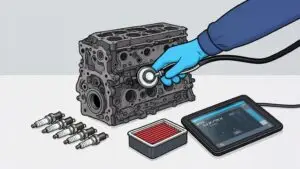

Your engine oil is quietly working against the clock. Every mile you drive, every cold start, every stop-and-go commute chips away at the protective chemistry inside your crankcase. Understanding why oil change intervals matter for performance isn’t just maintenance trivia. It’s the difference between an engine that runs strong at 150,000 miles and one that starts failing at 80,000.
The core reason is straightforward: oil maintains lubrication, reduces friction, manages heat, and suspends contaminants that would otherwise grind metal against metal. When those properties degrade, your engine pays the price in torque loss, fuel waste, and accelerated wear. The oil change benefits for your engine are most fully realized when you stay ahead of that degradation curve, not behind it.
- Oil lubricates hundreds of moving components, preventing metal-on-metal contact that causes permanent wear
- Timely changes replenish anti-wear additives like ZDDP and molybdenum before they deplete
- Degraded oil reduces engine torque and increases fuel consumption measurably
- Contaminants including iron, silicon, and nickel accumulate and accelerate internal wear
- Research recommends a maintenance interval not to exceed the typical mid-range intervals advised for post-warranty vehicles to preserve protection
- Kwik Kar Oil Change & Auto Care provides ASE-certified service to keep your intervals on track
How oil degradation directly hurts your engine’s performance
Oil doesn’t just get dirty. It chemically breaks down in ways that quietly rob your engine of power and efficiency. Field testing on passenger cars found that molybdenum anti-friction additives drop 4.5 times after exceeding 12,000 km, while iron, nickel, and silicon contaminants climb sharply. Those metals aren’t just hitchhikers. They’re evidence of active engine wear, and their presence in the oil accelerates further damage.
The performance consequences are measurable. Degraded engine oil causes a measurable 6% reduction in engine torque and increases brake specific fuel consumption by approximately 5%. For a daily driver, that translates to sluggish acceleration and more trips to the pump.
Key finding: Testing on modern Euro 6 diesel engines confirmed degraded oil causes a 6% drop in engine torque and a 5% rise in fuel consumption compared to fresh oil.
Oil aging involves several simultaneous processes:
- Oxidation increases viscosity and forms acidic compounds that attack engine surfaces
- Soot accumulation from combustion thickens oil and clogs passages
- Fuel dilution thins the oil, reducing its load-bearing film strength
- Additive depletion strips away the chemistry protecting metal components
- Contaminant buildup from iron and silicon particles accelerates wear past 12,000 km
Synthetic oils resist these processes longer than conventional formulas, but no oil is immune. Additive loss and contamination accelerate most sharply in the final 1,000–2,000 miles of an extended interval, which is exactly when many drivers assume they still have time to spare.
Why your oil filter has limits you can’t ignore

The oil filter is your engine’s first line of defense against circulating contaminants, but it has a finite capacity. Once saturated, it can no longer trap particles effectively. At that point, unfiltered oil bypasses the filter media and circulates freely through your engine, carrying abrasive particles directly to bearings, camshafts, and cylinder walls.
This is the detail most drivers miss entirely. You can have chemically acceptable oil in the crankcase while a saturated filter lets contaminants run unchecked. The filter’s capacity is engineered to match one oil change interval, not two.
- Filters capture combustion byproducts, wear metals, and dirt during normal operation
- Saturation can occur before the oil itself reaches chemical end-of-life
- A bypass valve opens when the filter clogs, routing unfiltered oil through the engine
- Changing oil while leaving the old filter in place can significantly reduce the protection the new oil provides
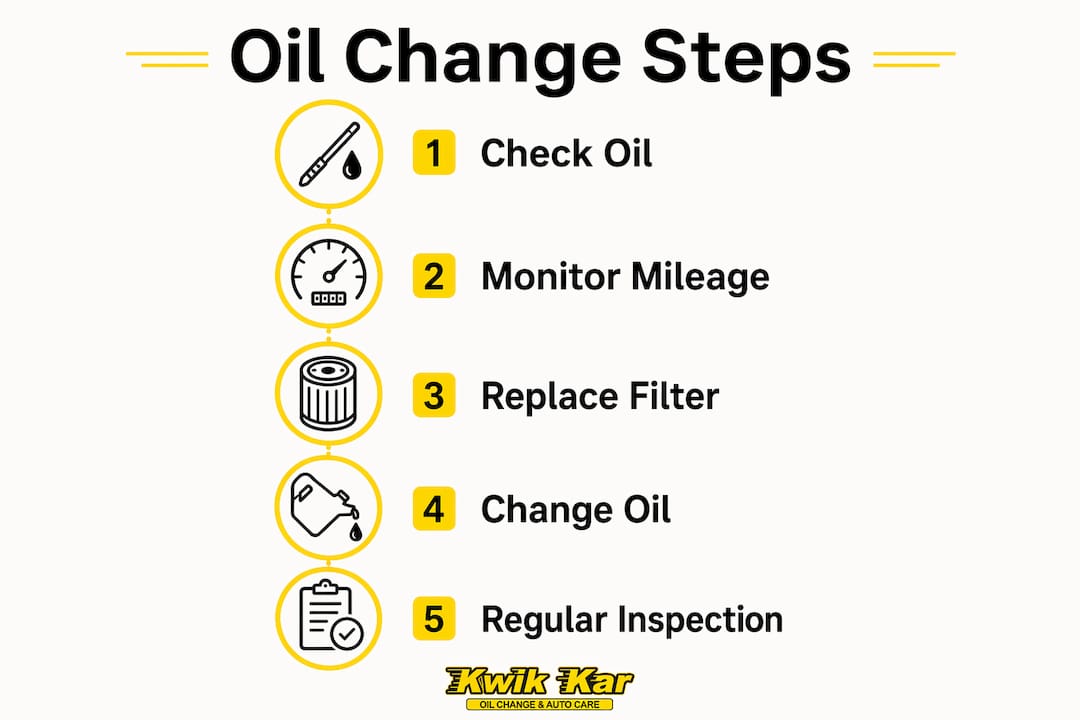
- It is strongly recommended to replace the filter at every oil change.
Why time matters just as much as mileage
Mileage alone doesn’t tell the full story of your oil’s condition. A car driven 2,000 miles in short, cold-weather hops can have oil in worse shape than one driven 5,000 miles on the highway. Short trips prevent the engine from reaching full operating temperature, which means moisture from combustion condenses in the crankcase instead of evaporating. That moisture mixes with combustion byproducts to form corrosive acids.
Experts recommend changing oil at least every 6–12 months regardless of mileage, because time-based degradation is real and invisible. Your oil life monitor won’t always catch it.
Conditions that shorten effective oil life beyond mileage alone:
- Frequent short trips under 10 miles that never fully warm the engine
- City stop-and-go driving, which increases thermal cycling and soot production
- Towing or hauling, which puts sustained thermal stress on the oil
- Extreme cold or heat, both of which accelerate chemical breakdown
- Infrequent use, where moisture and acid accumulate without being burned off
For cold-weather drivers, vehicle maintenance challenges extend beyond oil. Brake performance in winter conditions is another area where proactive care pays off.
Expert advice on keeping your intervals dialed in
Following your manufacturer’s recommended interval is the baseline, not the ceiling of good practice. For vehicles under severe driving conditions, engineers recommend changing oil approximately 15% earlier than the maximum manufacturer interval. City drivers, towers, and anyone logging frequent short trips fall squarely into that category.
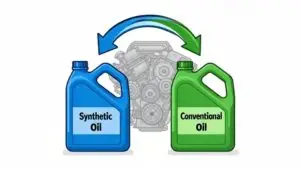
Synthetic oil extends protection, but it doesn’t eliminate the need for timely changes. The oil’s additive package still depletes, and the filter still reaches capacity on schedule.
- Follow your owner’s manual interval as a starting point, then adjust for your actual driving pattern
- Use full synthetic oil for better heat resistance, longer additive life, and improved cold-start protection
- Schedule changes based on whichever comes first: the mileage limit or the time interval
- Keep documented records of every oil change to protect your warranty coverage
- Consult expert scheduling advice if your driving conditions fall outside the normal range
Kwik Kar Oil Change & Auto Care’s ASE-certified technicians assess your specific vehicle, driving habits, and oil condition at every visit, so your interval recommendation reflects reality rather than a generic number on a sticker.
Pro Tip: If you drive mostly in city traffic or take frequent short trips, treat your oil change interval as a time-based schedule first and a mileage limit second. Your oil degrades faster than the odometer suggests.
What manufacturers recommend versus what real-world driving demands
Manufacturer intervals are tested under controlled, often favorable conditions. They represent a reasonable baseline for normal driving, which the industry typically defines as mostly highway miles, moderate temperatures, and no towing. Most American drivers don’t fit that profile.
Modern vehicles with full synthetic oil often carry manufacturer recommendations of 7,500–10,000 miles. Older vehicles or those using conventional oil typically need service every 3,000–5,000 miles. The gap between what the manual says and what your driving actually demands can be significant. Warranty claims for engine failure are routinely denied when documented oil changes are absent, so the stakes of misreading your interval go beyond engine wear alone.
Signs your oil change is already overdue
Your engine communicates when it’s running on degraded oil. The signals are easy to dismiss because they build gradually, but each one points to the same problem.
Watch for these warning signs:
- Oil maintenance light or check engine light illuminated on the dashboard
- Increased engine noise, particularly a knocking or ticking at startup
- Dark, gritty oil on the dipstick instead of amber or light brown
- Burning oil smell from the engine bay, indicating oil is breaking down under heat
- Reduced fuel economy or noticeably sluggish acceleration
- Rough idle that wasn’t present before
Dark oil color alone doesn’t confirm the oil is spent. Oil darkens quickly because it’s suspending contaminants, which is exactly its job. The texture, smell, and mileage on the oil tell a more complete story than color alone.
What happens to fuel efficiency and emissions when you skip oil changes
Degraded oil forces your engine to work harder. Increased internal friction raises fuel consumption, and a harder-working engine produces more emissions as combustion efficiency drops. The 5% rise in brake-specific fuel consumption documented in engine testing isn’t abstract. Over 15,000 miles of driving, that inefficiency adds up at the pump.
Sludge buildup from neglected oil changes restricts oil flow through passages and galleries, which compounds the problem. Restricted lubrication means more heat, more friction, and a dirtier combustion cycle. Engines running on degraded oil also tend to consume oil faster, which means you may be adding fresh oil to a contaminated system rather than replacing it. The protective role of timely oil changes on emissions and efficiency is one of the most cost-effective arguments for staying on schedule.
Key Takeaways
Staying within your oil change interval is the single most effective way to protect engine performance, fuel efficiency, and long-term reliability.
| Point | Details |
|---|---|
| Oil degradation is measurable | Degraded oil causes a 6% reduction in engine torque and increases fuel consumption by approximately 5%. |
| Additives deplete past 12,000 km | Molybdenum anti-friction additives drop 4.5 times beyond 12,000 km, accelerating engine wear. |
| Filters have finite capacity | A saturated filter bypasses contaminants back into the engine, even when oil still tests chemically acceptable. |
| Time matters as much as mileage | Experts recommend oil changes every 6–12 months regardless of mileage for low-mileage or short-trip drivers. |
| Severe driving shortens intervals | Changing oil approximately 15% earlier than the manufacturer maximum protects engines under city, towing, or stop-and-go conditions. |
FAQ
How does oil degradation affect engine performance?
Degraded oil loses its anti-wear additives and accumulates contaminants, causing a 6% reduction in engine torque and a 5% increase in fuel consumption, as confirmed by engine testing.
How often should you change your oil?
For most modern vehicles using full synthetic oil, every 7,500–10,000 miles or every 6–12 months is a reasonable range, whichever comes first. Severe driving conditions including frequent short trips, towing, or city stop-and-go traffic call for shorter intervals.
Does skipping oil changes void your warranty?
Manufacturers can deny warranty claims for engine failure when documented oil changes are absent. Keeping dated service records at every interval is the only reliable protection against a denied claim.
Should you change the oil filter every time?
Yes. Oil filters reach capacity before the oil itself is chemically spent, and a saturated filter routes unfiltered oil through the engine. Replacing the filter at every oil change is the only way to maintain full protection.
Is synthetic oil worth it for longer intervals?
Full synthetic oil maintains proper viscosity and additive effectiveness longer than conventional oil, resisting oxidation and thermal breakdown more effectively. That said, synthetic oil still requires timely changes based on your manufacturer’s recommendation and driving conditions.