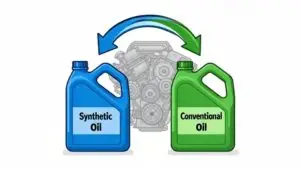
Why Synthetic Oil Lasts Longer Than Conventional Oil

Synthetic oil typically does last longer than conventional oil, and the reasons come down to chemistry, not marketing. Here’s why:
- Molecular uniformity means synthetic molecules are engineered to a consistent size and shape, so they resist breaking down under heat and stress.
- Oxidation resistance slows the acid formation and sludge buildup that age conventional oil fast.
- Low volatility keeps more oil in the crankcase instead of burning off, which protects both your engine and your wallet between fill-ups.
One caveat before you extend anything: your vehicle’s owner’s manual and your service advisor’s recommendation always outrank any general rule of thumb.
Key Takeaways
Synthetic oil lasts longer than conventional oil because its uniform molecular structure resists oxidation, thermal shear, and evaporation far better under real driving conditions.
| Point | Details |
|---|---|
| Verdict | Synthetic oil typically outlasts conventional oil due to molecular uniformity, oxidation resistance, and low volatility. |
| Typical intervals | Most manufacturers set synthetic intervals at 7,500 to 10,000 miles, with some vehicles approved up to 15,000 miles. |
| Oxidation resistance | AAA testing found conventional oil losing oxidation resistance within 3,000 to 4,000 miles, while synthetic held up longer. |
| Biggest life-shortener | Frequent short trips under 15 minutes prevent moisture and fuel dilution from burning off, aging oil faster. |
| Where to get it checked | Kwik Kar Oil Change & Auto Care’s ASE-certified technicians confirm the right oil grade and interval for your specific vehicle. |
Table of Contents
- Why Synthetic Oil Lasts Longer Explained: Full Synthetic vs Blend vs Conventional
- The Chemistry Behind Synthetic Oil’s Longevity
- How Many Miles Can Synthetic Oil Really Go?
- Weighing the Pros and Cons of Synthetic Oil
- Who Benefits Most From Synthetic Oil
- Signs Your Oil Needs Changing Sooner
- What the Lab Data and Industry Guidance Actually Show
- Get a Synthetic Oil Change Done Right in Richardson
- Sources
- FAQ
Why Synthetic Oil Lasts Longer Explained: Full Synthetic vs Blend vs Conventional
Conventional oil is refined directly from crude petroleum, carrying a natural mix of molecule sizes and minor impurities left over from the refining process. Full synthetic oil is built through chemical synthesis or severe hydrocracking, producing molecules engineered for uniform size and structure rather than pulled straight from crude. Synthetic blend oil splits the difference, mixing synthetic base stock with conventional oil to get partial benefits at a lower price point.
Here’s the quick contrast:
- Conventional: variable molecule sizes, more natural impurities, shortest service life.
- Synthetic blend: partial synthetic content, moderate performance boost, mid-range cost.
- Full synthetic: engineered molecular consistency, strongest resistance to breakdown, highest upfront price.
You’ll also see base-stock groups referenced on oil labels. Group III oils are heavily processed mineral oils often marketed as synthetic, while Group IV (PAO) and Group V (esters and other synthetics) are the more advanced categories that deliver the biggest gains in thermal stability and reduced evaporation. Not sure which category fits your vehicle? A quick comparison of synthetic versus conventional oil can clarify which one matches your driving habits and budget.
The Chemistry Behind Synthetic Oil’s Longevity
Think of conventional oil as a bag of mixed screws, all different lengths and thread patterns, thrown together under engine heat. Synthetic oil is more like a bag of identical, precision-machined bolts. That molecular uniformity is why synthetic base stocks resist thermal shear and hold their protective film even when the engine is working hard.
Viscosity index and shear stability matter just as much. A high viscosity index (VI) means the oil’s thickness stays more consistent whether your engine is cold-starting in January or working through a Texas summer. PAO base stocks commonly carry a VI in the 135 to 160-plus range, letting the oil maintain film strength under stress instead of thinning out and losing protection right when you need it most.
Oxidation resistance and additive retention slow the chemical aging process itself. As oil oxidizes, it forms acids and sludge that eat away at engine internals. AAA laboratory testing found that conventional oils can lose meaningful oxidation resistance after just 3,000 to 4,000 miles, with some samples showing weakness as early as 2,000 miles. Synthetic-based lubricants held up considerably longer in the same testing.

Low volatility is the piece most owners never hear explained. Noack volatility testing measures how much oil evaporates under high heat. PAO-based synthetics often post Noack losses under 5 to 8 percent, while conventional mineral oils lose considerably more to evaporation, according to technical formulation comparisons.
Statistic to remember: AAA’s testing showed conventional oils losing oxidation protection within 3,000 to 4,000 miles, in some cases as early as 2,000, while synthetic oils retained that protection significantly longer under identical lab conditions.
The mechanisms driving these results include:
- Narrow molecular-weight distribution, which limits weak links that break down first.
- Higher apparent activation energy for oxidation, meaning it takes more heat energy to trigger degradation, per peer-reviewed lubricant studies.
- Fewer paraffinic waxes, which helps the oil stay fluid at low temperatures.
- Stronger additive retention, so the anti-wear and detergent package keeps working mile after mile.
Lab technicians confirm these gains using three core tests: Noack volatility for evaporation loss, oxidation induction testing for aging resistance, and HTHS (high-temperature high-shear) testing for film strength under load. These aren’t marketing numbers. They’re the standardized measures the entire lubricant industry relies on.
How Many Miles Can Synthetic Oil Really Go?
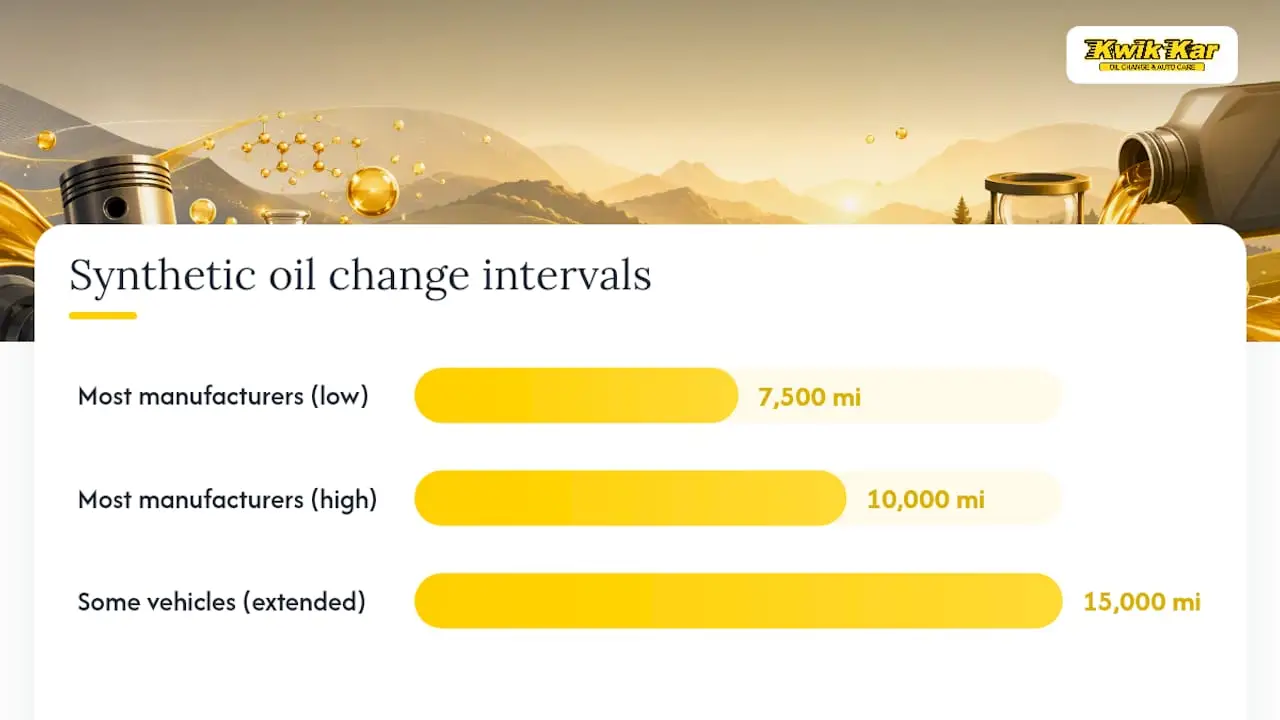
Most manufacturers set synthetic oil change intervals somewhere between 7,500 and 10,000 miles, and some vehicles are approved for up to 15,000 miles between changes, according to Consumer Reports. That’s a wide range, and where your car falls depends heavily on how you drive it.
Factors that shorten oil life:
- Frequent short trips under 15 minutes, which prevent the engine from reaching temperatures that burn off moisture and fuel dilution.
- Towing or hauling heavy loads regularly.
- Extreme heat, extreme cold, or dusty, stop-and-go conditions.
- An aging engine that burns oil or runs slightly rich.
Factors that support longer intervals:
- Highway cruising with light loads.
- A newer engine in good mechanical condition.
- Manufacturer approval for extended-interval synthetic use.
Many newer vehicles include an oil-life monitoring system that calculates remaining service life using engine temperature, trip length, and load data rather than mileage alone. That’s a smart tool, but it’s a guide, not a substitute for your owner’s manual. Even with synthetic oil, most guidance still recommends at least one change per year, and severe-service schedules can shorten that further regardless of oil type.
Weighing the Pros and Cons of Synthetic Oil
Benefits:
- Longer drain intervals mean fewer trips to the shop.
- Better protection at temperature extremes, both freezing cold starts and blistering summer highway runs.
- Lower oil consumption thanks to reduced evaporation.
- Less deposit and sludge formation over the oil’s service life.
Downsides:
- Higher upfront cost, often around 30 percent more than conventional oil, though the extended interval frequently offsets that difference over the life of the vehicle.
- Persistent myths about seal leaks. Modern synthetic oils are formulated to be seal-compatible; leaks usually trace back to an aging gasket, not the oil itself.
- Very old engines with worn seals may need special consideration before switching.
Can you switch back to conventional oil after running synthetic? Yes. There’s no chemical reason you can’t move between oil types, though you’ll give up the extended interval and some of the temperature protection once you do.
Who Benefits Most From Synthetic Oil
Synthetic oil delivers the biggest payoff for:
- Modern engines with tight tolerances and turbochargers.
- High-mileage vehicles needing extra wear protection.
- Vehicles used for towing or carrying heavy loads.
- Drivers in extreme heat or cold climates.
- Fleet vehicles racking up miles fast, where extended intervals cut downtime.
If any of that describes your driving, synthetic is worth a serious look, and your owner’s manual or service advisor can confirm the right grade and interval for your engine.
Signs Your Oil Needs Changing Sooner
Watch for these warning signs regardless of oil type:
- Dark, sludgy oil on the dipstick instead of amber or light brown.
- A strong fuel odor from the oil, a sign of dilution.
- Rising oil consumption between checks.
- Rough idling or unusual engine knocking.
- Dashboard oil-life or oil-pressure warnings.
An oil analysis test can go further, checking for wear metals, oxidation byproducts, and coolant or fuel contamination. It’s a useful step if you’re troubleshooting an issue rather than just following a routine schedule.
Pro Tip: If you’re switching from conventional to synthetic, ask your technician to check gaskets and seals during the service. Older seals sometimes reveal existing wear that synthetic oil’s better cleaning properties can expose, and catching it early beats catching it as a leak later.
What the Lab Data and Industry Guidance Actually Show
Three tests form the backbone of every synthetic oil claim you’ll read: Noack volatility (evaporation loss), oxidation induction testing (resistance to chemical breakdown), and HTHS shear testing (film strength under load). These aren’t proprietary brand metrics. They’re industry-standard measures used across the lubricant field.
AAA’s controlled testing found conventional oils losing meaningful oxidation resistance within 3,000 to 4,000 miles, with synthetic-based oils maintaining that protection considerably longer under matched conditions.
Consumer Reports and AAA both back the mileage guidance cited throughout this piece, and peer-reviewed lubricant research adds the deeper chemistry explaining why. Lab measurements translate directly into the drain-interval advice you see on oil labels and in service manuals.
A technician’s take on synthetic oil
When customers ask if synthetic oil is worth it, I tell them the same thing every time: it’s not about stretching intervals as far as possible, it’s about protecting the engine when conditions get tough. If you’re unsure what your car needs, keep your oil-change receipts and ask for an oil analysis if anything seems off.
Get a Synthetic Oil Change Done Right in Richardson
Reading about Noack volatility and oxidation resistance is one thing. Knowing exactly which synthetic oil grade and interval your specific engine needs is another, and that’s where Kwik Kar Oil Change & Auto Care comes in. Our ASE-certified technicians check your make, model, and driving conditions against manufacturer specifications before recommending anything, so you’re not guessing between synthetic, blend, or conventional.
Every service includes a full inspection of seals, fluid levels, and wear points, with transparent digital reporting so you see exactly what we found and why we’re recommending it. If your dashboard is flashing an oil-life warning or you’re just due for a change, schedule your synthetic oil change with Kwik Kar Oil Change & Auto Care and get a technician’s read on the right interval for your vehicle.
Sources
- Should You Use Synthetic Oil in Your Car? – Consumer Reports
- AAA Research Report: Synthetic vs Conventional
- Is Synthetic Oil Really Better Than Conventional? – Engine Builder Magazine
- Synthetic vs mineral base oils comparison – Global Formulation
- Comparative studies on oil oxidation and thermal stability – MDPI Lubricants
FAQ
Does synthetic oil actually last longer?
Yes. Lab testing from AAA shows synthetic oils retain oxidation resistance considerably longer than conventional oils, which lose meaningful protection within 3,000 to 4,000 miles.
Is it okay to go 10,000 miles with synthetic oil?
Many vehicles are approved for 7,500 to 10,000-mile synthetic intervals, and some go up to 15,000 miles, but always confirm the exact number in your owner’s manual since it varies by manufacturer.
Is there a downside to synthetic oil?
The main downside is a higher upfront cost, roughly 30 percent more than conventional oil, though the extended interval often balances that out over time.
Can I switch back to regular oil after using synthetic?
Yes, you can switch back to conventional oil at any time without engine damage, though you’ll lose the extended interval and temperature-extreme protection that synthetic provides.
Does driving style affect how long synthetic oil lasts?
Yes. Frequent short trips, towing, and extreme temperatures all shorten oil life faster than highway driving, regardless of whether you’re running synthetic or conventional oil.