AGM or Flooded Battery: When to DIY and the 4 Shop Tests That Decide
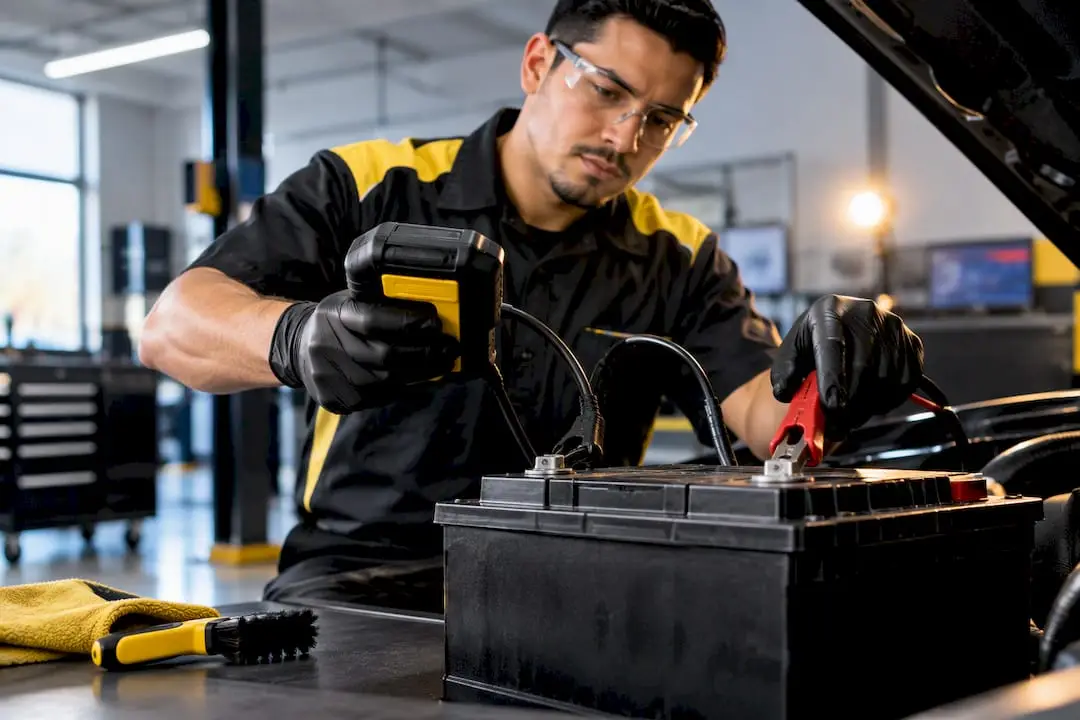
If your vehicle relies on stop and start technology or runs heavy electrical accessories, an AGM battery is the stronger choice because it tolerates vibration and partial charging better. If you’re replacing a basic starter battery on an older vehicle and routine maintenance isn’t a problem, a flooded battery still does the job at a lower cost. Either way, confirm the correct BCI group size and check that your charging system matches the battery before you buy.
TL;DR:
- AGM batteries are more suitable for stop and start vehicles, heavy accessories, and vibration-prone mounts due to their vibration resistance and sealed design.
- Proper charging system voltage regulation is essential for AGM batteries to prevent damage and optimize lifespan, unlike flooded batteries which tolerate a wider voltage range.
- Flooded batteries offer a lower initial cost and proven reliability for basic starting needs but require maintenance like water topping and venting clearance.
- Correctly matching battery type to vehicle duty cycle and charging system extends battery life more than simply choosing the newest or most expensive option.
- Professional testing, including alternator output and load capacity, is recommended to ensure the right match and avoid premature failures, especially in stop and start or fleet vehicles.
Table of Contents
- How AGM and flooded batteries are built and why it matters
- Performance comparison: starting power, cycling, charge acceptance, and temperature
- Pros and cons: AGM advantages and limitations
- Pros and cons: flooded battery advantages and limitations
- How to choose between AGM and flooded for your vehicle
- Maintenance, safety, and end-of-life best practices
- Kwik Kar’s practical service advice on testing and replacement
- What the AGM vs flooded debate gets wrong
- Get your battery tested the right way at Kwik Kar
- Sources
- FAQ
How AGM and flooded batteries are built and why it matters
The difference between these two battery types starts with how each one holds its electrolyte. AGM, short for Absorbent Glass Mat, holds electrolyte inside a fiberglass mat rather than as free liquid. The battery is sealed and valve regulated, which means it recombines internal gasses instead of venting them the way a conventional battery does. Flooded batteries, sometimes called wet cell or conventional batteries, contain free liquid electrolyte that surrounds the plates and vents gas during charging.
That construction difference shapes everything else about how each battery behaves. According to FSEC/UCF technical guidance, AGM’s sealed design reduces water loss and leakage risk through internal gas recombination, but it also makes the battery less tolerant of overcharging and high heat.
- AGM’s sealed design allows mounting in tighter or less ventilated spaces since there’s little risk of spilled acid.
- Flooded batteries need upright mounting and occasional venting clearance because they release gas during normal charging.
- Vibration resistance favors AGM, which is why it shows up more often in trucks, off-road vehicles, and powersports applications.
Performance comparison: starting power, cycling, charge acceptance, and temperature
Cold cranking amps, listed on every battery label, tell you how much current a battery can deliver at low temperature to start an engine. Matching CCA and BCI group size to your vehicle’s factory specification matters more than chemistry alone, since an undersized battery will struggle in cold weather regardless of type.
Where the two chemistries really separate is charge behavior. Research summarized in the Journal of Power Sources shows that charge acceptance and partial state of charge operation are decisive factors in battery lifespan: limited charging time and repeated partial charging accelerate sulfation and capacity loss unless the charging strategy accounts for it.
Dynamic charge acceptance is essential for stop and start driving, according to Journal of Power Sources research on partial-charge cycling. Vehicles that shut the engine off at stoplights ask the battery to recover quickly and repeatedly, and AGM generally handles that cycling better when the charging system is properly controlled.
- AGM tends to resist sulfation better in stop and start or accessory heavy driving when voltage is regulated correctly.
- Flooded batteries can suffer capacity loss faster under frequent partial charging, especially in short-trip driving.
- Both chemistries lose lifespan faster in sustained high heat, though AGM is more sensitive to overcharge under those conditions.
Pros and cons: AGM advantages and limitations
AGM earns its reputation for being low fuss, but it isn’t invincible. Weighing the real trade-offs helps you avoid paying for capability you don’t need or skipping protection you do.
- Maintenance free operation. There’s no water topping and minimal leak risk, which suits interior or trunk mounted installations.
- Vibration and vehicle motion resistance. The glass mat construction holds up well in trucks, SUVs, and powersports use.
- Better charge acceptance under managed charging. AGM handles stop and start and accessory loads more gracefully when voltage regulation is correct.
- Higher upfront cost. AGM batteries generally cost more upfront than comparable flooded batteries.
- Sensitivity to overcharge and heat. FSEC/UCF guidance notes that sealed VRLA batteries need a lower charge voltage set point than flooded batteries, so a charger or alternator tuned for the wrong chemistry can shorten AGM life quickly.
Pro Tip: “Sealed” and “maintenance free” describe water topping, not charging tolerance: an AGM battery still needs a charging system set to the correct voltage to reach its expected lifespan.
Pros and cons: flooded battery advantages and limitations
Flooded batteries aren’t outdated, they’re simply suited to a narrower set of jobs. For a basic starter replacement where cost matters most, they remain a sound, practical option.
- Lower upfront cost. Flooded batteries are generally the least expensive option for standard starting, lighting, and ignition duty.
- Long track record for simple starter use. For vehicles without stop and start or heavy accessory demand, flooded batteries perform reliably.
- Regular maintenance required. Periodic water topping, terminal cleaning, and inspection for stratification are part of ownership.
- Leak and corrosion exposure. Free electrolyte and gas venting mean flooded batteries fit better in ventilated engine bay locations than sealed interior compartments.
- Not ideal for heavy cycling. Vehicles with frequent partial charging or high accessory draw wear flooded batteries down faster than AGM.
How to choose between AGM and flooded for your vehicle
Picking the right battery comes down to matching chemistry to duty cycle, not chasing the newer or pricier option by default.
- Step 1: Check your owner’s manual or the old battery’s label for the correct BCI group size and terminal layout.
- Step 2: Identify your duty type: basic starting, stop and start, deep cycle for accessories, or powersports.
- Step 3: Confirm your alternator or charger outputs the correct voltage range for the chemistry you choose, since FSEC/UCF guidance shows AGM needs a different regulation point than flooded batteries.
- Step 4: Consider mounting location, vibration exposure, and heat, since interior or remote mounts favor AGM’s sealed design.
According to consumer guidance on battery disposal and replacement, replacement decisions should be driven by factory fitment, starting demands, accessory load, and charging system compatibility, since mismatches and weak alternators cause premature failures. You can start with a multimeter test at home, but confirming alternator output and charge acceptance really calls for a shop meter.
Pro Tip: If you’re unsure whether your vehicle came with AGM from the factory, check the original battery’s label before assuming a cheaper flooded replacement will work.
Maintenance, safety, and end-of-life best practices
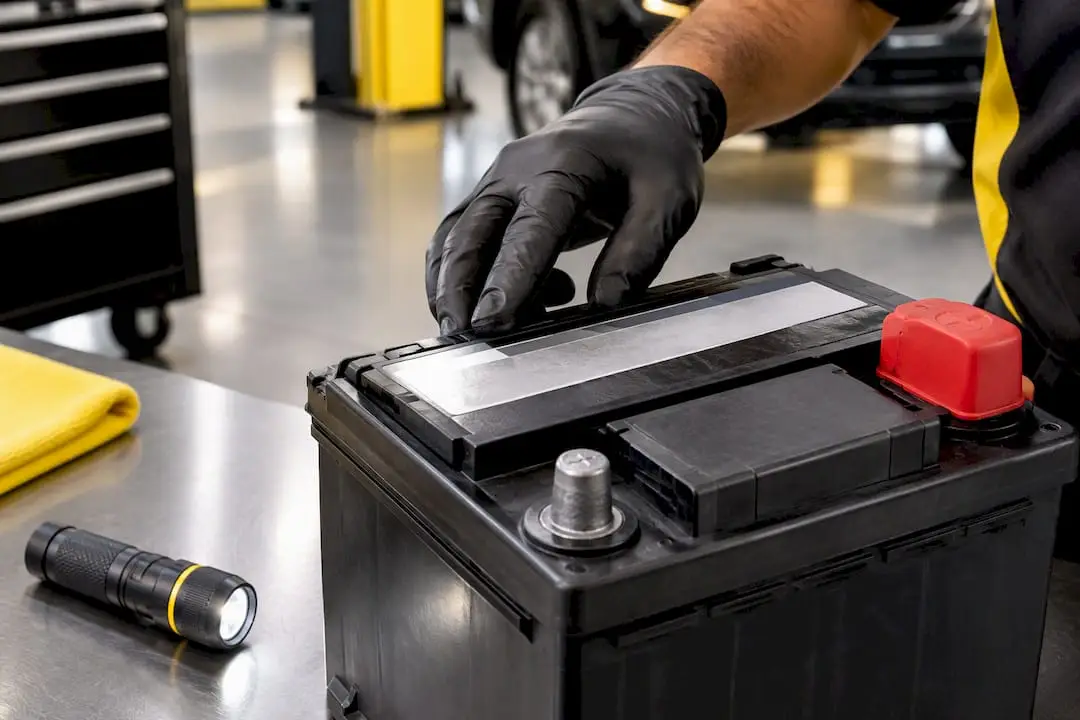
A battery that’s swollen, cracked, leaking, or hot to the touch needs immediate attention: stop handling it, ventilate the area, and arrange professional service rather than attempting a DIY fix.
- Flooded batteries need periodic water topping with distilled water and terminal cleaning to prevent corrosion buildup; for guidance on safe procedures, see clean engine bay: safe steps and ceramic protection.
- AGM batteries need no water topping, but benefit from monitoring charging voltage to avoid overcharge damage.
- Long periods of low use can cause stratification in flooded batteries, so occasional full charging cycles help.
- Jump starting and charger settings should match the battery’s chemistry: an AGM optimized charger uses a lower voltage ceiling than a flooded battery charger.
When a battery reaches the end of its service life, don’t toss it in the trash. Lead batteries have a very high recycling rate in the United States, near 98% according to Battery Council International, according to Battery Council International, making them one of the most recycled consumer products available. Both AGM and flooded batteries should go back through appropriate recycling channels rather than general waste. If corrosion has built up around your terminals in the meantime, our guide to solving battery corrosion covers safe cleanup steps, and our safe battery removal guide walks through the process if you’re handling it yourself.
Kwik Kar’s practical service advice on testing and replacement
When you bring a vehicle to Kwik Kar Oil Change & Auto Care for a battery concern, our ASE-certified technicians run a state-of-charge check, a load test to confirm cold cranking capacity, an alternator output test, and a visual terminal inspection. That combination catches problems a simple voltage reading misses, including a battery that reads fine at rest but fails under starting load.
For fleet vehicles, stop and start commuters, or vehicles loaded with aftermarket electronics, we generally point customers toward AGM. For basic commuter vehicles without those demands, a quality flooded battery remains a sound, cost-effective recommendation. Every diagnosis comes with transparent digital reporting so you can see exactly what we tested and why we’re recommending a given battery. If you’ve noticed slow cranking or dimming lights, our guide to failing battery signs walks through what to watch for before you’re stuck.
What the AGM vs flooded debate gets wrong
The AGM versus flooded conversation gets treated like a simple upgrade decision, as if AGM is always “better” the way a newer phone is always faster. That framing misses the point. AGM’s real advantage is charge acceptance under partial state of charge cycling, which matters enormously for stop and start vehicles and barely matters at all for a basic commuter car that fully charges on every drive.
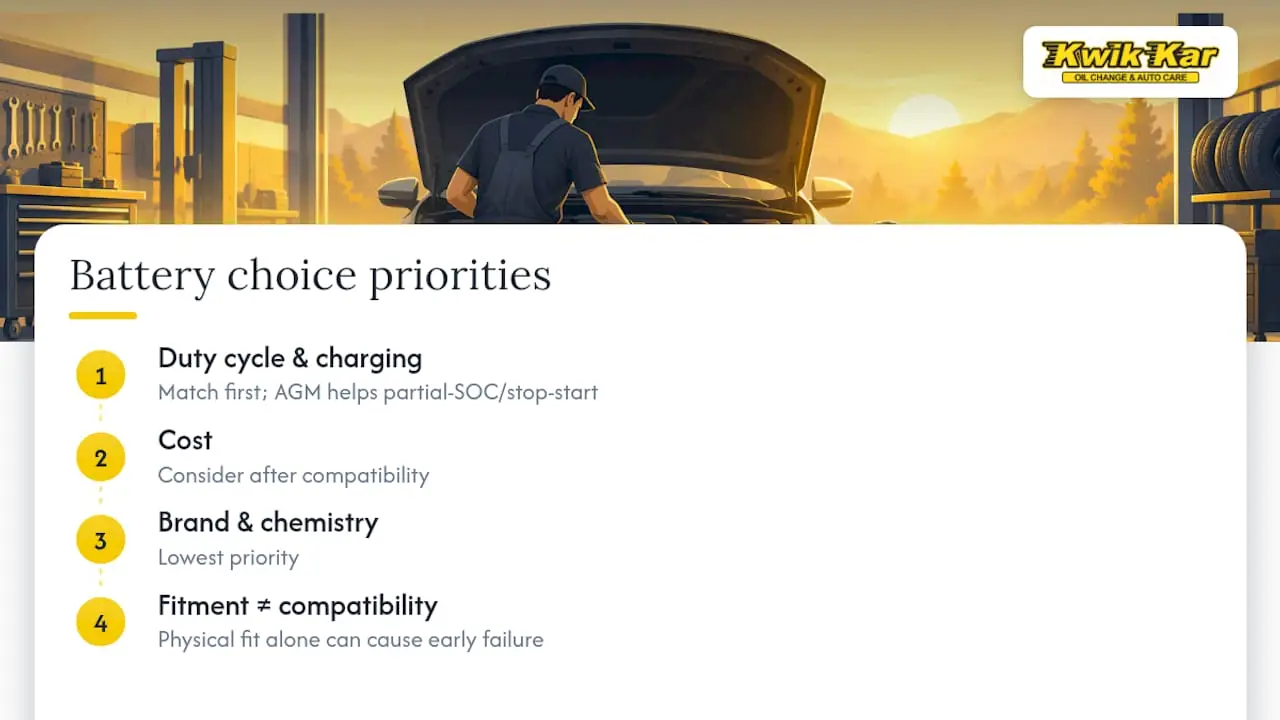
The bigger blind spot is charging system compatibility. Plenty of buyers assume any battery will work once it physically fits the tray, then wonder why an AGM battery dies early in a charging system tuned for flooded voltage set points, or why a flooded battery struggles in a vehicle with heavy accessory cycling. Fitment is necessary but not sufficient.
Prioritize duty cycle and charging compatibility first, cost second, and brand or chemistry last. A correctly matched flooded battery will outlast a mismatched AGM every time.
— Kwik Kar
Get your battery tested the right way at Kwik Kar
Reading about CCA ratings and charge acceptance only gets you so far when you’re standing in an auto parts aisle guessing at group sizes. Kwik Kar Oil Change & Auto Care offers battery testing and replacement backed by ASE-certified technicians who check your alternator output, load capacity, and terminal condition before recommending anything, so you’re not guessing whether AGM or flooded fits your driving.

If you drive a stop and start vehicle, run a fleet, or just want a straight answer on whether your current battery is holding up, schedule a battery test or replacement with our Richardson team. We back our work with a 24 month or 24,000-mile warranty and offer discounts for military and first responders, all with transparent pricing explained before any work begins.
Sources
- New study confirms lead batteries are America’s most recycled consumer product with a 98% recycling rate
- Battery fundamentals and VRLA behavior (FSEC/UCF technical report)
- What do I do with used batteries? (consumer guidance)
- Charging performance of automotive batteries (Journal of Power Sources abstract)
FAQ
What are the disadvantages of AGM batteries?
AGM batteries cost more upfront and are more sensitive to overcharging and sustained heat than flooded batteries, according to FSEC/UCF technical guidance. They also require a charging system set to the correct voltage range, since a charger tuned for flooded batteries can shorten AGM lifespan.
Which battery is better, AGM or flooded?
Neither is universally better: AGM suits stop and start driving, heavy accessory loads, and vibration prone mounting, while flooded batteries remain a reliable, lower cost choice for basic starting duty. The right pick depends on your vehicle’s factory specification and charging demands, per consumer replacement guidance.
How to tell if you have a flooded battery or AGM?
Check the battery label for “AGM” or “Absorbent Glass Mat,” since flooded batteries are usually labeled as conventional or wet cell batteries. AGM batteries are also fully sealed with no visible fill caps, while flooded batteries often have removable caps for water topping.
Is it okay to jump start an AGM battery?
Yes, AGM batteries can be jump started using standard jumper cables and normal safety precautions, the same as flooded batteries. If the battery is swollen, cracked, or leaking, skip the jump start and arrange professional service instead.