Alignment After Suspension Work: Skip It, Risk Tire Wear in Richardson
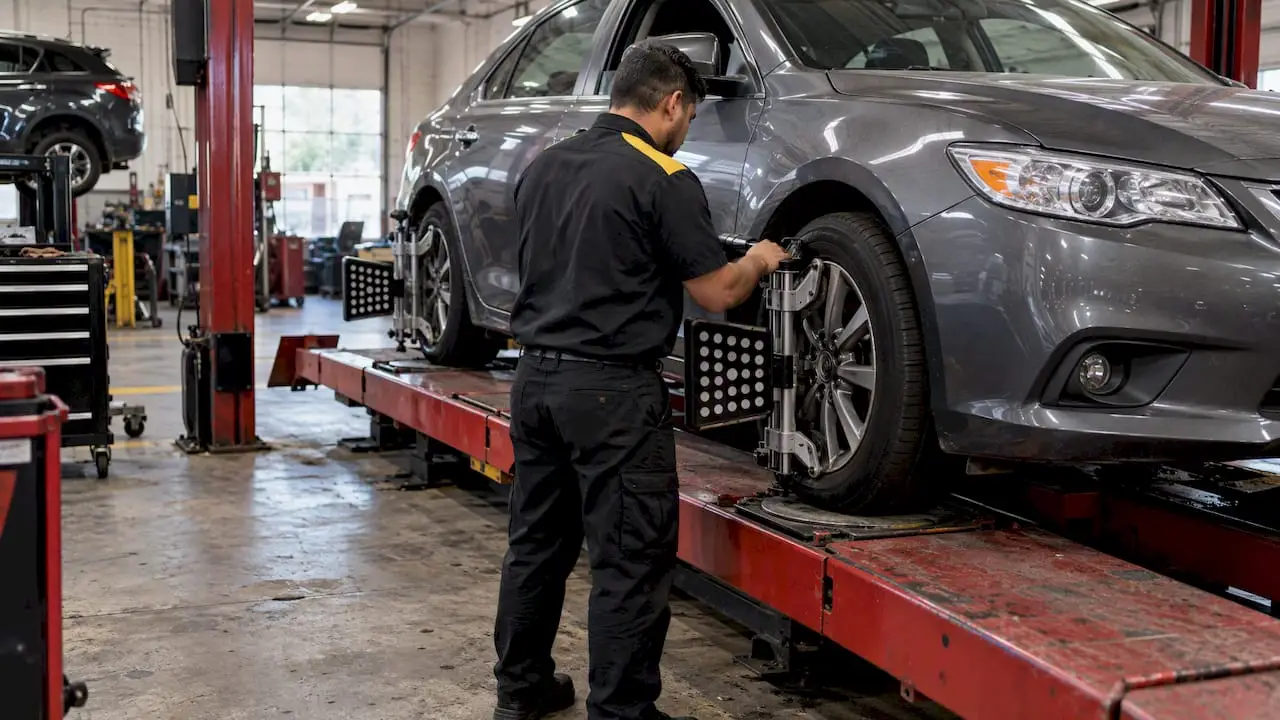
Yes, in most cases you need a wheel alignment after suspension work, and skipping it can undo the repair you just paid for. Replacing control arms, struts, springs, or subframe components changes the angles your wheels sit at, and being off spec can accelerate tire wear and affect handling. Schedule the alignment right after the repair, or at minimum take a short test drive and watch for pulling before you put real miles on new parts.
TL;DR:
- Control arm, strut, spring, or subframe work changes wheel geometry and calls for alignment; a shock replacement alone usually does not.
- Before adjustment, technicians inspect ride height, tires, bushings, ball joints, and bent parts; worn or damaged components must be repaired first.
- Book alignment promptly after the repair; a settling drive should stay under a few miles, and newer vehicles may need sensor resets or ADAS recalibration.
- A brief road check can reveal pulling or a crooked steering wheel, but only rack measurements confirm exact angle errors; return if symptoms persist.
Table of Contents
- Which suspension repairs actually require an alignment
- What alignment actually adjusts and what a technician checks first
- When to book the alignment and what happens at the shop
- DIY checks before you commit to a professional alignment
- Warning signs that alignment is still off after the repair
- What ASE and NHTSA guidance say about alignment after repairs
- Our take on alignment after suspension work
- Book your alignment and suspension check in Richardson
- FAQ
- Sources
Which suspension repairs actually require an alignment
Not every suspension job moves the needle on your wheel geometry, but most of the common ones do. Here’s how to sort what you had done into “definitely” and “probably not.”
- Control arm replacement changes camber and toe because the arm sets the wheel’s pivot point, so an alignment is required.
- Strut or coil spring replacement alters ride height and camber, both of which need to be re-measured and adjusted.
- Subframe or cradle work can shift the entire suspension mounting structure, making alignment mandatory.
- Shock absorber replacement alone usually doesn’t touch alignment angles, since shocks control damping, not geometry.
- Aftermarket or reused parts, including lift kits or non-factory control arms, can shift geometry outside factory tolerances even when installed correctly.
If your repair touched anything that bolts the wheel assembly to the chassis, plan on an alignment. If it was purely about ride comfort, like a shock swap with no other work, you may be fine, but a quick check still costs you nothing.
What alignment actually adjusts and what a technician checks first
An alignment sets three main angles. Camber is the inward or outward tilt of the tire when viewed from the front. Caster is the forward or backward tilt of the steering axis, which affects straight-line stability. Toe is whether the front edges of the tires point slightly in or out, and it’s the angle most responsible for uneven tread wear. A fourth measurement, thrust angle, compares the rear axle’s direction to the vehicle’s centerline and flags if the car is tracking crooked.
Before any adjustment, a technician runs a pre-alignment inspection, which includes:
- Checking ride height against factory specifications.
- Inspecting bushings and ball joints for play or wear.
- Looking for bent control arms, tie rods, or struts.
- Confirming tire condition and inflation, since uneven wear skews readings.
A shop won’t adjust alignment angles until worn or bent parts are fixed, because ASE test specifications describe alignment as a diagnostic procedure that depends on accurate pre-checks of ride height, steering axis inclination, and possible subframe misalignment before any angle gets adjusted. Adjusting toe on a car with a worn bushing just means you’re aligning a moving target.
When to book the alignment and what happens at the shop
Book the alignment as soon as the suspension repair is done, especially after control arm, strut, or subframe work. If your shop recommends a short break-in drive first, usually under a few miles, that’s normal for new bushings to settle, but don’t delay beyond that window.
A typical alignment appointment follows this sequence:
- Pre-alignment inspection confirms no bent, loose, or worn parts remain before measurement begins.
- Measurement of camber, caster, toe, and thrust angle using alignment rack sensors.
- Adjustment of each angle to match the manufacturer’s specification.
- Steering wheel centering so the wheel sits straight when the tires point forward.
- Road test to confirm the vehicle tracks straight with no pulling or wander.
Newer vehicles with lane-keep assist or adaptive cruise control may also need a steering angle sensor reset or ADAS recalibration, since those systems rely on the wheel being centered correctly.
DIY checks before you commit to a professional alignment
Before you call the shop, a few quick checks at home can tell you how urgent the alignment is.
- Look at ride height from a distance: one corner sitting noticeably lower suggests a spring or mounting issue.
- Check for visible damage, loose bolts, or fresh scrapes on control arms and tie rods.
- Inspect tire sidewalls and tread for obvious new wear patterns.
- Drive on a flat, empty road and let go of the wheel briefly to see if the car pulls to one side.
- Note whether the steering wheel sits crooked when driving straight.
These checks tell you whether something feels off, but they don’t replace rack measurements. A hand level and a straight road can suggest a problem; only a shop’s equipment can confirm the exact degree of camber or toe error.
Pro Tip: Take the same empty, flat road every time you test for pulling, since crowned roads and potholed streets can mimic an alignment problem that isn’t actually there.
Warning signs that alignment is still off after the repair
Alignment problems don’t always show up immediately. Keep an eye on these signs over the first few weeks after suspension work.
- Uneven tire wear, especially feathering on one edge of the tread, can appear if toe is off.
- Pulling to one side on a flat road points to uneven camber or a caster imbalance.
- Wandering or poor steering return after a turn suggests caster or toe issues.
- An off-center steering wheel while driving straight is one of the clearest signs alignment wasn’t fully corrected.
If any of these show up after your repair, contact the shop for a follow-up rather than waiting, since uneven wear from poor alignment can shorten tire life quickly once it starts.
What ASE and NHTSA guidance say about alignment after repairs
NHTSA guidance identifies wheel alignment as a key part of recurring maintenance that helps maximize tire life and keeps a vehicle tracking straight instead of veering. That guidance underscores why skipping alignment after suspension work isn’t just a comfort issue, it’s a tire longevity and handling issue.
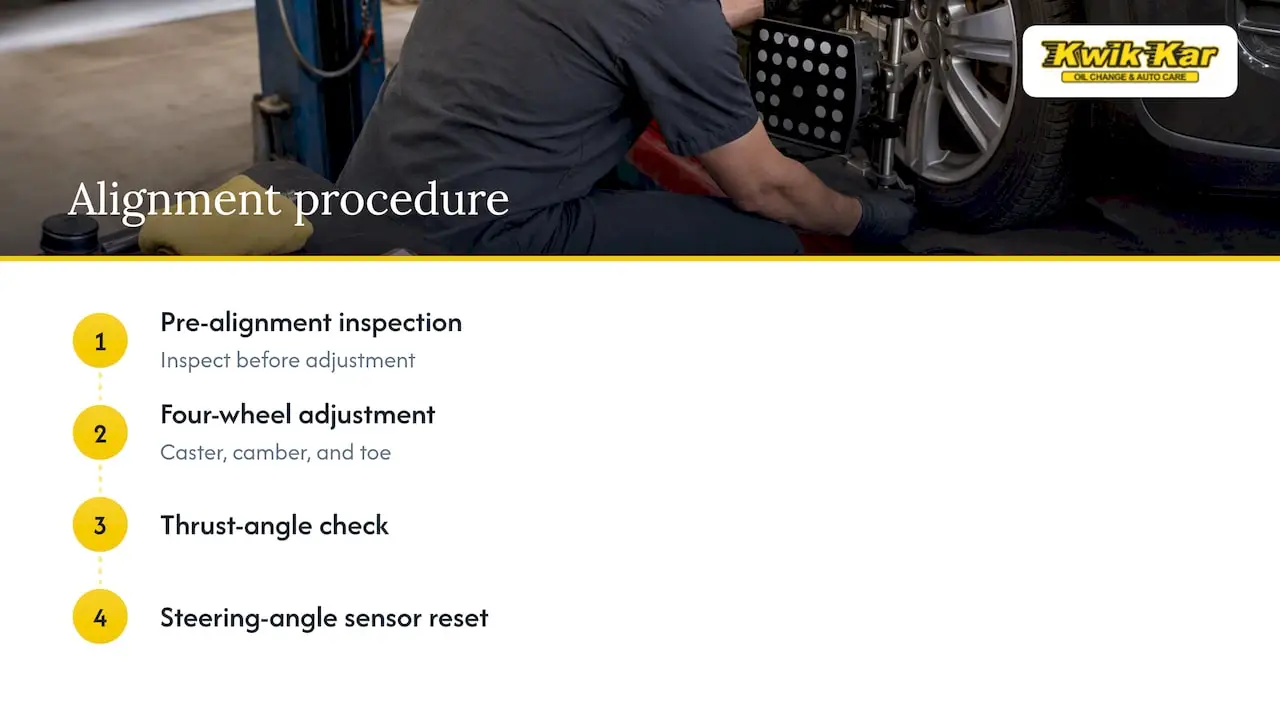
On the technical side, ASE correlation standards list pre-alignment inspection, four-wheel adjustment of caster, camber, and toe, thrust angle checks, and steering angle sensor resets as standard alignment procedure. These aren’t optional extras, they’re the baseline a technician works through on every alignment job, which is part of why a rushed or skipped alignment after suspension repair tends to show up again later as uneven wear or a pull.
Our take on alignment after suspension work
We recommend alignment after most geometry-changing suspension repairs. Ask us for alignment whenever you book control arm, strut, or subframe work.
— Kwik Kar
Book your alignment and suspension check in Richardson
If you’ve just had control arms, struts, or subframe work done, pairing it with a wheel alignment protects the repair you already paid for. Our ASE-certified technicians measure and adjust camber, caster, and toe.
- Bundle alignment with your suspension repair in one visit to avoid a second trip.
- Ask about our discounts for military and first responders when you schedule.
- Bring in tire wear concerns too, since our tire services team can check if uneven tread needs attention alongside alignment.
Schedule your alignment or suspension follow-up with us in Richardson, and drive out with wheels pointed the way they’re supposed to be.
FAQ
Do I need a wheel alignment after changing tires?
A tire change alone doesn’t move suspension components, so it doesn’t require an alignment the way suspension repairs do. It’s still a reasonable time to check alignment, since worn tires can mask an existing pull or wear pattern that’s actually geometry-related.
Can I drive if my alignment is bad?
Driving with a bad alignment is usually not dangerous in the short term, but it accelerates tire wear and can make the car harder to control in an emergency maneuver. NHTSA notes that proper alignment helps a vehicle track straight, so a pull or wander is worth addressing soon rather than ignoring.
Is suspension related to alignment?
Suspension components directly set the angles that alignment measures and adjusts, including camber, caster, and toe. When a control arm, strut, or spring changes position or wears out, it shifts those angles, which is why suspension repairs often require a follow-up alignment.
How do I know what suspension parts are bad?
Common signs include uneven tire wear, a bouncy or rough ride, clunking noises over bumps, and the vehicle pulling or wandering on a straight road. A visual inspection for bent, rusted, or leaking components, paired with a professional diagnostic check, gives a more definitive answer than guessing from symptoms alone.
Sources
- Tire Safety Ratings and Awareness | TireWise | NHTSA
- MASTER AUTOMOBILE SERVICE TECHNOLOGY (MAST) SERIES
- 2022 ASE Correlation Chart