Spot 6 Uneven Tire Wear Patterns and Fix Them in Richardson
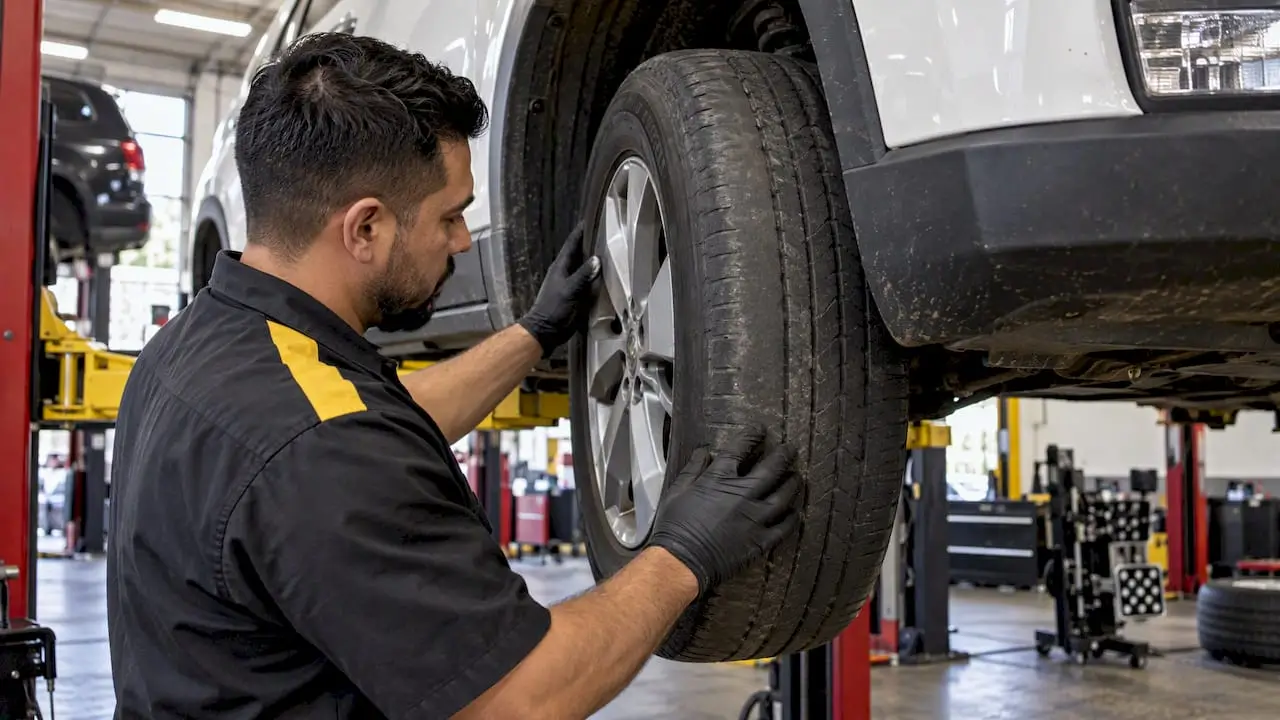
Uneven tire wear means something underneath your car isn’t doing its job right, whether that’s tire pressure, alignment, balance, or suspension. Check your tire pressure against the placard inside your driver’s door, avoid long highway stretches if the wear looks severe, and schedule an inspection right away if the wear is one-sided or you feel a vibration. Going forward, rotate your tires on schedule and check pressure monthly so the problem doesn’t come back.
TL;DR:
- Center wear indicates overinflation, and should be corrected by reducing tire pressure to prevent early replacement.
- One-sided wear and cupping suggest alignment issues or suspension problems requiring professional inspection and adjustment.
- Regular manual pressure checks and tire rotation every few thousand miles are crucial to prevent uneven wear patterns.
- Deep cupping, scalloping, or visible cords signal severe damage, making tire replacement necessary regardless of repair attempts.
- Immediate professional evaluation is recommended when experiencing vibrations, pulling, or uneven wear to address underlying mechanical causes early.
Table of Contents
- How to Spot the Most Common Wear Patterns
- What’s Causing Your Specific Wear Pattern
- Measuring Tread Depth and Knowing When to Replace
- Your Prevention Checklist: Pressure, Rotation, Alignment, and More
- When to Call in a Professional and What They’ll Check
- How Kwik Kar Diagnoses Uneven Wear
- Why Early Diagnosis Matters More Than It Seems
- Book Your Tire Inspection in Richardson
- FAQ
- Sources
How to Spot the Most Common Wear Patterns
Your tires leave a record of what’s wrong with your car, if you know how to read it. Run your palm across the tread in a few spots, because some patterns are easier to feel than see.
- Center wear: tread wears down the middle strip while both edges stay fuller.
- Shoulder wear: both outer edges wear faster than the center.
- One-sided wear: only the inner or only the outer edge is balding.
- Feathering: tread blocks develop a sharp edge on one side and a rounded edge on the other, noticeable when you drag a hand across the tire from inside to outside.
- Cupping or scalloping: dips or scooped-out patches appear around the tire in a wavy pattern, usually accompanied by a buzzing or humming sound at speed.
- Flat spots: a section of tread is worn flatter than the rest, sometimes from hard braking or long parking.
Before guessing at a cause, run a quick at-home check: press a penny into the tread, look for the built-in wear bars molded into the grooves, and feel for any of the textures above. Those few minutes tell you whether you’re looking at a maintenance fix or a mechanical one.
What’s Causing Your Specific Wear Pattern
Each pattern points to a different culprit, and matching them correctly saves you from fixing the wrong thing. According to Michelin’s guide to wear problems, center wear typically comes from overinflation, shoulder wear from underinflation, one-edge wear from an alignment problem, and cupping from imbalance or worn shocks.
- Center wear: too much air pressure, pushing the middle of the tread into the road.
- Shoulder wear: too little air pressure, letting the outer edges carry extra load.
- One-sided inner or outer wear: a camber or toe alignment issue is tilting the tire’s contact with the road.
- Feathering: toe alignment is off, dragging the tread sideways as it rolls.
- Cupping or scalloping: wheel imbalance or worn shocks and struts are letting the tire bounce instead of roll smoothly.
Driving habits and conditions speed up all of these. Towing, carrying heavy loads often, hitting potholes hard, and aggressive cornering or braking all accelerate whichever pattern your car is already prone to. A single alignment issue left unaddressed for months, paired with regular highway towing, can turn mild one-sided wear into a tire that needs replacing well before its time, making understanding the role of wheel alignment when buying tires essential.
Measuring Tread Depth and Knowing When to Replace
A visual guess isn’t enough. Two simple tests tell you where you stand.
- Penny test: insert a penny into the tread groove with Lincoln’s head facing down. If you can see the top of his head, the tread is worn to around 2/32 of an inch and the tire needs replacing.
- Wear bar check: look for the raised rubber bars molded across the tread grooves. When tread wears flush with those bars, you’ve hit the same 2/32 inch mark.
- Gauge check: for a precise reading, press a tread depth gauge into several spots around the tire, not just one.
The NHTSA tire brochure sets tire replacement at 2/32 inch of remaining tread, the point where traction and wet-weather performance drop off sharply.
Localized heavy wear, a single worn edge, deep cupping, or visible cords, usually means replacement rather than repair, even after you fix the underlying cause. TPMS lights only warn of significant pressure loss, so a monthly manual check with a gauge catches slow leaks TPMS misses. Rotation helps even out mild, early wear; once a pattern is advanced, rotation alone won’t save the tire.
Your Prevention Checklist: Pressure, Rotation, Alignment, and More
Most uneven wear is preventable with a short list of habits.
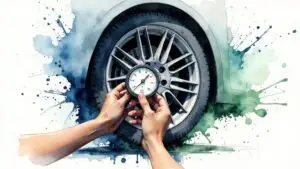
- Check tire pressure regularly, ideally monthly, using a gauge rather than relying solely on TPMS alerts against the placard inside your driver’s door, using a gauge rather than relying solely on TPMS alerts.
- Rotate your tires regularly according to your owner’s manual, typically every few thousand miles, or per your owner’s manual rotation interval, and don’t skip the first rotation.
- Check your alignment after hitting a pothole or curb, or any time the car pulls to one side.
- Balance your tires if you feel vibration through the steering wheel or seat.
- Have your shocks and struts inspected if you notice cupping or vibration that doesn’t go away; don’t ignore a steering shake.
- Avoid overloading your vehicle and stay within the tire load limits listed on the sidewall and door placard.
The USTires passenger and light truck tire guide notes that going many miles without rotating lets early uneven wear set in, making it harder to correct later. For staggered or directional tire setups, rotation options are limited, so check your manual before swapping positions.
Pro Tip: Keep a small tread gauge in your glovebox. A monthly 30-second check catches problems long before they show up as a vibration.
When to Call in a Professional and What They’ll Check
Some signs mean stop driving and get your car looked at, not just add it to a to-do list. Severe one-sided wear, a vibration that doesn’t fade, a car that pulls hard to one side, or visible cords and bulges all call for an immediate appointment.
A proper inspection covers more than the tires themselves:
- Alignment angles (camber and toe) to catch the geometry causing one-sided wear.
- Wheel balance, since an out-of-balance wheel can cause irregular tread wear and vibration.
- Rim condition, checking for bends or damage that throw off balance.
- Shocks, struts, and tie rods, since worn suspension parts are a common cause of cupping.
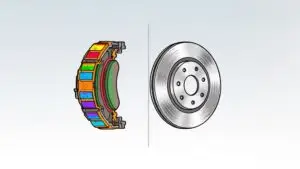
- Brakes, since uneven braking force can create flat spots.
Fixing the root cause before replacing tires keeps the new set from wearing the same way. Bring your owner’s manual and any notes on when the symptom started; most alignment checks and diagnostics are done within the same visit.
How Kwik Kar Diagnoses Uneven Wear
We start every uneven wear visit with a full inspection rather than guessing from the tread alone. We check alignment angles, wheel balance, shocks and struts, and tie rods, then provide a digital inspection report with photos before any work begins.
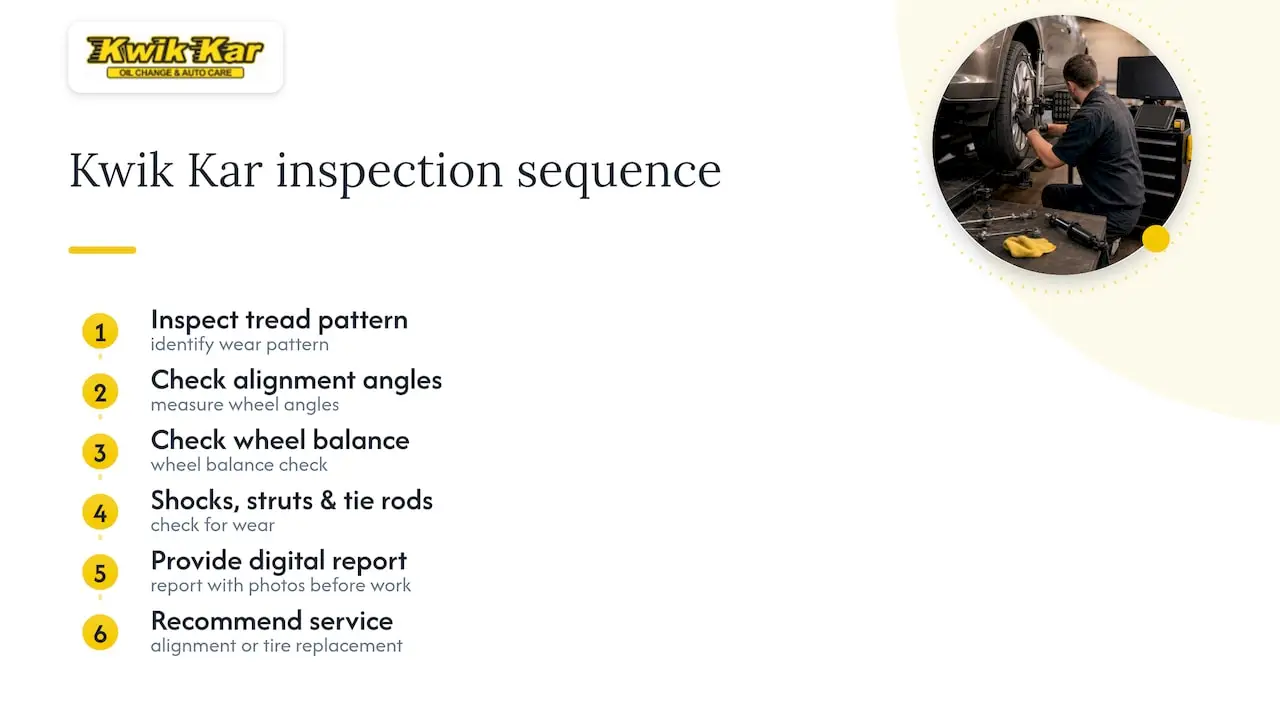
If your tires show a pattern that needs more than rotation, we’ll recommend wheel alignment or tire service and replacement based on what the inspection actually finds, not a guess. Repairs we perform are backed by our 24-month/24,000-mile warranty, and we offer discounts for military members and first responders. Booking takes a few minutes online or by phone, and most alignment and balance checks fit into one visit.
Why Early Diagnosis Matters More Than It Seems
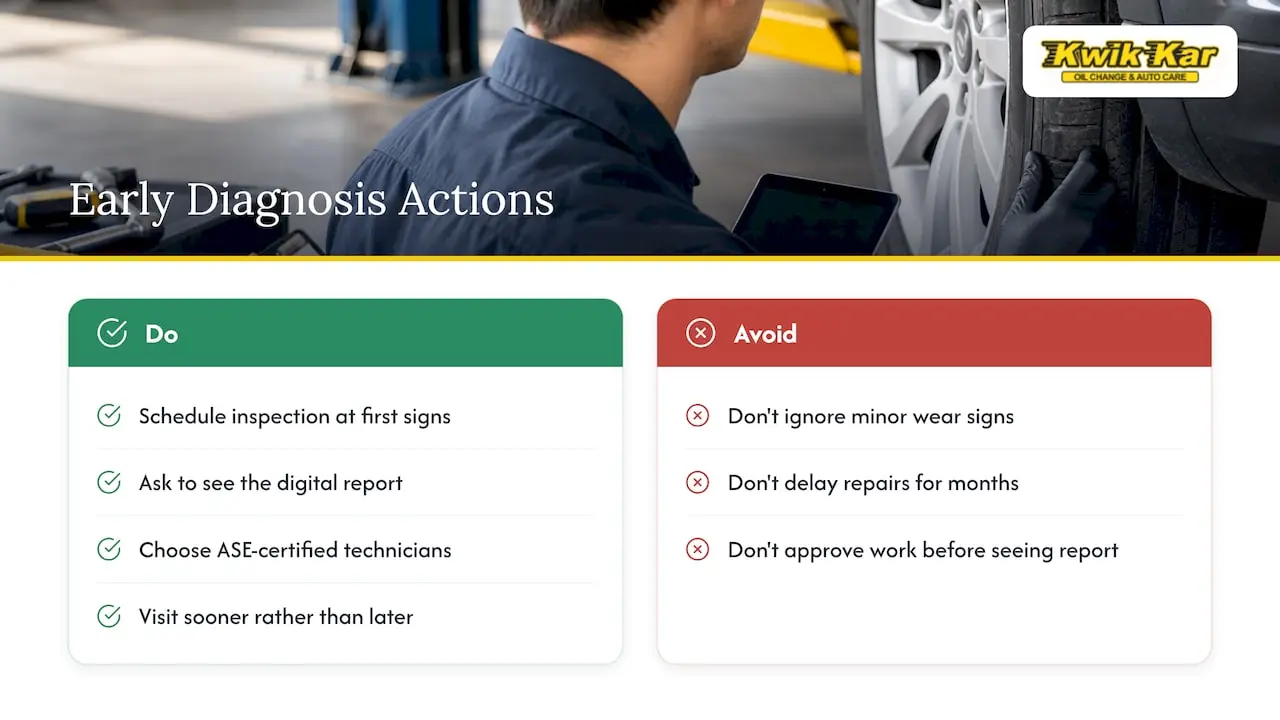
Uneven wear rarely announces itself loudly at first, which is exactly why catching it early matters. A pattern that costs an alignment today can cost a full tire replacement in a few months if it’s left alone.
Our technicians are ASE-certified and every inspection comes with a transparent digital report, so you see exactly what we found before you approve any work. If you recognized one of the patterns described above on your own tires, that’s worth a visit sooner rather than later.
— Kwik Kar
Book Your Tire Inspection in Richardson
Catching uneven wear early costs less than replacing a tire that’s already gone too far. We offer wheel alignment and tire services and replacement with transparent digital reports, backed by our 24-month/24,000-mile warranty.

Call or book online today. If your wear is severe or your car is vibrating, hold off on long drives and get it checked before your next trip.
FAQ
Is it possible to fix uneven tire wear?
Mild uneven wear can often be corrected by rotating the tires and fixing the underlying cause, such as alignment or pressure. Once wear patterns like deep cupping or feathering set in, the tire’s uneven surface usually can’t be smoothed out, so replacement is typically needed.
How much does a tire alignment cost?
Alignment pricing varies by vehicle and shop, so we recommend checking directly with your local service center for a quote. Ask about a wheel alignment inspection if your car pulls to one side or you’ve recently hit a pothole or curb.
What is the 3% rule for tires?
This isn’t a standard measurement rule referenced by major tire safety authorities like NHTSA or USTires. The reliable thresholds to follow are the 2/32 inch tread depth minimum and monthly pressure checks against your vehicle’s placard.
What are the symptoms of uneven tire pressure?
Underinflation shows up as wear concentrated on both outer shoulders, while overinflation wears down the center strip of tread. The USTMA recommends checking pressure monthly with a gauge, since TPMS often won’t alert you to gradual pressure loss.
Sources
- Care and Service of Passenger and Light Truck Tires (USTires)
- Tire: Everything rides on it (NHTSA brochure)
- Wear problems | Michelin USA