$150 Fix: Alignment After New Tires Prevents Early Replacement
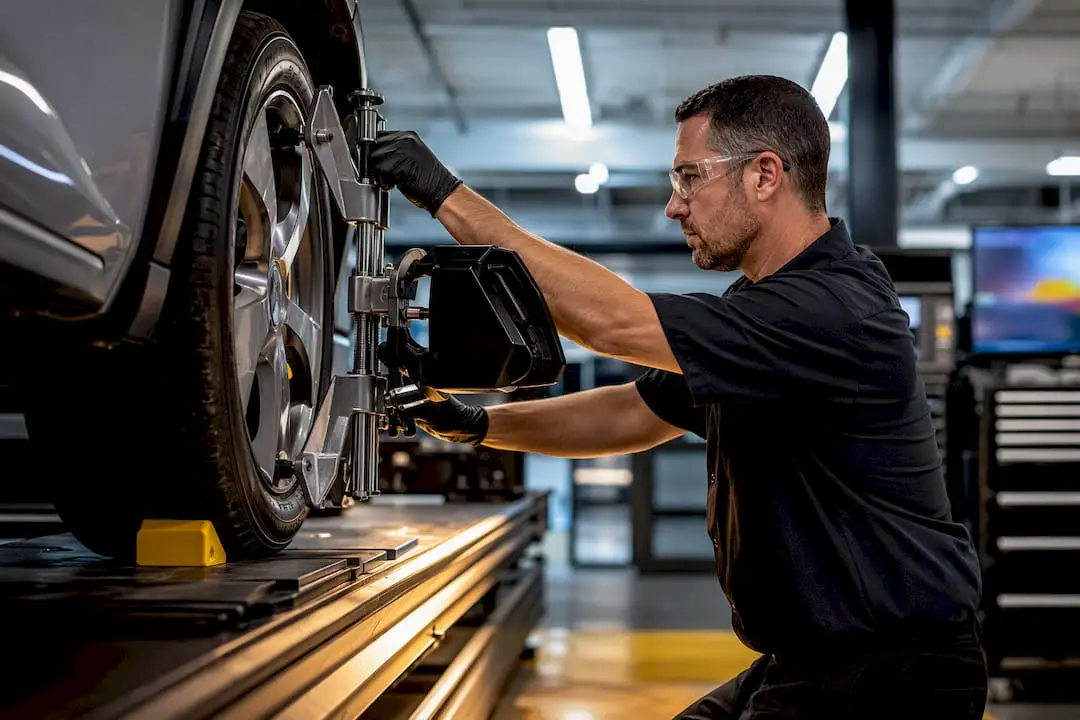
Get a wheel alignment check every time you install new tires, and follow through with a full adjustment if the measurements fall outside spec. New tires on a misaligned car wear unevenly from the first mile, which shortens the life of the tires you just paid for. Have the check done at installation, or within the first few hundred miles if you skip it that day.
TL;DR:
- An alignment check should be performed immediately after installing new tires or within a few hundred miles to prevent uneven tread wear.
- Drivers should be alert for signs like pulling, steering wheel misalignment, uneven tire wear, vibration, or squealing, which indicate the need for an alignment.
- Even if only two tires are replaced on the same axle, an alignment is usually necessary unless the old tires had no uneven wear and the replacement tires are identical in size and tread depth.
- Most vehicles require a four-wheel alignment if they have independent suspensions, but older trucks may only need front-end adjustments; alignment costs typically range around $150 and take about an hour.
- Request an alignment check at tire installation, keep the measurement records, and consider confirmation of the vehicle’s steering center to protect your tire investment and avoid premature replacements.
Table of Contents
- Why Alignment Matters for New Tires (And When It’s Urgent)
- What Are the Signs You Need an Alignment Now?
- Do You Need an Alignment After Replacing Just One or Two Tires?
- Two-Wheel vs. Four-Wheel Alignment: What Gets Adjusted
- What Does an Alignment Cost, and How Long Does It Take?
- Shop Checklist: What to Ask For at Your Alignment Appointment
- How Kwik Kar Approaches Alignment With New Tires
- Why “Wait and See” Is the Wrong Approach With New Tires
- Protect Your New Tires With an Alignment Check at Kwik Kar
- Sources
- FAQ
Why Alignment Matters for New Tires (And When It’s Urgent)
Misalignment does not wait for a convenient moment to start damaging your tires. It begins wearing the tread unevenly from the first rotation, and that pattern only gets worse the longer it goes uncorrected. Industry sources note that starting new tires on a misaligned vehicle can trigger irreversible wear almost immediately, which is exactly the outcome you’re trying to avoid after spending money on a fresh set.
Most vehicles hold their alignment reasonably well between checks, and the general guidance is to have one done annually or every 12,000 to 15,000 miles. New tires reset that clock. So does anything that jolts your suspension.
You should treat an alignment check as immediate, not optional, in these situations:
- Right after new tire installation, before the tread has a chance to wear unevenly
- After any suspension or steering repair, since replaced parts change ride geometry
- Following a hard pothole strike or curb hit, even if the car seems to drive fine afterward
A quick fact worth remembering: alignment angles shift gradually with road conditions rather than on a fixed timetable, which is why Continental Tire recommends checking after impacts and symptom onset, not just by the calendar.
What Are the Signs You Need an Alignment Now?
Your car usually tells you before a mechanic has to. The trouble is that most drivers miss the early clues because they’re subtle at first and easy to write off as “just how the road feels today.”
Watch for these five signals:
- Pulling to one side when you release light pressure on the wheel while driving straight.
- An off-center steering wheel when the car is tracking straight ahead.
- Uneven or feathered tread wear, especially concentrated on one edge of the tire.
- Vibration through the steering wheel, particularly at highway speed.
- Squealing tires during slow, tight turns like parking lot maneuvers.
If you pull an old tire off the car, look at the wear pattern before you toss it. Wear concentrated on the inside edge usually points to excess negative camber or toe-in; outside-edge wear often means the opposite. Feathering, where the tread blocks feel sharp on one side and rounded on the other, is a classic toe misalignment signature.
Even faint versions of these signs justify a check. Waiting until the symptom is obvious usually means you’ve already lost meaningful tread life.
Pro Tip: Snap a photo of your tread wear pattern before your new tires go on. If a technician later needs to explain what caused the old wear, that photo helps confirm whether alignment was the culprit.
Do You Need an Alignment After Replacing Just One or Two Tires?
An alignment check is still the right call, even for a partial replacement. The exception is narrow: if you’re replacing tires on a single axle with matched sizing and tread depth, and the old tires showed no signs of uneven wear, skipping the check is sometimes reasonable. That’s the exception, not the rule.
Alignment becomes essential, not optional, when any of the following apply:
- The new tires are a different size or tread depth than the ones staying on the car
- The old tires you’re replacing showed uneven or feathered wear
- You’ve hit a pothole, curb, or had suspension work done since the last check
If you’re only swapping two tires, ask the shop to match sizes and tread depth closely, and request the alignment check anyway. It costs you almost nothing to confirm, and it protects the tires that are staying on the car too.
Two-Wheel vs. Four-Wheel Alignment: What Gets Adjusted
Three measurements drive every alignment job: toe, camber, and caster. Toe is whether your tires point slightly inward or outward when viewed from above, and it’s the single biggest factor in tread wear. Camber is the inward or outward tilt of the tire when viewed from the front, and incorrect camber wears one edge of the tread faster than the other. Caster affects steering stability and how the wheel returns to center after a turn.
Most modern vehicles with independent rear suspension need a full four-wheel alignment, since all four corners can drift out of spec independently. Older vehicles or trucks with a solid rear axle sometimes only require front-end adjustment, since the rear geometry is fixed by design.
It also helps to know the difference between two shop terms:
- An alignment check measures your current angles and prints or displays the results, often at no charge.
- A full alignment is the paid adjustment that brings those angles back within factory spec.
What Does an Alignment Cost, and How Long Does It Take?
Expect the appointment itself to run about one hour in most shops, whether it’s a two-wheel or four-wheel job. Pricing typically falls within a moderate range depending on two-wheel vs four-wheel service, vehicle type, and local rates.
Here’s the number that matters most: a $150 alignment adjustment is a fraction of the cost of replacing a set of tires early because uneven wear ate through the tread in half the expected mileage.
Many tire retailers include a free alignment check with a new tire purchase, and only charge you if the measurements come back out of spec and need correcting. That’s worth asking about before you agree to a price on new tires, since bundling the check into the same visit saves you a second trip:
- Request the alignment check at the same appointment as tire installation
- Ask whether the check is complimentary with tire purchase
- Confirm any adjustment charge before work begins, not after
Shop Checklist: What to Ask For at Your Alignment Appointment
Walking into the shop with a short list of questions turns a routine visit into real protection for your investment. Here’s what to bring up when you drop off the car for new tires:
- Ask for an alignment check at installation, and request the printed or digital specs if an adjustment is performed.
- Confirm whether your vehicle needs four-wheel alignment, and ask the shop to document the before-and-after measurements for warranty purposes.
- Request photos of the old tires before they come off, so you have a record of the wear pattern that led to replacement.
- Ask for a steering-center verification after the alignment, confirming the wheel sits straight when the car tracks straight.
Pro Tip: Keep your alignment printout with your tire warranty paperwork. If a tire wears unevenly down the road, that record shows whether alignment was in spec at installation, which can matter for a warranty claim.
Clean wheels also make it easier for a technician to spot wear patterns and hardware issues during inspection, which is one reason proper brake dust removal between service visits is worth the extra few minutes.
How Kwik Kar Approaches Alignment With New Tires
Qualified technicians follow dealership-level procedures for alignment work, including digital inspection reports that document your measurements before and after service. That paperwork matters if a tire warranty claim ever comes up down the road.
When you bring in new tires for installation, the auto care provider can check your alignment as part of that visit and move straight to a full adjustment if the angles are out of spec. That single-trip approach saves you a second appointment and protects the tread on tires you just paid for. It’s a small step at installation that heads off a much bigger cost: replacing tires early because nobody checked the geometry underneath them.
Why “Wait and See” Is the Wrong Approach With New Tires
Most drivers treat alignment as something you deal with only after a problem shows up, pulling, vibration, a crooked steering wheel. That mindset costs money. By the time those symptoms are obvious enough to notice while driving, you’ve usually already burned through a meaningful chunk of tread on tires that should have lasted years.
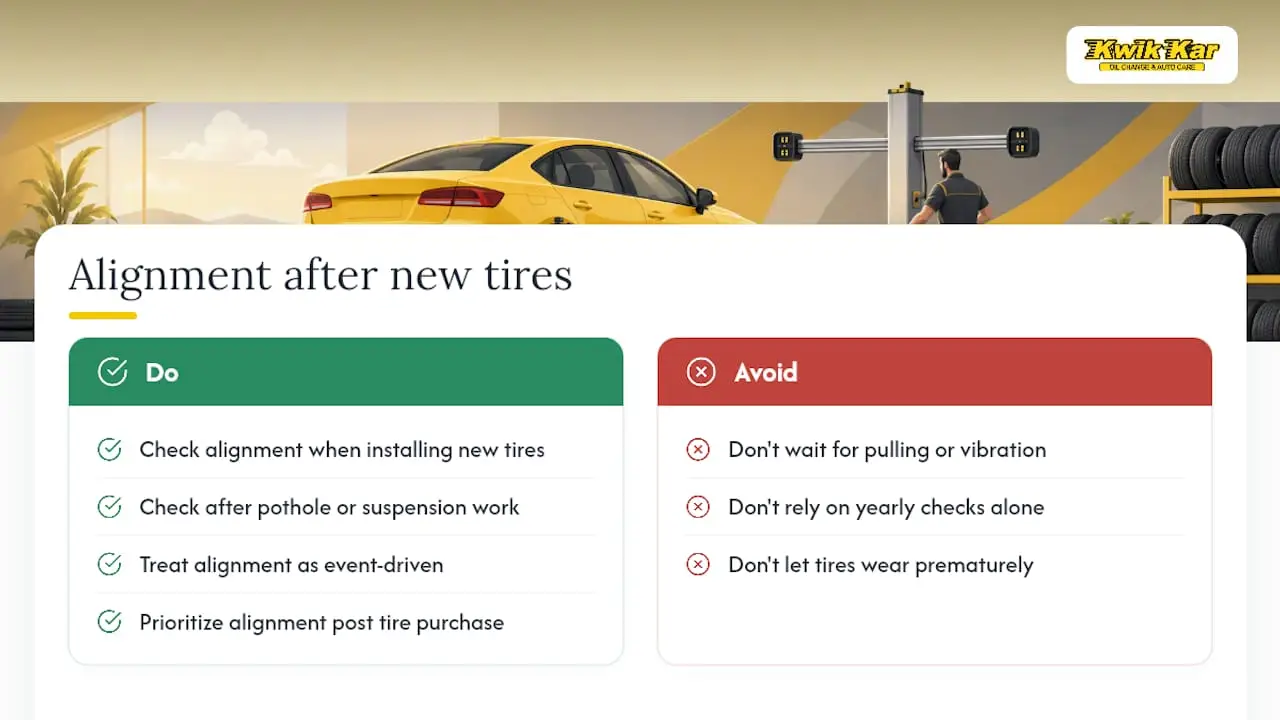
The conventional advice to “get an alignment once a year” isn’t wrong, but it’s incomplete. It treats alignment as a calendar event when it’s really an event-driven one. New tires, a hard pothole hit, a suspension repair, any of these reset the clock regardless of when your last check happened.
If you’re prioritizing one thing after buying new tires, make it this: get the check at installation, not after you notice a problem. It’s the cheapest insurance you’ll buy for that purchase, and it’s the difference between tires that last their full mileage rating and tires that need replacing two years early because nobody looked at the angles underneath them.
— Kwik Kar
Protect Your New Tires With an Alignment Check at Kwik Kar
Buying new tires and skipping the alignment check is like installing new brake pads on warped rotors. You’re setting fresh parts up to wear against a problem that’s already there. Kwik Kar Oil Change & Auto Care’s wheel alignment service pairs ASE-certified technicians with digital inspection reporting, so you get documented before-and-after measurements you can keep with your tire warranty paperwork.

Book your alignment check the same day you install new tires, and Kwik Kar Oil Change & Auto Care will measure your angles and walk you through the results before any adjustment work begins. Military and first responder discounts are available, and scheduling online takes a couple of minutes. Get it checked before those new tires start wearing unevenly, not after.
Sources
For deeper detail on alignment frequency and symptoms, see AutoZone’s alignment guidance on service intervals, Continental Tire’s breakdown of warning signs, and Tire Advise’s explanation of why new tires trigger an immediate check.
- Why proper alignment is important for your tires | Continental Tire
- How often do I need a wheel alignment? | AutoZone
FAQ
How Soon Should I Get an Alignment After Getting New Tires?
Get the alignment check at the same appointment as tire installation, or within the first few hundred miles if that’s not possible. Waiting longer risks uneven wear starting on tires that have barely been driven.
Do I Need an Alignment After Replacing Just One Tire?
Usually yes, though a single-axle swap with matched size and tread depth can sometimes skip it if the old tires showed even wear. Any prior uneven wear or mismatched tires makes the check necessary.
Does Getting New Tires Actually Affect Alignment?
New tires themselves don’t change your alignment angles, but they reveal existing misalignment fast because fresh tread wears unevenly right away. That’s why installation is treated as a trigger event for a check, not just routine maintenance.
Do You Need an Alignment Every Time You Change Tires?
A check is recommended every time, even if a full adjustment isn’t always needed. Many shops include the check free with tire purchase and only charge if the measurements come back out of spec.
How Long Does a Wheel Alignment Take?
A standard alignment appointment takes about one hour, whether it’s a two-wheel or four-wheel adjustment. Kwik Kar Oil Change & Auto Care can often complete the check and adjustment during the same visit as your tire installation.