Richardson Drivers: 1/4 Inch Rule for a Nail in Your Tire
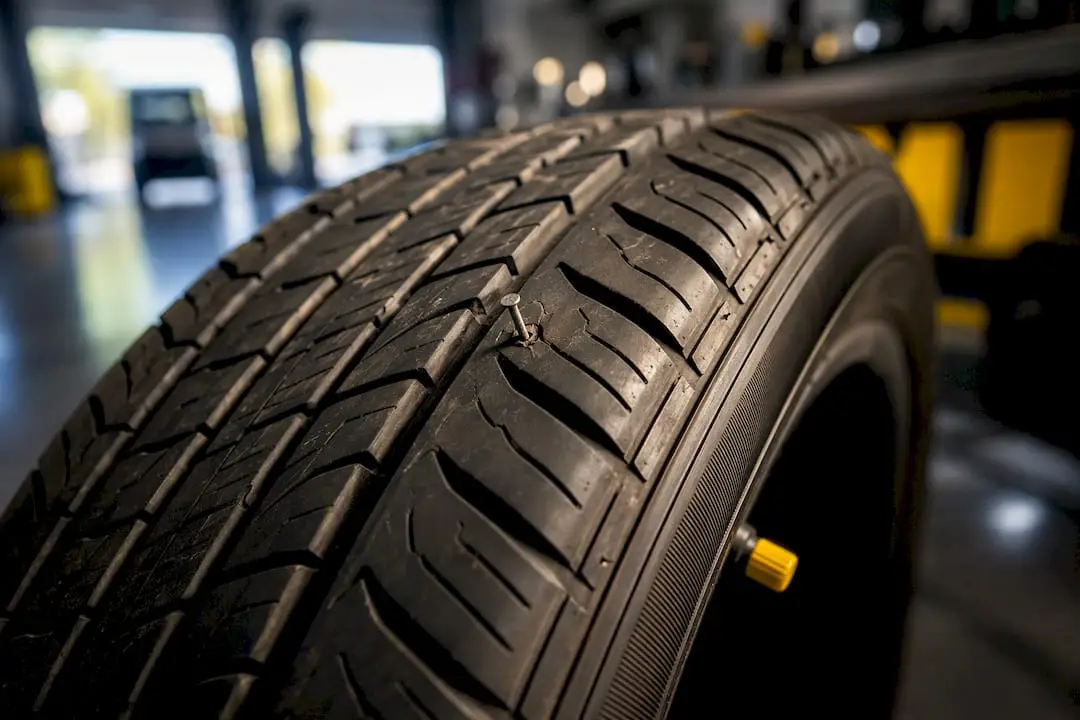
A nail in the center tread that measures 1/4 inch (6 mm) or smaller is usually repairable, but only after a professional pulls the tire off the wheel and inspects the inside. The U.S. Tire Manufacturers Association and NHTSA both back this rule. Drive gently to a shop, keep an eye on your tire pressure, and don’t assume a quick plug is the end of the story.
TL;DR:
- A tire nail repair is only recommended if the puncture is in the central tread, smaller than 1/4 inch (6 mm), and the tread depth is more than 2/32 inch.
- Drive slowly to a repair shop and avoid removing the nail yourself to prevent internal damage or a sudden blowout.
- Temporary solutions like plugs or aerosol sealants are only for short-term use and can’t replace a proper, internal repair.
- A certified shop will demount the tire, inspect inside for damage, and perform a vulcanizing patch and plug combination for a safe, long-term fix.
- Tires with sidewall damage, bulges, exposed cords, or worn tread below 2/32 inch should be replaced rather than repaired.
Table of Contents
- How to Tell if a Nail in Your Tire Is Repairable
- What to Do the Moment You Find a Nail
- Can a Plug Kit or Sealant Fix It for Now?
- What a Proper Shop Repair Actually Involves
- When Replacement Is the Safer Call
- What to Expect for Cost and Time
- Why a Certified Shop Makes the Difference
- Our Take: Follow the Rule, Skip the Guesswork
- Get Your Tire Inspected the Right Way in Richardson
- Primary Sources on Safe Tire Repair
- Sources
- FAQ
How to Tell if a Nail in Your Tire Is Repairable
Not every puncture gets a second chance. The tire industry has settled on measurable rules that take the guesswork out of the decision, and knowing them means you won’t be surprised by a technician’s verdict.
The puncture has to sit in the central tread area, and it can’t be larger than 1/4 inch (6 mm) in diameter. That limit comes straight from USTMA guidance, and reputable shops follow it without exception. A nail that went in at a sharp angle, rather than straight down, often causes internal damage that’s wider than the entry hole suggests, which is exactly why a visual glance from outside the tire never tells the whole story.
Tread depth matters just as much as puncture size. If any part of the tire measures 2/32 inch or less, the Tire Industry Association recommends replacement over repair, since a worn tire simply doesn’t have enough rubber left to seal safely. Watch for these warning signs before you even get to the shop:
- A puncture in the shoulder or sidewall, where flexing under load makes any repair unreliable
- Visible bulges or soft spots that hint at damaged internal belts
- Exposed steel cords or fabric, which mean the casing has already failed
- A puncture that overlaps a previous repair, since two weak points side by side rarely hold
- Tread worn down to 2/32 inch or less anywhere on the tire
The shoulder and sidewall flex constantly as you drive, and that ongoing movement can break down a repair that would hold fine in the flatter, more stable center tread.
What to Do the Moment You Find a Nail
Your first move should always be a quick pressure check and a visual scan for a fast leak. A tire losing air quickly needs immediate attention, not a “we’ll deal with it later” shrug, and using the right tyre dressing can help maintain tire condition after repair.
- Check tire pressure with a gauge and look for hissing, bulging, or rapid deflation.
- If the tire is losing air fast, stop driving and swap to your spare or call for roadside assistance.
- If pressure looks stable, drive slowly and directly to a repair shop, avoiding highway speeds.
- Leave the nail in place unless a technician tells you otherwise. Pulling it out yourself can turn a slow leak into a blowout.
- Tell your technician immediately if you’ve already used an aerosol sealant.
That last step matters more than most drivers realize. Aerosol sealants leave behind residue that can be flammable or corrosive, and a technician who doesn’t know it’s there could be caught off guard during the repair process.
Pro Tip: Keep a simple tire gauge in your glove box. A pressure reading taken the moment you spot the nail gives your shop a real baseline, instead of a guess about how fast you’re actually losing air.

Can a Plug Kit or Sealant Fix It for Now?
A plug kit or a can of aerosol sealant can buy you time, and that’s precisely what they’re designed for. A plug fills the hole from outside, while sealant coats the interior and hardens around the puncture. Both are meant to get you to a shop, not to replace a proper repair.
Here’s where drivers get into trouble: treating a plug as a permanent fix. Industry guidance is blunt about this, and USTMA specifically discourages on-wheel plug-only repairs as a lasting solution because nobody has inspected the inside of the tire for hidden damage.
- A plug-only repair can mask belt damage that only shows up once the tire is off the wheel
- Moisture trapped inside the casing can corrode steel belts slowly over weeks
- Delaying a real inspection risks a repair that fails later at highway speed
- Temporary fixes should only carry you short distances at reduced speed
If you’re relying on a temporary fix, keep your speed moderate and get to a shop as soon as possible.
What a Proper Shop Repair Actually Involves
A real repair starts with the tire coming off the wheel entirely. That single step separates a legitimate shop from a quick fix at the curb, since there’s no way to check for internal damage while the tire is still mounted.
- The technician demounts the tire and inspects the inside for cord damage, moisture, or old repair failures.
- The puncture is prepared and filled with a vulcanizing stem, then sealed with a patch bonded to the innerliner. This combination approach is what USTMA and NHTSA-referenced technical standards both point to as the accepted method.
- The shop pressure tests the repair and rebalances the wheel before it goes back on your car.
- If the technician finds exposed cords, oversized damage, or a puncture overlapping a prior repair, replacement gets recommended instead.
Plug-only or patch-only repairs skip half of this process, which is exactly why they don’t meet the standard a certified shop follows.
When Replacement Is the Safer Call
Some punctures simply aren’t worth repairing, and pretending otherwise puts you at risk on the road. A tire is not a place to split hairs when the damage exceeds industry limits.
- The puncture is larger than 1/4 inch (6 mm) or sits outside the repairable tread zone
- Damage shows up in the sidewall or shoulder, or you see bulges, exposed cords, or separated tread
- Tread depth measures 2/32 inch or less anywhere on the tire
- The tire already carries multiple repairs, or the new puncture overlaps an old one
Manufacturer policies add another layer here. Continental and other manufacturers note that speed rating, load index, and run-flat construction can impose stricter limits than general industry guidance. A run-flat tire, in particular, often can’t be repaired at all once its reinforced sidewall has been compromised, since that sidewall is what lets it carry weight after a pressure loss in the first place.
What to Expect for Cost and Time
A straightforward repair is almost always faster and cheaper than replacement, and the difference in bench time reflects that. Repairing a tire means demounting, inspecting, buffing the injury, applying the plug and patch combination, letting it cure if the process calls for it, and rebalancing the wheel. Replacement adds the extra step of sourcing the correct tire, which can mean a short wait if your size isn’t in stock.
- Run-flat and low-profile tires often take longer to service due to stiffer sidewalls and tighter bead seats
- A puncture with hidden internal damage adds inspection time before any repair decision is final
- Multiple damaged tires on one visit naturally stretch your total time in the shop
- Calling ahead to confirm availability saves you a wasted trip, especially for less common tire sizes
Why a Certified Shop Makes the Difference
Kwik Kar Oil Change & Auto Care staffs ASE-certified technicians and carries recognition from both RepairPal and CARFAX, which reflects a standard of work that goes beyond a quick patch job. Every tire that comes through the door gets the demount-and-inspect treatment before any repair decision is made, and every repair comes with transparent reporting so you know exactly what was found and fixed.
If you’ve already applied an aerosol sealant, say so before work begins. Trained staff know how to handle sealant residue safely, and skipping that disclosure can complicate an otherwise routine repair.
That kind of straightforward communication, backed by warranty-supported service, is what separates a shop you can trust with your family’s tires from one that’s just trying to get you out the door.
Our Take: Follow the Rule, Skip the Guesswork
The conventional advice on nail punctures tends to swing between two extremes: panic and replace everything, or plug it and forget it. Neither serves drivers well. The measurable rules from USTMA and NHTSA exist precisely because tire failure is rarely dramatic until the moment it is, and a 1/4 inch cutoff or a 2/32 inch tread minimum gives you something concrete to check instead of a hunch.
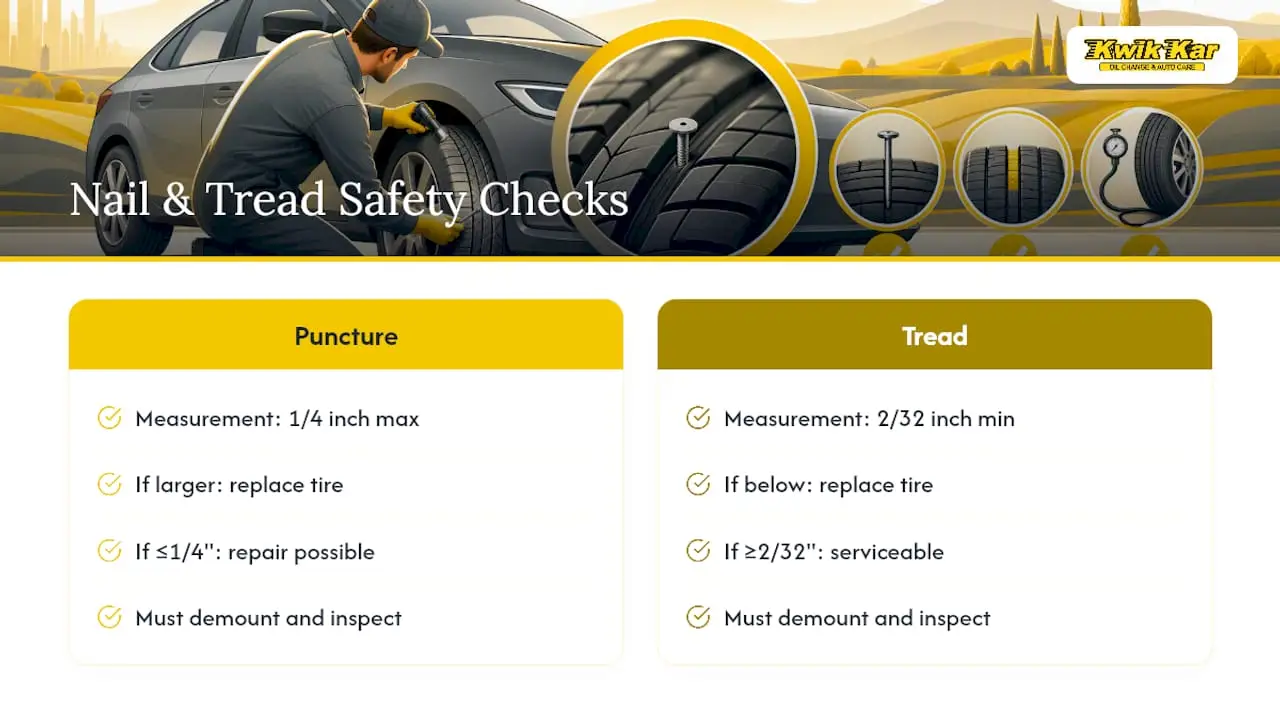
What gets overlooked most often is the demount-and-inspect step. Drivers focus on whether the hole “looks small enough,” when the real risk usually hides on the inside of the casing where a quick glance can’t reach. A plug that seals the outside can leave a belt separation quietly working itself loose underneath.
Prioritize getting the tire off the wheel before anything else. Everything downstream, whether that’s a combination repair or a recommendation to replace, depends on what that inspection actually finds. Trust the measurable standard over the convenient shortcut, every time.
— Kwik Kar
Get Your Tire Inspected the Right Way in Richardson
A plug kit from the gas station can get you home, but it can’t tell you what’s happening inside your tire’s casing. Kwik Kar Oil Change & Auto Care offers full tire inspection, demount-and-inspect repair when your tire qualifies, and replacement with warranty-backed service when it doesn’t, all handled by ASE-certified technicians recognized by RepairPal and CARFAX.

If you found a nail in your tire today, don’t wait for it to turn into a roadside emergency. Bring your vehicle to our Richardson shop or schedule an appointment online for a full inspection. We also offer discounts for military personnel and first responders. Explore our full tire service and repair options to see exactly what’s covered before you come in.
Primary Sources on Safe Tire Repair
The safety limits in this guide come from organizations that set the standards shops actually follow.
- USTMA puncture repair basics covering size limits and demount requirements
- NHTSA tire safety resources on maintenance and consumer guidance
- Tire Industry Association recommendations on tread depth and replacement
Sources
- Tire Repair Basics — U.S. Tire Manufacturers Association
- Tire Repair — Tire Industry Association (consumer safety overview)
- Safety and savings: Ride on your tires — NHTSA
FAQ
Can a Tire Be Repaired With a Nail in It?
Yes, if the puncture is 1/4 inch (6 mm) or smaller and located in the central tread, away from the sidewall and shoulder, according to USTMA standards. A technician still has to remove the tire and inspect the inside before confirming it.
Can I Still Drive With a Nail in My Tire?
You can drive slowly and carefully to a repair shop if the tire isn’t losing air quickly, but a fast leak or a hissing sound means you should stop and switch to your spare instead.
How Much Should It Cost to Fix a Nail in a Tire?
Costs vary by shop and tire type, so it’s best to call ahead and ask for a quote once a technician has inspected the puncture, since manufacturer restrictions on run-flat or specialty tires can affect the final recommendation.
Is It Better to Plug or Patch a Nail in a Tire?
Neither a plug nor a patch alone meets the accepted standard. A proper repair combines both, filling the puncture with a vulcanizing stem and sealing the innerliner with a patch, which is why shops like Kwik Kar Oil Change & Auto Care perform demount-and-inspect repairs rather than quick plug jobs.