You notice it on a rainy morning. Traffic is moving fast on US-75, spray is coming off the tires around you, and your steering wheel feels just a little lighter than it should. Nothing dramatic happens, but you can tell your car isn’t planted the way it used to be.
That feeling often starts with tread depth.
Most drivers in Richardson don’t think about their tire tread until a state inspection, a flat, or a rough weather day forces the issue. But tread depth isn’t a minor maintenance detail. It’s what helps your tires clear water, hold the road, and stop when you need them to. For commuters, parents driving kids across town, and small fleet owners trying to keep vehicles safe and productive, good tire tread depth is one of the simplest things to monitor and one of the easiest to overlook.
Driving Safely in Richardson Starts with Your Tires
A North Texas storm can change the road in minutes. Dry pavement turns slick, standing water forms in low spots, and a normal commute suddenly demands much more from your tires than a clear day ever does.
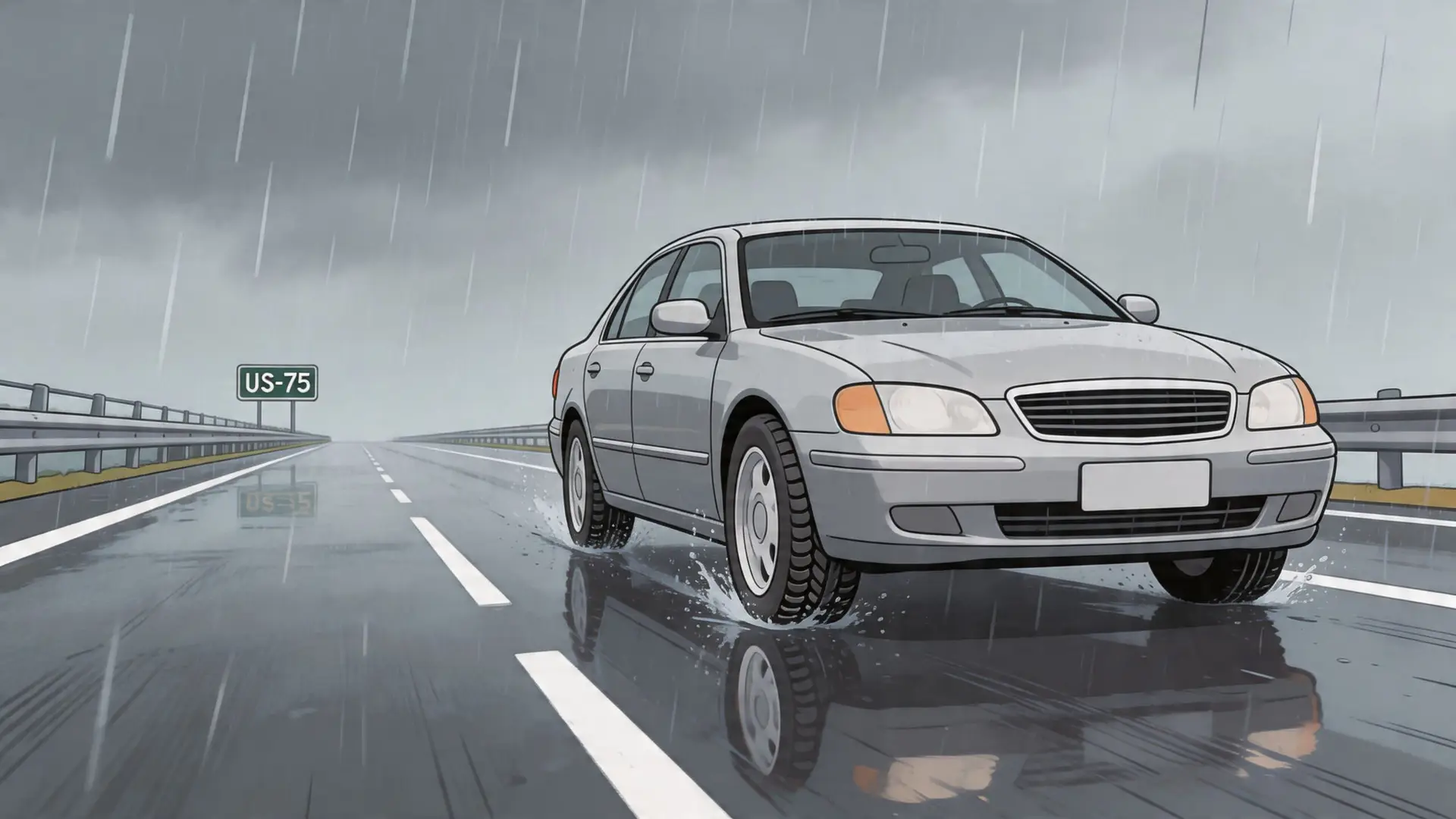
Tread is what gives a tire its working grip. Those grooves and channels aren’t there for looks. They help move water away from the contact patch so the rubber can stay connected to the road instead of skating on top of it. When tread gets shallow, control drops off first in the conditions that catch drivers off guard most often: rain, slush, and emergency braking.
In the shop, drivers usually ask one version of the same question. “Am I still okay, or do I need tires now?” The right answer depends on more than the legal minimum. It depends on how you drive, what you drive, and what kind of weather you regularly face in Richardson.
What matters most on a daily driver
For most local vehicles, these are the issues that matter first:
- Wet-road control: Sudden downpours expose weak tread fast.
- Braking confidence: A tire can still be legal and still stop poorly in the rain.
- Wear pattern: A tire may look acceptable at a glance but be worn out on one edge.
- Visible damage: If tread is low and the tire also has impact damage, replacement moves up the priority list. If you’ve spotted sidewall damage, this guide on a bubble on a tire is worth reading.
Good tread depth isn’t about squeezing every last mile out of a tire. It’s about keeping enough margin to handle the road when conditions turn against you.
Understanding Good Tire Tread Depth by the Numbers
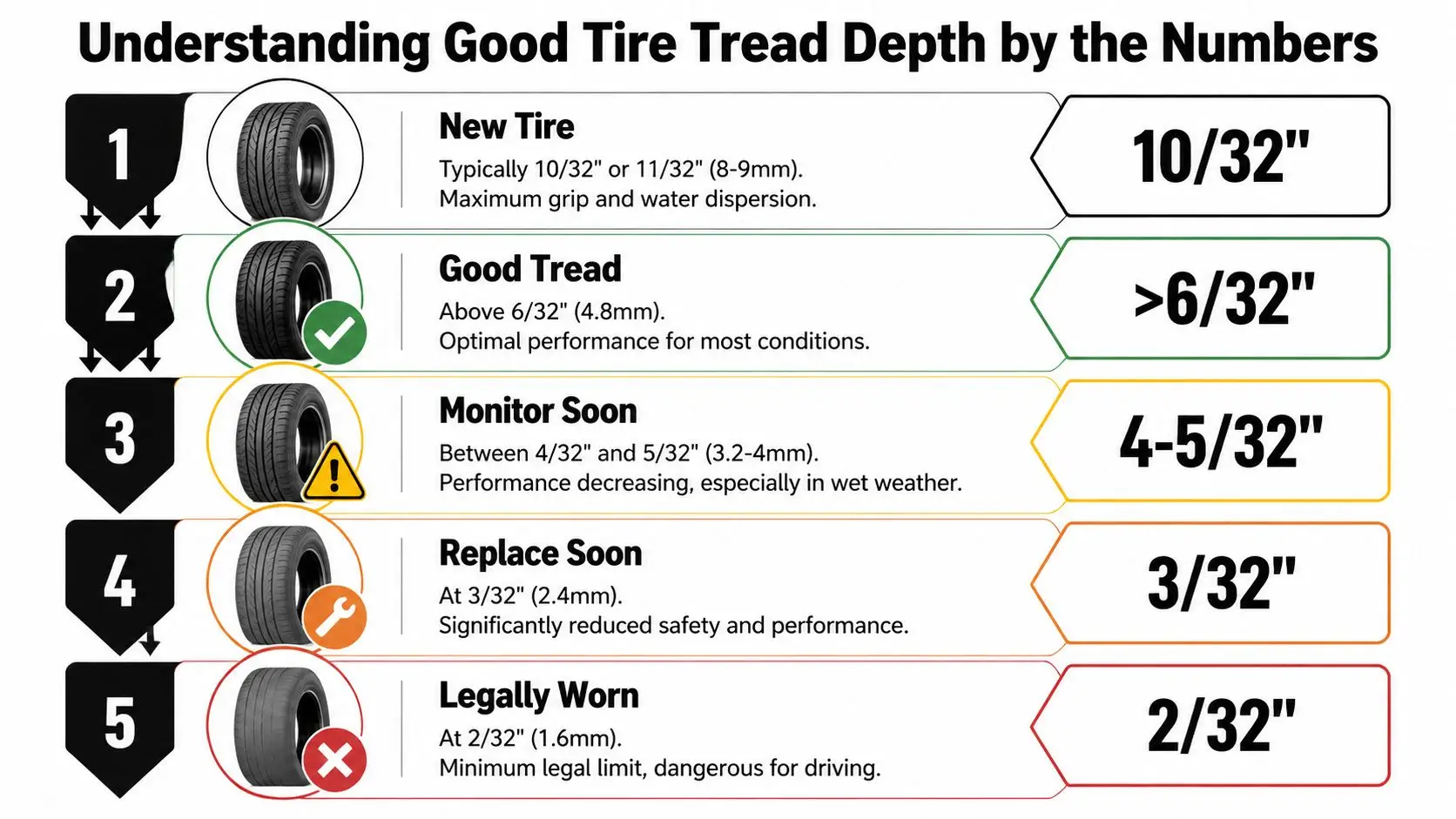
Tread depth is measured in 32nds of an inch, and those small numbers matter more than many Richardson drivers realize. A tire can still look usable from a few feet away and already be into the range where wet-road performance starts slipping.
For passenger cars, new tires often start with deeper tread than the average driver expects. Light trucks and vans usually start deeper still, especially if they are built for load carrying or longer service life. The legal replacement point is 2/32 inch, but that number is a bare minimum standard. It is not the point where most drivers still have a comfortable safety margin in Texas rain.
A practical way to read the numbers
In the shop, I tell customers to read tread depth in zones instead of asking for one magic number.
Quick rule:
6/32 and above is a healthy range for most daily driving in Richardson.
4/32 to 5/32 is the point where many drivers should start planning for replacement, especially before storm season or longer highway driving.
Below 4/32 is replacement territory for most commuters, family vehicles, and work vehicles that need dependable wet traction.
2/32 is the legal minimum, not a practical safety target.
What each range means
| Tread depth | What it means in practice |
|---|---|
| New tire range | Typical starting depth varies by tire type and intended use |
| 6/32 and above | Good working tread for most local driving, with better margin in rain |
| 4/32 to 5/32 | Mid-wear range. Still serviceable in some cases, but the safety cushion is shrinking |
| 3/32 | End-of-life range for most drivers. Replacement should already be scheduled |
| 2/32 | Legal minimum for passenger vehicles |
Why the right number depends on how you drive
A Richardson commuter who runs US-75 in heavy rain needs a different replacement plan than a fleet van that racks up miles in dry daytime service. The same goes for SUVs, half-ton trucks, and delivery vehicles that carry more weight. Heavier vehicles and higher-mileage use usually justify replacing earlier because the tire has less reserve when conditions get bad.
That is why I do not give every customer the same answer. If the tire is at 5/32, a lightly used local vehicle may have some time left. A highway commuter heading into another North Texas storm cycle should already be budgeting for tires. That earlier decision often costs less in the long run because it avoids running a tire all the way down to the legal limit and then being forced into a rushed replacement.
How Tread Depth Impacts Braking Hydroplaning and Control
You feel tread loss first in the rain. A tire can still look decent in the driveway and still give up a lot of wet-road grip on US-75, George Bush, or a soaked Richardson side street.
Tread grooves push water out of the way so the rubber can stay planted on the road. As those grooves wear down, the tire has less room to move water, and the safety buffer gets smaller.
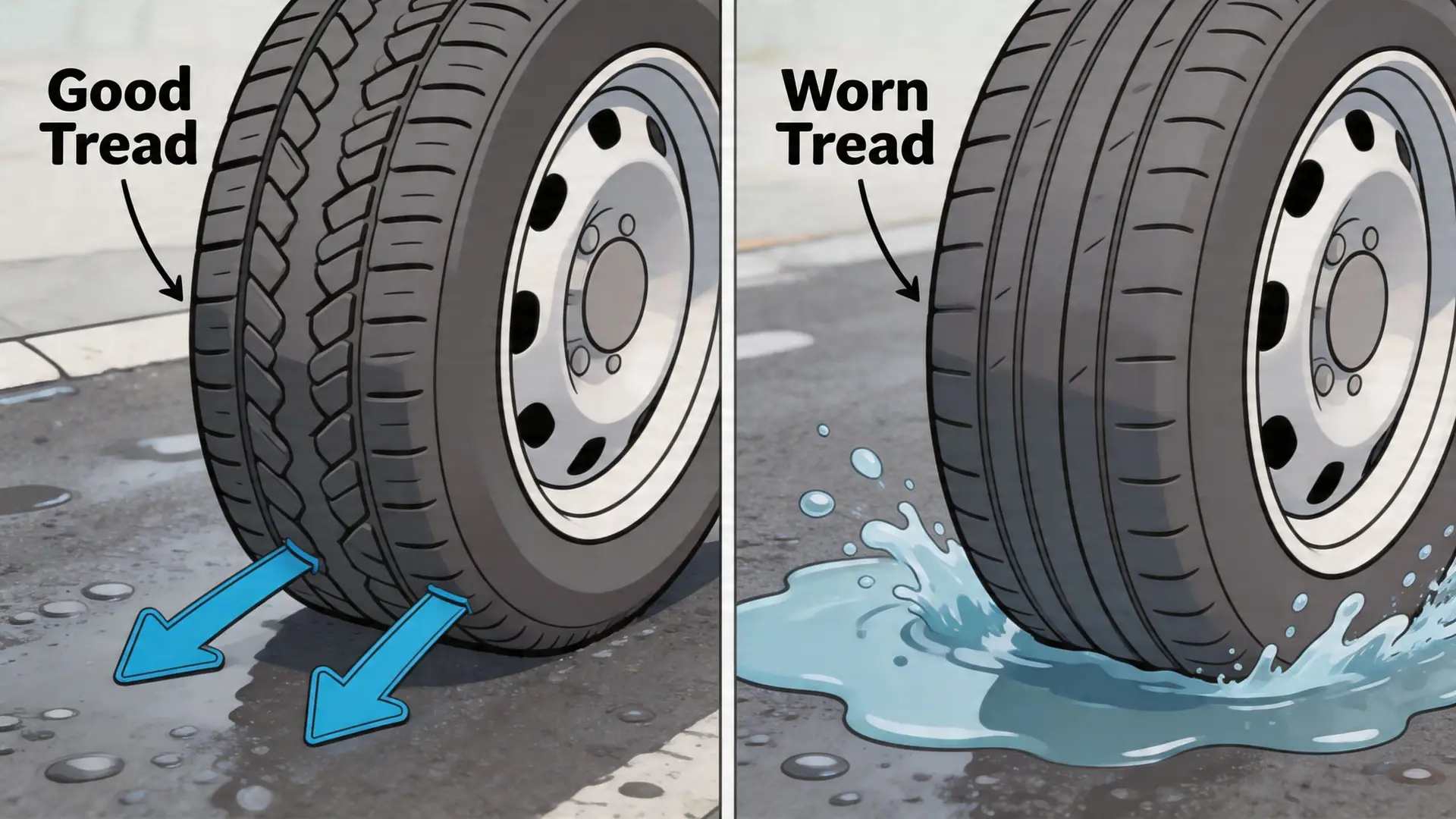
Firestone Complete Auto Care’s tread basics page explains the basic pattern clearly. As tread gets lower, wet traction drops, hydroplaning resistance drops, and the tire has a harder time clearing water at normal road speeds. That matters here because North Texas rain often comes hard and fast, with water collecting in wheel tracks and intersections before drainage catches up.
Braking usually gets worse before drivers expect it to. According to AAA tire testing, tires worn to 4/32 inch can need much more distance to stop on wet pavement than new tires. In practical terms, that means a car that feels fine on a dry afternoon can slide well past your normal stopping point during a sudden rain event.
I see that trade-off all the time in the shop. A customer wants to squeeze a few more months out of a set of tires, which can make sense on a lightly driven local vehicle in dry weather. It makes far less sense for a Richardson commuter, a family SUV, or a work truck that sees highway speeds in storm season.
Control also fades in predictable situations:
- Heavy rain at highway speed: the tire runs out of water-clearing capacity first.
- Hard braking at lights and intersections: wet stopping distance grows as tread depth drops.
- Standing water in ruts or low spots: the steering can feel light or delayed.
- Cold, wet mornings or light winter mix: the tire has less edge and channel depth to hold the road.
Vehicle type matters here too. A compact commuter car, a loaded half-ton truck, and a fleet van do not use the same amount of tread the same way. Heavier vehicles and high-mileage service use leave less room for error once the grooves get shallow.
Quiet tires are not always safe tires. If the tread is low, braking, hydroplaning resistance, and steering control can all be worse long before the tire looks completely worn out.
Three Easy Ways to Measure Your Tire Tread at Home
You can learn a lot about a tire in your own driveway. If your Richardson commute includes President George Bush Turnpike, Central Expressway, or wet frontage roads after a storm, a quick tread check can help you decide whether you still have usable life left or whether it is time to start planning for replacement.
Start with where you measure
Check more than one spot on each tire. I recommend looking at the inner groove, center groove, and outer groove, then repeating that pattern around the tire.
That matters because tires rarely wear perfectly evenly. A commuter car with too much air may wear the center faster. A truck or SUV with alignment issues may wear one shoulder first. On a fleet vehicle that racks up miles every week, one tire can fall behind the others long before the set looks worn at a glance.
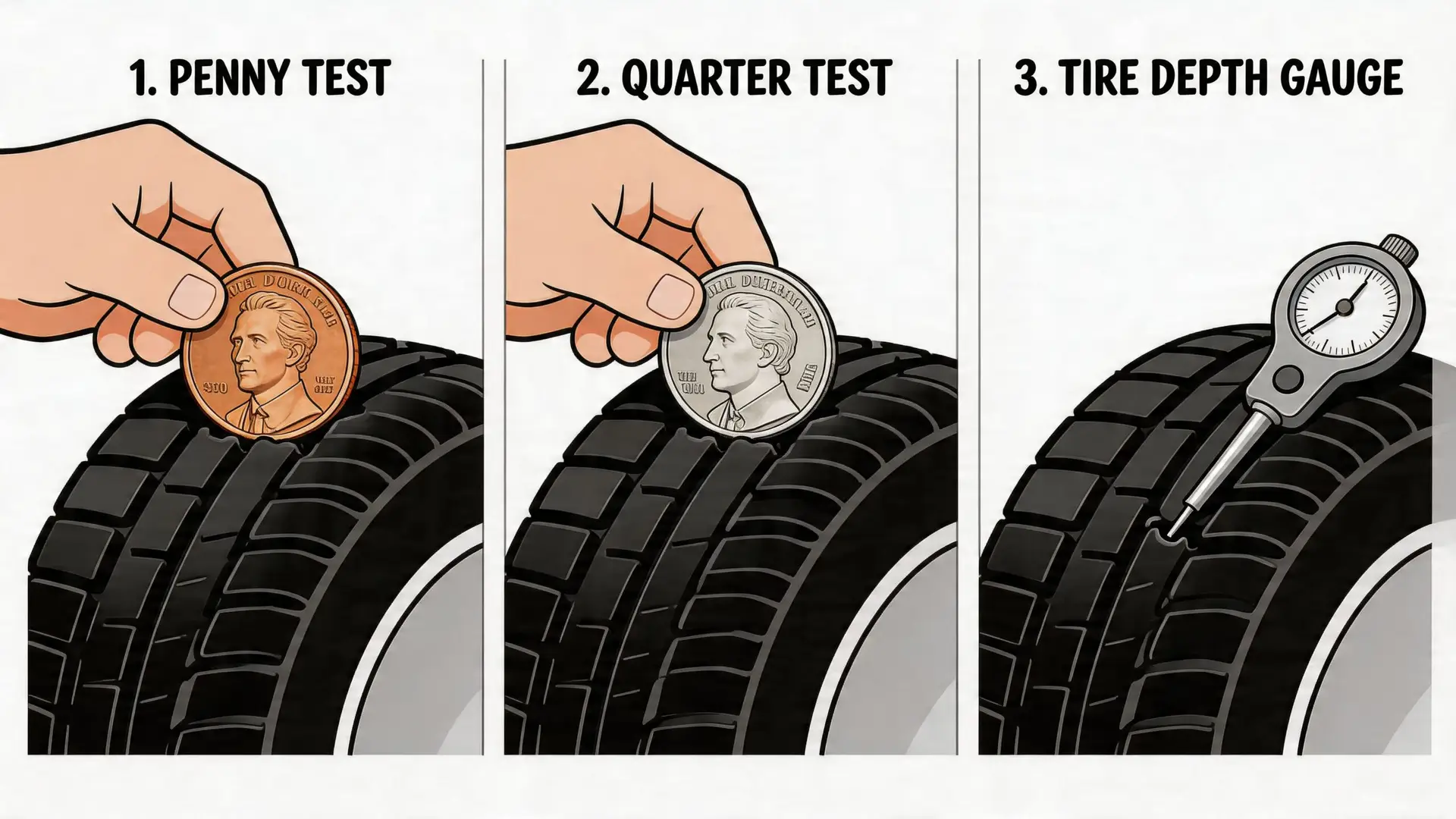
The penny test
The penny test is a quick way to catch a tire that is already near the end of its life. Insert a penny into a main tread groove with Lincoln’s head pointed down. If you can see all of Lincoln’s head, the tread is worn very low.
Use this as a red-flag check, not a planning tool. If a tire only passes the penny test by a hair, I would not call that a comfortable tire for heavy rain, highway commuting, or carrying family in Texas weather.
The quarter test
The quarter test gives you a better early warning. It helps you spot a tire that still looks usable but is starting to lose the tread depth you want for wet roads.
Be consistent with it. Check several grooves on every tire and compare the results side to side and front to rear. If one tire reads lower than the rest, that usually points to a wear pattern that needs attention, not just normal age. Catching that early can save money, especially if you are trying to budget ahead using this guide to the average price for new tires.
This video shows the process clearly:
The tread depth gauge
A tread depth gauge is the best at-home method because it gives an exact reading. They are inexpensive, easy to keep in the glove box, and much more useful than a coin if you want to track wear over time.
Place the base flat across the tread, set the probe into the groove, and read the measurement. Then check:
- Multiple grooves on each tire
- Several points around the circumference
- All four tires, plus the spare if you expect to rely on it
Measure the shallowest spot you can find. That is the number that matters.
A gauge also makes replacement timing easier to predict. For example, if a Richardson commuter drives a lot of highway miles and the front tires are wearing faster than the rear, gauge readings taken a month or two apart give you a realistic window for rotation or replacement. That is a better way to manage tire cost than waiting until one tire suddenly looks bad.
If you want a shop to verify what you found, a technician can do more than read depth. We also look for inner-edge wear, cupping, inflation issues, and alignment problems that a coin test will miss.
Why Texas Legal Limits Are Not Safe Limits
A Richardson driver can leave work on a dry road and hit standing water ten minutes later on US-75. In that situation, a tire that is still legal may already be giving up wet traction you need for braking and lane control.
Texas drivers hear 2/32 inch all the time, and that number gets treated like a safe target. It is not. As Tire Rack explains in its tread depth guidance, 2/32 inch is the legal minimum for passenger tires, while below 3/32 inch can fail a Texas safety inspection. More important for daily driving, wet-weather performance drops before a tire reaches the legal floor.
I tell customers to treat the legal limit as the point where time has run out, not the point where replacement planning should begin.
That matters even more here because Richardson driving is hard on marginal tread. Fast highway commuting, sudden summer storms, polished intersections, and long stretches of year-round all-season use leave less room for error than slow neighborhood driving. A commuter sedan, a family SUV, and a work truck may all be legal at the same tread depth, but they do not carry the same risk in the rain.
Vehicle use matters too. A local commuter who drives mostly city miles can often plan replacement earlier and avoid paying rush prices. A high-mileage driver or small fleet usually needs a wider safety margin because wet stopping distance and hydroplaning resistance become business problems, not just maintenance items. If you are trying to budget before tires become urgent, this guide to the average price for new tires in Richardson can help you time the expense instead of stretching worn tread too far.
Commercial vehicles are a separate case. Steer tires on commercial vehicles must meet a stricter minimum than passenger cars, and mixed-use trucks can fall under different rules than many owners expect. If a vehicle is used for business, it is smart to verify the standard that applies to that specific truck before assuming the passenger-car limit is enough.
A good replacement decision is based on how the vehicle is used in Richardson, how fast the tread is disappearing, and how much wet-weather margin you still have. The legal number is only the floor. It is not a safety plan.
Predicting and Extending the Life of Your Tires
Most drivers don’t ask about tread depth until replacement is close. The better question is earlier: how do you spot the trend before it turns into an urgent expense?
There isn’t a reliable universal wear-rate number you can apply to every vehicle. Driving style, road surface, alignment condition, inflation habits, load, and tire design all change how quickly tread disappears. What does hold true is that high-mileage drivers and fleet operators need a forecasting habit, and uneven wear makes that timeline much harder to predict, as noted in Utires’ discussion of tread wear planning.
How to forecast replacement without guessing
Use a simple log. Every time you check tread, write down the date, mileage, and readings for each tire. You don’t need a spreadsheet if you don’t want one. A note on your phone works fine.
Watch for three things:
- One tire dropping faster than the others: Often points to alignment, inflation, or suspension concerns.
- Front and rear wearing very differently: Common on vehicles that haven’t had regular rotations.
- Inner-edge or outer-edge wear: Usually more important than the average tread number because it tells you the tire may become unsafe early.
A practical maintenance routine can make forecasting much easier. During a rotation service, shops can record current tread readings and compare them over time. At Kwik Kar’s tire rotation guidance, you can see how rotation intervals fit into keeping wear more even.
What actually extends tire life
Some maintenance habits work. Others don’t.
What works:
- Regular pressure checks: Underinflation and overinflation both change the wear pattern.
- Consistent rotations: They help spread wear across all four tires instead of sacrificing one axle early.
- Alignment checks when the car pulls or the wheel is off-center: That’s often the hidden cause of rapid shoulder wear.
- Prompt repair of worn suspension parts: New tires won’t stay healthy if the hardware controlling them is loose.
What doesn’t work:
- Waiting until a tire looks obviously bald: By then the useful safety margin is gone.
- Replacing one worn tire without fixing the cause: The next tire often follows the same pattern.
- Judging by appearance alone: Tread depth needs a measurement, not a glance.
A good budgeting habit
For aging vehicles and work fleets, the smartest move is to plan replacement while the tires are still serviceable. That gives you time to compare tire options, schedule installation, and fix any alignment issue before it destroys the next set.
Drive Confidently with a Free Tire Check at Kwik Kar
A tire can feel fine on a dry afternoon in Richardson and still be a bad bet for the next hard rain on US-75.
That is why a tread check should answer more than one question. The goal is not just to find out whether the tire is legally worn out. It is to see how much safety margin you still have for your kind of driving, whether that means daily commuting, carrying work equipment, or keeping a small fleet on the road.
At Kwik Kar, an ASE-certified technician measures all four tires, looks at the inside and outside shoulders, and checks for wear patterns that point to alignment, inflation, or suspension problems. That gives you a practical replacement timeline instead of a guess based on appearance.
For commercial vehicles, tread standards can be stricter in some positions, as noted earlier. In the shop, though, the bigger question is usually operational, not legal. A fleet truck that barely meets the minimum may still need replacement sooner if it runs long miles in storms, carries heavy loads, or shows uneven wear that will shorten its remaining life.
If you are not sure whether your tires have a few safe months left or need attention now, stop by for a free tire check. You will leave with actual tread readings, a clear view of wear across all four tires, and straightforward advice for Richardson roads and Texas weather.
Frequently Asked Questions About Tire Tread
Do I need to replace all four tires at once
Not always. It depends on the vehicle, the condition of the remaining tires, and how close the tread depths are to each other. On some vehicles, replacing a pair is reasonable if the matching tires still have solid tread and even wear. On others, especially vehicles that are sensitive to tire diameter differences, replacing all four may be the better call. The safe answer comes from measuring all four and looking at the wear pattern, not guessing from appearance.
Does low tread depth affect gas mileage
It can, but tread depth is usually not the first tire issue I’d chase for fuel economy. Inflation pressure, alignment, and overall tire condition matter more day to day. Low tread is mainly a traction and safety problem. If a tire is wearing unevenly because of alignment or pressure issues, that can also hurt efficiency while shortening tire life.
What usually causes uneven tire wear
Uneven wear often points to a vehicle issue, not just an old tire. Common causes include poor alignment, incorrect air pressure, worn suspension parts, and missed rotations. The pattern matters. Center wear, edge wear, and one-sided shoulder wear usually mean different things.
If one part of the tire is worn out, treat the tire as worn out. The deepest groove on the tire doesn’t make the shallowest groove safer.
Is the penny test enough
It’s useful for spotting a tire that has reached the legal limit. It’s not the best way to judge whether you still have good wet-weather tread. A gauge is more accurate, and a professional inspection is better if you suspect uneven wear.
Should fleet owners check tread differently than commuters
Yes. Fleet vehicles need a more disciplined schedule because downtime, compliance, and liability all matter. A commuter may only need periodic checks. A fleet needs routine measurements and documentation, especially on steer tires and vehicles that carry load.
If you’d like a clear answer on your tread depth, tire wear pattern, or replacement timing, schedule a visit with Kwik Kar Oil Change and Auto Care. We’ll help you measure what matters and spot problems before they turn into a safety issue.