You notice it at a red light on Belt Line. The brake pedal feels a little softer than usual, or the brake warning light comes on for a second and then disappears. The car still stops, so it’s tempting to tell yourself you’ll deal with it later.
That’s how brake fluid problems get missed.
A lot of drivers watch pad thickness and listen for squeaks, but they don’t pay much attention to the brake fluid level until something feels wrong. That’s risky. Brake fluid is what carries the force from your foot to the brakes at each wheel. If the level is low, the fluid is contaminated, or the wrong fluid gets added, the whole system suffers.
A simple visual check is useful. It’s also the beginning. On newer vehicles, checking the reservoir is straightforward. On older vehicles, it can be less obvious and easier to contaminate by mistake. And the biggest danger of all, moisture in the fluid, often can’t be seen at a glance.
Why Your Brakes Depend on More Than Just Pads
A driver can have decent-looking pads and still have unsafe brakes.
That surprises people, but it is logical once you consider how the system works. Your foot pushes the pedal. The master cylinder moves brake fluid through the lines. That hydraulic pressure applies the brakes. If the fluid can’t do its job, the pads never get the pressure they need.
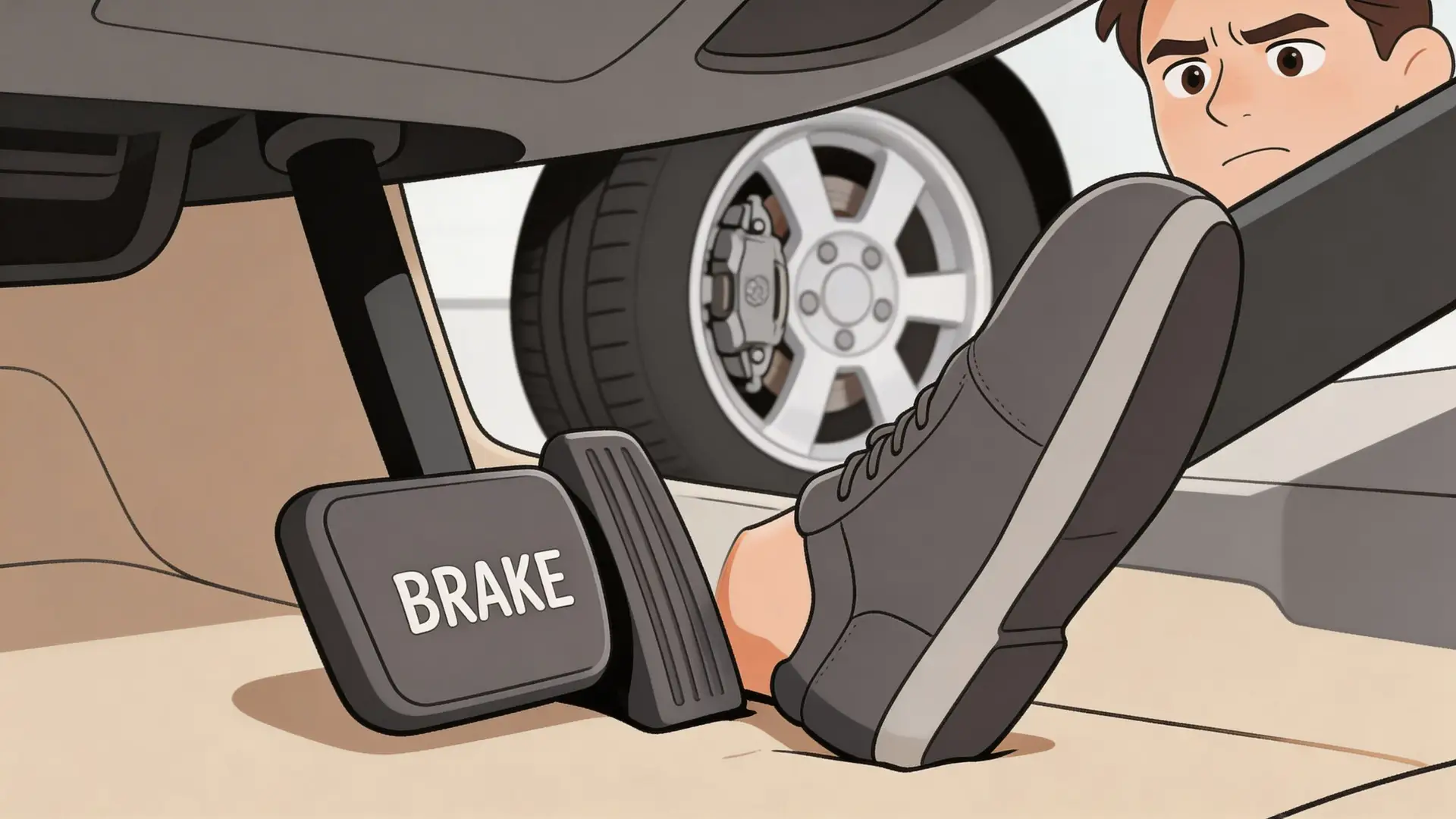
What drivers usually notice first
Many drivers don’t open the hood because they’re curious about brake fluid. They do it because something feels off.
Common first signs include:
- A soft or spongy pedal that travels farther than normal
- A warning light that comes and goes
- Less confidence in stop-and-go traffic because the brakes don’t feel as firm
- A pedal feel change after hard braking on a hot day or in heavy traffic
Those symptoms don’t always point to the same failure. That’s why guessing can get expensive fast.
Practical rule: If the brake pedal suddenly feels different, treat that as a safety issue first and a maintenance issue second.
Pads are only one part of the story
Pads wear out. Everyone knows that. What gets overlooked is that the brake system is hydraulic, and hydraulic systems depend on clean fluid at the correct level.
A quick reservoir check can tell you whether the fluid is between the marks, but it also gives you a clue about the condition of the rest of the system. A slowly dropping level may track with normal pad wear. A sudden drop is a different conversation entirely.
That’s why I tell neighbors the same thing I tell customers. Don’t reduce brake service to “do I need pads yet?” The better question is whether the entire system is still able to deliver firm, repeatable stopping power.
Why a visual check matters
Checking brake fluid level doesn’t replace professional brake service. It does help you catch problems earlier.
If you drive in Richardson traffic every day, you already know your brakes don’t get a gentle life. School runs, short trips, repeated stops, summer heat, and freeway merges all add stress. A thirty-second look at the reservoir can warn you that the system needs attention before the pedal gets scary.
That’s the point of this whole topic. Brake fluid isn’t an extra. It’s the hydraulic lifeline your brakes depend on every time you drive.
Your Step-by-Step Guide to Checking Brake Fluid
Checking brake fluid level is simple if you do it cleanly and don’t rush. The biggest mistakes happen when people open the reservoir carelessly, use the wrong fluid, or assume every vehicle uses the same style reservoir.
Start with the basics.
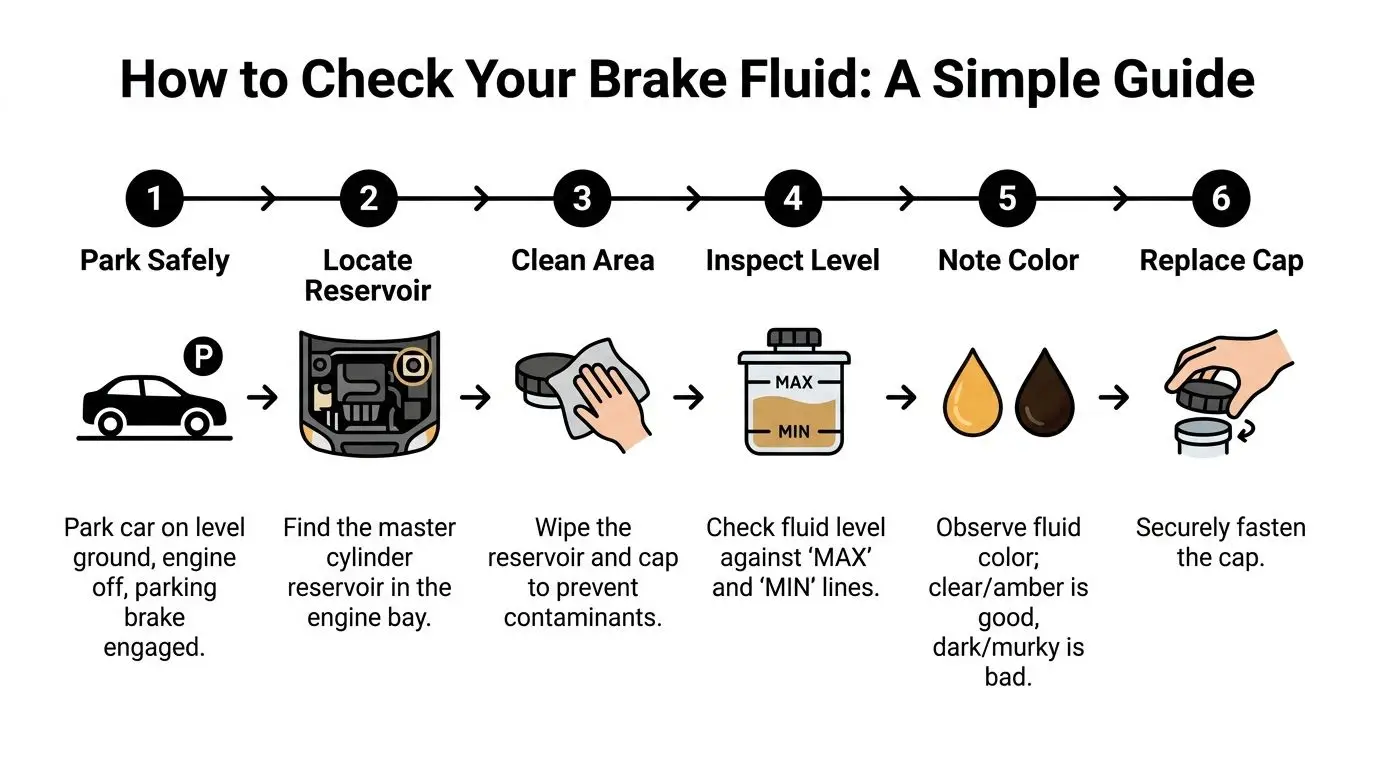
The safe way to begin
Use this order every time:
- Park on level ground. Turn the engine off and set the parking brake.
- Open the hood and find the master cylinder reservoir. It’s usually near the firewall on the driver’s side.
- Inspect before touching anything. Dirt around the cap matters.
- Clean the cap and surrounding area. Use a clean rag so debris doesn’t fall into the system.
If you want a broader under-hood routine along with this check, Kwik Kar’s guide on how to check car fluids is a useful companion.
Modern vehicles with translucent reservoirs
Most newer vehicles use a plastic reservoir that lets you check the level from outside. That’s the easy version.
Look for the MIN and MAX marks on the side. The fluid should sit between them. If it’s near the lower mark, don’t top it off and walk away. Low fluid is information. You need to know why it’s low.
For many modern cars, you don’t need to remove the cap just to check the level. In fact, if the reservoir is clear enough to read from outside, leaving it closed is better because it reduces the chance of contamination.
If the reservoir is translucent and readable, check first with the cap closed. Opening it just to look creates unnecessary risk.
Also pay attention to the fluid’s appearance. Clear to light amber is generally less concerning than fluid that looks dark or murky, but color alone doesn’t prove the fluid is safe. Moisture contamination often can’t be judged by eye.
Older vehicles with metal reservoirs
Older vehicles can be less DIY-friendly.
Some pre-1980s systems use opaque metal reservoirs instead of translucent plastic. Those often require opening a spring-loaded clamp or metal retainer to check the fluid directly. Existing content often skips this distinction, even though one cited summary notes that 40% of brake inquiries from vehicles over 10 years old involve confusion on reservoir access and ties that confusion to higher safety inspection failure rates for high-mileage vehicles in Texas markets (Quaker State brake fluid guide).
Here’s the right approach on an older setup:
- Clean first, then open. On an older cap, dirt likes to collect around seams and clamps.
- Use a steady hand on the clamp. Don’t pry aggressively and bend hardware.
- Keep the opening clean. Any grit that drops inside becomes part of the hydraulic system.
- Re-seat the cover carefully. A poor seal creates future problems.
With these systems, the check itself is often simple. The challenge is doing it without introducing contamination.
A quick visual comparison helps:
| Vehicle type | Reservoir style | Best checking method | Main risk |
|---|---|---|---|
| Modern vehicle | Translucent plastic | Read level against MIN and MAX from outside | Misreading level or topping off without diagnosis |
| Older vehicle | Opaque metal | Open carefully after cleaning cap and clamp area | Letting debris fall into the reservoir |
What to do after the check
If the level is in range and nothing feels off at the pedal, note it and move on. If the level is low, or you see staining around the master cylinder, don’t treat that as routine without more inspection.
This video gives a useful visual overview of the basic process:
A brake fluid level check is a smart habit. It’s not a diagnosis by itself. The moment the fluid is low, the pedal is soft, or the reservoir area looks suspect, the safest move is to have the full brake system inspected.
What a Low Brake Fluid Level Is Telling You
Low brake fluid isn’t a random event. It’s a clue.
The important part is reading that clue correctly. Some low-fluid situations point to routine wear. Others point to a leak that can put the car in a dangerous state quickly.
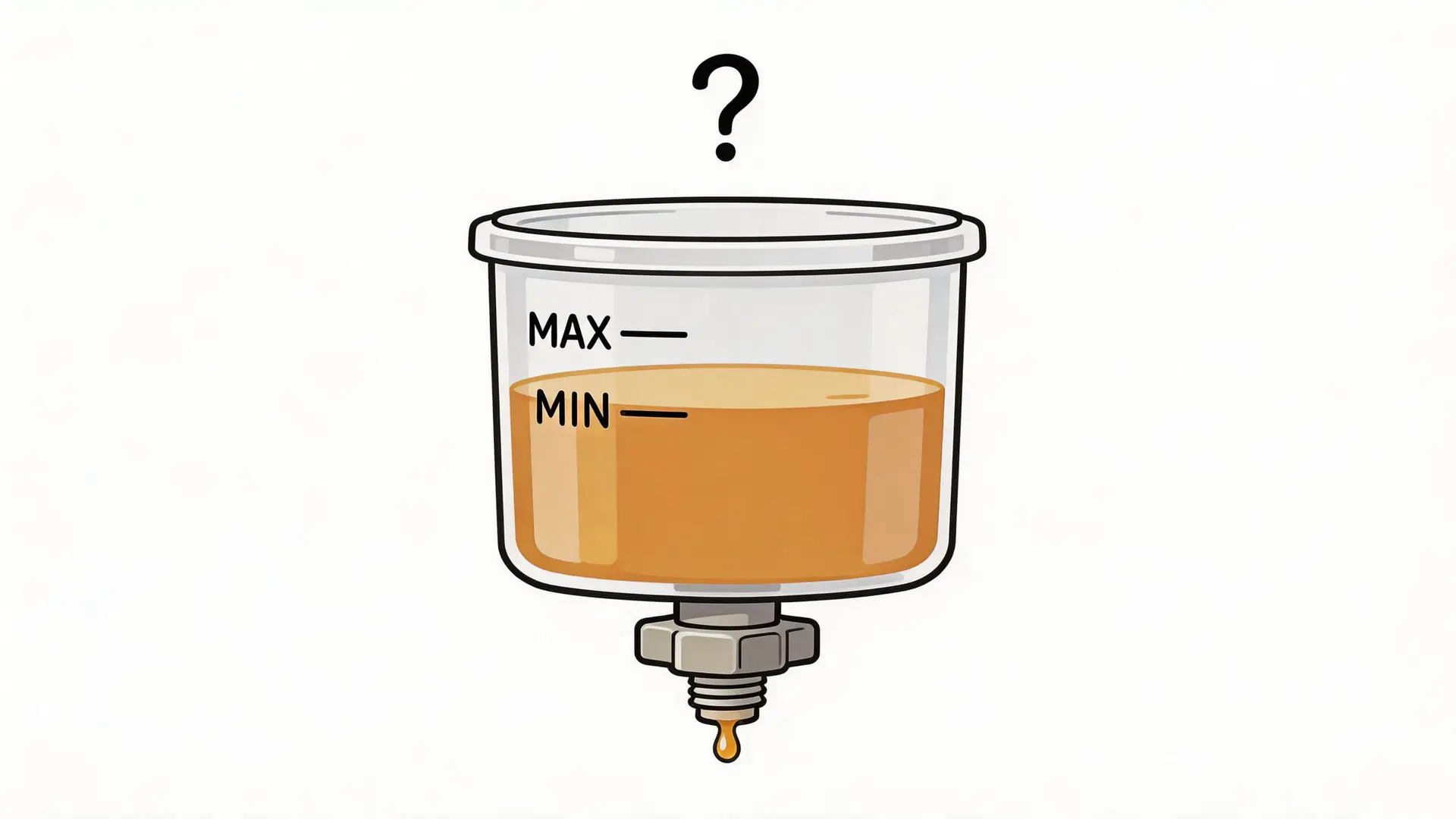
The normal explanation
A modest drop in brake fluid level often happens as the brake pads wear down.
As the friction material gets thinner, the caliper piston has to travel farther. That uses more fluid volume at the wheels and lowers the level in the reservoir. One brake service reference explains that low brake fluid typically signals worn brake pads for exactly that reason, while noting that the hydraulic system is sealed and should otherwise stay relatively stable (Sun Auto Service on signs and causes of low brake fluid).
That’s why topping off can sometimes hide useful information. If pad wear causes the low level, adding fluid without checking the brakes can mask a maintenance need that should be addressed properly.
The red-flag explanation
A sudden or significant drop is different.
That same service reference warns that a more abrupt loss of fluid can indicate:
- Damaged brake lines
- Internal seal failure
- Contamination-related issues
- Other leaks that need immediate inspection
If the system loses fluid quickly, don’t assume the car is still safe because the pedal works on the driveway.
A sealed hydraulic system shouldn’t need frequent topping off. If the level keeps falling, something is wrong.
What the pedal can tell you
A low brake fluid level often shows up at your foot before you confirm it under the hood.
Watch for:
- More pedal travel than usual
- A mushy feel instead of a firm, predictable stop
- A warning light paired with weak brake response
- A change that happened suddenly, not gradually
Those signs don’t tell you the exact failed part. They do tell you not to treat the issue casually.
The useful mindset is this. Low fluid isn’t the root problem. It’s evidence. Sometimes that evidence points to worn pads and a scheduled brake job. Sometimes it points to a leak, damaged line, or failing hydraulic component that shouldn’t wait.
The Hidden Dangers of Contaminated Brake Fluid
A brake system can have the right fluid level and still be unsafe.
That catches a lot of drivers off guard, especially on newer vehicles where the reservoir still looks clean through the plastic. Older vehicles can fool you in a different way. The fluid may look dark, but color alone does not tell you how much moisture it has absorbed or how far the boiling point has fallen.
Why contamination matters
Most passenger vehicles use glycol-based brake fluid, including DOT 3, DOT 4, and DOT 5.1. Those fluids absorb moisture over time. As noted in MISCO’s brake fluid maintenance explanation, that moisture lowers the fluid’s boiling point and can create a real safety problem under heat.
Here is the part many driveway checks miss. Brake fluid is supposed to transfer force as a liquid. Water-contaminated fluid is more likely to boil during repeated hard stops, downhill braking, towing, or heavy stop-and-go traffic. Once that happens, vapor can form in the system. Vapor compresses. Your brake pedal travel increases, pedal feel gets inconsistent, and stopping confidence drops right when you need the brakes to stay predictable.
What this feels like on the road
Contaminated fluid usually does not announce itself with a puddle under the car.
Instead, the warning can show up as a pedal that feels softer after the brakes get hot, a longer stop after several lights in traffic, or a vehicle that feels normal on a short trip but less stable on a long downhill stretch. On ABS-equipped vehicles, fluid condition matters even more because the hydraulic system depends on clean, stable fluid to react the way it was designed to.
That is why a quick look at the reservoir only goes so far.
What a visual check cannot confirm
A visual check can still help. It may show low fluid, obvious debris, or severe discoloration. It cannot confirm moisture content, boiling point, or internal corrosion risk.
That last point matters on both modern and older vehicles. On newer cars, contamination can affect expensive ABS components and tight-tolerance hydraulic parts before the fluid looks terrible. On older cars, moisture can contribute to rust inside steel lines, calipers, wheel cylinders, and other components that are already dealing with age. If you want a closer look at what contaminated fluid does inside the system, this guide on dirty brake fluid and why it deserves attention explains the issue in more detail.
When contaminated fluid becomes a bigger risk
The margin for error gets smaller under certain driving conditions:
- Frequent stop-and-go driving
- Towing or carrying heavy loads
- Long downhill grades
- Repeated higher-speed braking
- Vehicles with ABS or stability control systems
In the shop, this is why I do not treat brake fluid as a cosmetic item. If the fluid has absorbed moisture, topping it off does nothing to correct the problem. The level may look fine while the fluid itself is no longer doing its job safely.
Fresh-looking fluid can still be compromised. For anything beyond a simple visual check, professional brake service is the safest move.
The Decision DIY Top-Off or Professional Flush
There’s a narrow lane where a DIY top-off makes sense. Most brake fluid situations fall outside it.
If the level is modestly low, the vehicle is due for pads, the fluid is otherwise in good shape, and you know the exact fluid specification, a careful top-off may be reasonable as a short-term measure. That’s a lot of conditions. Most drivers don’t have enough information to verify all of them from the driveway.
When a top-off might be acceptable
A top-off is the least risky only when all of these are true:
- You confirm the correct DOT type on the cap. The specification matters.
- The level is modestly low. Not suddenly emptying or repeatedly dropping.
- There are no leak signs. No wet lines, no stained components, no soft pedal surprise.
- You understand it’s temporary. You’re not treating added fluid as a repair.
The fluid choice matters more than many people realize. A technical brake fluid reference stresses that you must match the DOT3, DOT4, or DOT5.1 specification listed on the reservoir cap, and that mixing glycol-based fluid with silicone-based DOT5 can cause system failure (Performance Racing Industry on brake fluid specs).
When topping off is the wrong move
A top-off is not the answer if:
- The level dropped suddenly
- The pedal feels spongy
- The fluid is old or questionable
- The reservoir area is dirty and opening it risks contamination
- You don’t know what fluid is already in the system
- The vehicle has ABS and calls for a specific modern fluid behavior
That same technical reference notes that DOT4 LV fluids offer better low-temperature viscosity for faster ABS response in modern vehicles. In other words, fluid choice can affect how well the system reacts, especially on newer cars with more complex brake control.
What a flush does that a top-off doesn’t
A top-off adds fluid. It doesn’t remove moisture, old fluid, trapped air, or contamination already in the lines.
A proper brake flush addresses the whole system. It replaces aged fluid with the correct specification, restores the hydraulic side of the brake system, and gives a technician the chance to inspect for leaks or component problems while the system is being serviced.
For drivers comparing options, brake flush service explains what that service is intended to accomplish and when it’s warranted.
Adding fluid is sometimes a stopgap. A flush is a maintenance and safety procedure.
One practical example. If a driver tops off a reservoir that was low because the pads were worn, the next brake job can become messier because fluid may overflow when caliper pistons are pushed back. If the level was low because moisture and age have degraded the fluid, topping off leaves the underlying problem untouched.
That’s why the safest advice is simple. If you’re doing anything beyond a clean visual check, a professional service approach is the better call.
Trust Kwik Kar for Complete Brake Safety in Richardson
You check the reservoir, the level looks a little low, and now you have a decision to make. Add fluid and hope for the best, or find out why the level changed in the first place. With brakes, the safer answer is to find the cause.
Brake fluid level, pad wear, leak detection, and moisture contamination all tie together. A quick look under the hood can catch an obvious problem, but it cannot confirm whether the system is safe under pressure, how the fluid is holding up inside the lines, or whether an older vehicle has seal or corrosion issues starting to show.
What professional testing adds
A trained technician checks more than the mark on the reservoir.
The job is to confirm whether the fluid level matches normal pad wear, spot signs of leaks, inspect the hydraulic system for seepage, and test fluid condition in a way a visual check cannot. On newer vehicles, that matters because ABS and stability systems depend on fluid that can respond correctly in tight internal passages and valves. On older vehicles, service history is often unclear, and aged seals or rusty components can turn a simple low-level concern into a repair issue.
Professional testing may include moisture and pH checks with test strips or electronic tools. Those results help show whether the fluid is still serviceable or whether it has absorbed enough moisture to justify a flush and a closer inspection.
Why local drivers benefit from full-system inspection
Richardson drivers deal with stop-and-go traffic, school runs, highway commuting, and summer heat. All of that puts steady demand on the brake system. If the vehicle is older, the trade-off gets more complicated. A top-off may raise the fluid level today, but it can also hide the reason it dropped and delay needed repair.
At Kwik Kar Oil Change and Auto Care, brake inspections and fluid service are handled by ASE-certified technicians using state-of-the-art equipment, with support from CARFAX, RepairPal, and NAPA AutoCare standards. That matters when a low brake fluid level could point to worn pads, a hydraulic leak, fluid breakdown, or more than one problem at the same time.
The primary value is the inspection that happens with the service. That is how drivers get a clear answer instead of a guess.
When to stop checking and start scheduling
Schedule brake service if any of these apply:
- The brake fluid level is below normal
- The pedal feels soft or inconsistent
- The warning light came on
- You drive an older or high-mileage vehicle and aren’t sure of fluid history
- You’re trying to decide whether the car needs a top-off, a flush, or repairs
Practical details matter too. Clear estimates, convenient scheduling, and a comfortable waiting area make it easier to take care of brake concerns before they become safety problems. Kwik Kar also offers discounts for military, first responders, and healthcare workers.
Use your brake fluid level check as an early warning. For anything beyond that simple visual step, professional service is the safer move.
If your brake pedal feels different, your brake fluid level looks low, or you just want a professional answer before a small issue turns into a safety problem, schedule an inspection with Kwik Kar Oil Change and Auto Care. A proper brake check can tell you whether you’re looking at normal wear, contaminated fluid, or a hydraulic problem that needs immediate attention.