A lot of drivers have heard a simple rule: electric power steering does not use fluid.
That rule is helpful, but it is not complete. Some vehicles sold or described as “electric” use a middle-ground setup that still depends on fluid. If you miss that detail, you can skip maintenance your steering system needs, or pay for a fluid service your car does not need at all.
I see this confusion all the time with daily commuters, family vehicles, and older higher-mileage cars. The good news is that you do not need an engineering degree to sort it out. You just need to know which steering system your vehicle has, what symptoms matter, and when to get it checked before a small issue turns into a big repair.
The Big Question About Electric Power Steering Fluid
Do electric steering systems need fluid?
Sometimes no. Sometimes yes.
That sounds slippery, but it is the honest answer. Traditional fully electric power steering, often shortened to EPS, uses an electric motor to help you turn the wheel. That setup does not use power steering fluid. But some vehicles use a hybrid setup called electro-hydraulic power steering, or EHPS, and that system does use fluid.
The reason people get tripped up is simple. Consumer advice often stops at “electric steering has no fluid.” A more accurate explanation is that some modern vehicles blend electric and hydraulic parts, so the label “electric” does not always mean “fluid-free.” That customer confusion is specifically noted in BG’s discussion of electric versus fluid-dependent steering systems.

Why this matters in real life
If your vehicle has a true EPS system, searching for “electric power steering fluid” can send you down the wrong path. You may waste time hunting for a reservoir that does not exist.
If your vehicle has EHPS, the opposite mistake is worse. You may assume no fluid service is needed, let the fluid degrade, and end up with steering problems that could have been prevented.
Quick takeaway: The right first question is not “Is my steering electric?” It is “Does my steering system still use hydraulic assist anywhere in the chain?”
A simple way to think about it
Think of steering assist like opening a heavy gate.
- Manual steering is opening the gate with your own strength.
- Hydraulic steering is using fluid pressure to help push.
- Electro-hydraulic steering is using electricity to run the helper that creates that fluid pressure.
- Full EPS is skipping the fluid helper and using an electric motor directly.
Same goal. Different hardware. Different maintenance needs.
That is why the phrase electric power steering fluid confuses people. In one vehicle, it is irrelevant. In another, it is exactly the fluid that keeps the system working properly.
From Muscle to Microchips The Four Types of Steering Systems
Steering systems evolved in stages. The easiest way to understand them is to compare them to kitchen tools.
A hand whisk works, but it takes effort. A stand mixer does the work with a motor. A hybrid gadget might still use gears, oil, and a motor together. Steering followed a similar path.
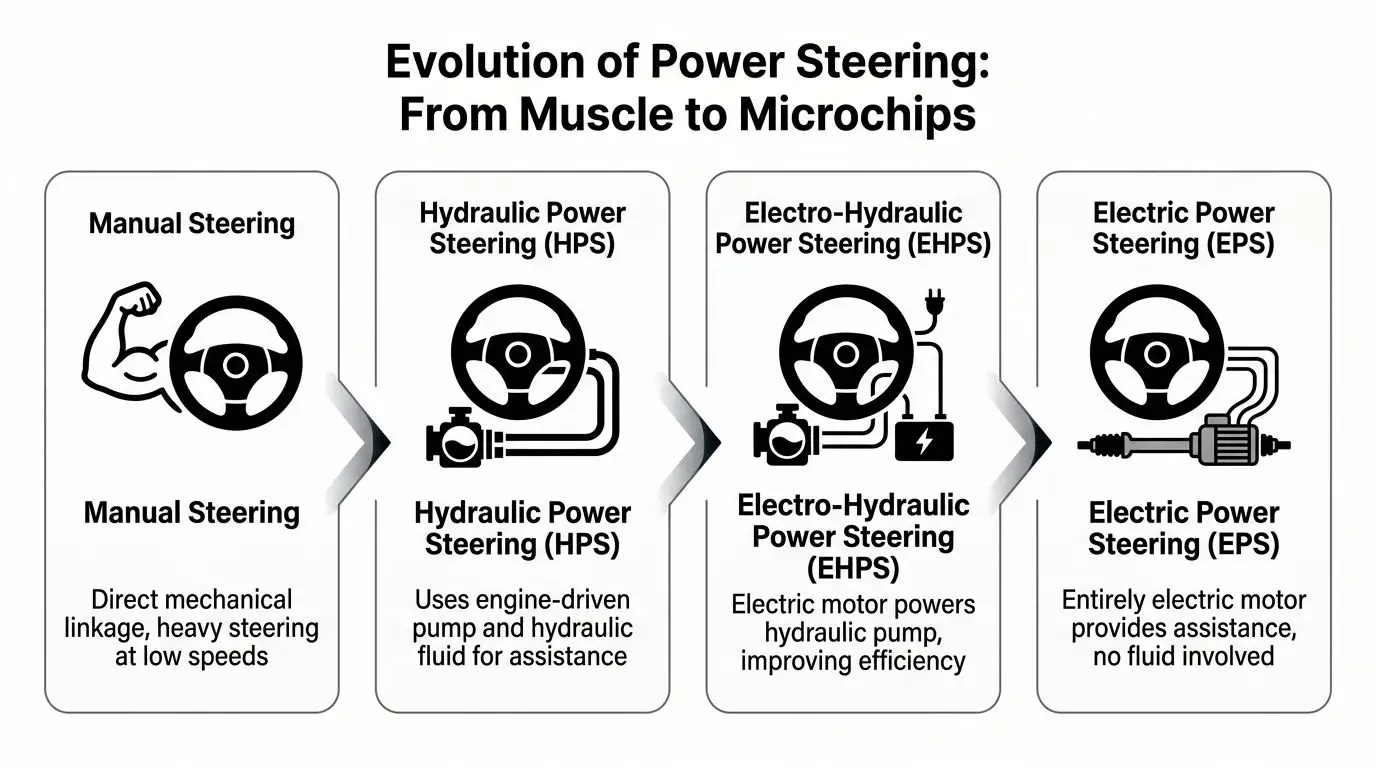
Manual steering
Older manual steering systems have no assist. The steering wheel connects mechanically to the steering gear and front wheels.
You feel everything. Parking takes more effort, especially at low speed.
There is no power steering fluid because there is no power assist system.
Hydraulic power steering
This is the classic setup many drivers know. The engine drives a pump. That pump moves hydraulic fluid through hoses and valves to help turn the steering gear.
If you grew up hearing a steering pump whine or seeing reddish or amber fluid under a car, this is the system you were probably dealing with.
Hydraulic power steering depends on the condition and level of its fluid. Wrong fluid, dirty fluid, or a leak can lead to noise, heavy steering, and pump wear.
Electro-hydraulic power steering
This is the system that causes the most confusion.
With EHPS, the vehicle still uses hydraulic assist and fluid, but the hydraulic pump is powered by an electric motor instead of being driven directly by the engine. So yes, it is more electric than old-school hydraulic steering. But no, it is not fluid-free.
Some systems from manufacturers including Toyota, GM, and Chrysler use this blended approach. Specialized EHPS fluids are engineered for high-pressure service, and one cited benchmark is Brookfield viscosity at -40°C below 30,000 cP to maintain pumpability during cold starts and help prevent hydraulic lock-up, as described in this EHPS fluid technical reference from WH Lubricants.
Fully electric power steering
A true EPS system uses an electric motor mounted on the steering column or rack to provide assist. There is no hydraulic pump, no hydraulic hoses, and no power steering fluid reservoir.
This design helps automakers cut weight and improve efficiency. It also integrates well with driver-assistance features.
If this is what your vehicle has, adding or changing “electric power steering fluid” is not part of routine maintenance because there is no steering fluid to service.
Quick comparison table
| System type | Uses fluid | Main assist source | Common owner confusion |
|---|---|---|---|
| Manual steering | No | Driver effort | Feels heavy by design |
| Hydraulic power steering | Yes | Engine-driven hydraulic pump | Fluid leaks and pump noise |
| Electro-hydraulic steering | Yes | Electric motor powering hydraulic pump | Called “electric” but still needs fluid |
| Electric power steering | No | Electric motor at column or rack | Owners search for fluid that is not there |
Tip: If your vehicle sits in the middle ground, fluid quality matters as much as fluid level. EHPS systems are less forgiving when the wrong fluid is used.
Does Your Electric Steering Need Fluid A Simple Check
If you want a practical answer for your own vehicle, skip the forum arguments and do a basic under-hood check.
You are looking for one thing: a power steering fluid reservoir.
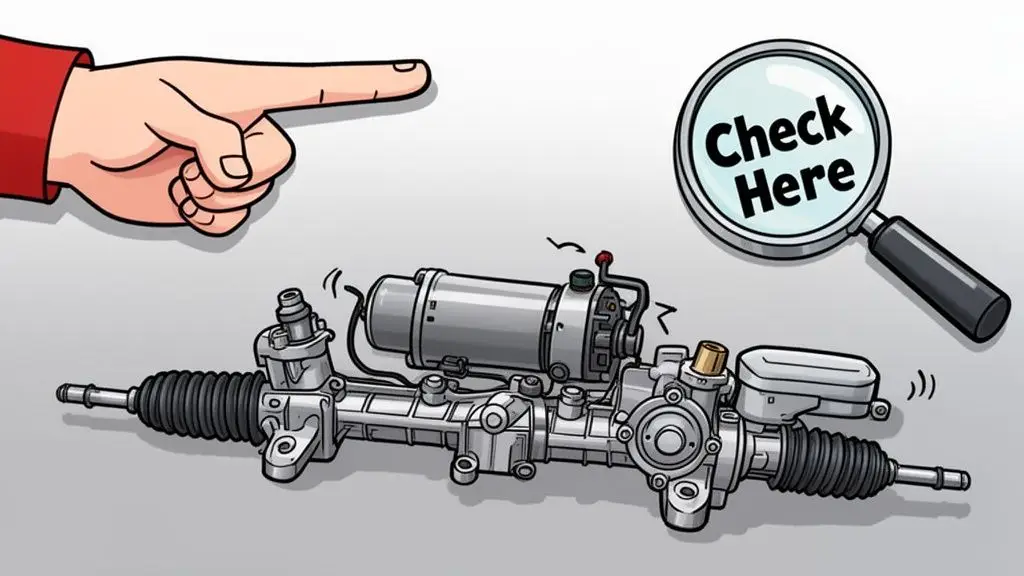
What to look for under the hood
On vehicles with hydraulic or electro-hydraulic steering, the reservoir is usually a small plastic or metal container with a cap. The cap may say Power Steering, PSF, or show a steering wheel symbol.
You may also see fluid level marks on the side of the container. Some are translucent, so you can check the level without opening them.
If you see a reservoir and fluid lines related to steering assist, your system uses fluid. That means your vehicle does not have a fully fluid-free EPS setup.
If you do not see a reservoir
No reservoir is a strong clue that the vehicle uses full electric power steering.
In that case, the steering assist comes from an electric motor and control module, not hydraulic pressure. A steering problem would be diagnosed more like an electrical or electronic issue than a fluid issue.
A short driveway checklist
Use this as a quick filter:
- Open the hood: Look near the engine bay edges and around the accessory area for a labeled fluid reservoir.
- Read the owner’s manual: Search “power steering” or “steering fluid.”
- Look underneath carefully: Hydraulic and EHPS systems may show signs of fluid seepage around hoses or components.
- Do not guess from the word electric: A vehicle can still use fluid in a hybrid steering design.
- Ask for a visual confirmation: A good shop should be able to show you whether your vehicle has a reservoir, pump, hoses, or a direct electric rack.
Neighbor-to-neighbor advice: If you are not sure what you are seeing, do not top off random fluid. Using the wrong product can create a bigger problem than low fluid.
One more clue
Some owners search for “electric power steering fluid” because the steering feels heavy and they assume fluid must be low. That logic only works if the system uses hydraulic assist.
A true EPS problem will not be fixed by adding fluid. An EHPS problem might. The key is identifying the hardware first.
Telltale Signs Your Steering System Is In Trouble
When steering systems start acting up, they usually warn you in ways you can feel, hear, or see.
A driver often notices the problem first in a parking lot, not on a repair estimate. The wheel gets heavier. A noise shows up. The steering starts feeling less predictable.

Signs common with hydraulic and electro-hydraulic systems
These systems often complain in mechanical ways.
- Whining when you turn: You back out of a parking spot and hear a rising whine as the wheel turns. That can point to low fluid, aerated fluid, pump strain, or internal wear.
- Heavy steering at low speed: Parallel parking suddenly feels like turning the wheel through wet cement. Hydraulic assist may be weak or inconsistent.
- Fluid spots under the vehicle: Red or amber fluid under the front area can mean a leak from a hose, rack, pump, or seal.
- Jerky assist: The wheel may feel smooth one second and resistant the next, which can happen when fluid is degraded or air gets into the system.
If you also notice vibration through the steering wheel, that can overlap with tire, suspension, or steering causes. This guide on what causes steering wheel vibration is a helpful companion when the symptom is not clearly fluid-related.
Signs more common with full EPS systems
Fully electric systems tend to fail differently.
You may not see a leak or hear a pump. Instead, the symptoms are often tied to electronics, sensors, or the assist motor itself.
Watch for these:
- Warning light on the dash: An EPS or steering warning light is one of the clearest clues.
- Sudden loss of assist: The wheel still turns, but it takes much more effort than normal.
- Poor return to center: After a turn, the steering wheel may not unwind naturally.
- Inconsistent steering feel: The vehicle may feel light one moment and strangely heavy the next.
A short visual can help if you have seen that warning light appear:
When not to keep driving
A minor noise can sometimes wait for a scheduled inspection. A major steering change should not.
Stop and get the vehicle checked promptly if:
- The wheel becomes suddenly hard to turn
- A steering warning light comes on and steering feel changes
- You see active fluid leaking
- The steering binds, jerks, or feels unpredictable
Safety first: If steering assist changes abruptly, do not treat it like an inconvenience. Steering problems can change how the car responds in traffic, during parking, or in an emergency lane change.
Professional Steering Service What to Expect
A proper steering diagnosis starts with identifying the system type. That determines whether the work is fluid service, electrical diagnosis, or both.
This is important because the market for EPS-related fluid service is not small or niche. The global electric power steering fluid market was valued at approximately USD 12.5 billion in 2023, and that scale reflects how common electro-hydraulic applications still are. The same market summary notes that improper maintenance can contribute to failures costing $500-$1,500 in repairs according to DataIntelo’s electric power steering fluid market report.
What a shop does on fluid-based systems
On a hydraulic or EHPS system, a technician usually checks:
- Fluid condition: Clean fluid looks different from fluid that is dark, contaminated, or burnt.
- Fluid level: Low level can point to leakage or neglect.
- Hoses and seals: A damp hose or rack boot can reveal where fluid is escaping.
- Pump operation: Noise, pressure delivery, and assist consistency matter.
- Correct specification: Not every power steering fluid is interchangeable.
If the fluid is degraded, the fix may be a flush and refill with the correct product. If a leak or failed component is present, the system needs repair before fresh fluid is added.
If you want a fuller picture of what that service involves, this explanation of what a power steering flush is breaks down the process clearly.
What a shop does on full EPS systems
A true EPS system gets a different workflow.
Instead of checking a reservoir, the technician will inspect the steering rack or column assist unit, wiring, battery and charging health, and use a scan tool to read steering-related trouble codes from the control module.
That diagnosis may include:
| System area | What the technician checks |
|---|---|
| Steering control module | Fault codes and communication issues |
| Assist motor | Proper operation and response |
| Sensors | Steering angle and related inputs |
| Electrical supply | Voltage support and connection quality |
| Mechanical linkage | Binding, wear, or external steering issues |
What you should expect as a customer
You should expect three things from any steering service visit.
First, system identification. The shop should tell you whether the vehicle is hydraulic, electro-hydraulic, or fully electric.
Second, evidence. If fluid is dirty, leaking, or incorrect, they should be able to show you. If an EPS module has stored faults, they should explain what was found.
Third, clear next steps. That might mean a fluid service, leak repair, electrical diagnosis, or a recommendation to monitor a condition.
Good steering service is not guesswork. It is diagnosis first, then the right repair.
Smart Maintenance Habits for Steering System Longevity
Most steering repairs get expensive for one reason. Drivers wait until symptoms become obvious.
A better approach is boring, and that is good news. The boring habits usually save the most money.
Use the exact fluid your system calls for
This point gets overlooked constantly. There are no official industry-wide API standards for power steering fluid quality, so “power steering fluid” on the label does not automatically mean it is right for your vehicle. Underhood Service notes that cheap or low-quality fluid can accelerate wear on pumps and racks, with those components costing $400-$2,000+ to replace. The same source also warns that neglected maintenance lets fluid degrade, forcing pumps to work harder and fail sooner in its discussion of why power steering fluids are not all created equal.
That means the right fluid is not a luxury item. It is part of protecting expensive hardware.
Follow service intervals if your system uses fluid
For vehicles with hydraulic or electro-hydraulic steering, fluid is not lifetime magic. It ages. It gets contaminated. Its protective qualities fall off.
If your owner’s manual lists a service interval or fluid specification, follow it. If the manual calls for a specific synthetic or manufacturer-approved fluid, do not substitute based on price alone.
Keep stress off the system
A few driving habits reduce steering strain whether your vehicle uses fluid or full EPS.
- Avoid dry steering: Turning the wheel hard while the car is stopped puts extra load on steering parts and tires.
- Keep tires inflated properly: Low tire pressure makes the steering system work harder.
- Do not ignore noise or stiffness: Small symptoms are cheaper to diagnose than full failures.
- Inspect during routine service: A quick look during normal maintenance often catches seepage or wear early.
For a broader look at keeping vehicle fluids on schedule, this guide to auto fluid change service is worth a read.
Practical rule: Saving a little money on fluid or delaying a check can cost much more when a pump, rack, or related component has to be replaced.
Your Trusted Steering Experts in Richardson TX
Steering problems are frustrating because they blur together. One vehicle has no steering fluid at all. Another has an electro-hydraulic setup that absolutely depends on the right fluid. To a driver, both may feel “hard to steer.”
That is why accurate diagnosis matters so much.
If your vehicle uses fluid, quality matters. High-quality synthetic power steering fluids are formulated with shear-stable viscosity and a viscosity index of 162-199, which helps prevent pump cavitation and wear. The same technical information notes benefits such as seal conditioning, leak reduction, and reliable cold-start performance in Red Line’s power steering fluid product data.
For Richardson drivers, the best shop is the one that can sort out the middle ground without guessing. That means technicians who know the difference between hydraulic steering, EHPS, and full EPS. It also means a shop that can explain what it found in plain English.
Kwik Kar Oil Change and Auto Care in Richardson brings that kind of approach. The team includes ASE-certified technicians, and the shop is backed by CARFAX, RepairPal, and NAPA AutoCare certifications. Drivers also appreciate the local focus, transparent estimates, and the discounts offered for military, first responders, and healthcare providers.
If your steering feels heavy, noisy, inconsistent, or just different than it used to, get it checked before the problem grows. A good diagnosis protects both your safety and your wallet.
If you want a clear answer on whether your vehicle needs electric power steering fluid, schedule an inspection with Kwik Kar Oil Change and Auto Care. We can identify your steering system, check for leaks or warning codes, and recommend the right service so you can drive Richardson with confidence.