Check Engine Light Flashing? Here’s What to Do Right Now

A flashing check engine light means your engine is misfiring right now, dumping unburned fuel into a catalytic converter that can hit failure temperatures within minutes. Slow down, kill the air conditioning, and get to a safe stop as soon as you can, then shut the engine off. If the light keeps flashing on restart, call for a tow. Driving through it is the single most expensive decision you can make.
TL;DR:
- Ignoring a flashing check engine light risks immediate catalytic converter failure due to unburned fuel and severe overheating.
- Drivers should slow down, turn off the AC, and stop safely within a mile to prevent engine or converter damage.
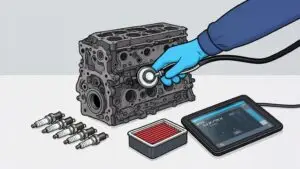
- Reading the diagnostic trouble codes before repair helps identify whether the issue stems from spark plugs, coils, injectors, or mechanical faults.
- Continuous driving beyond the safe stop significantly increases repair costs, with converter replacement often costing several times more than ignition repairs.
- Certified diagnostics and code-specific repairs are essential to avoid unnecessary parts replacement and to ensure proper vehicle repair.
Table of Contents
- What a Flashing Check Engine Light Actually Means
- What to Do the Moment the Light Starts Flashing
- Common Causes Behind a Flashing Light
- Reading the Codes: What P0300 and Friends Tell You
- Why Every Extra Mile Gets Expensive Fast
- Is It Ever OK to Drive a Short Distance?
- Why Certified Diagnostics Beat Guesswork
- Get Your Flashing Check Engine Light Diagnosed Today
- Sources
- FAQ
What a Flashing Check Engine Light Actually Means
Your car’s onboard diagnostics system, formally called OBD-II, uses the check engine light as a severity signal, not just a warning. A steady light usually means a stored code tied to something gradual: a loose gas cap, an aging oxygen sensor, an emissions component drifting out of spec. Nothing urgent is happening at that moment.
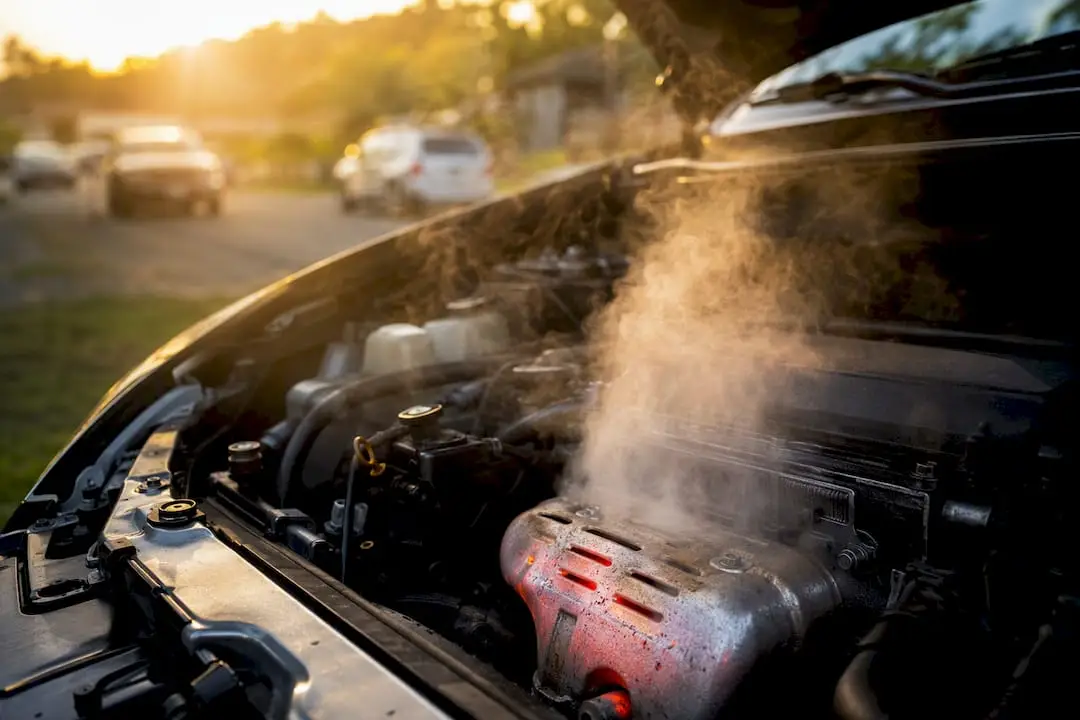
Flashing is different. It’s the computer telling you a misfire is happening as you drive, cylinder by cylinder, right now. Raw, unburned fuel is passing straight into the exhaust system instead of combusting where it should. That fuel meets your catalytic converter, where temperatures spike well beyond normal operating range. A steady light says “get this looked at soon.” A flashing one says “stop.”
What to Do the Moment the Light Starts Flashing
Treat the next five minutes as damage control. Here’s the order that protects both you and your engine:
- Ease off the accelerator and turn off the AC. Lower engine load reduces how hard the misfiring cylinders are working.
- Find the nearest safe spot within a mile or two — a parking lot, a wide shoulder, a gas station. Do not push for a lot farther away just because it’s more convenient.
- Shut the engine off completely once you’re stopped. Give it a few minutes before restarting.
- Restart and watch the light. If it comes back on steady or stays off, you may be able to limp to a nearby shop at low speed. If it flashes again immediately, stop the test there.
- Call for a tow if flashing persists. This is not the moment to gamble on making it home.
If you must move the car, keep the distance and speed minimal and avoid hills and hard acceleration. Anything beyond that is a bet against your catalytic converter, and the odds aren’t in your favor.
Pro Tip: Keep a cheap OBD-II code reader in your glove box. Reading the code before you call for help means the tow driver or shop already knows what they’re dealing with, which can shave real time off your repair.

Common Causes Behind a Flashing Light
Misfires don’t come from one source. The diagnostic code narrows things down, but the usual suspects fall into a predictable list:
- Worn spark plugs or failing ignition coils — often the cheapest fix, and the most common cause of random misfires.
- Fuel injector problems — a clogged or failing injector starves or floods a cylinder.
- Vacuum leaks — unmetered air throws off the fuel mixture enough to trigger a misfire code.
- Bad MAF or O2 sensors — feeding the computer wrong data leads it to miscalculate fuel delivery.
- Low cylinder compression — a more serious mechanical issue, sometimes tied to worn rings or a failing valve.
- Damaged wiring or connectors — intermittent flashing that comes and goes often points here.
Watch for a rough idle, noticeable shaking through the cabin, a sudden loss of power, popping or backfiring, or a sulfur smell from the exhaust. A whiff of rotten eggs usually means the catalytic converter is already under stress.
Spark plugs and coils typically run in the range of a routine maintenance bill. Fuel system repairs and catalytic converter replacement live in a different cost bracket entirely, often several times higher. That gap is exactly why reading the stored code first matters more than guessing. Replacing plugs on a hunch when the real problem is a failing injector wastes money and buys you nothing but a second repair bill.
Reading the Codes: What P0300 and Friends Tell You
Every OBD-II vehicle built since 1996 has a diagnostic port, usually tucked under the dashboard near the steering column. Plug in an inexpensive code reader, or ask a parts store for a free scan, and you’ll pull a code in under a minute.
- P0300 means random or multiple cylinder misfires, often pointing to a system-wide issue like fuel quality or a vacuum leak.
- P0301 through P0308 each point to a specific cylinder, which usually narrows the problem to that cylinder’s plug, coil, or injector.
- P0171 or P0174 indicate a lean fuel mixture, frequently traced to a vacuum leak or a failing sensor.
A single-cylinder code like P0302 is often a DIY-friendly fix: swap the coil or plug on that cylinder. A random misfire code paired with a rough idle and no obvious plug wear points toward something a mechanic needs to isolate, especially if converter damage is already a possibility. Write down the exact code and every symptom you noticed before anyone touches a wrench.
Pro Tip: Note whether the misfire happens at idle, under acceleration, or both. That detail alone can point a technician toward the fuel system versus the ignition system before the car’s even on the lift.
Why Every Extra Mile Gets Expensive Fast
Unburned fuel reaching the catalytic converter doesn’t just pass through. It ignites inside the converter itself, sending internal temperatures far past what the ceramic substrate was built to handle. Enough heat and that substrate melts or cracks, and at that point you’re no longer looking at a misfire repair. You’re looking at converter replacement, which routinely costs several times more than fixing the plugs, coils, or injector that caused the problem in the first place.
There’s no reliable number of “safe” miles you can drive on a flashing light. Damage can begin within minutes of sustained misfiring, not hours. The only conservative rule that actually protects your wallet: zero extra miles beyond the nearest safe stop.
Is It Ever OK to Drive a Short Distance?
Only under narrow conditions. If the light flashed once, went steady or off after a restart, and stayed that way, a slow crawl to a nearby shop at low speed and light throttle is defensible. If it flashes again the moment you restart, that test is over and the car isn’t moving further under its own power.
Distance matters more than most drivers assume: a mile to a shop is a different risk than five miles home across town. When in doubt, treat the shorter, slower option as the only acceptable one, and keep watching the light every time you restart.
Why Certified Diagnostics Beat Guesswork
A shop that jumps straight to replacing spark plugs because “that’s usually it” is gambling with your money. ASE-certified technicians work the problem differently: they pull the stored code, check live misfire counters per cylinder, and review freeze-frame data captured at the moment of the fault before touching a single part.
That process is why Kwik Kar Oil Change & Auto Care leans on ASE-certified staff and transparent diagnostic reporting, backed by recognition from CARFAX and RepairPal. When you drop off a car, ask what code it threw, whether the misfire is isolated to one cylinder, and whether the catalytic converter shows any stress. Those three questions separate a shop that diagnoses from one that just swaps parts and hopes.
— Kwik Kar
Get Your Flashing Check Engine Light Diagnosed Today
Towing a car with a flashing light costs less than gambling on a few extra miles that turn a $200 ignition coil into a $1,500 converter replacement. Kwik Kar Oil Change & Auto Care runs full engine diagnostics with ASE-certified technicians who read the actual misfire data before recommending a single repair, so you’re never paying for parts you didn’t need.

Transparent pricing means you see the code, the likely cause, and the cost before any work starts. If your car is already stopped and you need it towed in, our team coordinates that logistics so you’re not stuck figuring it out roadside. Our ASE and RepairPal certification reflects the same code-first, no-guessing approach described above. Schedule a diagnostic visit through our auto repair service page and get a straight answer on what’s actually wrong before it turns into a bigger repair bill.
Sources
For general dashboard warning safety while pulled over, this brake warning light guide covers similar roadside protocol. For deeper diagnostic prep, see our guides on reading a check engine light and spark plug failure symptoms.
- What Does a Flashing Check Engine Light Mean? — AutoZone
- Check engine light flashing: what it means, how long you have + what to do — AutoUpdateZone
FAQ
Can I drive my car with the check engine light blinking?
No. A blinking light signals an active misfire, and every mile driven raises the risk of catalytic converter damage. Reduce speed, pull over safely, and shut off the engine.
What is the most common cause of a flashing check engine light?
Engine misfires are the leading cause, most often traced to worn spark plugs, failing ignition coils, or a fuel injector problem. Reading the stored OBD-II code narrows it down to a specific cylinder or system.
How do I fix a flashing check engine light?
Start by pulling the diagnostic code with an OBD-II scanner, since codes like P0300 or P0301 through P0308 point to the exact cylinder or cause. From there, a shop like Kwik Kar Oil Change & Auto Care can confirm whether it’s a plug, coil, injector, or something tied to the fuel system before recommending a repair.
Which is worse, a blinking or a solid check engine light?
Blinking is worse. A solid light usually means a stored, non-urgent code, while a blinking light means an active misfire that can damage the catalytic converter within minutes if you keep driving.
Should I reset the check engine light myself?
Only after the underlying misfire has been diagnosed and repaired. Clearing the code before a technician reviews the freeze-frame data erases evidence that helps pinpoint the exact cause.