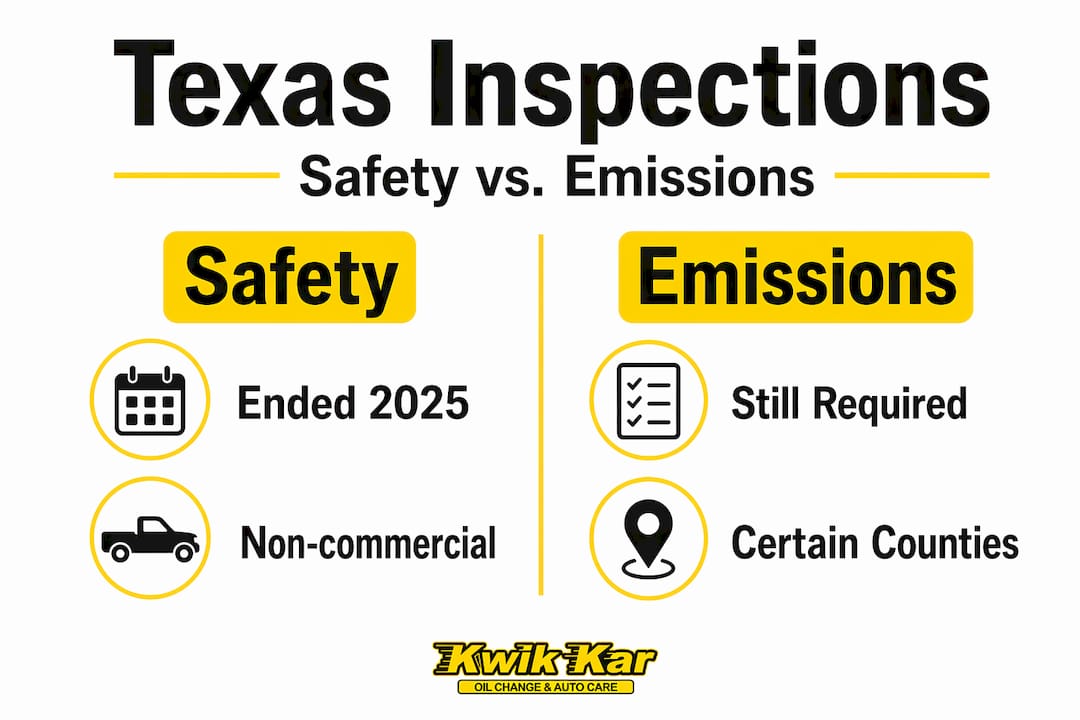
If you think Texas eliminated all vehicle inspections and you’re now off the hook, you’re not alone. That’s one of the most common misconceptions circulating right now among Texas drivers. Understanding how the state inspection process works explained clearly can be the difference between smooth registration renewal and a costly surprise at the DMV. Safety inspections for non-commercial vehicles ended January 1, 2025, but emissions inspections are still very much alive in certain Texas counties. Here’s what you actually need to know.
Table of Contents
- Key takeaways
- Types of vehicle inspections in Texas
- How the emissions inspection process works, step by step
- Why vehicles fail emissions inspections
- How to prepare for your Texas state inspection
- Our take on the new Texas inspection reality
- Get your car inspection-ready at Kwik Kar Richardson
- FAQ
Key takeaways
| Point | Details |
|---|---|
| Safety inspection ended in 2025 | Texas removed safety inspections for non-commercial vehicles, but emissions tests remain required in designated counties. |
| Emissions counties still matter | If you register your vehicle in an emissions county, you must pass an annual emissions inspection to renew your registration. |
| OBD readiness determines your result | Your vehicle’s onboard diagnostic system must show complete readiness monitors, or you will fail even without a visible problem. |
| Check engine light means automatic failure | Any active emissions-related fault code will prevent your vehicle from passing a Texas emissions inspection. |
| Preparation prevents repeat visits | Timing your inspection correctly after repairs and performing proper drive cycles eliminates most avoidable failures. |
Types of vehicle inspections in Texas
Most Texas drivers heard the news in 2024 and assumed inspections were done. The reality is more specific than that, and getting it wrong can hold up your registration renewal.
Texas inspection requirements differ significantly based on where you register your vehicle and what type of vehicle you drive. Here is how those categories break down:
| Vehicle Type | Safety Inspection Required | Emissions Inspection Required |
|---|---|---|
| Non-commercial vehicles (non-emissions county) | No (eliminated 2025) | No |
| Non-commercial vehicles (emissions county) | No | Yes, annually |
| Commercial vehicles | Yes | Yes, where applicable |
| Diesel vehicles over 14,000 lbs | Yes | Varies by county |
The key factor for most readers is whether you live in one of Texas’s designated emissions counties. Counties such as Harris, Dallas, Tarrant, Bexar, Travis, and Collin (home to many Richardson residents) fall under emissions testing requirements. If you register your car in one of those counties, your annual emissions inspection is not optional.
Some drivers mistakenly believe no safety inspection means no inspection requirement at all. That mistake shows up as a failed registration renewal, and nobody wants to discover it at the tax office window. Commercial vehicles face a separate set of rules entirely, including a full safety inspection in addition to emissions testing. If you operate a truck, bus, or any vehicle with a commercial classification, the pre-2025 rules still apply to you.
How the emissions inspection process works, step by step
Understanding state inspection procedures means knowing exactly what happens when your car pulls into the inspection bay. There are no surprises here once you know the sequence.
-
Vehicle identification and records check. The inspector verifies your vehicle’s VIN, confirms registration eligibility, and checks whether the car has any existing inspection records in the state database. This takes roughly two minutes and confirms they’re testing the right vehicle.
-
Visual inspection of emissions equipment. The technician physically checks that your emissions control components are present and undamaged. This includes the catalytic converter, exhaust gas recirculation (EGR) valve, fuel cap, and any visible oxygen sensor wiring. A missing or visibly gutted catalytic converter will fail this step before any scan occurs.
-
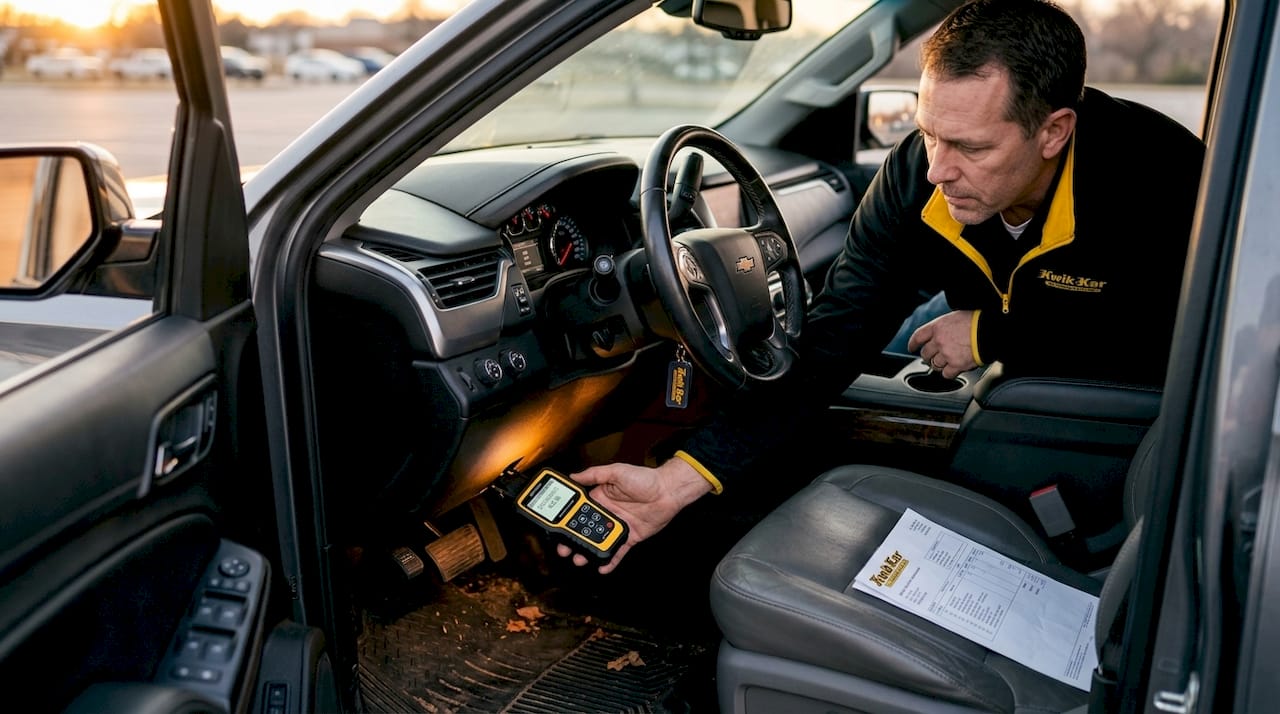
OBD-II system scan. This is the heart of the emissions inspection. The inspector plugs a diagnostic tool into your vehicle’s OBD-II port, typically located under the dashboard near the driver’s knee. The OBD-II system is your car’s built-in self-monitoring network, and it tracks dozens of emissions-related functions constantly.
-
Readiness monitor evaluation. The scan checks whether your vehicle’s readiness monitors are complete. These monitors are self-tests your car runs on systems like the catalytic converter, oxygen sensors, evaporative emissions, and EGR. All required monitors must show “Ready” for your car to pass.
-
Fault code review. If your check engine light is on, the OBD scan will read active fault codes and the inspection ends there. Any emissions-related diagnostic trouble code causes an automatic failure.
-
Pass or fail result. If the visual check is clean, readiness monitors are complete, and no fault codes are active, your vehicle receives a passing inspection certificate linked directly to your registration record.
Pro Tip: Schedule your inspection during the first two-thirds of your registration month rather than the last week. Stations get backed up at month-end, and rushing an inspection after recent repairs gives your readiness monitors less time to complete.
Why vehicles fail emissions inspections
Failure feels frustrating, but most vehicles fail for a handful of predictable reasons. Knowing them ahead of time means you can check your car before the inspector does.
-
Active check engine light. This is the number one cause of failure. The check engine light signals that your OBD system detected a fault, and emissions-related fault codes like those tied to oxygen sensors, catalytic converters, and the EGR valve automatically disqualify your vehicle from passing.
-
Incomplete OBD readiness monitors. Your car might have zero active fault codes and a clean visual inspection, yet still fail because one or more readiness monitors haven’t completed their self-tests. This happens most often after a battery disconnection, a recent repair, or when someone clears fault codes before the inspection. Clearing diagnostic trouble codes immediately before your inspection can actually make things worse and may disqualify you from receiving an emissions waiver later.
-
Faulty or missing emissions components. A bad oxygen sensor is a silent saboteur. It may not always trigger a visible warning, but it consistently logs faults that show up during the OBD scan. Catalytic converter faults, oxygen sensor failures, and EGR valve problems account for a large share of emissions failures. If you notice poor fuel economy or rough idling before your inspection, those symptoms often point to exactly these components.
-
Fuel cap failure. A loose or cracked fuel cap triggers the evaporative emissions monitor and can cause a failure on its own. It is also one of the cheapest fixes in automotive repair.
Pro Tip: Before your inspection, plug in an inexpensive OBD-II reader (available at most auto parts stores for under $30) and check your readiness monitors yourself. You will see exactly which monitors are “Ready” and which are still “Not Ready,” saving you the trip and the fee if your car isn’t ready.
If your vehicle fails, you do have options beyond immediately paying for repairs. Emissions inspection waivers are available under specific conditions when documented repair costs meet a defined financial threshold and the vehicle still cannot pass after those repairs. This is a last resort, not a routine workaround, but it exists to protect owners from being stuck in a loop of expensive repairs with no resolution.
How to prepare for your Texas state inspection
Preparation is where you reclaim control of the process. Most repeat failures are preventable with a few deliberate steps taken before you arrive at the inspection station.
-
Confirm your county’s inspection requirements. Look up whether your registration county requires an emissions inspection. If you recently moved to or from a county like Collin, Denton, or Dallas, your requirements may have changed. The Texas state inspection requirements are updated regularly, and confirming first takes less than two minutes.
-
Check your check engine light before anything else. If it is on, don’t go to the inspection station. Address the fault first. Use a diagnostic scan to identify the specific trouble code, then repair the issue at a qualified shop. Going in with the light on guarantees failure and costs you the inspection fee.
-
Do not clear codes or disconnect the battery right before your inspection. Incomplete readiness monitors from a battery reset can cause failure even after a successful repair. Your car needs time and specific driving conditions to run its self-tests after any reset.
-
Perform a proper drive cycle after repairs. Vehicles that recently cleared fault codes need a specific sequence of driving conditions, including highway speeds, stop-and-go traffic, and cold starts, to complete all readiness monitors. Ask your mechanic to walk you through the manufacturer-recommended drive cycle for your specific vehicle, or ask them to perform it before returning your car.
-
Check your fuel cap. Twist it until it clicks. Replace it if the seal feels worn. A $15 fuel cap is a much better way to spend your morning than a failed inspection.
-
Know your waiver rights. If your vehicle fails and you’ve already spent money on documented repairs, ask your mechanic about the emissions waiver process and what documentation you’ll need to qualify.
Our take on the new Texas inspection reality
I’ve worked with Texas drivers long enough to watch the confusion around the 2025 inspection changes play out in real time. What I’ve found, repeatedly, is that the elimination of the safety inspection actually shifted the pressure onto something less visible and more misunderstood: your car’s emissions control systems.
Before 2025, many owners coasted through safety inspections with a well-maintained vehicle and the assumption that passing meant the car was fine. Now, the inspection is telling you something narrower but no less important. Post-2025, inspections focus on emissions control systems, which means your oxygen sensors, catalytic converter, and EGR valve carry more weight than ever.
What I’ve learned from working with emissions failures is that most of them were preventable. The owner who clears the check engine light the night before, hoping for the best, almost never passes. The owner who comes in two weeks after a repair, asking why their car still won’t pass, usually ran out of drive cycle time. These aren’t mechanical mysteries. They’re timing and preparation problems.
My honest advice: treat the emissions inspection as a wellness check for systems your car runs silently in the background. Partner with a mechanic who will actually explain what the OBD scan shows you, not just tell you whether you passed. That transparency changes how you maintain your vehicle going forward.
— Kwik Kar
Get your car inspection-ready at Kwik Kar Richardson

At Kwik Kar Oil Change & Auto Care in Richardson, TX, our ASE-certified technicians handle the full picture: emissions inspections, OBD diagnostics, check engine light repair, and all the component repairs that stand between your car and a passing result. We’re RepairPal certified and recognized by CARFAX, so you know the diagnosis you get here is one you can trust.
Whether your check engine light just came on or you want a pre-inspection scan before your registration renewal, our team gives you straight answers and transparent pricing. We offer engine diagnostics and repair for every emissions-related fault code, and we’ll walk you through the drive cycle process after any repair so you arrive at the inspection station ready to pass the first time. Military members and first responders receive special discounts. Schedule your visit at Kwik Kar’s auto repair services today.
FAQ
Does Texas still require annual vehicle inspections?
Texas eliminated safety inspections for non-commercial vehicles as of January 1, 2025, but annual emissions inspections are still required for vehicles registered in designated emissions counties.
What happens if my check engine light is on during the inspection?
An active check engine light means the OBD-II system has logged an emissions-related fault code, which results in automatic failure. You must diagnose and repair the fault before attempting the inspection again.
What are readiness monitors and why do they matter?
Readiness monitors are self-tests your car’s OBD system runs on individual emissions components. Incomplete readiness monitors cause failure even if no fault codes are active, and they often occur after a battery disconnect or recent repair.
Can I get a waiver if my car fails the emissions inspection?
Yes. Texas offers conditional emissions waivers when documented repair costs meet a specific financial threshold and the vehicle still cannot pass after those repairs. Proof of repairs is required.
How do I know if I live in an emissions county?
Check your vehicle registration documents or visit the Texas DPS website to confirm whether your county requires emissions testing. Counties like Dallas, Tarrant, Harris, Collin, and Travis all currently require emissions inspections.