Act Fast for Low Oil Pressure: 5 Checks to Do in 60 Seconds
A low oil pressure warning means your engine’s bearings and moving parts may not be getting the lubrication they need to survive, and that makes it a potential emergency, not a nuisance light. The right first move is simple: pull over safely, shut off the engine, and check the dipstick before you drive another mile. Sensors do fail and can trigger false alarms, but you won’t know which situation you’re in until you check.
TL;DR:
- Most low oil pressure warnings are caused by low oil levels, incorrect viscosity, or sensor faults, which are inexpensive and quick to fix.
- If the warning light appears, immediately pull over, shut off the engine, and check the oil level and condition before attempting a restart.
- A mechanical pressure gauge is necessary for an accurate diagnosis, as dash sensors can give false readings due to sensor or wiring issues.
- Repairs range from simple oil top-ups to costly internal engine work, with urgent internal damage requiring prompt attention to prevent engine failure.
- Preventative habits, such as following recommended oil change intervals and inspecting oil levels regularly, can help avoid low oil pressure emergencies.
Table of Contents
- What Does It Mean When Oil Pressure Is Low?
- What to Do the Moment the Warning Light Comes On
- How Shops Verify a True Low Oil Pressure Reading
- What Repairs Typically Cost and How Urgent Each One Is
- Maintenance Habits That Keep Oil Pressure Where It Belongs
- How Kwik Kar Oil Change & Auto Care Diagnoses Low Oil Pressure
- A Mechanic’s Take on Why Minutes Matter
- Get Your Oil Pressure Checked the Right Way
- Sources
- FAQ
What Does It Mean When Oil Pressure Is Low?
Oil pressure and oil flow are not the same thing, and mixing them up is where a lot of confusion starts. Pressure is resistance to flow, the force pushing oil through tight passages and bearing clearances. Flow, or volume, is how much oil is actually moving through the engine. A pump can push plenty of volume and still show low pressure if a passage is blocked or worn, which is why diagnosing this properly takes more than a glance at the dash.
Several things can cause that warning light to trip:
- Low oil level from consumption, a leak, or a missed oil change
- Wrong viscosity oil that thins out too much once the engine reaches operating temperature
- Clogged oil filter or pickup screen, often from sludge buildup after extended oil changes
- Failing oil pump that can’t generate adequate pressure at idle or under load
- Stuck pressure relief valve holding pressure lower than it should be
- Worn engine bearings, which widen clearances and let pressure bleed off
- Faulty oil pressure sensor or sending unit reporting a problem that doesn’t exist
The most common cause is simply not enough oil in the pan, followed by viscosity issues, filter or pickup clogs, sensor failures, pump wear, and worn bearings, according to Jalopnik’s breakdown of low oil pressure causes. Here’s the split that matters for your peace of mind: sensor and filter problems are usually cheap, quick fixes. Pump failure and bearing wear are the ones that can end an engine’s life if you keep driving on them.
What to Do the Moment the Warning Light Comes On
Treat the first sixty seconds after that light appears as the most important part of the whole ordeal. Here’s the sequence to follow:
- Get off the road safely. Signal, move to the shoulder or a parking lot, and only keep the engine running long enough to reach a safe spot.
- Shut off the engine. Once you’re stopped somewhere safe, turn the key off. AAA’s guidance is direct on this point: stop the engine because bearings can fail rapidly once lubrication drops out, according to AAA’s low oil pressure guide.
- Check the dipstick. Pull it, wipe it, reinsert, and check both the level and the color. Oil that’s low, gritty, or milky tells you something.
- Top up if you’re low. Add oil matching your manufacturer’s recommended viscosity if you’re carrying a quart, then restart briefly to see if the light clears.
- Call for a tow if it doesn’t clear, if you hear knocking or ticking, or if a mechanical gauge check confirms near zero PSI.
Pro Tip: Adding a quart of oil often makes the warning go away, but that’s a temporary patch, not a diagnosis. If oil keeps disappearing between changes, something is burning it, leaking it, or letting it escape past worn parts, and that root cause needs attention before it happens again.
How Shops Verify a True Low Oil Pressure Reading
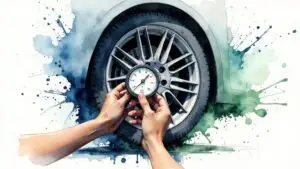
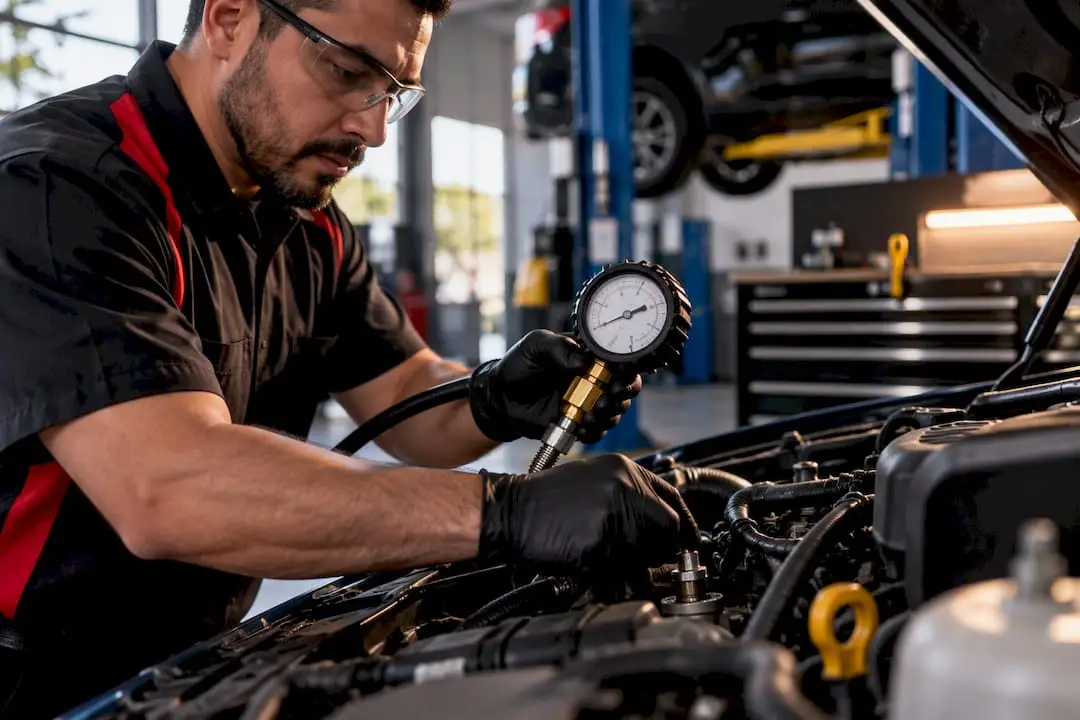
Dash gauges and warning lights run off a single sensor, and that sensor can be wrong. A reliable diagnosis leans on a mechanical pressure gauge screwed directly into the engine’s oil galley, since that’s the only way to get a true reading independent of the electrical sending unit, according to AA1Car’s troubleshooting guide. Skipping this step and just swapping the sensor is a common misdiagnosis that wastes a customer’s money without fixing anything.
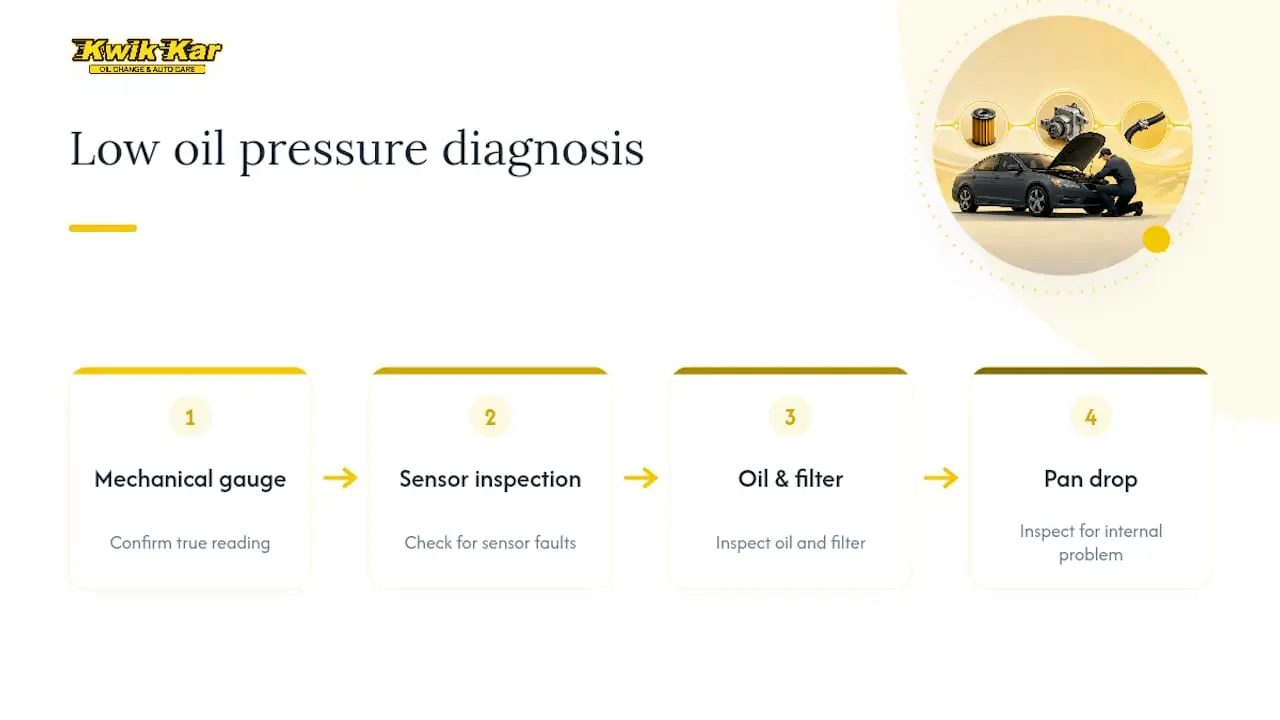
A proper diagnostic sequence usually runs in this order:
- Confirm the oil level and condition first
- Inspect or swap the pressure sending unit
- Verify actual pressure with a mechanical gauge
- Change the oil and filter if sludge or debris is suspected
- Drop the oil pan to inspect the pickup screen and pump if pressure is still low
- Measure bearing clearances when everything upstream checks out fine
Typical hot idle pressure runs around the low to moderate PSI range, climbing to a higher moderate PSI range at cruising RPM on many modern engines, though exact numbers vary by engine design and oil temperature, according to VehicleBar’s diagnostic guide.
| Reading Pattern | Likely Cause |
|---|---|
| Low at idle, normal at higher RPM | Worn bearings |
| Low across all RPM ranges | Pump wear or pickup screen restriction |
| Fluctuates or flickers intermittently | Sensor fault or wiring issue |
| Zero PSI confirmed on mechanical gauge | Pump failure or severe internal damage |
A faulty oil pressure sensor is one of the more common culprits behind a false alarm, and it’s worth ruling out before assuming the worst.
What Repairs Typically Cost and How Urgent Each One Is
Not every low oil pressure problem ends in an engine rebuild. A meaningful share of cases trace back to simple, inexpensive fixes, while worn bearings and internal damage make up a smaller slice of cases but carry the highest cost and urgency, according to VehicleBar’s cost breakdown.
Here’s roughly how the repair ladder breaks down:
- Simple and cheap: Topping up oil, replacing a faulty sender, or a routine oil and filter change. These are same-day fixes in most cases.
- Moderate: Replacing a worn oil pump, cleaning or replacing a clogged pickup screen, or repairing an external leak. These take more labor time since they usually involve removing the oil pan.
- Expensive and urgent: Bearing replacement or a broader internal engine repair. If a mechanical gauge confirms low pressure and you’ve heard knocking, this is where you’re headed.
The math changes once you’re staring down a major repair bill. If the estimate approaches or exceeds what the car is worth, it’s worth getting a second opinion before committing, especially if the vehicle’s mileage or overall condition suggests other big-ticket items are coming due soon. A trustworthy shop will walk you through exactly what they found on a mechanical gauge and pan inspection instead of asking you to take their word for it.
Maintenance Habits That Keep Oil Pressure Where It Belongs
Most low oil pressure emergencies are preventable, and the habits that prevent them aren’t complicated.
- Follow your manufacturer’s recommended oil viscosity and change interval instead of guessing or stretching intervals to save money.
- Check your oil level every few weeks, and pay attention if you’re consistently topping it off, since consumption or a slow leak usually explains it.
- Use a quality oil filter and change your oil before it breaks down into sludge, since sludge is a leading cause of pickup screen clogging, according to AA1Car.
- Schedule periodic professional inspections so a technician can catch early signs of pump wear or sensor drift before they turn into a roadside emergency.
Pro Tip: If you’re unsure whether you’re checking your oil level correctly, checking cold versus checking hot changes your reading. A quick review of the right technique for your vehicle avoids chasing a phantom low-level warning.
How Kwik Kar Oil Change & Auto Care Diagnoses Low Oil Pressure
Our ASE-certified technicians don’t stop at the dash light. A visit for a low oil pressure concern typically includes a mechanical gauge check to confirm the true reading, a sensor inspection, and a look at oil condition and filter health, with a pan drop if the numbers still point to a deeper problem. We back repairs with a warranty and offer transparent pricing so you know what you’re paying for before work begins. Special discounts are available for military personnel and first responders as part of our commitment to the local community. For more on how sensor faults mimic real pressure problems, see our guide on the engine oil pressure gauge.
A Mechanic’s Take on Why Minutes Matter
Most low oil pressure warnings I’d want checked immediately turn out to be sensors, not catastrophes. The trouble is you can’t tell the difference from the driver’s seat. A worn bearing or failed pump can go from “annoying light” to “seized engine” in the time it takes to drive a few more miles at highway speed. That’s why verifying with a mechanical gauge beats guessing, and why towing a car a short distance beats gambling on making it home.
— Kwik Kar
Get Your Oil Pressure Checked the Right Way
A dash light doesn’t tell you whether you’re looking at a $20 sensor or a pump on its way out, and guessing wrong is how a manageable problem turns into an engine replacement. Kwik Kar Oil Change & Auto Care verifies every low oil pressure warning with a mechanical gauge before recommending a repair, backed by ASE-certified technicians, transparent pricing, and a 24 month/24,000 mile warranty on the work we do.

If your warning light just came on, don’t wait for it to happen again on the highway. Schedule an oil change and inspection or book an engine diagnostic, and ask about discounts for military personnel and first responders when you book.
Sources
- What Might Be Causing Your Low Engine Oil Pressure, And What Fixes We’d Be Trying First — Jalopnik
- Troubleshoot Low Oil Pressure — AA1Car
- Low engine oil pressure causes, symptoms, and how to fix — AAA
FAQ
How Do You Fix Low Oil Pressure?
The fix depends on the cause: topping up oil or replacing a faulty sensor solves most cases, while a clogged pickup screen, worn oil pump, or damaged bearings need shop repair. A mechanical gauge check, like the process our technicians use at Kwik Kar Oil Change & Auto Care, confirms which one you’re dealing with before any parts get replaced.
Can You Drive a Car With Low Oil Pressure?
You shouldn’t. Driving even a short distance with genuinely low oil pressure risks rapid bearing damage, since bearings depend on constant lubrication to survive friction and heat, according to VehicleBar’s safety guidance. Pull over, shut the engine off, and check the oil level before deciding whether it’s safe to continue at all.
Is Low Oil Pressure Expensive to Fix?
Not always. Many cases trace back to inexpensive fixes like a sensor replacement or an oil and filter change, while pump failure or bearing wear cost significantly more and take longer to repair, according to VehicleBar’s cost analysis. Current service pricing at Kwik Kar Oil Change & Auto Care is available by contacting the shop directly, since costs vary based on the specific repair needed.
How Do You Get Oil Pressure Back Up?
Start by checking and correcting the oil level, since insufficient oil volume is the most frequent cause of low pressure readings, according to Jalopnik. If topping up doesn’t resolve it, the sensor, filter, pickup screen, or pump likely need inspection by a technician using a mechanical gauge to confirm the true reading.
Why Does My Oil Pressure Light Flicker at Idle?
A flickering light at idle often points to oil that’s thinning too much at operating temperature, a partially clogged pickup screen, or early bearing wear, since pressure naturally drops at idle and any weakness shows up first there. If the light steadies out at higher RPM, that pattern specifically suggests worn bearings rather than a pump or blockage issue.