Most drivers in Richardson treat an oil change like a pit stop. You pull in, someone swaps the oil, and you drive out. But understanding what does local oil change service include reveals something more significant than a simple fluid swap. A properly executed service touches your engine’s cooling system, its cleanliness, and its ability to protect itself under stress. A standard professional oil change costs between $50 and $150 and covers far more than oil and a filter. Knowing exactly what you’re paying for helps you choose the right service provider and protect one of your most valuable assets.
A complete service includes fluid checks, a drain plug washer, a leak check, and a maintenance light reset.
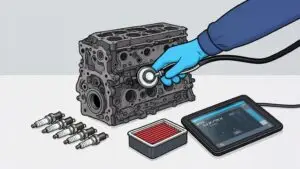
Multi-point inspection adds value
Technicians examine belts, hoses, battery, air filter, and tires during a thorough oil change visit.
Local shops follow specs more closely
Full-service providers typically use the correct oil grade and quality filters matching manufacturer guidelines.
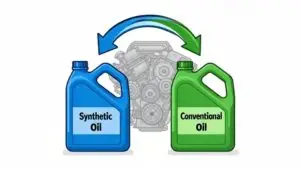
Oil type affects your interval
Synthetic oil can extend your change interval, but severe driving conditions shrink it regardless of oil type.
Skipping service is expensive
Neglected maintenance can raise ownership costs by up to 75% over five years due to avoidable engine damage.
What local oil change service includes
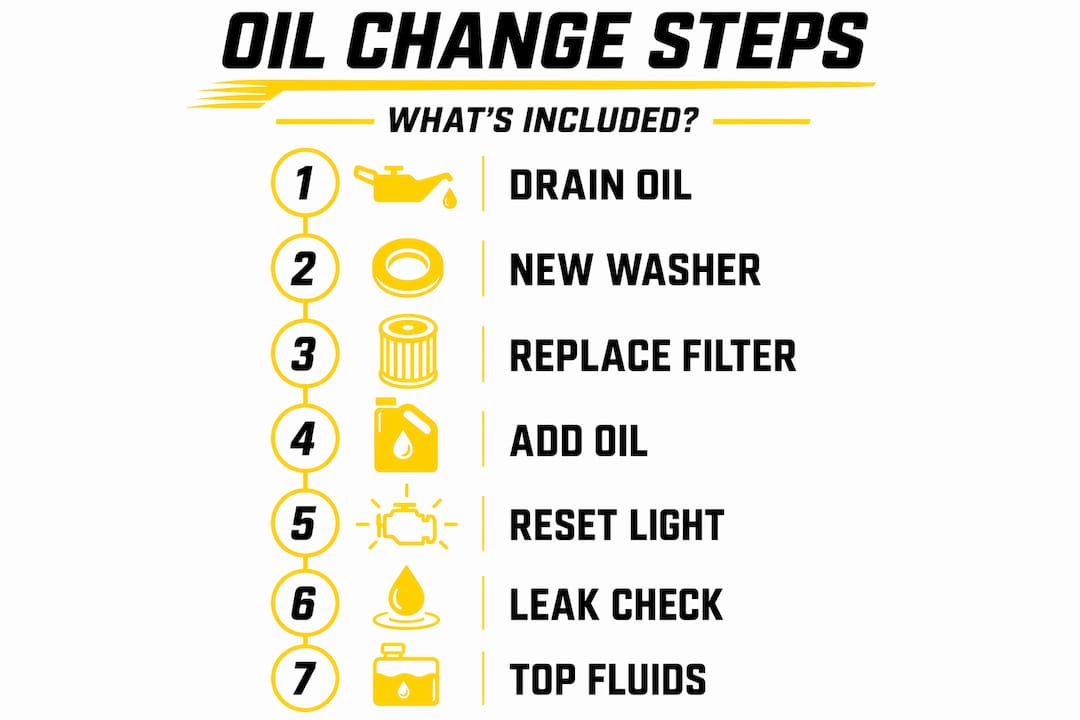
When you pull into a quality shop, the process is more structured than most people realize. Here is every step a professional oil change service checklist typically covers.
1. Draining the old engine oil
The technician removes the drain plug and lets all the degraded oil flow out completely. Old oil carries suspended combustion byproducts, metal particles, and sludge that have been quietly building up since your last change. None of that stays behind in a properly performed service.
2. Replacing the drain plug washer
This small step matters more than it gets credit for. The drain plug washer should be replaced every single service to prevent slow, undetected oil leaks that erode engine health over time. Many quick-lube operations reuse the old washer to save seconds. A thorough local service does not.
3. Installing a fresh oil filter
Not all filters are equal. Cheap filters can fail prematurely, letting debris circulate freely through your engine. A quality filter matched to your specific vehicle traps particles down to a very fine level, protecting internal surfaces with every cold start and highway mile.
4. Refilling with the correct oil type and quantity
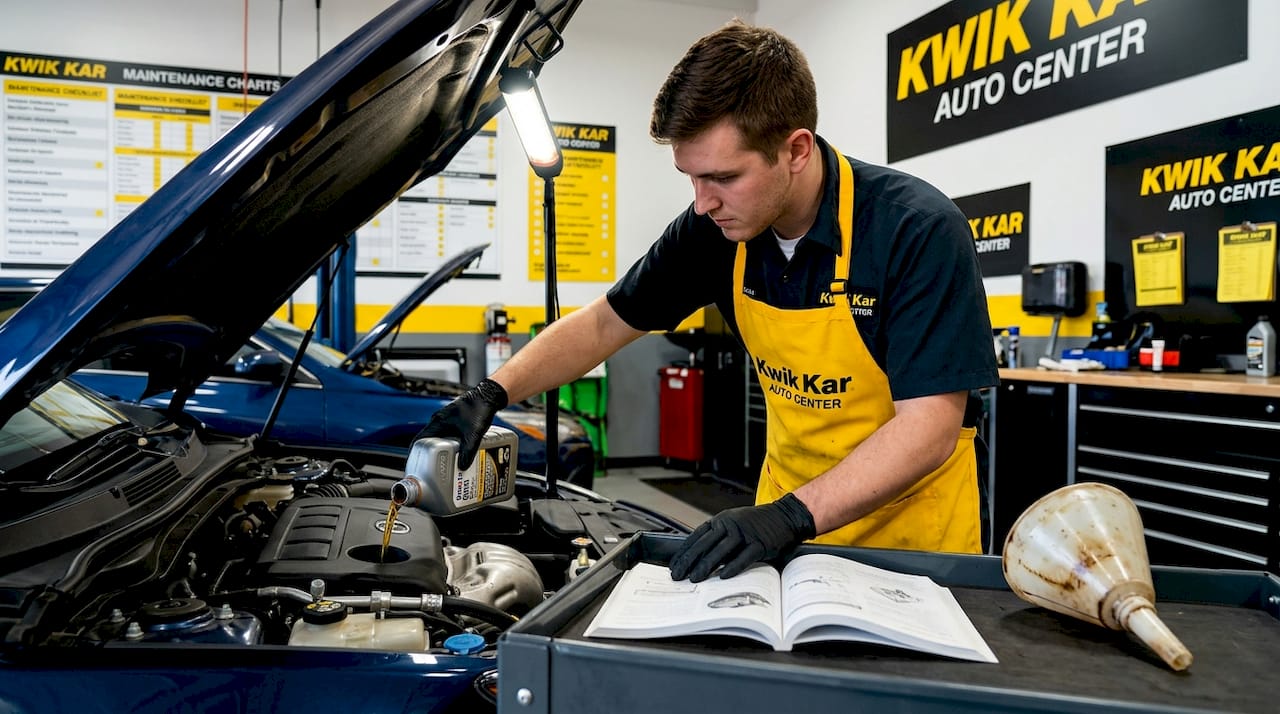
Whether your vehicle takes conventional, full synthetic, or a synthetic blend, the right grade matters enormously. Putting the wrong viscosity in your engine creates friction where there should be none. Your technician should verify the manufacturer specification before pouring a single drop.
Pro Tip:Check your owner’s manual for the recommended SAE viscosity grade. A shop that asks for your vehicle year, make, and model before selecting oil is doing it right.5. Resetting the oil change indicator
Your dashboard maintenance light does not reset itself. The oil change indicator reset is an essential final step that prevents confusing your next service reminder and keeps your maintenance schedule accurate. Skipping it means the light stays on or goes off at the wrong time.
6. Final leak check
Before the vehicle is returned to you, a technician should run the engine briefly and inspect the drain plug and filter area for seepage. A missed drip today becomes a low-oil situation next week.
7. Basic fluid top-offs
Most local oil change packages include a visual check and top-off of coolant, brake fluid, power steering fluid, and windshield washer fluid. These are not full replacements. They are protective courtesy checks that can catch a dangerously low brake fluid level before it turns into a safety emergency.
What a multi-point inspection covers
A professional oil change service at a full-service shop does not stop at the engine bay. The technician works through a checklist of vehicle health items that catch problems before they become repairs. These checks represent some of the most direct benefits of local oil changes you will not find at a drive-through lube lane.
Here is what a thorough multi-point inspection typically examines:
Belts and hoses. A cracked serpentine belt or a swollen radiator hose will not announce itself with a warning light. A visual check during your oil change is often the only time these get looked at between major services.
Battery terminals and condition. Corroded terminals restrict current flow and can leave you stranded. Technicians check for buildup and flag a battery that is reaching the end of its life.
Air filter status. A clogged air filter starves your engine of oxygen and hurts fuel efficiency. The inspection reveals whether it needs replacement before your engine starts working harder than it should.
Oil and fluid leak inspection. Gaskets and seals degrade over time. A technician doing a proper oil change service checklist looks for staining patterns at known leak points around the valve cover, pan gasket, and timing cover.
Tire condition and pressure. Uneven wear reveals alignment or suspension issues. Correct tire pressure affects fuel economy and handling directly.
Wiper blades. A simple check that most drivers ignore until the first rainy night. Cracked or streaking blades are a safety issue, not just an inconvenience.
Pro Tip:Ask your service advisor for a written copy of the inspection results. A reputable shop will hand it to you without hesitation. That document tells you what was checked and what needs attention next.
Local full-service vs. quick-lube vs. DIY
Understanding the difference in oil change services helps you make a smarter choice for your vehicle. Here is how the three options compare across the factors that actually matter.
Factor
Local full-service shop
Quick-lube chain
DIY
Oil grade accuracy
Verified to manufacturer spec
Often standardized for speed
Depends on owner’s research
Filter quality
Matched to vehicle specs
Generic or house brand
Varies by purchase
Drain plug washer
Replaced every service
Often reused
Depends on owner
Multi-point inspection
Included
Partial or skipped
Not performed
Leak check before release
Standard practice
Variable
Owner responsibility
Maintenance light reset
Included
Usually included
Manual reset required
Technician experience
ASE-certified typical
Variable
Owner skill level
Full-service local shops provide more thorough vehicle health checks and tend to follow manufacturer guidelines more closely than quick-lube locations, which prioritize throughput over depth. The speed advantage of a quick-lube disappears the moment you factor in a missed drain plug washer leak or the wrong oil viscosity eroding your engine over six months.
Oil cools and cleans the engine as it lubricates, suspending dirt and combustion byproducts to prevent sludge buildup. When that oil degrades and those byproducts accumulate, the engine runs hotter, burns more fuel, and wears faster. Dirty oil increases friction and forces your engine to consume more fuel just to maintain normal performance. A quality oil change addresses all of that at once.
The cost difference between a fast-lube visit and a full-service local change is often $20 to $40. That gap is almost nothing compared to a $1,500 to $4,000 engine repair caused by neglected routine maintenance.
How often to schedule your oil change
Getting the service right matters. Getting it done on time matters just as much. The answer to “how often to get an oil change” depends on several factors that vary from driver to driver.
Conventional oil: Change every 3,000 to 5,000 miles. Conventional oil breaks down faster, especially in heat and under load.
Synthetic blend: Change every 5,000 to 7,500 miles. Blends offer better protection than conventional without the full cost of synthetic.
Full synthetic oil: Typical intervals reach 7,500 to 10,000 miles or more depending on vehicle and driving conditions. Some manufacturers approve 15,000-mile intervals for specific models.
Severe driving conditions: Short trips under five miles, frequent towing, extreme heat, dusty environments, and stop-and-go commutes all degrade oil faster. Richardson’s summer heat alone puts real thermal stress on motor oil. Shorten your interval accordingly.
Your owner’s manual: This is the definitive source. Manufacturer engineers designed the service schedule for your specific engine. Deviating from it voids warranties and invites problems.
Extended oil change intervals beyond manufacturer recommendations risk sludge buildup, increased friction, overheating, and in serious cases, complete engine failure. The synthetic vs. conventional oil choice changes your interval range but does not eliminate the need for scheduled service.
Your vehicle’s oil life monitor, if equipped, measures actual driving conditions rather than just mileage. Trust it, but still have a shop physically inspect the oil at the recommended interval regardless of what the dashboard says.
What most drivers never think to ask about
I’ve been watching vehicles come through service bays for years, and the detail that surprises drivers most is the drain plug washer. It is a paper-thin seal the size of a quarter, and it is the only thing standing between your engine and a slow oil leak that drains your oil level without triggering any warning light. Most people never even knew it existed. The ones who bring in cars with oil stains on their driveway often trace it straight back to a reused washer from a rushed service.
The multi-point inspection is the second thing most drivers underestimate. I’ve seen cracked serpentine belts caught during a routine oil change that were three weeks away from snapping on a highway. That ten-minute inspection saved someone a tow bill, a rental car, and potentially an overheated engine. You cannot put a price on that kind of early warning.
The maintenance light reset matters more than it seems. Skipping it means your next oil change reminder fires at the wrong mileage. That creates a creeping inaccuracy in your service schedule that compounds over time. ASE-certified technicians treat the reset as part of the job, not an afterthought.
What I’ve found, honestly, is that the difference between a shop you trust and one you tolerate usually comes down to these small steps. The oil and the filter are table stakes. The washer, the inspection, the leak check, and the reset are where real care shows up.
— Kwik
Get the right oil change service in Richardson
At Kkrichardson, the oil change service goes well beyond what most drivers expect. Kwik Kar Oil Change and Auto Care in Richardson, TX offers both conventional and synthetic oil change packages performed by ASE-certified technicians who follow manufacturer specifications on every vehicle. Every service includes a multi-point inspection, drain plug washer replacement, filter installation, fluid top-offs, and a final leak check before your keys are returned. The shop is recognized by CARFAX and RepairPal, and provides special discounts for military personnel and first responders. If you want local auto maintenance services you can count on, Kwik Kar Richardson is ready to take care of your vehicle today.
FAQ
What is included in a standard oil change?
A standard oil change includes draining old oil, replacing the oil filter and drain plug washer, refilling with the correct oil type, resetting the maintenance indicator, and performing a final leak check. Most full-service locations also top off fluids and perform a basic multi-point vehicle inspection.
How much does a local oil change service cost?
A professional oil change typically costs between $50 and $150 depending on oil type, vehicle, and the level of service included. Full synthetic oil changes cost more than conventional but extend your service interval.
How often should I get an oil change?
Intervals range from 3,000 miles for conventional oil to 10,000 miles or more for full synthetic, depending on your driving conditions and manufacturer guidelines. Severe conditions like short trips, extreme heat, or frequent towing require more frequent changes.
Why does the drain plug washer matter?
The drain plug washer creates a sealed barrier that prevents oil from slowly leaking past the drain plug after service. Reusing an old washer is a common shortcut that causes undetected leaks and gradual oil loss.
What is the difference between a quick-lube and a full-service oil change?
Quick-lube locations prioritize speed and may skip steps like the drain plug washer replacement or a thorough vehicle inspection. Full-service shops typically match oil grade to manufacturer specs, use quality filters, and include a multi-point inspection as part of the standard service.
 3. Installing a fresh oil filter
Not all filters are equal. Cheap filters can fail prematurely, letting debris circulate freely through your engine. A quality filter matched to your specific vehicle traps particles down to a very fine level, protecting internal surfaces with every cold start and highway mile.
4. Refilling with the correct oil type and quantity
Whether your vehicle takes conventional, full synthetic, or a synthetic blend, the right grade matters enormously. Putting the wrong viscosity in your engine creates friction where there should be none. Your technician should verify the manufacturer specification before pouring a single drop.
3. Installing a fresh oil filter
Not all filters are equal. Cheap filters can fail prematurely, letting debris circulate freely through your engine. A quality filter matched to your specific vehicle traps particles down to a very fine level, protecting internal surfaces with every cold start and highway mile.
4. Refilling with the correct oil type and quantity
Whether your vehicle takes conventional, full synthetic, or a synthetic blend, the right grade matters enormously. Putting the wrong viscosity in your engine creates friction where there should be none. Your technician should verify the manufacturer specification before pouring a single drop.
 3. Installing a fresh oil filter
Not all filters are equal. Cheap filters can fail prematurely, letting debris circulate freely through your engine. A quality filter matched to your specific vehicle traps particles down to a very fine level, protecting internal surfaces with every cold start and highway mile.
4. Refilling with the correct oil type and quantity
Whether your vehicle takes conventional, full synthetic, or a synthetic blend, the right grade matters enormously. Putting the wrong viscosity in your engine creates friction where there should be none. Your technician should verify the manufacturer specification before pouring a single drop.
3. Installing a fresh oil filter
Not all filters are equal. Cheap filters can fail prematurely, letting debris circulate freely through your engine. A quality filter matched to your specific vehicle traps particles down to a very fine level, protecting internal surfaces with every cold start and highway mile.
4. Refilling with the correct oil type and quantity
Whether your vehicle takes conventional, full synthetic, or a synthetic blend, the right grade matters enormously. Putting the wrong viscosity in your engine creates friction where there should be none. Your technician should verify the manufacturer specification before pouring a single drop.
 Pro Tip: Check your owner’s manual for the recommended SAE viscosity grade. A shop that asks for your vehicle year, make, and model before selecting oil is doing it right.
5. Resetting the oil change indicator
Your dashboard maintenance light does not reset itself. The oil change indicator reset is an essential final step that prevents confusing your next service reminder and keeps your maintenance schedule accurate. Skipping it means the light stays on or goes off at the wrong time.
6. Final leak check
Before the vehicle is returned to you, a technician should run the engine briefly and inspect the drain plug and filter area for seepage. A missed drip today becomes a low-oil situation next week.
7. Basic fluid top-offs
Most local oil change packages include a visual check and top-off of coolant, brake fluid, power steering fluid, and windshield washer fluid. These are not full replacements. They are protective courtesy checks that can catch a dangerously low brake fluid level before it turns into a safety emergency.
Pro Tip: Check your owner’s manual for the recommended SAE viscosity grade. A shop that asks for your vehicle year, make, and model before selecting oil is doing it right.
5. Resetting the oil change indicator
Your dashboard maintenance light does not reset itself. The oil change indicator reset is an essential final step that prevents confusing your next service reminder and keeps your maintenance schedule accurate. Skipping it means the light stays on or goes off at the wrong time.
6. Final leak check
Before the vehicle is returned to you, a technician should run the engine briefly and inspect the drain plug and filter area for seepage. A missed drip today becomes a low-oil situation next week.
7. Basic fluid top-offs
Most local oil change packages include a visual check and top-off of coolant, brake fluid, power steering fluid, and windshield washer fluid. These are not full replacements. They are protective courtesy checks that can catch a dangerously low brake fluid level before it turns into a safety emergency.
 At Kkrichardson, the oil change service goes well beyond what most drivers expect. Kwik Kar Oil Change and Auto Care in Richardson, TX offers both conventional and synthetic oil change packages performed by ASE-certified technicians who follow manufacturer specifications on every vehicle. Every service includes a multi-point inspection, drain plug washer replacement, filter installation, fluid top-offs, and a final leak check before your keys are returned. The shop is recognized by CARFAX and RepairPal, and provides special discounts for military personnel and first responders. If you want local auto maintenance services you can count on, Kwik Kar Richardson is ready to take care of your vehicle today.