
That small sticker in the corner of your windshield does more work than most drivers realize. It records your last service date and mileage, then tells you exactly when your engine needs fresh oil again. Ignore it long enough, and you’re not just skipping a routine task. You’re letting degraded oil quietly destroy the components it was meant to protect.
Here’s what’s at stake when you treat that sticker as optional:
- Oil that runs too long accumulates acids and combustion debris, forming sludge that blocks oil galleries and starves critical engine parts
- Sludge buildup can trigger overheating and engine failure, with repair costs that exceed the vehicle’s value
- Skipping scheduled changes can void your manufacturer’s warranty, leaving you fully exposed to those repair bills
- Your engine’s oil life monitor estimates usage algorithmically; it doesn’t physically measure oil condition, so the sticker provides a fixed, reliable target alongside it
The sticker isn’t redundant. It’s your most visible, always-on maintenance checkpoint.
Why oil change sticker reminders matter for your engine
Oil change stickers typically display four pieces of information: the date of your last service, the mileage at that service, the recommended mileage for your next change, and sometimes a calendar date as a secondary trigger. A technician fills this in based on your vehicle’s manufacturer guidelines and the oil type used.
Their accuracy depends on correct technician input and the interval your manufacturer specifies. Consumer Reports notes that most manufacturers recommend 7,500 to 10,000 miles between changes, making the old “every 3,000 miles” rule genuinely outdated for most modern vehicles. That said, stickers reflect normal driving conditions by default.
- The sticker’s mileage target assumes standard use; severe conditions require shorter intervals
- Oil life monitors adjust dynamically to driving patterns, but they are algorithm-based estimates, not direct measurements of oil condition
- A sticker works without a charged phone, an app, or a dashboard interaction. It’s visible every time you sit behind the wheel
- Physical service stickers remain relevant precisely because they require no technology to deliver their reminder
Verify the sticker’s mileage and date at every appointment. A transposed digit or an outdated interval can push your next service further out than your engine can safely handle.
How to use your oil change sticker effectively

The sticker’s mileage is your primary target, but driving conditions determine whether you reach it or stop short. Modern engines can handle 7,500 to 10,000 miles under normal conditions, but that interval should be cut roughly in half if you regularly tow, sit in stop-and-go traffic, or drive in extreme heat.
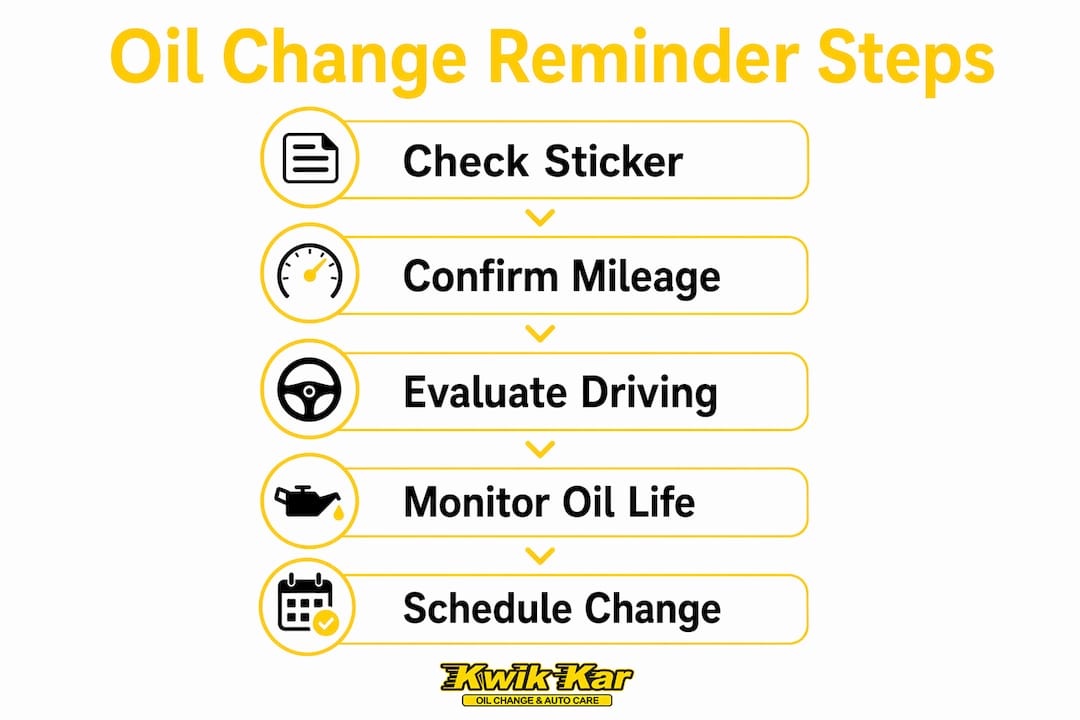
Your oil life monitor is a useful secondary signal. Change your oil at the sticker mileage or before the oil life monitor indicates a low oil life, whichever comes first. Waiting until the monitor reads near zero adds unnecessary wear, especially on turbocharged engines where oil degradation accelerates faster.
Pro Tip: Log your sticker’s mileage and date in your phone’s notes app right after each service. If the sticker ever fades or peels, you still have an accurate record without guessing.
A Pennzoil specialist recommends changing oil about 15% earlier than the manufacturer’s listed interval if you drive in severe conditions or plan to keep the vehicle long-term. For a 10,000-mile sticker, that means servicing around 8,500 miles, while a 7,500-mile interval would indicate a change at approximately 6,375 miles. Check the sticker at every fill-up, and if the print has faded, ask your shop to replace it at the next visit.

What delayed oil changes do to the environment
Postponing an oil change doesn’t just hurt your engine. It creates a broader environmental problem that’s easy to overlook.
Degraded oil burns off more readily than fresh oil, releasing hydrocarbons and particulates into the atmosphere through the exhaust system. An engine running on overdue oil also works harder to maintain performance, burning more fuel and producing more emissions in the process. Catalytic converters and diesel particulate filters are especially vulnerable. Oil-burning engines poison these components quickly, and replacing them is expensive and resource-intensive.
Proper disposal matters too. Used motor oil that’s changed on schedule is collected and recycled through certified facilities. Oil that degrades to sludge inside an engine is far harder to reclaim and often ends up as hazardous waste. Staying on your oil change schedule keeps your emissions cleaner and your used oil recyclable.
Key Takeaways
Sticker reminders and oil life monitors work best together, but the sticker’s fixed mileage target is your most reliable, always-visible maintenance guide.
| Point | Details |
|---|---|
| Sticker accuracy | Stickers reflect manufacturer guidelines; verify the mileage and date at every service appointment. |
| Interval guidance | Most manufacturers recommend 7,500–10,000 miles; severe driving conditions cut that interval roughly in half. |
| Monitor as backstop | Change oil at sticker mileage or before the oil life monitor drops below 15%, whichever comes first. |
| Environmental cost | Overdue oil burns off as emissions and degrades into sludge that’s harder to recycle safely. |
| Kwik Kar Oil Change & Auto Care | ASE-certified technicians set accurate sticker reminders and maintain your service records at every visit. |
Kwik Kar Oil Change & Auto Care keeps your reminders accurate
Accurate sticker reminders start with a technician who knows your vehicle, your oil type, and your driving conditions. At Kwik Kar Oil Change & Auto Care in Richardson, TX, every oil change is performed by ASE-certified technicians who set your next service interval based on manufacturer specifications, not guesswork.

Kwik Kar is recognized by both CARFAX and RepairPal, so your service history is documented and verifiable. That record protects your warranty, supports your vehicle’s resale value, and gives you a clear paper trail if anything ever needs diagnosis. Military members and first responders receive special discounts, and transparent pricing means no surprises at checkout. Schedule your oil change at Kwik Kar Oil Change & Auto Care and leave with a sticker you can actually trust.
FAQ
What does the oil change reminder sticker mean?
The sticker records your last service date and mileage, then displays the recommended mileage or date for your next oil change, based on your manufacturer’s interval guidelines.
Does the date on an oil change sticker matter?
Yes. Oil degrades over time even without heavy mileage, so the calendar date on the sticker acts as a secondary trigger. Drivers who cover few miles should still change oil every six to twelve months.
Are oil change stickers accurate?
Stickers are as accurate as the technician’s input and the interval your manufacturer specifies. Verify the mileage and date at each appointment, and cross-reference with your oil life monitor as a secondary check.
Do I have to follow the sticker for my oil change?
Following the sticker is the safest approach. Ignoring it repeatedly leads to gradual engine wear, sludge formation, and repairs that far outweigh the cost of a timely oil change.