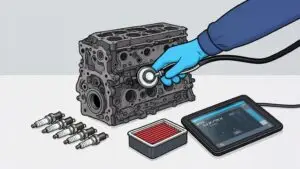

Yes, a winter oil change matters, and cold weather is exactly why. When temperatures drop, engine oil thickens, slows down, and leaves your engine’s most vulnerable components under-lubricated during the critical seconds after startup. That’s not a minor inconvenience; it’s where cold-start wear quietly accumulates into real engine damage.
Three things are working against your engine every cold morning:
- Thickened oil delays circulation. Cold oil resists flow, so bearings, timing components, and turbo shafts go unprotected during startup.
- Short winter trips breed sludge. Condensation and unburned fuel mix into oil that never reaches full operating temperature, forming deposits that clog oil passages over time.
- The wrong “W” rating compounds the problem. The SAE J300 viscosity system’s “W” number tells you how oil performs in cold conditions. A higher W means slower flow when it’s cold, and that delay costs you.
Pro Tip: When booking your next service, tell the shop you want the oil grade specified in your owner’s manual, or ask whether a lower “W” grade is within manufacturer limits for your climate. Write it on the appointment form so there’s no ambiguity at the counter.
Table of Contents
- Why does cold weather change how engine oil flows?
- How do short winter trips accelerate engine wear?
- Which oil is best for winter: synthetic, conventional, or multigrade?
- When should you schedule a winter oil change?
- Your practical winter oil-change checklist
- Why you should never drain truly cold oil
- Signs your oil or engine needs attention this winter
- Key Takeaways
- A shop-backed perspective on what most drivers get wrong
- Winter oil service at Kwik Kar Oil Change & Auto Care in Richardson, TX
- Sources and further reading
- FAQ
Why does cold weather change how engine oil flows?
Viscosity is oil’s resistance to flow, and cold temperatures increase it dramatically. Think of honey on a winter morning: what pours freely at room temperature turns sluggish and slow when chilled. Your engine oil behaves the same way, and the consequences are far more serious than a slow pour.
The SAE J300 standard governs how motor oils are rated for cold performance. The “W” in a grade like 5W-30 stands for winter, and the number before it reflects the oil’s behavior during cold-cranking and pumpability tests at specific low temperatures. A lower W number means the oil passes those tests at a colder temperature point. A 0W oil is tested at lower temperatures than a 10W oil, which means it flows faster when your engine needs it most.
The practical stakes are measurable. A 10W oil can be roughly 1.7 times thicker than a 5W oil at certain low-temperature points, placing real additional strain on your battery and starter motor in cold regions. Meanwhile, slow-circulating oil means bearings, turbo shafts, and timing chain components go without a protective film for several seconds longer than they should.
Key implications for cold-weather driving:
- Delayed oil circulation leaves metal parts in direct contact during startup
- Turbochargers, which spin at extremely high speeds, are especially vulnerable to cold-start oil starvation
- At temperatures below roughly -13°F (-25°C), higher W-grade oils can approach their cold-cranking limits, risking oil pump cavitation
How do short winter trips accelerate engine wear?
Cold starts are hard on oil even once. Do them repeatedly on short trips, and the damage compounds fast. When your engine never reaches full operating temperature, condensation and unburned fuel build up in the oil rather than burning off. That moisture mixes with combustion byproducts to form sludge, a thick, tar-like deposit that clogs oil passages and starves components of lubrication.
Fuel dilution is the other side of this problem. Cold starts require richer fuel mixtures, and some of that fuel inevitably finds its way past the piston rings into the crankcase. Once in the oil, it reduces viscosity and strips away the film strength your engine depends on. Old oil that’s already been diluted by fuel and contaminated by moisture is doing almost nothing useful for your engine.
Cold weather also reduces fuel economy, a figure cited by shop-level guidance referencing U.S. Department of Energy data. Fresh oil with the right viscosity reduces internal friction, which helps your engine recover some of that efficiency. The cost comparison is stark: a routine oil change costs a fraction of what sludge-related engine repairs demand.
Internal corrosion adds another layer of risk. When old oil can’t coat internal parts effectively in cold, humid conditions, moisture from condensation events can begin attacking metal surfaces. Fresh oil contains anti-corrosion additives that form a protective barrier during those off-cycle periods when the engine sits cold overnight.
Which oil is best for winter: synthetic, conventional, or multigrade?
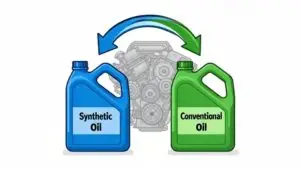
Synthetic oil is the stronger choice for cold-weather protection, and the chemistry explains why. Conventional oils contain wax compounds that thicken significantly in the cold, slowing flow and increasing startup wear. Synthetic oil flows better at low temperatures because it’s engineered without those waxes, delivering faster lubrication to critical components from the first turn of the key. For anyone driving in temperatures that regularly drop below 20°F, synthetic is worth the upgrade.
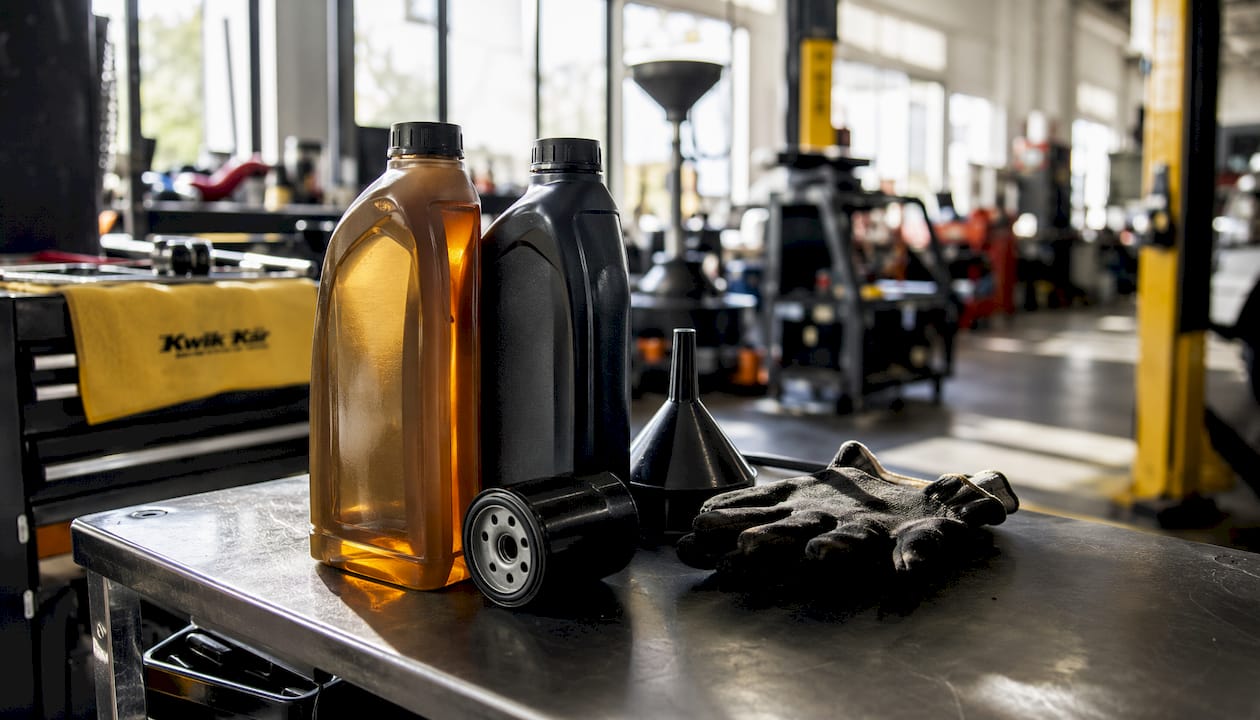
Multigrade oils give you performance across a temperature range. A 5W-30 oil flows like a 5-weight in cold conditions and maintains 30-weight protection at operating temperature. Choosing a lower W grade within your manufacturer’s specifications, say 0W-30 instead of 5W-30, gives you faster cold-start protection without sacrificing warm-temperature performance. Lubrication experts consistently emphasize the W rating first: it’s the number that determines how quickly your engine gets protected after a cold start.
Your owner’s manual is the final authority. Some manufacturers specify a single viscosity grade for all conditions; others include a temperature chart showing acceptable alternatives. If your manual allows a lower W grade, use it in winter. If it specifies one grade only, stick to it and focus on choosing a quality synthetic within that spec. Explore the types of oil change available if you’re unsure which service fits your vehicle.
- 0W-20 or 0W-30: Best cold-flow performance; ideal for very cold climates where manufacturer allows
- 5W-30: The most common recommendation; good cold-start protection across most U.S. winter conditions
- 10W-30: Acceptable in milder winters; noticeably slower at startup in sub-freezing temperatures
Pro Tip: At the shop counter, say: “I’d like a [grade] synthetic, per my owner’s manual, and please note the viscosity and brand on my service record.” That one sentence protects you if a warranty question ever comes up later.
When should you schedule a winter oil change?
The right time is before the first prolonged cold spell, not after your engine has already spent weeks struggling through cold starts on degraded oil. Scheduling in October or early November gives you a clean slate heading into the hardest months. If you’ve already missed that window, getting it done now still matters; every cold start on fresh oil is better than another one on contaminated oil.
Frequency depends on how you drive:
- Normal driver (highway miles, full warm-up cycles): Follow the manufacturer’s interval, typically 5,000–7,500 miles for synthetic.
- Frequent short-trip driver (under 5 miles per trip, mostly city): Shorten the interval, since oil degrades faster without reaching operating temperature. More frequent changes are recommended in winter.
- Extreme-cold climate driver (sustained temperatures below 0°F): Treat every oil change as a winter service and consider 0W-grade synthetic within manufacturer limits.
Oil filter replacement is non-negotiable at every change. The filter traps soot, metallic particles, and combustion residue; replacing it prevents trapped contaminants from re-entering fresh oil. In winter, when short trips accelerate contamination, a clogged filter is a serious liability. For guidance on how often to change your oil based on your specific driving pattern, the interval recommendations vary more than most drivers realize.
Your practical winter oil-change checklist
Whether you’re doing this yourself or requesting it at a shop, these are the steps that actually matter:
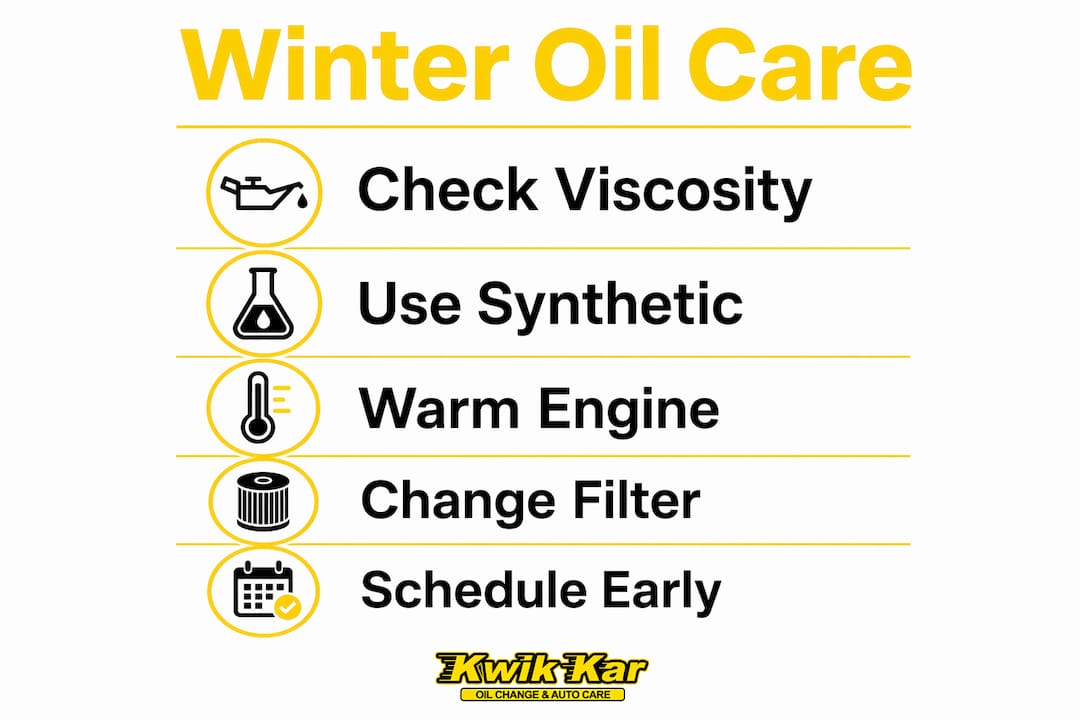
- Warm the engine briefly. Drive for 2–3 minutes or perform the change shortly after a trip so oil flows freely and carries suspended contaminants to the drain.
- Drain and inspect. Dark, gritty, or fuel-smelling oil signals contamination beyond normal wear. Note the color and consistency before disposing.
- Replace the filter. Always. No exceptions in winter.
- Top off all fluids. Coolant, windshield washer fluid rated for freezing temperatures, and brake fluid all deserve attention during a winter service.
- Check the battery. Cold weather reduces battery capacity; a battery test during an oil change can help prevent a no-start situation.
- Inspect tire pressure. Pressure drops roughly 1 PSI for every 10°F temperature decrease, affecting traction and fuel economy.
- Record everything. Write the oil grade, brand, mileage, and date on your service record or in a maintenance app.
At a shop, specifically request: winter-grade viscosity per your owner’s manual, synthetic oil if your budget allows, and a multi-point inspection. An ASE-certified technician will know to check battery terminals, belts, and hoses as part of a thorough winter service. Fleet operators dealing with heavy equipment face similar cold-weather challenges, and cold-weather oil change guidance for construction equipment notes that specialized tools and heated environments are often needed to keep technicians safe and efficient.
Pro Tip: Run the engine for 2–3 minutes before draining, targeting an oil temperature around 100°F. Warm oil flows freely and suspends particles for removal. Wear nitrile gloves and let the engine cool for 5 minutes after shutting down before touching the drain plug.
Why you should never drain truly cold oil
Draining cold oil leaves sediment behind. When oil sits overnight in a cold engine, contaminants settle to the bottom of the sump. Cold, thick oil won’t carry those particles out during a drain; they stay in the engine and mix into your fresh oil within minutes of startup. R&D teams and technicians consistently recommend warming the engine first because circulating, warm oil suspends those particles and removes them with the drain.
The safe target is roughly 100°F oil temperature, achieved by running the engine for 2–3 minutes or performing the change shortly after a drive. That’s warm enough for good drainage and particle suspension, but cool enough that a technician wearing nitrile gloves can work safely with a brief cool-down window after shutdown. Fully hot oil, straight off a highway run, is a burn risk and unnecessary.
Pro Tip: If you’re doing this at home in a cold garage, a brief drive around the block before pulling in is all you need. The oil will drain noticeably faster and more completely than it would from a cold-soak engine.
Signs your oil or engine needs attention this winter
Your engine will tell you when something is wrong. The challenge is knowing what to listen and look for before a small problem becomes a costly repair.
Watch for these warning signs:
- Dark, sludge-like oil on the dipstick. Fresh oil is amber and translucent. Black, thick, or gritty oil means it’s overdue. Learn more about checking your oil level accurately at home.
- Ticking or knocking at startup. This is the sound of oil-starved components. It should quiet within seconds of starting; if it persists, get to a shop.
- Fuel smell in the oil. Dip the dipstick and smell it. A gasoline odor means fuel dilution is already happening.
- Increased oil consumption. Checking your level more often in winter is good practice. A noticeable drop between changes points to a problem.
- Hard starts or sluggish cranking. Could be the battery, but degraded, thickened oil adds resistance that makes starting harder.
- Declining fuel economy. If your MPG has dropped noticeably without a change in driving habits, contaminated oil and increased internal friction are likely contributors.
If you’re seeing ticking at startup, fuel smell in the oil, or a rapid drop in oil level, those are shop-visit signs, not wait-and-see situations. Engine diagnostics can identify whether the issue is oil-related or points to something deeper before it escalates.
Key Takeaways
Cold weather makes engine oil thicker, slows lubrication at startup, and accelerates wear through condensation and fuel dilution, making a timely winter oil change one of the most protective steps you can take for your engine.
| Point | Details |
|---|---|
| Cold thickens oil at startup | Viscosity increases in cold, delaying lubrication to bearings, turbo, and timing components during the most vulnerable seconds. |
| Lower W grade, faster protection | A 10W oil can be roughly 1.7× thicker than a 5W at low temperatures; choose the lowest W grade your owner’s manual allows. |
| Warm oil drains more completely | Running the engine 2–3 minutes before draining suspends contaminants and removes them with the old oil. |
| Short trips demand shorter intervals | Frequent cold starts without full warm-up cycles accelerate sludge formation; shorten your change interval in winter if you make frequent short trips, as oil degrades faster without full warm-up cycles. |
| Kwik Kar Oil Change & Auto Care | ASE-certified technicians in Richardson, TX perform winter oil services with correct viscosity selection, filter replacement, and multi-point inspection. |
A shop-backed perspective on what most drivers get wrong
Most drivers treat oil changes as a mileage milestone, not a seasonal decision. That’s the gap where winter damage quietly accumulates. The conversation worth having isn’t “am I due?” but “is my oil still capable of protecting my engine in these conditions?”
The W rating is underused as a practical tool. Drivers accept whatever oil grade the previous shop used without asking whether it’s the right choice for their climate. If your owner’s manual shows a viscosity chart with temperature ranges, that chart exists precisely because the engineers who built your engine knew that a 10W-30 in a Texas winter is a different proposition than a 10W-30 in Minnesota in January. Using a 5W or 0W synthetic within manufacturer limits in a cold climate isn’t an upgrade for its own sake; it’s closing a protection gap that exists for real, measurable physical reasons.
The warm-drain practice is another area where the right habit makes a real difference. Draining cold oil is faster and easier, which is why it happens. But the sediment that stays behind mixes into fresh oil immediately and begins degrading it from the first startup. Two minutes of engine run time before a drain is a small investment for a meaningfully cleaner result.
At Kwik Kar Oil Change & Auto Care, the approach is straightforward: ASE-certified technicians select the correct winter-grade oil per your owner’s manual, replace the filter, and run a multi-point inspection that catches battery and fluid issues before they strand you. When you book, ask for your preferred W grade and request that it be noted on your service record. That documentation protects you and keeps your maintenance history accurate for warranty purposes.
Winter oil service at Kwik Kar Oil Change & Auto Care in Richardson, TX
Cold-weather engine protection starts with getting the service details right, and that’s where professional expertise makes a concrete difference. Kwik Kar Oil Change & Auto Care offers winter oil changes with correct viscosity selection, oil filter replacement, battery testing, and a multi-point inspection that covers the components most stressed by cold weather.

The ASE-certified technicians at Kwik Kar perform warm-drain oil changes, selecting the manufacturer-compliant winter-grade oil that gives your engine the fastest cold-start protection. Battery testing is included because cold weather reduces battery capacity at the same time it demands more from your starter. Transparent pricing and a no-pressure service approach mean you know exactly what’s being done and why before work begins. Military and first responders receive special discounts.
Ready to protect your engine before the next cold snap? Book your winter oil service at Kwik Kar Oil Change & Auto Care in Richardson, TX, and drive into winter with confidence.
Sources and further reading
- Cold Weather Oil Changes: Why They Matter | America 1st Auto — supports sludge formation, fuel economy drop, synthetic advantages, and filter replacement rationale
- The Cold War: Why Your Engine’s Winter Oil Grade Matters More Than You Think | AMSOIL Blog — SAE J300 W-rating explanation, 1.7× viscosity difference between W grades, extreme-cold oil pump risk
- Cold or Hot: When Do You Change Your Motor Oil? | Diesel Army — warm-drain best practice, technician and R&D consensus on contaminant suspension
- Cold War: Why Your Engine’s Winter Oil Grade Matters | Diesel Army — lubrication expert guidance on W-rating priority and cold-start protection
- Cold Weather Oil Change Tips | For Construction Pros — fleet and equipment guidance on cold-weather service precautions
FAQ
Is it good to do an oil change in cold winter weather?
Yes. Cold weather accelerates oil degradation through thickening, condensation, and fuel dilution, making a winter oil change one of the most protective services you can schedule. The best time is before the first prolonged cold spell, typically in October or early November.
Is it better to change oil on a cold or warm engine?
Warm is better. Running the engine for 2–3 minutes before draining allows oil to circulate, suspend contaminants, and flow freely out of the sump. Cold oil drains slowly and leaves sediment behind that mixes into fresh oil at the next startup.
Are oil changes more important in summer or winter?
Winter demands more from your oil, making cold-weather changes especially critical. Cold starts, short trips, condensation, and fuel dilution all degrade oil faster in winter than in summer driving conditions.
How do I know if my oil needs changing sooner in winter?
Check the dipstick: dark, gritty, or fuel-smelling oil means it’s overdue regardless of mileage. Ticking at startup, sluggish cranking, or a noticeable drop in fuel economy are additional signs that your oil is no longer protecting your engine effectively.