Brake Caliper Sticking: 5 Safe Checks for Richardson Drivers
If your car pulls to one side, one wheel runs hot after a short drive, or a brake drags when you are not pressing the pedal, those are strong signs of a sticking brake caliper. Avoid long drives, run the safe checks below if you feel comfortable, and book an inspection promptly when you notice a combination of these signs.
TL;DR:
- Compare wheel temperatures and coasting behavior after a gentle, low speed drive; never touch brake parts, and stop driving if a wheel stays hot.
- A restricted brake hose can trap pressure and mimic a seized caliper, so technicians should inspect it alongside pistons, guide pins, seals, and boots.
- Smoke, a strong burning odor, a soft pedal, reduced braking, or grinding from metal contact calls for stopping safely and arranging inspection or towing.
- Guide pins may need cleaning and lubrication, but a seized piston can require caliper replacement, especially if overheating has damaged the pads or rotors.
Table of Contents
- What are the common brake caliper sticking symptoms?
- How can you check for a sticking caliper safely?
- What mechanical problems make a brake caliper stick?
- When does a sticking caliper become urgent?
- What can you safely try before you reach a shop?
- When should you see a mechanic, and what will they do?
- Our perspective on diagnosing and fixing sticking calipers
- Schedule a brake inspection at Kwik Kar Richardson
- FAQ
- Sources
What are the common brake caliper sticking symptoms?
Your car usually tells you something is wrong long before a caliper locks up. The trick is translating what you feel, hear, and smell into the right diagnosis.
- Pulling to one side. A sticking caliper fails to release fully, so one wheel drags while the other rolls free, and the steering drifts toward the dragging side.
- A hot wheel or burning smell. Constant friction turns motion into heat. You may smell burning pad material or see one wheel that is far hotter than its partner after a short drive.
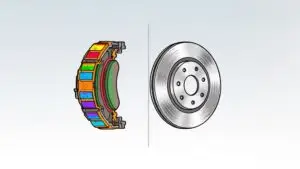
- Rotor discoloration. Brake guidance describes blueing of a single disc and hot spots on the rotor face as clear signs of overheating.
- Dragging. The car feels sluggish, slows when you coast, or loses fuel economy for no obvious reason.
- Grinding or squealing. A noise that stays after the pedal is released points to a pad that never lets go.
- Uneven pad wear. One pad worn thin while its partner looks fresh is a classic fingerprint of a caliper that binds.
Longer stopping distances, a soft or spongy pedal, and a brake warning light can back up any of these signs.
Heat is the giveaway: a caliper that refuses to release can leave pads and rotor overheated and unevenly worn, which is why a single hot or blued wheel deserves attention fast.
How can you check for a sticking caliper safely?
You do not need a lift to gather useful clues. Work slowly, and treat every brake component as hot until proven otherwise.
- Park on level ground, set the parking brake only if the rear brakes are not the suspect, and let the vehicle sit for a few minutes.
- Look through each wheel for rotor discoloration, unevenly worn pads, or wet fluid around the caliper and hose.
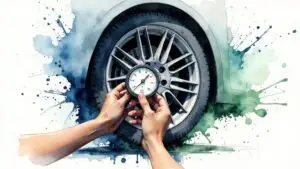
- After a short, low-speed drive with gentle braking, carefully bring the back of your hand near each wheel’s edge. Do not touch the rotor or caliper. A wheel that radiates far more heat than the others suggests a stuck caliper.
- Notice how the car coasts in a safe, empty spot. If it slows quickly with your foot off the pedal, one brake is likely dragging.
- If a technician lifts the car safely, a wheel that spins hard by hand compared with its partner on the same axle confirms drag.
A collapsed or internally restricted brake hose can trap pressure and mimic a bad caliper, so a good diagnosis checks both. Please do not spray WD-40 or other solvents on pads and rotors, do not hammer on brake parts, and do not keep driving with a hot wheel.
Pro Tip: Check the same wheel on both sides of the axle. A difference between left and right tells you far more than any single reading.
What mechanical problems make a brake caliper stick?
Most sticking calipers come down to a part that can no longer move freely. These are common failures that can make a caliper stick:
- Seized piston. Corrosion or a collapsed seal keeps the piston from pulling back, so the pad never leaves the rotor.
- Stuck guide or slide pins. On a floating caliper, rusted or dry pins let one pad ride the rotor constantly. Proper lubrication of slides and pistons helps prevent that binding and the uneven pad wear that follows.
- Torn or hardened boots and seals. Once the rubber cracks, dirt and moisture reach the moving parts and they start to bind.
- A collapsed brake hose. The hose can act like a one-way valve, letting fluid in when you press the pedal but refusing to let pressure back out.
- Swollen phenolic pistons. Some calipers use phenolic pistons that can absorb moisture when a vehicle sits for six months or more, causing the piston to grow and bind. Driving regularly and inspecting periodically help avoid it.
Knowing the cause matters because it decides the repair. A dry guide pin may need only cleaning and fresh lubricant, while a seized piston usually means a rebuilt or new caliper.
When does a sticking caliper become urgent?
Some combinations mean you should stop driving rather than gamble on a few more miles.
- Smoke, a strong burning smell, or a wheel too hot to approach. Pull over safely and have the vehicle checked before it moves again.
- A strong pull to one side with a soft pedal or reduced braking. That pairing means your stopping power is already compromised.
- Persistent grinding or metal-on-metal noise. It signals that pad material is gone and the rotor is being damaged.
Not every sound is an emergency. A light, occasional squeak after rain is different from a noise that gets louder each week. AAA advises that brake noise that persists or worsens after an attempted fix needs immediate inspection, because a safety-critical failure may follow. Our guide to squeaky brakes and when they are urgent walks through the difference.
What can you safely try before you reach a shop?
Your goal is to reduce risk and give the technician better information, not to fix the caliper in the driveway.
- If the car still feels drivable, go slowly to a nearby shop. Skip heavy braking and long highway runs.
- Note which wheel runs hot, when the noise appears, and whether it happens cold or only after driving.
- Take photos of any rotor blueing and record the sound on your phone.
- If the rotors are dirty, removing brake dust safely before you photograph them makes discoloration easier to see.
- Leave penetrating oils off the pads and rotors, and never keep driving on a wheel that stays hot.
Pro Tip: Write down the exact conditions when symptoms start, such as speed, temperature, or time since the last stop. Those details help us pinpoint the fault faster.
At the curb, a technician will usually repeat the heat and drag checks you just read about, so your notes line up with what we do next.
When should you see a mechanic, and what will they do?
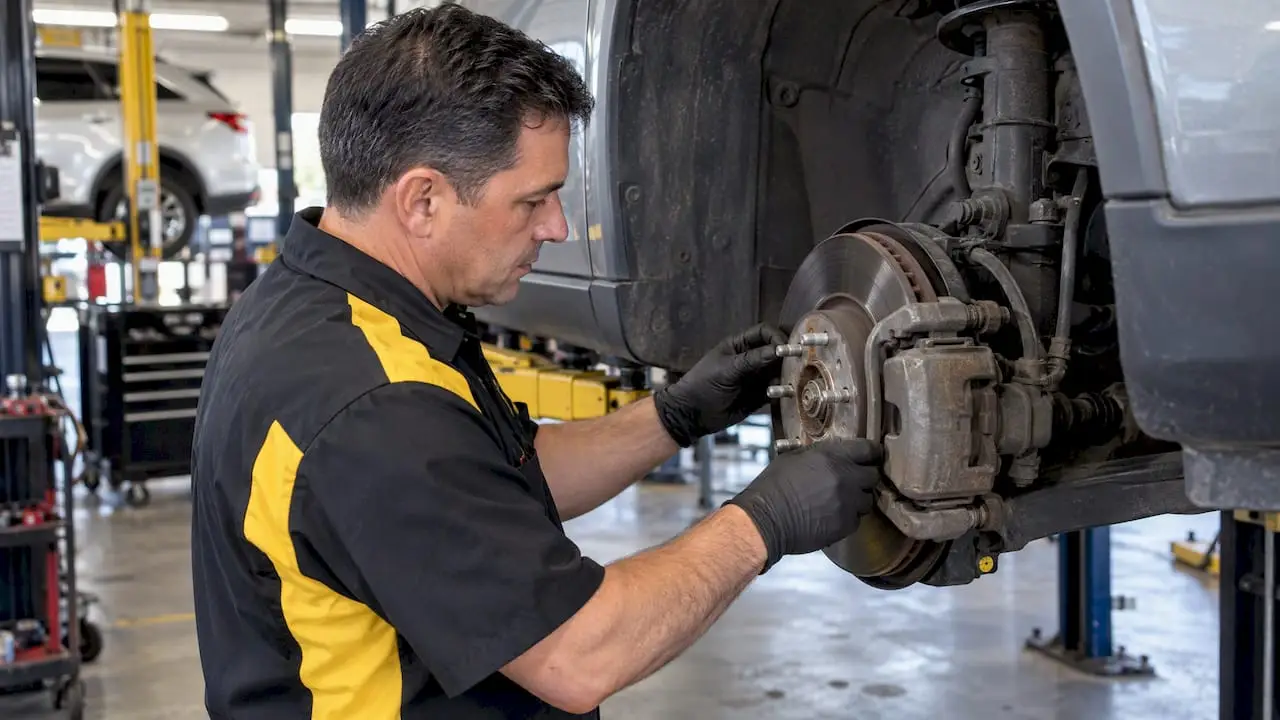
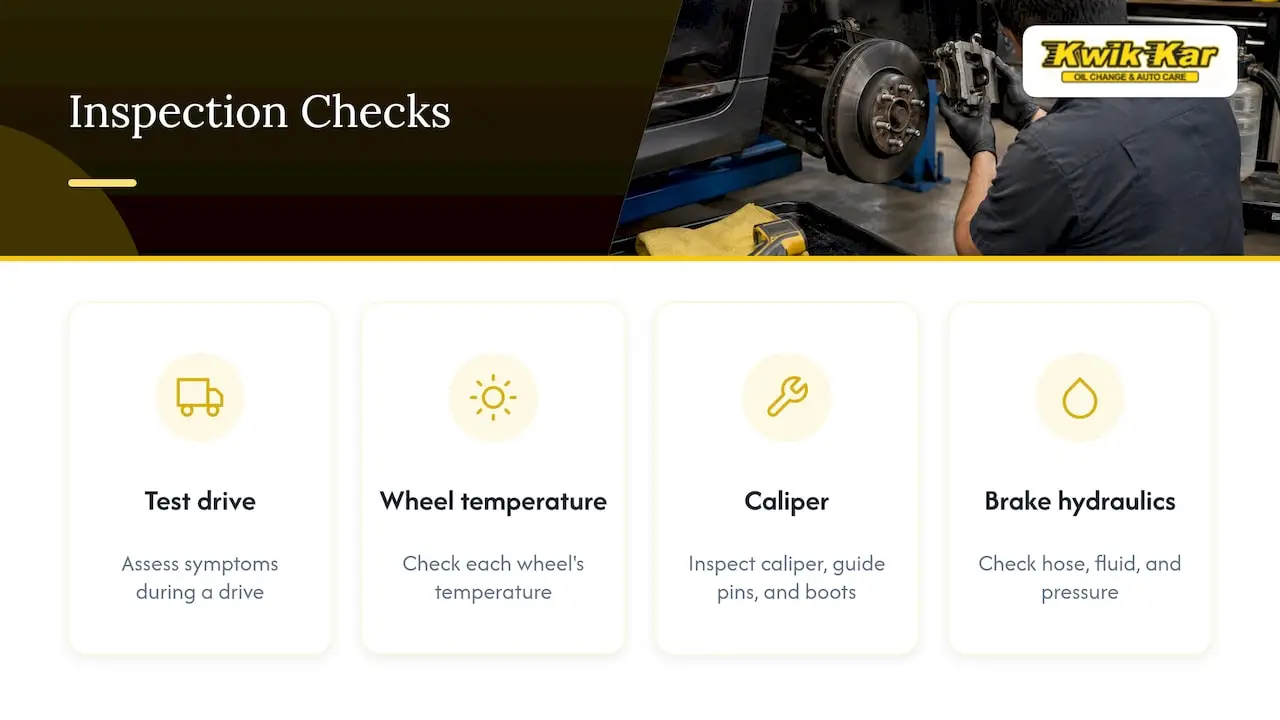
See a professional when symptoms show up together or any symptom keeps getting worse. A thorough inspection typically includes a test drive, a wheel temperature check, a wheel-off look at the caliper, guide pins, and boots, a brake hose check, and a brake fluid and pressure test.
Repairs range from cleaning and lubricating guide pins to rebuilding or replacing the caliper and hose. If the wheel overheated, pads and rotors often need replacing too, and our article on inspecting brake rotors explains what technicians look for.
Ask whether the technician is ASE-certified, whether you will receive digital inspection photos, and what warranty covers parts and labor. If the wheel is smoking or the pedal feels soft, towing is safer than driving in.
Our perspective on diagnosing and fixing sticking calipers
We see the same pattern often: a driver tries to quiet a dragging brake with a spray can or a few more weeks of driving, and the heat quietly ruins pads and rotors that would have been fine. Our ASE-certified technicians check wheel temperature, inspect the caliper, pins, and hose, and photograph what they find so you see the evidence yourself. We report plainly, stand behind our work with warranty coverage, and would rather you book an inspection early than guess at a fix.
— Kwik Kar
Schedule a brake inspection at Kwik Kar Richardson
If you suspect a sticking caliper, bring it to us for a brake inspection or brake repair in Richardson.
- ASE-certified technicians
- Digital inspection photos so you can see what we see
- Warranty coverage and discounts for military and first responders
Book your brake service at Kwik Kar Richardson today.
FAQ
How do you know if your brake calipers are stuck?
Look for a car that pulls to one side, a wheel that runs much hotter than the others, or a brake that drags when you are off the pedal. Burning smells and a blued rotor add weight to the diagnosis.
Can I spray WD-40 on brake calipers?
No. Oil on pads or rotors reduces friction and can make stopping less reliable, and it does not repair a seized piston or pin. Have a technician clean and service the caliper instead.
What are the symptoms of a stuck parking brake?
A stuck parking brake often shows up as a rear wheel that drags, a burning smell after driving, or a car that feels held back. It can also leave one rear wheel noticeably hotter than the other.
How to tell if brakes are dragging?
Notice whether the car slows quickly when you coast, whether a wheel is unusually hot after a short drive, and whether you hear a faint rub or squeal. Any of these with the pedal released points to a dragging brake.
Sources
- How to Know if Your Brakes Are Going Bad
- The Most Common Reasons For Squeaky Brakes | AAA Club Alliance
- Brake Pad Inspection Manual
- Alldata