Brake Pad Replacement Cost in Richardson: $150–$350 Per Axle
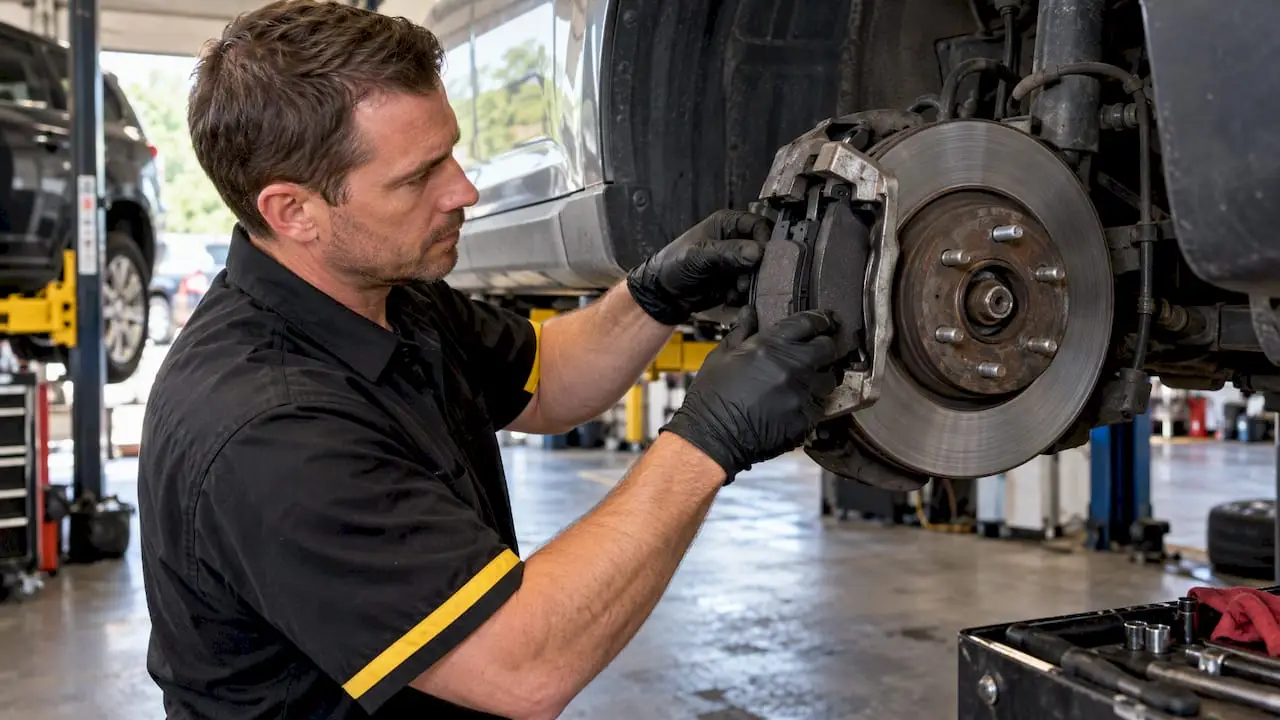
Brake pad replacement typically costs between $150 and $350 per axle, which puts a full four-pad job in the $300 to $700 range for most vehicles. The final number depends mostly on whether your rotors need attention, which pad material you choose, and the labor rate at the shop you pick.
TL;DR:
- Pads only commonly cost $100 to $300 per axle; adding rotor service raises the range to $250 to $500, and measurements determine the repair.
- A shop should measure rotor thickness and runout; rotors below minimum thickness or with deep grooves need replacement, while resurfacing requires adequate remaining thickness.
- Request an itemized estimate naming the pad brand and material, labor rate and hours, separate hardware or fluid charges, and parts and labor warranties.
- Newer vehicles with integrated or electric parking brakes require specific release procedures, while incorrect bleeding or bracket torque can compromise stopping power.
- A pads only job takes under an hour per axle; both axles with rotors take two to three hours, followed by bedding and a road test.
Table of Contents
- Cost Breakdown: Pads-Only Prices by Vehicle Type
- When Rotors or Other Parts Are Required
- Key Cost Drivers Behind Your Brake Bill
- DIY vs Professional Service: What You’re Really Weighing
- How to Read a Brake Estimate Before You Approve It
- How Long a Brake Pad Job Takes
- Our ASE-Certified Brake Technicians and Transparent Estimates
- Why We’d Rather You Spend a Little More Now Than a Lot More Later
- Get Your Brakes Checked in Richardson Today
- FAQ
- Sources
Cost Breakdown: Pads-Only Prices by Vehicle Type
A pads-only brake job covers two things: the parts and the labor to install them. On most passenger cars, that lands in the $150 to $350 per axle range, though several consumer guides put the more common midpoint closer to $100 to $300 per axle, with around $150 per axle showing up frequently as a typical figure. Front axle work often costs slightly more than rear work because front pads wear faster and carry more of the braking load, so technicians inspect them more closely and sometimes recommend thicker, higher-grade pads up front.
Here’s how that plays out across a few common vehicle types:
- An economy compact with standard semi-metallic pads usually falls at the lower end of the typical range, since parts are inexpensive and the job takes less labor time.
- A mid-size SUV or crossover tends to land in the middle of the range, reflecting larger rotors, bigger calipers, and slightly higher labor hours.
- A higher-performance or luxury vehicle with larger brake components or specialty pad formulations often pushes toward the upper end, sometimes beyond it, due to pricier parts and longer install times.
“Per axle” means both wheels on that end of the car get new pads in the same visit, since brakes almost always get replaced in pairs for even stopping power. Labor on a straightforward pads-only job usually runs under an hour per axle, though access, caliper design, and hardware condition can stretch that time.
When Rotors or Other Parts Are Required
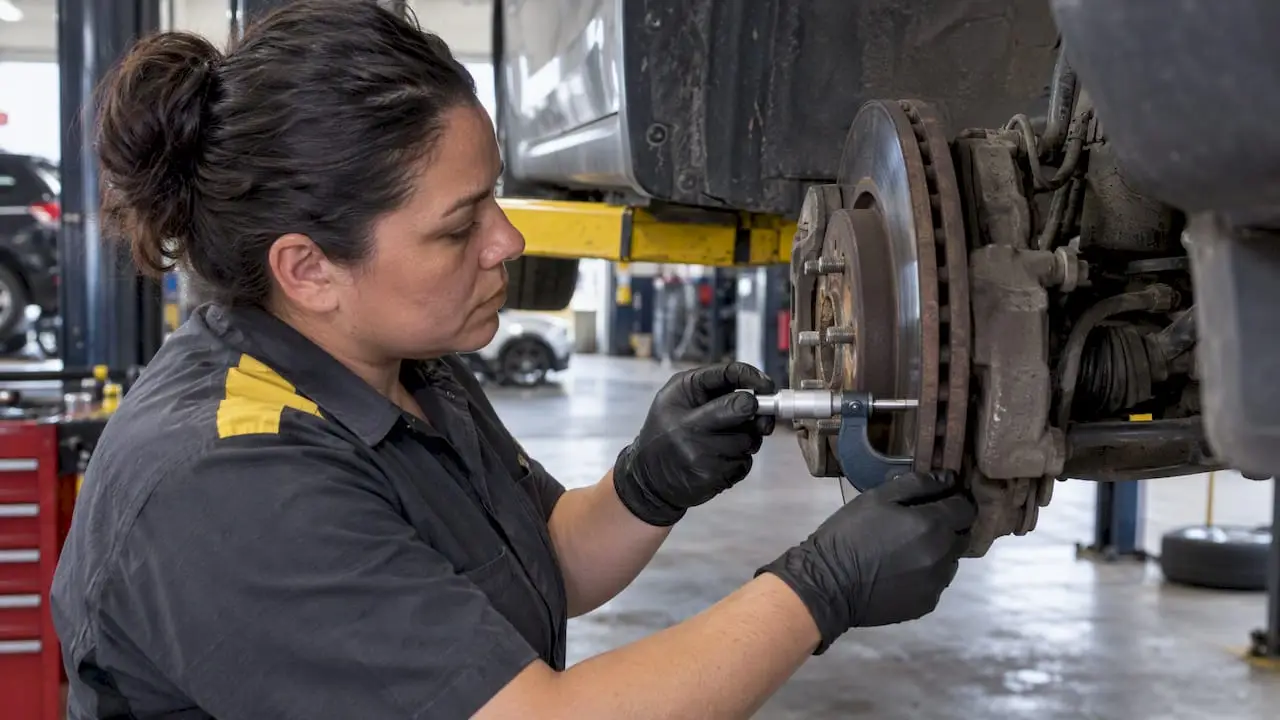
Pads rarely wear out in isolation. Rotors take heat and friction right alongside them, and by the time pads are thin, rotors have often developed grooves, uneven thickness, or a glazed surface that keeps new pads from biting properly. When a shop adds rotor work to the job, the price shifts: a combined pads-and-rotors service typically runs $250 to $500 per axle, roughly double what a pads-only job costs.
- Rotor resurfacing (machining the surface flat again) costs less than full replacement and works when the rotor still has enough thickness to meet safety specifications.
- Rotor replacement becomes necessary when the rotor has worn below its minimum thickness, developed deep grooves, or shows excessive runout.
- A rotor’s measurement, not its mileage, determines whether it can be resurfaced or needs to be swapped out.
Industry guidance notes that rotors have become central to modern brake service, since a worn or scored rotor paired with fresh pads often produces noise and vibration almost immediately. That’s why a trustworthy shop checks rotor thickness and runout before finalizing any brake quote rather than quoting pads alone and hoping the rotors pass.
Key Cost Drivers Behind Your Brake Bill
A few variables explain most of the difference between a $150 quote and a $500 one. Before you compare estimates, it helps to know what’s actually moving the number.
- Pad material: Semi-metallic pads cost less upfront, while ceramic pads run higher but tend to produce less dust and quieter stops.
- Vehicle complexity: Larger calipers, integrated parking brake mechanisms, and EV or hybrid regenerative braking systems can add labor time and parts cost.
- Labor rate and hours: Shop labor rates vary, and some vehicles simply take longer to access the caliper and bracket hardware.
- Hardware and fluid: Replacement clips, shims, and a brake fluid top-off or flush are common add-ons that show up as separate line items.
- Brand and warranty: Ask which pad brand the shop installs and what warranty backs it. A slightly higher price often buys a longer warranty period.
DIY vs Professional Service: What You’re Really Weighing
Buying pads alone is cheaper than paying for installed labor, and that gap is the main appeal of doing it yourself. But brake work carries real risk if it’s rushed or done without the right tools.
- Skipping a proper rotor inspection can leave a damaged rotor in place, which shortens the life of brand-new pads.
- Integrated parking brake calipers and electric parking brake systems on many newer vehicles require specific release procedures before the caliper can even come off.
- A bad bleed or an unevenly torqued caliper bracket can affect stopping power in ways that aren’t obvious until you’re already braking hard.
If you do hire a shop, insist on ASE-certified technicians and ask whether rotor measurement and a proper bedding procedure are included.
Pro Tip: Always ask whether the price you’re quoted includes a rotor inspection, not just pad replacement, since that single question prevents most brake job surprises.
How to Read a Brake Estimate Before You Approve It
A clear estimate should separate every cost so you know what you’re paying for and why.
- Confirm the parts line item names the pad brand and material, not just “brake pads.”
- Ask for the labor rate and estimated hours, since that math should add up to the total labor charge.
- Check whether rotor inspection is included and what the shop will do if rotors measure outside spec.
- Ask about hardware kits, brake fluid service, and whether those are already included or billed separately.
- Confirm the warranty length on both parts and labor before you approve the work.
Walk away from any quote that just says “brake job” with no breakdown. A shop that can’t itemize pads, rotors, labor, and hardware separately makes it hard to know what you’re actually paying for.
How Long a Brake Pad Job Takes
A pads-only job on a single axle usually takes under an hour, while a full pads-and-rotors job on both axles often runs closer to two to three hours total. Every proper brake job should end with a road test, and new pads need a bedding or burnish period where the technician performs a series of controlled stops to seat the pad material against the rotor surface. Skipping that step is one of the most common reasons drivers notice squealing or reduced bite in the days after a brake job.
Our ASE-Certified Brake Technicians and Transparent Estimates
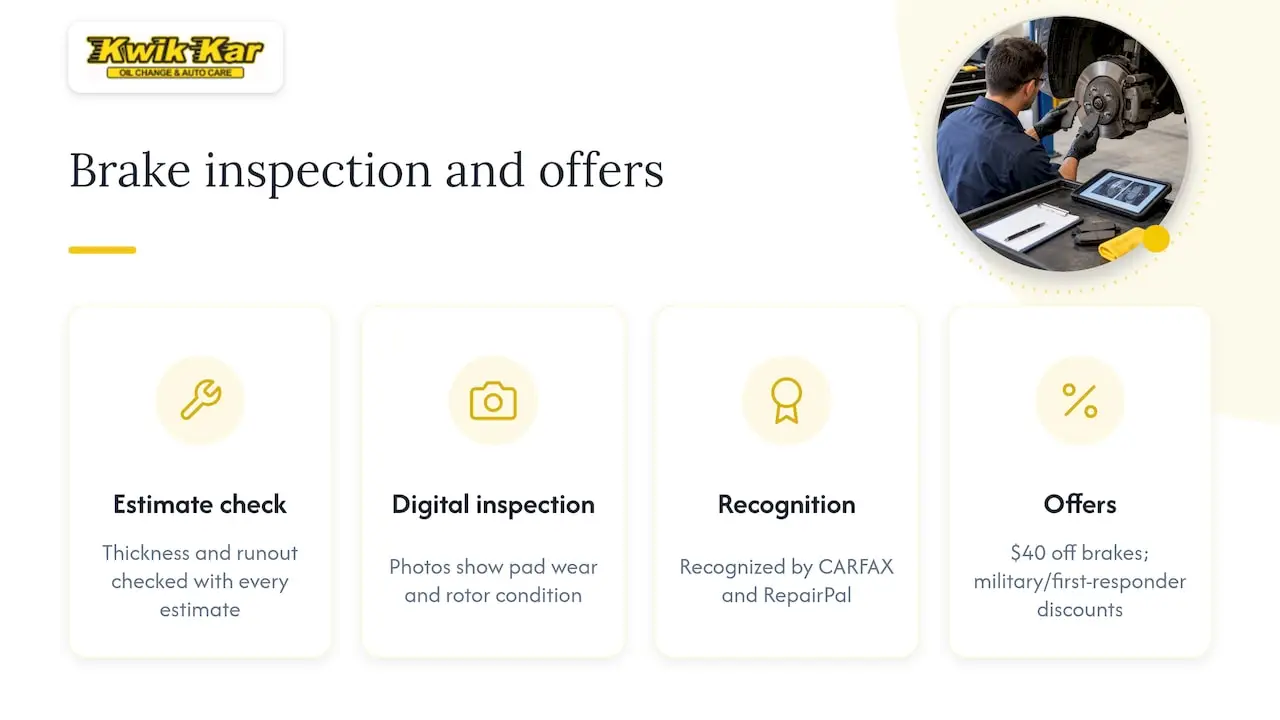
We staff ASE-certified technicians who inspect rotor thickness and runout as a standard part of every brake estimate, not an upsell added after the fact. Our digital vehicle inspections give you photos and plain-language notes on pad wear and rotor condition, so you can see exactly what we found before you approve any work. We’re recognized by CARFAX and RepairPal, and we offer a $40 off brake replacement coupon along with discounts for military members and first responders. Our brake repair page outlines the full scope of what we check, and our post on brake pad replacement cost, time, and safety walks through the process in more detail.
Why We’d Rather You Spend a Little More Now Than a Lot More Later
Cheap pads on worn rotors almost always cost more down the road, since the rotor damage that caused the noise or pulsing in the first place doesn’t go away just because the pads are new. If you’re hearing a squeal, feeling a pulse through the brake pedal, or seeing a wear indicator light, book an inspection before it turns into a rotor replacement you could have avoided.
— Kwik Kar
Get Your Brakes Checked in Richardson Today
Worn pads and scored rotors don’t fix themselves, and waiting usually turns a pads-only job into a pads-and-rotors one. We inspect, measure, and show you exactly what your brakes need before we touch a single bolt, with ASE-certified technicians handling every step.
- Book a brake inspection on our brake repair page and get a clear, itemized estimate before any work starts.
- Already seeing warning signs? Read when to replace brake pads and book your appointment this week.
FAQ
How much does it cost to replace all 4 brake pads?
Replacing all four brake pads typically totals $300 to $700, assuming the job is pads-only on both axles. If rotors also need resurfacing or replacement, the total climbs higher since each axle’s cost roughly doubles with rotor work included.
Is it cheaper to replace brake pads yourself?
Buying pads alone is cheaper than paying for installed labor, but skipping a professional rotor inspection can leave damage in place that shortens the life of new pads. Vehicles with integrated parking brake calipers or electric parking brake systems often require specific procedures that make professional installation safer.
Can you drive with bad brake pads?
Driving on worn brake pads is unsafe because stopping distance increases and the pad backing material can eventually contact the rotor directly, causing further damage. If you hear squealing, feel grinding, or notice a dashboard brake warning light, have your brakes inspected promptly rather than continuing to drive.
Should I replace all four brake pads at once?
Brakes are typically replaced in pairs per axle rather than individually, since uneven wear side to side or front to back can affect braking balance. Whether both axles need service at the same visit depends on how worn the rear pads are compared to the front, which a technician can confirm during inspection.
Sources
- How Much Does It Cost To Replace Brake Pads? | AAA Automotive
- Brake Repair Prices & Cost Estimates — KBB
- Why the brake rotors are ground zero for today’s brake service — VehicleServicePros
- Automobile Maintenance and Light Repair (G1) Test — ASE