A full brake pad and rotor replacement typically costs $400 to $900 per axle. In many cases, you’ll also see quotes in the $250 to $500 per axle range depending on the vehicle, parts selected, and labor involved.
If you’re reading this because your car just started squealing at the stoplight on Belt Line or grinding on the way home from work, you’re not alone. Brakes have a way of making noise at the exact moment you were hoping your car would just behave for one more month.
The good news is that brake work is one of the easier repairs to understand once someone breaks the estimate into plain English. The final bill isn’t random. It comes from a few specific pieces: pads, rotors, labor, and the kind of vehicle sitting in the bay. If you know what those parts do and what they usually cost, it gets a lot easier to tell the difference between a fair quote and one that deserves a second opinion.
That Sound Is Your Wallet Calling
You back out of the driveway in Richardson, tap the brake pedal, and hear a sharp squeal that was not there last week. For most drivers, that sound is the moment brake service stops feeling optional and starts feeling like a budget decision.
The price range mentioned earlier is a useful starting point, but the number on the estimate matters less than what is included. One shop may quote pads only. Another may quote pads, rotors, hardware, and a brake fluid check. That is why two estimates for what sounds like the same job can land far apart.
Around town, brake wear tends to show up faster than many owners expect. Short trips, traffic lights, school pickup lines, and repeated stop-and-go driving build heat and wear into the system. Front brakes also usually wear faster because they handle more of the stopping load.
Practical rule: If the squeal is getting louder, the pedal feels soft, or the steering wheel shakes when you slow down, get it checked soon. Waiting can turn a pad job into a pad-and-rotor job, and in some cases a caliper or brake fluid issue gets added to the ticket.
Another point that catches people off guard is how shops write the estimate. Brake work is often priced per axle, which means the front pair or the rear pair. If both axles need service, the total climbs quickly.
This is also where an independent shop can save Richardson drivers real money. In many cases, a trusted local shop like Kwik Kar can come in lower than a dealership because labor rates are usually more manageable and the estimate is easier to read line by line. That matters. An itemized quote lets you see whether you are paying for pads, rotors, labor, shop supplies, and any recommended extras, instead of staring at one large number and guessing. Add in local promotions or seasonal discounts, and the gap between dealership pricing and a well-documented independent quote can be significant.
Understanding Your Brake System Components
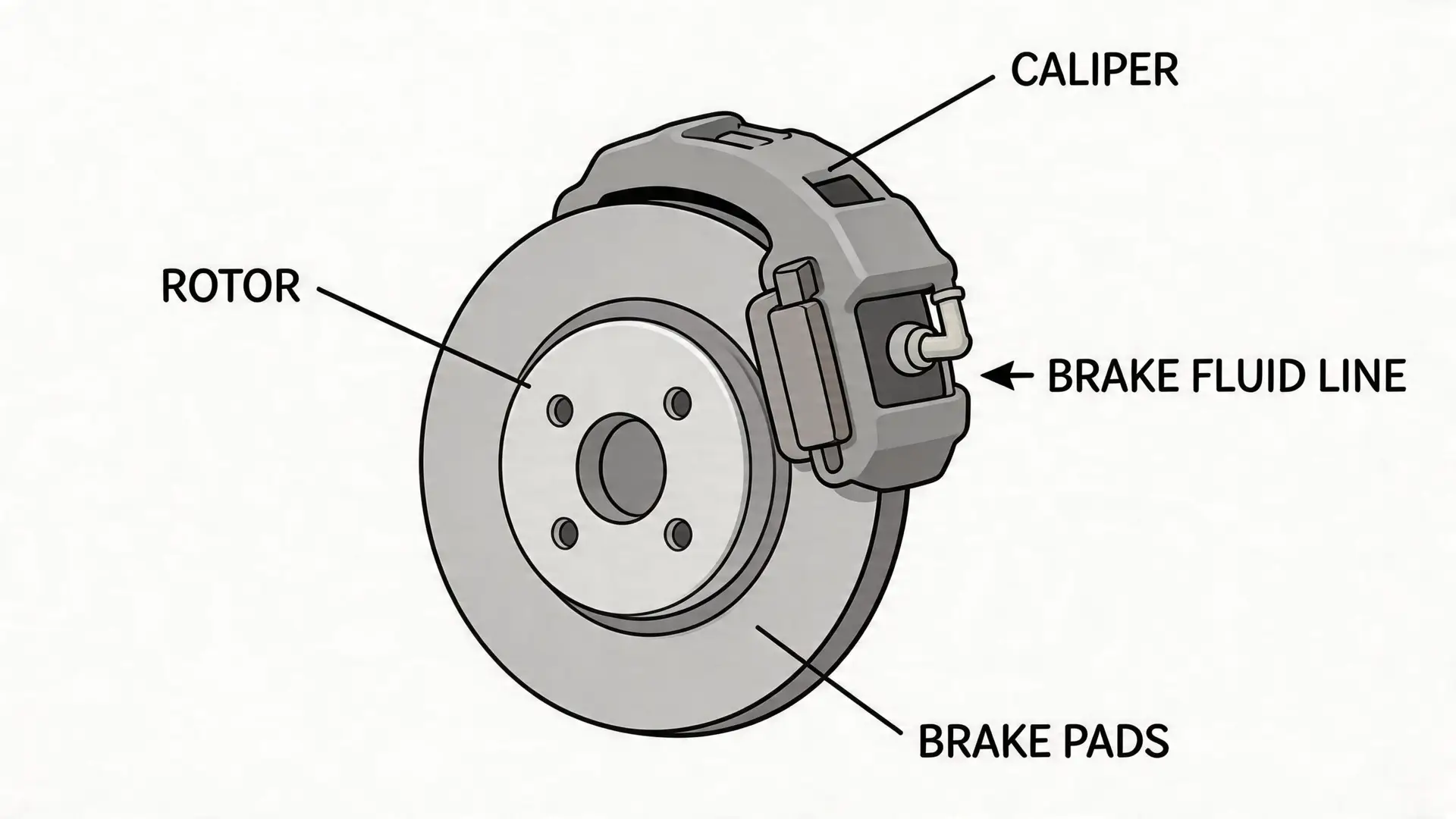
Disc brakes are simple once you picture them the right way. Think of a bicycle hand brake, but built to stop a much heavier machine at much higher speed. Your car uses pressure to squeeze friction material against a spinning metal surface. That friction slows the wheel.
Brake pads do the gripping
Brake pads are the parts that wear down by design. They press against the rotor every time you step on the brake pedal. If you want a simple analogy, pads are the soles of your shoes. They create the grip, and over time that friction material gets thinner.
When pads wear too far, they can’t manage heat well and they stop protecting the rotor. That’s often when a minor brake service turns into a more expensive brake-and-rotor job.
Rotors take the heat
Rotors are the metal discs bolted to the wheel hubs. They spin with the wheel, and the pads clamp onto them to slow the vehicle. Rotors deal with heat, pressure, and repeated friction.
A healthy rotor should have a smooth braking surface. A worn rotor may be grooved, heat-spotted, or uneven. When that happens, you may feel pulsing in the pedal or vibration during braking. Even if the car still stops, it won’t feel as controlled or as smooth.
The pad is the friction material. The rotor is the surface it grabs. If either one is compromised, the system can’t work the way it should.
Calipers apply the force
Calipers are the clamps in the system. They use hydraulic pressure to push the pads against the rotor. Most drivers don’t need to replace calipers during routine brake service, but they matter because a sticking caliper can wear pads unevenly, overheat a rotor, and create pulling or dragging.
Here’s the basic relationship:
- Brake pads: Wear item that creates stopping friction
- Rotors: Spinning discs that absorb and shed heat
- Calipers: Hydraulic clamps that squeeze the pads into the rotors
If you understand those three parts, you can read an estimate without feeling like the shop is speaking another language. That also helps when comparing quotes or reviewing a guide on the difference between brake pads and rotors.
The Bottom Line A Detailed Brake and Rotor Cost Breakdown
A brake estimate makes more sense once you separate the job into line items. For most cars, the quote comes down to three things: pads, rotors, and labor. If you are reviewing estimates from a dealership and a local independent shop, this is also where savings are often found.
As noted by Consumer Reports in its guide to car repair pricing and shop comparisons, labor rates and parts markup can vary a lot from one shop to another. In practice, that often means a trusted independent shop can save Richardson drivers meaningful money compared with dealership pricing, especially on routine brake work where the repair itself is straightforward but the invoice structure is not.
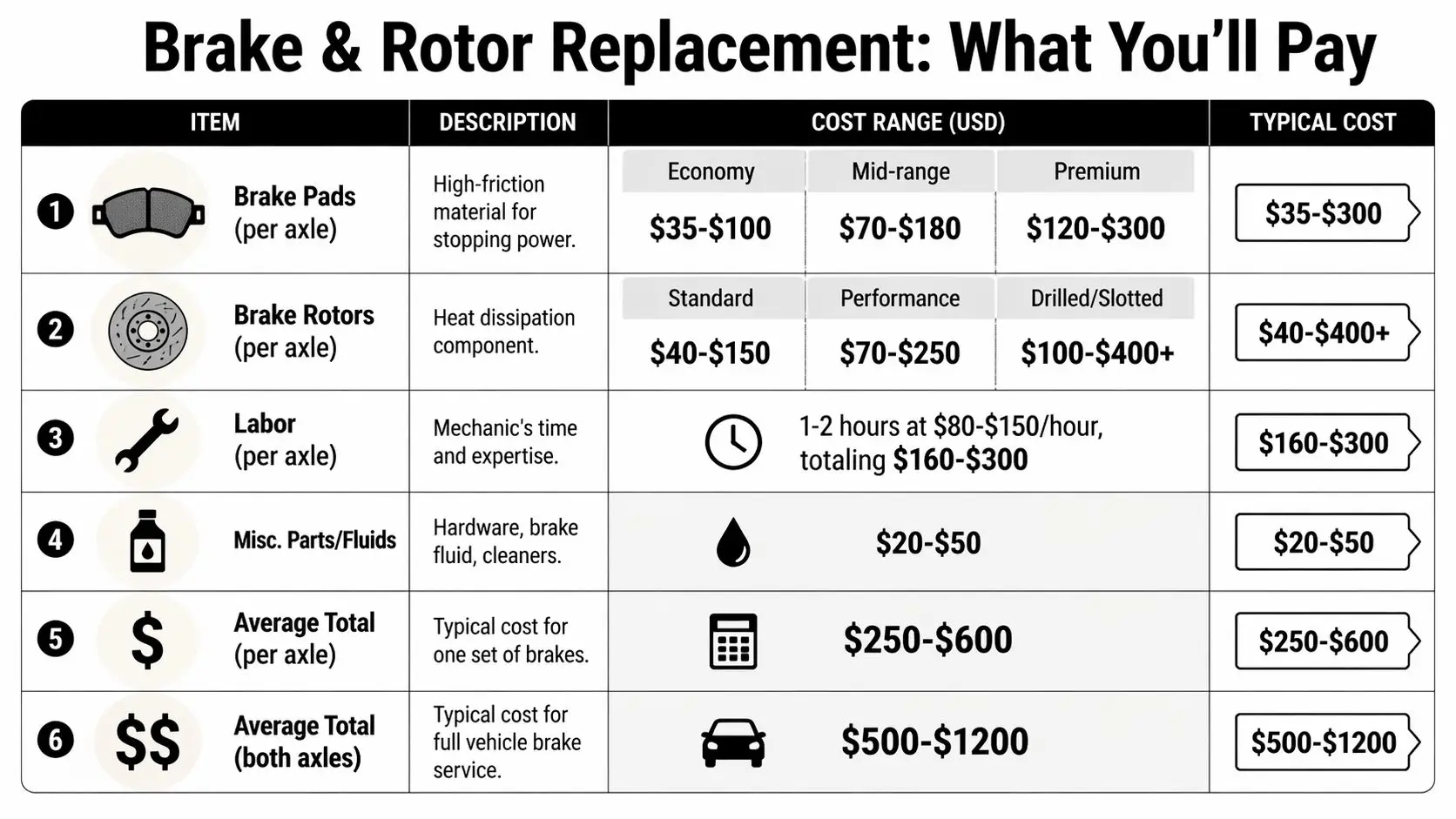
What per axle actually means
An axle means one pair of brakes. Front axle means the two front wheels. Rear axle means the two rear wheels.
That detail prevents a lot of confusion at the counter. A quote for one axle is not a quote for the whole vehicle. If your front brakes are worn out but the rear still has life left, a good shop should say that clearly and price only what the car needs today.
If you want a quick refresher on how those parts work together, this guide on the difference between brake pads and rotors helps make the estimate easier to read.
A simple breakdown table
| Vehicle Type | Average Part Cost | Average Labor Cost | Total Estimated Cost (Per Axle) |
|---|---|---|---|
| Compact sedan | Lower than larger vehicles | Varies by shop rate | Usually on the lower end of normal brake pricing |
| Midsize sedan | Moderate | Varies by shop rate | Often similar to compact and small crossover pricing |
| SUV or truck | Higher due to larger, heavier-duty parts | Varies by shop rate | Commonly higher than many sedans |
| Full vehicle, both axles | Parts and labor combined | Parts and labor combined | Usually much more than a single-axle service |
Where the money goes
Most estimates break into these buckets:
- Pads: Friction material that wears out first
- Rotors: Two metal discs per axle
- Labor: Remove old parts, inspect hardware, install new components, torque everything correctly, and road-test if needed
That itemization matters. It lets you compare two quotes without guessing. One shop may look cheaper until you notice it left out rotor replacement, hardware, or brake fluid service that another shop included.
At our level in the trade, honest shops differentiate themselves from expensive ones. A dealership quote can climb fast because of higher labor rates, OEM-only pricing, and bigger markup. A solid independent shop like Kwik Kar can often trim that total while still using quality parts and showing each charge on the estimate. For Richardson drivers, that can mean keeping a few hundred dollars in your pocket on a full brake job, especially when local specials or community discounts apply.
A brake quote should read like a grocery receipt, not a mystery bill. If the estimate is one lump sum with no parts and labor breakdown, ask for the details before you approve the work.
Front brakes usually wear sooner because they handle more of the stopping load. Rear brakes still need inspection, but many vehicles need front pads and rotors first.
Why Your Brake Job Cost Can Vary So Much
Two drivers can walk into different shops asking for “new brakes and rotors” and get quotes that are nowhere near each other. That doesn’t automatically mean one shop is honest and the other isn’t. Sometimes the cars themselves are the reason.
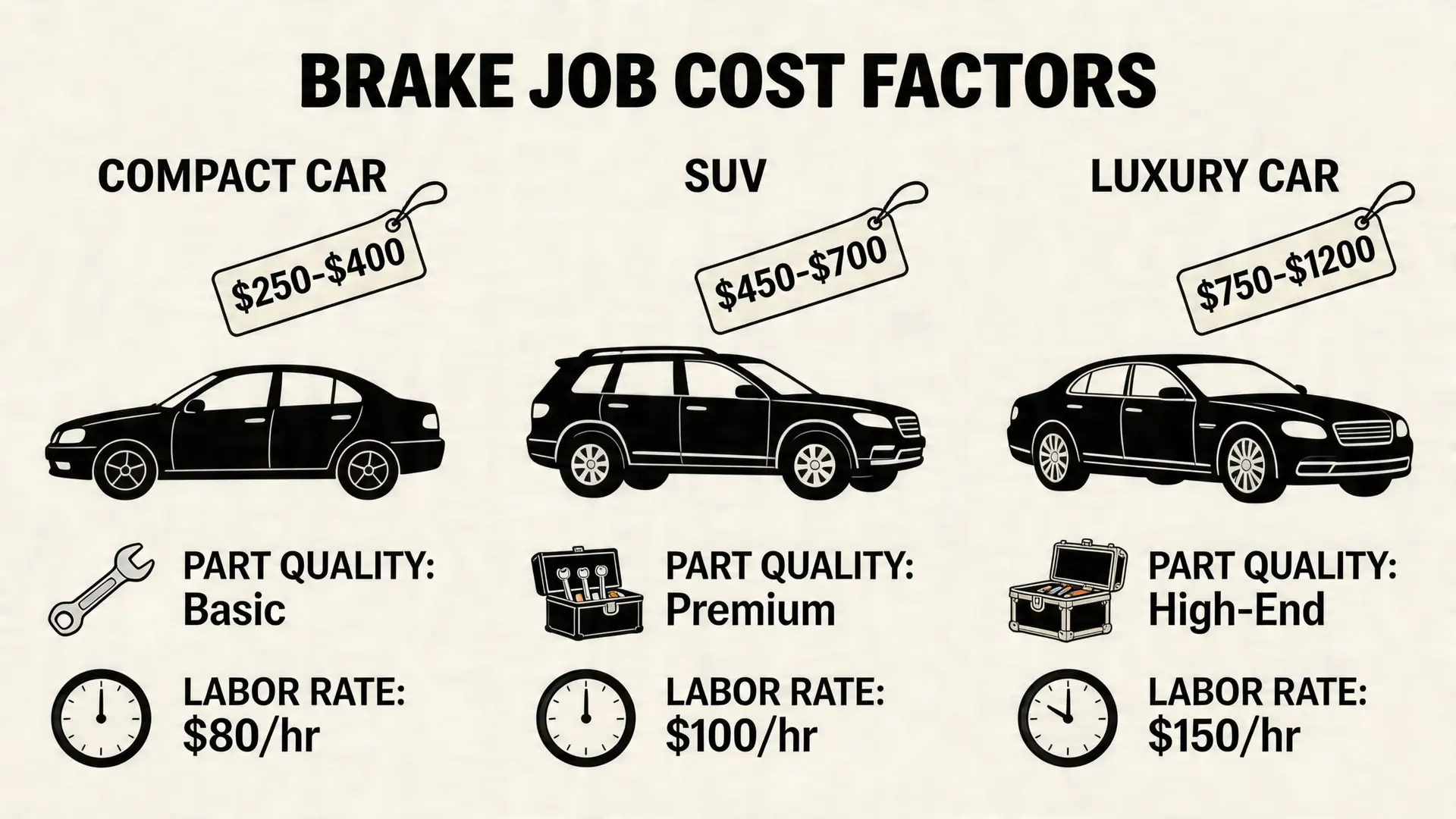
Vehicle type changes everything
A compact sedan usually uses smaller, simpler brake components than a heavy SUV, pickup, or performance car. Bigger vehicles need bigger braking surfaces and more heavy-duty hardware because they carry more weight and generate more heat during stopping.
Premium models raise the price even more. BestParts notes that a BMW 3 Series can cost over $1,000 for front pads and rotors, while a Ford Taurus is around $650. The gap comes from specialized parts such as multi-piston calipers and high-carbon rotors.
Parts choice matters
There’s a real trade-off between OEM parts and aftermarket parts. OEM means the part is built to the vehicle manufacturer’s original spec. Aftermarket means another company makes a compatible replacement.
Neither option is automatically wrong. The key is choosing quality. Good OEM-equivalent parts from brands a professional shop trusts can deliver solid braking feel, noise control, and service life without paying for a vehicle-logo box.
What usually doesn’t work well is chasing the cheapest possible part online. Low-grade friction material can be noisy, dusty, or inconsistent. Cheap rotors can also create comeback problems if the finish, metallurgy, or machining isn’t up to the job.
For daily drivers, the sweet spot is usually quality OEM-equivalent parts, not the cheapest part on the shelf and not always the most expensive upgrade either.
Resurfacing versus replacement
In some cases, a technician may discuss resurfacing rotors instead of replacing them. That means machining the rotor surface to clean it up, provided the rotor still meets safe specifications and isn’t too worn or damaged.
That can be a cost-saving option on the right vehicle with the right rotor condition. It isn’t always possible, and it isn’t always smart. Grooved, heat-damaged, or undersized rotors should be replaced, not forced through one more cycle.
A quick visual can help if you want to see the differences among vehicle categories and why costs separate the way they do:
Why one quote feels high and another feels low
When a quote comes in higher than expected, the usual reasons are:
- Heavier vehicle: SUVs and trucks use larger brake components.
- Premium platform: European or performance models often need specialized parts.
- Part quality: Better pads and rotors cost more, but they often fit and perform better.
- Condition of related components: If hardware is seized or other brake parts need attention, the quote can rise.
That’s why “how much are new brakes and rotors” doesn’t have one universal answer. The car decides a lot of the bill before the wrench ever turns.
Professional Service vs DIY Brake Replacement
Saturday afternoon, the car is on jack stands, one wheel is off, and a caliper bracket bolt will not move. That is the point where a brake job stops feeling like a money-saving project and starts eating time, tools, and patience.
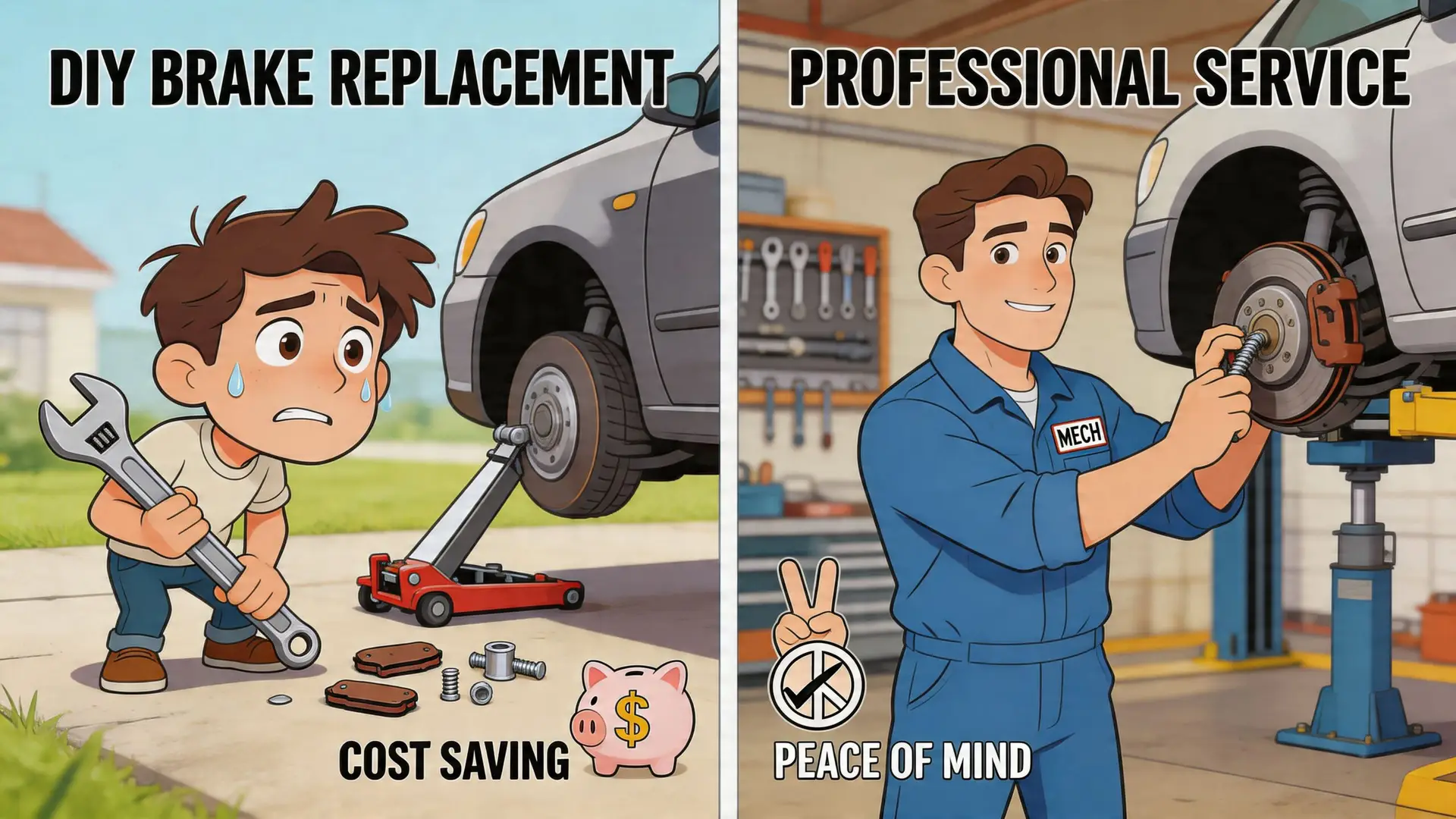
DIY brake work can make sense for an experienced owner with the right tools, a safe work area, and a clear understanding of torque specs, caliper service, and rotor condition. On a straightforward vehicle with no rust, no seized hardware, and no hidden problems, doing pads and rotors at home can cut out labor charges.
The catch is that brake service is rarely just a parts swap. A good repair also checks slide pins, pad hardware, rotor thickness, wear patterns, brake hose condition, and whether the caliper is releasing correctly. Miss one of those details and the new parts can wear badly, make noise, or leave the car pulling on the first hard stop.
DIY usually gets risky in a few specific places:
- Stuck or corroded hardware: One seized bolt can turn a two-hour job into an all-day repair.
- Wrong parts: Pads and rotors that technically fit can still create noise, dust, poor pedal feel, or uneven braking.
- Missed root causes: A sticking caliper or frozen slide can ruin new pads quickly.
- No test equipment or shop support: If the pedal feels soft or the braking feels uneven afterward, diagnosis gets harder fast.
For many Richardson drivers, the key comparison is not DIY versus dealership. It is dealership versus a trusted independent shop.
That matters because the price gap can be substantial. Dealerships often charge more for labor, higher-marked-up parts, and packaged brake services that are not always explained line by line. A reputable independent shop like Kwik Kar can often save drivers a meaningful amount while still using quality OEM-equivalent or premium parts, and the estimate is usually easier to read. You should be able to see pads, rotors, labor, and any hardware or fluid service separately.
That itemized approach helps you make a better decision. If the rotors are still serviceable, the shop should say so. If replacement is the smarter call, the reason should be clear. If you want to understand what a technician is checking before making that recommendation, this guide on how to inspect brake rotors is a useful reference.
A good independent shop also gives you options. For a daily commuter, OEM-equivalent parts are often the best value. For heavier SUVs, frequent highway driving, or vehicles that see a lot of wet conditions, stepping up to better pad material or coated rotors can pay off in longer life and less noise. Road moisture and corrosion also affect how brake hardware ages over time, which is one reason some owners also look into rust protection measures for your vehicle.
If you have the tools and know what normal brake wear looks like, DIY can work. If you want a warranty, a clear estimate, and a technician who can spot problems before they cost you another set of pads, a well-run independent shop is usually the better value.
Smart Strategies to Save Money on Your Next Brake Service
You can’t make brake service free, but you can keep it from getting more expensive than it needs to be. The biggest savings usually come from timing and communication.
Start with the noise early. A squeak or light scraping may be the moment to schedule an inspection before worn pads chew into the rotor surface. Waiting often turns a simpler service into a larger parts bill.
Ask for options, not just a price. Shops can often explain the difference between standard aftermarket, OEM-equivalent, and premium parts in a way that helps you match the repair to how you drive.
A few practical ways to keep the bill under control:
- Request an itemized estimate: Seeing pads, rotors, and labor separately helps you compare apples to apples.
- Discuss part quality openly: For a commuter vehicle, a quality OEM-equivalent setup is often the best balance.
- Address brake noise promptly: Early inspection can prevent additional rotor damage.
- Bundle sensible maintenance: If the vehicle is already in the bay, related service can be more convenient and easier to plan for.
- Protect the vehicle overall: Corrosion and harsh conditions affect more than just brakes, so it’s worth learning about rust protection measures for your vehicle if your car sees wet roads, debris, or long-term outdoor parking.
Ask the shop, “What exactly is included in this quote, and what condition are the old parts in?” A solid advisor will answer clearly without getting defensive.
The cheapest quote isn’t always the lowest long-term cost. The best value is a brake job done once, done correctly, with parts that fit the car and the way you use it.
Finding Transparent Brake Service in Richardson TX
By the time you’ve compared estimates, the main thing you want is clarity. You want to know what parts are being replaced, why they need it, and whether the price is fair for your vehicle.
That’s where a lot of local drivers get tripped up. They hear one big number and aren’t sure whether it reflects quality parts, a legitimate labor charge, or markup hiding inside vague wording. A trustworthy shop removes that uncertainty by showing the estimate line by line and answering questions in plain language.
For Richardson commuters, families, and fleet owners, the best brake experience usually comes down to a short checklist:
- Itemized estimate: Pads, rotors, and labor should be broken out clearly.
- Credible parts choice: Ask whether the shop is using OEM-equivalent components from recognized suppliers.
- Qualified technicians: Brake feel and reliability depend on the details of installation.
- Straight answers: If a rotor can be reused, a good shop will tell you. If it can’t, they should explain why.
- Community fit: Local discounts for military, first responders, and healthcare workers can make a real difference when maintenance hits at the wrong time.
If you’re evaluating where to go, it also helps to review these signs of how to find a trustworthy mechanic before you book.
The short version is simple. The right brake shop doesn’t just install parts. It gives you confidence that the estimate is fair, the work is appropriate, and the car will stop the way it should when your family is in it.
If you want brake service from a local team that explains the estimate clearly, uses quality parts, and treats you like a neighbor instead of a ticket number, schedule with Kwik Kar Oil Change and Auto Care. Our ASE-certified technicians provide transparent brake inspections and repairs for Richardson drivers, with trusted service backed by NAPA AutoCare, plus discounts for military, first responders, and healthcare professionals.