Match Your Drive to Ceramic or Semi Metallic Brake Pads in Richardson
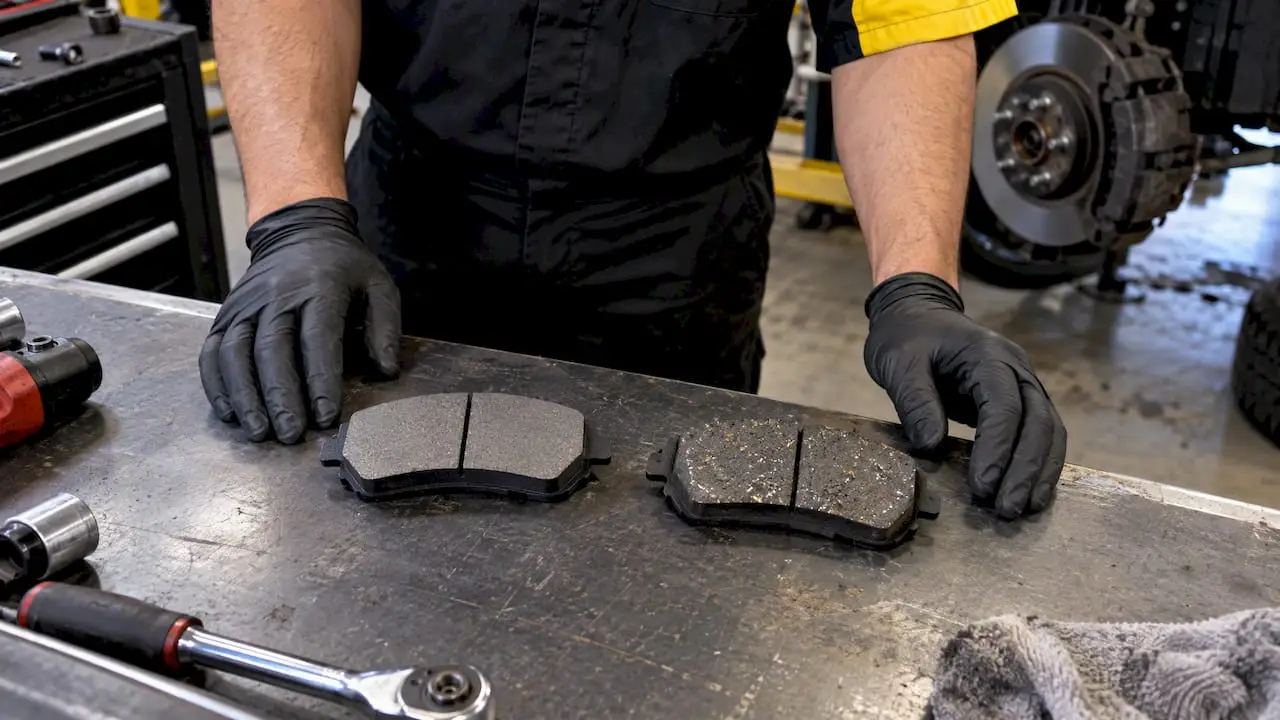
If you commute, carpool, or drive around town most days, ceramic brake pads are usually the better fit. If you tow, haul heavy loads, or drive mountain routes, semi-metallic pads handle the heat better. The real difference comes down to dust, noise, and heat tolerance, so always check your owner’s manual and have a technician inspect your brakes before deciding.
TL;DR:
- Semi-metallic pads are better suited for towing, hauling, and mountain driving due to their superior heat dissipation and fade resistance.
- Ceramic pads tend to last longer under daily commuting conditions because they cause less rotor wear and produce less dust and noise.
- Upfront cost is higher for ceramic pads, but they offer quieter operation and lighter dust, whereas semi-metallic pads are generally more affordable.
- Switching pads requires checking compatibility with your calipers and rotors, and proper bedding-in to ensure performance and longevity.
- Regular professional brake inspections are essential to confirm the correct pad type and maintain safety, especially if you notice noise or performance changes.
Table of Contents
- Ceramic vs Semi Metallic Brakes: A Quick Comparison
- What Ceramic and Semi-Metallic Pads Are Made Of
- Matching Pad Type to How You Actually Drive
- Ceramic and Semi-Metallic Pads: Pros and Cons
- How Long Each Pad Type Lasts and What That Means for Maintenance
- Switching Brake Pad Types: What to Check First
- Why Professional Brake Inspection Matters
- Our Take on Choosing the Right Pad for Richardson Drivers
- Get Your Brakes Inspected at Kwik Kar in Richardson
- FAQ
- Sources
Ceramic vs Semi Metallic Brakes: A Quick Comparison
Before getting into the chemistry and engineering behind each pad type, it helps to see how they stack up where it counts: on the road. Ceramic and semi-metallic pads feel different from the first push of the pedal, and that difference only grows as your brakes heat up.
Ceramic pads tend to feel smooth and predictable, with a softer initial bite that many drivers find easier to modulate in stop-and-go traffic. Semi-metallic pads bite harder right away, which some drivers like and others find grabby until they get used to it.
Heat resistance is where semi-metallic pads usually pull ahead. Their higher metal content moves heat away from the pad surface faster, which helps resist brake fade during repeated hard stops, a trait RealTruck notes makes them common on trucks, SUVs, and performance vehicles.
- Dust and noise: Ceramic pads produce lighter, less visible dust and run quieter; semi-metallic pads tend to be louder and leave more dark residue on your wheels.
- Heat tolerance: Semi-metallic compounds dissipate heat more effectively, which matters most under sustained or repeated braking.
- Rotor wear: Ceramic’s softer composition is gentler on rotors over time, while semi-metallic’s abrasiveness wears rotors faster.
- Cost: Semi-metallic pads are often the more budget-friendly option upfront, while ceramic pads typically cost more per set.
None of this makes one pad universally “better.” It makes one pad better suited to how you actually drive, which is the thread running through the rest of this guide.
What Ceramic and Semi-Metallic Pads Are Made Of
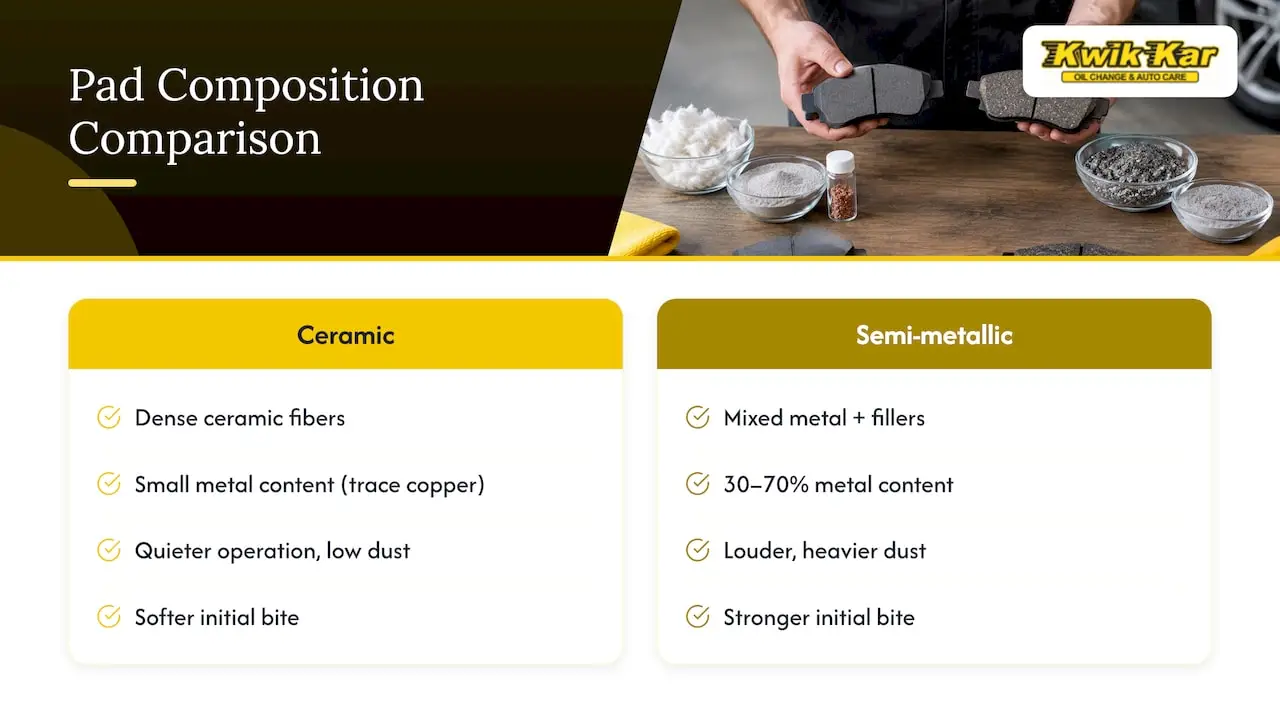
The performance differences above trace back to what’s actually inside each pad. Ceramic brake pads are built from dense ceramic fibers, bonded together with nonferrous filler materials and small amounts of metal, often copper strands, for conductivity. That composition is why ceramic pads run quieter and shed lighter, less visible dust: there’s simply less ferrous metal grinding against the rotor with every stop.
Semi-metallic pads take the opposite approach. They’re made from a mix of metal fibers (commonly 30% to 70% metal content) combined with friction modifiers and fillers that bind the compound together. That metal content is what gives semi-metallic pads their stronger initial bite and better heat transfer away from the braking surface, which is exactly why they hold up under sustained thermal stress better than ceramic compounds.
There’s also a regulatory thread worth knowing about. Copper has historically been a common ingredient in friction materials, but research on copper in brake materials documents a broader industry shift toward copper-reduced and copper-free formulations, driven largely by environmental regulation. Pad manufacturers have responded by reengineering compounds to balance friction performance with lower copper content, so the pad you buy today may differ chemically from one built a decade ago even if it carries the same marketing label.
Matching Pad Type to How You Actually Drive
Composition explains the “why.” Your driving habits determine the “which.” Here’s how the two materials line up against common scenarios:
- Daily commuters and family vehicles: Ceramic pads are usually the right call. They run quieter, produce less visible brake dust on your wheels, and are gentler on rotors, which adds up to longer pad and rotor life for routine city and highway driving, according to RealTruck’s comparison.
- Towing, hauling, and mountain driving: Semi-metallic pads make more sense here. The added metal content improves heat dissipation and resists fade when your brakes are working hard for extended descents or repeated stops with a loaded trailer.
- Performance driving and track use: Semi-metallic or dedicated high-performance compounds are built for repeated hard braking at elevated temperatures, a scenario where ceramic pads can struggle to keep pace.
- Delivery routes and heavy urban stop-and-go: This one takes some judgment. Frequent heat cycling favors semi-metallic’s thermal tolerance, but the extra dust and noise can be a drawback on routes with constant short stops. A hybrid or semi-ceramic formulation, which AAA notes blends traits of both materials, can be a reasonable middle ground for this kind of duty cycle.
If you’re not sure which category describes your driving, think about your worst week, not your average one. A commuter who tows a boat twice a summer still mostly needs a commuter pad; a contractor who hauls materials daily needs to build around the heavy days, not the easy ones.
Ceramic and Semi-Metallic Pads: Pros and Cons
Every pad material trades one advantage for another. Here’s the honest breakdown:
- Ceramic pros: Quieter operation, lighter and less visible dust, gentler wear on rotors, and often a longer service life for typical commuting.
- Ceramic cons: Higher upfront cost and comparatively limited fade resistance under extreme, sustained heat.
- Semi-metallic pros: Strong initial bite, effective heat dissipation, and a cost-effective choice for heavy-duty or high-friction use.
- Semi-metallic cons: More visible dust, louder operation, and faster rotor wear over time.
Pro Tip: If quiet operation and clean wheels matter more to you than squeezing out the last dollar of upfront savings, ceramic pads are worth the price difference for daily driving.
Most drivers end up accepting one of two trade-offs: a little more noise and dust in exchange for heat capacity they rarely tax, or a bit less fade resistance in exchange for a cleaner, quieter ride. Neither choice is wrong. It depends on what your vehicle actually does most days.
How Long Each Pad Type Lasts and What That Means for Maintenance
Pad life depends heavily on your vehicle, driving style, and the specific product grade, a point Consumer Reports emphasizes when comparing manufacturer lineups. That said, ceramic pads are often cited with longer life estimates than semi-metallic pads in common industry comparisons, largely because their softer composition generates less abrasive wear on both the pad and the rotor.
That same abrasiveness is why semi-metallic pads tend to wear rotors faster over time. More aggressive wear means rotors may need resurfacing sooner, and in some cases replacement rather than resurfacing becomes the more practical option once they’ve thinned past a safe margin.
Watch for these signs regardless of which pad type you run: squealing or grinding noises, a pulsing brake pedal, visible dust buildup that seems unusually heavy, or a dashboard warning light. Our guide on warning signs that mean it’s time to replace brake pads walks through what each symptom usually indicates.
Switching Brake Pad Types: What to Check First
Thinking about switching from semi-metallic to ceramic, or the other way around? A few checkpoints keep the swap safe and effective.
- Check your owner’s manual and caliper compatibility first. Not every caliper and rotor setup is engineered the same way for every friction material, so confirm your vehicle supports the switch before buying pads.
- Bed in your new pads properly. A proper bedding-in process, usually a series of gradual stops from moderate speed, transfers an even layer of friction material onto the rotor surface and is essential for both performance and longevity.
- Inspect your rotors before the swap. Switching from a more abrasive pad to a smoother one won’t fix rotor damage that’s already there; a technician can tell you whether resurfacing or replacement makes more sense first.
Our breakdown of how pads and rotors work together covers this relationship in more depth if you want the fuller picture before your next service visit.
Why Professional Brake Inspection Matters
There’s no Federal Motor Vehicle Safety Standard written specifically for brake pads. Instead, NHTSA’s interpretation clarifies that brake system standards apply at the vehicle level, and aftermarket pads remain subject to recall provisions if a genuine safety defect turns up. In practice, that means fit, quality, and correct application fall on manufacturers and installers, which is exactly where a qualified inspection earns its keep.
We run digital vehicle inspections performed by qualified technicians, giving you a clear, documented look at your brake system rather than a guess. We offer discounts for military members and first responders as part of our commitment to transparent, fair pricing.
If you’ve recently changed pad material, noticed new noise, or felt a change in pedal feel, that’s a reasonable moment to have your brakes looked at rather than waiting for a bigger problem to show up.
Our Take on Choosing the Right Pad for Richardson Drivers
We tend to steer commuters and family vehicle owners toward ceramic pads because the daily experience, quieter stops, cleaner wheels, longer rotor life, matches how most people actually drive around Richardson. Fleet managers and customers who tow regularly get a different recommendation: semi-metallic compounds handle sustained heat better, and that matters more than a little extra dust when a loaded trailer is involved.
What we won’t do is sell you on a pad material based on price alone. A documented inspection report tells you what your brakes actually need, not what’s easiest to upsell. If you’re unsure which pad fits your vehicle and driving habits, that’s a conversation worth having before you buy parts.
— Kwik Kar
Get Your Brakes Inspected at Kwik Kar in Richardson
Choosing between ceramic and semi-metallic pads matters less than making sure your current brakes are actually in good shape, and that’s where a proper inspection pays off. Our brake repair service in Richardson includes a full evaluation of your pads, rotors, and brake system components, with a digital report that shows you exactly what’s wearing and what’s not.

- We back our brake work with a 24-month/24,000-mile warranty, so you’re covered after the service is done.
- Military members and first responders receive a discount on service, part of how we keep pricing fair for the people who keep Richardson running.
- Right now you can save with our $40 off brake replacement coupon, good toward your next pad and rotor service.
If towing is part of your routine, our team can also walk you through heat-related brake wear specific to trailer work, a topic covered in more technical detail by fleet brake repair specialists who work on commercial and towing setups daily.
Ready to find out what your brakes actually need? Schedule a brake inspection with our ASE-certified team in Richardson, or visit our full service menu to pair brake work with other maintenance on your visit.
FAQ
What is the downside to ceramic brake pads?
Ceramic pads typically cost more upfront than semi-metallic alternatives and offer comparatively limited fade resistance under extreme or sustained heat, such as repeated hard towing stops. For most daily driving, though, their quieter operation and longer rotor life offset the higher price.
Are semi-ceramic brake pads better than ceramic brake pads?
Semi-ceramic, or hybrid, pads blend traits of both materials and can suit drivers who want cleaner operation along with somewhat better heat handling than pure ceramic offers, as AAA notes. Whether that’s “better” depends on your driving pattern rather than a fixed ranking between the two.
What brake pads last longer, ceramic or metallic?
Ceramic pads are often cited with longer service life in industry comparisons, largely because their softer composition causes less abrasive wear on the pad and rotor. Actual mileage varies significantly based on your vehicle, driving style, and the specific pad grade you choose, according to Consumer Reports.
Do semi-metallic brakes squeak?
Semi-metallic pads tend to run louder than ceramic pads due to their higher metal content, and some noise, including occasional squeaking, is common with this material. Persistent or grinding noise, however, is a sign your brakes need inspection rather than something to dismiss as normal.
Can I switch from semi-metallic to ceramic brake pads?
In many cases, yes, but you should confirm compatibility with your caliper and rotor setup first and check your owner’s manual for manufacturer guidance. A technician can also check whether your rotors need resurfacing before the switch, since proper pad-rotor pairing affects both performance and longevity.
Sources
- Ceramic vs. Semi-Metallic Brake Pads — RealTruck
- Ceramic vs. Semi-Metallic Brake Pads: Pros and Cons | AAA Automotive
- GF007915 | NHTSA interpretation on FMVSS and aftermarket brake pads
- Brake pads: what to look for | Consumer Reports
- Present knowledge and perspectives on the role of copper in brake materials and related environmental issues – ScienceDirect