Fleet Vehicle Inspection Checklist: Pre-Trip to Periodic
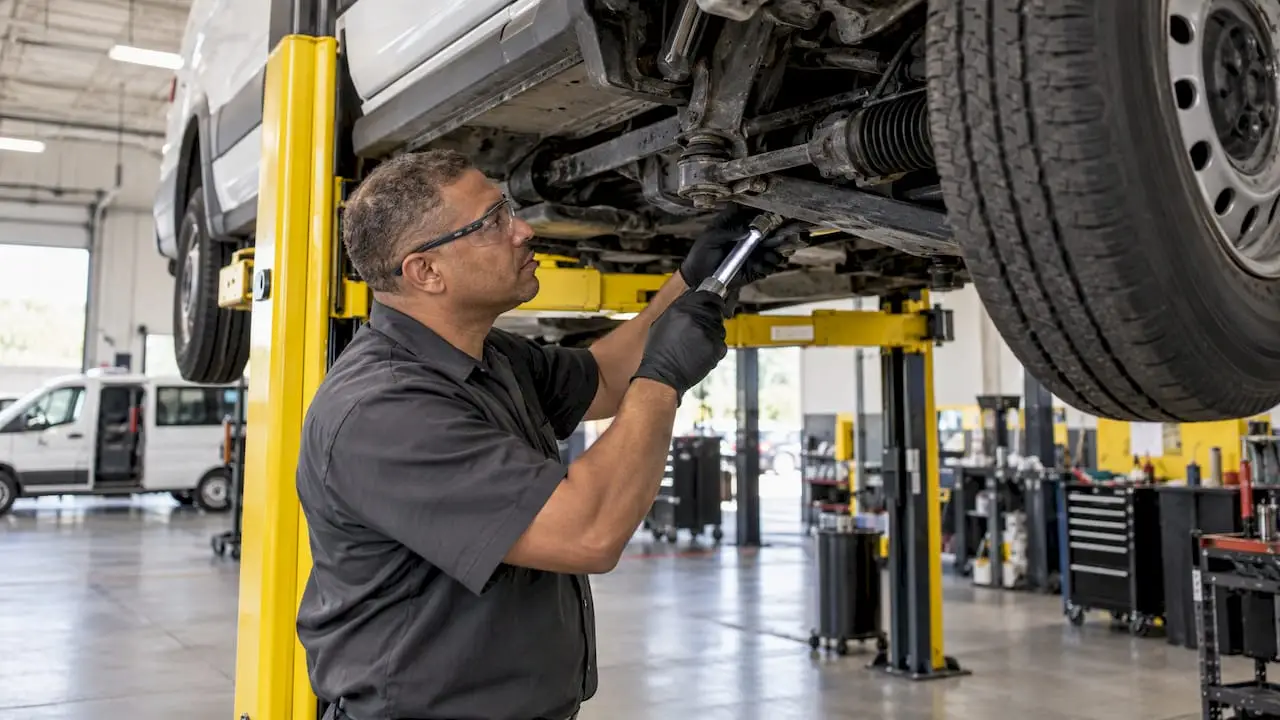
A good fleet vehicle inspection checklist covers brakes, steering, tires, lights, fluids, belts and hoses, the battery, and safety equipment. Drivers run it before and after each trip. A second person runs a deeper version monthly, and a technician does a full inspection on a set schedule. Every defect needs a written report, a repair, and a sign-off before the vehicle goes back out.
This guide gives you that checklist, explains which federal rules apply to commercial vehicles, and shows how fleets in Richardson, Plano, Garland, North Dallas and Addison can keep inspections consistent. It is written by the team at Kwik Kar Oil Change & Auto Care in Richardson, TX, phone (972) 644-1851.
TL;DR
- Use three layers: a driver walk-around before each trip, a post-trip defect report, and a deeper monthly or periodic inspection by someone other than the driver.
- Cover the core systems every time: brakes, steering, suspension, tires and wheels, lights, horn, wipers, mirrors, fluids, belts, hoses, battery and emergency equipment.
- Federal rules for covered commercial vehicles require driver inspections, defect reports and a periodic inspection at least once every 12 months. Non-regulated fleets should follow manufacturer schedules and keep records.
- Texas ended most non-commercial passenger vehicle safety inspections in 2025. Emissions testing is still required for qualifying vehicles in applicable counties, and commercial safety inspections continue.
- An inspection only works if defects get repaired and documented. Track each finding to a closed work order.
Table of Contents
- What a fleet vehicle inspection is, and why it pays off
- Who must follow federal inspection rules
- The fleet vehicle inspection checklist
- How to run a pre-trip inspection
- Post-trip inspection and defect reporting
- How often should fleet vehicles be inspected?
- Texas inspection rules fleet managers should know
- Turn findings into repairs
- Our perspective on fleet inspections
- Fleet service in Richardson
- FAQ
- Sources
What a fleet vehicle inspection is, and why it pays off
A fleet vehicle inspection is a structured check of a vehicle’s safety-critical and reliability-critical systems, done on a repeating schedule and recorded. It differs from a casual look around the truck because every item is checked the same way, every time, by whoever is on duty.
The payoff is practical. Fleet-management guidance describes inspections as a way to reduce breakdowns, control costs, extend vehicle life and avoid unplanned downtime. For a plumbing contractor in Garland or a delivery operation out of Addison, one van off the road for a day can cost more than the repair that would have prevented it.
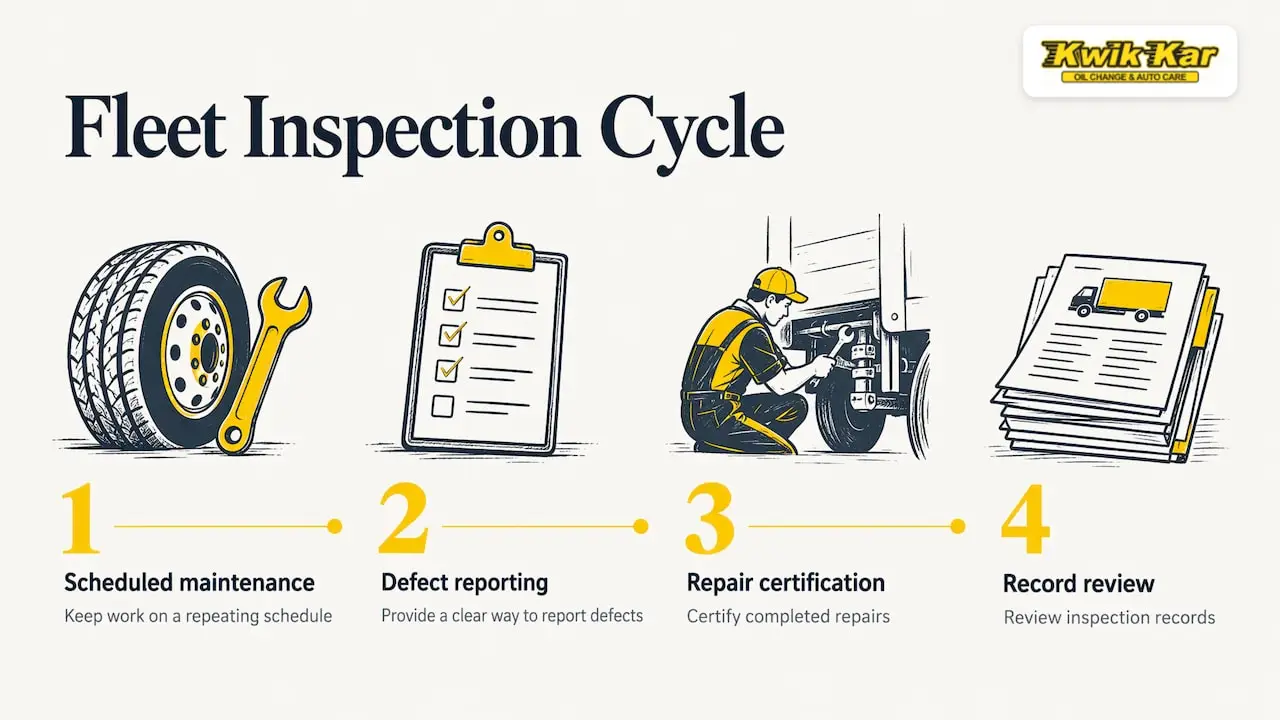
The larger idea is that inspection is a management system, not a form. Federal guidance on vehicle maintenance treats it as a cycle: scheduled maintenance, a clear way to report defects, repair certification, and record review. A checklist is just the first step of that cycle.
Who must follow federal inspection rules
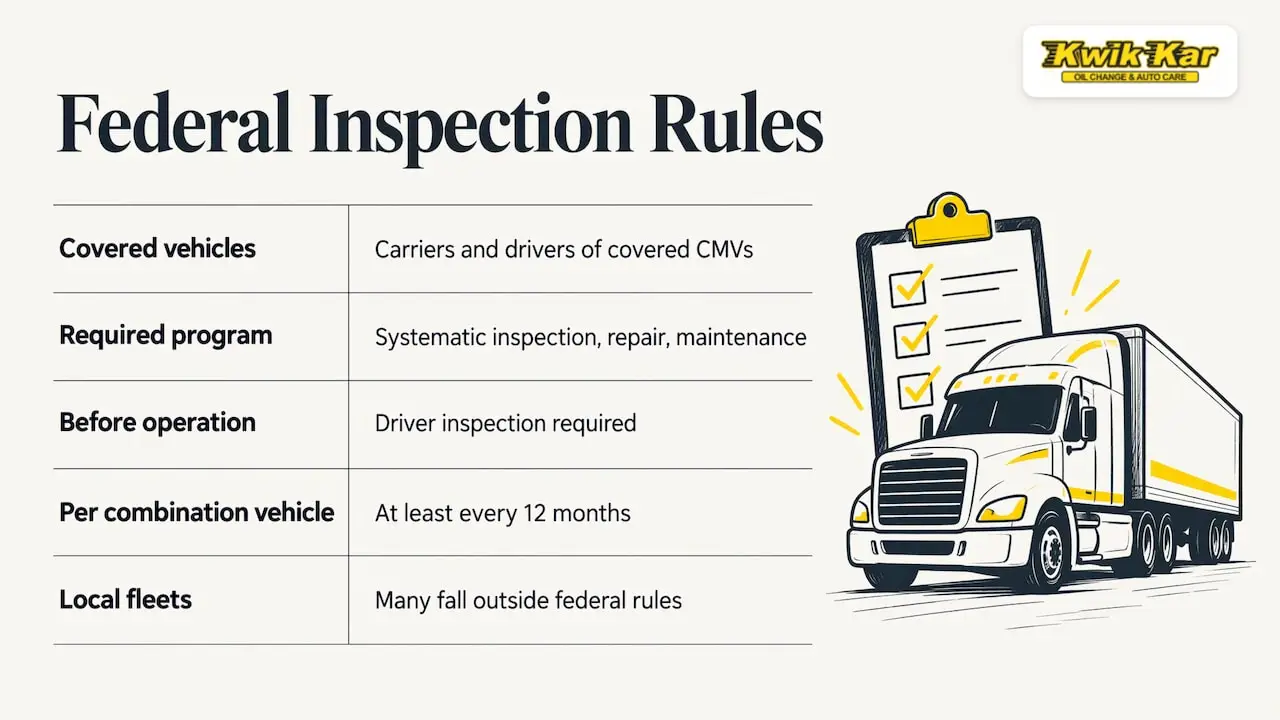
Federal rules in 49 CFR Part 396 apply to motor carriers and drivers responsible for covered commercial motor vehicles. They require systematic inspection, repair and maintenance, a driver inspection before operation, end-of-day vehicle inspection reports where applicable, and a periodic inspection at least once every 12 months for each vehicle in a combination. The same part excludes some vehicles, such as covered farm vehicles, and lists exceptions for certain carriers and operations.
If you are not sure whether your vehicles are covered, check the regulation text or ask your compliance contact. Many local fleets, such as service vans, sales cars and light pickups, fall outside the federal rules. They still benefit from the same habits, and in Texas commercial safety inspections continue.
For a broader look at how inspections support safety on the road, this overview of commercial vehicle inspections in fleet safety is worth a read.
The fleet vehicle inspection checklist
The federal minimum list for driver vehicle inspection reports gives a solid base. It includes service brakes and trailer brake connections, the parking brake, steering, lights and reflectors, tires, horn, wipers, rear-vision mirrors, coupling devices, wheels and rims, and emergency equipment. The longer inspection program rules also name frame and frame assemblies, suspension, axles and attaching parts, and steering systems.
We organize the list by zone so drivers can walk it in a logical loop. Mark each item OK or Repair, and add notes for anything you flag.
Exterior and body
- Dents, cracks or sharp edges that could injure someone or hide structural damage
- Windshield chips or cracks in the driver’s line of sight
- Side and rear windows, and wiper blades that clear the glass without streaking
- License plate, registration sticker and plate lights
- Mirrors secure, unbroken and adjusted
- Cargo doors, racks and tie-downs latching and secure
Lights and signals
- Headlights on low and high beam
- Brake lights, turn signals and hazard flashers
- Reverse lights and clearance lights where equipped
- Reflectors clean and intact
- Dashboard warning lights that stay on after startup
Lighting and visibility are also a recurring theme on inspection forms, which we cover in our state vehicle inspection checklist guide.
Tires and wheels
Tires are where small neglect becomes a roadside event. A thorough tire check includes tread depth and pressure, sidewall damage, lug nuts, valve-stem caps, dual-tire spacing and hub-seal leaks.
- Pressure matches the placard in the driver’s door jamb, checked cold
- Tread wear even across the tire, with no cords, bulges or cuts
- Lug nuts present and tight, no rust streaks around them
- Wheels and rims free of cracks or bends
- Spare tire and jack in place, if the vehicle carries them
Uneven wear often points to alignment or suspension trouble. Our guide to tire warning signs helps drivers describe what they see.
Brakes, steering and suspension
These are the systems regulators single out, and they should never be a “next week” item.
- Brake pedal feels firm, with no sinking, pulsing or unusual travel
- Parking brake holds the vehicle on a slope
- No grinding, squealing or pulling to one side when braking
- Steering wheel free of excessive play, with no wandering or vibration
- No clunks over bumps, no leaning, no fluid on shocks or struts
- Power steering fluid at the proper level, with no whining when turning
If something feels off, a technician should diagnose it. We handle brake repair and service, steering and suspension repair and wheel alignment at our Richardson shop.
Under the hood
A good engine-compartment check looks at oil, coolant and power-steering fluid levels, leaks, hoses, belts, and securely mounted components, along with battery mounting and terminals.
- Engine oil on the dipstick between the marks, and a color and smell that look normal
- Coolant reservoir at the correct level when the engine is cold
- Brake fluid, washer fluid and transmission fluid per the owner’s manual
- Belts without cracks, glazing or fraying
- Hoses firm, not swollen, soft or weeping
- Battery terminals clean, tight and free of white or green corrosion
- Fresh spots or drips under the vehicle
Cab, controls and safety equipment
- Horn works
- Seat belts latch and retract
- Gauges read normally, and the check engine light is off
- Heater, defroster and air conditioning work, which matters for visibility and driver alertness during Texas summers
- Fire extinguisher, first-aid kit, reflective triangles or flares where your operation requires them
- Registration, insurance card and any required inspection or permit paperwork in the vehicle
How to run a pre-trip inspection
A pre-trip should take a few minutes, and a consistent route around the vehicle keeps it that fast.
- Review the last report. Before driving, the driver should be satisfied the vehicle is safe to operate and, where required, review the previous inspection report and sign that needed repairs were performed.
- Start at the driver’s door and walk clockwise. Check body, lights, tires, wheels and anything leaking underneath.
- Open the hood and check fluids, belts, hoses and the battery.
- Sit in the cab and test the horn, wipers, lights, gauges, brakes and steering feel.
- Record it. Mark OK or Repair, sign, and hand any Repair item to whoever dispatches or manages the fleet.
- Do not dispatch a vehicle with an open safety defect. Brakes, steering, tires and lights should be fixed first.
Pro tip: Have drivers take a phone photo of anything unusual. A picture of a cracked sidewall or a leaking hose makes the repair conversation faster and removes guesswork.
Post-trip inspection and defect reporting
At the end of the day, the driver reassesses the same systems and reports anything discovered or reported that could affect safe operation or cause a breakdown. Under federal guidance, the report should identify the vehicle, describe the defect and the affected component, and be signed. For a non-passenger carrier, a report is not federally required when no defect is found, but many fleets still keep a no-defect record as good practice.
We like the no-defect record for one reason: it proves the inspection happened. When every driver signs every day, a gap in the paper trail stands out.
What drivers should listen and look for after a day on Central Expressway or the George Bush Turnpike:
- New noises, vibrations or pulling
- Warning lights that came on during the route
- Fluid spots where the vehicle was parked
- Anything that was bumped, scraped or struck
- Any reduced braking performance, however slight
How often should fleet vehicles be inspected?
There is no single interval that fits every fleet. Federal guidance recommends a preventive maintenance schedule based on manufacturer recommendations, the carrier’s own experience and regulatory requirements.
For fleets that are not federally regulated, one commercial insurer’s risk guidance suggests a driver walk-around before each trip, a detailed monthly inspection by someone other than the driver, and documented manager inspections two to four times a year. It adds that quarterly inspections may suit newer vehicles that avoid harsh conditions or heavy mileage, and that older vehicles or hard use call for more frequent checks.
| Inspection layer | Who does it | Typical timing | Focus |
|---|---|---|---|
| Pre-trip walk-around | Driver | Before each trip | Safety basics, last report review |
| Post-trip report | Driver | End of each driving day | Defects found during use |
| Detailed inspection | Fleet lead or technician, not the driver | Monthly, or per your policy | Fluids, belts, hoses, tires, brakes, lights |
| Manager or technician review | Fleet manager, shop | Two to four times a year for non-regulated fleets | Documented condition and maintenance history |
| Periodic inspection | Qualified inspector | At least every 12 months for covered commercial vehicles | Federal inspection standards |
Adjust the table to your own vehicles. Stop-and-go delivery routes, towing, dusty job sites and high annual mileage all justify a tighter schedule. Our small fleet maintenance schedule guide walks through how to build service intervals around your manufacturer’s recommendations.
Texas inspection rules fleet managers should know
Texas ended most non-commercial passenger vehicle safety inspections in 2025. That change does not remove the need for your own fleet checks, since the vehicle still has to be safe every day it is driven.
Three points matter for local fleets:
- Emissions testing remains required for qualifying vehicles in applicable counties, which include much of the Dallas area.
- Commercial safety inspections continue in Texas.
- Whether federal Part 396 applies depends on the vehicle and the operation, not only on the state.
If your vehicles fall under emissions testing or commercial inspection rules, a check-up before the official inspection helps you catch lighting, brake and diagnostic issues first. We cover the common items in our vehicle inspection checklist.
Turn findings into repairs
A checklist that ends in a filing cabinet does not protect anyone. Federal guidance describes a review of inspection and maintenance records to confirm corrective action and find process breakdowns. A simple version works for any size of fleet:
- Triage each defect. Safety items such as brakes, steering, tires and lights go first. Comfort or cosmetic items can wait for a scheduled visit.
- Assign it. Each Repair item gets an owner and a target date.
- Repair and verify. A qualified technician fixes it and notes what was done.
- Sign off. The next driver reviews the report and acknowledges the repair before driving.
- Review monthly. Look for repeat defects on the same vehicle or the same driver’s route. Repeats usually point to a root cause, such as an alignment problem eating tires.
- Keep records by vehicle. Mileage, service dates, parts and findings in one place make the next decision easier.
Not every flagged item is urgent. A chipped wiper blade and a soft brake pedal are very different problems. The point of triage is to put urgency where it belongs, and to ask a technician when you are unsure.
Our perspective on fleet inspections
At Kwik Kar in Richardson, we see the same pattern with local fleets. The vehicles that stay on the road are rarely the newest ones. They are the ones where someone looked at them on a schedule, wrote down what they found, and fixed it before it grew.
We think the best fleet inspection program is a partnership between your drivers and a shop that can act on what they report. Drivers know how the vehicle feels day to day. Our ASE-certified technicians bring diagnostic tools and hands-on experience to confirm what is behind a noise, a warning light or a fluid spot.
We also provide digital vehicle inspection reporting, so fleet managers can see what was found and decide what to approve. For qualifying repairs, our 24-month/24,000-mile limited warranty applies, and qualifying suspension repairs may be covered by our Lifetime Suspension Warranty. Coverage depends on the repair, so ask us what applies to yours.
Our advice is simple: use your manufacturer’s maintenance schedule as the backbone, inspect in layers, and treat every defect report as the start of a repair record, not the end of a form.
Kwik Kar
Fleet service in Richardson
Kwik Kar Oil Change & Auto Care offers fleet maintenance and repair for local businesses, along with the services most inspection findings lead to: oil change and preventive maintenance, brake service, tire service, alignment, suspension, electrical, cooling system and air conditioning repair, and diagnostics for check engine lights. You can see the full list on our service page, and learn more about our ASE-certified technicians.
If your inspection checklist turned up a defect, or you want a technician to review a vehicle before it goes back out, call (972) 644-1851 or schedule an appointment. We serve fleets and drivers across Richardson, Plano, Garland, North Dallas and Addison.
FAQ
How often should a fleet vehicle be inspected?
Drivers should walk around the vehicle before each trip, and someone other than the driver should do a detailed inspection about monthly. Covered commercial vehicles also need a federal periodic inspection at least every 12 months. Always base service intervals on the manufacturer’s recommendations for each vehicle.
What is the difference between a pre-trip and a post-trip inspection?
A pre-trip confirms the vehicle is safe to drive and that earlier defects were repaired. A post-trip records anything that went wrong or changed during the day. Together they create a paper trail that links each defect to a repair.
Does my small business fleet need to follow federal inspection rules?
It depends on whether your vehicles are covered commercial motor vehicles under 49 CFR Part 396. Many light-duty business vehicles are not, but the same checklist still reduces breakdowns and risk. Check the regulation or ask your compliance contact if you are unsure.
Does Texas still require vehicle safety inspections?
Texas ended most non-commercial passenger vehicle safety inspections in 2025. Commercial safety inspections continue, and emissions testing remains required for qualifying vehicles in applicable counties.
What should I do when a driver reports a defect?
Decide whether it affects safety, and keep the vehicle parked if it involves brakes, steering, tires or lights. Then schedule a technician to diagnose and repair it, and have the next driver sign off once it is done.
Sources
- Fleet Inspections: Types, Checklists & Tips
- Pre-Trip Inspection Checklist for Fleets
- The Motor Carrier Safety Planner, driver vehicle inspection reports
- eCFR, 49 CFR Part 396: Inspection, Repair, and Maintenance
- Safety Management Cycle for the Vehicle Maintenance BASIC, FMCSA
- Inspection and Maintenance of Non-regulated Fleets, Nationwide
- The Role of Commercial Vehicle Inspections in Fleet Safety