Most vehicle owners only think about their state inspection when the sticker on the windshield is nearly expired. That’s the moment when missing even one state vehicle inspection checklist item can mean a failed inspection, a rejected registration, or an unexpected repair bill. What makes this harder is that requirements are not uniform. Each state defines its own vehicle safety inspection items, its own documentation rules, and its own emissions standards. The goal of this guide is to walk you through the categories that matter most, with real examples from states like Texas, Pennsylvania, North Carolina, and California, so you arrive prepared and leave with a passing sticker.
Table of Contents
- Key Takeaways
- 1. Core safety-related state vehicle inspection checklist items
- 2. Lighting and visibility checklist items for inspections
- 3. Emissions and OBD diagnostic checklist items
- 4. Documentation and administrative checklist items required at inspections
- 5. Preparing for your state vehicle inspection: practical pre-visit tips
- What I have learned after years of preparing vehicles for state inspections
- Get your vehicle inspection-ready at Kwik Kar Richardson
- FAQ
Key Takeaways
| Point | Details |
|---|---|
| Safety systems come first | Brakes, tires, steering, and seat belts are the most frequently inspected components across all states. |
| Lighting failures are preventable | Burned-out bulbs and dashboard warning lights are leading causes of inspection rejection, yet easy to fix in advance. |
| Emissions rules vary widely | California and North Carolina require emissions checks; Texas eliminated safety inspections for non-commercial vehicles in 2025. |
| Documents must be current | Registration, title, and valid inspection certificates are part of the compliance checklist in most states. |
| State-specific preparation wins | Tailoring your checklist to your state’s specific criteria dramatically increases your odds of passing on the first visit. |
1. Core safety-related state vehicle inspection checklist items
Safety components are the backbone of any state inspection checklist, and for good reason. These are the systems that determine whether your vehicle can stop, steer, and protect occupants in an emergency.
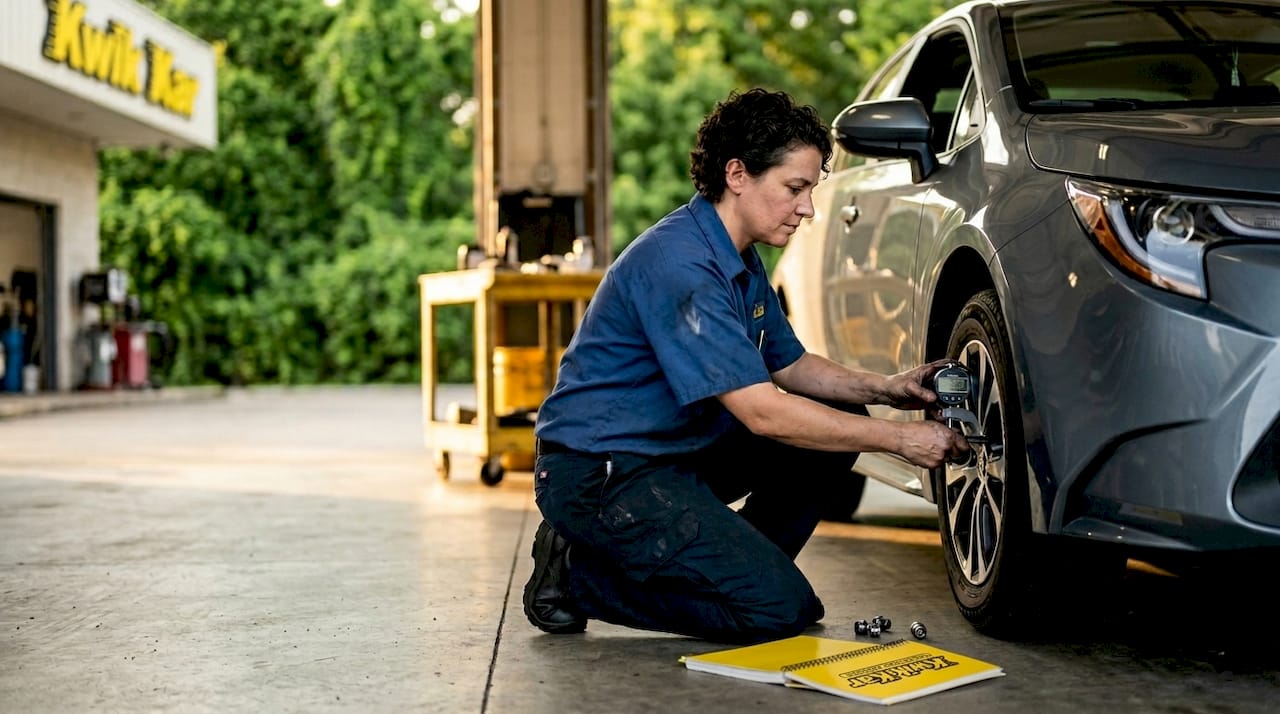
Brakes receive some of the most detailed scrutiny. Pennsylvania specifies a minimum brake pad thickness of 2/32 of an inch, and inspectors will also check rotors for scoring, brake fluid condition, and parking brake function. A soft pedal or a pulsing brake response tells an inspector that something is worn or compromised before they even put the vehicle on a lift.
Steering and suspension checks cover tie rods, ball joints, shock absorbers, and power steering fluid levels. Excessive play in the steering wheel or a vehicle that pulls noticeably to one side will raise red flags immediately.
Tires must meet minimum tread depth standards, which is typically 2/32 of an inch across most states, and they must be free from sidewall damage, bulging, or uneven wear that signals alignment or suspension issues.
Beyond mechanical systems, inspectors verify these additional safety components:
- Seat belts: all belts must retract, latch, and release properly
- Horn: must be audible from a reasonable distance
- Windshield: cracks or chips in the driver’s direct line of sight cause failures in states like Pennsylvania
- Emergency brake: must hold the vehicle on a slope without slipping
North Carolina’s annual safety inspection covers all of these items and must be completed no more than 90 days before registration expiration. That timing matters more than most owners realize.
Pro Tip: Before your inspection appointment, sit in the driver’s seat and test every seat belt, the horn, and the parking brake. These take under two minutes to check and are among the most common reasons for a rejection sticker.
2. Lighting and visibility checklist items for inspections
Every light on your vehicle tells part of a safety story, and inspectors read every chapter. When even one bulb is out, your car can fail the vehicle safety inspection outright. The good news is that lighting failures are the most preventable category on the checklist for car inspections.
Inspectors typically verify all of the following:
- Headlights: both low and high beams must illuminate without flickering
- Tail lights and brake lights: a burned-out brake light is one of the most cited failure causes nationwide
- Turn signals: front and rear, both sides, must flash at a consistent rate
- Hazard lights: must activate and flash symmetrically
- License plate light: often overlooked, this small bulb is checked in states like New York and Massachusetts
- Reverse lights: must illuminate when the transmission is placed in reverse
Electrical and bulb issues along with dashboard warning lights such as ABS or check-engine indicators are among the most common causes of inspection rejections. A lit ABS warning light, for example, will cause an automatic failure in Pennsylvania because it signals a compromised braking system.
Visibility extends beyond lights. Windshield condition matters: cracks or chips that fall within the driver’s sweep area (the path the wipers travel) are grounds for failure. Wipers themselves must clear the windshield without streaking or skipping. Washers must spray correctly. Mirrors must be present, securely mounted, and providing an unobstructed rear view.
Window tinting receives scrutiny too. Many states set a minimum visible light transmission percentage for front side windows, and tinting that is too dark will fail the inspection regardless of how the rest of the vehicle performs.
Pro Tip: Walk around your vehicle at night before your inspection. Turn on every light mode one at a time and have someone step on the brakes while you watch from the rear. Five minutes of this simple check can save you a return trip to the inspection station.
3. Emissions and OBD diagnostic checklist items
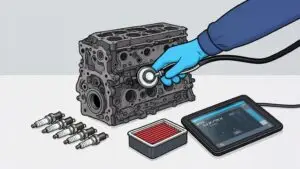
Emissions testing sits in a different category from safety checks, but it uses its own detailed set of criteria. The formal process involves two layers: a visual inspection of emissions control components and an electronic scan through the vehicle’s OBD-II (on-board diagnostics) port.
The OBD-II scan checks for diagnostic trouble codes (DTCs) and verifies that all readiness monitors have completed their self-test cycles. A monitor that has not completed, which often happens right after a battery replacement or a code clearing, can cause a failure even when nothing is mechanically wrong with your vehicle. Permanent diagnostic trouble codes cannot be erased simply by disconnecting the battery, which means that clearing codes to hide a problem will not work on modern vehicles.
Here is how emissions inspections typically unfold:
- The inspector connects a scan tool to the OBD-II port under your dashboard
- The system checks for active or pending DTCs
- Readiness monitors are reviewed to confirm all major systems have completed self-tests
- Some states (particularly those with older vehicle populations) add a tailpipe emissions test using an exhaust probe
California’s Smog Check program requires biennial testing for most vehicles, with pre-2000 models potentially needing tailpipe tests in addition to the OBD scan. North Carolina and Massachusetts both combine safety and emissions testing in their annual inspection programs, with Massachusetts requiring inspections within seven days of new vehicle registration.
Texas is the notable exception. As of January 1, 2025, Texas eliminated safety inspections for non-commercial vehicles, though emissions inspections remain required in designated counties with air quality concerns.
Pro Tip: If your check-engine light came on recently and you had the codes cleared, drive the vehicle for at least 100 to 200 miles before your emissions test. This gives the OBD-II monitors time to complete their cycles. Showing up too soon after a reset almost guarantees a “not ready” failure.
4. Documentation and administrative checklist items required at inspections
The mechanical side of inspection preparation gets most of the attention, but the paperwork side causes its own share of last-minute headaches. Your state inspection required documents checklist is shorter than the mechanical one, but missing any item on it means the inspection cannot proceed.
Most states require you to bring or present:
- Current vehicle registration: must be valid and match the vehicle’s VIN
- Proof of insurance: some states verify coverage at the time of inspection
- Photo identification: typically a driver’s license
- Previous inspection certificate or sticker: in states like New York and Massachusetts, expired certificates must be removed or handled per state protocol during the new inspection
- License plates: must be present, legible, and properly mounted; license plate lighting is checked as part of the inspection in multiple states
| State | Key documentation required | Inspection frequency |
|---|---|---|
| New York | Registration, insurance, valid ID | Annual |
| Massachusetts | Registration, insurance, prior sticker | Annual |
| Texas | Registration (emissions counties only) | As required by county |
| North Carolina | Registration | Annual |
| Pennsylvania | Registration | Annual |
One detail many owners miss: some states require that the existing inspection sticker remain on the windshield until the new one is issued, while others require its removal before the inspection begins. Knowing this ahead of time prevents confusion at the station.
Verifying that your registration is current before you arrive is not just a formality. If your registration has lapsed, many stations will decline to perform the inspection until the registration issue is resolved with the DMV.
5. Preparing for your state vehicle inspection: practical pre-visit tips
Preparation is where you shift from reactive to proactive. The vehicle owners who pass on the first visit are rarely lucky. They are organized.
Because inspection requirements vary by state and vehicle type, the smartest approach is to pull your specific state’s official inspection criteria before you schedule anything. State DMV websites publish the exact criteria inspectors use. Read it like a checklist, because that is exactly what it is.
Common pre-inspection maintenance that dramatically improves pass rates:
- Replace any burned-out bulbs (check all exterior lights, including the license plate light)
- Address any active dashboard warning lights, particularly the check-engine and ABS lights
- Check tire tread depth with a quarter or a tread depth gauge
- Top off fluids, including brake fluid and windshield washer fluid
- Test wipers for streaking and replace blades if needed
- Confirm that seat belts click, retract, and release properly
If your vehicle has failed an inspection before, use the rejection report as your repair map. Rejection stickers and printed failure reports tell you precisely which items the inspector flagged. Targeted repairs based on that report are more efficient than a broad, exploratory diagnosis.
Timing your inspection within the correct window matters more than most owners assume. North Carolina requires the inspection to be completed no more than 90 days before the registration plate expires. Waiting until the last week creates unnecessary stress and leaves no time to address any surprises. Schedule early, within the allowed window, and you protect yourself from registration blocks and late penalties.
Pro Tip: A comprehensive vehicle inspection checklist specific to your state is one of the most useful documents you can keep in your glove box. Print it, work through it a week before your appointment, and you will almost never face a rejection sticker.
For Texas drivers specifically, understanding the current Texas inspection requirements and how the 2025 law change affects your registration process is worth reviewing before your next renewal.
What I have learned after years of preparing vehicles for state inspections
After working alongside ASE-certified technicians at Kwik Kar Oil Change & Auto Care and watching countless vehicles come through our bays before and after inspection appointments, I have developed a strong opinion on this: generic checklists fail people. The internet is full of “universal” vehicle inspection checklists that lump every state together and leave owners unprepared for the specific criteria their inspector will use.
What I have found actually works is starting with your state’s official published criteria, then layering in vehicle-specific knowledge. A 2018 truck in a Texas emissions county has completely different preparation needs than a 2005 sedan in Pennsylvania. Treating them the same wastes time and money.
The other pattern I see regularly is owners dismissing small electrical problems because the car “drives fine.” A single burned-out brake light or a quietly lit ABS warning light will fail an inspection in most states, and those repairs typically cost far less than a return visit and re-inspection fee. Catching those issues early is not overcautious. It is simply smart vehicle ownership.
Law changes also catch people off guard. Texas’s elimination of safety inspections for non-commercial vehicles is a perfect example. Owners in emissions counties still have obligations, and assuming otherwise has led to registration surprises.
My consistent advice: treat your inspection preparation like a flight preflight check. Work through every category methodically, verify your documents, address your warning lights, and schedule with enough time to fix anything that comes up.
— Kwik Kar
Get your vehicle inspection-ready at Kwik Kar Richardson
When your checklist reveals brake wear, a lit warning light, or tires that won’t make the cut, you need a shop that moves quickly and diagnoses accurately. At Kwik Kar Oil Change & Auto Care in Richardson, TX, our ASE-certified technicians cover the full range of auto repair and inspection prep services, from brake system repairs that address the pad thickness and rotor condition inspectors look for, to engine diagnostics that identify and resolve the trouble codes that trigger emissions failures. We are recognized by CARFAX and RepairPal, and we offer special discounts for military personnel and first responders. Schedule your pre-inspection service with us and arrive at the inspection station confident.
FAQ
What are the most common reasons vehicles fail state inspections?
Burned-out bulbs, active dashboard warning lights (especially check-engine and ABS), worn brake pads, and tires below minimum tread depth are the most frequent causes of inspection rejection across most states.
Do all states require both safety and emissions inspections?
No. Requirements vary significantly by state. Texas eliminated safety inspections for non-commercial vehicles as of 2025, while states like North Carolina and Massachusetts require both safety and emissions testing annually.
What documents do I need to bring to a state vehicle inspection?
Most states require your current vehicle registration, a valid driver’s license, and proof of insurance. Some states also check that your license plates are properly mounted and lit, so verify your state’s specific requirements before arriving.
Can clearing OBD-II codes help me pass an emissions test?
Clearing codes temporarily removes diagnostic trouble codes, but permanent DTCs cannot be erased. Even with cleared codes, incomplete OBD-II readiness monitors will cause a “not ready” failure, so driving your vehicle through several full cycles before testing is necessary.
How early should I schedule my state vehicle inspection?
Schedule your inspection well within your state’s allowed window before your registration expires. North Carolina, for example, requires the inspection no more than 90 days before plate expiration. Waiting until the final week leaves no time to address any repair needs before your registration lapses.