Think of the Texas state inspection as a required annual checkup for your car. It’s a pretty simple process designed to make sure your vehicle is safe for you, your family, and everyone else sharing the road. At its heart, it’s all about confirming your car meets the state's minimum safety and, in some areas, environmental standards.
What Every Driver Needs to Know About the Texas State Inspection
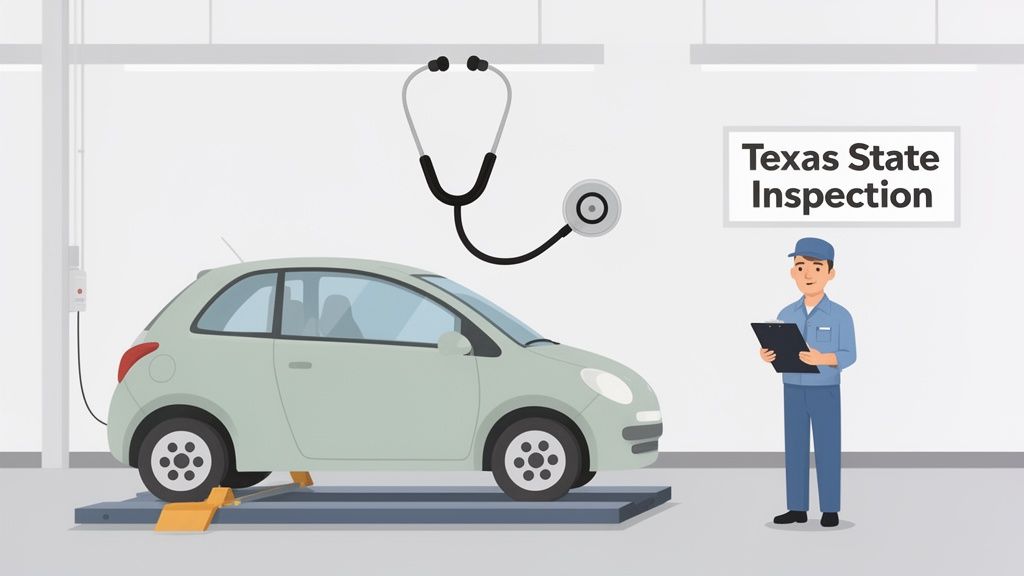
Navigating the Texas state inspection can sometimes feel like just another chore on your long to-do list, but once you understand why it’s required, it makes a lot more sense. The whole point is to keep unsafe vehicles off our roads, which cuts down on accidents caused by mechanical problems. This guide will break down exactly what the process looks like for drivers here in Richardson.
To really get a handle on it, it’s best to view the inspection as having two main components. The first is a safety check that every single vehicle in Texas has to pass. The second is an emissions test, but this one is only mandatory in certain counties with larger populations and air quality concerns—like Dallas County, where Richardson is located.
A Tale of Two Tests
Imagine your car is heading to the doctor for its yearly physical. The safety inspection is like checking its vital signs. The doctor would test its reflexes, check blood pressure, and listen to its heart. In the same way, an inspector checks your car's ability to stop (brakes), see (headlights), and be seen (tail lights and turn signals). They're making sure all the fundamental systems are working correctly.
The emissions test, on the other hand, is a more specialized screening. Think of it as a respiratory exam to ensure your car isn't "polluting" the air with an excess of harmful chemicals. For all of us here in Dallas County, this test is a crucial part of keeping our local air quality in check.
Let's break that down for a quick overview.
Texas State Inspection at a Glance
This table offers a quick summary of the essential components, requirements, and outcomes of the Texas vehicle inspection.
| Inspection Component | What It Covers | Who It Applies To |
|---|---|---|
| Safety Inspection | Brakes, lights, horn, steering, tires, seatbelts, and other core safety systems. | All vehicles registered in the state of Texas. |
| Emissions Test | On-Board Diagnostic (OBDII) system checks for proper function and pollution control. | Vehicles in 17 specific counties, including Dallas, Tarrant, Collin, and Denton. |
Essentially, everyone gets the safety check, but if you're in the DFW area (or other major metro areas), you'll have the emissions test, too.
Why This Matters for Richardson Drivers
Understanding the "why" behind the inspection turns it from a hassle into a responsible part of owning a vehicle. It’s about more than just getting a sticker for your windshield; it’s about doing your part to create a safer driving environment for our entire community. A well-maintained car is far less likely to break down unexpectedly or cause a crash because of a failing part.
This guide is designed to give you a clear, straightforward path to passing your Texas state inspection. Our goal is to arm you with the knowledge you need to pass on the first try, making the whole process smoother and less stressful. To broaden your automotive knowledge, you can explore more automotive insights that cover topics beyond state-specific requirements.
The Two Pillars of Inspection: Safety and Emissions
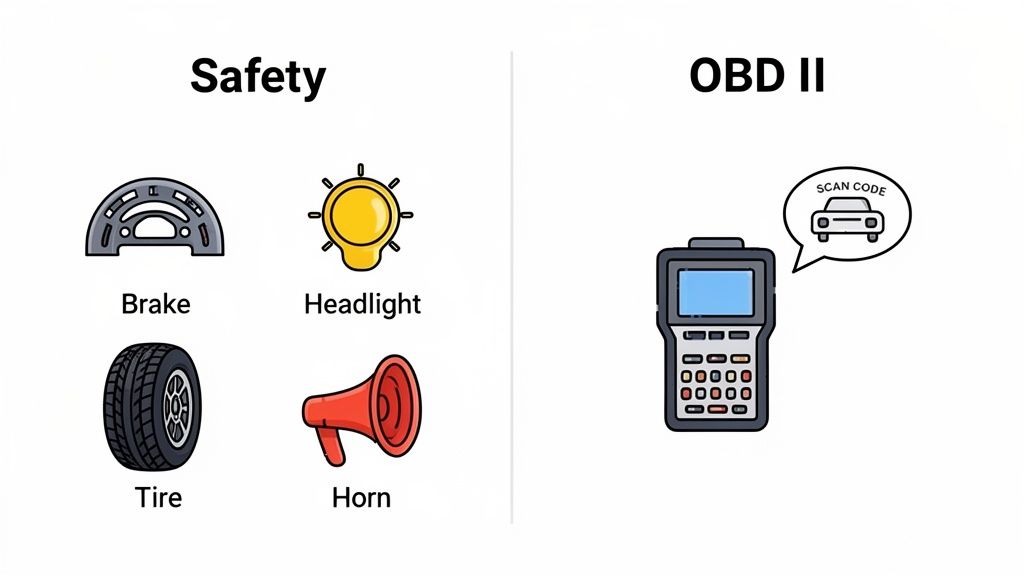
To really get a handle on the Texas state inspection, it helps to stop thinking of it as one single test. Instead, see it as two separate evaluations that work together, each focusing on a different part of your vehicle's health and its impact on the world around you. It’s a lot like a comprehensive health screening that checks your personal well-being and your effect on the community.
The first pillar is the Safety Inspection, and it's mandatory for every single vehicle registered in the state. This is a hands-on, top-to-bottom review of your car’s most critical functions, designed to answer one simple question: is this vehicle safe enough to be on a public road?
Pillar One: The Statewide Safety Inspection
This part of the inspection is all about preventing accidents that happen because of mechanical failure. An inspector methodically works through a checklist of components that are absolutely essential for controlling your vehicle and making your intentions clear to other drivers. This isn't just about ticking boxes; it's a practical assessment of real-world functionality.
For example, the technician will actually measure the thickness of your brake pads and check for any leaks in the brake lines. They aren't just looking to see if you can stop, but if you can stop safely and reliably in an emergency situation.
The safety checklist is extensive, covering the parts of your car you count on every day. Key areas include:
- Braking System: This covers both your foot brake and your parking brake. They have to be able to stop and hold your vehicle effectively.
- Lights and Signals: Every light has a job to do. Headlights, tail lights, brake lights, turn signals, and even your license plate light must all be working properly.
- Horn: A working horn is a vital communication tool on the road, essential for alerting other drivers and preventing collisions.
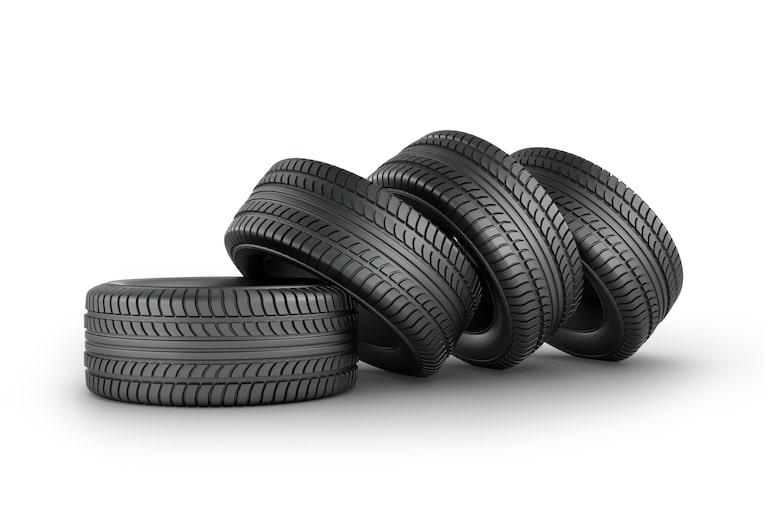
- Tires: The inspector checks for adequate tread depth—at least 2/32 of an inch—and makes sure there are no visible signs of dangerous wear or damage.
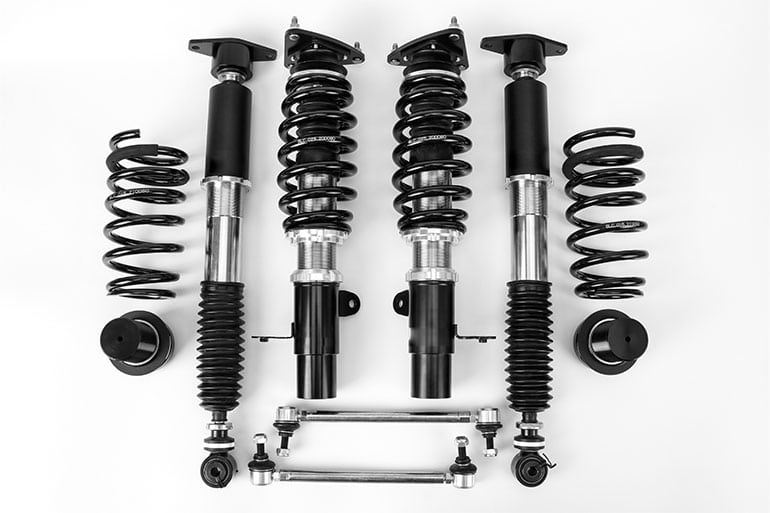
- Steering and Suspension: These systems need to be tight and responsive, without any excessive looseness that could compromise your control of the car.
- Windshield and Wipers: Your view of the road must be clear and unobstructed. Your wipers need to sweep the windshield clean without leaving streaks that obscure your vision.
Ensuring your visibility is a massive part of vehicle safety. For drivers looking for solutions beyond standard wipers, exploring a protective coating can be a game-changer. There's an ultimate guide to a clearer, safer drive that explains how these technologies work.
The core idea behind the safety inspection is simple: a failure in any one of these basic systems can have catastrophic consequences. By catching these issues early, the state helps reduce the number of preventable accidents on Texas roads.
Pillar Two: The Emissions Test for DFW Drivers
The second pillar of the Texas inspection applies specifically to vehicles registered in 17 Texas counties, including our own Dallas, Collin, Denton, and Tarrant counties. This is the Emissions Test, and its entire purpose is to protect our local air quality. If the safety check is about protecting people, the emissions test is about protecting the environment we all share.
Forget the old-school tailpipe probes you might remember from years ago. Modern inspections use a much smarter method. For any vehicle from model year 1996 or newer, technicians perform an On-Board Diagnostics (OBD-II) test.
Think of it as a quick, digital conversation with your car's brain. The inspector plugs a scanner into your car's OBD-II port (usually under the dashboard) and reads data directly from the engine's computer. This system is constantly monitoring the performance of your engine and all its pollution-control components.
The scanner is looking for two main things:
- Readiness Monitors: It checks to see if your car’s computer has completed all of its self-checks on the emissions systems.
- Diagnostic Trouble Codes (DTCs): It scans for any active trouble codes, which are the very things that trigger your "Check Engine" light to pop on.
If your "Check Engine" light is on, it's an almost certain sign that your vehicle will fail the emissions portion of the Texas state inspection. That light means the OBD-II system has detected a problem that is likely causing your vehicle to produce excessive pollution. Understanding both of these pillars gives you the full picture of what it takes to be a compliant and responsible driver in Richardson.
Your Checklist for a Smooth Inspection Process
Showing up prepared can turn what feels like a chore into a quick, painless visit. Think of it like going to the airport—you wouldn't get far without your ID and boarding pass. A little prep work before your Texas state inspection ensures everything goes off without a hitch.
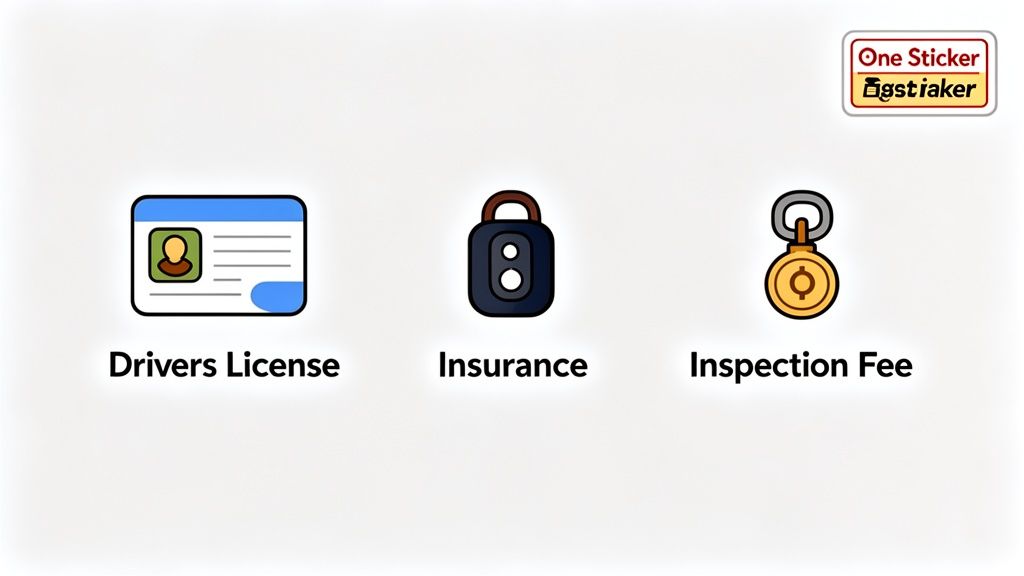
The key is having the right documents ready to go. Before you even head out the door, take a minute to gather the three items every inspection station needs to see. This simple step is the best way to avoid delays and get the process started the moment you pull in.
What to Bring to Your Inspection
Make sure you have these three things in your car where you can easily grab them. Nobody wants to be the person holding up the line while they dig through their glove compartment.
- A Valid Driver's License: The inspector needs to confirm who you are, so make sure your license is current and not expired.
- Proof of Texas Liability Insurance: You’ll need to show a current insurance card for the vehicle you're getting inspected. A digital copy on your phone usually works just fine, but double-check that the policy is still active.
- The Inspection Fee: Be ready to pay for the service. Here at Kwik Kar Richardson, we take all the usual payment methods to make it easy.
Having these items on hand shows you’re ready to go and helps our technicians get started right away. For a deeper dive, take a look at our complete vehicle inspection checklist to make sure you've covered all your bases.
Understanding the Two Steps One Sticker System
Passing the inspection is a huge step, but it’s not quite the finish line for being street-legal. Texas has a smart, streamlined system that links your inspection status directly to your vehicle registration. It’s a logical process designed to ensure every car on the road is both safe and properly registered.
This "Two Steps, One Sticker" approach got rid of the old, clunky two-sticker system, creating a much clearer path for drivers to follow.
Here’s the simple breakdown:
- Step One Pass the Inspection: Your vehicle has to pass its annual Texas state inspection first. Once it does, the station sends the results electronically to a statewide database run by the Texas Department of Public Safety.
- Step Two Renew Your Registration: With that passing inspection on file, you’re cleared to renew your registration. You can do this online, by mail, or in person at your local county tax office.
After you renew your registration, you'll get a single sticker for your windshield. This one sticker is proof of both a valid inspection and current registration. It cleans up your windshield and makes it simple to see that you’re good to go.
This integrated system means you can't renew your registration without passing your inspection—the two are now tied together for good. A successful inspection is your green light to finish the registration process and drive legally on Richardson roads.
How To Avoid Common Inspection Failures
Nothing sinks your day faster than taking time for a Texas state inspection only to fail over something small and easily fixable. The good news? Most inspection failures are completely predictable and preventable. Think of this as your pre-game strategy, a simple checklist you can run through in your own driveway to turn a potential headache into a smooth, one-and-done visit.
With just a few minutes of your time, you can spot the usual suspects that cause a failed inspection sticker. This little bit of prep work not only saves you the hassle and cost of a re-inspection but also helps you stay on top of your car's overall health. You'll walk into the inspection station feeling confident, knowing you’ve already taken care of business.
The Infamous Check Engine Light
Let's start with the undisputed champion of emissions test failures in Dallas County: the Check Engine light. That little glowing symbol on your dashboard is your car’s way of raising its hand and saying, "Hey, my onboard computer found a problem with the engine, transmission, or emissions system."
If that light is on, it's an automatic fail for the emissions portion of the test. No questions asked. The inspection equipment simply reads the error code that triggered the light in the first place. The cause could be anything from a loose gas cap to a more serious issue like a faulty oxygen sensor. Before you even think about heading to an inspection, you need to get this diagnosed and fixed. If you're wondering where to start, our guide explains how to check the engine light and what to do next.
Your At-Home Pre-Inspection Checklist
Beyond the check engine light, a handful of other common issues can easily trip you up during the safety inspection. The best part is that you can check almost all of them yourself in less time than it takes to brew a pot of coffee.
Here's a quick look at how you can identify and address these common failure points before you even leave the house.
Pre-Inspection Checklist Common Failures and Fixes
| Common Failure Point | How to Check at Home | Simple Fix or Professional Service Needed |
|---|---|---|
| Burned-Out Bulbs | Have a friend help. Test headlights (high & low beams), brake lights, turn signals (front/back), reverse lights, and the license plate light. | Simple Fix: Most bulbs are inexpensive and can be replaced at home with basic tools. |
| Worn Windshield Wipers | Turn them on. Do they leave streaks, skip across the glass, or look cracked/peeling? If so, they need replacing. | Simple Fix: New wiper blades are easy to find and install yourself in just a few minutes. |
| Cracked Windshield | Look for any cracks or large chips directly in the driver's line of sight. Small dings outside this critical area are usually fine. | Professional Service: Windshield repair or replacement requires a professional. |
| Horn Not Working | Give the horn a quick press. It needs to be loud and clear. A weak or silent horn is an automatic failure. | Professional Service: This usually indicates an electrical issue that needs a technician to diagnose. |
Taking just ten minutes for a simple walk-around can catch over 80% of the common issues that cause a vehicle to fail. That small investment of time can save you from a return trip and another inspection fee.
Brakes and Tires: Two Critical Safety Checks
While many issues are easy to spot, your brakes and tires deserve a closer look. These are two of the most critical safety systems on your vehicle, and inspectors pay very close attention to them during the Texas state inspection.
For your braking system, use your ears and your feet. Listen for any grinding or high-pitched squealing noises when you apply the brakes. If the pedal feels mushy or sinks too close to the floor, that’s another red flag. While a technician will officially measure your brake pad thickness, these clues tell you it's time for a professional check-up.
Tires are the other major safety checkpoint. The minimum legal tread depth in Texas is 2/32 of an inch. You can easily check this at home with a penny.
- The Penny Test: Stick a penny into your tire's tread with Lincoln's head facing down. If you can see the top of Abe's head, your tread is too worn, and you'll fail the inspection. Make sure to check several spots on each tire.
You should also give the sidewalls a quick scan for any visible bumps, cracks, or exposed cords. Finally, check your tire pressure and make sure it matches the manufacturer’s recommendation, which is usually found on a sticker inside the driver's side door jamb. Properly inflated tires aren't just safer—they also help improve your gas mileage.
The Future of Texas Vehicle Inspections
The world of Texas state inspections is about to change in a big way, and if you want to stay ahead of the curve, it's smart to know what’s coming. The state's goals—keeping roads safe and the air clean—aren’t going anywhere, but the process itself is getting a major overhaul. Knowing what's happening will save you from any surprises when it's time to renew your registration.
Right now, the system works on a pretty clear timeline. Once your car passes its inspection, you have a solid 90 days to get your vehicle registration renewed. That's a decent window to get everything sorted. If your car fails, however, you get a 15-day grace period to make the necessary repairs. The good news is that when you bring it back within that timeframe, the re-test on the failed items is free.
The Impact of House Bill 3297
The biggest shake-up is just around the corner, all thanks to a piece of legislation called House Bill 3297. On January 1, 2025, Texas is officially eliminating the mandatory annual safety inspection for most noncommercial vehicles. This is a massive shift from the system we've known for decades. You can learn more about the fee structure changes resulting from this bill.
But hold on—this doesn't mean the entire process is vanishing. The fee you're used to paying for a safety inspection isn't disappearing, either. Instead, it's being rolled into your annual registration renewal as a new, equivalent fee. Think of it less as an "inspection fee" and more of a "road safety fee."
This shift means that while you won't need a separate safety inspection, the state will still collect funds dedicated to road safety initiatives. The convenience for drivers increases, but the financial obligation remains part of the annual registration process.
Emissions Testing Remains a Constant for Richardson
This is the crucial part for anyone driving in Richardson and the rest of Dallas County: one major piece of the Texas state inspection is not changing. The 17 Texas counties with air quality concerns, which include Harris, Dallas, Tarrant, and Travis, will still require annual emissions inspections.
So, even after the statewide safety inspection requirement goes away, you will still need to bring your vehicle to a certified station like Kwik Kar Richardson for its yearly emissions test. That OBD-II check is still a non-negotiable step before you can renew your registration.
- Who is affected? All non-exempt vehicles registered in the 17 designated counties.
- What is required? A passing On-Board Diagnostics (OBD-II) emissions test.
- What is the outcome? You need a passing result to renew your vehicle's annual registration.
This flowchart breaks down some of the most common reasons we see for inspection failures. It’s a great visual guide to help you know what to check before you even come in.
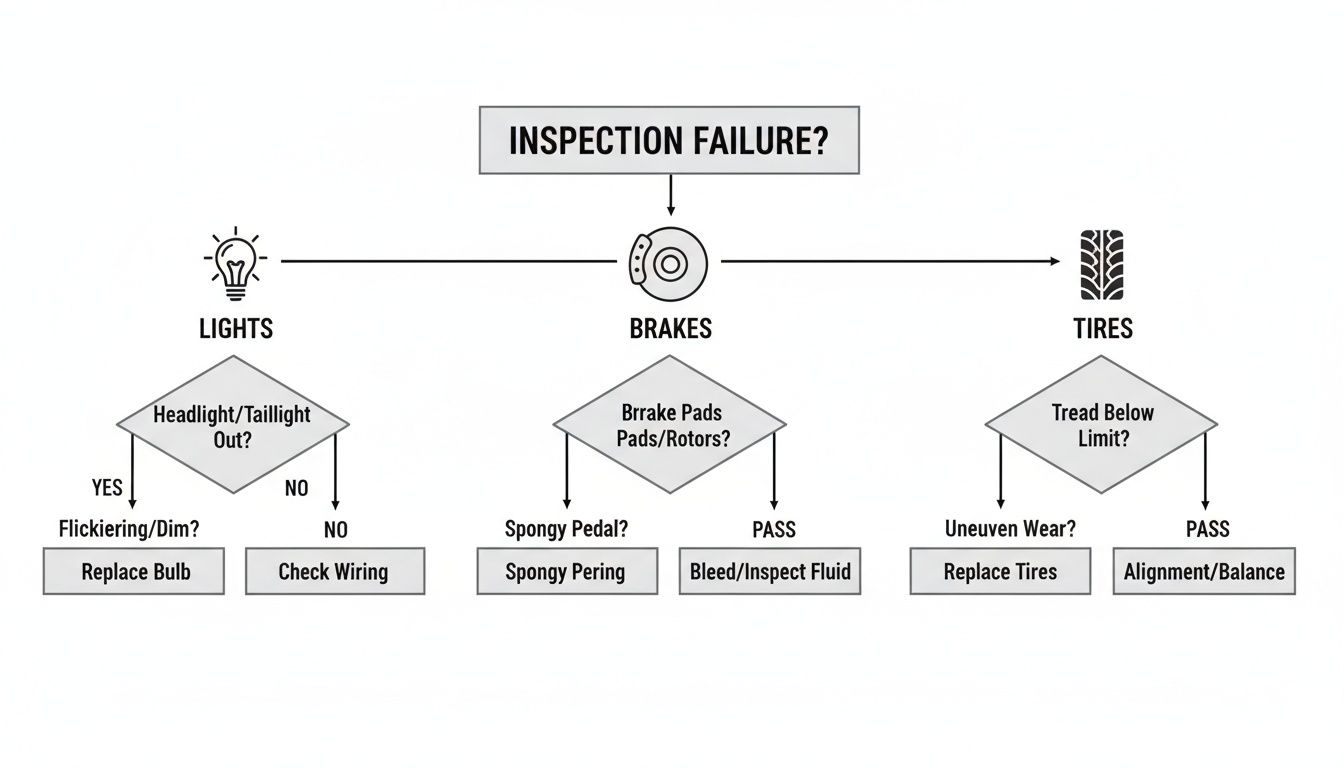
As you can see, simple maintenance issues with lights, brakes, and tires are the top culprits for inspection failures—and thankfully, they’re often the easiest to check and fix beforehand.
Why Trust Kwik Kar for Your Richardson Inspection?
Choosing where to get your Texas state inspection done might seem like a small detail, but it can make a huge difference in your day. The right shop doesn't just check boxes on a form; they act as a true partner in keeping your vehicle safe and healthy for the long haul. Here at Kwik Kar Richardson, we take that role seriously, mixing top-notch technical skill with clear, honest communication.
Our whole process is built around being transparent and straightforward. While we're an officially licensed Texas Department of Public Safety (DPS) inspection station, our qualifications run much deeper. Our shop is staffed with ASE-certified technicians—professionals who've proven their expertise and are committed to doing every inspection with precision and integrity.
The Kwik Kar Difference
When you bring your car to us, you’re getting more than just a standard checkup. We use modern diagnostic equipment to make sure every result is spot-on, whether it’s the full safety check or the required emissions test for Dallas County. This commitment to quality means you get a fair and thorough evaluation, every single time.
But what really sets us apart is how we handle things if your vehicle doesn't pass. We believe a failed inspection should be a moment for clear guidance, not stress and confusion.
- No Jargon, Just Answers: We'll walk you through exactly what’s wrong in plain English, and we’ll even show you the problem whenever we can.
- No-Pressure Estimates: You’ll get a detailed estimate for any needed repairs, giving you all the info you need to make a decision without any obligation.
- A Focus on Solutions: Our goal is simple: find the most effective and affordable way to get you back on the road safely and legally.
This straightforward approach builds trust and puts you in control. We want to be more than just your inspection station; we want to be your go-to shop for all your car care needs. You can learn more about our specific Texas state inspection services and see how we can help.
At Kwik Kar Richardson, we combine dealership-quality service with the values of a local, community-focused business. We’re not just servicing cars; we’re serving our neighbors in Richardson.
Navigating Changes with a Trusted Partner
With Texas set to phase out the mandatory safety inspection in 2025, having a reliable auto shop on your side is more important than ever. The state-mandated check might be going away, but the need for a safe, well-maintained vehicle certainly isn't. The old system was a huge part of the auto industry's economy. Before its elimination, 19 million vehicle owners paid a combined $307 million in annual fees, and station owners relied on $137.3 million in revenue from these inspections. As you can read in the full DPS executive summary, this is a major shift for both drivers and service centers.
Even without the mandatory check, our ASE-certified technicians can still provide comprehensive safety evaluations to ensure your brakes, tires, and other critical systems are in great shape. We’ll also continue to be your expert resource for the required emissions test, helping you navigate the rules and pass with confidence.
Got a Question About Your Texas Inspection? We’ve Got Answers.
Even with the basics covered, the world of vehicle inspections has its share of tricky "what if" scenarios. You’re not alone if you've found yourself wondering what to do in a specific situation. This is where we clear up the confusion.
Think of this as your quick-reference guide for those questions that don't always have a straightforward answer. We'll tackle some of the most common curveballs drivers face so you can navigate the process with confidence.
Common Questions and Clear Answers
Let's dive into the situations that often leave Texas drivers scratching their heads. From new residents to that dreaded post-inspection warning light, here’s what you need to know.
Q: I just passed my inspection, but my Check Engine light came on. What now?
This is a frustratingly common scenario, but don't panic—it doesn't invalidate your passing report. As long as you passed before the light appeared, your report is still valid for 90 days. That gives you the window you need to renew your registration.
However, you should absolutely get the issue diagnosed and fixed as soon as you can. Ignoring it could lead to more serious engine problems or just plain awful fuel economy down the road.
Q: I just moved to Texas. How long do I have to get my car inspected?
Welcome to the Lone Star State! Once you're officially a resident, the clock starts ticking. You have 30 days to get your vehicle registered, and the very first step in that process is getting a passing Texas state inspection.
Once the inspection is done, you'll take your passing vehicle inspection report (VIR) to your local county tax assessor-collector’s office to finish up the registration.
Q: My registration expires soon, but my inspection is current. Can I get an inspection early?
Yes, you can, and it's a smart move. Your passing inspection report is valid for 90 days. This means you can get your vehicle inspected up to 90 days before your registration sticker expires, giving you plenty of breathing room to get everything sorted without a last-minute scramble.
The most important thing to remember is that your vehicle must pass its inspection before you can renew your registration. The two are directly linked, so always plan to tackle the inspection first.
Q: Does the 2025 law change affect my commercial or fleet vehicles?
No, it does not, and this is a critical point for business owners. The upcoming change in 2025 that eliminates the annual safety inspection only applies to non-commercial cars and light trucks.
Commercial vehicles will still be required to undergo an annual safety inspection. This is to ensure they continue to meet both state and federal safety standards. If you manage a fleet in Richardson, this is a distinction you can't afford to miss.
At Kwik Kar Oil Change and Auto Care, our ASE-certified technicians are here to answer all your questions and make your inspection experience seamless. Whether you need a quick check-up before your test, emissions diagnostics, or reliable repairs to pass, we're the local experts you can trust. Schedule your visit today and drive with complete confidence.