Your vehicle is a complex machine, a daily partner in navigating the roads of Richardson and beyond. Yet, many drivers wait for a dashboard light or a strange noise before giving it the attention it deserves. This reactive approach not only leads to unexpected breakdowns and costly repairs but also compromises safety and performance. The secret to a long-lasting, reliable vehicle isn't a secret at all: it's consistency.
By adopting a proactive mindset, you transform maintenance from a chore into a powerful strategy for preserving your investment. This guide provides a definitive routine car maintenance checklist, broken down into manageable frequencies and actionable steps. We will cover everything from simple monthly fluid checks you can do in your driveway to critical annual services best left to ASE-certified technicians at a trusted shop like Kwik Kar.
Following this blueprint will empower you to understand your vehicle's needs, extend its lifespan, improve fuel economy, and drive with unshakable confidence. Beyond the hands-on checklist, a complete maintenance blueprint also considers how to effectively manage the financial aspects of vehicle care. For small business fleet managers or families juggling multiple vehicles, efficiently managing maintenance expenditures is just as crucial as the physical upkeep. This comprehensive plan ensures you address every critical system before it becomes a problem, saving you time, money, and stress down the road.
1. Oil and Filter Change
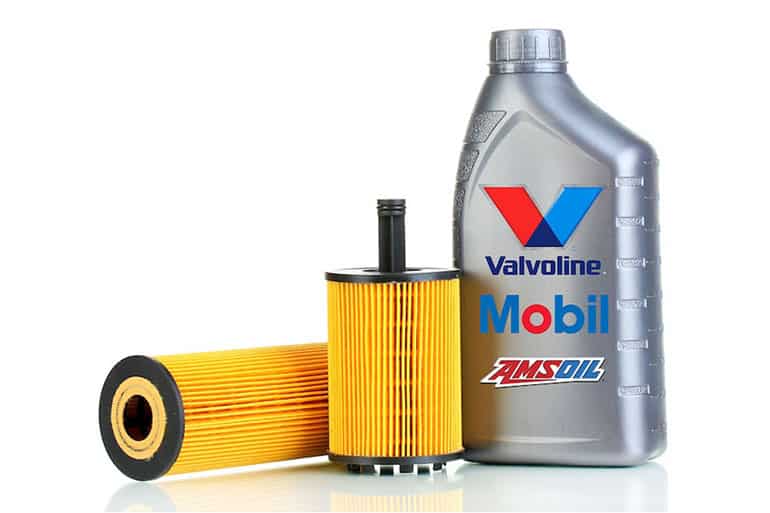
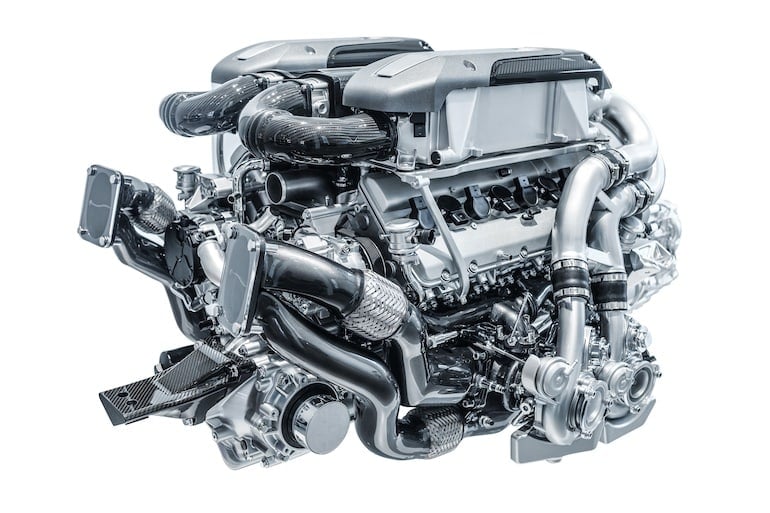
The oil and filter change is arguably the most critical service on any routine car maintenance checklist. Think of engine oil as the lifeblood of your vehicle. It lubricates the hundreds of moving parts within your engine, reducing friction, minimizing wear, and preventing overheating. As oil circulates, it picks up dirt, metal shavings, and other contaminants, which are then trapped by the oil filter.
Over time, the oil breaks down and the filter becomes clogged, losing their effectiveness. Ignoring this service forces your engine to work harder with dirty, degraded oil, leading to decreased performance, poor fuel economy, and potentially catastrophic engine damage. Regular changes ensure your engine runs smoothly, efficiently, and for many years to come.
Why It's the Cornerstone of Maintenance
This service is the foundation of preventive care for a reason. Fleet managers for Richardson-area businesses and first responder vehicle fleets adhere to strict oil change schedules to guarantee vehicle reliability and avoid costly downtime. For them, a well-maintained engine is essential for operational readiness and safety.
Similarly, owners of high-mileage vehicles can significantly extend their car's life by sticking to a consistent oil change schedule. Using the right type of oil provides superior protection against the stresses of aging engine components.
Key Insight: A documented history of regular oil changes is one of the most compelling pieces of evidence for a well-cared-for vehicle, significantly boosting its resale value.
Actionable Tips for Oil Service
To get the most out of this essential service, follow these best practices:
- Check Your Manual: Always refer to your vehicle manufacturer’s guide for the recommended oil type (viscosity grade) and service interval. Intervals can range from 3,000 to 10,000 miles or more.
- Consider Your Options: While conventional oil is sufficient for many vehicles, synthetic oil offers enhanced protection in extreme Texas heat and can extend the time between changes. If you're unsure which is best for your car, you can learn more about the differences between synthetic and conventional oil.
- Bundle Services: Save time by scheduling your oil change with other routine checks like a tire rotation or fluid top-off.
- Perform Monthly Checks: Between professional services, pop the hood and check the oil level yourself using the dipstick. This simple, two-minute check can help you spot leaks or excessive oil consumption before they become serious problems.
2. Tire Rotation and Inspection
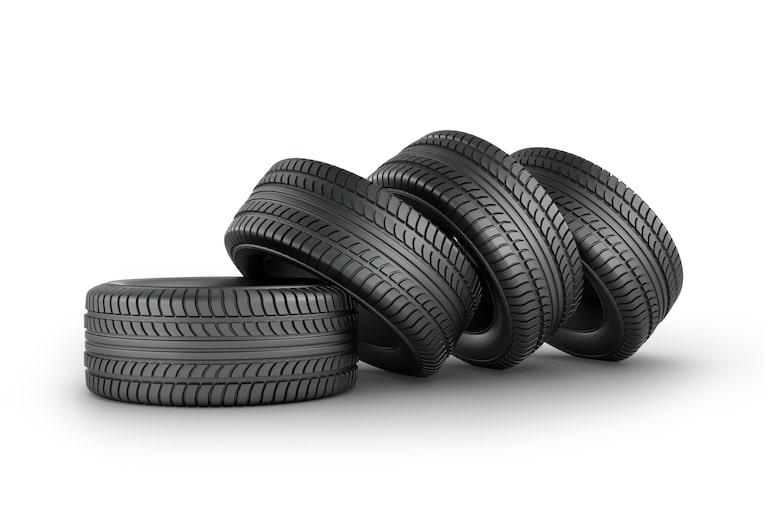
Often overlooked, tire rotation and inspection is a fundamental part of any routine car maintenance checklist that directly impacts your vehicle's safety and longevity. Your tires wear down at different rates depending on their position. Front tires, for example, often bear the brunt of steering forces and braking, causing them to wear faster than the rear tires. Rotating them repositions each tire to a new spot on the vehicle, allowing them to wear more evenly.
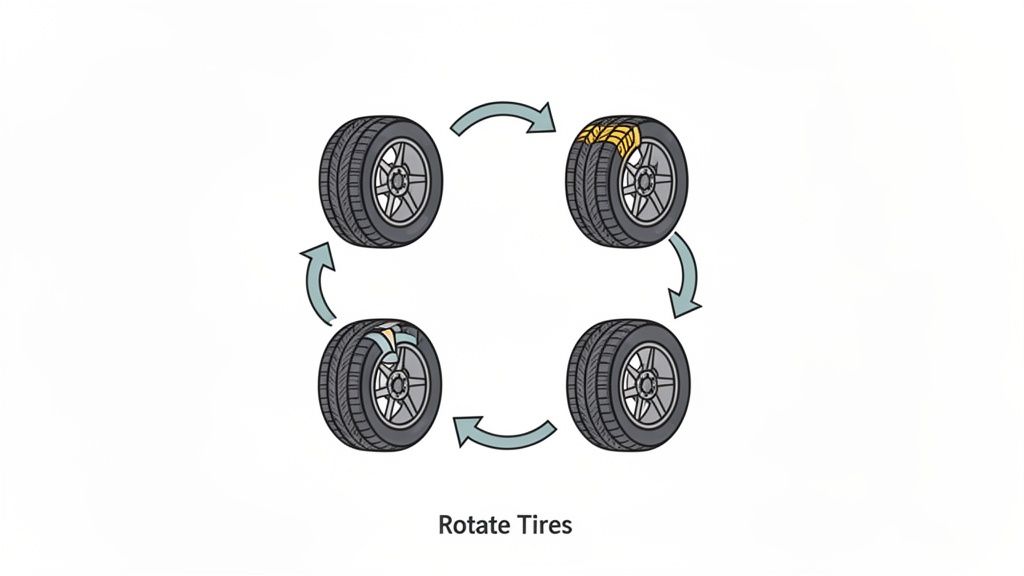
This simple process extends the life of your tires, maintains balanced handling, and ensures optimal traction and braking performance. Neglecting rotations leads to premature and uneven tire wear, which can compromise your car’s stability, decrease fuel efficiency, and ultimately force you to buy new tires much sooner than necessary.
Why It's a Pillar of Vehicle Safety
Consistent tire maintenance is crucial for safe and reliable vehicle operation. For Richardson commuters looking to reduce long-term costs, regular rotations can extend tire life by thousands of miles, delaying expensive replacements. Similarly, fleet vehicle managers rely on this service to maintain uniform wear across all vehicles, ensuring predictable performance and safety standards.
For families, a tire inspection performed during a rotation provides a vital safety check. Technicians can spot potential issues like tread separation, punctures, or sidewall damage that might otherwise go unnoticed, preventing a dangerous blowout on the road.
Key Insight: Uneven tire wear is often the first and most obvious symptom of an underlying wheel alignment or suspension problem. A routine rotation can help a technician catch these issues early.
Actionable Tips for Tire Service
To maximize the life and safety of your tires, incorporate these practices into your maintenance routine:
- Follow the Schedule: Rotate your tires every 5,000 to 7,500 miles, or as recommended in your vehicle’s owner's manual. A good rule of thumb is to do it with every oil change.
- Check Tire Pressure Monthly: Proper inflation is critical. Use a tire pressure gauge to check each tire, including the spare, and inflate them to the PSI level specified on the sticker inside your driver's side door jamb.
- Inspect Tread Depth: Use the "penny test." Place a penny with Lincoln's head upside down into the tread. If you can see the top of his head, your tread is worn and it’s time for new tires.
- Look for Uneven Wear: Visually inspect your tires for patterns like wear on one edge, which often points to an alignment issue that needs professional attention.
- Consider Wheel Balancing: If you notice a vibration in your steering wheel or seat after a rotation, you may need to have your wheels balanced.
3. Brake System Inspection and Service
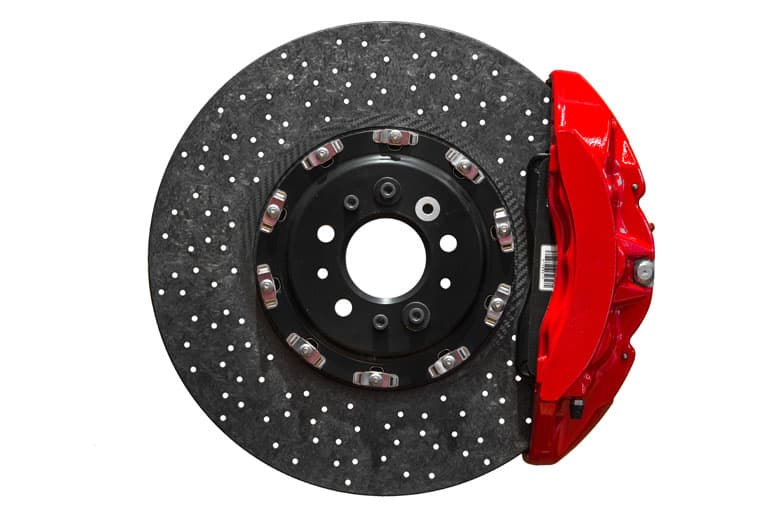
Your vehicle’s ability to stop safely and reliably is non-negotiable, making a brake system inspection and service a critical component of any routine car maintenance checklist. This service involves a comprehensive evaluation of all key components, including brake pads, rotors, calipers, and brake fluid. These parts work together to convert the pressure you apply on the pedal into the friction needed to slow down your vehicle.
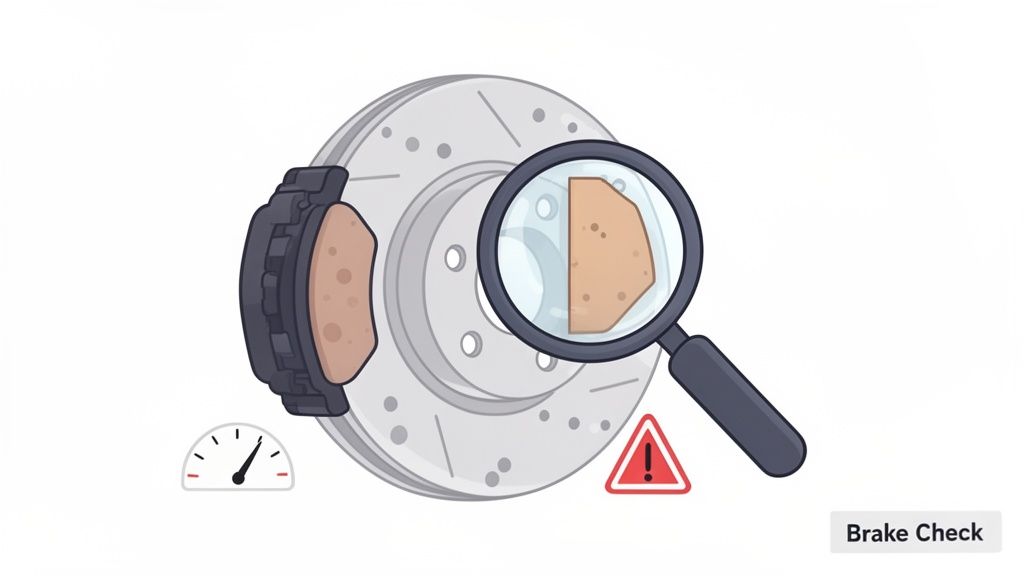
Over time, the constant friction causes brake pads and rotors to wear down, and brake fluid can absorb moisture, reducing its effectiveness. Neglecting the brake system increases your stopping distance, compromises vehicle control, and can lead to brake failure. Regular inspections ensure that every part functions correctly, providing the confidence you need for every trip.
Why It's the Cornerstone of Maintenance
A responsive brake system is the ultimate safety feature. For military personnel and first responders, dependable brakes are essential for navigating emergency situations where split-second reactions are required. Their vehicle fleets undergo rigorous brake inspections to ensure operational readiness and public safety.
Similarly, families rely on a perfectly maintained brake system for the safety of their loved ones during daily commutes and school runs. For owners of aging or high-mileage cars, proactive brake service prevents the escalation of minor wear into costly, multi-component repairs.
Key Insight: A well-maintained brake system not only ensures your safety but also protects other components. Addressing worn pads early prevents expensive damage to rotors and calipers.
Actionable Tips for Brake Service
To maintain optimal stopping power and safety, integrate these practices into your maintenance routine:
- Listen to Your Vehicle: High-pitched squealing or grinding noises when you brake are often the first signs that your brake pads are worn out.
- Feel the Pedal: If the brake pedal feels soft, spongy, or sinks to the floor, it could indicate a problem with the brake fluid or a leak in the system.
- Watch for Vibrations: A shaking steering wheel or pulsating brake pedal when stopping points to warped rotors, which reduce braking efficiency.
- Follow a Schedule: Have a professional inspect your brakes at least once a year or every 15,000 miles. If you're unsure, you can learn more about when to replace brake pads.
- Fluid is Key: Brake fluid should be flushed and replaced every 2 to 3 years, as recommended by most manufacturers, to prevent corrosion and maintain hydraulic pressure.
4. Battery Testing and Replacement
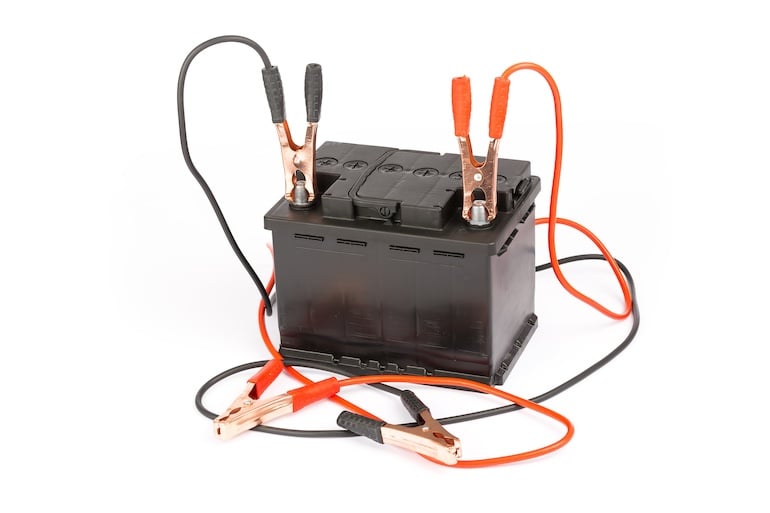
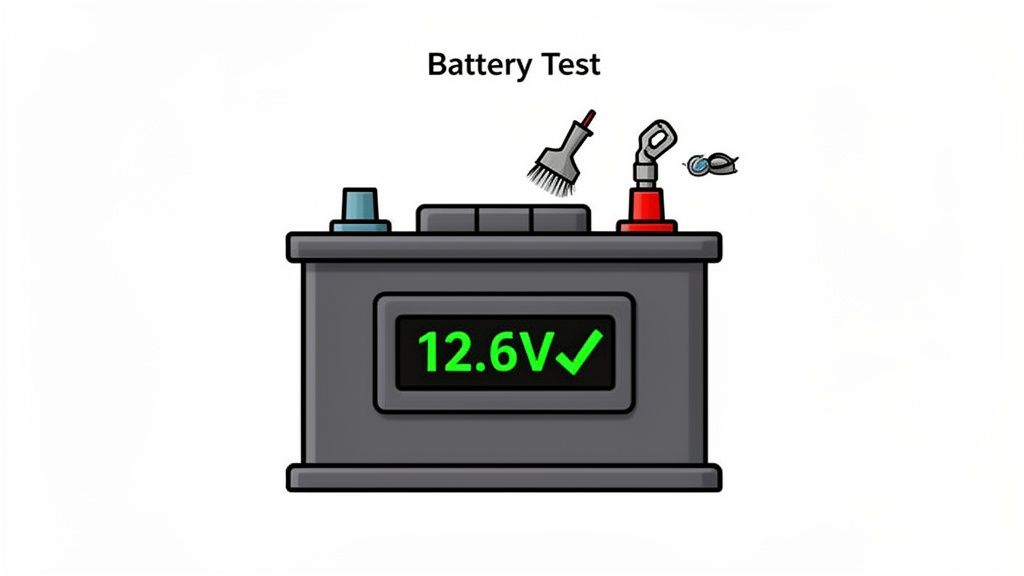
A reliable start every time you turn the key is a fundamental expectation, and regular battery testing is a key part of any routine car maintenance checklist. Your car's battery powers the starter, ignition system, and all the onboard electronics. It’s a consumable component with a finite lifespan, typically lasting 3-5 years, depending on factors like the Richardson climate, your driving habits, and the vehicle's electrical demands.
Over time, a battery's ability to hold a charge diminishes. Regular testing identifies a weakening battery before it fails completely, saving you from the inconvenience of being stranded with a car that won't start. Cleaning terminals and ensuring tight connections also prevents corrosion that can disrupt the electrical flow and strain the entire charging system.
Why It's the Cornerstone of Reliability
This service is the foundation of vehicle dependability for a reason. First responder and military vehicle fleets depend on instant, reliable starting capability in critical situations, making proactive battery testing and replacement a non-negotiable part of their maintenance protocols. A dead battery means a vehicle is out of service, which can have serious consequences.
Similarly, preparing a vehicle for a cold North Texas winter must include a battery health check. Cold weather significantly reduces a battery's cranking power, and a weak battery is most likely to fail on the first frigid morning. Proactive testing prevents these predictable failures.
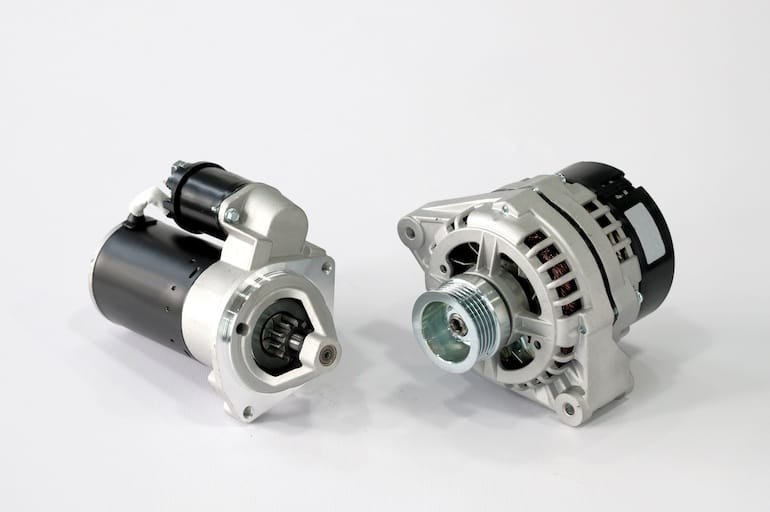
Key Insight: A battery that repeatedly fails prematurely is often a symptom of a larger issue, such as a failing alternator that isn't properly recharging it. A comprehensive charging system test is essential.
Actionable Tips for Battery Service
To ensure your vehicle starts reliably every time, follow these best practices:
- Test Annually: Have your battery and charging system professionally tested once a year, especially before winter arrives. A healthy battery should read around 12.6 volts or higher when the car is off.
- Keep It Clean: Check the battery terminals for fuzzy, bluish-white corrosion. You can clean this buildup with a mixture of baking soda and water and a wire brush to ensure a solid electrical connection.
- Check Connections: When checking terminals, gently tug on the battery cables to ensure they are tight and secure. Loose connections can mimic the symptoms of a dead battery.
- Watch for Warnings: Pay attention to your dashboard. A battery warning light often indicates a problem with the alternator or charging system, not just the battery itself.
- Consider an Upgrade: If you live in an area with extreme temperatures or have a vehicle with heavy electronic demands (like extra lights or a powerful sound system), consider investing in a premium or AGM (Absorbent Glass Mat) battery for better performance and longevity.
5. Fluid Level Checks and Top-Offs
Beyond engine oil, your vehicle relies on several other critical fluids to function correctly, making regular fluid checks an essential part of any routine car maintenance checklist. These fluids manage everything from engine temperature and transmission shifting to steering and visibility. Coolant prevents your engine from overheating, transmission fluid ensures smooth gear changes, and power steering fluid makes turning the wheel effortless.
Neglecting these fluids can lead to severe and expensive mechanical failures. Low coolant can cause catastrophic engine damage, while degraded transmission fluid can result in a complete transmission failure. Maintaining proper levels ensures all systems operate as designed, protecting your vehicle's long-term health and reliability.
Why It’s a Pillar of Preventive Care
This series of checks is fundamental to spotting problems early. For families, ensuring the windshield washer fluid is full is a simple but critical step for maintaining visibility in sudden rain or winter weather. Owners of aging vehicles can identify developing leaks by monitoring fluid levels, allowing for proactive repairs before a minor drip becomes a major breakdown.
Fleet managers also meticulously track fluid consumption across their vehicles. A truck that consistently needs coolant top-offs, for example, signals a potential leak in the cooling system that needs immediate attention to prevent vehicle downtime and costly engine repairs.
Key Insight: The color and smell of your fluids can be as telling as their level. Dark, burnt-smelling transmission fluid is a major red flag indicating internal wear and the need for professional service.
Actionable Tips for Fluid Service
To properly monitor and maintain your vehicle's essential fluids, incorporate these practices into your routine:
- Check When Cold: For the most accurate readings, check fluids like coolant and transmission fluid when the engine is cool. Always park on a level surface.
- Use the Right Stuff: Refer to your owner's manual to confirm the specific type and specification for each fluid. Using the wrong kind can cause significant damage.
- Monitor for Leaks: Routinely check your parking spot for any new drips or puddles. A piece of cardboard placed under the engine overnight can help you identify the color and source of a leak.
- Safety First: Never attempt to open the radiator cap when the engine is hot. The cooling system is highly pressurized, and opening the cap can cause scalding-hot coolant to erupt.
- Top-Off Regularly: Keep windshield washer fluid full year-round. Check your coolant, power steering, and brake fluid levels monthly and top off as needed, paying close attention to any sudden drops.
6. Air Filter and Cabin Air Filter Replacement
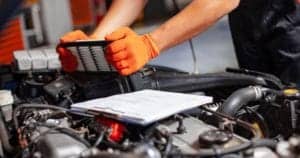
A complete routine car maintenance checklist must account for the air your car breathes, both for engine performance and passenger comfort. Your vehicle uses two primary air filters: the engine air filter and the cabin air filter. The engine filter ensures a clean, oxygen-rich air supply for fuel combustion, while the cabin filter purifies the air you and your passengers breathe inside the car.
Forgetting these components forces your engine to work harder with less oxygen, hurting fuel economy and performance. A clogged cabin filter degrades your HVAC system's efficiency and allows allergens, dust, and pollutants to circulate inside your vehicle, impacting air quality. Regular replacement keeps both the engine and the cabin environment clean and healthy.
Why It's a Key Part of Vehicle Health
This service is a fundamental aspect of preventive care for both performance and comfort. For Richardson families, especially those with allergy sufferers, a fresh cabin air filter can make a significant difference in seasonal comfort by trapping pollen and other irritants. It's a small change that drastically improves the driving experience.
Likewise, high-mileage vehicles operating in dusty Texas environments need more frequent filter changes to prevent grit from accelerating engine wear. A clean filter is a simple, cost-effective way to protect vital engine components from premature damage.
Key Insight: A clogged engine air filter can reduce your fuel efficiency by up to 10%. Replacing it on schedule is one of the easiest ways to save money at the gas pump.
Actionable Tips for Filter Service
To ensure your vehicle breathes easy, incorporate these filter checks into your maintenance plan:
- Follow the Schedule: Most manufacturers recommend replacing the engine air filter every 12,000 to 15,000 miles and the cabin air filter annually. Always check your owner's manual for specific intervals.
- Inspect Visibly: Ask your technician to visually inspect the engine air filter during every oil change. If it's dark, dirty, or clogged with debris, it's time for a replacement, regardless of mileage.
- Listen to Your HVAC: If you notice reduced airflow from your vents or a musty smell when you turn on the AC or heat, a clogged cabin air filter is the most likely culprit.
- Consider Your Environment: If you frequently drive on dirt roads or live in an area with high pollen counts, you should plan to replace both filters more often than the standard recommendation.
7. Wheel Alignment Inspection and Correction
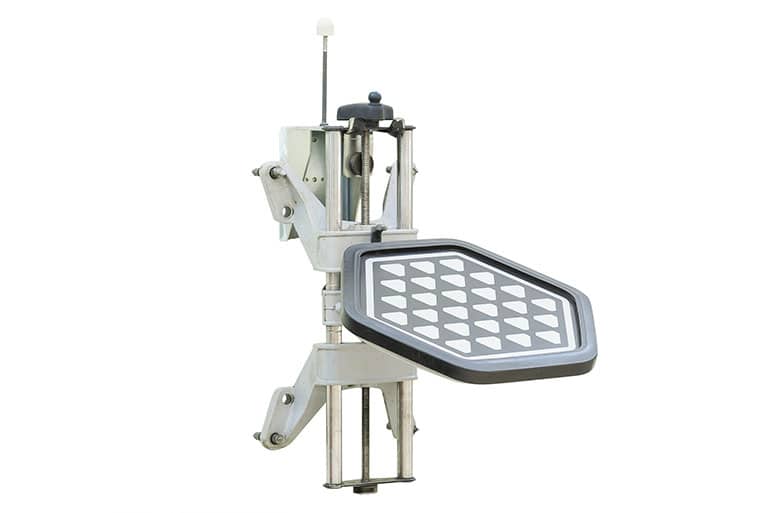
A wheel alignment is a crucial adjustment on any routine car maintenance checklist, yet it is often overlooked until a problem becomes obvious. This service involves precisely adjusting the angles of your wheels (known as camber, caster, and toe) to match the manufacturer's specifications. Proper alignment ensures your vehicle drives straight, maximizes tire lifespan, and improves overall handling and safety.
Everyday driving hazards like hitting potholes, bumping into curbs in Richardson, or even normal wear on suspension components can gradually knock your wheels out of alignment. Ignoring this leads to premature and uneven tire wear, decreased fuel efficiency as the engine works harder to overcome tire resistance, and a less stable, potentially unsafe driving experience.
Why It's the Cornerstone of Safety and Savings
This service is a fundamental part of preventive care that protects your investment in tires. Fleet managers responsible for commercial vehicles prioritize regular alignment checks to minimize tire replacement costs and ensure predictable, safe handling for their drivers. A properly aligned fleet is a more economical and reliable one.
For any driver, especially those with newer vehicles or who have recently purchased new tires, a wheel alignment is essential for protecting that investment. It ensures the tires wear evenly from the start, preventing issues that can void a tire warranty and lead to expensive, premature replacements.
Key Insight: A consistent pull to one side while driving on a straight, flat road is the most common symptom of a bad wheel alignment. Addressing it promptly can save hundreds of dollars in tire costs.
Actionable Tips for Wheel Alignment
To get the most out of this essential service, follow these best practices:
- Schedule Annual Checks: Have your alignment inspected at least once a year or any time you install new tires. It's also wise to check it after a significant impact with a pothole or curb.
- Watch for Warning Signs: Be alert for uneven or rapid tire wear, a crooked steering wheel when driving straight, or your vehicle pulling to the left or right. These are clear indicators that an inspection is needed.
- Opt for a Four-Wheel Alignment: While some shops offer a front-end alignment, a comprehensive four-wheel alignment is the best practice for most modern vehicles, ensuring all wheels work together harmoniously.
- Align After Suspension Work: If you have any suspension components replaced, such as struts or control arms, a wheel alignment is not just recommended; it is a necessary final step to restore proper vehicle geometry.
8. Spark Plug Inspection and Replacement
Spark plugs are small but mighty components on any routine car maintenance checklist. These crucial parts create the spark that ignites the air-fuel mixture in your engine's combustion chambers, essentially starting the process that powers your vehicle. A clean, strong spark ensures efficient combustion, while a weak or inconsistent spark leads to a host of performance issues.
Over time, spark plugs wear down from heat, pressure, and electrical erosion. This degradation can cause problems like rough idling, sluggish acceleration, poor fuel economy, and difficulty starting your engine. Regularly inspecting and replacing them according to your vehicle’s schedule is vital for maintaining optimal engine health and performance.
Why It's a Key Performance Tune-Up
This service is a fundamental part of a traditional engine tune-up for good reason. For fleet managers overseeing multiple vehicles, ensuring consistent performance and fuel efficiency across the board often starts with scheduled spark plug replacements. This proactive step prevents performance degradation and avoids unscheduled service appointments for misfires.
Similarly, owners of high-mileage vehicles can often restore lost power and smooth out a rough-running engine with a new set of plugs. It’s an effective way to rejuvenate an aging engine and improve its overall drivability.
Key Insight: A sudden, unexplained drop in your vehicle’s miles-per-gallon (MPG) is a classic symptom of worn-out spark plugs that are no longer firing efficiently.
Actionable Tips for Spark Plug Service
To ensure your engine runs at peak performance, follow these best practices for spark plug maintenance:
- Follow the Schedule: Your owner’s manual provides the manufacturer-recommended interval for spark plug replacement, which can range from 30,000 to over 100,000 miles depending on the type of plug.
- Replace as a Set: Always replace all spark plugs at the same time. This ensures uniform performance across all cylinders and prevents an old plug from failing shortly after you’ve replaced others.
- Recognize the Symptoms: Be aware of the signs of failing plugs. If you notice your engine is hesitating, misfiring, or idling roughly, it may be time for an inspection. You can learn more about the symptoms of bad spark plugs to diagnose the issue.
- Consider an Upgrade: When it's time for a replacement, ask your technician about premium iridium or platinum spark plugs. While they cost more upfront, they offer a longer service life and more consistent performance.
9. Transmission Fluid Check and Service
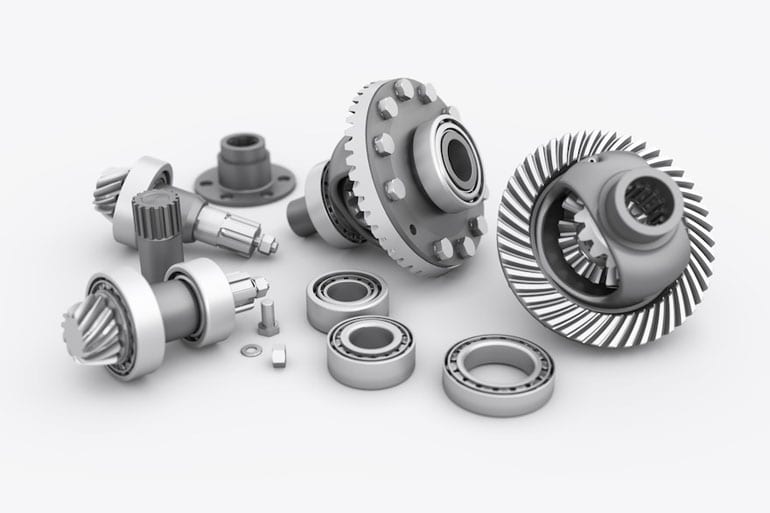
The transmission is one of your vehicle’s most complex and expensive systems, making its fluid a critical component in your routine car maintenance checklist. Transmission fluid is a specialized oil that lubricates moving parts, cools the system, and provides the hydraulic pressure necessary for smooth gear shifts. It ensures power from the engine is efficiently transferred to the wheels.
Over time, this fluid degrades due to heat and contamination, losing its protective properties. Neglecting it leads to hard shifting, shuddering, and overheating, which can cause internal component damage and eventual transmission failure. Regular checks and services are essential to prevent costly repairs and keep your vehicle running smoothly.
Why It's a Drivetrain Defender
This service is a non-negotiable for preserving your vehicle's drivetrain. Fleet managers responsible for high-use vehicles, such as delivery vans or service trucks, prioritize transmission services to prevent operational delays and catastrophic failures that can sideline a vehicle for weeks. A healthy transmission is key to reliability under demanding conditions.
For owners of aging vehicles, especially those with over 100,000 miles, a proactive transmission fluid flush can be the difference between a minor service cost and a major repair bill. It helps clear out sludge and varnish, restoring shifting performance and protecting vital components from accelerated wear.
Key Insight: A transmission fluid that is dark red or has a burnt smell is a clear warning sign of excessive heat or internal wear. Addressing it immediately can prevent a complete transmission rebuild.
Actionable Tips for Transmission Service
To properly maintain this vital system, follow these best practices:
- Check Fluid Regularly: While some modern vehicles have sealed transmissions, most allow you to check the fluid with a dipstick. Check the level and condition at every oil change. The fluid should be bright red and clear, not brown or gritty.
- Follow Manufacturer Specs: Always use the specific type of Automatic Transmission Fluid (ATF) recommended in your owner’s manual. Using the wrong fluid can cause serious damage.
- Adhere to Service Intervals: Most manufacturers recommend a transmission fluid flush every 30,000 to 60,000 miles. Consult your manual for the exact interval for your vehicle and driving conditions.
- Address Issues Immediately: If you notice any hesitation, slipping, or shuddering when your vehicle shifts gears, have it inspected by a professional right away. These are early symptoms of transmission problems.
10. Vehicle Safety Inspection for State Requirements
Passing an annual state safety inspection is a non-negotiable part of any routine car maintenance checklist for Texas drivers. This comprehensive evaluation is a legal requirement for vehicle registration renewal, designed to ensure every car on the road meets minimum safety standards. The inspection covers critical systems, including brakes, lights, steering, suspension, wipers, horn, and emissions, identifying potential hazards before they can cause an accident.
Failing to stay current with your inspection can lead to fines and prevent you from legally renewing your registration. More importantly, it’s a vital health check for your vehicle that confirms its core safety components are functioning correctly. This process protects you, your passengers, and every other driver sharing the road by catching wear and tear before it results in a critical failure.
Why It's the Cornerstone of Maintenance
This annual check is a cornerstone of responsible vehicle ownership for a reason. For new residents transferring their registration to Richardson, the Texas safety inspection is a mandatory first step. It ensures their vehicle aligns with state safety protocols from day one. Similarly, first responders and military personnel must keep their personal vehicles inspection-ready to guarantee they are safe and reliable for daily commutes and emergency situations.
For owners of aging vehicles, the annual inspection provides an invaluable third-party assessment. It often highlights developing issues, like thinning brake pads or a cracked windshield, that may have otherwise gone unnoticed, allowing for proactive repairs that prevent more costly problems down the line.
Key Insight: A clean, consistent vehicle inspection history is proof of responsible ownership and can reassure potential buyers that the vehicle has been maintained to meet or exceed state safety standards.
Actionable Tips for Inspection Service
To ensure a smooth and successful state inspection, follow these best practices:
- Schedule Early: Don’t wait until the last minute. Schedule your inspection a few weeks before your registration expires to allow time for any necessary repairs.
- Pre-Inspection Check: Do a quick walk-around. Test all your lights (headlights, brake lights, turn signals), check your horn, and ensure your wipers clear the windshield effectively.
- Address Warning Lights: If your "Check Engine" light or any other dashboard warning light is on, have it diagnosed and repaired before your appointment, as this often results in an automatic failure.
- Check All Safety Equipment: As part of your routine safety inspection, it's vital to confirm that all vehicle equipment, especially safety devices or any modifications, adhere to local and federal regulations. For specific information regarding legal and safety guidelines for seat belt extenders, it's best to consult official resources to ensure compliance.
10-Item Routine Car Maintenance Comparison
| Service | Implementation Complexity 🔄 | Resource Requirements ⚡ | Expected Outcomes ⭐📊 | Ideal Use Cases 💡 | Key Advantages ⭐ |
|---|---|---|---|---|---|
| Oil and Filter Change | 🔄 Low — routine, quick procedure | ⚡ Fast (~30 min); basic tools, oil & filter | ⭐📊 Improves engine longevity, fuel economy, reduces wear | 💡 Regular maintenance, high-mileage & fleet vehicles | ⭐ Affordable, high engine protection |
| Tire Rotation and Inspection | 🔄 Low–Medium — lift and swap with inspection | ⚡ 30–60 min; lift, torque wrench, tread gauge | ⭐📊 More even tire wear, improved handling and safety | 💡 Regular drivers, fleets, signs of uneven wear | ⭐ Maximizes tire life and investment |
| Brake System Inspection and Service | 🔄 Medium — detailed checks; possible repairs | ⚡ 1–2+ hrs; diagnostic tools, parts for replacement | ⭐📊 Restores reliable stopping power; prevents failures | 💡 Any safety concern, noise/vibration, annual checks | ⭐ Ensures safety; prevents accidents and costly damage |
| Battery Testing and Replacement | 🔄 Low — quick diagnostics; replacement access varies | ⚡ 15–45 min; digital tester, replacement battery | ⭐📊 Improved starting reliability; fewer roadside failures | 💡 Pre-winter checks, vehicles >3 years, fleets | ⭐ Prevents unexpected breakdowns |
| Fluid Level Checks and Top-Offs | 🔄 Low — visual checks and topping; some systems need flush | ⚡ 10–30 min; dipsticks, correct fluids, occasional flush equipment | ⭐📊 Prevents overheating, transmission damage, detects leaks | 💡 Monthly or oil-change visits, before long trips | ⭐ Affordable preventive measure; early leak detection |
| Air Filter & Cabin Filter Replacement | 🔄 Low — quick visual inspection and swap | ⚡ 10–30 min; replacement filters, minimal tools | ⭐📊 Better fuel economy, engine protection, improved cabin air | 💡 Allergy sufferers, dusty climates, routine tune-ups | ⭐ Cheap, fast way to boost performance and comfort |
| Wheel Alignment Inspection & Correction | 🔄 High — precise measurements and adjustments | ⚡ 1–2 hrs; alignment rack/computer, trained technician | ⭐📊 Extends tire life, improves fuel economy and handling | 💡 After pothole/curb hits, pulling or uneven wear | ⭐ Saves tires and improves driving stability |
| Spark Plug Inspection & Replacement | 🔄 Medium–High — access and precise gapping required | ⚡ 30–90 min; proper sockets, gap tool, correct plugs | ⭐📊 Restores acceleration, fuel efficiency; reduces misfires | 💡 Rough idling, poor fuel economy, scheduled tune-ups | ⭐ Restores engine efficiency and reliability |
| Transmission Fluid Check and Service | 🔄 Medium–High — level check simple; flush needs equipment | ⚡ 30–120 min; lift, pump/flush gear, correct ATF | ⭐📊 Smoother shifts, extended transmission life, avoids rebuilds | 💡 Shifting issues, towing, high-mileage vehicles | ⭐ Prevents catastrophic transmission failure |
| Vehicle Safety Inspection (State) | 🔄 Medium — multi-system checklist, emissions test | ⚡ 30–60 min; OBD-II scanner, inspection bay | ⭐📊 Legal compliance and comprehensive safety verification | 💡 Registration renewal, pre-sale, required by law | ⭐ Certifies roadworthiness and identifies multiple issues |
Your Trusted Partner on the Road to Reliability
Navigating the complexities of vehicle ownership can feel daunting, but it doesn't have to be. This comprehensive routine car maintenance checklist is designed to transform you from a reactive car owner into a proactive, empowered driver. By demystifying the essential checks and services your vehicle needs, from daily glances at your tires to annual professional inspections, you now possess a powerful roadmap to reliability, safety, and long-term savings.
Think of this checklist not as a series of chores, but as a strategic partnership with your vehicle. Each check, whether it's a simple fluid top-off or a professional brake inspection, is an investment in your car's future performance and your own peace of mind. You’ve learned how a timely oil change protects your engine’s heart, how proper tire rotation extends the life of your treads, and why clean air filters are crucial for both engine efficiency and your personal health.
From Checklist to Confident Action
The true value of this guide lies in its application. The difference between a well-maintained vehicle and one plagued by unexpected breakdowns is consistency. By integrating these checks into your schedule, you build a powerful preventative shield against costly repairs.
- You've learned to be observant: You now know the subtle signs that signal trouble, like a squealing brake pedal, a sluggish engine start, or a slight pull in your steering. These are no longer mysterious annoyances but clear communications from your vehicle demanding attention.
- You understand the "why": You're no longer just following a list. You understand that a wheel alignment isn't just about a straight steering wheel; it's about preventing premature tire wear and improving fuel economy. You know that replacing spark plugs isn't an arbitrary task; it's vital for optimal combustion and engine power.
- You know when to DIY and when to call the pros: This checklist empowers you to handle the simple tasks, like checking your oil and coolant levels, saving you time and money. More importantly, it gives you the clarity to recognize when a task requires the specialized tools, diagnostic equipment, and certified expertise of a professional technician.
The Real Impact of Routine Maintenance
Ultimately, mastering this routine car maintenance checklist is about more than just keeping your car running. It’s about ensuring the safety of yourself and your passengers on every journey. It’s about protecting the significant financial investment you’ve made in your vehicle, maximizing its lifespan, and preserving its resale value. For Richardson commuters, busy families, and small business fleet managers, this diligence translates directly into dependability you can count on, day in and day out.
Your vehicle is an integral part of your daily life, and treating it with consistent care ensures it remains a reliable asset, not a source of stress. By adopting these habits, you are taking definitive control of your automotive health, ensuring your car is always ready to safely and efficiently take you wherever you need to go.
Don't just read the checklist, put it into action with a team you can trust. Let the ASE-certified technicians at Kwik Kar Oil Change and Auto Care handle the professional services your vehicle deserves, from state inspections to complex diagnostics. Schedule your next service with us and experience the confidence that comes from expert care.