

Technician

Certified Shop

We’re proud to be the trusted choice for drivers in Richardson and nearby communities.
for nearly 30 years, Kwik Kar Richardson has been delivered honest auto repair and exceptional customer service.

See what our customers are saying
Your vehicle’s braking system is one of its most important safety features. Whether you’re driving through Richardson traffic, commuting to work, or heading out on a road trip, you rely on your brakes every time you get behind the wheel. At Kwik Kar Oil Change & Auto Care in Richardson, we provide professional brake inspections, maintenance, and repairs to help keep you, your passengers, and everyone on the road safe.
Our ASE-certified technicians are trained to diagnose and repair all types of brake system issues, from worn brake pads to hydraulic system failures, ensuring your vehicle stops safely and performs as designed.
Modern brake systems use hydraulic pressure to convert the force applied to the brake pedal into stopping power. When you press the brake pedal, brake fluid travels through the brake lines, activating the brake calipers and pads. The brake pads then apply pressure to the rotors, creating the friction needed to slow or stop your vehicle.
Because braking components experience constant wear, routine inspections and maintenance are essential. Ignoring worn brake components can lead to reduced stopping power, costly repairs, and potentially dangerous driving conditions.
If you notice any of the following symptoms, it’s important to have your braking system inspected as soon as possible:
Addressing brake problems early can help prevent more extensive damage and improve vehicle safety.
At Kwik Kar Richardson, we offer a full range of brake system services for most makes and models.
Brake pads and brake shoes naturally wear down over time and are among the most commonly replaced braking components. Our technicians inspect brake pad thickness, rotor condition, and overall brake performance to determine when replacement is needed.
Replacing worn brake pads before they become excessively thin can help prevent damage to your rotors and other brake components.
Brake rotors play a critical role in your vehicle’s stopping ability. If rotors become warped, excessively worn, or damaged, you may experience vibration, pulsation, or reduced braking performance.
We inspect rotor condition and recommend resurfacing or replacement when necessary to restore safe braking operation.
Brake fluid absorbs moisture over time, which can reduce braking performance and contribute to corrosion within the hydraulic system.
Our brake fluid service includes inspecting fluid condition and replacing contaminated or deteriorated fluid to help maintain optimal braking performance.
Brake lines carry hydraulic fluid throughout the braking system. Leaks, corrosion, or damaged brake lines can significantly reduce stopping power and create a serious safety risk.
Our technicians inspect brake lines for wear, leaks, and damage and perform repairs or replacements when needed.
The master cylinder is responsible for generating hydraulic pressure throughout the braking system. If it begins to fail, you may notice a soft brake pedal, inconsistent braking, or fluid leaks.
We perform comprehensive testing to determine whether repair or replacement is necessary.
Air trapped within the brake lines can cause a soft or spongy brake pedal and reduce braking effectiveness.
Brake bleeding removes air and contaminated fluid from the system, helping restore proper brake pedal feel and performance.
When an alternator begins to fail, your battery may no longer receive the charge it needs to power your vehicle. Because several components work together within the charging system, accurate testing is critical.
Our technicians use professional diagnostic equipment to evaluate:
This comprehensive testing allows us to identify the exact cause of the problem and recommend the appropriate repair.
If your alternator has failed or is no longer producing sufficient electrical output, replacement may be necessary. Our technicians carefully remove the old alternator, inspect related components, install a quality replacement unit, and verify proper charging system performance.
Once repairs are complete, we perform final testing to ensure your battery, alternator, and electrical system are functioning correctly.
Most alternators can last between 100,000 and 150,000 miles under normal driving conditions. However, factors such as extreme temperatures, heavy electrical loads, frequent short trips, and aftermarket accessories can reduce alternator lifespan.
Routine inspections can help identify charging system issues before they lead to a complete failure.
From routine maintenance to complex repairs, our ASE-certified technicians use advanced
diagnostics and quality parts to get the job done right the first time.

Expert A/C, heating, and cooling services for year-round comfort.

Keep your vehicle starting reliably with expert electrical service.
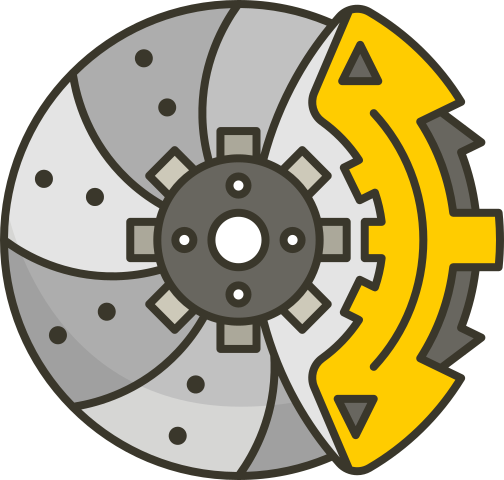
Brake pad and rotor replacement services for safe, smooth stopping.

Battery testing and replacement services for dependable vehicle starts.
Differential service and repairs for smooth power distribution.
Advanced engine diagnostics to pinpoint problems with precision.

Expert electrical diagnostics and repairs for reliable performance.

Professional fuel injector cleaning service for improved performance.
Professional oil changes that help protect engine performance.
Expert transmission services for smooth and reliable shifting.

Certified Texas state inspections for safety and compliance.
Expert shocks and struts service for improved ride comfort and safety.
Tire repair and replacement services for safe, reliable driving.

Replace worn timing belts before costly engine damage occurs.

Professional wheel alignment to improve handling and tire life.

Call us or book online today, We're here to help!
Get upto $20 OFF on all services.