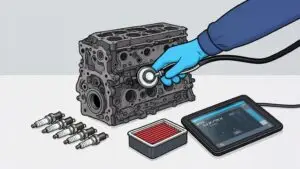
Your engine is quietly working against you every time you skip a proper oil change or settle for the bare minimum at a quick-lube shop. Understanding the full-service oil change benefits explained in this guide can mean the difference between an engine that runs strong past 200,000 miles and one that nickels-and-dimes you with costly repairs. A full-service oil change is not just a fluid swap. It’s a structured, multi-point maintenance event that catches problems before they become expensive, and it’s one of the smartest investments you can make in your vehicle’s long-term health.
Table of Contents
- Key takeaways
- What a full-service oil change actually includes
- Performance and engine health benefits
- How to prepare before your service appointment
- Step-by-step process at a professional service center
- Verifying the benefits and staying ahead of maintenance
- My honest take on full-service oil changes
- Get the full-service care your vehicle deserves
- FAQ
Key takeaways
| Point | Details |
|---|---|
| More than a fluid swap | A full-service oil change includes fluid checks, filter inspections, and basic diagnostics beyond just replacing oil. |
| Engine longevity pays off | Owners who follow scheduled maintenance spend about 50% less on mechanical costs over five years than those who don’t. |
| Oil type matters | Using the wrong oil viscosity or certification can compromise your engine’s oil life monitor and accelerate wear. |
| Resale value increases | Documented maintenance histories result in vehicles that resell for 10 to 15% more than those without records. |
| Choose service quality wisely | Full-service providers deliver diagnostic depth that quick-lube shops routinely skip, protecting your investment long-term. |
What a full-service oil change actually includes
Most car owners think of an oil change as two things: drain the old oil, pour in the new. A standard or quick oil change at many shops stops pretty much there. A full-service oil change is a different animal entirely.
Here is what a thorough oil change service covers that a basic service typically skips:
- Fresh motor oil and a new oil filter. The oil filter traps combustion byproducts, metal particles, and contaminants. Reusing an old filter with fresh oil defeats much of the purpose.
- Fluid level checks and top-offs. This includes coolant, brake fluid, power steering fluid, windshield washer fluid, and transmission fluid. Each plays a role in keeping your car safe and functional.
- Air filter inspection. A clogged air filter restricts airflow to the engine, reducing fuel efficiency and performance. A full-service technician flags this before it becomes a problem.
- Tire pressure check. Under-inflated tires reduce fuel economy and increase blowout risk. This takes 60 seconds and catches something most drivers never check themselves.
- Belt and hose visual inspection. Cracks, fraying, or swelling in belts and hoses signal future failures. Catching them here costs nothing. Replacing them after a roadside breakdown costs much more.
- Basic vehicle diagnostics. Full-service shops provide diagnostic checks that quick-change shops routinely skip, giving you a fuller picture of your vehicle’s health.
The contrast with a basic oil change is stark. Quick-lube services are designed for speed and volume. They get you in and out, but the tradeoff is depth. You leave knowing your oil was changed. With a full-service visit, you leave knowing your car.
Performance and engine health benefits
Here is where the advantages of full-service oil changes go beyond what most articles bother to explain. Fresh, properly specified oil does four jobs simultaneously: it lubricates moving metal components, cools areas the coolant cannot reach, cleans away carbon deposits and varnish, and neutralizes acidic combustion byproducts. When oil degrades, all four functions degrade with it.
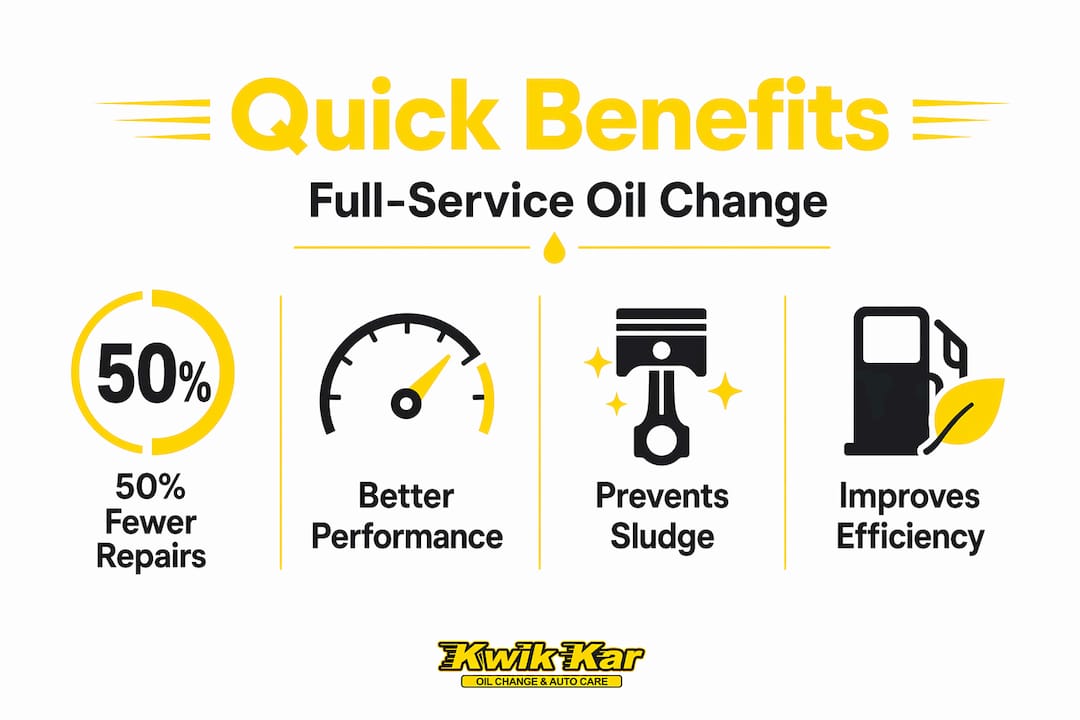
Reduced friction and wear. Engine components like pistons, camshafts, and crankshafts operate at microscopic tolerances. Degraded oil loses its viscosity film, and metal begins contacting metal. This is not a slow, dramatic failure. It’s cumulative damage that builds invisibly over thousands of miles.
Prevention of sludge buildup. Old oil oxidizes and turns into a thick, black sludge that coats oil passages and starves components of lubrication. Once sludge sets in, cleaning it out is expensive. Regular full-service oil changes prevent it from forming in the first place.

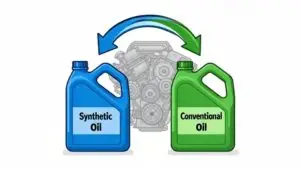
Temperature regulation. Synthetic oils handle heat better and are recommended for modern engines, particularly in hot climates like Texas summers. Thermal cycling degrades oil additives over time, and synthetic formulations preserve protection far longer than conventional options.
Fuel efficiency and acceleration. Clean oil reduces internal friction, which means the engine expends less energy moving its own components. That energy goes toward moving your car. Owners often notice a subtle but real improvement in throttle response and fuel consumption after a proper service.
The cost savings tell an equally compelling story. Owners following maintenance schedules spend roughly 50% less on mechanical repairs over five years compared to reactive repair owners. That statistic is not abstract. It represents avoided transmission failures, premature engine replacements, and roadside tows.
Pro Tip: If your vehicle has an oil life monitoring system, it depends on receiving the exact OEM-specified oil viscosity and certification grade. Using the wrong oil can cause the monitor to give inaccurate readings, throwing off your entire maintenance schedule.
How to prepare before your service appointment
Walking into a full-service oil change unprepared means you might leave with the wrong oil for your engine or miss an opportunity to address known issues. A few minutes of preparation beforehand changes the entire outcome.
- Pull your owner’s manual. Confirm the recommended oil viscosity (commonly 5W-30, 0W-20, or 5W-20) and the required API or ILSAC certification. Modern engines require OEM-specific viscosity for accurate oil life monitoring and proper component protection.
- Check your current mileage against your last service. Note where you are in the service interval. Most modern vehicles with synthetic oil run 7,500 to 10,000 miles between changes, but your specific engine may differ.
- Write down any symptoms or concerns. Odd noises, warning lights, or changes in fuel economy are useful data for the technician. The oil change visit is also an efficient time to ask about these observations.
- Bring your maintenance history if you have it. A service provider who can see your vehicle’s documented history is better equipped to flag patterns and recommend what comes next.
Here is a quick comparison to help you decide between oil types:
| Oil Type | Best For | Change Interval | Cost Level |
|---|---|---|---|
| Conventional | Older vehicles, low-stress driving | Every 3,000 to 5,000 miles | Low |
| Synthetic Blend | Mixed driving, moderate mileage vehicles | Every 5,000 to 7,500 miles | Medium |
| Full Synthetic | Modern engines, high-performance, hot climates | Every 7,500 to 10,000 miles | Higher upfront, lower long-term |
| High-Mileage Synthetic | Vehicles over 75,000 miles | Every 5,000 to 7,500 miles | Medium to high |
Choosing the right oil is not about picking whatever is cheapest on the shelf. Using bargain oil with low-quality filters accelerates sludge formation and engine wear, often leading to repair bills that dwarf the few dollars saved at the service counter.
Step-by-step process at a professional service center
Understanding what actually happens during your visit removes the mystery and helps you recognize when a service was done right or cut short. Here is what a full-service oil change looks like when performed correctly:
- Vehicle intake and inspection setup. The technician notes your mileage, identifies your vehicle’s oil specification, and lifts the car to access the drain plug and oil filter.
- Draining the old oil. The drain plug is removed, and old oil flows out completely. Rushing this step leaves behind degraded oil that contaminates the fresh fill. A thorough drain takes several minutes.
- Replacing the oil filter. The old filter comes off and a new, manufacturer-compatible filter goes on. The filter gasket receives a thin coat of fresh oil to seal properly and prevent leaks.
- Adding fresh oil. The correct oil type and quantity specified for your engine goes in. Overfilling is as harmful as underfilling, since excess oil can foam under pressure and lose its lubrication properties.
- Fluid inspections and top-offs. Coolant, brake fluid, power steering fluid, and washer fluid levels are checked. Low fluids get topped off; severely degraded fluids get flagged for a more involved service.
- Belt, hose, and air filter checks. A visual inspection of accessible components takes just a few minutes but catches wear patterns before they cause failures.
- Tire pressure adjustment and final diagnostics. Tires get adjusted to the manufacturer’s recommended PSI. Basic diagnostic checks scan for stored error codes your dashboard may not have surfaced yet.
- Test and documentation. The vehicle runs briefly to confirm oil pressure is normal and no leaks are present. The service provider documents the work for your maintenance record.
Pro Tip: Ask your technician to reset your oil life monitor after the service. Many shops forget this step, and an uncorrected monitor will remind you to change your oil based on stale data.
Verifying the benefits and staying ahead of maintenance
A full-service oil change is only as good as what you do with the information it generates. Here is how to stay on top of your vehicle’s health after you leave the shop:
- Check your oil level and color within the first week. Fresh oil is amber and clear. Dark brown or black oil after just a few hundred miles can indicate burning oil or internal contamination worth investigating.
- Monitor your oil life display. Oil life monitors require correct OEM-spec oil to function accurately. If yours reads differently than expected after a service, confirm the right oil was used.
- Act on any flagged items. A full-service visit often surfaces issues beyond the oil itself. A noted belt crack or low brake fluid is not a sales pitch. It’s a warning. Schedule those follow-ups before they become emergencies.
- Keep your service records. Whether paper or digital, a documented car maintenance history helps every technician who works on your vehicle going forward, and it protects your resale value.
- Set your next appointment before you leave. The single best habit for long-term vehicle reliability is scheduling the next service while the last one is still fresh. Most drivers who skip services do so by accident, not intention.
Vehicles that receive timely, preventive maintenance are far less likely to suffer sudden failures. Delayed fluid changes on neglected vehicles can actually dislodge sludge deposits masking existing wear, causing failures that proper maintenance would have prevented entirely.
My honest take on full-service oil changes
I’ve watched car owners make the same mistake for years: they treat the oil change as a checkbox, something to do as cheaply and quickly as possible, then move on. I understand the impulse. It feels like you’re getting the same result for less money.
But what I’ve seen in practice tells a different story. The vehicles that come in with well-documented, consistent service histories are in a fundamentally different condition than those where the owner chased the cheapest deal every time. Engines are cleaner. Belts and hoses haven’t failed without warning. And owners aren’t staring at a $4,000 repair estimate wondering how things got so bad.
The counterintuitive part is this: over 50 million oil changes happen monthly in the United States, yet most drivers have no idea what actually happened during theirs. Was the filter replaced with an OEM-compatible part? Was the drain allowed to run fully? Were fluid levels actually checked, or just noted on a form?
My advice is to stop thinking about the oil change as a commodity purchase and start treating it as a diagnostic touchpoint. A full-service visit done right tells you where your vehicle stands today and what it needs tomorrow. That information is worth more than the few dollars saved at a drive-through quick-lube.
— Kwik Kar
Get the full-service care your vehicle deserves
At Kwik Kar Oil Change & Auto Care in Richardson, TX, every oil change is performed by ASE-certified technicians recognized by both CARFAX and RepairPal. You’re not getting a quick fluid swap. You’re getting a structured maintenance visit that includes fluid inspections, air filter checks, tire pressure adjustments, and engine diagnostic services that catch hidden issues before they turn costly.
Documented service history from a trusted provider protects your engine today and your resale value tomorrow. Vehicles with complete records sell for 10 to 15% more than those without. Military members and first responders receive special discounts because quality maintenance should be accessible to everyone who depends on a reliable vehicle.
Schedule your next service at Kwik Kar Oil Change & Auto Care and give your engine the attention it’s been working hard to earn. Visit the full auto repair and oil change services page to see everything that’s included.
FAQ
What is included in a full-service oil change?
A full-service oil change includes fresh oil, a new oil filter, fluid level checks and top-offs, air filter inspection, tire pressure adjustment, and a basic vehicle diagnostic check. It covers far more ground than a standard quick-lube visit.
How often should I get a full-service oil change?
Most modern vehicles using full synthetic oil need service every 7,500 to 10,000 miles, though your owner’s manual provides the most accurate interval for your specific engine. Always follow OEM recommendations rather than the old 3,000-mile rule.
Why choose full-service oil changes over quick-lube options?
Full-service providers deliver diagnostic depth and multi-point inspections that quick-change shops often skip, helping you avoid costly surprises and keeping your vehicle running reliably long-term.
Does the type of oil used in a full-service oil change matter?
Yes. Using the wrong viscosity or certification grade can compromise your engine’s oil life monitor and accelerate internal wear. Always confirm your technician uses the oil specification listed in your owner’s manual.
Can a full-service oil change improve my vehicle’s resale value?
Documented full-service maintenance history increases resale value by 10 to 15%, according to Kelley Blue Book data. Buyers and dealers both treat a consistent, verifiable service record as a strong indicator of vehicle condition.