Texas vehicle inspection rules changed significantly in 2025, but that does not mean mirrors stopped being important safety equipment. For Richardson drivers, understanding the difference between a required state inspection and keeping your vehicle’s safety equipment in proper working condition is important.
As of January 1, 2025, Texas no longer requires annual safety inspections for most non-commercial vehicles. However, vehicles subject to the emissions program in Dallas County still require an emissions inspection, and commercial vehicles continue to require safety inspections. Texas law also continues to require motor vehicles to have a mirror that provides the driver with a rearward view of the highway.
This guide explains what Richardson drivers should know about mirrors, current Texas inspection rules, common mirror problems, and when it makes sense to have your vehicle checked by a professional.
Table of Contents
- Key Takeaways
- Did Texas Eliminate Vehicle Safety Inspections?
- What Are the Texas Mirror Requirements?
- What Should You Check on Your Vehicle’s Mirrors?
- Common Mirror Problems
- Mirrors and Digital Vehicle Inspections
- Emissions and Commercial Inspections in Richardson
- Mirror and Vehicle Safety Checks at Kwik Kar Richardson
- Frequently Asked Questions
Key Takeaways
| Topic | What Richardson Drivers Should Know |
|---|---|
| Texas safety inspections | Most non-commercial vehicles no longer require an annual safety inspection as of January 1, 2025. |
| Dallas County emissions testing | Qualifying vehicles registered in Dallas County still require emissions testing. |
| Commercial vehicles | Commercial vehicles continue to require Texas safety inspections. |
| Texas mirror requirement | Texas law requires a motor vehicle to have a mirror that provides the operator with a view of the highway for at least 200 feet behind the vehicle. |
| Routine maintenance | Even without an annual passenger-vehicle safety inspection, damaged, loose, or poorly functioning mirrors should be repaired promptly. |
Did Texas Eliminate Vehicle Safety Inspections?
Yes, for most non-commercial vehicles.
Beginning January 1, 2025, Texas eliminated the annual safety inspection requirement for non-commercial vehicles. This means most passenger cars, SUVs, and light-duty personal vehicles no longer need to pass a state safety inspection before registration.
That change did not eliminate every type of Texas vehicle inspection.
- Emissions inspections: Qualifying vehicles in emissions counties, including Dallas County, still require emissions testing.
- Commercial vehicle inspections: Commercial vehicles continue to require safety inspections throughout Texas.
- Vehicle maintenance: Drivers remain responsible for maintaining required safety equipment in proper operating condition.
The Texas Department of Public Safety specifically encourages drivers to continue maintaining important safety components such as mirrors, lights, windshield wipers, tires, and other equipment even though annual safety inspections were eliminated for most passenger vehicles.
What Are the Texas Mirror Requirements?
Texas law still establishes a basic mirror requirement for motor vehicles.
Under Texas Transportation Code Section 547.602, a motor vehicle must be equipped with a mirror positioned so the driver can see the highway for a distance of at least 200 feet behind the vehicle.
The important distinction is that this is an equipment requirement, not evidence that every passenger vehicle must undergo an annual mirror inspection.
For Richardson drivers, the practical goal is simple: your mirror system should provide a clear and usable rearward view while remaining securely attached to the vehicle.
What Should You Check on Your Vehicle’s Mirrors?
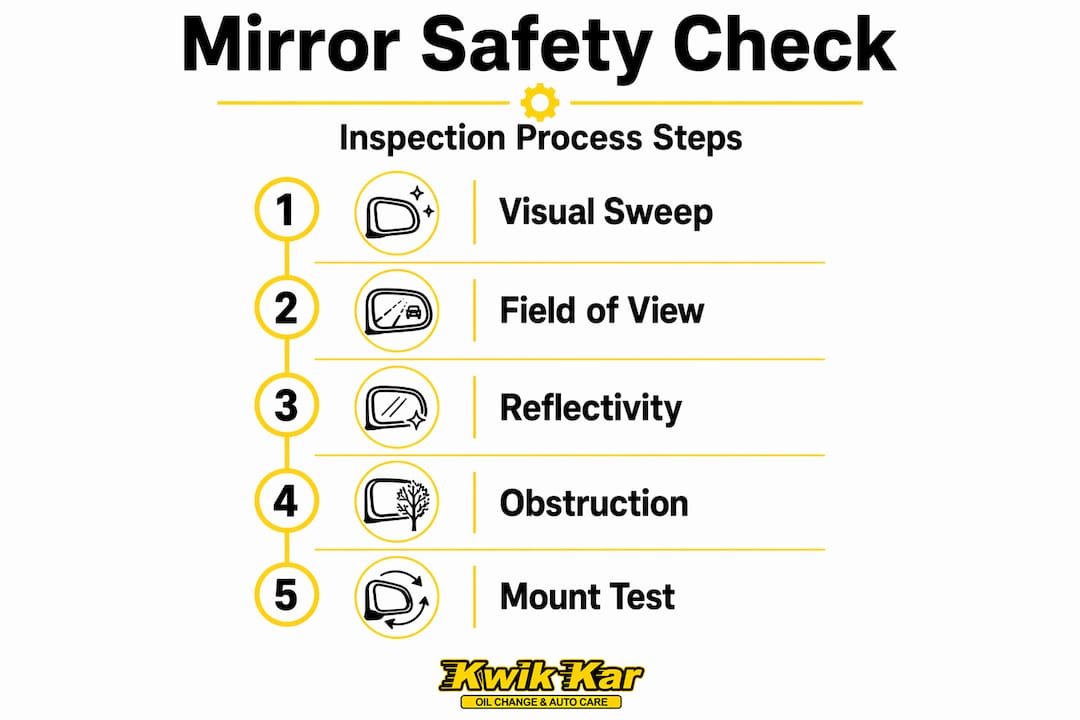
You do not need specialized testing equipment to identify many common mirror problems. A basic visual and functional check can reveal issues that may affect visibility and safe driving.
Check the following:
- Rearward visibility: Make sure you can clearly see traffic and the roadway behind your vehicle.
- Cracked glass: Look for cracks, chips, or missing sections that interfere with visibility.
- Clouding or discoloration: Aging mirror glass can become hazy or discolored and make objects harder to see.
- Loose housings: Exterior mirrors should remain securely attached rather than shaking or moving excessively while driving.
- Mirror adjustment: Power or manual adjustment mechanisms should allow the mirror to remain in the position selected by the driver.
- Interior rearview mirror: Check that the mirror is securely mounted and provides an unobstructed rearward view.
- Camera and sensor systems: On newer vehicles, damage around mirrors can also affect cameras, blind-spot monitoring components, turn-signal indicators, or other driver-assistance equipment.
Common Mirror Problems Richardson Drivers Should Watch For
Mirror problems can develop gradually, which makes them easy to overlook during everyday driving.
Cracked or damaged mirror glass
A small crack can spread over time, while chips or broken sections can distort the driver’s view. Damage that interferes with visibility should be addressed rather than ignored.
Loose exterior mirrors
A mirror housing damaged in a parking lot or minor collision may look acceptable while the vehicle is stationary but vibrate significantly at highway speeds. Excessive movement can make it difficult to judge surrounding traffic accurately.
Clouding and deterioration
Mirror surfaces can deteriorate with age. Moisture intrusion, damaged backing material, and environmental exposure may cause dark spots, haziness, or discoloration.
Broken adjustment mechanisms
If a power mirror motor, switch, wiring connection, or internal mechanism fails, the driver may be unable to position the mirror correctly.
Integrated electronics
Modern side mirrors may contain heating elements, cameras, blind-spot indicators, turn signals, puddle lights, and other electronics. Damage to the housing can therefore involve more than the reflective glass.
Mirrors and Digital Vehicle Inspections
The elimination of Texas’ annual passenger-vehicle safety inspection does not eliminate the value of having safety-related components checked during routine maintenance.
A comprehensive Digital Vehicle Inspection (DVI) can help identify visible problems with mirrors and other vehicle systems before they become larger safety or repair concerns.
Depending on the vehicle and service being performed, a technician may document visible concerns involving components such as:
- Mirrors and exterior equipment
- Tires and tread condition
- Brake components
- Exterior lighting
- Windshield wipers
- Fluid condition or leaks
- Belts and hoses
- Battery and charging-system concerns
- Steering and suspension components
Photos and technician recommendations can make it easier to understand what was observed and which repairs should receive attention.
Emissions and Commercial Inspections in Richardson
Although Texas eliminated annual safety inspections for most non-commercial vehicles, Richardson is in Dallas County, where qualifying vehicles continue to require emissions inspections.
Commercial vehicles are different. Texas continues to require commercial vehicle safety inspections, regardless of county.
If you are unsure which inspection requirement applies to your vehicle, confirm whether it is registered as a non-commercial or commercial vehicle and whether it is subject to the Dallas County emissions program.
Learn more about current local requirements on our Texas Emissions & Commercial Inspections page.
Mirror and Vehicle Safety Checks at Kwik Kar Richardson
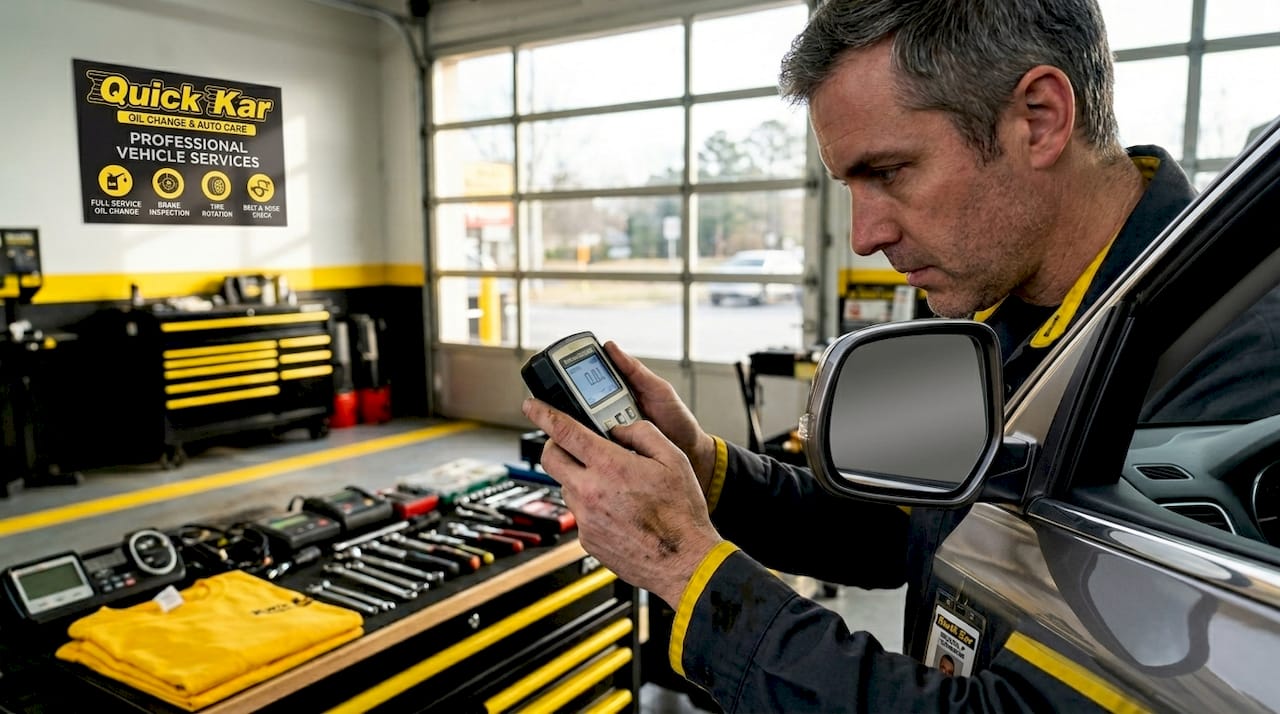
If you have a loose, damaged, cracked, or malfunctioning mirror, the team at Kwik Kar Oil Change & Auto Care in Richardson, TX can help determine what needs attention.
Our ASE-certified technicians provide comprehensive automotive service and can inspect related vehicle systems during routine maintenance and repair visits. Digital Vehicle Inspections can also provide photos and recommendations when visible concerns are identified.
Kwik Kar Richardson also provides qualifying Texas emissions and commercial inspection services, along with complete auto repair and maintenance services.
Keeping mirrors, tires, brakes, lights, wipers, and other safety equipment in good working condition remains important even when an annual passenger-vehicle safety inspection is no longer required.
Frequently Asked Questions
Does Texas still inspect mirrors on passenger vehicles?
Texas no longer requires annual safety inspections for most non-commercial passenger vehicles as of January 1, 2025. That means mirrors are no longer part of an annual state safety inspection for most personal vehicles. Mirrors remain required safety equipment, however, and drivers should keep them in proper working condition.
What is the Texas law for vehicle mirrors?
Texas Transportation Code Section 547.602 requires a motor vehicle to have a mirror positioned to reflect a view of the highway for at least 200 feet behind the vehicle.
Does Richardson still require a Texas vehicle inspection?
Richardson is located in Dallas County. Qualifying non-commercial vehicles registered in Dallas County still require emissions inspections. Commercial vehicles continue to require safety inspections and may also be subject to applicable emissions requirements.
Can I drive with a cracked side mirror in Texas?
The key legal requirement is maintaining the rearward view required by Texas law. Regardless of whether a particular crack immediately prevents compliance, damaged mirror glass can reduce visibility and should be repaired when it interferes with a clear view or safe operation.
Should mirrors still be checked during routine maintenance?
Yes. Texas DPS encourages motorists to continue maintaining safety equipment, including mirrors, even though annual safety inspections have ended for most non-commercial vehicles. A routine maintenance visit or Digital Vehicle Inspection is a good opportunity to identify visible mirror damage or other safety concerns.
Do commercial vehicles still have mirror inspections in Texas?
Commercial vehicles continue to require Texas safety inspections. The inspection requirements for commercial vehicles are different from the rules that now apply to most non-commercial passenger vehicles.