$150–$700: Serpentine Belt Replacement Cost for Richardson
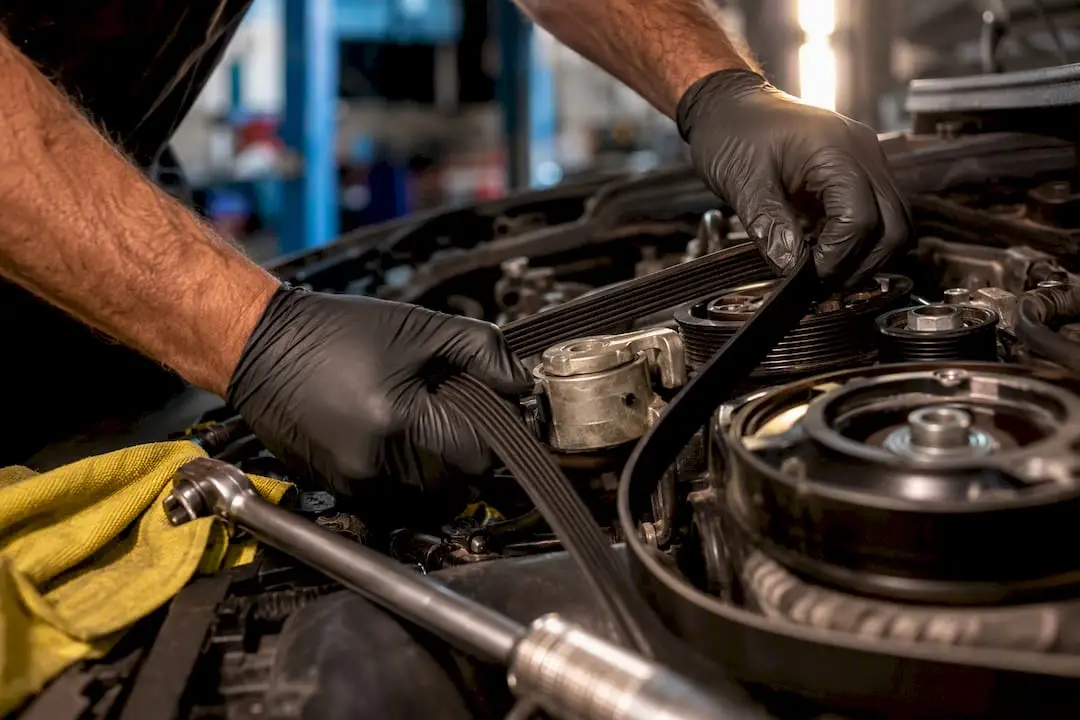
Budget $150 to $250 for a straightforward, belt-only replacement at most independent shops. If the tensioner or idler pulley needs attention too, expect $250 to $500, and full accessory-drive repairs can climb to $350 to $700 or more. The wild card is timing: a belt that snaps on the road often triggers towing, a dead battery, and sometimes overheating damage, which can push an otherwise simple job into much more expensive territory.
TL;DR:
- Replacing only the belt typically costs between $150 and $250, but replacing the tensioner adds $100 to $250 more, depending on components needed.
- Labor costs vary widely based on vehicle complexity, regional rates, and shop type, so the overall price can range from low hundreds to over $700 for full accessory-drive repairs.
- Proper inspection of the tensioner and idler pulleys before replacement can prevent future breakdowns and significantly reduce total repair costs.
- Driving with a worn or cracked belt risks immediate failure, which can lead to high-cost repairs due to towing, overheating, or loss of essential systems.
- Request an itemized quote, include a belt inspection, and consider ASE-certified technicians for reliable, transparent service.
Table of Contents
- How Much Does Serpentine Belt Replacement Cost? Parts vs. Labor
- What Affects the Final Serpentine Belt Replacement Price?
- Is DIY Serpentine Belt Replacement Worth It?
- What Are the Signs of a Bad Serpentine Belt?
- How to Get a Fair Quote on Serpentine Belt Replacement
- Why ASE-Certified Technicians Matter for This Repair
- Our Take: Budget for the Belt, Not the Breakdown
- Get Your Serpentine Belt Checked at Kwik Kar Richardson
- Where These Cost Estimates Come From
- Sources
- FAQ
How Much Does Serpentine Belt Replacement Cost? Parts vs. Labor
The part itself is cheap. Labor is where your final bill actually gets decided.
An economy serpentine belt typically runs $25 to $50. Step up to an OEM-equivalent belt and you’re looking at $50 to $100, while premium belts, often built with longer-lasting EPDM rubber compounds, land between $75 and $150. On their own, none of these numbers should scare you. The belt part typically falls between $25 and $150 depending on which tier you choose, and that same source notes labor commonly makes up 40% to 60% of your total invoice.
Labor is usually quoted at 0.5 to 1.5 hours, but the hourly rate a shop charges varies a lot more than most drivers expect. A dealership in a major metro area might bill $150 an hour; an independent shop nearby might charge closer to half that. That gap alone can swing your total bill by $75 or more, even when the belt itself costs the same.
National estimator averages tend to sit in the high $100s to low $200s for a routine job, though RepairPal’s cost estimator notes that regional labor rates and your specific vehicle change that number quickly. A V6 with tight underhood packaging takes longer to access than a four-cylinder with the belt sitting right up front, and that time difference shows up directly on your invoice.
Here’s how the three most common scenarios stack up:
| Scenario | Typical Cost Range | What’s Included |
|---|---|---|
| Belt only | $150–$250 | Belt part, labor to remove and route new belt |
| Belt + tensioner | $250–$500 | Belt, tensioner assembly, added labor for pulley removal |
| Belt + tensioner + idler(s) | $350–$700+ | Full accessory-drive rebuild, multiple components, extended labor |
Those bands align closely with figures reported across cost guides and shop estimators, including a detailed cost breakdown from CostHelper that separates simple replacements from full accessory-drive jobs. If your quote falls well outside these ranges in either direction, it’s worth asking why. A quote far below $150 might skip inspecting the tensioner; one well above $700 for a routine belt-only job deserves an itemized explanation.
What Affects the Final Serpentine Belt Replacement Price?
Two vehicles with identical belts can generate very different invoices, and the reasons usually come down to a handful of predictable factors.
- Engine layout and access time. Some engines put the belt in plain sight; others bury it behind the front bumper cover or require removing a splash shield first, adding labor minutes that add up fast.
- Vehicle category. Economy sedans generally have simpler accessory-drive systems than luxury vehicles or trucks, where added components like air suspension compressors or auxiliary pumps mean more pulleys sharing the same belt.
- Tensioner and idler condition. A tensioner that’s lost spring tension or an idler pulley with a failing bearing needs replacing alongside the belt, and skipping that step just invites a repeat visit.
- Shop type and regional labor rates. Dealerships typically charge more per hour than independent shops or mobile mechanics, and labor rates and parts markups tend to run higher at dealerships even when the underlying repair is identical.
- Hidden add-ons. Seized bolts on an older vehicle, or cleanup after a belt has already shredded and scattered rubber debris across the engine bay, both add labor time a basic estimate won’t reflect.
Because the belt itself is inexpensive, the single biggest source of price variation between shops is labor accessibility and regional rates, not the part on the shelf. That’s worth remembering the next time two shops quote you numbers $150 apart for what looks like the same job.
Is DIY Serpentine Belt Replacement Worth It?
If you’re mechanically comfortable and your vehicle has good underhood access, DIY can genuinely cut your cost. Parts-only pricing can run as low as $25 to $100 for many common vehicles, and the job itself often takes just 30 to 60 minutes on straightforward layouts. But “straightforward” is doing a lot of work in that sentence, and the decision comes down to a few honest checkpoints.
- Confirm your tools first. You’ll need a serpentine belt routing diagram (usually on a sticker under the hood), a breaker bar or belt tensioner tool, and enough working room to reach the tensioner pulley without fighting other components.
- Consider a mobile mechanic if access is tight. Mobile service brings the convenience of not driving anywhere, and pricing generally lands between full DIY and dealership rates, though availability and scheduling flexibility vary by provider.
- Weigh dealership vs. independent shop tradeoffs. Dealerships often use OEM parts and may carry stronger warranty backing for that specific make, while independent shops frequently offer comparable workmanship at meaningfully lower labor rates.
- Know the common DIY mistakes. Misrouting the belt around even one pulley causes squealing or component damage almost immediately, and under tensioning it leads to slipping, glazing, and a repeat failure within weeks.
If the routing diagram is missing, or your engine bay makes the tensioner hard to reach with basic hand tools, that’s your signal to book a shop instead of improvising.
What Are the Signs of a Bad Serpentine Belt?
A serpentine belt rarely fails without warning. It usually tells you first through sound.
- A high pitched squeal or chirp on startup or during acceleration
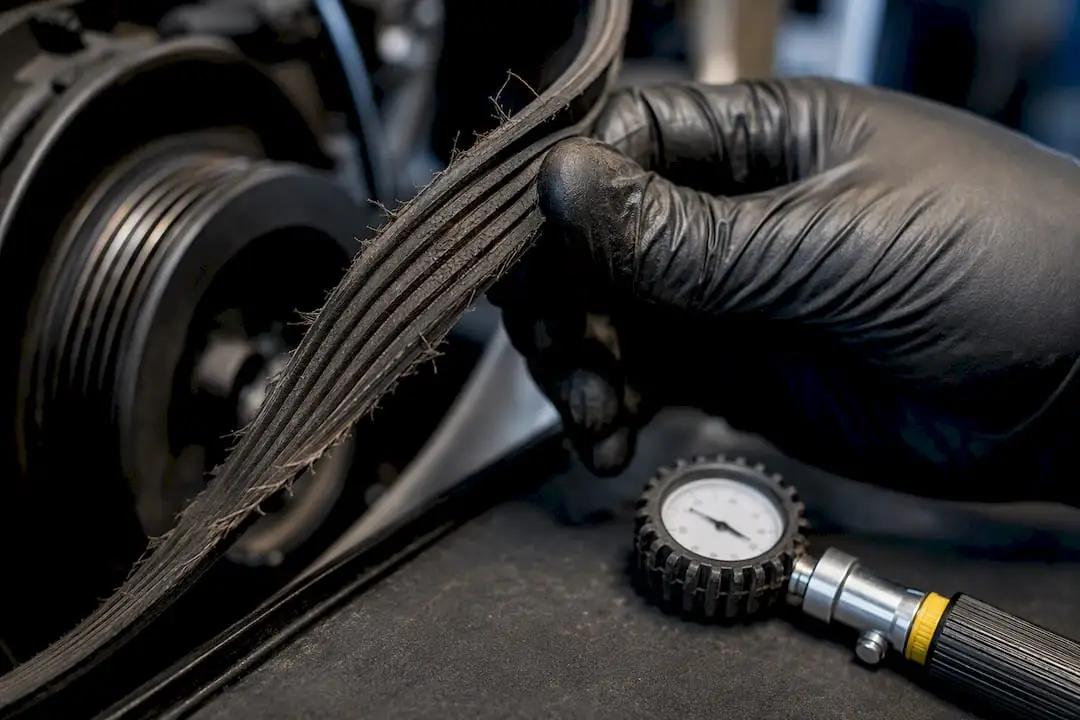
- Visible cracking, glazing, or fraying along the belt’s ribbed surface
- Sudden loss of power steering assist or a warning light on the dash
- Battery or alternator warning light as charging output drops
- Engine temperature climbing toward overheating as the water pump loses drive
Routine inspection catches these early signs of cracking, glazing, and fraying long before failure, and replacing a worn belt proactively costs far less than repairing what happens after it snaps. The mechanical consequences escalate fast once the belt actually breaks: alternator drive stops, meaning your battery starts draining immediately; the water pump on many engines stops circulating coolant, risking overheating within minutes; and power steering assist disappears, making the car noticeably harder to control at low speeds.
A snapped serpentine belt can turn a $150 to $250 repair into $350 or more once towing, a jump start, and overheating inspection get added to the bill, according to reporting on driving with a failed accessory belt. If you hear a new squeal or see the belt fraying, treat it as a same-week appointment, not a someday errand. Should the belt fail while driving, pull over safely, shut off the engine, and call for a tow rather than trying to limp home. Continuing to drive risks compounding a cheap fix into an expensive one.
How to Get a Fair Quote on Serpentine Belt Replacement
A fair quote is an itemized one. If a shop gives you a single number with no breakdown, ask for the specifics before you approve any work.
- Request the belt part cost separately from labor hours and the shop’s hourly rate.
- Ask whether the tensioner and idler pulleys were inspected, and if replacement is recommended, why.
- Ask to see the old belt and any worn components once removed, so you can confirm the diagnosis yourself.
- Confirm upfront whether the quoted price includes a full accessory-drive inspection or just the belt swap.
A useful script line: “Can you break down the belt cost, labor hours, and hourly rate separately, and let me know if the tensioner needs replacing too?” That single question filters out vague estimates fast.
Pro Tip: Ask your shop to replace the tensioner at the same time as the belt if it’s showing wear. The added labor overlaps almost entirely with the belt job itself, so you avoid paying for a second teardown a few months later. This lines up with common mechanic guidance that replacing the tensioner alongside the belt reduces the odds of an early repeat repair.
Why ASE-Certified Technicians Matter for This Repair
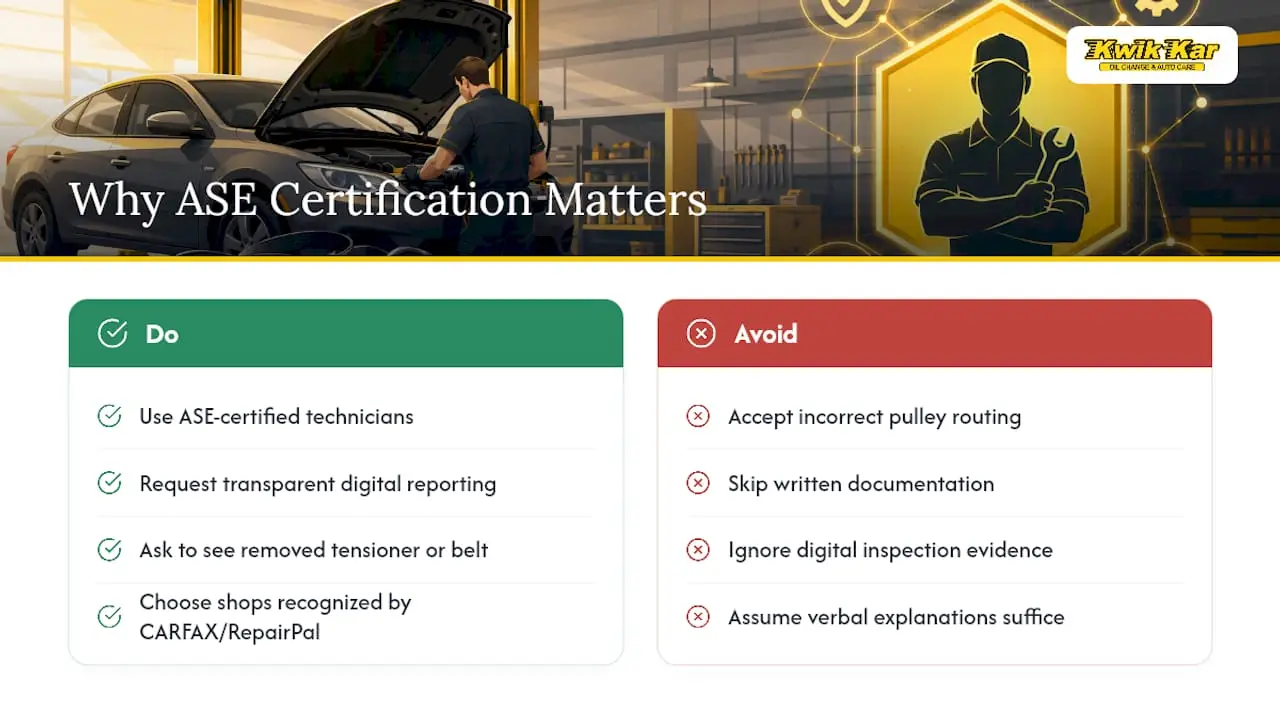
Belt routing looks simple on paper, but a single pulley routed wrong causes premature wear, noise, or component damage within days. ASE certification means a technician has demonstrated competency in exactly this kind of diagnostic and mechanical work, which matters more than it sounds like for a job that hinges on correct tensioning and routing the first time.
Technicians certified by ASE often provide transparent digital reporting, so you see exactly what’s worn, what’s being replaced, and why, before any work begins. Showing you the removed tensioner or cracked belt firsthand isn’t a sales tactic. It’s how disputes over “was this really necessary” get avoided entirely.
Kwik Kar Oil Change & Auto Care is also recognized by CARFAX and RepairPal, and offers special discounts for military personnel and first responders. If your family or fleet depends on predictable maintenance costs, working with a shop that documents everything in writing removes most of the guesswork from a belt replacement bill.
Our Take: Budget for the Belt, Not the Breakdown
The conventional advice on this topic focuses almost entirely on the belt-only number, and that’s where most drivers get blindsided. A $150 to $250 estimate is real, but it only holds if the tensioner and idler pulleys are healthy. Skipping that inspection to save an hour of labor is the single most common way a cheap repair becomes two repairs.
We’d argue the smarter frame isn’t “how much does a belt cost” but “how much does it cost to fix the whole accessory-drive system once, correctly.” That reframe changes what you ask for in a quote. It also explains why proactive replacement at the first sign of cracking or glazing almost always beats waiting for the belt to fail on the highway.
Prioritize the inspection over the price. A shop willing to show you a worn tensioner before recommending its replacement is telling you more about their honesty than any online estimate ever will.
— Kwik Kar
Get Your Serpentine Belt Checked at Kwik Kar Richardson
Unlike a rushed drive-through swap, Kwik Kar Oil Change & Auto Care in Richardson gives you an itemized quote before any work starts. You know exactly what’s belt, what’s tensioner, and what’s labor. That transparency is the difference between a bill you understand and one you’re left questioning.

When you schedule a serpentine belt inspection with us, our ASE-certified technicians check the belt, tensioner, and idler pulleys together, then walk you through what’s worn and why before recommending anything. You’ll see the removed parts yourself, not just a line item on an invoice. Military personnel and first responders receive special discounts, and current customers can save $50 on service over $500. If you’ve noticed squealing, cracking, or a dash warning light, don’t wait for the belt to fail on the road. Schedule your inspection at Kwik Kar Richardson today and get a clear, itemized quote before any work begins.
Where These Cost Estimates Come From
The price bands in this guide draw from several independent automotive cost resources. RepairPal’s estimator provides national averages and highlights how labor rates shift by region. CarParts’ cost guide breaks down the parts-versus-labor split in detail. CostHelper explains why emergency repairs after a belt failure cost more than proactive replacement, and SlashGear’s reporting covers the symptom timeline and safety risks of ignoring early warning signs.
Sources
- Serpentine belt replacement cost (CostHelper)
- Serpentine belt symptoms, replacement cost and more (CarParts)
- What happens if you keep driving with a bad serpentine belt? (The Motor Guy)
- Serpentine Belt Replacement Cost Estimate (RepairPal)
FAQ
Can I drive with a bad serpentine belt?
Driving on a belt showing cracks, glazing, or squealing is risky and not recommended, since failure can happen without further warning. Once it snaps, you’ll typically lose power steering assist and battery charging almost immediately, so get it inspected as soon as you notice symptoms.
How much would a shop charge to replace a serpentine belt?
Most shops charge $150 to $250 for a straightforward belt-only replacement, rising to $250 to $500 if the tensioner needs replacing too, and up to $700 or more for a full accessory-drive repair. Ask for an itemized quote breaking down parts and labor separately.
What are the signs of a bad serpentine belt?
Common warning signs include a high pitched squeal, visible cracking or fraying on the belt’s surface, loss of power steering, and dashboard warning lights for the battery or engine temperature. Catching these early keeps a simple belt swap from turning into a bigger repair.
Are serpentine belts easy to replace?
For vehicles with good underhood access, an experienced DIYer can often swap the belt in 30 to 60 minutes using a routing diagram and basic tools. Tight engine bays, seized fasteners, or a tensioner that also needs replacing make professional service the safer, faster option.