You’re heading down Arapaho or easing through stop and go traffic near US-75, and something changes. Maybe the brakes start squealing at the next light. Maybe the pedal feels softer than usual. Maybe the steering wheel shakes when you slow down for a turn. Most drivers know that uneasy feeling right away. The car still stops, but it doesn’t feel right.
That’s usually when people search for brakes and rotors service near me. They want a straight answer, not a sales pitch. Is it pads? Rotors? Fluid? Can it wait a few days, or is it unsafe now? Those are fair questions, especially if you rely on your vehicle every day for commuting, school drop-offs, work calls, or family errands around Richardson.
Brake problems are never something to brush off. Brake failure contributes to approximately 2% of all motor vehicle crashes, or over 300,000 incidents annually in the United States alone, according to NHTSA-related brake service data. When a braking system starts giving warnings, the safest move is to inspect it before a smaller issue turns into a larger repair.
Your Guide to Brake Safety on Richardson Roads
Richardson driving is hard on brakes. Short trips, crowded intersections, school zones, and repeated stops build heat fast. That matters because brakes don’t fail all at once most of the time. They wear down in stages. First you hear something. Then you feel something. Then the damage spreads into other parts.
A typical example looks like this. A driver notices a light squeal in the morning but ignores it because the vehicle still stops. A few weeks later, the noise turns harsher, the braking feels rougher, and now the rotors may be involved too. What could have been a simpler pad service becomes a more expensive axle repair.
Practical rule: Brake noise is rarely “nothing.” If the sound is new, the system deserves a proper inspection.
For Richardson drivers, brake service is about more than replacing worn parts. It’s about keeping the whole system working the way it should in daily traffic. That includes the pads, rotors, calipers, slide hardware, and brake fluid condition. When one part starts sticking, overheating, or wearing unevenly, the others often pay the price.
Here’s what matters most on a local brake visit:
- Safe stopping: The vehicle should stop smoothly, straight, and without vibration.
- Consistent pedal feel: The pedal shouldn’t feel low, spongy, or unpredictable.
- Even wear: Pads and rotors should wear evenly across the axle.
- Clear recommendations: You should know what needs service now and what can wait.
That’s the standard drivers should expect from a real brake inspection.
Warning Signs Your Brakes Need Immediate Attention
You ease up to a red light on Belt Line, press the pedal, and the car answers with a squeal, a shake, or a soft pedal. That is the point to stop guessing. Brake problems usually give warnings before they turn into a larger repair, but those warnings do not stay small for long.
Sounds you shouldn’t ignore
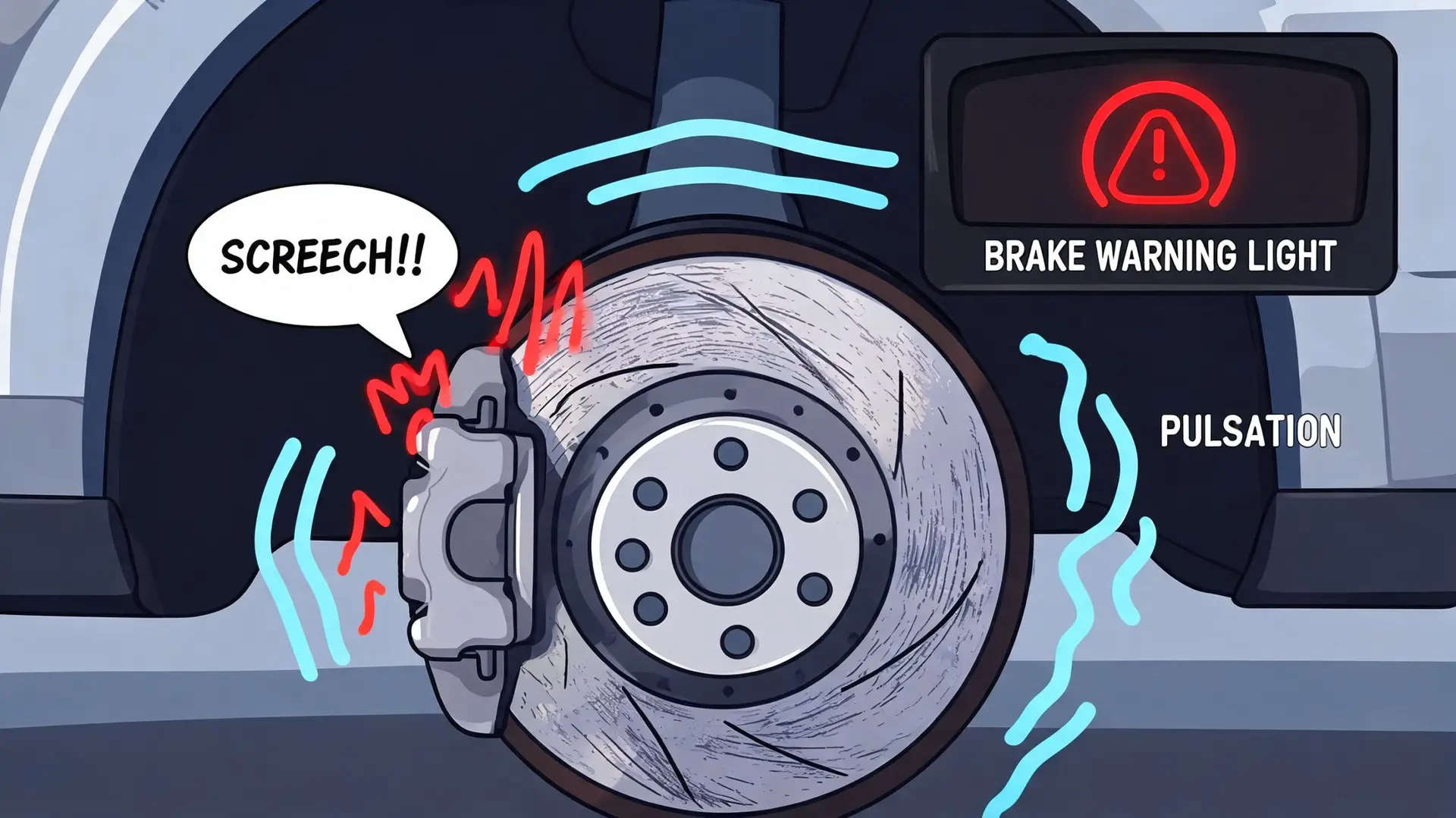
A high-pitched squeal often means the pads are near the end of their usable life. Many brake pads have a wear indicator built in, so the noise is there to get your attention before braking performance drops further.
A grinding sound calls for immediate service. In the shop, that noise often means the friction material is worn away and metal is contacting the rotor. At that stage, a pad job can turn into pads, rotors, and sometimes caliper or hardware work.
A clicking noise during braking or backing up can point to loose hardware, shifted pads, or parts that are no longer seated the way they should be. The car may still stop, but the system is not working the way it was designed to.
Heavy stop-and-go driving wears brakes faster than steady highway miles, and delayed service often leads to a bigger pads-and-rotors bill, as noted in this Consumer Reports-based brake service reference. That matches what we see with Richardson drivers who spend a lot of time in traffic and short-trip driving.
Changes you can feel through the pedal, wheel, and seat
If the steering wheel or brake pedal vibrates when you slow down, the rotors may have uneven wear, heat spotting, or runout. Drivers often say the rotors are warped. Sometimes that is close enough for conversation, but the repair decision depends on measurements, not guesses.
If the pedal feels soft, spongy, or lower than usual, treat it as a safety issue. That can come from worn fluid, air in the hydraulic system, or a leak that has started to affect brake pressure.
If the vehicle pulls left or right during braking, one side may be doing more work than the other. Common causes include a sticking caliper, uneven pad wear, or slide hardware that is no longer moving freely.
For a broader symptom list, this guide on signs of bad brakes gives you a useful checklist before you schedule an inspection.
You can also catch a few warning signs in the driveway. Check for a brake warning light, very dark brake fluid in the reservoir, or one wheel that carries much heavier brake dust than the others. That last clue can point to a brake on one corner running hotter than it should.
Here’s a quick explainer if you want to see common brake symptoms in action.
If your brakes are making noise and the pedal feel has changed, book an inspection now. Waiting usually means more heat, more wear, and fewer low-cost repair options.
Brake Rotor Resurfacing vs Full Replacement
Rotors are the metal discs your brake pads clamp onto to slow the vehicle. Think of them as the working surface of the braking system. If that surface is smooth, thick enough, and structurally sound, braking stays predictable. If it’s too thin, cracked, or uneven, the system can’t do its job the way it should.
That’s why the resurfacing versus replacement decision should never be made by guesswork.
When resurfacing can make sense
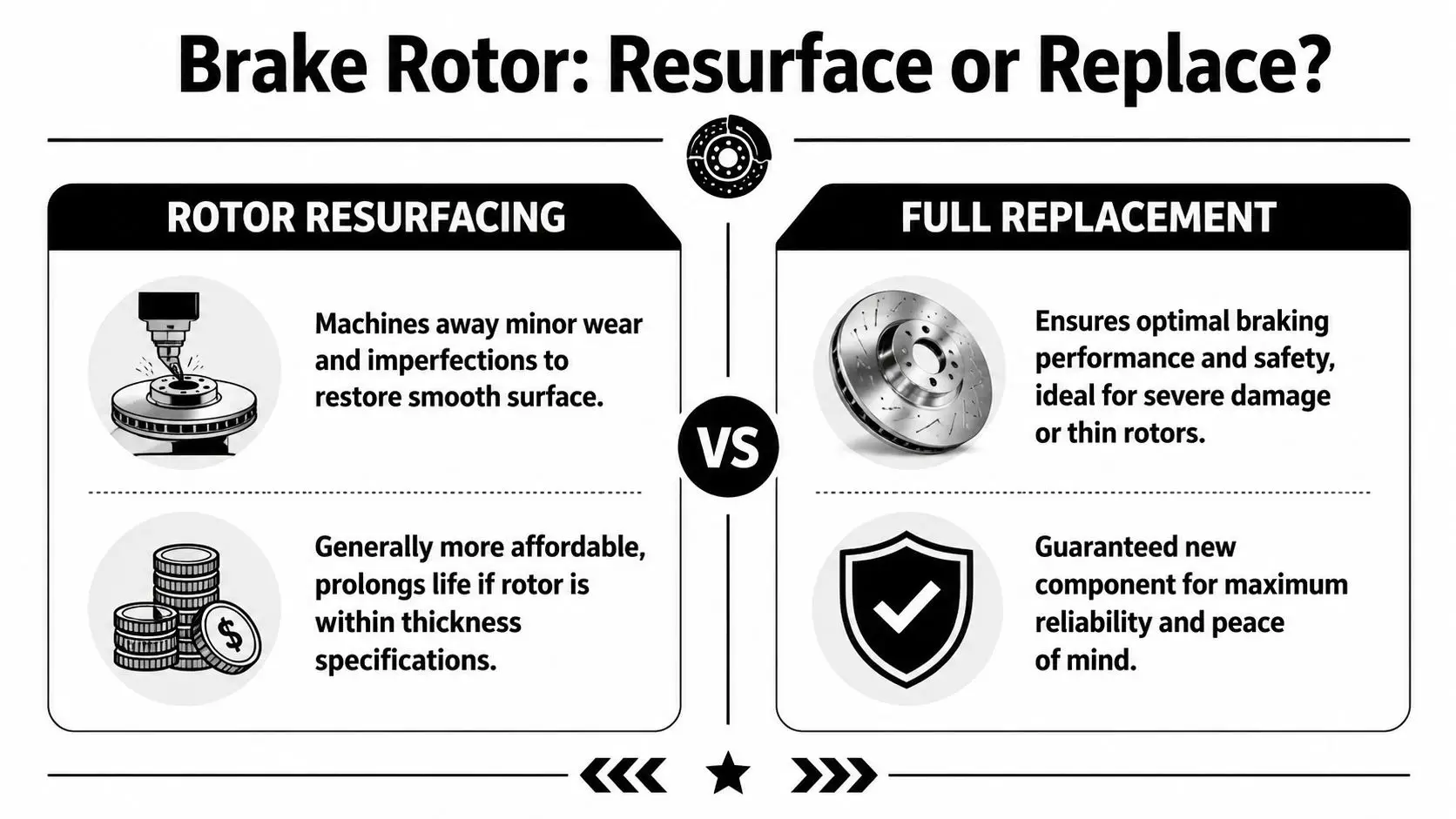
Resurfacing, also called machining, removes a small amount of material to restore a cleaner, smoother braking surface. It can be a reasonable option when the rotor is still thick enough, the wear is minor, and there are no structural concerns.
Resurfacing may work if:
- Thickness is still safe: The rotor remains above discard limits after machining.
- Surface damage is light: Minor scoring or mild unevenness may be corrected.
- No heat cracking is present: The rotor must still be structurally sound.
This is where measurement matters. A proper brake technician doesn’t decide by appearance alone. Rotor thickness, flange condition, and runout all need to be checked before recommending machining.
When replacement is the right call
Replacement is the safer choice when the rotor has lost too much material or shows damage that machining won’t solve. Brake rotors must be measured against the manufacturer’s minimum thickness specification, or MIN TH, often etched on the rotor itself. Operating below that threshold compromises heat dissipation and mechanical strength, which can lead to deformation, thermal cracks, and severe braking failure, according to Mitchell 1’s rotor specification guidance.
Replacement is usually the better answer when:
- The rotor is at or near MIN TH
- Heat cracks or hard spots are visible
- Vibration is tied to deeper thickness variation
- Past machining has already removed too much material
A thin rotor may still look usable to the eye. Measuring it is what keeps the decision honest.
There’s also a practical side to this. Resurfacing can save money in the right situation, but it shouldn’t be used to force one more cycle out of a rotor that’s already at the end of its service life. That often leads to repeat noise, pedal pulsation, or another repair sooner than expected.
If you want to understand what technicians look for during that decision, this article on how to inspect brake rotors gives a helpful overview.
What works and what doesn’t
Here’s the simple version:
| Option | Usually works when | Doesn’t work when |
|---|---|---|
| Resurfacing | Rotor is within spec and damage is minor | Rotor is too thin, cracked, or heavily heat-damaged |
| Replacement | Safety, longevity, and fresh surface matter most | You’re trying to cut cost on a rotor that still could be safely machined |
The best answer isn’t always the cheapest line on the estimate. It’s the one that leaves the vehicle braking smoothly and safely after the job is done.
What Is Included in a Complete Brakes and Rotors Service
A complete brakes and rotors service should leave you with more than new parts. It should solve the reason the brakes wore unevenly, pulsed, squealed, or felt weak in the first place. On Richardson roads, with stop-and-go traffic, short trips, and hard braking around busy intersections, that full inspection matters.
The core parts of the job
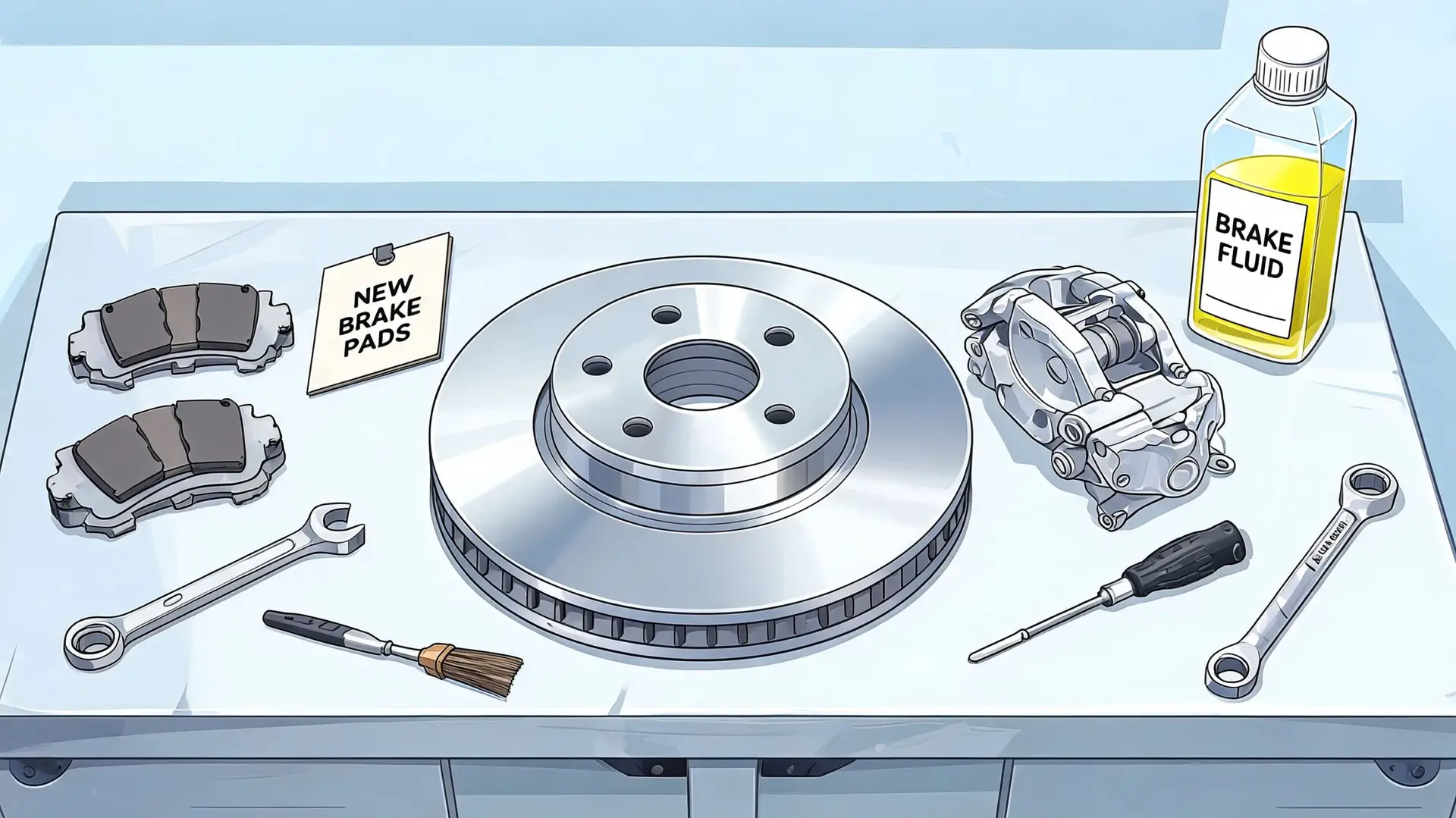
Service usually starts with an axle-by-axle inspection. Pad thickness, rotor condition, caliper operation, hardware wear, and fluid condition all need a close look before any parts are ordered. That prevents the common mistake of replacing pads while missing the sticking slide pin or damaged rotor that caused the problem.
A thorough brake service typically includes:
- Brake pad replacement: New pads restore the friction material your vehicle needs to stop predictably.
- Rotor service: Rotors are inspected and measured, then resurfaced or replaced based on condition.
- Hardware service: Clips, abutments, and pad contact areas are cleaned or replaced if needed.
- Slide pin service: Caliper slides are checked and lubricated so the pads apply evenly.
- Fluid check: Fluid level and condition are reviewed to catch moisture contamination or other concerns affecting pedal feel.
Good brake work is detail work. If the hardware binds or the caliper cannot move the way it should, even quality pads can wear out early.
The step quick brake jobs often miss
Installing parts is only part of the repair. New pads and rotors also need proper bedding so the friction surfaces mate correctly. Without that step, drivers can end up with noise, vibration, uneven pad transfer, or a brake feel that never seems quite right.
New brake parts need a correct break-in process to deliver smooth stopping and even wear.
That is one reason the lowest brake quote is not always the best value. A fast pad swap can look cheaper up front, but if it skips hardware service, lubrication, or bedding, the vehicle may come back with the same complaint.
Problems a full inspection can catch
Brake inspections often uncover issues that are easy to miss during a quick service:
- Sticking caliper slides
- Inner and outer pads wearing at different rates
- Heat-spotted or glazed rotor surfaces
- Rust or contamination on pad contact points
- Brake fluid condition problems that affect pedal response
Those findings are not add-ons for the sake of the estimate. They usually explain why the brakes did not wear normally. For commuters in Richardson, where daily driving can mean repeated stops, school-zone traffic, and sudden slowdowns on Central Expressway, fixing the root cause helps you avoid paying twice.
Drivers who want a clearer picture of pricing before they schedule can review this breakdown of how much new brakes and rotors cost. At Kwik Kar Oil Change and Auto Care, ASE-certified technicians inspect the full brake system so the repair matches the vehicle’s actual condition, not just the noise it came in with.
Understanding Brake Service Costs and Timelines
The biggest reason many drivers delay brake work isn’t always the repair itself. It’s not knowing what the final bill will look like. That uncertainty makes people wait, and waiting often shrinks their options.
Industry data cited in this brake pricing discussion notes that rotor resurfacing can cost as little as $25 per rotor, while delaying service because of price uncertainty can lead to more expensive damage involving calipers and other parts. That’s why a clear inspection and written estimate matter so much.
What changes the final cost
Brake jobs vary because vehicles vary. A compact sedan and a heavier SUV don’t use the same parts, and some systems are simpler to service than others. The final estimate usually depends on:
- Which axle needs service: Front, rear, or both
- Pad-only or pads plus rotors: Rotor condition changes the repair path
- Part choice: OEM-equivalent parts and hardware affect long-term results
- Hardware condition: Sticking slides or seized parts add labor
- Fluid needs: Some vehicles also need brake fluid service
This article on how much new brakes and rotors cost can help you frame the conversation before your visit.
Estimated Brake Service Costs at Kwik Kar Richardson
| Service Type | Estimated Cost Range | Estimated Time |
|---|---|---|
| Rotor resurfacing per rotor | From $25 per rotor | Varies by vehicle and rotor condition |
| Front or rear brake service estimate | Final price depends on inspection findings | Often completed same visit when parts and condition allow |
| Pads and rotors service | Final price depends on vehicle, parts, and axle condition | Timing varies with parts, machining needs, and hardware condition |
| Four-wheel brake service | Final price depends on full system condition | Usually longer than single-axle service |
A good estimate should separate what’s required from what’s optional. If rotors can be safely resurfaced, that should be explained. If replacement is necessary, the technician should show why. Drivers don’t mind paying for needed work. They mind paying for vague work.
What to expect on timing
Most brake visits start with an inspection and measurement. If the parts are available and there are no seized components or unexpected issues, many services can be handled in one visit. More involved repairs take longer, especially when rotor replacement, hydraulic work, or additional axle issues show up during the inspection.
Why Richardson Drivers Trust Kwik Kar for Brake Safety
Drivers don’t just want someone who can replace pads. They want someone who can tell the difference between a simple wear issue and a problem that will come right back. That’s where experience, process, and third-party standards matter.
What trust looks like in a brake shop
For Richardson commuters, trust usually comes down to a few basics. The technician should inspect before quoting. The estimate should make sense. The recommendation should match the condition of the parts in front of you.
That’s especially important for high-mileage vehicles. An older car may need a practical, budget-aware repair plan. A family vehicle may need the most durable option available. A fleet vehicle may need a repair that reduces downtime and repeat visits. The right brake recommendation depends on how the vehicle is used, not on a one-size-fits-all script.
A trustworthy shop also explains trade-offs plainly:
- Resurface when it’s safe and sensible
- Replace when measurement or condition requires it
- Address hardware issues that caused uneven wear
- Avoid selling work that doesn’t solve the actual complaint
The best brake estimate is the one that answers “why” in plain language.
Why certifications matter to drivers
ASE certification matters because brake work is detail work. Measuring rotor thickness, checking runout, evaluating slide movement, and verifying pedal feel all require skill, not shortcuts.
Third-party affiliations also give drivers another layer of confidence. CARFAX, RepairPal, and NAPA AutoCare backing tell customers the shop is operating within recognized service standards and pricing expectations. For many people, that matters as much as the repair itself because it reduces the guesswork.
Richardson drivers also value practical support. Discounts for military, first responders, and healthcare providers can make a real difference when brake service can’t wait but the budget is tight. That’s not just a marketing detail. It helps local families and workers keep safe vehicles on the road.
What local drivers usually care about most
Most customers aren’t asking for a technical lecture. They want three things:
- Is it safe to drive right now?
- What has to be fixed today?
- What will this cost before work starts?
A shop that can answer those questions clearly tends to earn repeat business. In brake service, that clarity matters as much as the parts on the invoice.
Frequently Asked Questions About Brake Service
Do all four brakes need to be replaced at once
Not always. Brake service is often done by axle, based on wear and condition. If the front brakes are worn and the rear brakes still have healthy material and proper operation, it may make sense to service only the front. What matters is balanced braking on each axle and an inspection of the full system before making the call.
Should I replace pads and rotors together
Sometimes yes, sometimes no. If the rotor is still in good condition and measures safely within spec, resurfacing or reuse may be possible depending on the vehicle and wear pattern. If the rotor is too thin, heat-damaged, or causing vibration, replacement is the better option.
What’s more important, brake pads or rotors
Both matter. Pads create the friction, but rotors provide the surface that friction acts on. New pads on damaged rotors often lead to noise, poor feel, or uneven wear. Good brake service treats them as a matched system.
How often should brakes be inspected
There isn’t one perfect interval for every driver because use matters. Richardson stop and go driving, short trips, and frequent braking wear parts faster than light highway use. A practical approach is to have the brakes checked whenever you rotate tires, notice a change in feel, or hear any new brake noise.
Does brake fluid really matter
Yes. Brake fluid transfers pedal force through the hydraulic system. If the fluid is contaminated or degraded, braking performance can suffer, especially when heat builds up. Fluid condition is easy to overlook because you can’t see it working, but it affects pedal feel and system reliability.
Are aftermarket brake parts okay
Quality matters more than the word “aftermarket.” Some OEM-equivalent parts perform very well when matched properly to the vehicle and installed correctly. Cheap friction materials usually don’t save money for long. They’re more likely to create noise, dust, poor wear patterns, or repeat visits.
Why do new brakes sometimes make noise at first
A short settling-in period can happen, but repeated or worsening noise usually means something needs attention. Hardware fit, rotor condition, pad material, and proper burnishing all affect how quiet the system will be. New parts alone don’t guarantee a quiet result.
Can I keep driving if my brakes are grinding
That’s a bad bet. Grinding usually means the wear has gone beyond a simple early-stage warning. Continued driving can damage rotors and other components, raising the repair cost and reducing safety. If the brakes are grinding, book an inspection as soon as possible.
If your vehicle is making noise, shaking when you stop, or just doesn’t feel right in traffic, Kwik Kar Oil Change and Auto Care can help you get a clear brake inspection and a straightforward explanation of what your car needs. Schedule a visit, ask questions, and get the kind of brake service advice that helps you make a safe decision without guesswork.