Richardson: Judge Spark Plug Replacement Cost in 30 Seconds

A full spark plug replacement typically runs between $100 and $250 for parts and labor combined, though hard-to-reach engines can push that past $500. Labor, not the plugs themselves, usually drives the bill. Before you accept any quote, ask what plug type your engine needs and whether the price includes intake or coil work, since those two details explain most of the spread.
TL;DR:
- Labor costs typically dominate the total price, with regional rates ranging from $120 to $159 per hour, especially in complex engine setups.
- Replacing spark plugs yourself is feasible only if the engine features easy access and you have proper tools, such as a torque wrench and spark-plug socket.
- Costs for parts vary: copper plugs cost around $2 to $6 each, platinum about $6 to $12, and iridium from $8 to $25, with total parts prices depending on cylinder count.
- Engine design factors like coil-on-plug systems and multiple plugs per cylinder significantly increase both parts and labor costs, often doubling or tripling estimates.
- Accurate quotes require understanding if the price includes intake removal, coil or wire replacement, and whether warranties cover parts and labor, especially for hard-to-access engines.
Table of Contents
- Where the money actually goes: parts vs. labor
- Why some quotes run higher than others
- Should you replace your own spark plugs?
- Sample cost ranges by engine type
- How Kwik Kar prices spark plug service
- What warranty coverage should you expect
- Does plug type change how your engine runs
- What most quotes get wrong for drivers
- Book a spark plug estimate at Kwik Kar
- Sources
- FAQ
Where the money actually goes: parts vs. labor
Spark plugs themselves are inexpensive. Copper plugs run about $2 to $6 each, single platinum plugs land around $6 to $12, and iridium plugs cost roughly $8 to $25 depending on the brand and heat range. Multiply the per-plug price by your cylinder count to get a rough parts subtotal: a four-cylinder using iridium plugs might total $32 to $100 in parts, while a V8 could run $64 to $200.
Labor is where quotes diverge. A quick-access engine, one where the plugs sit right on top and a wobble socket reaches them easily, might take under an hour. An engine that buries its plugs behind an intake manifold or engine cover can take two to three hours or more, and some shops bill that time at a flat rate rather than an hourly clock.
- Copper plugs: about $2 to $6 each, the budget option with the shortest service life.
- Platinum plugs: about $6 to $12 each, a common middle-ground choice.
- Iridium plugs: about $8 to $25 each, often specified for coil-on-plug and long-interval engines.
On many modern vehicles, labor accounts for the majority of the total invoice, according to AAA’s cost breakdown, since diagnostics, correct torque procedures, and access work take far longer than swapping the parts themselves.
Why some quotes run higher than others
Not every spark plug job costs the same, and the difference almost always traces back to how the engine is built rather than which shop you call. A few design factors explain most of the variation you will see between estimates.
- Coil-on-plug ignition systems often require removing an engine cover or intake components, which multiplies labor time compared with older distributor-based setups.
- Some performance engines, including certain HEMI designs, use two spark plugs per cylinder, doubling both parts and labor costs.
- Shops commonly recommend replacing ignition coils or plug wires at the same time to avoid a second labor charge later; our guide to bad ignition coil symptoms explains when that makes sense.
- Labor rates vary by region, and state-level averages show many shops pricing between roughly $120 and $159 per hour, so your ZIP code alone can shift a quote by a meaningful margin.
Pro Tip: If a shop’s estimate seems high, ask specifically whether the labor figure includes intake removal. That single question usually explains the gap between two very different quotes.
Should you replace your own spark plugs?
Doing the job yourself can save money on labor, but only when the plugs are easy to reach and you have the right tools on hand. Weigh these factors before you start.
- Estimate your real savings. DIY parts costs mirror shop parts costs; the savings come entirely from skipping labor, which matters most on engines with easy access and less on engines requiring intake removal.
- Gather the correct tools. A spark-plug socket, wobble extension, and torque wrench are not optional. Incorrect torque is the most common DIY mistake and can strip threads or crack a plug.
- Know the failure modes. Cross-threading an aluminum cylinder head, over-torquing a plug, or damaging a coil boot during removal can turn a simple job into an expensive repair.
- Apply a simple rule of thumb. Attempt it yourself only if the plugs are visible without removing major components and you already have automotive tool experience.
Sample cost ranges by engine type
These ranges give you a way to sanity-check a quote before you agree to the work. They reflect typical parts-and-labor totals for common engine configurations, not a guaranteed price for your specific vehicle.
- Easy-access 4-cylinder: roughly $100 to $150, low end of the typical range.
- Typical 4-cylinder with moderate access: roughly $150 to $220.
- V6 engine: roughly $180 to $300, higher when intake work is needed.
- V8 or hard-to-access engine: roughly $250 to $500 or more, especially with coil-on-plug systems.
Before you book, run through a short checklist on the phone: Does the quote include parts and labor, or just labor? Are coils or wires included if the technician recommends them? Is there a warranty on parts and workmanship? Is the price flat-rate or hourly? If a quote comes in at double the typical range for your engine type with no explanation, ask what specifically is driving the difference.
How Kwik Kar prices spark plug service
We build every spark plug estimate around what your engine actually needs, not a generic number. ASE-certified technicians perform a digital inspection first, so you see the reasoning behind the quote rather than a flat figure with no explanation.
- Estimates list parts, labor, and applicable warranty coverage before any work begins.
- Some shops offer recognition from certification organizations and provide discounts for military and first responders.
- Related symptoms worth watching are covered in our guide to bad spark plug symptoms and our breakdown of replacement intervals.
That transparency matters most when a quote includes coil replacement or intake work, since those add-ons are exactly where costs can balloon without a clear explanation.
What warranty coverage should you expect
Spark plug parts typically carry a manufacturer warranty separate from the shop’s labor warranty, and the two rarely run for the same length of time. A plug that fails prematurely due to a manufacturing defect is usually covered by the plug maker, while a shop’s labor warranty covers installation errors like improper torque or a damaged coil boot.
Before you approve any spark plug job, ask what the labor warranty covers and for how long. A shop that stands behind its installation work will state that coverage plainly rather than leaving it vague. This matters more on jobs involving intake removal, since a bolt left loose or a gasket seated wrong can cause a comeback issue weeks later that has nothing to do with the plugs themselves.
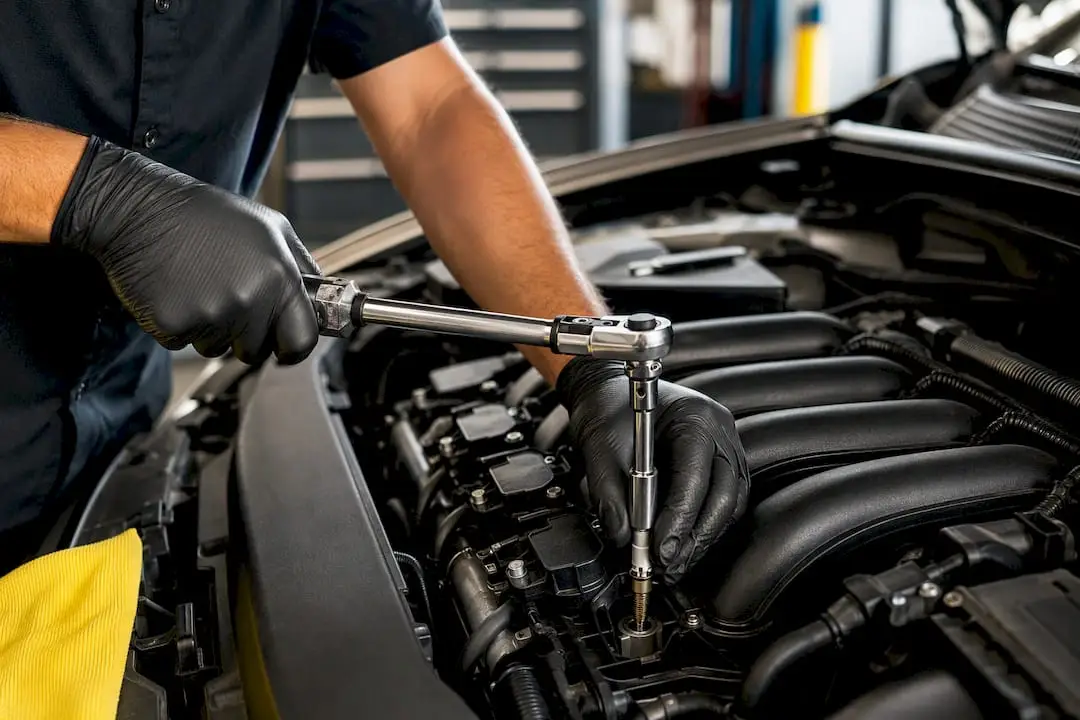
If a shop recommends replacing ignition coils alongside the plugs, ask whether those parts carry their own separate warranty and whether it is prorated. Reputable shops document warranty terms on the invoice, not just verbally, so you have something to reference if a problem shows up later. Reputable shops back repairs with stated warranties and provide that information as part of written estimates, so customers know what is covered before service begins.
Does plug type change how your engine runs
Plug composition affects more than price. Copper plugs conduct electricity well and work fine in older, simpler ignition systems, but they wear faster, often needing replacement around 20,000 miles. Platinum and iridium plugs use harder metals at the electrode tip, which resist erosion and hold a consistent gap far longer, sometimes to 60,000 or even 100,000 miles depending on the specific plug.
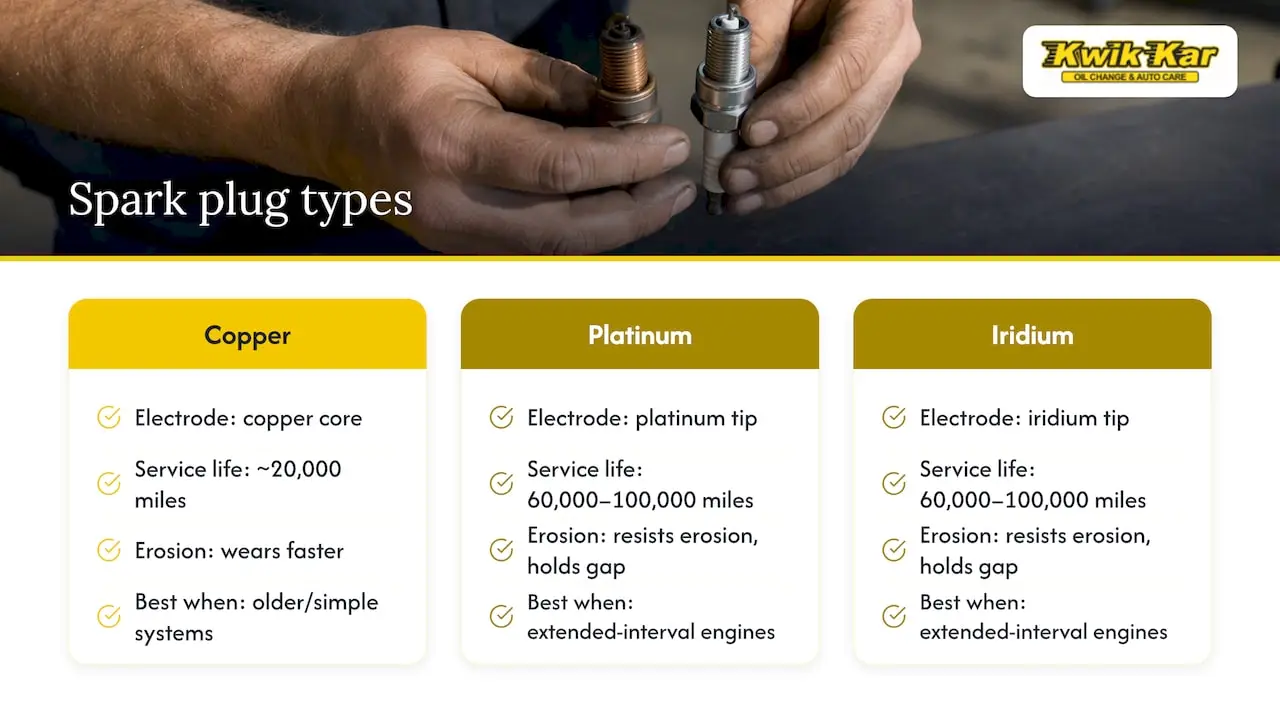
A worn plug does not just fail outright. Long before that, it can cause a weaker spark, which shows up as rougher idle, slightly reduced fuel efficiency, and hesitation under acceleration. Upgrading from copper to platinum or iridium on an engine designed for extended intervals will not make the engine more powerful, but it will help maintain a consistent spark over a longer stretch of miles, which is where the efficiency benefit actually comes from.
The reverse also matters: installing the wrong plug type or an incorrect heat range for your engine can cause misfires or, in rare cases, engine damage. Always match the plug to what your manufacturer specifies rather than assuming a more expensive plug is automatically the better choice for your vehicle.
What most quotes get wrong for drivers
The biggest mistake drivers make with spark plug pricing is comparing a single dollar figure across shops without asking what that figure includes. A $150 quote and a $350 quote for the same car are not really comparable if one includes coil inspection and the other does not, or if one shop’s labor rate reflects a flat-rate manual and the other charges by the clock.
Conventional advice tells you to shop around for the lowest price, but that advice undersells how much access complexity and bundled work explain the gap. A shop quoting more may simply be doing more, catching a failing coil before it strands you, or confirming torque specs that a rushed job would skip.
If you take one thing from this guide, prioritize the breakdown over the bottom line. Ask what plug type is specified for your engine, whether labor includes any disassembly beyond the plugs, and what the warranty covers. Once you have those three answers, you can judge a quote in thirty seconds instead of guessing whether it is fair.
— Kwik Kar
Book a spark plug estimate at Kwik Kar
Getting an accurate number for your car takes a short inspection, not a guess over the phone. When you bring your vehicle to Kwik Kar Oil Change & Auto Care in Richardson, our ASE-certified technicians check plug type, access difficulty, and coil condition before quoting a price, so the number you see reflects your specific engine.

Your written estimate covers parts, labor, and warranty terms, with no surprise line items added after the work starts. If your check engine light is on or you have noticed rough idle, our engine diagnostic service can confirm whether spark plugs are the cause before you pay for anything.
Before you call, have these five answers ready:
- Your vehicle’s year, make, model, and mileage.
- Whether you have noticed misfires, rough idle, or reduced fuel efficiency.
- Whether a check engine light has appeared.
- Your preferred plug type, if you have one.
- Whether you want coils inspected at the same time.
Visit our service auto repair page to see the full range of maintenance we handle, or call your local Richardson shop today to schedule a spark plug inspection and get a written estimate before any work begins.
Sources
- How much does it cost to replace spark plugs? – AutoZone
- What is the Average Spark Plug Replacement Cost? | AAA
FAQ
What are the symptoms of a bad spark plug?
A failing spark plug often causes rough idling, hesitation during acceleration, misfires, or a noticeable drop in fuel efficiency. Our guide to bad spark plug symptoms covers the full list, including engine warning lights that can accompany these issues.
Will an auto parts store install spark plugs for you?
Auto parts retailers typically sell the plugs and the tools needed but do not perform installation labor themselves. AutoZone’s guidance is written for DIY installation, so drivers who want professional installation need a repair shop.
Why do professional spark plug quotes seem expensive?
Professional pricing reflects diagnostic checks, correct torque procedures, and the labor time needed to access plugs safely, which AAA notes can prevent costly follow-up damage. On engines requiring intake removal, that labor time can account for most of the invoice.
Does a quick-service shop typically handle spark plug replacement?
Some quick-service locations focus primarily on oil changes and basic maintenance rather than ignition system work. Availability varies by location, so it is worth calling ahead and asking directly whether a shop performs spark plug replacement before scheduling.
How often should spark plugs be replaced?
Replacement intervals depend on plug composition: copper plugs often need replacement around 20,000 miles, while platinum and iridium plugs can last 60,000 to 100,000 miles or more. Towing, frequent short trips, and stop-and-go driving can shorten those intervals.