Most Richardson car owners know they need regular maintenance, but far fewer understand the full range of types of local auto care services available to them or how to choose the right one for each situation. Your vehicle is quietly signaling its needs every time you drive it. The question is whether you know which service to call for. This guide breaks down every major service category, explains what each one actually includes, and gives you a practical framework for choosing the right shop before something goes wrong.
Table of Contents
- Key takeaways
- Types of local auto care services: what Richardson drivers need to know
- 1. Oil change service
- 2. Brake repair and inspection
- 3. Tire services
- 4. Battery testing and replacement
- 5. Engine diagnostic services
- 6. Automotive electrical repair
- 7. Heating and air conditioning services
- 8. Suspension and steering system repairs
- 9. Transmission service
- Comparing service providers: dealerships, independents, and chains
- Practical tips for getting the best local auto care in Richardson
- My take on local auto care: what experience has actually taught me
- Why Richardson drivers trust Kwik Kar Oil Change & Auto Care
- FAQ
Key takeaways
| Point | Details |
|---|---|
| Know your service types | Understanding the difference between routine maintenance and specialized repair saves you time and money. |
| Diagnostics come first | Always request a written diagnostic estimate before approving any repair work. |
| Shop type matters | Dealerships, independents, and chains each have strengths depending on the service you need. |
| OEM vs. aftermarket | Safety-critical parts like brakes and steering components often justify the cost of OEM quality. |
| Local shops offer flexibility | Richardson-area shops frequently offer coupons and scheduling options that large chains cannot match. |
Types of local auto care services: what Richardson drivers need to know
Before you can choose the right shop, you need to understand what you’re actually shopping for. Auto repair services fall into two broad categories: routine maintenance and specialized repair. Routine maintenance is predictable. It follows a schedule and keeps your vehicle running the way it was designed to. Specialized repair is reactive. It addresses something that has already failed or is on the verge of failing.
When evaluating any local auto care provider, four criteria separate good shops from great ones:
- Service quality and technician certification: Look for ASE-certified technicians. Certification means the person working on your vehicle has passed standardized tests in specific repair categories, not just logged hours under a hood.
- Transparent pricing: A trustworthy shop provides written, line-item estimates before any work begins. If a shop resists putting numbers on paper, that tells you something important.
- Warranty coverage: Reputable shops stand behind their work with parts and labor warranties. Ask specifically what is covered and for how long.
- Convenience and communication: Does the shop explain what they found and why the repair is needed? Can you get a same-day appointment for routine services? These details reflect how a shop actually treats its customers.
Pro Tip: Ask every shop you consider whether they charge a diagnostic fee separately from the repair estimate. A shop that bundles these without disclosure may be padding costs before you even approve anything.
The distinction between dealership, independent, and chain shops also shapes your experience significantly. Each serves different needs, and knowing the difference helps you match the service to the right provider.
1. Oil change service
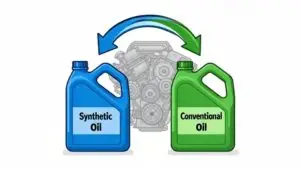
An oil change is the single most frequent service your vehicle needs, and it is also the most misunderstood. The type of oil matters. Conventional oil works for older, lower-mileage vehicles. Full synthetic is engineered for modern engines, high-performance driving, and extreme Texas heat. Synthetic blend sits in between, offering improved protection at a lower price point than full synthetic.
Routine services like oil changes are the foundation of long-term vehicle health, protecting engine components from friction and heat buildup. Most modern vehicles using full synthetic oil can go 7,500 to 10,000 miles between changes, though your owner’s manual is the authoritative source for your specific model. Skipping changes does not just dirty the oil. It quietly degrades the engine from the inside out.
2. Brake repair and inspection
Your brakes are the most safety-critical system on your vehicle. Brake service covers a wide range of components: pads, rotors, calipers, brake fluid, and the hydraulic lines connecting them all. A standard brake inspection checks pad thickness, rotor condition, and fluid quality. Squealing when stopping is a warning. Grinding is an emergency.
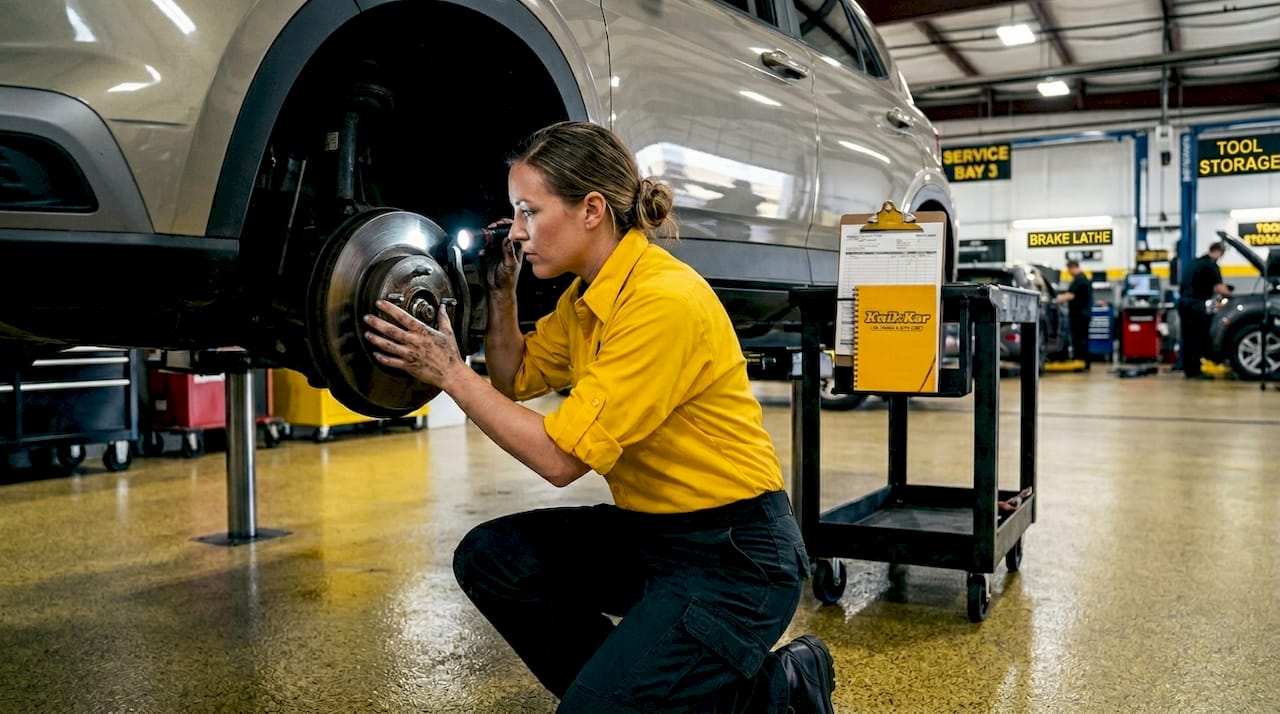
Safety-critical parts like brakes justify the use of OEM or high-quality aftermarket parts during repairs, because low-cost brake components wear faster and perform inconsistently under hard stops. Richardson drivers who want to reduce brake service costs without sacrificing safety can take advantage of a brake inspection discount that includes $20 off replacement.
3. Tire services
Tire care is one of the most overlooked categories of local vehicle care, yet it directly affects fuel economy, handling, and safety. The four main tire services are rotation, balancing, alignment, and replacement.
Rotation moves tires from front to rear and side to side to distribute wear evenly. Balancing corrects weight imbalances in the wheel-and-tire assembly that cause vibration at highway speeds. Alignment adjusts the angles of your wheels to manufacturer specifications, preventing uneven wear and pulling to one side. Replacement becomes necessary when tread depth drops below 2/32 of an inch, which you can check with a penny.
4. Battery testing and replacement
A battery that fails quietly is one of the most frustrating vehicle problems because there is rarely a dramatic warning. One morning your car simply does not start. Battery testing takes minutes and measures cold cranking amps, state of charge, and internal resistance. Most batteries last three to five years in the Texas heat, though extreme summer temperatures accelerate degradation faster than cold climates do.
Battery testing and replacement is a quick, affordable service that prevents the far more inconvenient scenario of being stranded. If your battery is more than three years old, ask for a load test at your next oil change appointment.
5. Engine diagnostic services
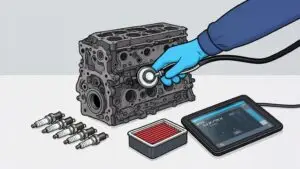
When your check engine light comes on, it is not an immediate crisis. It is your vehicle’s way of flagging a stored fault code in the onboard diagnostic system. Engine diagnostics translate that code into a specific system or component that needs attention, ranging from a loose gas cap to a failing oxygen sensor to a misfiring cylinder.
The key distinction is that reading a code is not the same as diagnosing the problem. A quality engine diagnostic service goes beyond code retrieval to identify the root cause. A two-step process works best: pay for a thorough diagnostic scope first, then review a detailed written estimate before approving any repair. This approach, recommended by consumer automotive experts, reduces the risk of misdiagnosis and unnecessary parts replacement.
6. Automotive electrical repair
Modern vehicles run on increasingly complex electrical systems. Power windows, sensors, lighting, the alternator, the starter, and the entire suite of driver-assist features all depend on electrical components working correctly. When something fails, the symptoms can seem unrelated. A dead power window and a charging issue might trace back to the same blown fuse or faulty relay.
Automotive electrical repair requires specialized diagnostic equipment and technicians trained to read wiring diagrams. This is not a service category where guesswork is acceptable. Shops with advanced diagnostic tools can isolate the fault quickly rather than replacing components until something works.
7. Heating and air conditioning services
In Richardson’s summers, a failing air conditioning system is not a minor inconvenience. It is a health concern. HVAC service covers refrigerant recharge, compressor inspection, cabin air filter replacement, and leak detection. A common misconception is that an AC recharge is a fix. If refrigerant is low, there is a leak somewhere, and recharging without finding it just delays the real repair.
Heating system issues often trace to the coolant system, thermostat, or heater core. Both heating and cooling services benefit from a full system inspection rather than addressing only the obvious symptom.
8. Suspension and steering system repairs
Your suspension and steering systems are what keep your vehicle stable, comfortable, and predictable through turns and over rough roads. Worn shocks or struts cause your vehicle to bounce excessively, which extends stopping distance and reduces tire contact with the road. Worn tie rods and ball joints affect steering precision.
The telling signs are a rough ride that has gradually worsened, pulling to one side, or a steering wheel that feels loose. Because steering and suspension components are safety-critical, quality parts and experienced technicians are non-negotiable for these repairs.
9. Transmission service
Transmission service is one of the most expensive categories of local auto care, which is exactly why preventive maintenance matters so much here. A transmission fluid exchange at the recommended interval costs a fraction of a rebuild or replacement. Automatic transmissions are sensitive to fluid degradation. When the fluid breaks down, it stops lubricating and cooling the transmission’s internal components effectively.
Symptoms of transmission trouble include delayed engagement when shifting from park to drive, slipping between gears, and unusual noises during acceleration. Catching these early through regular fluid checks can extend transmission life significantly.
Comparing service providers: dealerships, independents, and chains
Understanding which type of shop to use for which service is one of the most practical decisions you can make as a Richardson car owner.
| Provider Type | Best For | Typical Pricing | Key Consideration |
|---|---|---|---|
| Dealership | Warranty work, recall repairs, dealer-only diagnostics | Highest | Required for some manufacturer-specific repairs |
| Independent shop | Most maintenance and repairs, personalized service | Moderate to low | Independent shops offer lower labor rates and higher satisfaction |
| Chain facility | Quick routine services, standardized pricing | Moderate | Consistency varies by location and technician |
Dealerships handle repairs requiring dealer-only access and warranty work, but independent shops cover most other maintenance with technicians who often carry dealership experience. Many experienced technicians at independent shops came from dealerships, bringing the same skill set at a lower hourly rate. For most routine and repair needs, an independent shop with certified technicians offers the best combination of quality and value.
Practical tips for getting the best local auto care in Richardson
Getting the most from any auto repair service comes down to a few habits that most car owners skip.
- Request written estimates every time. Ask for line-item estimates from local shops to avoid overpaying or approving work you do not fully understand.
- Use coupons and scheduling windows strategically. Local shops offer flexible scheduling and discount opportunities that chains typically cannot match. Check for available service discounts before booking any appointment.
- Understand your parts options. OEM parts are made by the original manufacturer. Aftermarket parts are made by third parties and vary widely in quality. Remanufactured parts are rebuilt originals. For safety systems, OEM or premium aftermarket is the right call.
- Build a relationship with one shop. A shop that knows your vehicle’s history can spot patterns and catch developing problems earlier than a shop seeing your car for the first time.
- Know when to escalate. Routine maintenance is predictable, but unusual sounds, warning lights, or handling changes are signals that something specialized needs attention soon.
Pro Tip: Before any repair, ask the shop to confirm the diagnostic fee in writing and clarify whether it applies toward the repair cost if you approve the work. Many shops credit the fee, but only if you ask.
My take on local auto care: what experience has actually taught me
I’ve seen a pattern repeat itself more times than I can count. A customer comes in after putting off a routine service because they assumed it would be expensive or complicated. By the time they arrive, what would have been a $60 oil change has become a $400 repair because degraded oil quietly damaged engine components over thousands of miles. Preventive care is not a sales pitch. It is the math of vehicle ownership.
What I’ve also learned is that the shop you trust matters as much as the service itself. Transparency in repair communication builds genuine trust, and trust is what makes customers feel confident approving a repair rather than anxious about being misled. I’ve watched customers at shops without clear communication approve unnecessary work simply because they did not know what questions to ask.
My contrarian view: most car owners do not need to go to a dealership for the vast majority of services. The perception that dealerships offer superior quality for routine maintenance is largely a marketing outcome, not a technical reality. Independent shops with ASE-certified technicians and proper diagnostic equipment deliver the same quality, often with more personal attention and lower labor rates.
The one area where I tell every customer to pay attention is parts selection for safety systems. Brakes, steering, suspension. Do not let price alone drive that decision. The road between Richardson and Dallas does not forgive compromised stopping power.
— Kwik Kar
Why Richardson drivers trust Kwik Kar Oil Change & Auto Care
Kwik Kar Oil Change & Auto Care in Richardson brings together the full range of auto repair and oil change services that local drivers need, from quick conventional and synthetic oil changes to brake repair, engine diagnostics, battery service, and electrical system repair. Every vehicle is handled by ASE-certified technicians who bring dealership-level expertise without dealership-level pricing. Kwik Kar is recognized by both CARFAX and RepairPal, and offers special discounts for military personnel and first responders. Whether you need to schedule an oil change or address a check engine light, the team provides written estimates, transparent communication, and service you can count on.
FAQ
What are the most common types of local auto care services?
The most common types include oil changes, brake inspections and repair, tire rotation and balancing, battery testing, engine diagnostics, and electrical system service. Routine services like these form the foundation of long-term vehicle health and reliability.
How do I choose between a dealership, independent shop, or chain?
Use a dealership for warranty work or repairs requiring manufacturer-specific tools. For most other auto repair services, independent shops offer better pricing and comparable quality, especially those staffed by ASE-certified technicians.
Should I always use OEM parts for repairs?
Not always, but for safety-critical components like brakes, steering, and suspension, OEM or high-quality aftermarket parts are the right choice. For non-safety systems, quality aftermarket parts can offer good value.
How often should I schedule local car maintenance?
Oil changes typically fall every 5,000 to 10,000 miles depending on oil type and your vehicle. Tire rotation every 5,000 to 7,500 miles, brake inspection annually, and battery testing every two to three years are solid baselines for most Richardson drivers.
What should I ask before approving any auto repair?
Ask for a written estimate with line-item costs, confirm whether the diagnostic fee applies toward the repair, and ask what parts will be used and why. These three questions protect you from overpaying and help you make an informed decision.