Your oil change light is on, your week is packed, and Google keeps showing the same promise over and over: fast, cheap, done in minutes. That sounds good until the car has a slow valve cover leak, a torn belt starting to crack, or an aging battery that nobody bothered to mention because the whole visit was built around speed.
When people search for a reliable oil change near me, they usually mean more than fresh oil. They mean, “Will this shop catch the stuff that strands me later?” In Richardson, that matters. A lot of local drivers are commuting, hauling kids, or trying to keep an older vehicle going without getting talked into nonsense.
A dependable oil change isn’t just a transaction. It’s a check on the health of the vehicle, the quality of the parts, the training of the technician, and the honesty of the person at the counter. If you know what to look for, it gets a lot easier to tell the difference between a real service and a rushed drain-and-fill.
Why 'Reliable' Matters More Than 'Quick' for Your Oil Change
A fast oil change is fine if the shop still does the basics right. The problem is that speed often becomes the whole product. That’s when important checks get skipped, weak filters get installed, and small problems stay small only until they turn expensive.
For a busy commuter, the temptation is obvious. Pull in, wait a few minutes, drive away. But the vehicle doesn’t care how packed your calendar is. If it has worn hoses, seepage around the oil pan, low coolant, or uneven tire wear, those issues keep moving in the background whether anyone looked for them or not.
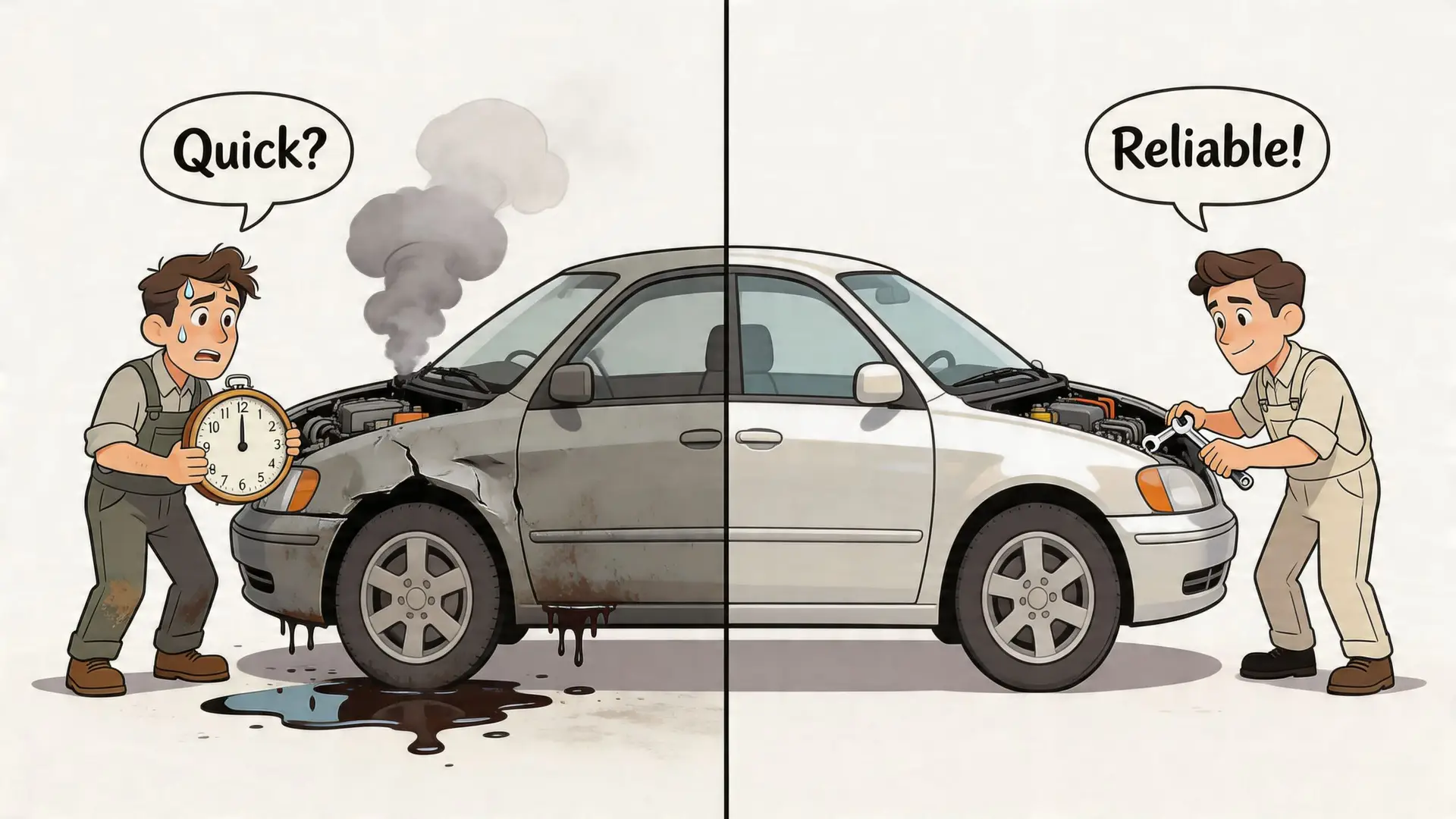
What quick service often misses
A basic oil change only answers one question: did someone replace the oil and filter? A reliable oil change answers several more:
- Is the engine leaking anything: Oil residue around the filter housing, drain plug area, timing cover, or valve cover can tell you a lot.
- Are other fluids in range: Coolant, brake fluid, and power steering fluid don't fix themselves.
- Is the car wearing evenly: Tire wear patterns often show alignment or suspension issues before the driver feels them.
- Are there warning signs on older vehicles: High-mileage cars need a sharper eye, not a faster stopwatch.
That’s why the cheap-and-fast approach can cost more later. A 2025 AAA and RepairPal-related summary on comprehensive oil change inspections says 42% of vehicle breakdowns stem from neglected maintenance beyond basic oil changes, and high-mileage vehicles over 100,000 miles see 30% higher failure rates if only quick services are used. The same source notes that ASE-certified shops emphasizing comprehensive diagnostics during oil changes can reduce long-term repair costs by 25%.
Practical rule: If a shop sells the visit on how little time they spend with your car, ask yourself whether that’s really the part you want minimized.
The real goal is fewer surprises
Most drivers aren’t shopping for oil. They’re shopping for confidence. They want to know the engine was filled correctly, the filter seals, the drain plug was tightened properly, and someone looked over the vehicle with enough care to spot trouble early.
That’s the difference between “quick” and “reliable.” One gets you out the door. The other helps keep you from coming back on a tow truck.
Where to Find Trustworthy Auto Care Beyond Google Maps
Star ratings help, but they don’t tell the whole story. Shops can have strong reviews for friendliness, location, or speed and still be weak on diagnostics. If you want a reliable oil change near me, read reviews like a technician reads a symptom. Look for patterns, not slogans.
Read reviews for substance, not stars
A useful review mentions details. It says the shop found a leak, explained an estimate clearly, documented the inspection, or advised waiting on a repair that wasn’t urgent. Those are signs of a place that values long-term trust.
Weak reviews and weak praise have a different feel. “Fast.” “Cheap.” “In and out.” That’s not always bad, but it doesn’t tell you whether the work was careful or whether the advice was honest.
Look for comments that mention:
- Clear explanations: The advisor explained what was urgent, what could wait, and why.
- Proof, not pressure: Customers were shown the worn part, dirty filter, or fluid condition.
- Consistency: Multiple reviewers describe the same shop habits, not one lucky visit.
- Fair handling of problems: When something needed a recheck, the shop responded professionally.
Verify third-party trust signals
Good shops usually leave a trail. That trail matters more than ad copy.
Start with credentials and service-history tools. RepairPal matters because it signals pricing transparency and process standards. CARFAX matters because it helps document maintenance and gives future buyers or family members a trackable record. NAPA AutoCare matters because it points to a shop operating inside a stronger quality framework than a generic pop-up lube bay.
If you’re comparing local shops, it also helps to understand how map visibility works. Businesses that rank higher on Google Maps and capture transactional customers often put real effort into profile accuracy, reviews, and local relevance. That doesn’t prove repair quality by itself, but it does explain why some good shops are easier to find than others.
For a practical local walkthrough, this guide on how to find a trustworthy mechanic is worth reading before you book anything.
Reliable shops make it easy to verify who they are. If you have to guess about certifications, warranty support, or service history, keep looking.
What separates a chain listing from real auto care
A quick-lube listing on Google Maps usually focuses on convenience. A full-service auto care center tends to communicate differently. You’ll see more emphasis on technician qualifications, inspections, diagnostics, and repair capability beyond fluid service.
That distinction matters most for older cars and daily drivers. If your vehicle has miles on it, you don’t just need oil. You need a shop that can notice a seep, trace a smell, explain a recommendation, and fix the issue if needed.
A trustworthy shop doesn’t rely on one signal. It stacks signals. Good reviews. Clear credentials. Documented service history. Transparent communication. That combination is harder to fake and easier to trust.
Your Pre-Visit Inspection and Credentials Checklist
Before you hand over your keys, do a quick audit. Not of your car. Of the shop.
A lot of drivers get ripped off because they judge a service lane the same way they judge a coffee shop. Clean lobby, nice person at the counter, decent reviews, good enough. That’s not how you evaluate mechanical work. You want to know who is touching the vehicle, what standards they follow, and how they handle problems when they find them.
Start with credentials you can verify
The strongest first filter is certification. You want to see whether the shop and the technicians operate inside recognized standards, not just internal training.
What ASE-certified mechanic credentials actually mean is worth understanding before you schedule service, because those letters aren’t decoration. They signal formal testing and professional accountability.
A Richardson area oil change reference discussing certification standards states that certifications like ASE, RepairPal, and NAPA AutoCare ensure technicians meet rigorous standards, and that this professionalism reduces future repair costs by an average of 25% through preventive maintenance, while early detection via thorough inspections can prevent up to 40% of major breakdowns.
That doesn’t mean every certified shop is perfect. It does mean the shop has cleared a higher bar than a place built only around volume.
Questions to ask before you approve service
Don’t ask, “How much is an oil change?” first. Ask questions that reveal how they work.
Use these:
- What oil does my vehicle need: A good advisor should ask about make, model, engine, mileage, and driving conditions before answering.
- What filter are you installing: You want an OEM-spec filter or equivalent quality, not the cheapest part that fits the threads.
- What inspection comes with the service: Ask what gets checked besides the oil. If the answer is vague, expect a vague service.
- Will you document recommendations: Reliable shops note findings clearly instead of tossing verbal warnings at you in the parking lot.
- Can you show me anything you recommend replacing: Honest shops don’t mind proof.
If a service advisor gets irritated by basic questions, that's useful information. Good shops answer them every day.
Watch the waiting area and front counter
A surprising amount shows up before the vehicle ever enters a bay.
Notice whether certifications are visible. Look for organized workflow, not chaos. Listen to how the counter staff talks to other customers. If every conversation turns into a hard sell, your turn won’t be different.
Other good signs:
- Printed or digital estimates: You should know what’s being done before it’s done.
- Vehicle history awareness: The shop asks about prior service and current concerns.
- No mystery pricing: Fees and add-ons are explained up front.
- Professional language: Staff can explain oil types, filters, and inspection findings without hiding behind jargon.
Service comparison quick lube vs certified auto care
| Feature | Typical Quick Lube | Certified Auto Care Center (e.g., Kwik Kar) |
|---|---|---|
| Technician training | Often centered on fast routine service | Built around verified credentials and broader maintenance knowledge |
| Oil selection process | May default to a standard package | More likely to match oil to vehicle specs, mileage, and driving habits |
| Filter quality discussion | Often minimal unless you ask | More likely to explain filter quality and fitment |
| Inspection depth | Basic visual checks | More comprehensive vehicle health review |
| Diagnostic ability | Limited if a concern appears | Better equipped to investigate leaks, noises, warning lights, and wear patterns |
| Estimate process | Can feel transactional | Usually clearer documentation before added work |
| Service records | May be limited | More likely to support documented maintenance history |
| Follow-up support | Focused on the single visit | Better suited for ongoing maintenance and repairs |
Don’t confuse a coupon with value
A low advertised price can be fine if the shop uses the correct oil, installs a proper filter, and performs a real inspection. But some cheap offers are designed to get the car in the bay and recover margin with rushed labor or aggressive upsells.
The safest approach is simple. Judge the shop by process, credentials, and transparency. Price matters, but it should come after those three.
What a Quality Service Looks Like From Greeting to Invoice
A good oil change has a rhythm to it. You can hear it in the questions, see it in the inspection, and read it on the invoice. If the visit feels rushed from the first minute, it usually stays rushed all the way through.
It starts with the intake conversation
A professional service advisor doesn’t just ask for your keys and mileage. They ask how you drive the vehicle. Short trips, highway commuting, stop-and-go traffic, older engine, recent repairs, oil consumption, warning lights, fluid spots on the driveway. Those details matter because they shape what the technician should watch for.
A weak intake sounds like this: “Oil change?”
A strong intake sounds more like this: “Any leaks, noises, warning lights, or recent maintenance we should know about?”
That’s not upselling. That’s triage.
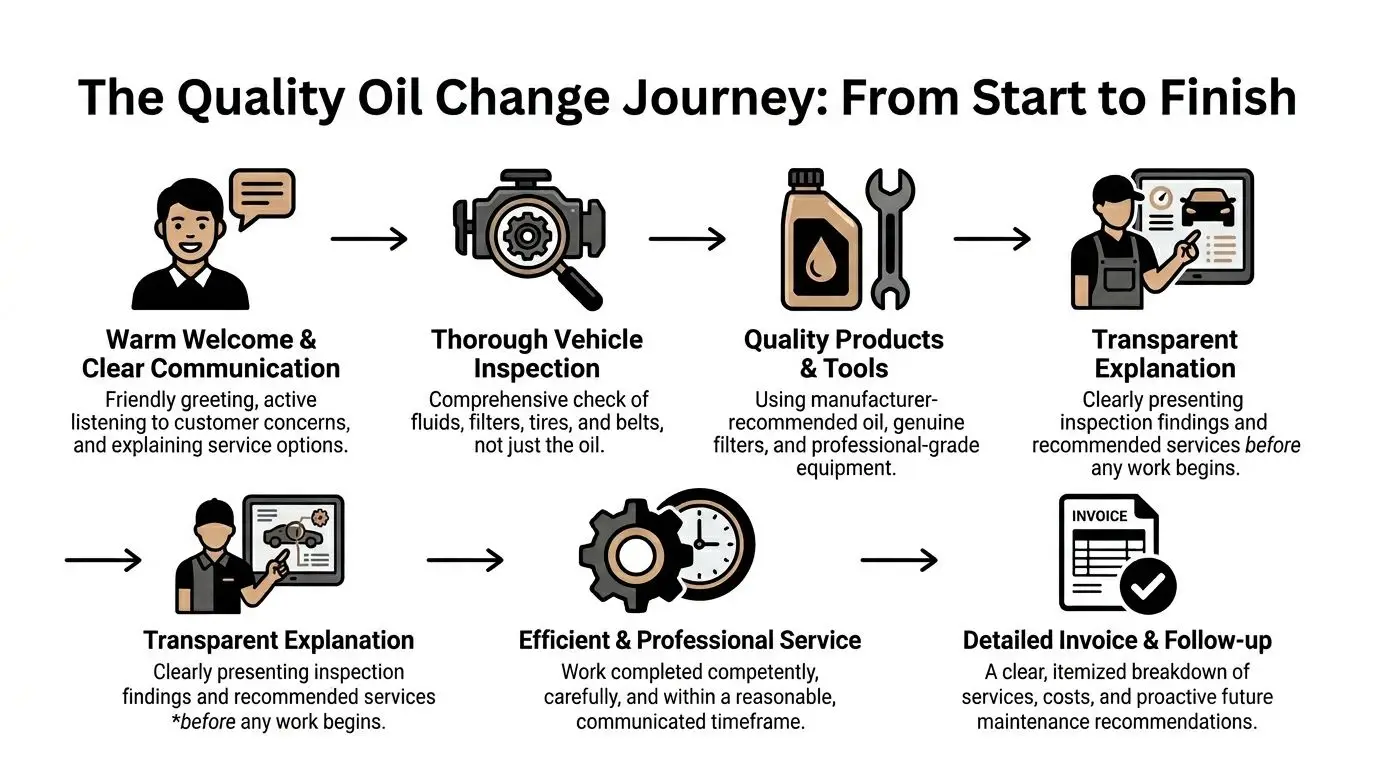
For a fuller breakdown of what should be included, this guide to a full-service oil change shows the difference between a simple drain-and-fill and a more complete maintenance visit.
The inspection should produce evidence
A quality service doesn’t hide the car from you and return with a mystery list. It creates evidence.
That may mean the advisor brings you a dirty cabin filter, shows you seepage around a gasket, points out a nail in a tire, or explains why the battery terminals need attention. The key is that the recommendation ties to something visible, testable, or documented.
Good recommendations come with a reason you can understand and a condition you can verify.
If everything is phrased as “you need this” without context, that’s a problem. If everything is “urgent,” that’s also a problem.
A pro knows when sampling matters and how to do it right
Most routine oil changes don’t require oil analysis. But when a vehicle has high mileage, unusual wear concerns, contamination worries, or fleet-tracking needs, sampling technique matters. This is one of those details that separates trained procedure from guesswork.
According to Machinery Lubrication on obtaining an oil sample to avoid false positives, best practices call for drawing from the oil’s live zone while the engine is running. That avoids misleadingly clean oil from stagnant areas and reduces diagnostic variability. The same source notes that poor sampling can lead to false negatives in 20-30% of cases.
That’s inside-baseball to most drivers, but it matters. If someone is trying to evaluate engine condition, bad sampling can make a worn engine look healthy.
The invoice tells you how careful the shop was
At the end of the visit, read the paperwork. A clean invoice should list the oil used, the filter replaced, and any inspection findings or recommendations. It should not look like a pile of vague line items glued together by sales language.
Watch for these green flags:
- Specific parts and fluids: The invoice identifies what went into the vehicle.
- Clear recommendations: Deferred items are listed without scare tactics.
- No surprise additions: Charges match what you approved.
- Maintenance notes: The shop gives you a usable record for the next visit.
A quality oil change feels calm. The shop asks the right questions, checks the right areas, explains what it found, and sends you out with documentation that makes sense.
Why Richardson Drivers Trust Kwik Kar for Auto Care
Drivers in Richardson usually aren’t looking for a sales pitch. They want a shop that can handle a commuter car on a tight schedule, a family vehicle that needs a real safety eye, or an older car that can’t afford lazy maintenance.
That’s where a full-service model makes more sense than a speed-only model.
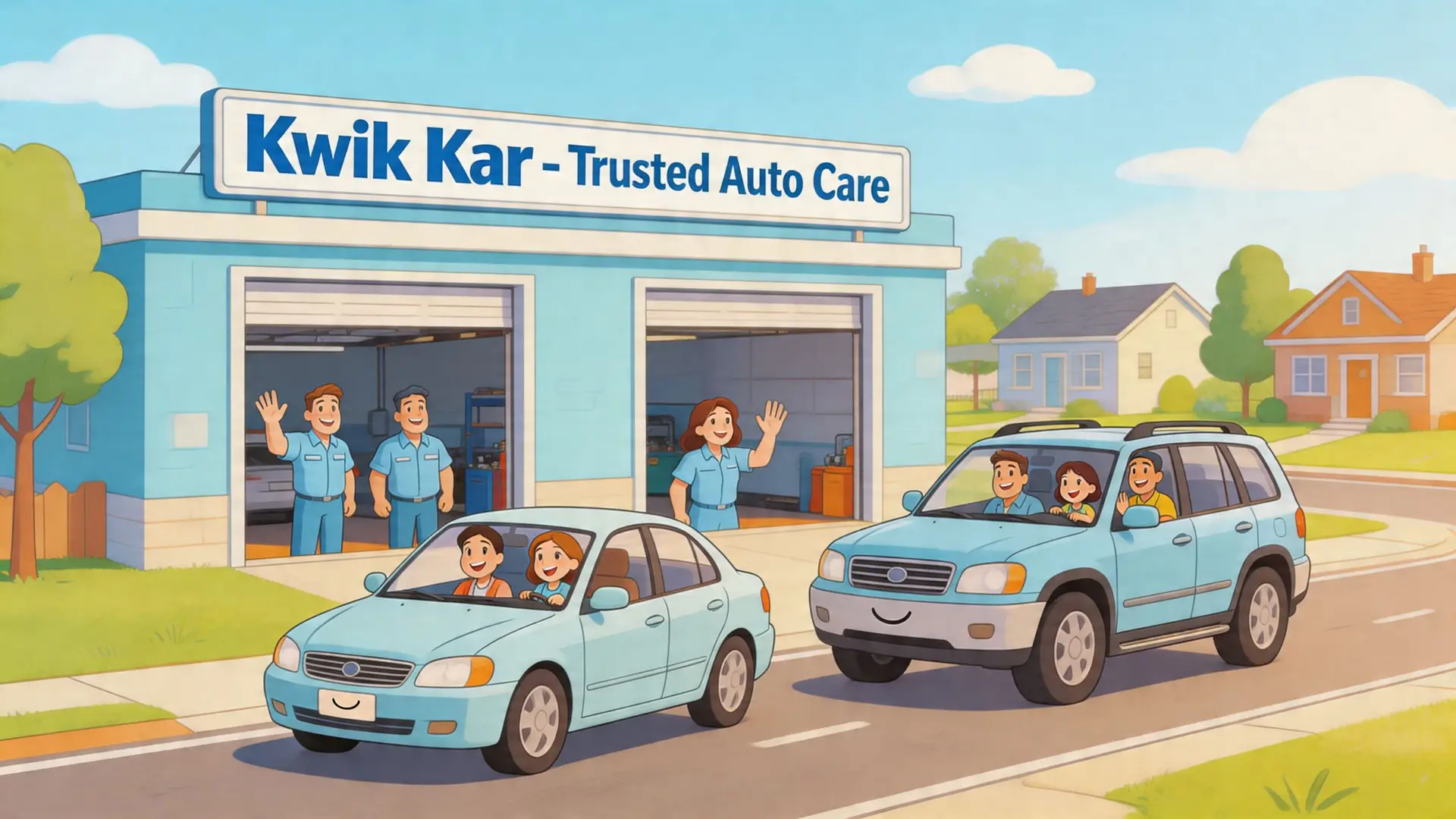
What local drivers should look for in a shop
The core trust signals are straightforward. You want ASE-certified technicians, recognized program backing, transparent estimates, and the ability to do more than one narrow service. A car rarely chooses the perfect moment to need more than oil.
For readers comparing options, Kwik Kar Oil Change and Auto Care fits that full-service category with ASE-certified technicians and backing from CARFAX, RepairPal, and NAPA AutoCare. That combination matters because it aligns with the quality signals serious drivers should verify anywhere, not because of branding alone.
A shop’s reputation also shows up in how it manages customer feedback and follow-through. If you’re curious how strong auto shops build trust online over time, this overview of Auto Repair Reputation Management gives useful context for reading reviews with a sharper eye.
Discounts matter when they’re real and clearly offered
One thing many national chains fail to communicate well is whether they honor meaningful discounts for the people who serve the community. That’s not a small issue in Texas.
A search trend and loyalty summary tied to oil change discount demand reports a 35% spike in searches for “oil change military discount near me” in major Texas metros, and notes that certified centers offering targeted discounts see 22% greater loyalty from these groups.
That tracks with what a lot of drivers want. If you’re military, a first responder, or a healthcare provider, you shouldn’t have to dig through fine print or call three stores to find out whether a shop honors your work with a straightforward offer.
Here’s a closer look at the shop environment and service approach:
Why that matters for older cars and daily use
A primary reason trust sticks isn’t the logo on the wall. It’s whether the shop handles the vehicle like it expects to see you again. That means consistent inspections, honest explanations, and enough diagnostic ability to catch issues before they become roadside problems.
For Richardson drivers with older vehicles, that approach matters even more. Aging cars don’t need drama. They need methodical maintenance.
Drive Away Confident Your Car Is Ready for the Road
A reliable oil change is never just about checking a box on your maintenance list. It’s about choosing a shop that treats the visit as a chance to protect the whole vehicle, not just drain and refill one fluid.
That’s the standard to use when you search for a reliable oil change near me. Look for verified certifications, ask direct questions, pay attention to how the shop explains its work, and expect documentation that makes sense. If the process feels sloppy before the service starts, it won’t get better once the hood is open.
The good news is that avoiding bad service isn’t complicated once you know the signals. Trust the places that welcome questions, inspect carefully, explain clearly, and don’t hide behind speed or gimmicks.
Your next oil change shouldn’t leave you wondering what you paid for. It should leave you confident the car was serviced correctly and checked by people who know what to look for.
If you want an oil change shop that takes reliability seriously, schedule service with Kwik Kar Oil Change and Auto Care. You’ll get a team that focuses on certified workmanship, transparent recommendations, and the kind of thorough maintenance that helps you avoid expensive surprises later.