
You’ve probably been there. The oil change is done, the car is running fine, but the tires are showing wear and you’re staring at a sidewall full of numbers that don’t mean much at first glance.
That’s where most tire mistakes start. Not with bad intentions, but with confusion. A driver just wants a safe replacement, maybe a better ride, maybe a little savings at the pump, and instead has to sort through width, aspect ratio, diameter, load index, and whether a different size will throw off the speedometer.
For Richardson drivers, that matters more than commonly understood. A 15 inch tire size chart isn’t just a reference sheet. It’s a practical tool for choosing a tire that fits the vehicle correctly, drives predictably on local roads, and doesn’t create problems with handling, fuel use, or odometer accuracy.
Your Guide to Choosing the Right 15-Inch Tires
A lot of drivers come in with the same question phrased a few different ways.
“My car has 15s. Can I just get whatever 15-inch tire is on sale?”
Usually, the answer is no.
Two tires can both fit a 15-inch wheel and still behave very differently on the road. One might be narrower and better for daily commuting. Another might be taller, which can change the way the speedometer reads. A third might technically mount up, but create ride, clearance, or wear issues that show up later.
That’s especially common on older sedans, light trucks, and high-mileage vehicles still running 15-inch wheels. These vehicles are everywhere in North Texas because people keep them on the road for a long time. The tire choice needs to match that reality.
Practical rule: The right 15-inch tire isn’t just the one that fits the rim. It’s the one that matches the vehicle’s original design and the way you actually drive.
If you’re comparing numbers like 195/65R15, 215/65R15, or 235/75R15, the chart below will help you read what those sizes mean in plain language. It will help you understand what changes when you move away from the original size.
Understanding Tire Sidewall Codes
A tire sidewall works like an ID tag. Once you know how to read it, the code stops looking random.
Take P215/65R15.
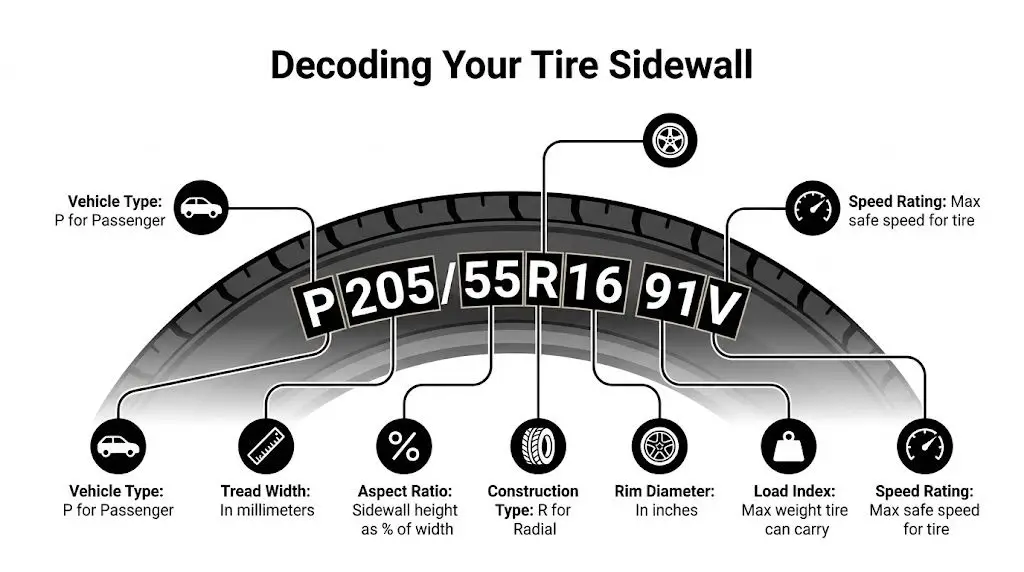
What each part means
- P means passenger vehicle.
- 215 is the section width in millimeters.
- 65 is the aspect ratio, which means the sidewall height is 65% of the width.
- R means radial construction.
- 15 is the wheel diameter in inches.
If the sidewall also includes something like 91H, that adds two more important details:
- 91 is the load index
- H is the speed rating
It's like a mailing address. Each part tells you something specific. Leave out one piece, and you can end up with the wrong destination. Tire sizing works the same way. The wheel diameter tells you what rim it fits, but the width and sidewall shape tell you how the tire will sit, carry weight, and roll down the road.
Why this matters in the shop
When a driver says, “I need 15-inch tires,” that’s only the starting point. A 195/65R15 and a 235/75R15 are both 15-inch tires, but they’re not interchangeable.
A few things to check on the sidewall before ordering anything:
- Match the wheel diameter. If the tire says 15, it fits a 15-inch wheel. Nothing else will do.
- Check the full size, not just the last number. Width and aspect ratio affect height, ride, and clearance.
- Look at load and speed ratings. Those matter on family vehicles, work vehicles, and anything carrying regular passenger or cargo weight.
If you want a step-by-step visual on locating your tire size before comparing options, this guide on how to find tire size is a useful starting point.
The Ultimate 15 Inch Tire Size Chart
A good 15 inch tire size chart does more than list sizes. It helps you compare how one option changes the vehicle’s stance, sidewall height, and rolling behavior.
For common 15-inch tire sizes, industry chart data includes measurements such as overall diameter, section width, sidewall height, circumference, and revolutions per mile, which are key fitment and maintenance references according to this 15-inch tire size chart at TireSize.com.
Common 15-inch tire sizes
| Tire Size | Section Width | Sidewall Height | Overall Diameter | Circumference | Revs per Mile |
|---|---|---|---|---|---|
| 175/65R15 | 6.9" | 3.5" | 24" | ~75.4" | ~840 |
| 185/65R15 | 7.3" | 3.8" | 24.5" | ~77" | ~825 |
| 195/65R15 | 7.65" | 4" | 25" | ~78.5" | ~810 |
| 205/65R15 | 8.1" | 4.2" | 25.5" | ~80" | ~795 |
| 215/65R15 | 8.5" | 4.4" | 26" | ~81.7" | ~776 |
| 225/70R15 | 8.9" | 5.5" | 27.4" | ~86" | ~736 |
| 235/75R15 | 9.25" | 6.9" | 28.6" | ~89.8" | ~706 |
How to use this chart
Start with the size printed on your current tire or the vehicle placard. Then compare three measurements.
- Overall diameter affects ride height, speedometer reading, and clearance.
- Section width affects how wide the tire sits on the road.
- Revolutions per mile affects odometer and speed calculations.
A shorter tire turns more times in a mile. A taller tire turns fewer times in a mile. That sounds minor, but it changes how the vehicle interprets speed and distance.
What drivers usually notice first
Few drivers notice revs per mile. They notice outcomes.
A tire with more sidewall can soften the ride. A wider tire can feel more planted in dry conditions. A taller overall diameter can subtly change the vehicle’s feel when accelerating or cruising. If the size change is poorly chosen, you may also notice rubbing on turns, awkward wheel-well gaps, or a speedometer that doesn’t quite match traffic pace.
Raw chart numbers matter because they translate directly into what the driver feels at the steering wheel.
A quick read on common patterns
- 175/65R15 to 195/65R15 sits in the smaller, commuter-friendly range.
- 205/65R15 and 215/65R15 are common middle-ground choices for daily driving.
- 225/70R15 and 235/75R15 move into taller, broader territory often associated with trucks, older SUVs, and some larger vintage applications.
If you’re considering a change from your stock size, don’t compare by rim size alone. Use the whole row.
How Tire Diameter Changes Affect Your Speedometer
The most overlooked line in a 15 inch tire size chart is usually overall diameter.
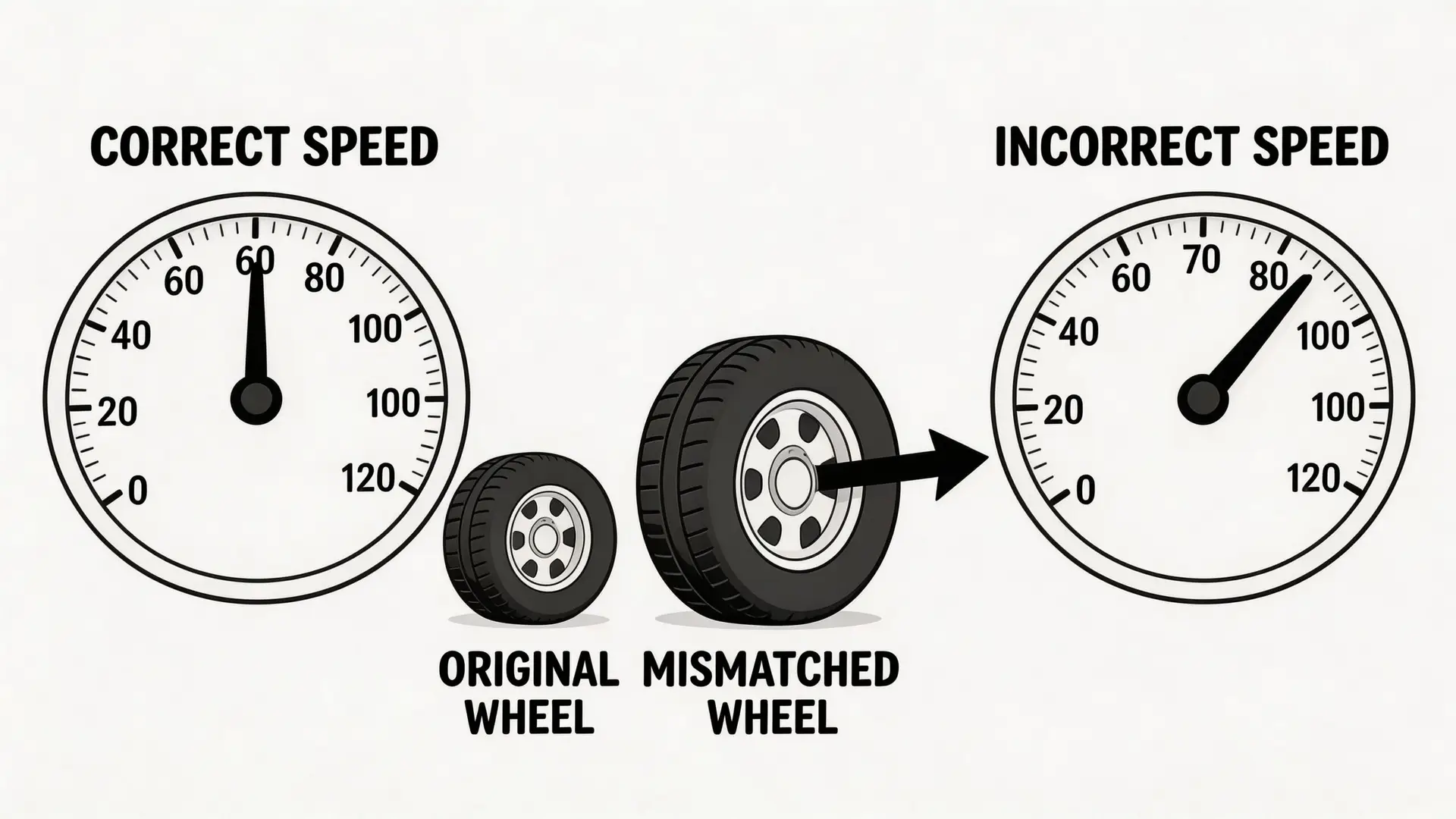
That number affects how far the vehicle travels with each wheel rotation. Change that, and you change what the speedometer and odometer think is happening.
The real-world problem
Many charts list tire diameters but stop there. The practical issue is what happens after the tire goes on the car.
A documented example shows that moving from 225/75R15 with a 28.3-inch diameter to 235/70R15 with a 28-inch diameter creates a 1.1% smaller diameter, which makes the speedometer read about 1.1% high. At an actual 60 mph, the speedometer would show about 60.7 mph, based on BFGoodrich size reference data.
That change sounds small because it is small. But it’s still real. On a vehicle that already has age, wear, or sensitive electronic systems, those small differences can stack up into annoying symptoms.
The shop rule that keeps drivers out of trouble
Stay within ±3% of the original overall diameter when changing tire sizes. That’s the safe guideline attached to the same fitment discussion above.
Here’s why that rule matters:
- Speedometer accuracy stays closer to normal.
- Odometer readings remain more trustworthy.
- ABS and traction control are less likely to react to unexpected wheel-speed differences.
- Clearance problems are less likely during turns or suspension movement.
If a tire change pushes the overall diameter too far from stock, the vehicle may still roll, but it won’t behave the way the factory intended.
Before you swap sizes
Ask these questions first:
- What is the original tire diameter?
- What is the diameter of the new size?
- Is the difference still inside the ±3% window?
A quick visual walkthrough can help if you want to see how tire size changes affect wheel speed and vehicle readings.
For Richardson drivers who spend time on highways, frontage roads, and stop-and-go traffic, this isn’t theory. If the speedometer is off, daily driving gets less predictable. That’s reason enough to check diameter before buying on price alone.
Choosing the Right Tire Width for Performance and Economy
Width changes how a vehicle feels more than many drivers expect.
A narrower tire usually rolls easier and can be a smart fit for commuting. A wider tire can improve dry-road grip, but there’s a trade-off in rolling resistance, cost, and sometimes wet-road behavior.
Narrower versus wider
Recent 2025 NHTSA data cited in this sizing reference notes that low-rolling-resistance 15-inch tires such as 205/60R15 can improve MPG by 1-2% compared with wider 275/60R15 options, while wider tires can increase rolling resistance by up to 5% according to the same source at Takeoff Tire’s tire size chart.
That tracks with what drivers often notice in practice.
- Narrower tires tend to suit daily commuting, lighter steering feel, and fuel-conscious driving.
- Wider tires can offer a more aggressive stance and stronger dry-pavement feel, but they usually ask for more from the vehicle.
What works for a Richardson commuter
If the car spends most of its life on city streets, school runs, and highway commuting, staying close to the original width is usually the better call. You protect ride quality and avoid paying for capability you rarely use.
If you want to compare the cost side before making that choice, this overview of the average price for new tires helps frame the budget side of the decision.
Where people go wrong
The common mistake is assuming wider always means better.
It doesn’t. A tire has to match the vehicle, the wheel, and the driving use. Too much width can feel sluggish, cost more to replace, and work against the goal of efficient everyday driving. For many local drivers, the best tire is the one that stays balanced across comfort, predictable handling, and operating cost.
Popular Vehicles That Came with 15-Inch Tires
A 15 inch tire size chart makes more sense when you tie it to actual vehicles people know.
For decades, 15-inch tire sizes were standard on American vehicles, especially from the 1930s through the 1970s, and classic sizes such as 7.00-15 later aligned with modern equivalents like P205/80R15, while G78-15 aligned with P235/75R15, according to the historical overview in Wikipedia’s tire code entry.
Where you still see 15-inch wheels
You’ll commonly find them in a few groups:
- Older compact and midsize cars that were built for comfort, affordability, and straightforward maintenance.
- Light trucks and older SUVs that used taller sidewalls for ride compliance and load-carrying practicality.
- Classic American cars where the 15-inch wheel is part of the vehicle’s original look and fitment.
Why that still matters
If you’re maintaining an aging daily driver, 15-inch tires often remain the most sensible choice because the suspension, gearing, and ride quality were built around them.
If you’re restoring an older vehicle, the issue is a little different. You’re not just chasing fitment. You’re often trying to preserve the right stance and driving character. In that case, understanding the older sizing language matters just as much as knowing the modern equivalent.
Restorations usually go wrong when someone picks a tire for appearance first and diameter second.
The chart is useful in both cases. It helps daily drivers stay practical and helps classic owners stay accurate.
A Guide to Plus Sizing and Minus Sizing
Some drivers want a different look or a different road feel without throwing the vehicle out of balance. That’s where plus sizing and minus sizing come in.
What plus sizing means
Plus sizing means moving to a larger wheel diameter while reducing sidewall height to keep the overall tire diameter close to the original.
Example in plain terms: if a car originally runs a 15-inch wheel, a driver might move to a 16-inch wheel and choose a lower-profile tire so the total height stays close to stock.
That matters because the vehicle cares about the tire’s overall rolling size more than it cares about appearance.
What minus sizing means
Minus sizing goes the other direction. A driver moves to a smaller wheel and uses a taller sidewall tire to maintain overall diameter.
This can make sense when the goal is a softer ride, more sidewall protection, or a setup better suited to rough roads.
What works and what doesn’t
What works is keeping the full package balanced:
- wheel diameter
- tire width
- sidewall height
- overall diameter
- clearance inside the wheel well
What doesn’t work is treating a larger tire and a larger wheel as the same thing. They’re not. You can install a bigger wheel while keeping the vehicle close to stock height. You can also install a taller tire on the same wheel and change the vehicle’s effective diameter much more than intended.
If you’re changing wheel size, compare the final tire diameter carefully before buying anything. The cleanest setups preserve fitment, steering feel, and clearance instead of chasing a visual change that creates new problems.
Complete Tire Services at Kwik Kar in Richardson
Choosing the right tire size is only half the job. The installation and follow-up service determine whether that tire performs the way it should.
A properly selected 15-inch tire can still wear poorly if the wheel balance is off, the alignment is out, or a slow leak goes unnoticed.
What a complete tire visit should include
A professional tire service should cover more than mounting rubber on a wheel.
- Tire installation should include correct mounting, inflation, and a final fitment check.
- Computerized balancing helps prevent vibration at neighborhood speeds and highway speeds.
- Alignment inspection catches steering-angle and wear issues that ruin a new set before its time.
- Tire repair should confirm whether a puncture is safely repairable or not.
- Pressure and tread inspection helps spot underinflation, edge wear, or center wear before they become larger problems.
Why certified service matters
On older vehicles, tire concerns often overlap with other systems. A pull that feels like a bad tire may involve alignment. Uneven wear may point to suspension issues. A vibration may be balance-related, or it may not be.
That’s why ASE-certified inspection matters. It narrows the problem down instead of guessing.
A full-service shop in Richardson also gives local drivers one place to handle the chain reaction that often starts with tires. Mounting, balancing, inspections, rotations, and related maintenance can be checked in the same visit. That saves time and reduces the chance that a sizing decision turns into a drivability problem later.
Tire Maintenance for North Texas Driving Conditions
North Texas is hard on tires. Heat, long stretches of hot pavement, sudden rain, construction debris, and daily stop-and-go driving all work against tread life.
You don’t need a complicated routine. You need a consistent one.
A practical local checklist
- Check tire pressure regularly. Texas heat can change pressure enough to affect wear and ride.
- Look at tread across the full width. Uneven wear can point to inflation or alignment issues.
- Rotate on schedule. Rotation helps the set wear more evenly over time.
- Inspect after potholes or curb hits. A tire can look fine at a glance and still have damage.
- Pay attention to vibration or pulling. Those symptoms rarely fix themselves.
If you want a good general emergency refresher for roadside situations, A-1 Driving School has a straightforward guide on how to fix a flat tire.
Two checks drivers can do at home
The penny test is still useful for a quick tread check. It’s not the whole story, but it can flag when tread is getting low.
Also check the tires when they’re cold, not right after driving. That gives you a more useful pressure reading.
When to get a shop involved
If one tire keeps losing air, if the steering wheel starts shaking, or if the tread wears differently from one side to the other, don’t wait. Those are usually service issues, not watch-and-see issues.
For a broader maintenance timeline, this article on how long car tires should last is worth reviewing alongside your tire size and usage pattern.
Answers to Your Top 15-Inch Tire Questions
Can I mix different tire sizes on my car
It’s best not to unless the vehicle was designed for a staggered setup. Mixed sizes can affect handling, braking feel, and overall predictability.
Can I mix different tire brands
Matching all four is the safest approach for most daily drivers. Different brands can have different tread designs, casing feel, and road manners even if the printed size matches.
What do load index and speed rating mean
They tell you how much weight the tire is designed to carry and the speed category it was built for. Those ratings should meet or exceed what the vehicle requires.
Is a taller 15-inch tire always better for ride comfort
Not always. More sidewall can soften impacts, but too much height can create fitment or handling problems if the size moves too far from stock.
What should I bring when shopping for replacement tires
Bring the current tire size, the vehicle year and model, and any concerns you’ve noticed such as pulling, vibration, uneven wear, or poor fuel economy. That gives the technician enough context to recommend a size that fits both the car and your daily driving.
If your vehicle runs on 15-inch tires and you want help choosing the right size, checking wear, or correcting vibration and alignment issues, schedule a visit with Kwik Kar Oil Change and Auto Care. Our ASE-certified team helps Richardson drivers make safe, practical tire decisions that fit the vehicle and the way they use it every day.