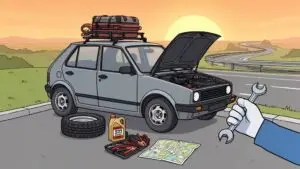
You’re driving home through Richardson, the car feels normal, and then something changes. A light comes on. The steering feels a little loose. Maybe there’s a tapping noise at idle that wasn’t there yesterday.
That moment is when many individuals start asking the same question. Who can I trust to tell me what’s wrong, fix it correctly, and not waste my money?
If you’ve ever wondered what is an ASE certified mechanic, the short answer is this: it’s a technician who has proven their knowledge and hands-on ability through a national testing and experience standard. That matters a lot more than most drivers realize, especially if you depend on an older commuter car, drive a family vehicle that has to be safe every day, or manage maintenance on several work vehicles.
That Unsettling Noise Your Car Just Made
You hear a clunk when you back out of the driveway.
At first, you hope it’s nothing. Then the sound happens again when you turn into traffic. By the time you reach the next stoplight, your mind is already doing the math. Is this a suspension problem? A brake issue? Something in the steering? Is this going to strand me, or turn into a repair bill that could’ve been avoided if someone caught it sooner?
That uncertainty is why shop credentials matter.
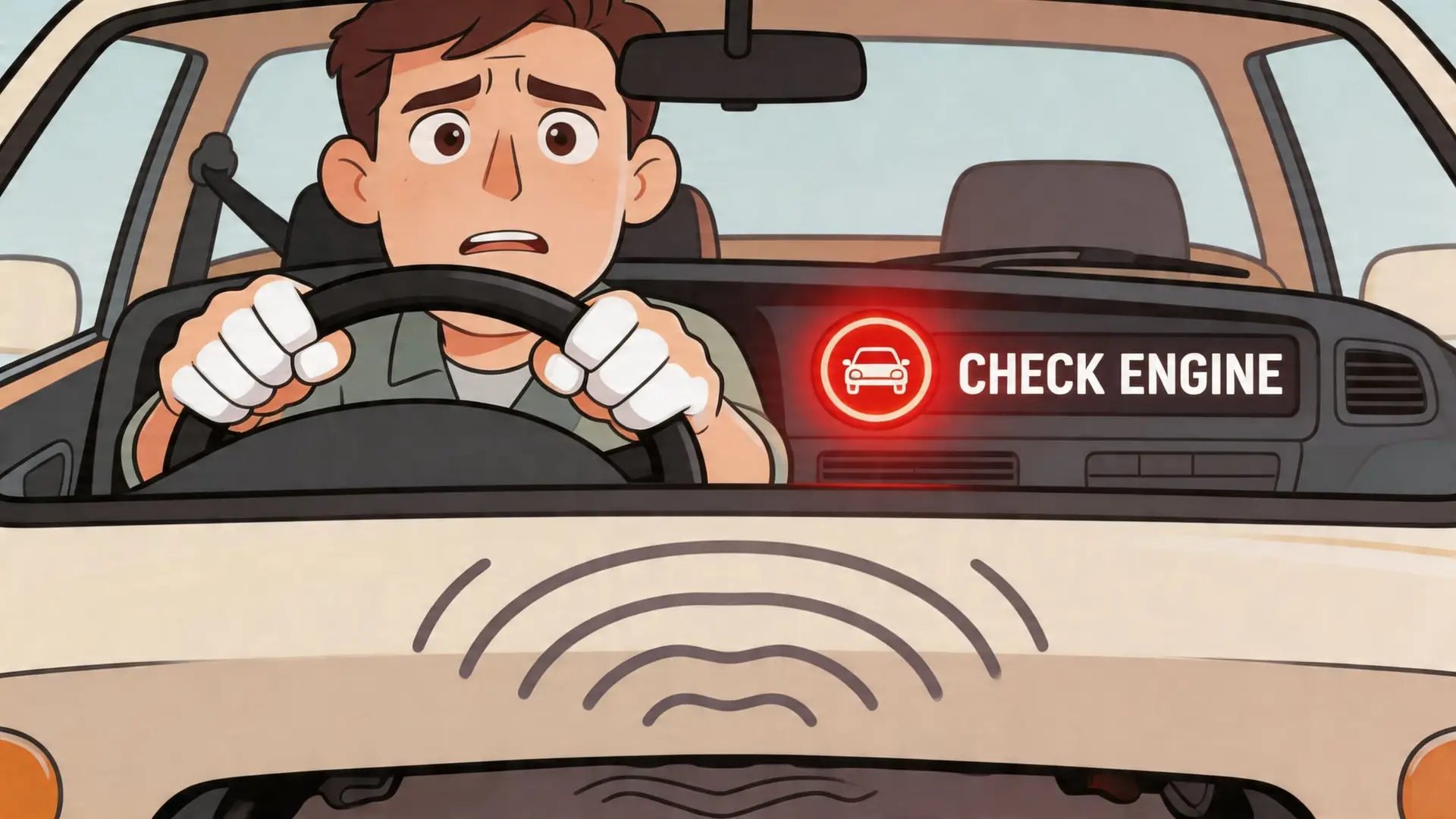
A lot of drivers think all mechanics are judged the same way. They aren’t. Some have years of experience but no formal third-party validation. Others have gone through a national certification process that tests whether they know the systems they’re working on.
That’s where ASE comes in.
ASE stands for the National Institute for Automotive Service Excellence. It created the certification standard in 1972, and today about 250,000 automotive professionals hold ASE credentials across the U.S., representing about 28% of the nation’s automotive technicians according to ASE’s overview of the World Class Technician standard.
Why that matters when you’re stressed
When your car is acting up, you don’t need vague reassurance. You need a sign that the person touching your brakes, steering, engine, or electrical system has met a recognized benchmark.
That’s what ASE certification gives you. It doesn’t guarantee perfection, and it doesn’t mean every non-certified mechanic lacks skill. But it does give you a much clearer starting point for trust.
Practical rule: When a car problem feels hard to explain, credentials become more important, not less.
This matters even more if you drive something older or unusual. If you own a classic or quirky vehicle, even reading through a history-focused piece like this look at the 1981 Chrysler Imperial can remind you how many systems and design differences mechanics may be dealing with across generations of vehicles.
The question behind the question
One might not often ask, “What is an ASE certified mechanic?”
What they’re really asking is, “How do I lower the chance of a bad diagnosis, an unsafe repair, or paying twice for the same problem?”
ASE certification is one of the clearest answers you can use before you hand over your keys.
The ASE Standard Explained
An ASE-certified mechanic is a technician who has met a national standard for automotive knowledge and job readiness.
The easiest way to think about it is this. ASE certification for auto repair is similar to board certification in medicine. It’s not the same profession, of course, but the idea is similar. An independent organization sets a benchmark, tests for competence, and gives customers a better way to judge professional skill.
What ASE does, and what it doesn’t do
ASE is a non-profit organization. Its job is to test and certify technicians in specific automotive areas.
That distinction matters. ASE doesn’t just mean a person attended training at some point. It means that an outside credentialing body evaluated whether that technician met a recognized standard.
A driver can easily get confused here, because shops often use several trust signals at once. A mechanic might have factory training, shop experience, continuing education, and ASE certification. Those are related, but they aren’t identical.
Why the standard is useful to customers
A vehicle today is a network of connected systems.
A rough idle might sound like an engine issue, but the root cause could involve ignition, sensors, wiring, fuel delivery, or another system entirely. A weak brake pedal may not be “just brakes.” It could involve hydraulics, worn components, or other related parts.
So when people ask what is an ase certified mechanic, the helpful answer is this:
- They’ve been tested against a national benchmark
- They’re certified in defined subject areas, not just in a general sense
- Their credential helps you separate proven competence from guesswork
Why that beats “my buddy knows cars”
A lot of car advice comes from experience, and experience matters. But experience alone can be uneven.
One technician may be excellent with older mechanical systems but weak on newer electrical diagnostics. Another may be strong with drivability complaints but not with HVAC or steering issues. ASE gives structure to that skill set.
An ASE credential tells you a technician’s ability wasn’t judged only by opinion or self-description.
That’s why certification matters most when the problem isn’t obvious. Oil changes are straightforward. Intermittent stalling, charging-system faults, parasitic battery drains, brake pulsation, and hard-to-pin-down warning lights are where standards and specialization start paying off.
The Path to Becoming ASE Certified
Your SUV starts making a brake noise on the way to school drop-off, or your high-mileage commuter keeps turning on the check engine light every few days. In those moments, “certified” only matters if it leads to a more accurate diagnosis and fewer return trips. The path to ASE certification is part of what helps create that result.
ASE does not treat certification like a one-and-done classroom badge. A technician has to build hands-on experience in the shop and then prove that knowledge on subject-specific exams. It works a lot like a pilot earning ratings. Time in the seat matters, but so does passing the test for the system you are trusted to handle.
Shop experience has to come before the credential means much
ASE bases certification on real repair experience plus testing. That matters to drivers because book knowledge and shop knowledge are not the same thing.
A technician may understand a charging system on paper, yet still struggle when corrosion, intermittent wiring faults, or parts wear hide the actual cause. The shop is where that judgment gets built. It is where a tech learns how to test instead of guess, and how to confirm a fix before handing the keys back.
For Richardson drivers, that difference shows up in practical ways. A family coming in for a safety concern needs someone who can spot wear patterns and catch related problems before they become breakdowns. An owner of an older car with 120,000 miles needs a technician who can tell the difference between the failed part and the worn system around it.
You can see how that commitment to tested repair standards fits into a shop’s process on Kwik Kar Richardson’s ASE and RepairPal certified service page.
The exams are specific for a reason
ASE exams are built around real vehicle systems and job roles, not a vague idea of “being good with cars.”
That is a big deal for customers.
A difficult brake problem should be handled by someone who understands hydraulic operation, wear measurement, inspection procedure, and how one fault can imitate another. Electrical problems demand a different kind of thinking. The technician has to trace circuits, read diagrams, test components in order, and avoid replacing parts just because a code pointed in their direction.
Certification helps screen for that kind of system knowledge. It raises the odds that the person diagnosing your vehicle knows how the parts work together, not just what usually fails.
It also has to be renewed
Vehicles keep changing. Even drivers who keep cars for a long time are driving machines with more electronics, more software, and tighter system integration than they had a decade ago.
ASE requires recertification on a regular cycle, which helps keep a technician current instead of relying on what they learned years ago. That matters whether you drive a newer SUV loaded with driver-assist features or an older sedan with age-related electrical and drivability problems. The tools may change, but the customer benefit is the same. Better testing, fewer assumptions, and a better chance of fixing it right the first time.
For your wallet, that can mean fewer unnecessary parts. For your schedule, it can mean less time coming back for the same unresolved issue. For your family, it can mean more confidence when the repair involves brakes, steering, suspension, or another safety-related system.
Understanding ASE Credentials and Specializations
A shop can say it has ASE-certified technicians, and that still may not tell you whether the person touching your car is strongest in brakes, electrical work, or drivability diagnosis.
That distinction matters more than many Richardson drivers realize. If your family SUV needs a brake inspection before a road trip, you want someone whose training lines up with brake systems and steering concerns. If your high-mileage commuter has an intermittent no-start or a check engine light that keeps coming back, the useful credential may be in electrical or engine performance.
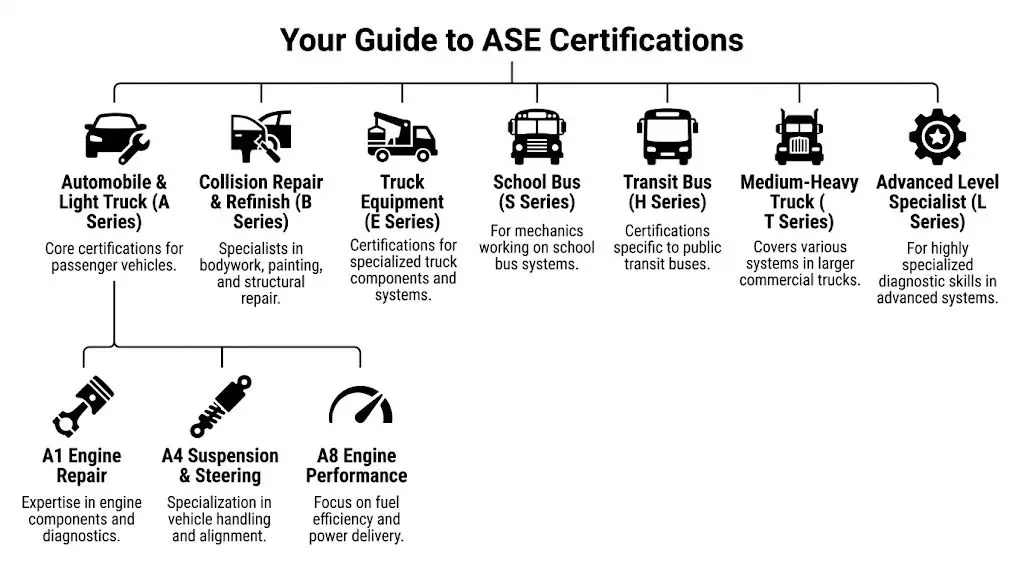
The A-Series most drivers run into
For passenger cars and light trucks, the certifications many drivers will see are the A-Series. These are organized by system, which is a practical way to understand them because cars fail by system too.
| Test Code | Specialty Area | What It Covers |
|---|---|---|
| A1 | Engine Repair | Internal engine condition, wear, and mechanical faults |
| A2 | Automatic Transmission | Diagnosis and repair of automatic transmission systems |
| A3 | Manual Drive Train and Axles | Manual transmission, clutch, and axle-related issues |
| A4 | Suspension and Steering | Ride control, steering response, handling, and related components |
| A5 | Brakes | Brake inspection, hydraulic systems, wear items, and stopping performance |
| A6 | Electrical and Electronic Systems | Wiring, charging, starting, and electronic diagnosis |
| A7 | Heating and Air Conditioning | A/C performance, heating issues, and climate control diagnosis |
| A8 | Engine Performance | Driveability, emissions-related symptoms, sensors, and power complaints |
A car problem rarely arrives with a tidy label. The symptom you notice is often just the tip of the problem.
A shake during braking might involve brake rotors, but it can also be tied to worn suspension parts. A dead battery complaint may turn out to be a charging issue, a wiring fault, or a starter problem. Poor acceleration could point to fuel delivery, ignition, sensor data, or transmission behavior. The point of specializations is simple. ASE breaks the work into the same system categories a skilled technician has to test in real life.
What Master Technician means
Master Technician status shows broad ability across those linked systems.
In the automotive track, that means passing all eight A-Series exams and keeping them current. For a customer, the practical value is not bragging rights. It is range. A technician with that level of certification has shown they can work across the systems that often overlap during diagnosis.
That matters when the problem does not stay in one lane. A rough idle can involve engine performance, electrical inputs, and even mechanical condition. A shifting complaint can feel like a transmission problem and still start with sensor or drivability faults. Broad certification helps reduce tunnel vision, which is one of the common reasons repairs get repeated.
Why matching the credential to the problem matters
Specialization works like calling the right kind of doctor. You would not pick a heart specialist for a knee injury just because both are physicians.
The same logic helps with car repair. A family bringing in a vehicle for a safety inspection should care about strength in brakes, suspension, and steering. A driver trying to keep an older car on the road without wasting money on guesswork should care about electrical and engine performance knowledge. If you want to see how a shop presents those standards to customers, this page on ASE and RepairPal certified service gives a useful example.
Other ASE categories exist too
ASE certification also covers more than everyday passenger cars. There are credentials for collision repair, medium and heavy trucks, transit buses, parts specialists, and advanced diagnostic areas.
That wider structure is part of why the credential carries weight. It treats automotive work as a set of separate disciplines, not one generic skill. For you as a vehicle owner, the takeaway is straightforward. An ASE-certified mechanic is a good sign. An ASE-certified mechanic with the right specialization for your problem is even better.
The Real-World Benefits for Your Vehicle
Credentials only matter if they change the result for you.
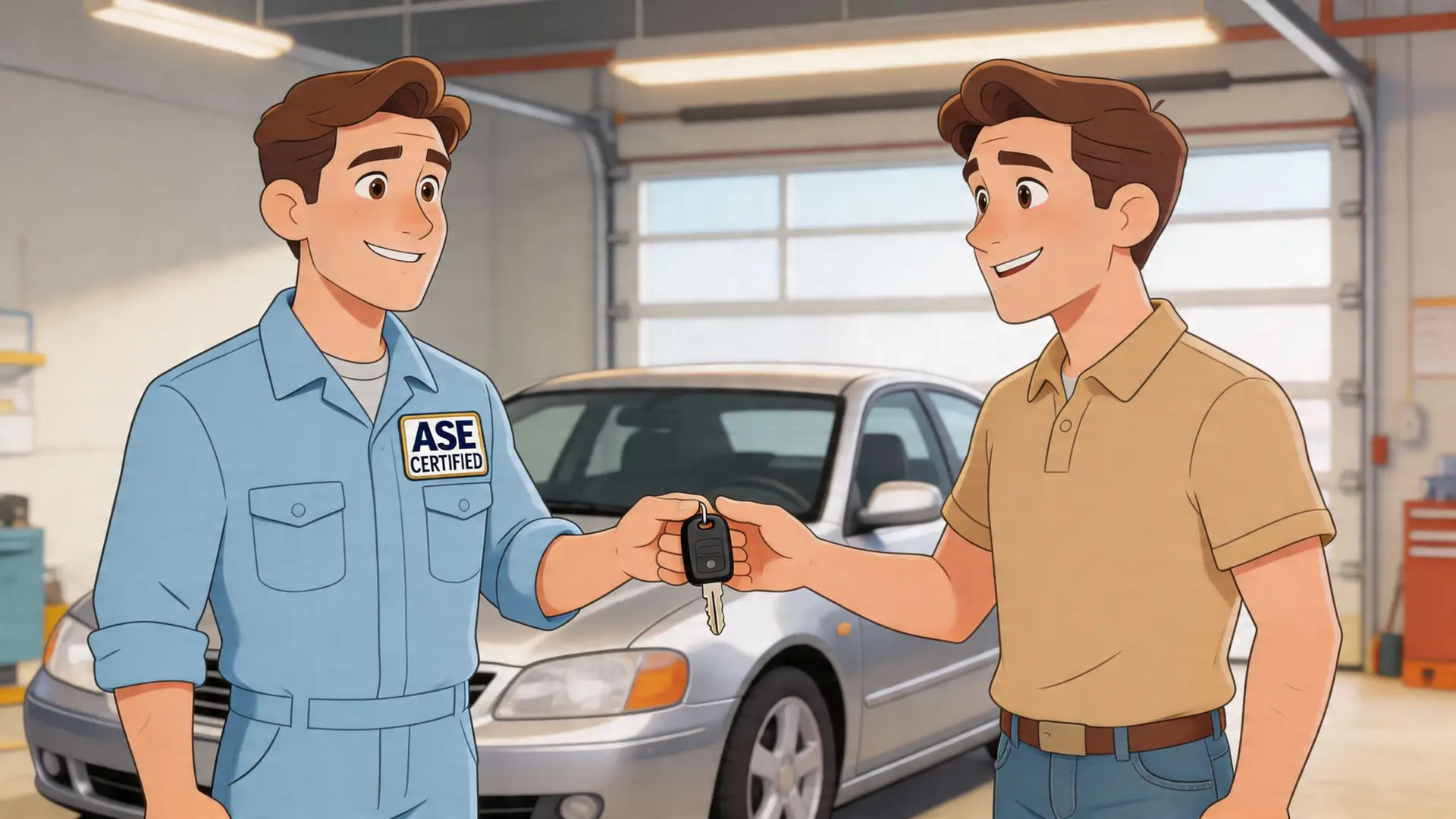
A patch on a uniform doesn’t help if your car still gets misdiagnosed, repaired poorly, or brought back for the same problem. The reason ASE matters is that it can improve the way a repair gets approached from the start.
Better diagnosis on older and high-mileage cars
Older vehicles can fool people.
A high-mileage sedan may show one symptom but have another cause. A check engine light, rough idle, or poor fuel economy can tempt an inexperienced technician to replace the obvious part first. Sometimes that works. Sometimes it doesn’t.
Certified technicians are trained to think in systems. That matters because many expensive mistakes begin with a rushed assumption.
For Richardson drivers who depend on older commuter cars, that kind of diagnostic discipline can save a lot of frustration. The car doesn’t need guesses. It needs a process.
Safety work has no room for shortcuts
When a family vehicle comes in for brakes, steering, suspension, or a general safety inspection, details matter.
Loose steering components, worn brake hardware, fluid issues, and uneven tire wear can all affect stopping distance, control, and confidence behind the wheel. In these situations, a credential translates into something very real. You’re not just paying for labor. You’re paying for trained judgment.
Shop-floor reality: The most expensive brake repair is the one that misses the actual safety problem.
Fewer unnecessary parts
A solid diagnosis often protects your wallet more than a cheap estimate does.
If a shop replaces parts before proving the failure, the invoice can grow without solving the complaint. That’s one reason customers sometimes feel burned after “trying a few things” at multiple shops.
An ASE-certified technician is still human, and no credential makes anyone perfect. But the certification standard pushes toward disciplined testing, correct procedures, and system-level understanding. That lowers the odds of spending money in the wrong place.
Modern vehicles raise the stakes
Cars aren’t getting simpler. They’re getting more electronic.
According to the source discussing the difference between ASE-certified technicians and regular mechanics, U.S. EV sales were up 40% in 2025, and ASE introduced new EV-specific certifications in 2025 to help technicians handle advanced battery and electrical systems on modern and aging hybrid fleets, as noted in this discussion of ASE-certified technicians versus regular mechanics.
That matters not only for new EV owners, but also for families and fleet operators dealing with hybrids, battery management systems, and software-heavy diagnostics.
A short video can help make that connection clearer before you choose a shop.
Peace of mind is part of the value
Drivers don’t always talk about this, but it’s real.
When you leave your vehicle at a shop, you’re handing over your schedule, your transportation, and often your family’s safety. Knowing the person working on it has been tested, vetted, and required to stay current takes some of the uncertainty out of the process.
That doesn’t just feel better. It usually leads to better questions, better explanations, and smarter repair decisions.
How to Find and Verify an ASE Certified Mechanic
You don’t need to be a car expert to check credentials.
You just need to know what to look for, and what to ask.
Start with visible proof
Most professional shops that employ ASE-certified technicians make that visible.
Look for the blue and white ASE seal on the shop wall, website, service counter, or technician uniforms. Shops are usually proud of those credentials because they take real effort to earn and maintain.
If the credential matters to you, ask directly. You’re not being difficult. You’re being smart.
A few useful questions:
Who will work on my car
Ask whether the technician assigned to your vehicle is ASE certified.Is that technician certified for this type of repair
A brake issue, electrical problem, and A/C complaint call for different strengths.Are the credentials current
Current certification matters because the credential has to be maintained.
Don’t be shy about asking for specifics
A good service advisor won’t get defensive.
They should be able to explain whether the technician handling your problem has the right background for it. That’s especially important when the issue is intermittent, safety-related, or hard to diagnose.
“Do you have an ASE-certified technician who regularly handles this kind of issue on vehicles like mine?”
That one question can tell you a lot about a shop’s transparency.
Use independent verification
If you want broader guidance on choosing a shop, this article on how to find a trustworthy mechanic covers the kinds of trust signals that matter before you schedule service.
You can also verify technician credentials through ASE’s online tools when available. If a shop claims ASE certification, it should be comfortable helping you confirm it.
What to watch for
These signs don’t automatically mean a shop is bad, but they should make you slow down:
- Vague answers about who will diagnose the problem
- No clear explanation of the recommended repair
- Pressure to approve parts quickly before testing is complete
- Dismissive responses when you ask about certifications
A trustworthy shop treats those questions like normal questions, because they are.
Your Trusted ASE Certified Team at Kwik Kar Richardson
For local drivers, credentials matter most when they connect to the kind of service you need.
That means accurate diagnostics on a high-mileage commuter car. Careful brake and suspension work before your family heads out for the week. Consistent maintenance for a small business fleet that can’t afford downtime.
Kwik Kar Richardson is built around that standard. The shop’s ASE-certified team supports the kind of dealership-quality maintenance and repair many drivers want, without losing the personal attention that makes it easier to ask questions and understand recommendations.
That local value matters because Richardson drivers don’t all use their vehicles the same way. Some are racking up daily commute miles. Some need dependable school-drop-off transportation. Some are balancing work vehicles, older cars, or hybrid systems that need thoughtful diagnostics instead of guesswork.
The shop also brings in other trust signals customers look for, including NAPA, CARFAX, and RepairPal alignment, along with discounts for military members, first responders, and healthcare workers. If you want to learn more about the team and how they approach service, you can visit the Kwik Kar Richardson about page.
The big takeaway is simple. If you’ve been asking what is an ase certified mechanic, the practical answer is this: it’s a technician whose knowledge and experience have been independently validated, and that validation can make a real difference in how your vehicle is diagnosed, repaired, and kept safe on the road.
If you want help from Kwik Kar Oil Change and Auto Care, schedule a visit and ask about the ASE-certified team handling your vehicle. Whether you need routine maintenance, a safety inspection, or a hard-to-pin-down diagnosis on an older car, you’ll get clear communication, professional care, and service built around trust.