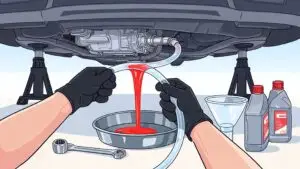
A professional transmission flush typically costs between $125 and $250, but it can range up to $500 depending on the vehicle and service center. If you're in Richardson and your car has started shifting a little harder in traffic, or you're just trying to stay ahead of a major repair, that price range is the number most drivers want to know first.
Around here, a lot of vehicles live a rougher life than owners realize. Daily stop-and-go commuting, school pickup lines, short errands, summer heat, and heavier family SUVs all put extra stress on transmission fluid. When the fluid gets old, the transmission loses some of the lubrication and cooling it depends on. That’s when a routine service decision starts to matter a lot more.
For commuter sedans, family crossovers, older cars, and small business fleet vehicles, the right transmission service isn’t just about price. It’s about choosing the service that fits the condition of the vehicle, the way it’s driven, and the risk you’re trying to avoid.
Understanding Transmission Flush Costs and Why They Matter
If you've ever been told your car “might need a transmission flush,” your first question is usually the right one. How much does a transmission flush cost, and do you need one?
A transmission flush is more than a fluid top-off. Transmission fluid handles lubrication, cooling, and hydraulic function inside the transmission. When that fluid breaks down, the transmission has to work harder, shift quality can suffer, and internal wear starts adding up.
For Richardson drivers, this comes up more often than people think. A commuter sitting in traffic on US-75, a family SUV making short trips all week, or an older sedan that hasn’t had regular service can all end up with fluid that’s worn out before the owner notices a serious problem.
Why the cost matters less than the timing
Transmission work gets expensive when maintenance gets skipped. A flush costs money, but so does waiting too long and finding out the transmission is already slipping or overheating. That’s why I tell people to think of transmission service as protection for one of the most expensive assemblies in the vehicle.
Practical rule: If the transmission still feels normal, that’s the best time to service it. Waiting for obvious symptoms usually gives you fewer good options.
There’s also no one-size-fits-all answer. Some vehicles do better with a full flush. Others, especially older high-mileage vehicles, may be better candidates for a drain-and-fill approach. The right decision depends on the service history, fluid condition, and transmission design.
What local drivers should focus on
Before saying yes to any transmission service, look at these basics:
- Driving pattern: Heavy stop-and-go driving puts more heat into the transmission than steady cruising.
- Vehicle type: Family SUVs, trucks, and CVT-equipped commuter cars can have different fluid needs and service procedures.
- Mileage and history: A regularly serviced transmission is a different situation from one that’s gone a long time without attention.
- Current behavior: Rough shifts, slipping, hesitation, or leaks change the conversation fast.
That’s why cost should always be tied to the condition of the vehicle, not just the menu price.
Breaking Down the Average Cost of a Transmission Flush
If you want the cleanest direct answer, here it is.
A professional transmission flush in the United States typically costs $125 to $250, while a complete machine-assisted flush can run $125 to $400. A standard drain-and-fill usually costs $80 to $250, and specialty units like VW/Audi DSG dual-clutch transmissions can reach $500 to $800, according to 2026 transmission fluid cost data.
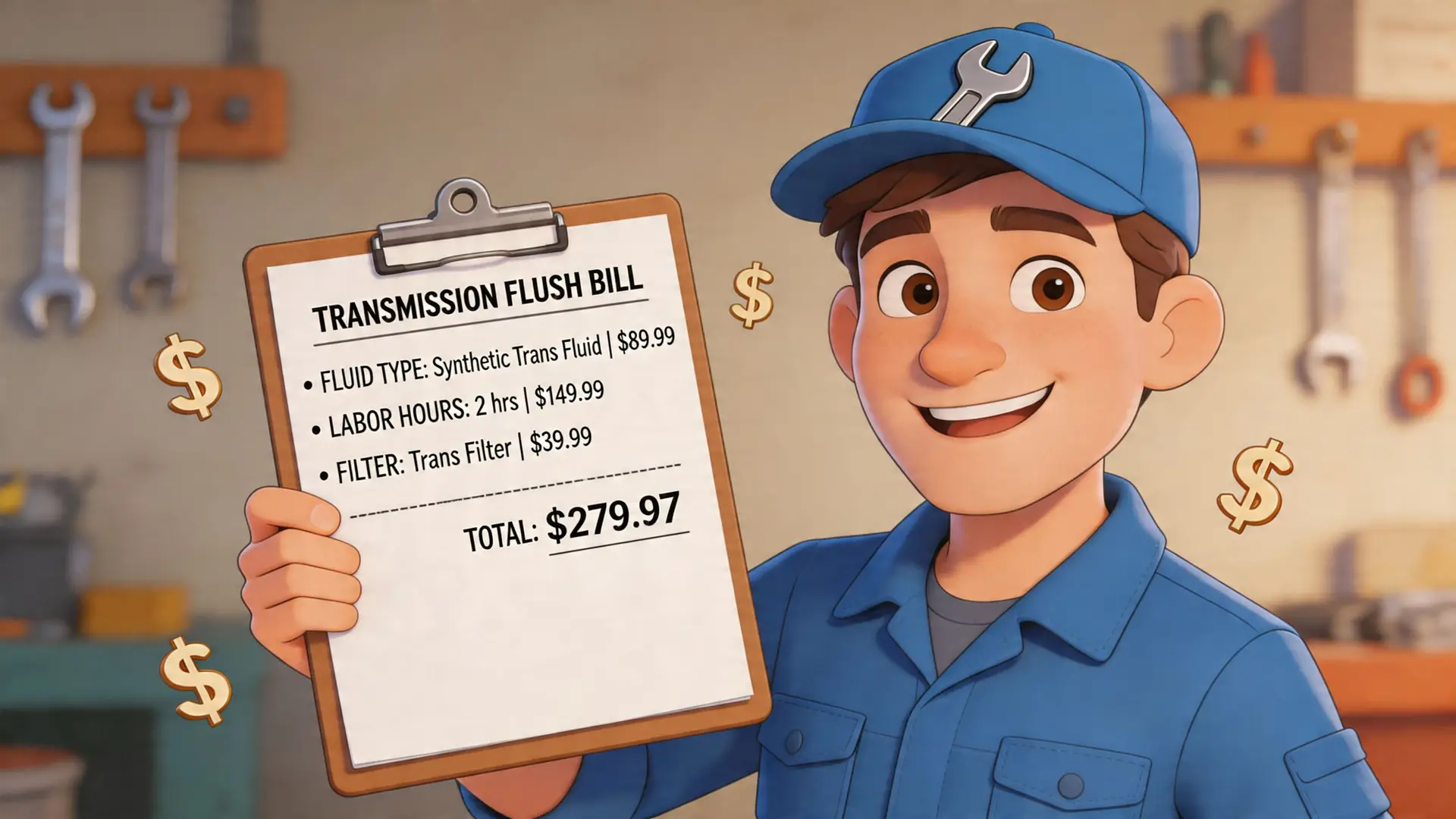
That range can look wide, but it makes sense once you know what’s included. A true flush uses specialized equipment and replaces nearly all the old fluid. A simpler drain-and-fill removes only part of the old fluid, so the service usually costs less.
What most drivers in Richardson will pay
For many common vehicles, the realistic question isn’t whether transmission service is cheap. It’s whether the quote matches the service being performed. A basic commuter car with standard automatic transmission service won’t usually land in the same price category as a European model or a dual-clutch setup.
If you want a closer look at the difference between service pricing and fluid-change options, this transmission fluid change pricing guide from Kwik Kar Richardson is a useful companion read.
The cost difference between service types
Here’s the practical breakdown:
- Drain-and-fill: Lower cost, less fluid replaced, often a reasonable maintenance option for vehicles that have been serviced on schedule.
- Full flush: Higher cost, more thorough fluid exchange, typically chosen when more complete fluid replacement is needed.
- Specialty transmission service: Highest cost, usually because the transmission design and fluid requirements are more demanding.
The biggest mistake I see is drivers comparing two prices that don’t describe the same job. One shop may be quoting a simple drain-and-fill. Another may be quoting a machine-assisted full-system exchange. Those are not interchangeable services, and the price gap often reflects real differences in fluid volume, labor, and equipment.
What Drives the Final Cost of Your Transmission Service
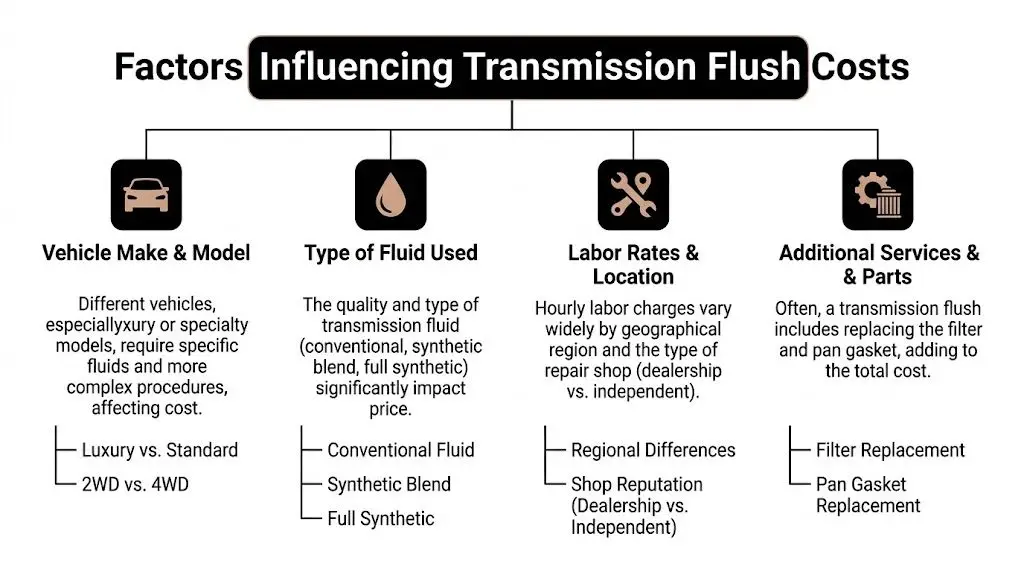
When a driver asks why one quote is much higher than another, the answer usually comes down to what the service requires. A transmission flush costs $125 to $500 mainly because it uses 12 to 22 quarts of fluid instead of 5 to 7 quarts for a drain-and-fill, and because the shop uses professional flush equipment to circulate the fluid through the system, according to this transmission flush cost breakdown. That same source also notes transmission failure can cost $2,000 to $5,000 to repair.
Vehicle and transmission type
Not every transmission is built the same. A common automatic in a commuter sedan is usually more straightforward than a CVT, a dual-clutch unit, or a premium European transmission.
That matters because some systems need more fluid, more setup time, and more precise procedures. Specialty transmissions can push service costs much higher, especially when the fluid spec is strict and the service steps are less forgiving.
If your vehicle has a continuously variable transmission, this CVT fluid change guide helps explain why those services are often priced differently from conventional automatics.
Fluid volume and fluid type
A lot of the final price is sitting in the fluid itself. A flush uses much more fluid because the technician is exchanging fluid from the transmission, cooler lines, and torque converter instead of only draining what comes out by gravity.
For Richardson drivers, that shows up fast on family SUVs, crossovers, and vehicles used for longer commutes. More capacity usually means a larger bill. If the transmission also requires a specialized synthetic fluid, the cost climbs again.
Labor and shop equipment
A professional flush isn’t just a drain pan and a funnel. The machine has to circulate fluid through the system correctly, and the technician has to verify the vehicle is a good candidate for that service in the first place.
That’s one reason dealership quotes are often higher. Labor rates, diagnostic time, and shop overhead all get built into the estimate. Independent shops can be more competitive, but the quality of the process still matters more than the cheapest number on the page.
A low quote isn’t always a bargain if the shop is only doing a partial service or using the wrong fluid specification.
Additional parts and related service
Sometimes the transmission service includes more than fluid. A filter or pan gasket may also need attention, depending on the design of the vehicle and the condition found during inspection.
That’s where two quotes for the “same” transmission service can diverge. One may cover fluid only. Another may include added parts and cleanup work that make the service more complete.
Local driving conditions matter
Richardson drivers often rack up wear in ways that don’t look severe on paper. Repeated short trips, traffic lights every few blocks, long idle time in summer heat, and fully loaded family vehicles all raise transmission temperatures and wear fluid faster than easy highway driving.
That doesn’t automatically mean every car needs a flush. It does mean the transmission service decision should reflect how the vehicle is used.
Transmission Flush vs Drain and Fill Which Is Right for You
The easiest way to explain this is with a pool analogy. A drain-and-fill is like scooping part of the water out and topping it off with fresh water. A flush is much closer to cycling the whole system so almost all the old fluid is replaced.
That difference matters because a machine-assisted flush can remove 99% of old fluid, while a gravity drain-and-fill removes about 40% to 60%, according to Jiffy Lube’s transmission flush vs exchange explanation. That source also notes some CVT and automatic systems require 16 to 22 quarts of specialized synthetic fluid.
What each service actually does
A drain-and-fill is simpler. The shop drains what it can from the pan and refills the unit. It’s less invasive and often a practical maintenance choice for vehicles with a known service history.
A flush goes further. The machine circulates fresh fluid through the transmission, cooler lines, and other passages to replace much more of the old fluid. For some vehicles, that thorough exchange makes sense. For others, especially neglected older units, caution matters more than completeness.
Transmission Flush vs. Drain-and-Fill at a Glance
| Feature | Transmission Flush | Transmission Drain-and-Fill |
|---|---|---|
| Fluid replaced | Near-complete exchange | Partial replacement |
| Equipment used | Machine-assisted service | Gravity-based drain and refill |
| Typical cost | Higher | Lower |
| Thoroughness | More complete removal of old fluid | Leaves more old fluid in the system |
| Best for | Vehicles that need a fuller exchange and are good candidates for machine service | Routine maintenance or older vehicles where a gentler approach makes more sense |
Which one usually makes sense
For a Richardson commuter car with documented maintenance and no symptoms, a drain-and-fill can be a smart, lower-cost choice. For a family SUV with dirty fluid but otherwise solid operation, a flush may be worth considering if the transmission is in suitable condition.
For an older vehicle with unclear history, I’d be careful. If the fluid is badly neglected and the transmission already acts up, the most aggressive service isn’t automatically the best one.
The right question isn’t “Which service is better?” It’s “Which service fits this transmission’s condition right now?”
Recognizing the Warning Signs You Need a Transmission Service
A lot of drivers don’t think about transmission service until the vehicle starts doing something odd in traffic. That’s understandable, but the transmission usually gives you a few warnings before things get expensive.
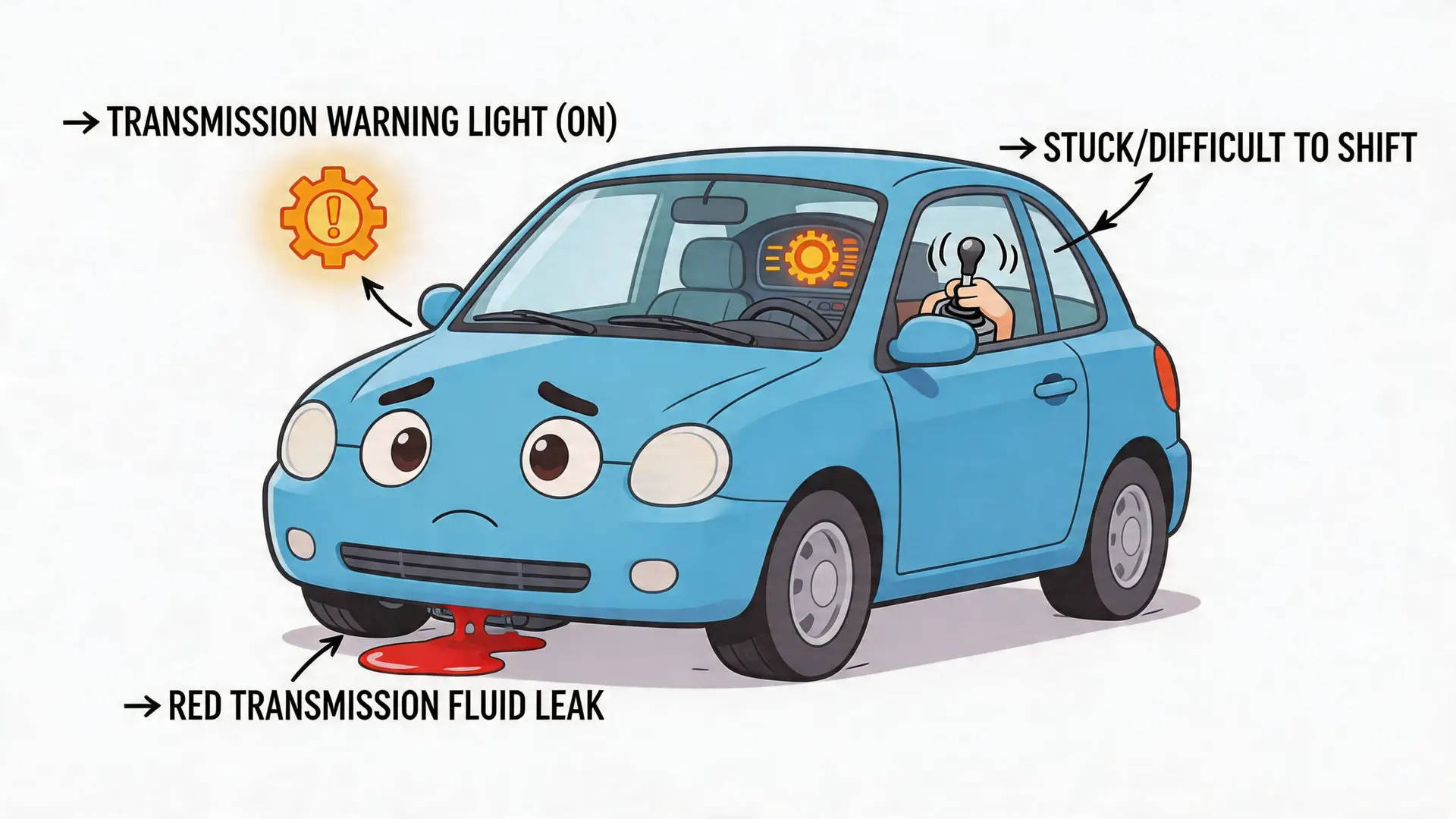
If your car has started shifting differently, this guide to signs of transmission problems can help you compare what you’re feeling with common early symptoms.
What drivers usually notice first
You don’t need to be a technician to catch the common signs. Most drivers describe them in plain language.
- Whining or clunking: You hear unusual noise when the vehicle shifts or changes load.
- Slipping: The engine revs, but the vehicle doesn’t move the way it should.
- Delayed engagement: You shift into Drive or Reverse and there’s a pause before the transmission responds.
- Rough shifting: Gear changes feel harder, sharper, or less consistent than usual.
These symptoms don’t always mean the transmission needs a flush specifically. They do mean the vehicle needs attention before the issue grows.
Smells, leaks, and warning lights
Burning smell is one of the signs drivers should never ignore. Old or overheated fluid can’t protect the transmission the way it should, and burnt fluid often points to excessive heat.
Leaks matter too. If you see red or brown fluid under the vehicle, the problem may be fluid condition, fluid level, or both. A low-fluid transmission can develop bigger problems fast.
Dashboard warning lights also deserve respect. Sometimes the problem is fluid-related. Sometimes it points to something more mechanical. Either way, service is cheaper when the issue is still diagnosable instead of catastrophic.
A short visual explanation can help if you want to see these symptoms discussed step by step.
Why acting early matters
For older Richardson vehicles and high-mileage daily drivers, early diagnosis is where money is saved. If the issue is aging fluid, you may still have service options. If the transmission has already suffered internal wear, fluid service won’t undo that damage.
That’s why I tell neighbors to pay attention to small changes. A slight delay backing out of the driveway is easier to deal with than a transmission that won’t pull through an intersection.
Should You DIY or Visit a Professional for a Transmission Flush
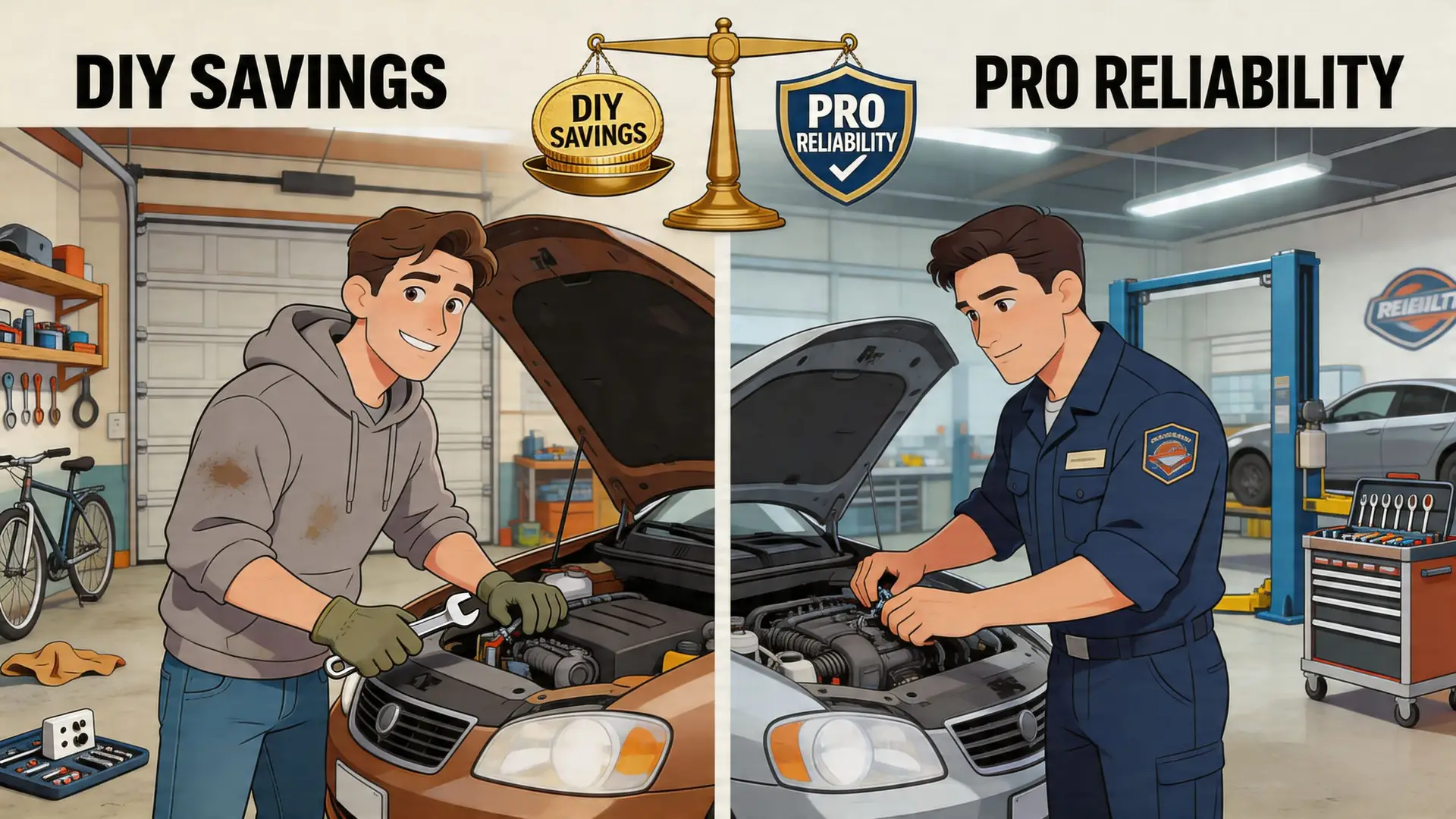
DIY transmission service appeals to a lot of people for one reason. Cost. If you can save labor, the job looks cheaper on paper.
According to RepairPal’s 2026 transmission fluid change estimates, the average transmission fluid change costs $232 to $290, with $125 to $183 of that in labor, while DIY fluid costs can run $40 to $100. That’s a real difference, and for a simple drain-and-fill on the right vehicle, some experienced owners do handle it themselves.
When DIY makes sense
A basic drain-and-fill can be manageable if you already know your vehicle, have the exact fluid specification, and understand how to verify fluid level correctly.
DIY usually makes the most sense when:
- You’re doing a basic fluid change: Not a machine-assisted full flush.
- Your vehicle has a straightforward service procedure: Some don’t.
- You already have tools and a safe workspace: This job gets messy fast.
- You’re confident about fluid selection: Wrong fluid can create shift issues and long-term wear.
Where DIY goes wrong
Transmission service punishes shortcuts. I’ve seen people use a fluid that was “close enough,” underfill the unit, overfill it, or assume any red fluid works in any automatic. That’s how a maintenance job turns into a drivability complaint.
Modern sealed transmissions also complicate things. Some require very specific temperature and level-setting procedures. Without the right process, you can’t be sure the service was completed correctly.
If you’re asking whether a flush machine can be improvised at home, the answer is no. A real flush requires professional equipment and a technician who knows when not to use it.
What a professional service buys you
The labor portion of the bill pays for more than wrench time. It pays for inspection, the correct equipment, proper fluid handling, and the experience to spot trouble before the service goes sideways.
One local option is Kwik Kar Oil Change and Auto Care, which provides transmission drain-and-fill and full flush service as part of a broader maintenance lineup. More important than the brand name on the sign is whether the shop checks service history, verifies the right fluid, and matches the service method to the transmission’s condition.
For most drivers, especially with CVTs, older vehicles, or symptom-related concerns, professional service is the safer play.
Why Richardson Drivers Trust Kwik Kar for Transmission Service
Richardson drivers usually want three things from a transmission shop. Clear answers, a fair estimate, and confidence that the technician isn’t guessing.
That matters with transmission service because the wrong recommendation can cost you twice. First at the counter, then later if the service didn’t match the condition of the vehicle. For commuters, family vehicles, and small business fleets, downtime is often a bigger headache than the invoice.
Kwik Kar Oil Change and Auto Care in Richardson is backed by CARFAX, RepairPal, and NAPA AutoCare certifications, and the work is handled by ASE-certified technicians. Those details matter because transmission service depends on procedure, fluid accuracy, and inspection quality. A shop with proper equipment can evaluate whether the vehicle needs a drain-and-fill, a full flush, or a different diagnostic path altogether.
For local drivers, there’s also value in having a shop that understands how Richardson driving affects vehicles. Heavy traffic, short-trip use, and hot-weather commuting put different stress on transmissions than easy highway miles.
Military members, first responders, and healthcare providers can also take advantage of shop discounts, which is a practical plus when routine maintenance stacks up across multiple vehicles in a household.
If your transmission is shifting differently, leaking, or due for service, the best next step is a straightforward inspection and written estimate.
Common Questions About Transmission Flush Services
Can a transmission flush damage an older high-mileage car
It can, in some cases. According to AutoZone’s discussion of transmission flush vs change, some data suggests a flush on a neglected transmission over 100k miles can dislodge debris and accelerate failure. The same source notes some mechanics prefer a series of drain-and-fills at 30k-mile intervals, which can extend transmission life by up to 40% without the same level of risk for an older system.
That’s why service history matters so much. If the vehicle has gone a long time without attention, a gentler approach may be smarter than forcing a full exchange.
How often do you really need transmission service
There isn’t one perfect interval for every vehicle. The safest answer is always to check the owner’s manual and then adjust for how the vehicle is used.
For Richardson drivers, stop-and-go traffic, summer heat, short errand trips, and loaded family driving all lean toward a more conservative maintenance mindset. If the manufacturer gives normal and severe-use guidance, many local drivers fit the severe-use side more than they think.
Is dark transmission fluid always a major problem
Not always, but it is a warning sign. Dark fluid can mean age, oxidation, heat, or contamination. Burnt smell, rough shifting, slipping, or visible debris raise the level of concern quickly.
Color alone doesn’t tell the whole story. A technician still needs to check condition, level, service history, and transmission behavior before recommending the right service.
Is a flush always better than a drain-and-fill
No. A flush is more thorough, but that doesn’t make it automatically better for every transmission. A well-maintained vehicle may do just fine with a drain-and-fill, while an older neglected unit may be better served by a slower, less aggressive plan.
The best service is the one that fits the transmission you have, not the one with the most dramatic name.
If your vehicle is due for transmission service or you're noticing rough shifts, delayed engagement, or a leak in the driveway, Kwik Kar Oil Change and Auto Care can help you sort out the right next step. Schedule a visit for a clear estimate, a proper inspection, and practical advice based on your vehicle’s condition and how you drive in Richardson.