Bad motor mounts are a common culprit behind a shaky, noisy ride. When these supports wear out or break, they can't hold your engine in place properly. This failure is what causes that excessive engine vibration, loud clunking, and can even lead to damage to other parts under the hood. It's the root cause of that annoying shudder you might be feeling.
What Are Motor Mounts and What Do They Do
Think about your car's engine for a second. It's a heavy, powerful piece of machinery that creates a ton of force and vibration. Without something to secure it and absorb all that shaking, it would rattle itself—and your entire car—to pieces. That's the crucial job of your motor mounts.
You can think of motor mounts like the foundation of a house. A strong foundation keeps the home stable and quiet, even during a storm. In the same way, motor mounts bolt your engine and transmission to the car's frame, stopping them from lurching around as you accelerate, brake, and turn.
The Two Core Functions of Motor Mounts
These parts are cleverly designed to do two things at once. They're usually built from a combination of tough metal for strength and a thick, shock-absorbing rubber or fluid-filled center to manage vibrations.
- Supporting the Engine: The metal structure is strong enough to hold the several-hundred-pound engine steady, keeping it from shifting during all kinds of driving conditions.
- Absorbing Vibrations: The rubber or fluid-filled section soaks up the constant hum and shake the engine naturally produces, stopping those vibrations from traveling into the cabin where you feel them.
This dual-purpose design is what gives you a smooth and quiet ride when everything is working correctly.
A common myth is that motor mounts are "forever" parts that never need replacing. The truth is, they're designed to wear out. The rubber gets hard, cracks, and breaks down after 5 to 10 years of heat and stress, so they will eventually fail.
Connecting Vibrations to Worn Mounts
When the rubber in a mount tears or the internal fluid leaks out, it can no longer do its job of dampening vibrations. All of a sudden, every little shudder from the engine gets transferred right to the car's frame. This is why one of the very first signs of bad motor mounts is a new, steady vibration you can feel in the steering wheel, seats, or even the dashboard, especially when you're idling at a stoplight.
This guide will walk you through how to spot these symptoms and understand what the repair process looks like. Catching the early warnings isn't just about getting your smooth ride back—it's about preventing a small problem from snowballing into a series of expensive and potentially dangerous issues.
The Top 7 Signs of Bad Motor Mounts
Spotting the signs of failing motor mounts early can save you from a world of trouble and some pretty hefty repair bills down the road. These symptoms often start small, but they’ll get louder and more obvious as the mounts continue to wear out.
So, what should you be looking, listening, and feeling for? Let's break down the top seven tell-tale signs that your engine’s support system is on its last legs, and more importantly, what's causing them.
1. Excessive Engine Vibration in the Cabin
This is usually the first red flag drivers notice. You might feel a persistent, annoying vibration coming through your steering wheel, the floor, or even your seat, especially when you're idling at a stoplight.
Think of your motor mounts as heavy-duty rubber cushions. Their job is to absorb the engine's natural shimmies and shakes. But when that rubber gets old, brittle, and cracked, it can't do its job anymore. The vibrations have nowhere to go but straight into the car’s frame, and you end up feeling every bit of it.
2. Impact Noises Like Clunks or Bangs
Are you hearing a loud "clunk" or "thud" from under the hood when you hit the gas, shift gears, or pop the car into drive? Those startling impact sounds are a classic symptom of a completely failed motor mount.
A broken mount gives the whole engine and transmission far too much room to move. When you suddenly apply power, the torque causes the engine to lurch violently, slamming against other parts in the engine bay. That’s the jarring sound you hear.
3. A Visibly Shifting Engine
Sometimes, the best way to diagnose the problem is to see it for yourself. A healthy engine should stay put, with only a minor tremble while it's running. Any major lifting or twisting under load is a dead giveaway.
You can perform a quick, safe check with a helper. Make sure the parking brake is on tight and your foot is pressed firmly on the brake pedal. Have your friend watch the engine as you shift from Drive to Reverse and back. If they see the engine jump or lurch more than an inch, you've almost certainly found your culprit.
This simple diagram shows the two main jobs of a motor mount.
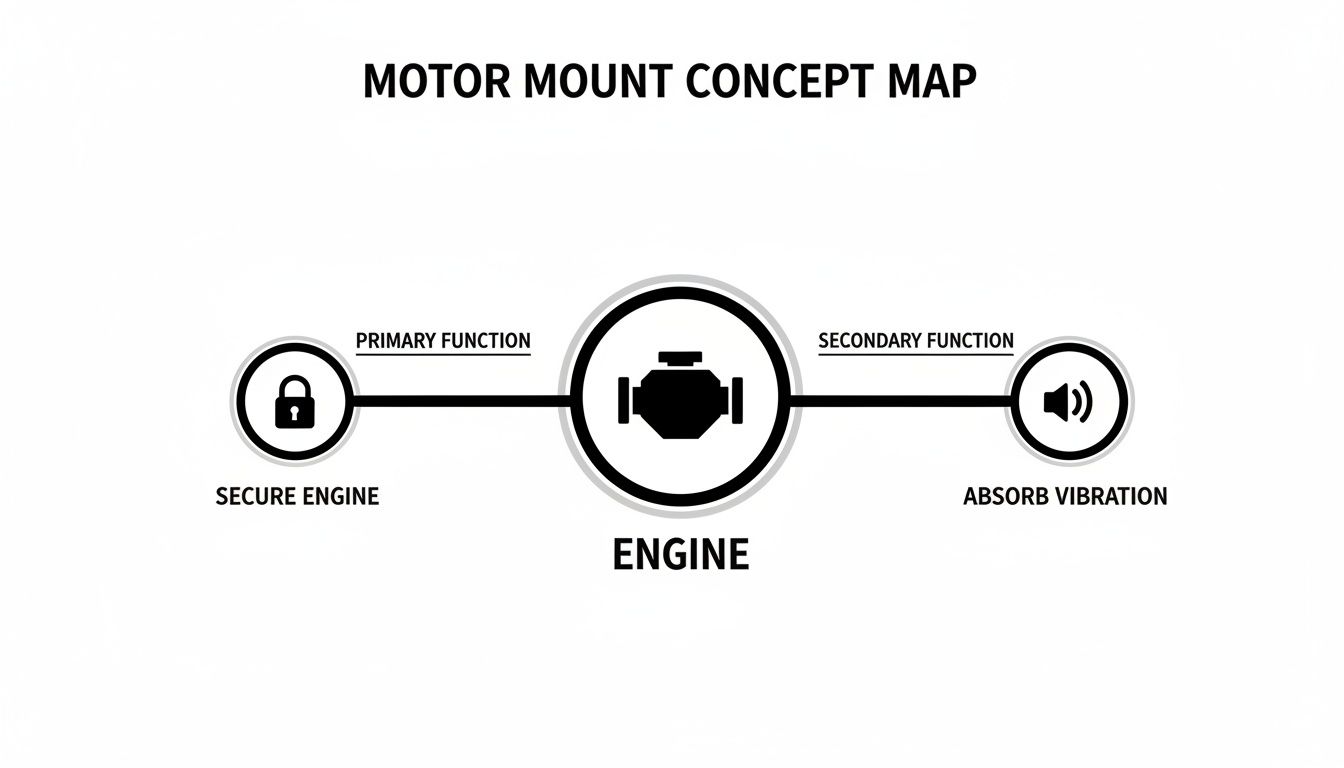
As you can see, once a mount fails at its main job of securing the engine, its ability to absorb vibrations also goes out the window, leading to all these symptoms.
4. Your Engine Looks Sagged or Tilted
You might be able to spot a problem just by popping the hood. Take a good look at your engine—it should sit perfectly level inside the engine bay.
If a motor mount has completely collapsed, you may see the engine sagging or tilting to one side. This is common when fluid-filled mounts leak or when the rubber has torn completely away from the metal bracket. This dangerous misalignment puts a massive strain on everything connected to the engine.
5. Unexpected Damage to Belts and Hoses
An engine that’s rocking and rolling around can cause a cascade of other problems. This excessive movement can stretch, rub, or even break nearby components.
The most common victims of this collateral damage include:
- Radiator Hoses: Constant pulling can cause hoses to tear or pop off, leading to a rapid loss of coolant and a dangerously overheating engine.
- Serpentine Belts: A tilted engine can knock pulleys out of alignment, causing belts to fray, squeal, or get thrown off completely.
- Wiring Harnesses: Wires can be stretched until they snap or rub against hot engine parts, leading to frustrating electrical gremlins.
6. A Rougher and Noisier Ride Quality
Besides the obvious clunks and vibrations, you might just feel that your car isn't as smooth as it once was. Bad motor mounts lead to an overall increase in what we mechanics call noise, vibration, and harshness (NVH). For a deeper look at specific noises, check out our guide on what can cause an engine rattle when accelerating.
This decline in comfort happens slowly, but it's a clear sign the mounts aren't isolating the engine from the chassis anymore. Every little road imperfection and change in engine RPM feels more intense. This is a common wear-and-tear issue for the 6,300 million gas-powered vehicles on the road, creating a massive global market for replacement parts.
7. A Lurch When Starting or Stopping the Car
Finally, pay close attention to how your car feels right when you turn the key or shut it off. A car in good shape should start and stop smoothly with very little drama.
If you feel a noticeable jolt or shudder as the engine fires up or sputters to a stop, it's a strong sign of a worn-out mount. The mount is failing to absorb that initial kick of torque from the starter or the final shudder of the engine shutting down, allowing the force to shake the entire car.
What Causes Motor Mounts to Fail
Motor mounts are built tough, but they don’t last forever. Just like your tires, they are wear-and-tear parts that eventually give out after years of constant stress. Understanding what makes them fail can help you spot the signs early and even change driving habits that might be speeding up their decline.
A few key culprits are behind most motor mount failures, usually a mix of simple old age, the strain from driving, and what they’re exposed to under the hood.
The Inevitable March of Time and Mileage
More often than not, motor mounts fail simply because they get old. The rubber in the mounts is there to soak up engine vibrations, but after thousands of miles and endless heat cycles, that rubber starts to dry out. It gets hard, brittle, and eventually starts to crack.
Think of an old rubber band you find in a drawer. When it was new, it was flexible and strong. Now, it's stiff and snaps the second you try to stretch it. The rubber in your motor mounts faces a similar fate after about 5 to 7 years of dealing with intense engine heat and road vibrations.
Driving Habits That Push Mounts to the Limit
The way you drive plays a huge role in how long your motor mounts will hold up. If you’re an aggressive driver, you’re putting a massive amount of extra strain on these critical parts.
These habits are especially tough on your mounts:
- Hard Acceleration: Slamming the gas pedal makes the engine twist violently with torque. The mounts are what stop it from moving too much, and that’s a big job.
- Abrupt Braking: When you slam on the brakes, your engine’s momentum wants to carry it forward. The mounts have to absorb that lurching force.
- Rough Roads: Driving over potholes and bumpy roads all the time sends constant shocks through the car’s frame, and the mounts have to work overtime to dampen them.
For anyone driving around Richardson, TX, the constant stop-and-go traffic is another big factor. Every time you start and stop, the engine shifts, and that slow, repetitive wear adds up day after day.
A failing mount can quickly become a major headache, especially in popular vehicles. With SUVs and trucks making up over 80% of new vehicle sales, their larger, more powerful engines place extra stress on mounts. This contributed to the automotive engine mounts market reaching a 29.15% revenue share in North America. You can get more details about this trend by exploring the automotive engine market research.
Hidden Killers in the Engine Bay
Sometimes, the problem isn’t age or driving style but something else happening under the hood. Leaking fluids, for instance, are a secret assassin for the rubber in your motor mounts.
Engine oil, power steering fluid, and coolant are all corrosive to rubber. If a leaky gasket or a cracked hose allows one of these fluids to drip onto a mount, the chemicals will slowly eat away at the rubber. It becomes soft, swollen, and weak, leading to failure long before its time.
The relentless Texas heat also doesn't help. High temperatures speed up the rubber's aging process, making it turn brittle much faster than it would in a cooler climate. This combination of heat and city driving makes motor mount inspections a vital part of regular maintenance here in our area.
Simple DIY Checks to Diagnose Bad Motor Mounts
So, you're hearing some clunks or feeling some new vibrations and suspect your motor mounts might be the culprit. The good news is, you don't have to just guess. There are a couple of straightforward checks you can do right in your driveway to see what's going on. These simple tests can give you a much better idea of the problem before you even head to a repair shop.
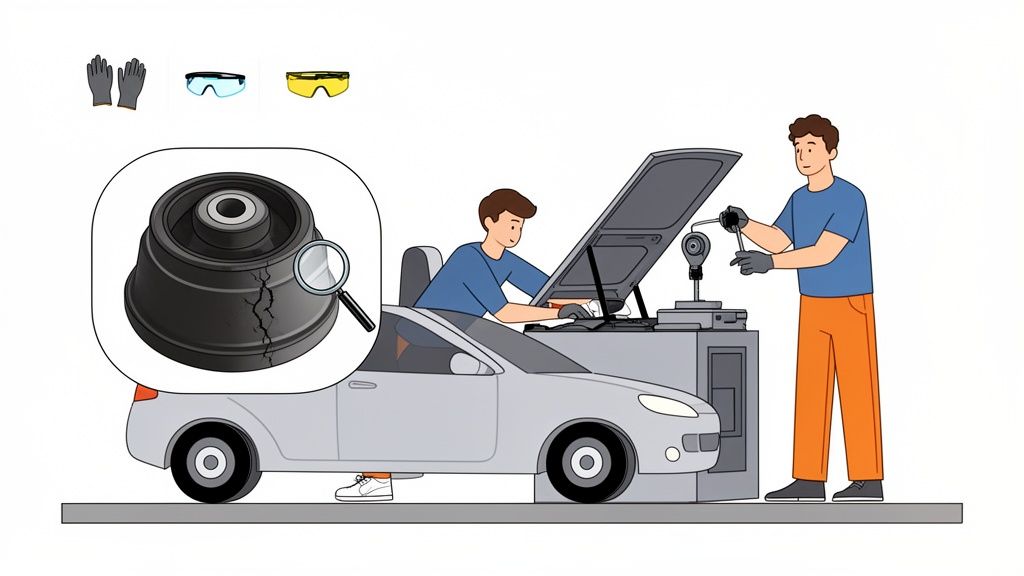
Before you start anything, let's talk safety. Safety is the absolute top priority. Make sure your vehicle is in Park or Neutral on a flat, level surface, and set the emergency brake firmly. For this first test, you’ll also need a helper you can trust.
The Engine Torque Test
This is the classic DIY test for finding a bad motor mount. The idea is to put the engine under a light, controlled load to see how much it tries to move. A healthy engine will barely budge, but if a mount has failed, you'll see a noticeable lurch or lift.
Here’s how to do it safely:
- Pop the Hood: Open the hood so you have a clear view of the engine. Have your helper stand off to the side of the car, never directly in front.
- Start the Engine: Hop in, start the car, and press your foot firmly on the brake pedal. You'll need to keep it held down for the entire test.
- Shift and Observe: While holding the brake, shift into Drive. Your helper should watch the engine closely for any sudden, major movement.
- Reverse the Test: Now, shift into Reverse and have them watch again. A bad mount will often let the engine lift or twist more than an inch in one direction or the other.
That excessive jump is the engine's torque trying to twist out of place—and the broken mount is letting it happen. This is exactly what's causing those "clunk" noises you hear when you accelerate.
A Thorough Visual Inspection
Sometimes, a bad mount is obvious just by looking at it. For this check, make sure the engine is completely cool to avoid any burns. Grab a good flashlight, since even in broad daylight, it can be tough to see into the nooks and crannies of the engine bay.
Look for visible signs of damage on the mounts themselves. The most obvious indicator is a large crack or tear in the rubber portion of the mount, where it has completely separated from the metal bracket.
While you're looking, keep an eye out for these specific issues:
- Cracked or Brittle Rubber: The rubber on a healthy mount should look solid and feel somewhat pliable. Check for deep cracks or a dried-out, crumbly appearance.
- Fluid Leaks: Many modern vehicles use fluid-filled (hydraulic) motor mounts for better vibration damping. If you see a dark, oily stain on or below the mount, it's a dead giveaway that the internal fluid has leaked out, and the mount is no longer doing its job.
- Collapsed Appearance: Take a step back and see if the engine looks like it's sagging or sitting lower on one side. A totally collapsed mount can cause the entire engine to tilt.
Running through these checks can give you solid evidence that you’re dealing with a bad motor mount. For more tips on figuring out what's wrong with your vehicle, our comprehensive guide on troubleshooting your car's problems can offer additional help. If you spot any of these red flags, the next step is getting a professional diagnosis to confirm the issue and prevent any further damage.
Understanding Motor Mount Replacement Costs
When you're dealing with the loud clunks and shaky vibrations of a bad motor mount, one of the first questions that pops into your head is probably, "What's this going to cost me?" No one likes an unexpected auto repair bill, but getting a clear picture of the costs involved helps you plan and make the right call for your car.
First things first, it’s important to know that motor mounts are a replacement-only part. The rubber and fluid-filled components that wear out can’t be patched up. The only safe and lasting fix is to swap out the entire worn-out mount for a brand new one.
Factors That Influence Replacement Costs
The final bill for replacing a motor mount isn't a simple flat fee. The total price is a mix of two main things: the parts themselves and the labor to install them. Both of these can change a lot depending on your specific vehicle.
- Vehicle Make and Model: It's no surprise that parts for a standard sedan are usually cheaper than those for a European luxury car or a big truck. Brands like BMW, Mercedes, or Audi often use more complex and therefore more expensive mount designs.
- Engine Type and Layout: How your engine is situated plays a massive role. A simple four-cylinder in a front-wheel-drive car might have mounts that are easy to get to. On the other hand, a larger V6 or V8, especially in an all-wheel-drive vehicle, can have mounts buried deep in the engine bay, which really drives up the labor time.
- Number of Mounts Replaced: Most cars and trucks have between three to four motor mounts. Even if only one has completely failed, a good technician will often recommend replacing them in pairs or as a complete set. That’s because when one goes, it puts a ton of extra stress on the others, making them likely to fail soon after.
- Type of Mount: The cost of the part itself varies. A basic solid rubber mount is the most budget-friendly option. But the advanced hydraulic or electronic "active" mounts found in many newer cars are significantly more expensive.
The key thing to remember is that the price of the part is often just a small piece of the puzzle. Labor is the biggest variable here. A mount that’s a pain to get to can turn a one-hour job into a four-hour procedure that needs special tools and requires removing other engine parts just to reach it.
Estimated Motor Mount Replacement Costs (Parts & Labor)
To give you a clearer idea of what to expect, the table below breaks down the typical costs for motor mount replacement across different types of vehicles. Remember, this is just an estimate—your final cost will depend on the factors we just discussed.
| Vehicle Type | Average Parts Cost | Average Labor Hours | Estimated Total Cost Range |
|---|---|---|---|
| Compact/Sedan (4-Cylinder) | $50 – $150 per mount | 1 – 2.5 hours | $200 – $450 |
| Mid-Size SUV/Crossover (V6) | $80 – $250 per mount | 2 – 3.5 hours | $350 – $700 |
| Full-Size Truck/SUV (V8) | $100 – $300 per mount | 2.5 – 4 hours | $450 – $900 |
| Luxury/Performance Vehicle | $150 – $400+ per mount | 3 – 5+ hours | $600 – $1,200+ |
This table shows how a seemingly simple repair can vary widely. A basic sedan will be on the lower end, while a complex job on a luxury SUV, especially if it involves multiple mounts, can easily push the cost toward the higher end of the spectrum.
OEM vs. Aftermarket Parts
When you get a quote, you’ll also have to decide between Original Equipment Manufacturer (OEM) parts and aftermarket parts. OEM mounts are made by your car's manufacturer, so they're identical to what was installed at the factory. This guarantees a perfect fit and the performance you expect.
Aftermarket parts are made by other companies. While they are often a cheaper alternative, their quality can be all over the place. A low-quality aftermarket mount might not soak up vibrations as well and could fail way too soon, putting you right back in the shop. Here at Kwik Kar, we always lean toward high-quality parts that ensure a repair is done right the first time.
Realistic Cost Expectations
So, what should you really budget for this repair? All in, a motor mount replacement can range from as little as $200 to over $1,000. For a single, easy-to-reach mount on a common passenger car, you'll likely be on the lower end of that scale.
However, if you own a bigger SUV or a luxury car with a V8 engine, and the bad mount is buried deep in the engine bay, the cost can climb quickly. This is especially true if you need to replace multiple mounts at once. It might seem like a steep price, but this investment not only brings back your smooth, quiet ride but also prevents the far more expensive damage a loose engine can cause down the road.
The Dangers of Ignoring Bad Motor Mounts
Trying to save a few bucks by putting off a motor mount replacement is a gamble that almost never pays off. That "minor" clunk or vibration you're trying to live with is more than just an annoyance—it's a bright red warning light for a much bigger problem brewing under your hood. Ignoring it puts both your car's health and your own safety at real risk.
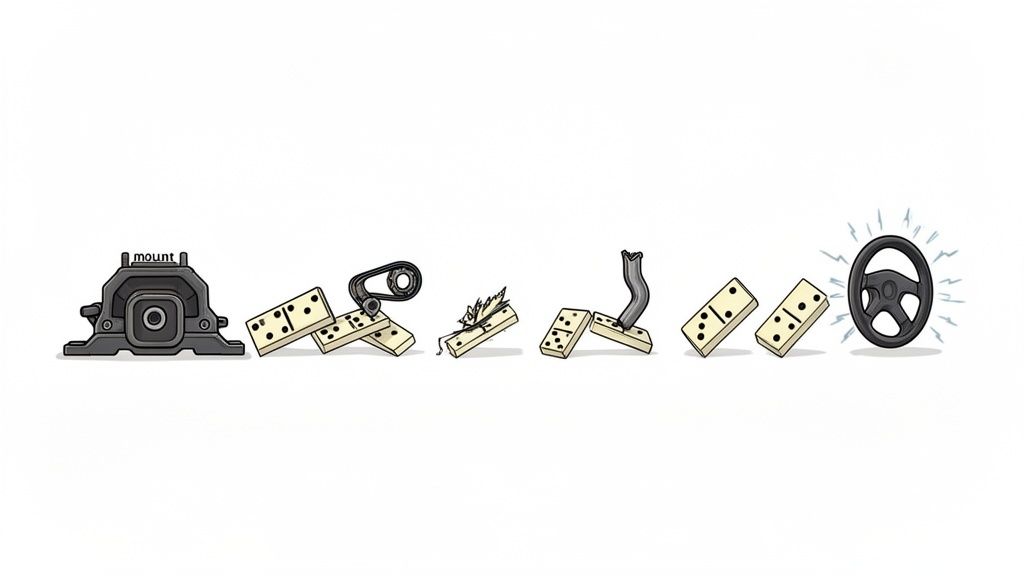
A loose engine doesn't just sit there and shake; it moves. And that movement can set off a costly and destructive domino effect throughout your engine bay. Just picture a small wrecking ball swinging around inside your car.
The Cascade of Collateral Damage
When your engine isn’t properly secured, its violent lurching can wreak havoc on all the parts around it. This collateral damage is often way more expensive to fix than the original bad mount.
Here are some of the most common victims of a loose engine:
- Snapped Belts and Torn Hoses: All that extra movement puts huge stress on parts like radiator hoses and the serpentine belt. A hose can tear, causing a rapid coolant leak and serious engine overheating. A snapped belt can mean a sudden loss of power steering and a dead battery.
- Cracked Exhaust Components: An unsecured engine can easily bend or even crack the exhaust manifold or downpipe. Not only does this create loud, obnoxious exhaust leaks, but it can also be a really tricky and pricey repair.
- Damaged Drivetrain: The constant, jarring impacts from a shifting engine put a ton of strain on your transmission and axles. This can lead to them wearing out way too soon or, in the worst cases, failing completely.
Broken engine mounts aren't just an inconvenience—they are a burning issue that can lead to severe engine damage. In North America, where the engine mount market share is projected to hit 29.15% by 2026, modern downsized turbo engines vibrate at frequencies 20-30% higher, wearing out mounts up to 40% faster in city traffic. This can lead to cracked exhaust manifolds or thrown belts that inflate repair bills to $2,000+.
Serious Safety and Drivability Hazards
Beyond the threat of expensive mechanical failures, driving with bad motor mounts creates some very real safety issues. An engine that lurches around unpredictably can directly affect your ability to control the car, especially when you need to react quickly. Ignoring the problem highlights the importance of regularly monitoring your vehicle's overall health.
Think about it: what if your engine shifts so violently that it messes with the throttle cable, causing the car to accelerate when you don't want it to? In extreme situations, that movement could even interfere with steering parts. The constant shaking is also a huge distraction, and if that has you wondering about the shake in your wheel, check out our article on what causes steering wheel vibration.
Ultimately, it’s best to view a motor mount replacement as a smart investment. You're not just quieting a noise; you're protecting your car's most important systems and making sure you have complete control every time you drive. The cost of the fix is tiny compared to the potential damage—and the safety risks—of putting it off.
Trust Kwik Kar for Your Motor Mount Replacement
Dealing with the constant vibrations and clunks from bad motor mounts can be incredibly frustrating. When it’s time for a repair, you need a local shop in Richardson, TX, that you can genuinely count on. At Kwik Kar, we combine the high standards of dealership service with the personal care and honesty you'd expect from a neighborhood garage.
Our entire focus is on getting you back on the road safely, without the usual stress of car repair. We believe in doing the job right the first time.
Our team is what makes the difference. Every technician on our floor is ASE-certified, which is the national gold standard for automotive skill and knowledge. We don't just listen for a noise and start guessing. We use advanced diagnostic tools to pinpoint the exact problem, ensuring we fix the root cause of your engine issues.
Why Our Community Trusts Us
Peace of mind is everything when you hand over your keys. We’re proud to be a certified service center backed by some of the biggest names in the industry, which gives you the confidence that your vehicle is in expert hands.
Here’s what our certifications mean for you:
- CARFAX Service Center: We log every service we perform, which helps you build a detailed and valuable vehicle history report.
- RepairPal Certified: This certification is your guarantee that our pricing is fair and our work meets the highest quality standards in the business.
- NAPA AutoCare Center: Through this partnership, we use premium parts and can offer a nationwide warranty on qualifying repairs.
These affiliations are our promise to you of reliable, high-quality work every single time. We are committed to being completely transparent, walking you through our findings and giving you a clear, straightforward estimate before we ever pick up a wrench.
We believe in taking care of those who take care of our community. As a thank you for their service, we are proud to offer special discounts to active military members, veterans, first responders, and healthcare workers.
Don't let worn-out motor mounts cause more damage down the road. Let the expert team at Kwik Kar get your car back to running smoothly, quietly, and safely.
Schedule your inspection with Kwik Kar Oil Change and Auto Care today and drive with the confidence you deserve. Learn more or book your appointment online at https://www.kkrichardson.com.