Ever thought about how your car actually starts and stays running? It's all thanks to a dynamic duo: the battery and alternator. Think of them like a relay team. The battery is the sprinter, providing that initial, powerful burst of energy to get the engine going. Once the car is running, it passes the baton to the alternator, the team's long-distance runner, who takes over for the long haul.
Understanding Your Car's Power Duo
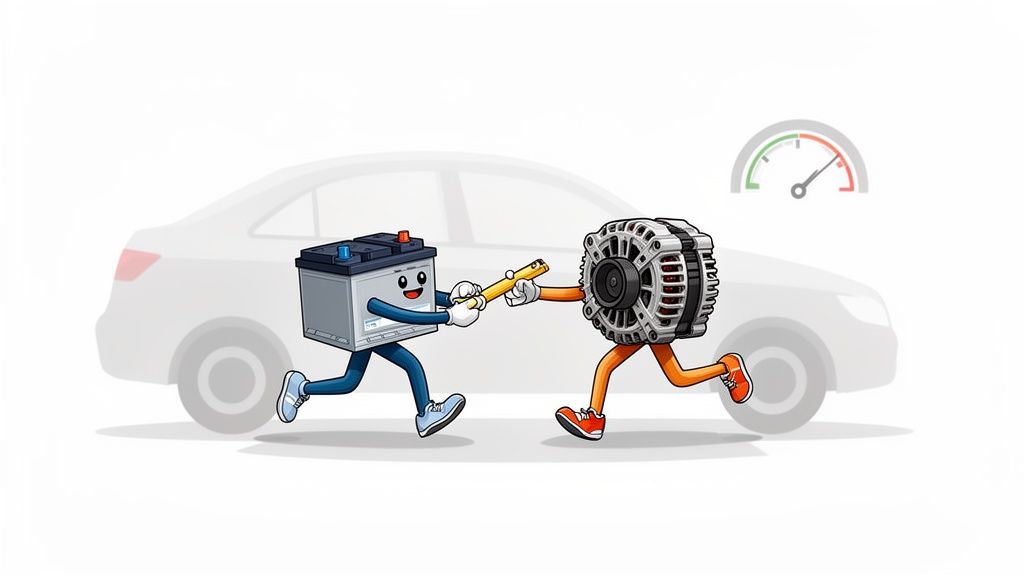
To really get a handle on your car's electrical system, you have to know what each of these parts does. They work together so closely that when one starts to fail, it almost always puts a strain on the other. This teamwork is why a dead car isn't always a simple fix, and why a problem with one can leave you stranded.
The Sprinter and The Marathon Runner
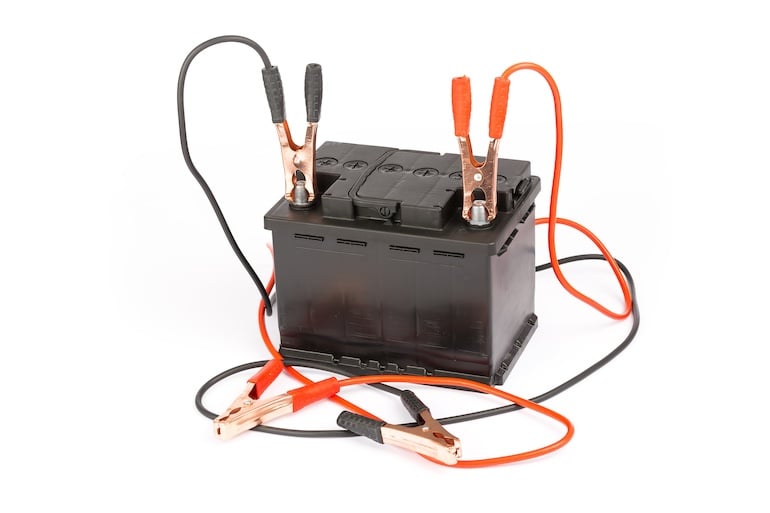
Your battery has one main, high-stakes job: delivering the massive jolt of electricity needed to crank the engine. It’s basically a rechargeable storage tank, holding just enough power for that initial sprint. As soon as the engine fires up, the alternator steps in and takes over completely.
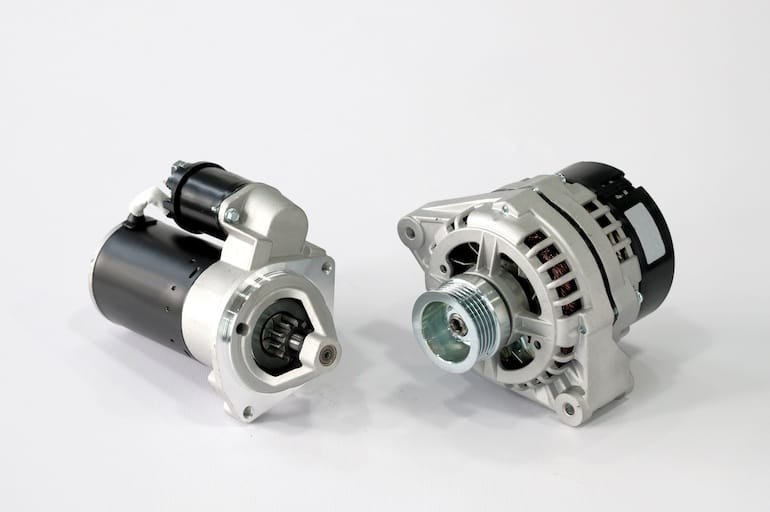
The alternator is your car's personal power plant. It converts mechanical power from the running engine into electrical power. This electricity runs everything—your headlights, radio, A/C, and all the other electronics. At the same time, it’s also sending a steady flow of power back to the battery, recharging it so it’s ready for the next time you need to start the car.
This constant cycle of discharging (starting the car) and recharging (while driving) is why a weak alternator can ruin a new battery, and a failing battery can overwork and destroy a perfectly good alternator.
To give you a better idea of their different responsibilities, here’s a quick breakdown:
Battery vs Alternator At a Glance
Here is a quick summary of the distinct roles each component plays in your vehicle's electrical system.
| Component | Primary Role | When It Works |
|---|---|---|
| Battery | Stores and provides a large burst of energy to start the engine. | Primarily before the engine starts and as a buffer. |
| Alternator | Generates electricity to power the car's systems and recharge the battery. | Only when the engine is running. |
This comparison makes it clear how interdependent they are; one can't do its job for long without the other working correctly.
Even in today’s high-tech cars, this fundamental system hasn't changed much. The demand for traditional lead-acid batteries saw a 3.9% increase recently, with a staggering 159 million units shipped in just one year. You can explore more data on automotive battery trends to see just how essential this component still is.
For Richardson drivers, this means your alternator is always working to keep the battery at its ideal charge—usually between 13.5 and 14.5 volts—to ensure your car starts every time. When one part of this team starts to struggle, the whole system is at risk, which is why it's so critical to check both if you suspect a problem.
Spotting the Warning Signs of Failure
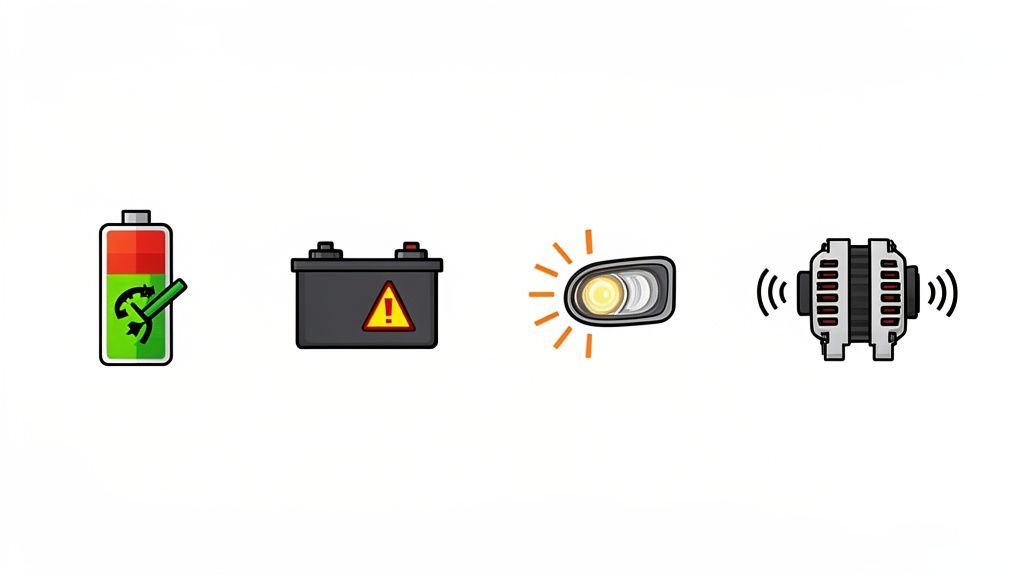
Is your car trying to tell you something? Electrical problems often start small, with subtle clues that are easy to miss before they leave you stranded on the side of the road. Learning how to tell the difference between a failing battery and a bad alternator can help you catch these issues early.
The tricky part is that many of the symptoms overlap, making it tough to pinpoint the real culprit without proper testing. That dashboard warning light, for instance, could mean a problem with either component. This is why knowing the full range of signs for both the battery and the alternator is so important for any driver.
Clues Pointing to a Bad Battery
A failing battery usually shows its weakness before the engine even gets going. Since its main job is to crank the engine, most of the tell-tale signs appear right when you turn the key.
You might be dealing with a weak battery if you notice:
- A Slow, Sluggish Engine Crank: Instead of a crisp, quick start, the engine turns over weakly, almost like it's tired. This is the classic symptom of a battery that's struggling to provide enough power.
- The Dreaded Clicking Noise: If all you get is a rapid clicking sound when you try to start the car, the battery doesn’t have enough juice left to engage the starter motor.
- Dim Lights with the Engine Off: Try turning on your headlights or dome light without starting the car. If they look dim or fade out quickly, the battery’s stored charge is running on empty.
- Frequent Need for a Jump-Start: If you find yourself needing to jump-start your car regularly and you haven't left the lights on, it's a strong sign your battery can no longer hold a proper charge.
Signs of a Failing Alternator
Alternator problems, on the other hand, typically pop up once the engine is already running. The alternator’s job is to power all of your car’s electronics and recharge the battery, so a failure affects the entire system while you drive. For an even deeper dive, you might be interested in our guide on the seven signs your alternator is going bad.
A failing alternator can’t supply consistent power, causing erratic behavior in your car's electrical systems. This inconsistency is a major red flag that the problem extends beyond just the battery.
Keep an eye out for these common alternator failure symptoms:
- Dashboard Battery Warning Light: This light often comes on when the alternator’s voltage output drops below a healthy level, which tells you it isn’t charging the system like it should.
- Flickering or Unusually Bright Headlights: An alternator that's on its way out can send inconsistent voltage through the system. This causes lights to dim, flicker, or even get surprisingly brighter than normal.
- Whining or Grinding Noises: A bad bearing or other worn-out parts inside the alternator can create a distinct whining or grinding sound that often changes pitch as you rev the engine.
- Electrical Accessory Problems: If your radio, power windows, or heated seats start acting strange or stop working entirely while you're driving, the alternator is likely failing to provide enough power to run everything.
Simple Diagnostics You Can Do at Home
Before you even think about heading to the shop, you can play detective with your car's electrical system using a few simple checks. A cheap and easy-to-use tool called a multimeter will be your best friend here. It gives you a direct window into the health of your battery and alternator, empowering you to have a much more informed conversation with your mechanic.
Of course, if your car is giving you trouble starting, it's always smart to check the easy stuff first. Sometimes the problem isn't the main car battery at all. A dead key fob, for example, can stop your car from recognizing the key and starting up; a quick guide on car key battery replacement can help you rule that out in minutes.
The Multimeter Voltage Check
Don't be intimidated by a multimeter; it's much easier to use than it looks. Just set it to the "20V" DC setting. From there, touch the red probe to the positive (+) battery terminal and the black probe to the negative (-) terminal. You're looking for two specific readings that tell a big story.
This flowchart breaks down exactly what those voltage numbers mean for your battery's health.
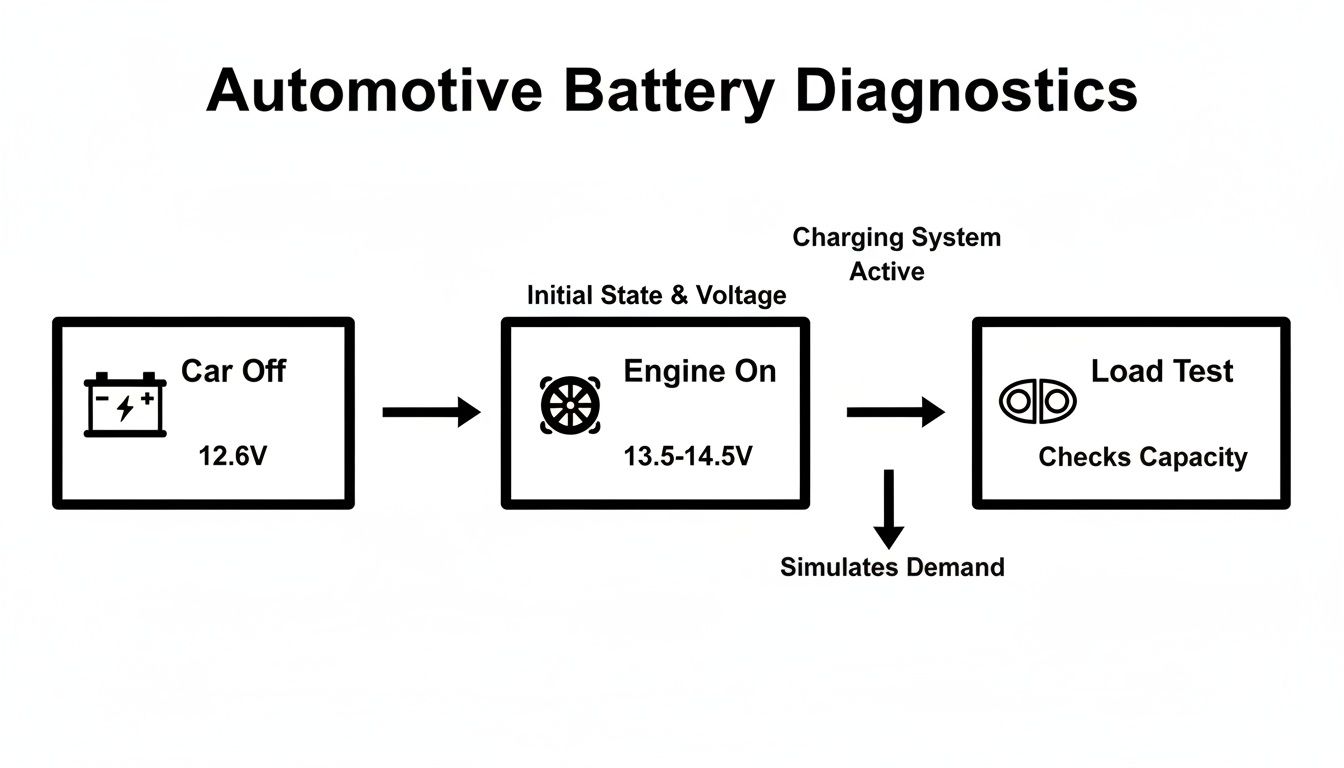
As you can see, a healthy battery should sit around 12.6 volts with the engine off. Once the engine is running, that number should jump up to between 13.5 and 14.5 volts as the alternator does its job.
- Engine Off (Battery Voltage): With the engine off, a healthy, fully charged battery will show a reading right around 12.6 volts. If you're seeing a number below 12.4 volts, it’s a sign the battery is either undercharged or it's starting to lose its ability to hold a charge. For a deeper dive, check out our guide on the ideal battery voltage chart.
- Engine On (Alternator Voltage): Now, start the car. The multimeter reading should immediately jump up to somewhere between 13.5 and 14.5 volts. This is the sweet spot, and it tells you the alternator is working correctly to recharge the battery. If that voltage barely moves or, even worse, drops, your alternator is almost certainly the component that's failing.
The Headlight Load Test
You don't even need a multimeter for this next one—just your eyes. This simple visual test shows how your electrical system holds up when you put it under a load.
- With the engine off, turn on your headlights. They should look bright and steady.
- Next, start the car. Did the headlights dim a lot while the engine was cranking? A little bit of dimming is normal, but a dramatic drop in brightness points straight to a weak battery.
- With the car running, give the engine a few gentle revs. If the headlights get noticeably brighter as the RPMs climb, it’s a classic sign that your alternator is struggling to produce enough power at idle.
For Richardson families, a weak alternator—one putting out under 90 amps—can seriously undercharge your battery, cutting its lifespan by up to 50% in the brutal Texas heat. With hybrid vehicle adoption climbing by 18% annually, these electrical systems are more critical than ever. Professional diagnostics can be the key to preventing a small issue from turning into a costly failure.
The Domino Effect: How One Failure Triggers Another
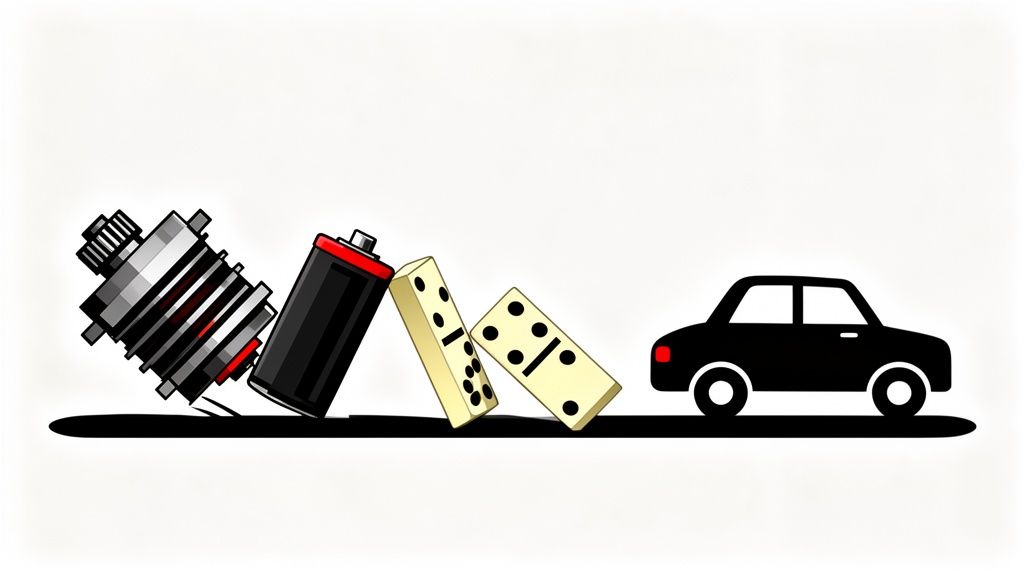
When it comes to your car's starting and charging system, a failing battery and alternator are rarely a one-off problem. More often than not, they’re caught in a destructive loop. Think of it like a line of dominoes—once one of them starts to fall, it almost always takes the other one down with it.
Understanding this chain reaction is the key to preventing repeat breakdowns and saving yourself from a cycle of frustrating and expensive repairs. It's a codependent relationship that can go wrong in two main ways: a bad alternator can kill a good battery, and a dying battery can send a healthy alternator to an early grave.
The Bad Alternator Scenario
Let’s say you just put in a brand-new battery, but your alternator is on its last legs. The alternator’s main job is to recharge your battery as you drive, but a weak one simply can't generate enough juice to do the job properly.
This forces your new battery to constantly supply power without ever getting the full recharge it needs. Over time, this state of chronic undercharging causes permanent damage to the battery's internal cells, dramatically shortening its life. Before you know it, you’re back at square one, needing another jump-start and wondering how your "new" battery failed so fast.
A healthy battery and alternator are a team. Ignoring a problem with one component almost guarantees you'll be replacing both sooner rather than later. This is why a comprehensive system check is non-negotiable.
The Bad Battery Scenario
Now, let's flip the script. Imagine your car has an old battery with a bad cell that just can't hold a decent charge anymore. This struggling battery puts a constant, heavy demand on your alternator, forcing it to work overtime to try and make up for the battery's weakness.
This relentless, high-output demand makes the alternator overheat, wearing out its internal parts at a shocking speed. It's like making a marathon runner sprint the entire race—burnout is pretty much guaranteed. Eventually, the overworked alternator gives up, leaving you stranded with both a dead battery and a dead alternator. For more tips on getting your car running again in an emergency, check out our guide on how to properly jump-start a car battery.
This vicious cycle is a real concern, especially since the average car on U.S. roads is now 12.5 years old. Even something as simple as a worn or slipping alternator belt can slash its output by 30%, putting both components at risk. You can discover more about how the industry is keeping up with these demands by reading the latest U.S. battery market insights.
Why Choose Kwik Kar for Your Electrical Service
When your car’s electrical system starts acting up, you need a team that can figure out the real problem, and fast. The tricky dance between a battery and alternator means just swapping out one part often doesn't fix anything. At Kwik Kar, we know this all too well, and we always dig deeper to find the root cause, not just patch up a symptom.
We bring dealership-level expertise right here to our local Richardson shop. We don’t guess—we diagnose. Our shop is equipped with state-of-the-art diagnostic tools that let our technicians see exactly what’s going on, saving you the headache of repeat breakdowns and paying for parts you didn't need.
Certified Technicians You Can Trust
The heart of our service is our team of ASE-certified technicians. That certification isn't just a framed piece of paper on the wall; it’s your guarantee that your vehicle is being serviced by proven professionals who live and breathe this stuff.
Our commitment to quality is backed by our certifications from CARFAX, RepairPal, and NAPA AutoCare. These partnerships reflect our dedication to transparency, high standards, and reliable repairs for every customer who walks through our doors.
These credentials mean that whether you're in for a complex alternator replacement or a simple battery check, you can be confident the job will be done right the first time.
The Kwik Kar Experience
We believe great auto care is about more than just what happens under the hood. From the moment you pull in, you’ll see that we do things differently. We give you clear, upfront estimates so you’re never caught by surprise, and our waiting area is clean and comfortable to make your visit as painless as possible.
We also want to show our appreciation for those who serve our community. We’re proud to offer special discounts for:
- Military personnel
- First responders
- Healthcare workers
Choosing Kwik Kar is about choosing peace of mind. You can get back on the road knowing your car’s electrical system was handled by experts who are committed to honesty, quality, and your complete satisfaction.
Frequently Asked Questions About Car Electrical Issues
Dealing with your car’s electrical system can be confusing, and it's completely normal to have questions. To help you make sense of it all, we've put together answers to some of the most common concerns we hear from drivers about their battery and alternator. This will give you the clarity you need to make safe, smart decisions for your vehicle.
Can I Drive My Car with a Bad Alternator?
We get this question a lot, and the simple answer is: you shouldn't. It's a huge and potentially costly risk. Once your alternator gives out, your car starts running entirely on the battery's stored power. That power won't last long—often just a few miles—before the battery is completely drained, your engine shuts down, and you're left stranded.
Trying to push it with a faulty alternator doesn't just empty the battery; it puts a massive strain on it, which can permanently ruin a perfectly good battery. It can also damage other sensitive electrical parts in your car. If you see that battery warning light pop up on your dashboard, the safest thing to do is pull over and call for help or drive straight to the nearest auto shop.
Will a New Battery Fix a Bad Alternator?
No, and this is probably one of the most common and expensive mistakes we see car owners make. A new battery will not solve a problem with your alternator. The alternator’s main job is to recharge the battery while the engine is running. Without it, your shiny new battery will drain just as quickly as the old one, and you'll be right back where you started.
A new battery is only a temporary fix for a bad alternator, often lasting just long enough to get you stranded again. This is why a full system check is essential.
At Kwik Kar, we make it a point to test the entire charging system—both the battery and the alternator—before we even think about replacing a part. This ensures we’re fixing the actual source of the problem, so you don’t have to deal with it a second time. It’s all about providing a real solution, not just a quick patch.
How Often Should I Have My Battery Tested?
Getting your battery tested annually is a smart, proactive habit, especially once it’s more than two years old. This is even more important in a hot climate like ours in Richardson, TX, where summer heat can slash a battery's lifespan by up to 50%. A great time to get it checked is during your regular oil change.
Alternators are different; they don’t have a routine checkup schedule like a battery. However, you should always have the alternator inspected anytime you’re having electrical issues or when you get a new battery. This just makes sure the whole system is healthy and working together the way it should.
When you need an expert diagnosis you can trust, turn to the certified technicians at Kwik Kar. We'll get to the bottom of your electrical issues and get you back on the road with confidence. Schedule your service today