That red battery light on your dash is enough to make any driver’s heart skip a beat. But before you panic, it’s important to understand what that little icon is actually trying to tell you. More often than not, it's not a warning that your battery is about to die on the spot. Instead, think of it as your car's way of saying there’s a problem with its charging system.
What That Red Battery Light Actually Means for Your Car
When that battery symbol lights up, your car's computer has detected a problem. Specifically, it means the electrical system's voltage has dropped below a safe level. While a bad battery can be the cause, the light is really designed to alert you to a breakdown in the entire charging circuit.
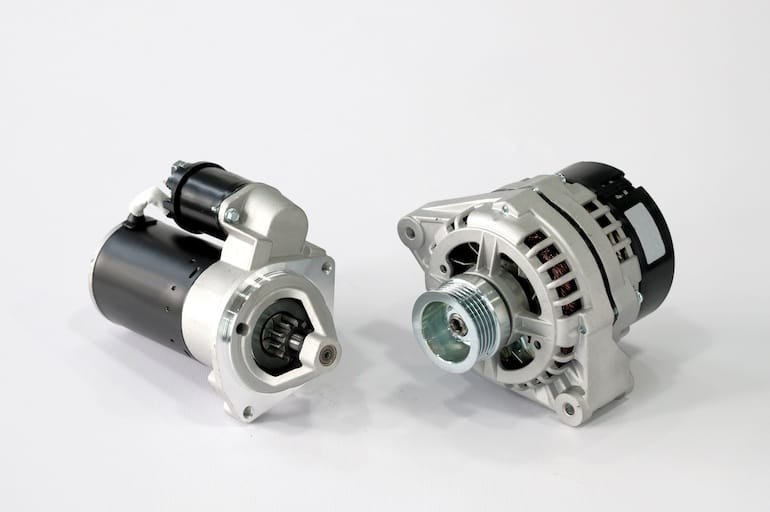
This system is a real team effort. Your battery provides the big jolt of power needed to crank the engine, but once you're running, the alternator is supposed to take over. It’s the powerhouse that generates electricity for everything—your radio, headlights, A/C—while also sending a charge back to the battery to keep it topped off.
If the alternator starts to fail, it can't produce enough juice. This forces the car to run entirely on the battery's stored power, which is a losing game. Once that reserve is gone, everything shuts down.
The Most Likely Culprits
Here’s a simple way to think about it: your battery is like a pitcher of water, and the alternator is the faucet that keeps refilling it. The warning light comes on when the system realizes the faucet isn't keeping up. The most common reasons for this are:
- A Failing Alternator: This is the number one suspect. Over time, bearings wear out or internal parts fail, and it simply stops generating power.
- An Old or Damaged Battery: While it's less common for a bad battery to trigger the light while you're already driving, an old battery that can’t hold a proper charge can definitely contribute to voltage drops and confuse the system.
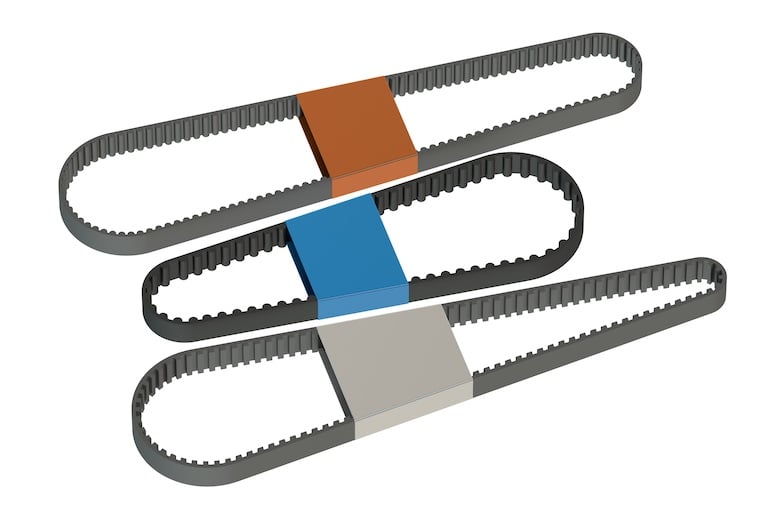
- A Worn or Broken Serpentine Belt: This is the rubber belt that connects the alternator to the engine's crankshaft. If it's loose, slipping, or has snapped, the alternator can't spin, which means no power gets generated.
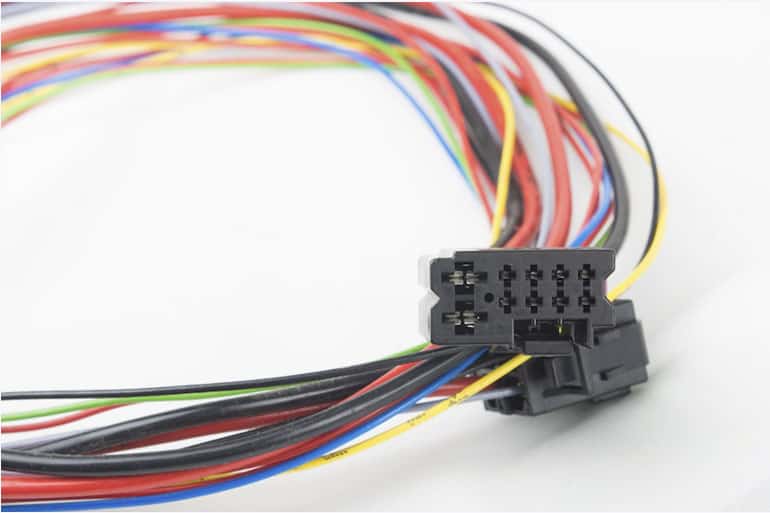
- Corroded or Loose Connections: Sometimes the fix is simple! Grime, rust, or a loose clamp on the battery terminals can interrupt the flow of electricity, tricking the computer into thinking there’s a major failure.
Imagine you're cruising down the road in Richardson, TX, and that light pops on—it's a wake-up call you can't ignore. In fact, proactive diagnostics can prevent the 40-50% of roadside breakdowns that are often tied to battery or charging system failures. [Dive deeper into these automotive market trends](https://www.aaa.com/AAA/common/AAR/files/ onderzoek-naar-automotive-pechhulp.pdf) to see just how common these issues are.
A battery light doesn't always mean you're stranded, but it does mean you need to act fast. To help you make a safe decision, here’s a quick guide to what you might be seeing and what to do next.
Immediate Action Plan for a Battery Warning Light
Use this quick-glance table to decide your next move safely, distinguishing between scenarios where it's okay to proceed with caution and when you must pull over.
| Observable Symptom | What It Likely Means | Your Immediate Action |
|---|---|---|
| Light is on, but the car drives normally. | The alternator is likely failing but still producing some charge. You're running on borrowed time. | Turn off all non-essential electronics (radio, A/C, heated seats) and drive directly to a mechanic. Do not stop and restart the car. |
| Dimming headlights, slow wipers, or weird gauges. | The system is losing power fast. The battery is being drained and can't keep up with demand. | Find a safe place to pull over immediately. The car is likely to shut down soon. |
| Grinding or whining noise from the engine bay. | This often points to a failing alternator bearing or a problem with the serpentine belt. | Pull over as soon as it is safe to do so. A broken belt can cause overheating and serious engine damage. |
| You smell burning rubber or plastic. | This is a serious red flag. It could be an overheating alternator or electrical short. | Pull over immediately and turn off the engine. This is a potential fire hazard. |
| The light flickers on and off. | Could be a loose connection, a worn-out alternator brush, or the very first sign of alternator failure. | Don't ignore it. Plan to get your vehicle inspected as soon as possible, even if the light goes off. |
Remember, these are just guidelines. When in doubt, the safest option is always to pull over and call for assistance. Pushing a failing charging system can leave you stranded in an unsafe location and potentially cause more damage to your vehicle's sensitive electronics.
Should You Drive or Call for a Tow? Assessing the Situation Safely
That little red battery light on your car’s dashboard is a universal symbol for trouble, but it doesn't always spell immediate disaster. Your next move—deciding whether to keep driving or pull over and call for a tow—is a big one, affecting both your safety and your car's health.
First thing’s first: find a safe place to pull over. A parking lot or a quiet side street is ideal. Try to avoid stopping on the shoulder of a busy highway unless you have absolutely no other choice.
Once you’re safely parked, it’s time for a quick diagnostic right from the driver's seat. The main goal here is to save every last drop of juice in your battery. Kill all the non-essential electronics immediately. That means the radio, the A/C or heater, interior lights, and anything you have plugged into the USB or 12V outlets. Every one of those accessories is pulling power that your engine’s electrical system desperately needs to keep running.
Quick On-the-Spot Checks
With everything unnecessary turned off, pay close attention to how your car is acting. These signs are your best clues to how serious the problem really is.
- Check the Headlights: Flip on your headlights. Are they shining bright and steady, or are they dim and flickering? Dimming lights are a classic symptom that your alternator has quit and the battery is on its last legs.
- Listen to the Engine: Does the engine sound right? Is the car struggling when you accelerate or feeling generally sluggish? Sometimes, electrical issues can mess with the engine control modules, leading to poor performance.
- Look for Other Warning Lights: Is the battery light having a party with other warning lights? If the temperature gauge is climbing or its warning light is on, you could be looking at a broken serpentine belt, which often runs both the alternator and the water pump. A broken belt is a "stop now" situation.
If you feel comfortable and you're in a well-lit, safe spot, popping the hood for a quick visual check can tell you a lot. Look at the battery terminals—do you see a crusty, fuzzy buildup (usually white or blue-green)? That corrosion can be enough to block the electrical connection.
Next, find the serpentine belt at the front of the engine. It's a long, ribbed rubber belt that should be tight. If it looks frayed, loose, or is completely missing, your alternator isn't spinning. That means your battery isn't charging, and you won't get far.
This flowchart can help you visualize the decision-making process based on what you're seeing and hearing.
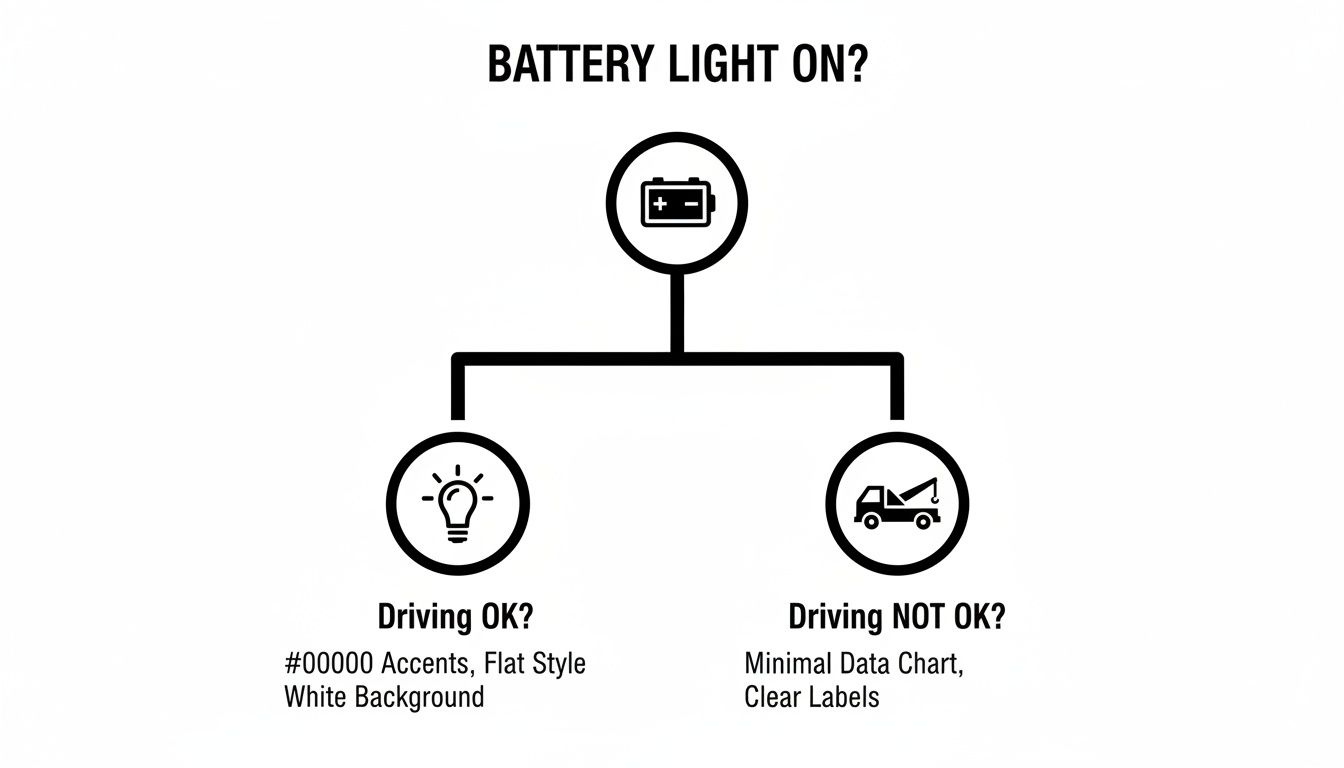
As you can see, the battery light is just the first alarm. It's the secondary symptoms, like dimming lights or engine trouble, that really tell you an imminent shutdown is likely.
Expert Takeaway: If you're seeing multiple symptoms—like dimming headlights and a sluggish engine—the odds of your car dying in the middle of traffic are incredibly high. A tow truck is always the safer, smarter bet in this scenario. Pushing your luck can leave you stranded in a very dangerous situation.
In the end, it all comes down to a quick risk assessment. If the battery light is on but the car is driving perfectly fine and you're only a mile or two from the shop, you might decide to risk it. But if you're a long way from help or you notice any other signs of electrical failure, calling for a tow is the only responsible choice. It not only keeps you safe but also prevents potential damage to your car's sensitive electronics.
The Most Common Reasons Your Battery Light Is On
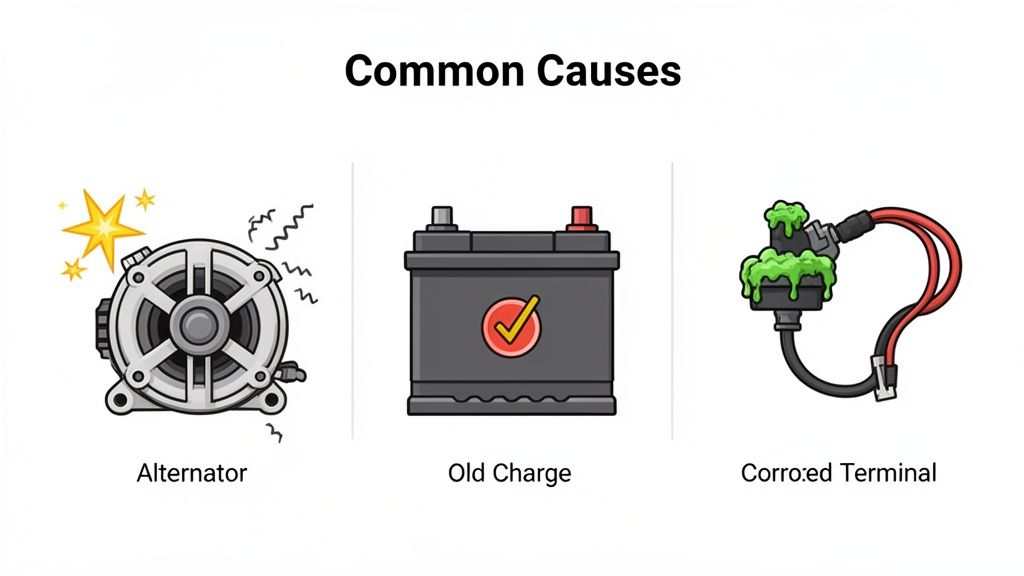
When the battery light on your car pops up on the dash, it’s easy to assume the battery itself is toast. But that little light is smarter than you think. It's an alert pointing to a problem somewhere in your vehicle's charging system, and the battery is just one piece of that puzzle.
Think of it like a detective story. You have a few prime suspects, and most of the time, the culprit is one of three things: a dying alternator, a worn-out battery, or a simple bad connection. Each one leaves its own set of clues.
The Failing Alternator
The alternator is the unsung hero of your car's electrical system. It’s like a miniature power plant that, once the engine is running, generates all the electricity needed to run your lights, radio, and A/C while also recharging the battery.
When the alternator starts to go, it can't produce enough voltage to keep everything powered up. This forces your car to drain the battery's stored power, which won't last long. It’s no surprise that over 50% of battery light warnings trace back to a faulty alternator. While the EV market is growing—now at a 7.8% US market share—the vast majority of us still rely on this classic setup.
Keep an eye out for these tell-tale signs of a bad alternator:
- A whining or grinding noise from the engine that gets louder when you accelerate.
- Dimming or flickering headlights and dashboard lights, especially when you turn on other electronics.
- A distinct smell of burning rubber or wires, which could mean the alternator is overheating or its belt is slipping.
If any of this sounds familiar, our detailed guide on bad alternator symptoms can help you dig deeper. Still, a professional diagnostic test is the only way to be 100% sure.
Pro Tip: A quick at-home test is to watch your headlights while you rev the engine in park. If they get noticeably brighter, it's a strong hint the alternator is weak and struggling to produce enough power at idle.
The Old and Tired Battery
Your car battery isn't built to last forever. Here in Richardson, TX, the intense summer heat is especially brutal, often cutting a battery's lifespan from five years down to just two or three.
An old battery simply can't hold a charge like it used to. Even with a perfectly good alternator sending power its way, a worn-out battery won't have the capacity to store that energy. This leads to voltage drops that trigger the warning light. The most common giveaway is a slow, sluggish crank when you try to start the car.
Damaged or Corroded Connections
Sometimes, the problem isn't a major component failure but something much simpler: a bad connection. Your entire electrical system depends on clean, tight connections to move power around efficiently.
Over time, battery terminals can grow a crusty, white, or greenish buildup. This corrosion acts like an insulator, blocking electricity from flowing between the alternator and the battery. Likewise, if the battery cables are loose, frayed, or damaged, you'll get a weak, intermittent connection that can confuse the car’s computer and switch on that battery light. This is often the easiest problem to spot and, luckily, the cheapest to fix.
So, How Much Is This Going to Cost Me?
When that little red battery light on your car pops up on the dash, your first thought is probably about the repair bill waiting around the corner. We get it. Understanding what a fix might cost and how long it'll take helps take the stress out of the situation, so let's break it down.
The final price tag really depends on what’s causing the problem and the kind of car you drive. A professional diagnosis isn't just a step—it's the step. Guessing is an expensive game; there's no point in replacing a perfectly good battery if the alternator is the real culprit. At Kwik Kar, our ASE-certified technicians use the right diagnostic tools to find the exact electrical fault, so you only pay for the fix you actually need.
Common Repair Cost Breakdowns
Once we know what we're dealing with, the repair usually falls into one of three buckets. Keep in mind that European and luxury vehicles often have higher parts and labor costs because of how they're designed and how tricky it can be to access certain components.
Here’s a general idea of what to expect for common charging system repairs:
- New Car Battery: This is the most common and straightforward fix. A standard lead-acid battery replacement, including installation, will typically run you between $150 and $350. If your car has start-stop technology, it likely needs an AGM (Absorbent Glass Mat) battery, which can cost more, usually in the $250 to $450 range.
- Alternator Replacement: The alternator is the heart of your charging system, so replacing it is a bigger job. The part itself can cost anywhere from $200 to over $600, and labor will add another $150 to $300. All in, you’re usually looking at a total cost in the $400 to $900 range.
- Serpentine Belt Replacement: If a worn-out or snapped belt is the problem, you're in luck—this is a relatively cheap and quick repair. The belt itself is usually under $50, and the labor might take an hour or less. The total cost is often around $100 to $200.
A Note on Timelines: We know you need your car back. Most of these repairs can be done the same day you bring your vehicle in. A battery swap is quick, taking less than an hour. An alternator replacement is a bit more involved and might take two to four hours, depending on where it’s tucked away in the engine bay.
Getting a precise diagnosis from the start is the key to avoiding wasted money. Our team always provides a clear, transparent estimate before we pick up a single tool, so you’ll never be hit with a surprise bill.
You can learn more about our professional battery services and diagnostics and how we get to the root of the problem. Our approach doesn't just fix the light on your dash—it gives you the peace of mind that your car is reliable and ready for the road ahead.
Proactive Maintenance to Keep the Warning Light Off
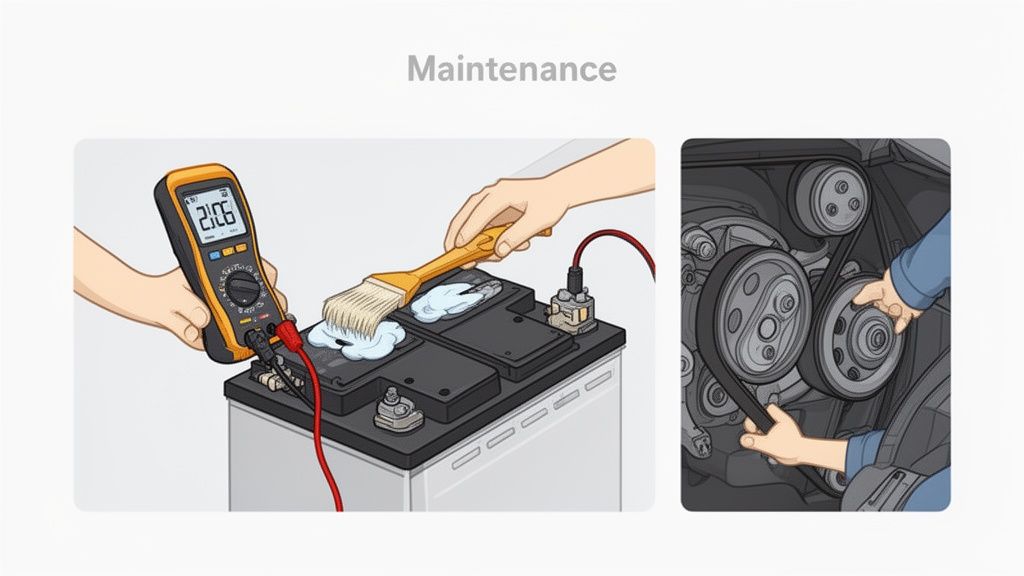
Honestly, the best way to handle that dreaded battery light on your car is to make sure it never has a reason to show up in the first place. A little proactive attention to your vehicle's charging system can save you from the stress and expense of a roadside breakdown. Smart maintenance isn't complicated; it's just about being consistent.
The foundation of a healthy charging system is regular check-ups. This means scheduling routine battery tests, especially before the seasons change. The brutal summer heat and bitter winter cold both put immense strain on your battery, and a simple test can spot a weakening unit before it decides to quit on you.
Smart Habits for a Longer Battery Life
Beyond what the pros do, your own driving and maintenance habits can significantly extend the life of your battery and alternator. Just being aware of how you use your car makes a huge difference.
- Clean Your Battery Terminals: Next time you're in for an oil change, peek at the battery terminals. If you see a white, crusty buildup (that's corrosion), it's acting like an insulator and choking off the electrical connection. Cleaning it off with a wire brush is one of the easiest and most effective preventative steps you can take.
- Vary Your Driving Routine: If your car only sees short five-minute trips to the store and back, the alternator never gets enough time to fully recharge what the battery used to start the engine. Make a point to take your car for a longer, continuous drive of at least 20-30 minutes once a week. That'll give it a chance to get a full, healthy charge.
For those interested in the finer points of vehicle care, exploring additional car maintenance insights can provide a wider perspective on proactive upkeep.
Real-World Impact: In hot climates like ours in Richardson, TX, car batteries often last only 2-4 years, compared to five or more years in cooler regions. The intense heat actually speeds up the chemical breakdown inside the battery, which can lead to a surprise failure when you least expect it.
Beyond the Battery Itself
It’s easy to focus on the battery, but it’s just one piece of the puzzle. Keeping an eye on the parts that support it is just as crucial for avoiding that warning light.
The serpentine belt is the critical link that transfers power from your engine to the alternator. A quick visual inspection can reveal cracks, fraying, or a shiny, glazed look—all signs that it's worn out and needs to be replaced. If that belt starts slipping, it can't spin the alternator properly, and you’ll end up with a charging problem.
These simple, proactive steps can transform you from a reactive driver into a prepared one. Understanding the basics of your vehicle's electrical health is key. You can find more details in our guide on how long a car battery should last. By making these habits part of your routine, you’re not just maintaining a car; you’re investing in reliability and peace of mind.
Frequently Asked Questions About the Battery Light
Even after understanding the potential causes, it's completely normal to have a few more questions when that dreaded battery light pops up on your dash. We get it. Here are some of the most common questions our technicians hear from drivers, along with some clear, straightforward answers.
Is an Intermittent Battery Light Safe to Ignore?
Absolutely not. Think of a flickering battery light as an early warning flare from your car's charging system. It’s a classic sign of trouble.
Often, this points to a failing alternator that's on its last legs, working inconsistently. It could also be something as simple as a loose wire that's making and breaking its connection as you drive. Ignoring this gamble almost never pays off—that intermittent problem will become a permanent one, and it usually picks the worst possible time to leave you stranded. It's far better to get it diagnosed while it's still just an annoyance.
Can a Brand New Battery Cause the Light to Come On?
Yes, and it’s more common than you might think. If that warning light appears right after you’ve installed a new battery, you can be almost certain the battery itself isn't the problem. The real issue usually falls into one of two camps:
- Improper Installation: Even something as simple as a battery terminal clamp that isn't fully tightened can prevent a solid connection, which is enough to trigger the warning light.
- Misdiagnosed Problem: The original culprit may have been a failing alternator all along. A new battery might get you running again, but it’s just a temporary fix because the faulty alternator isn't recharging it.
How Far Can I Actually Drive with the Battery Light On?
This is one of those questions with no good answer, because trying to find out is a huge risk. If your alternator has completely failed, your car is running on borrowed time—powered only by the juice left in the battery.
You might get a few minutes, or maybe up to 30 minutes of drive time. It all depends on your battery's age, how much charge it had to begin with, and how many electronics you’re running. Turning off the radio, A/C, and headlights can buy you a little more time, but the only truly safe move is to find a safe place to pull over as soon as possible.
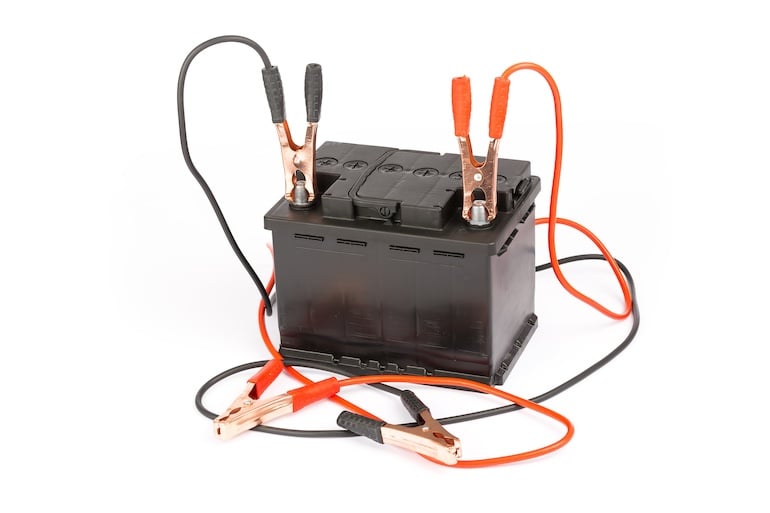
Key Takeaway: A jump-start won't fix a problem that triggers the battery light. It might breathe life into a dead battery for a moment, but if the alternator isn't doing its job, the car will die again very quickly. You have to fix the root cause.
It's also important not to confuse your car's main battery warning with a low battery in your key fob. If your key fob is the issue, that's a simple fix. In fact, plenty of guides online can show you how to replace a car key battery yourself. The light on your dashboard, however, signals a much more critical failure that needs professional attention right away.
Don't gamble with your vehicle's reliability. The ASE-certified technicians at Kwik Kar Oil Change and Auto Care use advanced diagnostic tools to pinpoint the exact cause of your charging system problem. Schedule your diagnostic appointment today and drive with confidence knowing your car is in expert hands.