When it comes to your car's most important safety feature, sticking to a schedule is key. Most mechanics and manufacturers agree on a standard timeline: plan for a brake fluid flush every two years or 30,000 miles, whichever milestone you hit first. Think of it less as a suggestion and more as a non-negotiable safety check.
Understanding Brake Fluid Service Schedules
So, why the strict timeline? It all comes down to the nature of brake fluid itself. It's hygroscopic, which is just a technical way of saying it loves to absorb moisture right out of the air. Over time, that water contamination lowers the fluid's boiling point, which can lead to a spongy brake pedal or, in a worst-case scenario, total brake failure when you need it most.
This isn't just our opinion; it's a widely accepted best practice in the auto care world. To keep your car's braking system reliable and responsive, industry experts across the board recommend this service every 2-3 years. You can find more great insights into why this service is so critical over at Carmedics Autowerks.
To make it even simpler, we've put together a quick table that breaks down the essentials at a glance.
Brake Fluid Flush at a Glance
This table sums up the core recommendations for keeping your braking system in top shape.
| Key Question | Standard Recommendation |
|---|---|
| How often should I flush brake fluid? | Every 2 years or 30,000 miles. |
| Why is it necessary? | To remove moisture and contaminants that compromise safety. |
| What's the main risk of skipping it? | Spongy pedal feel, reduced stopping power, or brake failure. |
| Where should I check for my car? | Always consult your vehicle's owner's manual for specifics. |
This gives you the quick-and-dirty facts before we dive a little deeper into why this often-overlooked fluid is the unsung hero of your vehicle’s safety system.
Why Your Brakes Depend on Clean Fluid
Think of your car's braking system as its hydraulic nervous system. When you press that brake pedal, you’re sending an urgent command. Brake fluid is the messenger, instantly carrying that force through the lines to the wheels under incredible pressure and heat to bring you to a safe stop.
But this essential fluid has a hidden weakness: it's hygroscopic. That’s just a fancy way of saying it’s a magnet for moisture, constantly pulling in water from the air around it. Even a tiny bit of water contamination can cause huge problems for your brakes.
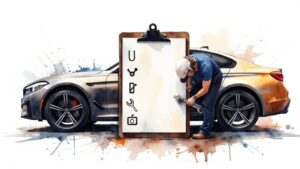
This infographic really drives home the key facts about keeping your brake fluid in good shape.
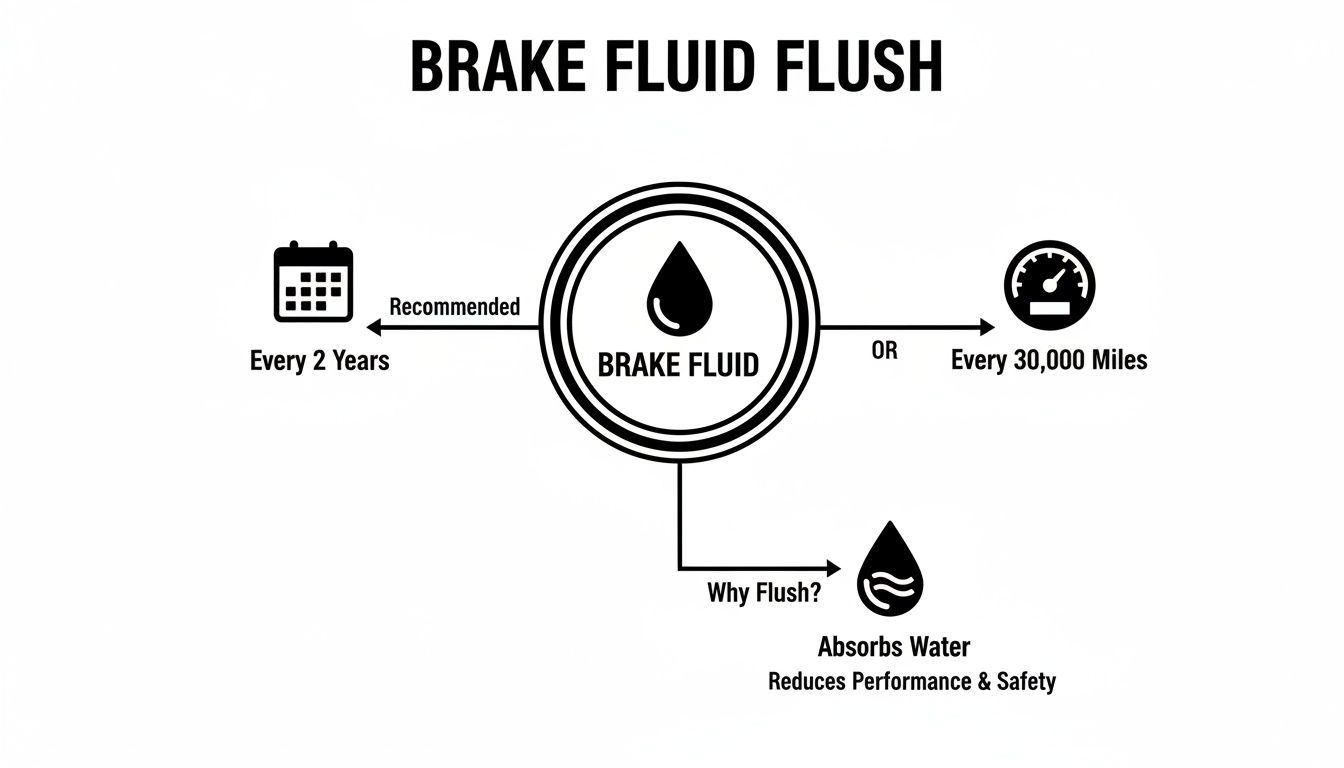
As you can see, the main takeaway is the time and mileage interval. This is all because of that pesky water absorption problem.
The Risk of Vapor Lock
Here’s where it gets serious. When water seeps into your brake fluid, it dramatically lowers the fluid’s boiling point. Under heavy braking—like you’d experience in stop-and-go traffic or coming down a steep hill—the system gets hot. That heat can make the trapped water boil and turn into steam bubbles.
This dangerous situation is called vapor lock. The result is a spongy brake pedal that feels soft or sinks right to the floor, severely reducing your stopping power at the exact moment you need it most.
The Hidden Dangers of Old Brake Fluid
Because brake fluid acts like a sponge for water, it kicks off a slow, silent process of destruction inside your brake lines. Over time, two main troublemakers build up in the system: water and copper particles. This toxic combo starts corrosion from the inside out, creating a serious risk to your car’s safety and your wallet.
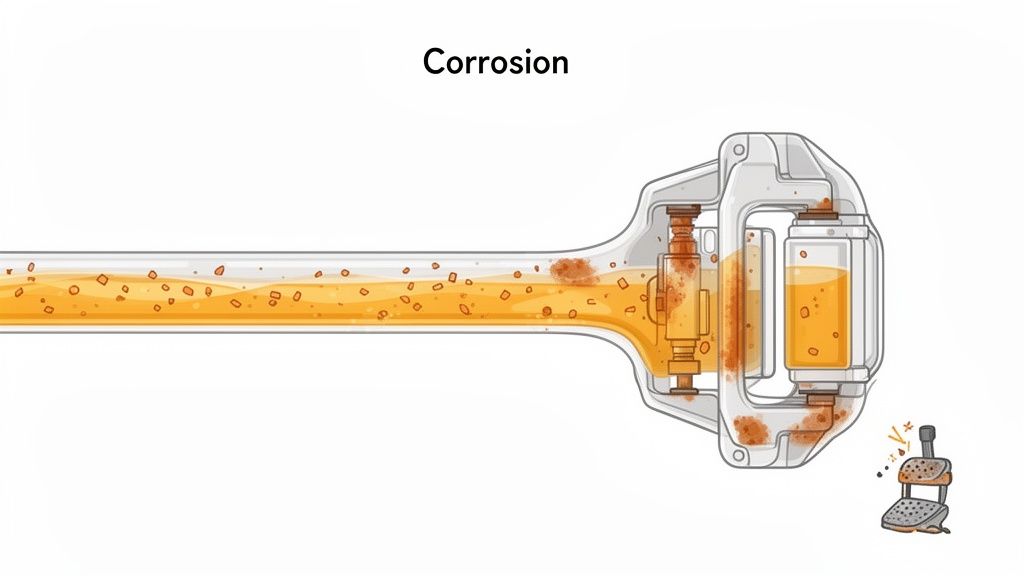
The moisture doesn't just lower the fluid’s boiling point and give you that dreaded spongy pedal feel. It also starts to rust critical metal components. Think of it like decay spreading through the veins of your braking system.
The Domino Effect of Corrosion
This internal rust doesn’t just sit there. It flakes off, sending tiny metal and copper particles circulating through the fluid.
These particles act like liquid sandpaper, slowly grinding away at expensive parts like the master cylinder, calipers, and the incredibly sensitive Anti-lock Braking System (ABS) module. An ABS module failure can cost well over $1,500 to repair—all from skipping a routine fluid flush.
Ignoring this gradual decay is a direct path to compromised stopping power right when you need it most. This internal damage is closely related to other brake system issues, and you can learn more about when to replace brake pads in our detailed guide. A brake fluid flush isn't just about maintenance; it’s about preventing a catastrophic failure down the road.
When to Adjust Your Service Schedule
While the “every two years” rule is a great baseline for knowing how often to get a brake fluid flush, it’s not a perfect fit for every single driver out there. Your real-world driving conditions often mean you need a more personalized maintenance schedule to stay safe on the road. Think of your owner's manual as the starting point, but remember that certain factors can make that fluid go bad much faster.
For example, just living in a high-humidity area means there’s more moisture in the air for your brake fluid to absorb. It’s a key reason why the global brake fluid market is growing so fast, with routine maintenance driving demand in the USD 530.9 million US market alone. You can see more on this trend at Mordor Intelligence.
Factors That Shorten Your Flush Interval
Certain driving habits and conditions put a ton of stress on your braking system, and that demands more frequent attention. You should definitely consider a shorter interval if you:
- Frequently Tow: Pulling a trailer or a boat generates a massive amount of heat, which really puts the brake fluid through its paces.
- Live in a Humid Climate: Constant moisture in the air is your brake fluid’s worst enemy, accelerating contamination.
- Drive Aggressively: Heavy, last-minute braking raises system temperatures and breaks down the fluid much quicker than gentle driving.
Following a schedule that’s actually tailored to how you drive is absolutely crucial. Our team can help you figure out the right frequency for a brake service in Richardson, TX, protecting your car’s safety and integrity way beyond generic guidelines.
How Technicians Test Your Brake Fluid
So, how does a good mechanic know for sure that you need a brake fluid flush? It’s not a guess based on mileage or a quick peek at the fluid color. Professionals rely on specific diagnostic tools to get hard data about your fluid's real condition, making sure any service recommendation is based on science, not speculation.
This straightforward, data-driven approach removes all the uncertainty and helps you know you're making the right call for your car. Understanding these simple tests can make you a more confident and empowered vehicle owner.
The Tools of the Trade
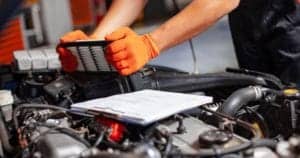
When our technicians pop the hood to check your brake fluid, they're using a couple of key methods to get an accurate assessment:
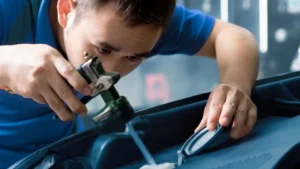
Electronic Moisture Testers: These handy devices give a precise, digital reading of the exact water percentage in your brake fluid. Since water contamination is the #1 reason for a flush, this test provides an immediate and clear pass-or-fail result. It's the most direct way to measure the fluid's biggest enemy.
Copper Test Strips: Over time, as the corrosion inhibitors in your brake fluid break down, tiny copper particles from the inside of your brake lines can leach into the fluid. These simple test strips measure that copper concentration, giving us a clear picture of how much internal decay is happening inside your brake system.
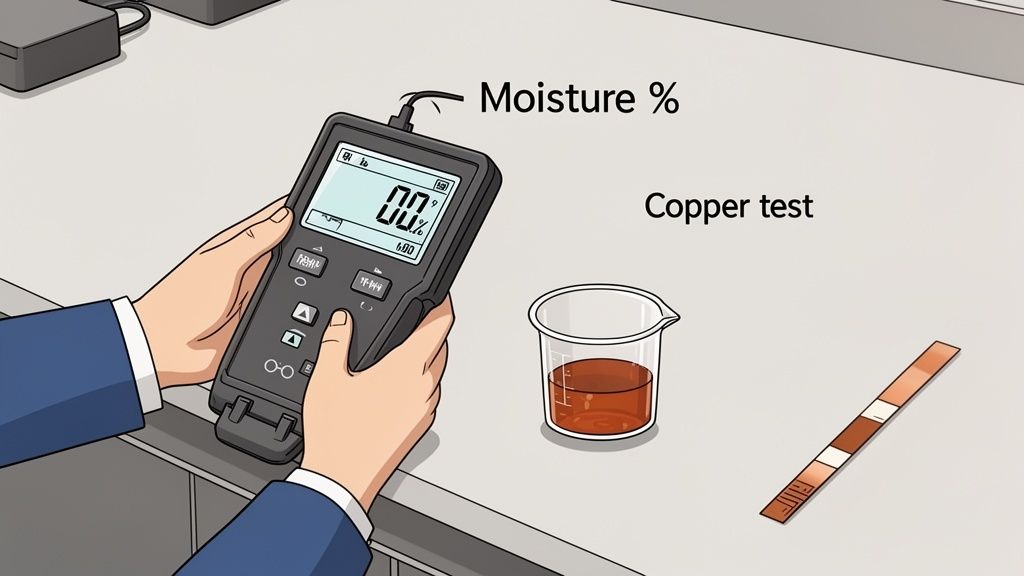
These diagnostics are a standard part of a thorough vehicle check-up. In fact, you can learn more about what to look for when you check car fluids at home.
Saving Money and Staying Safe
At the end of the day, a brake fluid flush is all about proactive care. Think of it as one of the best—and most affordable—investments you can make in your vehicle's long-term health and your own safety. By preventing that internal corrosion we talked about, you're actively protecting expensive parts like the ABS module and calipers from a premature, wallet-draining failure.
A timely flush keeps your brake pedal feeling firm and responsive, giving you the confidence you need to handle anything the road throws at you. It’s a small price to pay for huge returns in reliability and peace of mind.
The bottom line is simple: Don't wait for a warning light to pop up or for the pedal to feel spongy. Being proactive is the secret to a long, healthy life for your car's most important safety system. You'll protect both your vehicle and your wallet from expensive, avoidable repairs down the line.
Common Questions About Brake Fluid
Even with a clear maintenance schedule, it's natural to have questions about brake fluid. Getting straightforward answers is the best way to make smart decisions for your car and your safety on the road. Let's tackle some of the most common things we hear from drivers.
Can I Just Top Off My Brake Fluid Instead of Flushing It?
While you should absolutely top off your brake fluid if you see it's low, that's just a temporary fix, not a substitute for a full flush. Think of it this way: adding new fluid to old, contaminated fluid is like pouring a cup of clean water into a gallon of mud. It doesn't solve the underlying problem.
A complete flush is the only way to get all that accumulated moisture and gunk out of your system. It’s the only method that truly restores your braking system to its original, safe condition.
What Is the Difference Between a Fluid Flush and Bleeding the Brakes?
It’s easy to get these two mixed up, but they're done for very different reasons.
- Brake Bleeding: This is a specific repair procedure. A technician bleeds the brakes to get trapped air bubbles out of the hydraulic lines, usually after a part like a brake hose or caliper has been replaced. The goal is to fix a symptom, like a spongy-feeling brake pedal.
- Brake Fluid Flush: This is proactive maintenance. A flush involves replacing all of the old, worn-out fluid in the entire system with fresh, clean fluid. It’s about preventing future problems and keeping the whole system healthy. A flush is routine care, while bleeding is a targeted fix.
Does the Type of Brake Fluid Affect the Flush Interval?
Yes, but it doesn't eliminate the need for a flush. The most common fluids—DOT 3, DOT 4, and DOT 5.1—are all glycol-based, which means they are all hygroscopic. In simple terms, they all absorb water over time and will eventually need to be flushed.
While some high-performance fluids might have higher boiling points when they're brand new, they can sometimes absorb moisture even faster than standard fluids. The most critical thing you can do is use the exact fluid your car's manufacturer recommends and stick to that two-year service schedule.
At Kwik Kar Oil Change and Auto Care, our certified technicians in Richardson, TX, are here to make sure your braking system is safe and reliable. Ready to get your brakes checked? Schedule your professional brake fluid flush with us today.