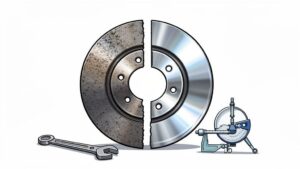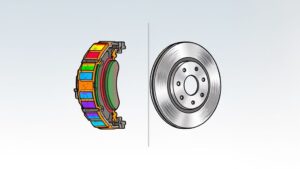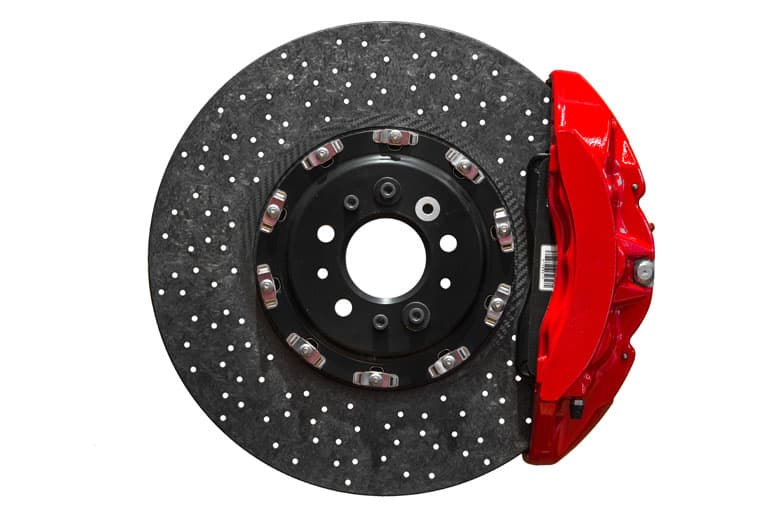
A brake flush service isn't just a top-off—it's a complete fluid replacement for your car's most important safety feature. Think of it as a full-system detox that pushes out old, contaminated fluid and replaces it with fresh, high-performance fluid. This ensures your brakes work exactly as they should, every single time you need them.
What Is a Brake Flush and Why Is It Essential
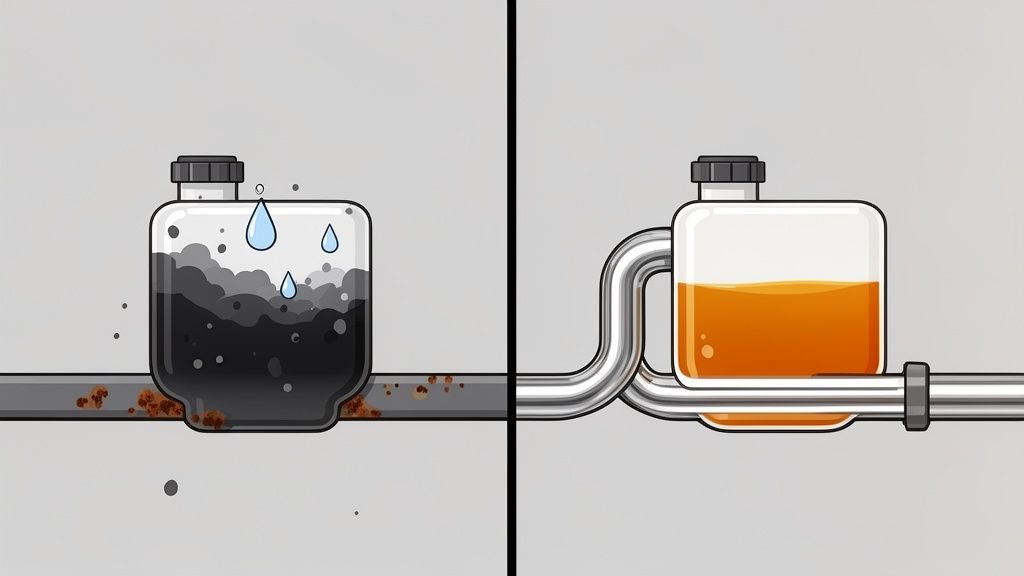
Your car's brake fluid is the hydraulic muscle that stops your vehicle. It’s what translates the pressure from your foot on the pedal into the force that clamps the brake pads onto the rotors, bringing you to a safe stop. But brake fluid has one major weakness: it's hygroscopic.
That’s a technical way of saying it loves to absorb moisture right out of the air, kind of like a sponge left out on a humid Texas day. Over time, that water contamination can have a disastrous effect on your ability to stop.
The Problem with Contaminated Brake Fluid
Fresh brake fluid is engineered to have a very high boiling point, often well above 400°F. This is non-negotiable, because stopping your car generates a massive amount of heat. As water gets into the brake lines, it dramatically lowers that boiling point.
In fact, after just a couple of years on the road, your brake fluid’s boiling point can drop by as much as 50%. This creates a dangerous condition known as vapor lock. When you brake hard, the intense heat can cause the water in your brake lines to boil, creating compressible steam bubbles.
The result is a brake pedal that suddenly feels soft and spongy. In the worst-case scenario, it goes straight to the floor with little to no stopping power. This complete hydraulic failure often happens without warning, right when you need your brakes the most.
This isn’t just a theoretical problem. The U.S. market for automotive brake fluid is expected to hit an estimated $798.4 million by 2035, largely because more older, high-mileage cars on the road require this critical service. More cars on Richardson roads means more vehicles are at risk of this exact kind of fluid breakdown.
Brake Flush vs. Topping Off Fluid at a Glance
It’s crucial to understand that simply topping off your brake fluid and getting a complete flush are two very different services. One is a band-aid, while the other is the cure. This table breaks down the key differences.
| Aspect | Brake Fluid Top-Off | Complete Brake Flush Service |
|---|---|---|
| Scope | Adds a small amount of new fluid to the reservoir. | Removes 100% of old fluid and refills the entire system. |
| Benefits | Restores the fluid level to the "full" mark. | Restores the fluid's high boiling point and corrosion protection. |
| Safety Impact | Minimal. Old, contaminated fluid remains in the lines. | Maximum. Eliminates the risk of vapor lock and ensures reliable stopping power. |
As you can see, topping off your fluid is a temporary measure that doesn't solve the underlying issue of contamination. A full brake flush service is the only way to truly restore the safety and performance of your braking system.
Understanding the right type of fluid for your car, like DOT 3 or DOT 4, is also a key part of the process, which you can read more about in our guide to brake fluid. Ultimately, caring for your brakes is a core part of responsible general vehicle maintenance and your peace of mind on the road.
Warning Signs Your Brakes Are Due for a Flush
Your car has a way of telling you when something’s not right, especially with a system as critical as your brakes. Learning to interpret these signals is the key to staying on top of maintenance and keeping yourself safe. When your brake fluid gets old and contaminated, it starts sending out some clear warning signs that a brake flush service is needed.
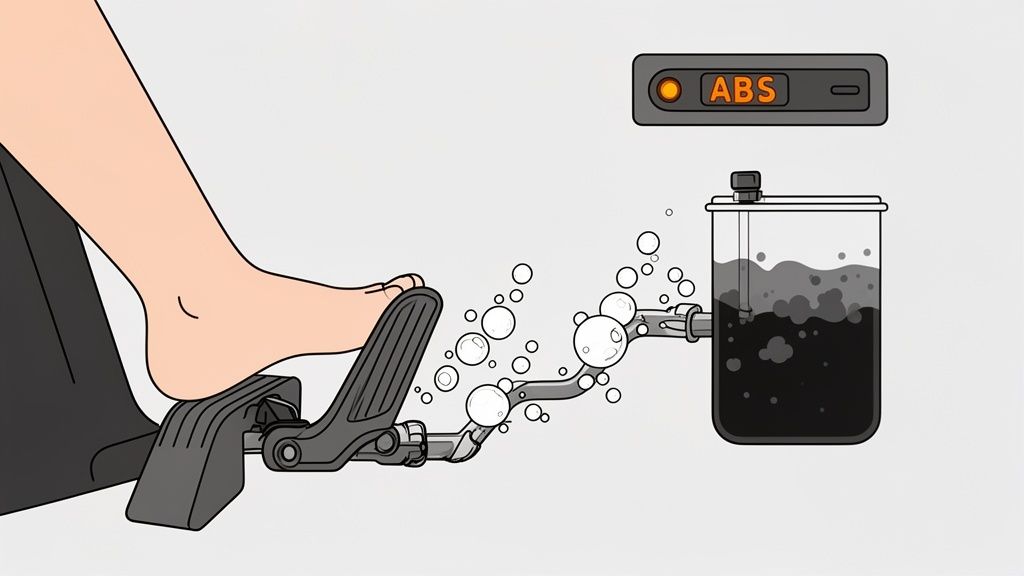
One of the most common—and unnerving—symptoms is a change in how your brake pedal feels. If you have to push the pedal further toward the floor, or if it feels soft and spongy, that’s a major red flag.
This "mushy" feeling is a direct result of contaminated fluid. When moisture and air work their way into the brake lines, they form compressible bubbles. Instead of your foot pressure transferring solid force to the brakes, it gets wasted on squeezing those bubbles, leading to a weak and dangerously delayed response.
The Feel of a Failing System
Think about pushing a solid block with a sturdy stick—the force transfers instantly. Now, imagine using a wet sponge to push that same block. The sponge squishes first, absorbing your effort before the block moves. That’s exactly what’s happening inside your brake lines with bad fluid.
A healthy braking system feels firm and responds the second you touch the pedal. Any sponginess means the system’s hydraulic integrity is shot. This isn't just a minor issue; it dramatically increases your stopping distance and could lead to total brake failure in an emergency.
Brake fluid is an incompressible liquid designed to transfer force. When water turns to steam or air enters the lines, the system gains compressibility, leading to a spongy pedal and a dangerous loss of stopping power. This is a critical safety issue that a proper brake flush service directly resolves.
Visual and Audible Clues
Beyond what you feel through the pedal, there are other clues you can see and hear that point to a brake fluid problem. A quick peek at the brake fluid reservoir under the hood can be very telling.
Fresh brake fluid is usually a light, almost clear amber color. Over time, as it soaks up moisture and collects tiny bits of debris from inside the system, it will get much darker.
- Dark or Cloudy Fluid: If you check the reservoir and the fluid looks like dark brown, black, or murky coffee, it's a sure sign of contamination. This visual cue alone is enough to warrant a professional inspection and, most likely, a full brake flush service.
- Strange Noises: While squealing or grinding often points to worn-out brake pads, these sounds can also be related to fluid issues. A compromised hydraulic system can make the brake calipers work unevenly or fail to retract correctly, leading to all sorts of odd noises.
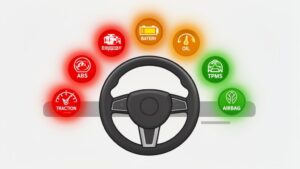
- Dashboard Warning Lights: Modern cars are smart. If the ABS (Anti-lock Braking System) or general brake warning light comes on, your car is telling you to get it checked out immediately. These lights can be triggered by low fluid, pressure problems, or a fault in the ABS module—all of which relate back to the health of your brake fluid.
Ignoring these warnings is a serious gamble. Every symptom, whether it's a soft pedal, dark fluid, or a dashboard light, points to a compromised system that needs attention. Taking prompt action with a professional brake flush service not only makes your car safe again but also helps you avoid more expensive damage to parts like your calipers and ABS module down the road.
Brake Flush vs Brake Bleeding Understanding the Key Difference
When it comes to brake service, "brake flush" and "brake bleeding" are two terms people often use as if they mean the same thing. They're actually two very different services with completely different goals. Getting them mixed up can lead to the wrong service for your car, which could compromise your safety.
Both involve brake fluid, of course, but one is a targeted fix for a specific problem, while the other is preventative medicine for your entire braking system.
Think of it like this: brake bleeding is like patching a single leaky pipe under your sink. It’s a focused repair meant to solve one issue—like air getting into the lines after a brake job. It pushes just enough fluid through the system to force those air bubbles out, giving you that firm pedal feel back.
A brake flush service, on the other hand, is like having a professional drain and replace every drop of water in your home’s plumbing. It's a complete system overhaul. We remove 100% of the old, contaminated fluid and replace it with fresh, high-quality fluid. This ensures the entire system is free of moisture, gunk, and debris.
When Is Brake Bleeding Appropriate?
Brake bleeding is a repair procedure, not something you do for routine maintenance. We typically perform it when air has gotten into the hydraulic system, which you'll notice as a soft, spongy brake pedal that feels dangerously unresponsive.
Situations that usually call for a brake bleed include:
- After replacing a brake line or hose.
- Following a brake caliper replacement.
- When the master cylinder has been opened or replaced.
In these cases, the main goal is simply to get the air out. A technician opens a "bleeder valve" at each wheel and pushes fluid through just until no more air bubbles come out. While this fixes the immediate spongy-pedal problem, it leaves most of the old, degraded fluid still circulating in your system. For a deeper dive into the mechanics, it's helpful understanding how to bleed brakes.
When Is a Brake Flush Necessary?
In contrast, a brake flush service is a critical maintenance task. It’s all about tackling the slow, steady degradation of your brake fluid. Because brake fluid is hygroscopic, it naturally absorbs water from the air. This moisture lowers the fluid's boiling point and starts causing corrosion inside your brake lines and components.
A flush is the only way to get all of that moisture and contaminated fluid out to restore your braking system's health and performance.
The consequences of skipping this service can be pretty severe. Contaminated fluid can reduce your stopping power by 20-30%, which could be the difference between a safe stop and a serious accident. A proper flush removes all that old fluid, restores hydraulic pressure, and helps prevent the estimated 40% of brake failures that are traced back to fluid issues. Ignoring this can also lead to rust and corrosion in expensive parts like the ABS module—a repair that can easily cost over $1,000.
A brake bleed is a reaction to a problem, like air in the lines. A brake flush is proactive maintenance that prevents problems like corrosion and fluid breakdown from ever starting.
So, which service does your car need? It all depends on the situation. If you just had a part replaced and now your pedal feels like a sponge, a bleed might be all you need. But if it's been two years or more since your fluid was last changed, a complete brake flush service is the only way to guarantee your safety and protect your car’s complex braking system.
How Often Should You Get a Brake Flush Service
Figuring out the right time for a brake flush service isn't as simple as just picking a number off a chart. While there are general guidelines, the real answer depends on your car, your driving habits, and even where you live. Getting this right is the key to moving from stressful, reactive repairs to confident, proactive safety.
The common industry recommendation is to schedule a brake flush service every two to three years or every 30,000 miles—whichever comes first. This is a solid starting point for the average driver. However, if you treat this as a hard-and-fast rule, you might be servicing your brakes too early or, far more dangerously, waiting too long.
Factors That Change Your Brake Flush Timeline
Your car’s owner’s manual is always the best place to start, but real-world conditions can definitely speed up the need for a flush. The main culprit is the hygroscopic nature of brake fluid, which is just a fancy way of saying it loves to absorb water right out of the air. Certain environments and driving styles make this contamination happen a lot faster.
Brake fluid's tendency to absorb water is a bigger deal than most people think. It can soak up 2-3% water in just 12-18 months. That might not sound like much, but it’s enough to slash its boiling point from a safe 500°F to a dangerous 300°F, creating a serious risk of brake fade.
This is why putting off a timely flush is so risky. It can lead to scary situations like doubled stopping distances and even cause expensive component failures, like caliper replacements that can run over $2,000. For a deeper look at fluid properties and market trends, you can explore this strategic overview of the brake fluid market.
A few key factors can demand more frequent service:
- High-Humidity Climates: Living somewhere humid like Richardson, TX means there's more moisture in the air for your brake fluid to absorb. This alone shortens your fluid’s lifespan.
- Heavy Stop-and-Go Traffic: City driving with constant braking generates a ton of heat. This constant heating and cooling puts a lot of stress on the fluid, causing it to break down faster.
- Towing or Hauling: Pulling a trailer or carrying heavy loads makes your brakes work overtime. All that extra heat and pressure degrades the fluid much more quickly.
- High-Performance Driving: If you enjoy spirited driving or take your car to the track, you’re pushing the brake system to its absolute limit. This generates extreme temperatures that require your fluid to be in pristine, moisture-free condition.
Here's a quick reference to help you gauge your needs.
Recommended Brake Flush Intervals
| Condition / Vehicle Type | Recommended Interval |
|---|---|
| Average Commuting | Every 2-3 years or 30,000 miles |
| High-Humidity Areas | Every 2 years or 20,000 miles |
| Frequent Towing / Hauling | Every 1-2 years or 15,000 miles |
| High-Performance / Track Use | Annually or as needed per testing |
While this table offers a great starting point, remember that a direct test of your fluid is the most accurate way to know for sure.
Creating a Personalized Service Schedule
Instead of just watching the odometer tick up to 30,000 miles, it’s much smarter to think about your personal driving conditions. A good technician won’t just recommend a flush based on mileage alone; they’ll actually test the fluid’s moisture content to see if the service is truly necessary.
The best approach is to have your brake fluid tested annually. A simple, inexpensive test can measure the percentage of water contamination, giving you a clear, data-driven reason to schedule a brake flush service rather than just guessing.
By tailoring your maintenance schedule to your specific situation, you can be confident your brakes are always ready to perform when you need them most. If you want to dive deeper into how these factors apply to your vehicle, you can learn more about brake flush frequency in our detailed guide. This proactive mindset is the cornerstone of safe and reliable car ownership.
What to Expect During a Professional Brake Flush
So, you’ve decided to get a brake flush service. Good call. But what actually happens when you hand over your keys to a certified technician? It’s a lot more involved than a simple fluid swap, and understanding the process shows you exactly where the value is.
When you bring your car in, we’re not just changing a fluid; we’re systematically restoring your car’s most important safety system to peak condition.
It Starts with a Thorough Inspection
The first thing a skilled tech does isn't draining fluid—it's getting a good look at your entire braking system. Your vehicle is lifted, and the wheels come off. This gives us a clear view of everything from the brake lines to the calipers.
This initial check is absolutely vital. We’re looking for worn brake pads, damaged or warped rotors, and any signs of fluid leaks. We also inspect the master cylinder, which is the heart of the whole operation. You can read our guide on how to inspect brake rotors to see exactly what the pros look for.
Think of it this way: pouring fresh brake fluid into a system with a hidden leak or worn-out pads is like putting a band-aid on a broken bone. It doesn’t solve the real problem. Only after we confirm the whole system is in good shape does the actual flush begin.
The Flushing Process, Step by Step
In a professional shop, we use specialized equipment—usually a pressure-based machine—to perform the flush. This is key because it forces all the old, contaminated fluid out without letting any air get into the brake lines, which is a common headache with DIY attempts.
- Connecting to the System: The technician attaches the flushing machine to your master cylinder’s reservoir. This machine will push brand-new, clean brake fluid into the system while a collection bottle at each wheel catches the old stuff.
- Purging One Wheel at a Time: We work methodically, usually starting with the wheel furthest from the master cylinder. The tech opens the bleeder valve on that wheel, and the machine pressurizes the system. This pushes the old, dark, contaminated fluid out until it's replaced by the new, clean amber fluid.
- Watching for Clean Fluid: The tech keeps a close eye on the fluid coming out. As soon as it runs perfectly clean and is free of any air bubbles, they close the valve and move on to the next wheel. This ensures 100% of the old fluid is purged from every line, caliper, and component.
- Final Checks and Top-Off: With all four wheels done, the tech double-checks that the master cylinder reservoir is filled to the perfect level with the correct DOT-rated fluid for your vehicle. A final look for any leaks is performed, and then we test the brake pedal to make sure it feels firm and responsive, just like it should.
This infographic shows just how much things like your local climate and driving habits can change how often this service is needed.
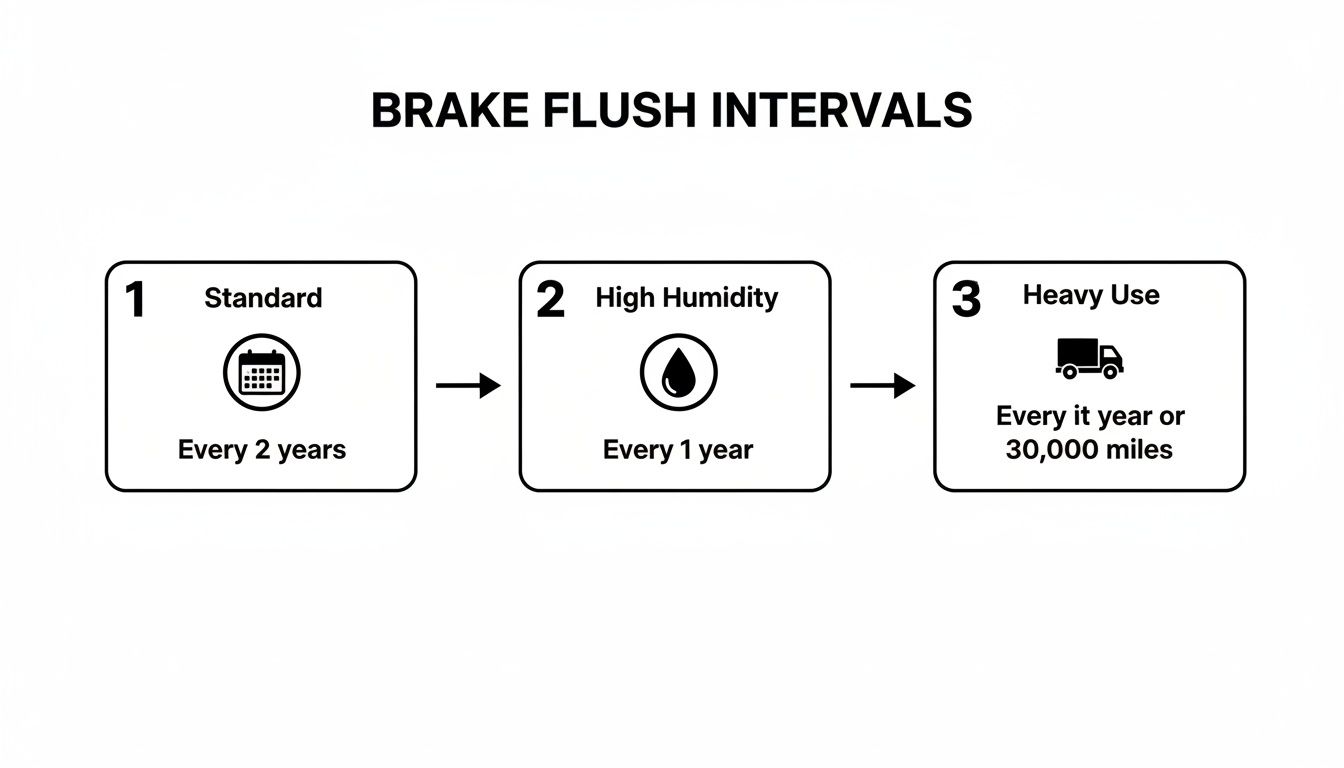
As you can see, factors like high humidity or a lot of stop-and-go driving mean you'll need a flush much sooner.
The real value of a professional brake flush service is the complete confidence it restores. It’s not just about new fluid; it's about knowing the entire hydraulic circuit is clean, air-free, and ready to perform flawlessly every time you hit the brakes.
Once you see the careful, step-by-step process, it’s clear why a brake flush is a crucial piece of maintenance, not one to be skipped. It's a direct investment in your stopping power and your peace of mind on the road.
Understanding the Cost and Value of a Brake Flush
When you're thinking about car maintenance, it's natural for the price to be a major factor. So, what does a brake flush service cost? While the price tag is important, the real discussion is about the value you get for your money. Seeing this service as a small investment in your safety and your car's health changes the whole conversation.
A professional brake flush is a fairly affordable service. Prices can vary, but you can usually expect the cost to be in a predictable range. That price covers the fresh, high-quality brake fluid, the specialized equipment our technicians use, and their expertise in making sure every last drop of old, contaminated fluid is gone.
What Influences the Cost?
A few things can affect the final price of a brake flush. Knowing what they are helps you understand exactly what you’re paying for.
- Vehicle Type: High-performance cars, luxury models, and even some heavy-duty trucks need special brake fluids, like DOT 4 or DOT 5.1. These are a bit pricier than the standard DOT 3 fluid that most passenger cars use.
- System Complexity: Modern cars with advanced systems like ABS and traction control can sometimes be more intricate to service. This can affect the labor time needed to do the job right.
- Fluid Required: The total amount of brake fluid needed to completely flush the system also changes from one vehicle to the next.
Even with these variables, the cost is tiny when you think about what it’s protecting. It's a small price for getting your car's most important safety system back to factory-fresh performance.
The Real Cost Is Neglect
The true cost of a brake flush isn't what you pay for the service—it's what you save by not skipping it. When you let old, moisture-filled fluid sit in your brake lines, it starts causing serious damage that leads to much more expensive repairs down the road.
A routine brake flush is a prime example of preventative maintenance. The modest cost is insignificant compared to the staggering expense of replacing components damaged by corrosion and neglect.
Think about the cost of doing nothing. That old, dirty fluid will eat away at metal parts from the inside out. This can lead to some truly scary and expensive failures. For instance, just replacing one seized brake caliper can run you hundreds of dollars.
Even worse, if that corrosive fluid gets to your Anti-lock Braking System (ABS) module, you could be looking at a repair bill that easily tops $1,000.
When you put the $100-$200 for a preventative flush next to a potential $1,000+ repair, the choice is pretty clear. A regular brake flush service isn't really an expense—it’s one of the smartest financial decisions you can make for your vehicle. It's peace of mind against major failures and a direct investment in your safety every time you get behind the wheel.
Frequently Asked Questions About Brake Flushes
Even after you understand all the benefits, it's completely normal to have a few more practical questions about getting a brake flush service. You want to have all the facts before committing to any work on your car, and that’s a smart move. We've put together some straightforward answers to the questions we hear most often, so you can feel confident about your decision.
Let's clear up some of those lingering questions right now.
Is Topping Off Brake Fluid a Good Substitute for a Flush?
Absolutely not. While adding a bit of fluid to the master cylinder reservoir might turn off a dashboard warning light, it does nothing to fix the real problem: contamination. Think of it like pouring a cup of clean water into a gallon of mud—the whole mix is still just mud.
All that old, moisture-soaked fluid is still sitting in your brake lines, calipers, and ABS module, where it can keep causing corrosion and putting your safety at risk. A top-off is just a band-aid for the fluid level, not a cure for poor fluid quality. Only a complete brake flush service actually removes all the gunk and restores your brake fluid's effectiveness.
How Do I Know Which DOT-Rated Fluid My Car Needs?
This is a critical question, because using the wrong fluid can lead to some serious damage. The good news is that the answer is usually easy to find. The correct brake fluid type is almost always printed right on the cap of the brake fluid reservoir under your hood, specifying a rating like DOT 3, DOT 4, or sometimes DOT 5.1.
You'll also find this information in your vehicle’s owner’s manual. Any professional technician will double-check for the correct fluid type before starting a flush, making sure your system gets exactly what it needs. Using the wrong kind can eat away at seals and seriously compromise your ability to stop.
Using the correct DOT-rated fluid is non-negotiable. Mismatched fluids can have different boiling points and chemical compositions, leading to component failure and reduced stopping power. Always refer to your owner's manual or the reservoir cap.
Is a Brake Flush Included in a Standard Brake Job?
This is a common point of confusion for many drivers. A standard brake job, where a mechanic replaces worn-out brake pads and maybe the rotors, does not automatically include a brake flush service. While the tech will likely need to bleed the brakes to get rid of any air that got in during the repair, a full flush is a separate, more thorough maintenance task.
However, getting your brake pads replaced is the perfect time to also have a brake flush done. The wheels are already off and the braking system is already being worked on, so bundling the services is really efficient. It also ensures every part of your brake system—both old and new—is working together with fresh, clean fluid for the best possible safety and performance.
How Long Does a Brake Flush Service Take?
A professional brake flush is a surprisingly quick service. For most cars and light trucks, the whole process usually takes between 30 to 60 minutes, from the initial check-up to the final pedal test. A certified technician with specialized pressure-flushing equipment can get the job done efficiently while making sure no air gets trapped in the system. It’s a small investment of your time that delivers a huge return in safety and peace of mind.
Ready to give your brakes the attention they deserve? The ASE-certified technicians at Kwik Kar Oil Change and Auto Care are experts in performing thorough, dealership-quality brake flush services. We use the right fluid for your vehicle and ensure your most critical safety system is restored to peak condition. Schedule your appointment online today!