That little bubble on your tire isn't just a cosmetic flaw—it's a massive red flag signaling serious internal damage. This is a critical safety hazard that dramatically increases your risk of a sudden, high-speed blowout. If you see one, you shouldn't keep driving on that tire. It needs an immediate professional inspection and almost certainly a replacement.
What a Bubble on Your Tire Really Means
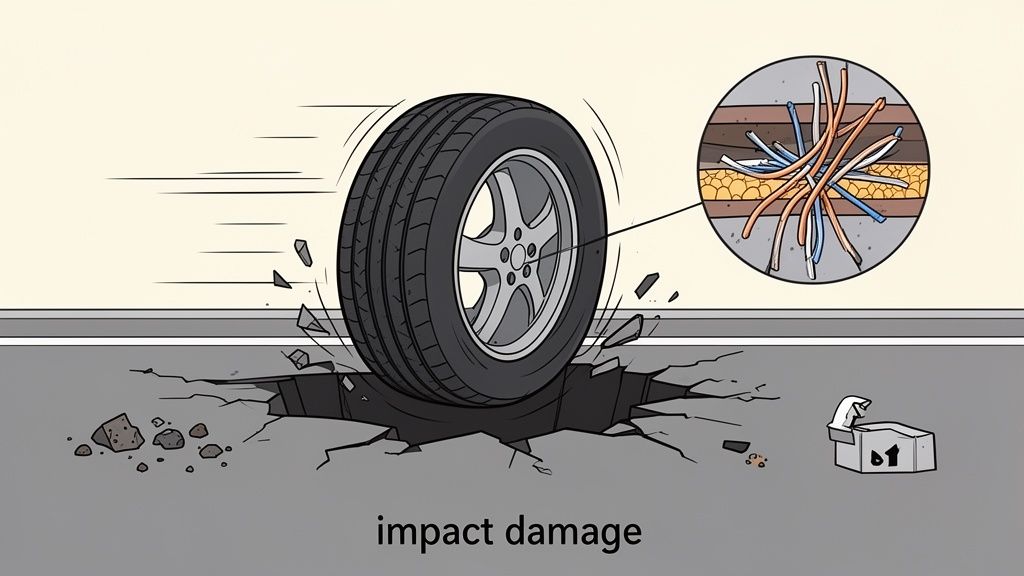
Spotting a bulge on your tire's sidewall is rightfully alarming. This isn't a minor imperfection you can put off until later. A good way to think of it is like a hernia for your tire. Your tire is built in layers, with a strong inner liner and fabric cords that hold high-pressure air and give it structure. A bubble forms when a sudden impact—like smacking a pothole or hitting a curb—snaps some of those internal cords.
Once that internal structure is broken, you're left with a weak spot. The air pressure inside, which is no longer properly contained, pushes the flexible outer layer of rubber outward. That's the bulge you see.
This concept map breaks down exactly what's happening and why it's so dangerous.
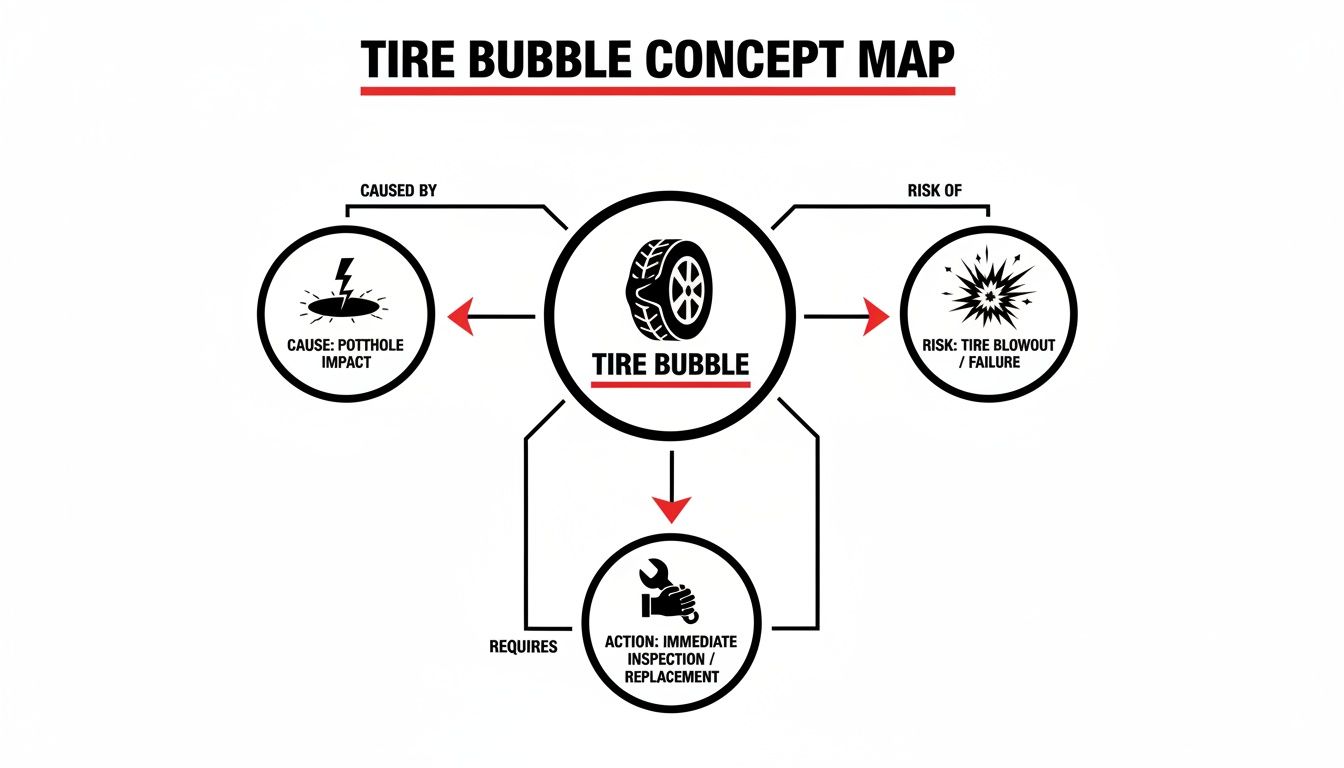
As you can see, the path from an everyday road hazard to a potential blowout is frighteningly direct.
A Ticking Time Bomb on Your Wheel
It's crucial to understand that the bulge itself is just the symptom of a much deeper, more dangerous problem: the structural integrity of the tire has failed. Continuing to drive puts more stress, heat, and pressure on this already compromised area, making a catastrophic failure not just possible, but highly likely.
A bubble on a tire is one of the most dangerous forms of tire damage. Unlike a simple puncture, it represents a complete structural failure from within, making a sudden blowout a significant and immediate risk.
Every time the wheel turns, the damaged sidewall flexes, weakening the remaining structure even more. This is why a tire bubble is often called a ticking time bomb—there is no way to predict when it will burst. It could happen minutes after you notice it or after a few miles, but the risk is always there.
Non-Negotiable Safety First
Because the internal damage is irreversible, there is no safe way to repair a tire bubble. The only solution is to replace the tire as soon as you possibly can. Driving at highway speeds, carrying a heavy load, or even hitting another small bump could be all it takes to trigger a blowout, which can easily cause you to lose control of your vehicle.
Your top priority has to be safety. Stop driving and get professional help from a certified shop like Kwik Kar right away.
To help you quickly gauge the situation, here’s a straightforward summary of what a tire bubble means for your vehicle's safety.
Tire Bubble At-a-Glance Safety Assessment
| Symptom | Underlying Cause | Safety Risk Level | Recommended Action |
|---|---|---|---|
| Visible bulge or "egg" on the sidewall. | Internal structural damage; broken cords in the tire's casing. | CRITICAL | Stop driving immediately. The tire is at high risk of a sudden blowout. |
| Tire feels wobbly or vibrates at low speeds. | The shape of the tire is compromised, causing imbalance. | SEVERE | Do not drive at high speed. Proceed slowly and directly to a tire shop. |
| Appears after hitting a pothole or curb. | A sharp impact has fractured the tire's internal structure. | CRITICAL | Replace the tire immediately. The damage is not repairable. |
This table underscores the urgency of the situation. A tire bubble isn't a "wait and see" problem—it's a "stop and fix" emergency that requires immediate professional attention to keep you safe on the road.
What Causes a Bubble on a Tire
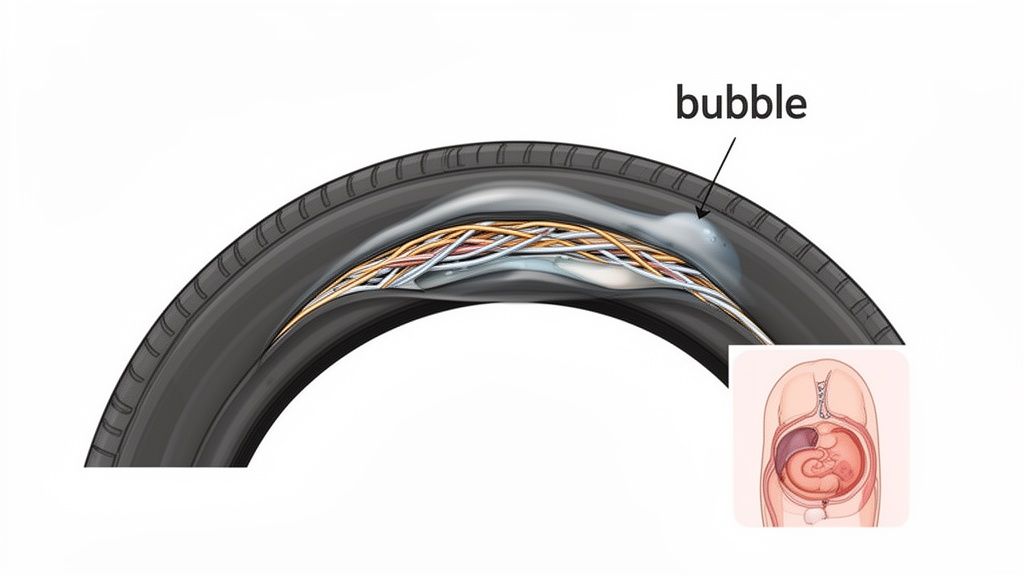
A bubble on a tire is one of those problems that seems to appear out of nowhere. One day your tire looks fine, the next it has a strange "egg" on the sidewall. But these bubbles rarely form without a specific reason, and it’s almost always tied to an event that damages the tire’s hidden internal structure.
The most common trigger is a sharp, sudden impact. Think back—did you recently hit a nasty pothole you couldn't avoid, clip a curb a little too hard, or drive over some debris on the highway? That jolt can be enough to pinch the tire’s sidewall against the metal wheel rim with tremendous force.
When that happens, the very cords that act as the tire's skeleton can snap. With the structural support gone, the air pressure inside has to go somewhere. It forces its way into the outer layers of flexible rubber, creating that unmistakable bulge. This is the bubble on your tire, and it’s a clear sign of a critical failure.
The Anatomy of Tire Damage
A modern tire is far more than just a ring of rubber. It’s a complex, layered structure built to withstand incredible forces. When you hit something hard, it’s not the tough outer rubber that gives way first—it's the delicate inner framework.
The force from hitting a pothole at just 25 mph can be equivalent to several tons. This sudden shock is more than enough to snap the delicate polyester and steel cords woven into the tire’s inner casing, leading directly to a sidewall bubble.
This is exactly why a bump that seems minor at the time can cause such severe damage. Your tire absorbs the blow, but its internal structure pays the ultimate price.
Common Culprits Behind Sidewall Bubbles
While one bad impact is the usual suspect, other factors can weaken a tire over time, making it much more vulnerable to damage. These issues often work together, creating the perfect storm for a sidewall bubble to form.
- Severe Pothole or Curb Impact: This is, without a doubt, the number one cause. Hitting a sharp edge at speed delivers a focused blow that the tire's internal structure just can't handle.
- Driving on Underinflated Tires: Low tire pressure is a silent killer. It forces the sidewalls to flex way more than they should, which generates heat and puts constant strain on those internal cords, making them brittle and easy to break.
- Manufacturing Defects: This is much less common, but it can happen. A flaw during the manufacturing process can leave a weak spot in the tire’s inner liner. Over time, air can slowly leak between the layers, eventually forming a bubble.
It’s also smart to remember how outside factors like temperature can play a part. For example, tire pressure drops in cold weather, which can quickly lead to underinflation if you aren't checking your PSI regularly.
At the end of the day, a bubble on a tire means its structural integrity is gone for good. Whatever the initial cause, the result is a dangerously weak tire that needs immediate attention from a professional. For your safety, it's time to get it inspected and replaced.
Why a Tire Bubble Cannot Be Repaired
When staring at a bubble on a tire, the first question most drivers have is a hopeful one: “Can’t you just patch it up?” It’s a perfectly reasonable question. After all, we’re used to punctures being a relatively quick and easy fix.
But a tire bubble is a completely different beast. It isn't just a simple hole letting air out; it’s a bright, glaring sign of a deep, catastrophic failure inside the tire’s structure.
A standard tire patch is made to seal a small puncture in the thick, durable tread. A bubble, however, is caused by broken internal cords inside the sidewall—the literal skeleton holding your tire together. That internal damage is what lets high-pressure air push the flexible outer rubber into that dangerous bulge.
Trying to "repair" this is like putting a small band-aid on a broken bone. Sure, the band-aid covers the skin, but it does absolutely nothing to mend the fracture underneath. In the same way, slapping a patch on a tire bubble won't restore the critical structural integrity that's been completely lost.
The Anatomy of a Non-Repairable Failure
A tire's sidewall is engineered for flexibility, not for the kind of puncture resistance you find in the tread. It’s built with layers of strong fabric cords, or plies, that run from one side of the wheel to the other, giving the tire its shape and strength. When a sudden impact snaps those cords, the tire’s ability to safely contain thousands of pounds of air pressure is gone.
Think of the tire's internal cords like the steel cables on a suspension bridge. If a bunch of those cables snap, the bridge is no longer safe to drive on. You wouldn't just patch the asphalt and pretend the broken cables aren't a problem—and the exact same logic applies to a tire bubble.
Putting a patch on this kind of structural damage creates a dangerously false sense of security. The tire is fundamentally broken and is just waiting for the right moment—like hitting highway speeds or another bump—to blow out suddenly and violently.
Why Replacement Is the Only Safe Option
Because this internal damage is permanent and irreversible, professional auto shops and tire manufacturers are all in agreement on this: a tire with a sidewall bubble cannot be safely repaired. The structural failure means the tire is no longer sound.
Let's break down the key differences:
- Puncture Repair: This seals a hole in the tread, making the tire airtight again. The crucial structure around the puncture is still intact and strong.
- Bubble (Structural Failure): This involves torn internal cords. There is simply no tool, procedure, or material that can reliably rebuild this broken internal framework.
Driving on a tire with a bubble is a huge gamble every single time you turn the key. The only responsible and safe thing to do is have the tire inspected by a certified technician and replaced immediately. Don’t risk your safety over a problem that has only one right answer.
Your Immediate Action Plan for a Tire Bubble
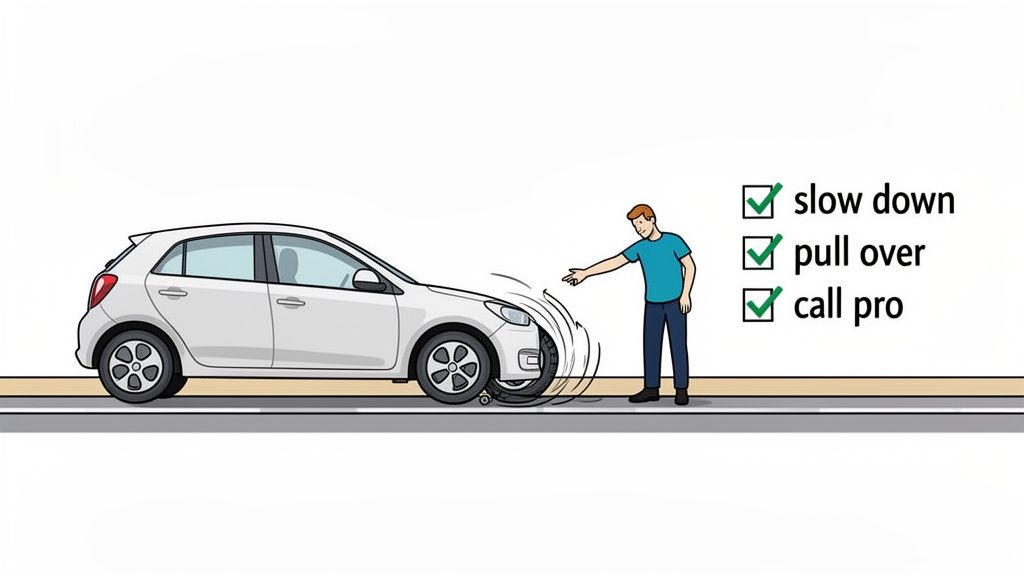
Spotting a bubble on your tire is definitely one of those heart-sinking moments. But don't panic. Knowing exactly what to do next is your best defense against what that bulge represents. Your top priority is simple and non-negotiable: stop driving on that tire as soon as it's safe to do so. The internal damage is already done, and every single rotation of the wheel is just tempting fate.
If you’re already on the road, the first thing to do is ease off the gas and significantly reduce your speed. Flip on your hazard lights to alert other drivers and start looking for the nearest safe spot to pull over—a quiet side street or a well-lit parking lot is ideal. Be gentle with your steering and braking; any sudden moves will put even more stress on that already weakened sidewall.
Once you're safely parked, it’s crucial to understand that this isn’t a DIY situation. A bubble isn't something you can fix with a patch kit or sealant. It signals a complete structural failure from the inside out, and the only solution is professional replacement.
Assessing the Situation Safely
With your car stopped and the parking brake on, you can take a quick look. This is purely to confirm what you’re dealing with, not to try and gauge how "bad" it is.
- Look, Don't Touch: A quick visual is all you need. The size of the bubble doesn’t really matter—whether it's the size of a grape or a golf ball, it means the tire's internal structure has failed. A small bubble is just as dangerous as a large one.
- Check Your Spare: Now’s the time to remember you have a spare. If you've got one and you're comfortable changing a tire, that's your ticket to getting to a shop safely. Just make sure the spare has enough air in it before you go through the trouble.
- Call for Help: If you can't change the tire or your spare isn't in good shape, your best and safest move is to call for roadside assistance. A tow truck can get your vehicle to a shop without putting any more strain on that compromised tire.
Honestly, the biggest mistake anyone can make is to underestimate how dangerous a tire bubble is. It's not a question of if that tire will fail, but when. Driving slowly for a very short distance to a nearby shop should only be considered an absolute last resort.
Getting Professional Help
The only safe way forward is to get your car to a certified tire shop right away. Trying to "limp it home" or drive just a few more miles is a huge gamble. The forces at work inside a failing tire are intense, and a blowout can cause you to lose control of your vehicle in an instant, especially at speed.
At a professional shop like Kwik Kar, our certified technicians can properly inspect the damage, confirm the need for a replacement, and help you pick out the right new tire for your car. We'll handle the mounting, balancing, and proper installation to get you back on the road safely. Your action plan is straightforward: pull over, figure out how to get to a shop without driving on the bad tire, and call for professional help. It’s the only way to handle a bubble on a tire and ensure your safety.
How to Choose the Right Replacement Tire
So, you've confirmed that the bubble on your tire means it's time for a replacement. What now? This next step—choosing the right tire—is absolutely critical for your vehicle's safety, performance, and overall handling. It’s about more than just finding a tire that fits; it's about matching the exact specifications your car was designed for.
The number one rule is to match the new tire to the others already on your vehicle, especially the one it shares an axle with. This means matching the exact size, speed rating, and load index you see printed on the tire's sidewall (your owner's manual has this info, too). Mismatched tires are a recipe for disaster, leading to unpredictable handling, uneven tread wear, and in some cases, serious damage to your car's drivetrain—a particularly expensive problem for all-wheel-drive vehicles.
One New Tire or Two?
This is a question we hear all the time: "Can I just replace the one bad tire, or do I have to buy two?" While replacing one is certainly cheaper at the checkout counter, it’s rarely the smartest or safest move.
- Replacing One Tire: This is really only an option if your other three tires are almost brand new with minimal tread wear. Even a small difference in tread depth between the new tire and its partner on the same axle can throw off your car's stability and handling.
- Replacing a Pair: This is what we highly recommend in almost every situation. Putting two new tires on the same axle ensures they have identical tread depth, grip, and performance characteristics. This keeps your vehicle feeling stable, predictable, and safe.
When you replace tires in pairs, you maintain the vehicle's designed balance. This is crucial for safe braking, cornering, and wet-weather performance, preventing one side from gripping the road differently than the other.
Navigating Your Options With a Pro
The tire market is massive. The industry is expected to grow from an estimated $282 billion in 2025 to $367 billion by 2030, which gives you an idea of just how many brands, models, and types of tires are out there. Trying to sort through all that on your own can be completely overwhelming.
This is where getting some expert guidance is a game-changer. Instead of taking a shot in the dark, it's always best to consult a professional.
An ASE-certified technician can help you find a tire that not only matches your car's factory specs but also suits your personal driving habits and budget. They know the subtle but important differences between various brands and tread patterns. For expert advice and a perfect installation, visiting a certified tire shop in Richardson is your best bet. Our pros will make sure your new tire is mounted, balanced, and installed correctly for maximum safety and performance.
Preventing Future Tire Bubbles and Damage
The absolute best way to deal with a tire bubble is to make sure one never shows up in the first place. And while you can't dodge every single hazard on the road, developing a few good habits can seriously lower your risk and keep your tires in great shape.
Prevention really boils down to two things: driving smart and staying on top of basic maintenance. A little bit of mindfulness behind the wheel and a simple routine can make all the difference, extending the life of your tires and keeping you safer on the road.
Adopt Proactive Driving Habits
Your eyes are your best defense against impact damage. Instead of just reacting to what's right in front of you, try to anticipate what's coming up ahead. This means actively scanning the road for potholes, broken pavement, and other debris.
Steering clear of these obstacles is always your best bet. Also, be extra careful when you’re parking or navigating tight spots. Hitting a curb, even at a slow speed, can be enough to pinch the tire's sidewall and cause the kind of internal damage that leads to a dangerous bubble.
Maintain Your Tires Consistently
Regular maintenance isn't just a suggestion—it's essential for tire safety and longevity. When you take proper care of your tires, you’re making sure they can handle the daily grind and better resist damage from those unexpected bumps and jolts.
Make these key practices part of your routine:
- Check Tire Pressure Monthly: Properly inflated tires are your first line of defense. When a tire is underinflated, its sidewalls flex way too much, creating heat that weakens the tire's internal structure. You can learn more about this in our guide to maintaining correct tire pressure.
- Rotate Your Tires Regularly: Get your tires rotated every 5,000 to 7,000 miles. This simple step ensures the tread wears down evenly across all four tires, which improves your car's stability and helps you get the most life out of them.
- Schedule Wheel Alignments: If you ever feel your car pulling to one side, it's time for an alignment. A proper alignment stops uneven wear patterns that put extra stress on specific parts of your tires.
A well-maintained tire is a resilient tire. Simple checks for proper inflation and regular rotations do more than just extend tread life—they preserve the tire's internal integrity, making it far less susceptible to forming a bubble after an impact.
By taking these proactive steps for your tire health, you dramatically reduce the odds of a catastrophic blowout. This diligence doesn't just save you money on replacements; it's a critical step to prevent rollover accidents that can be caused by sudden tire failure. Most importantly, it keeps you safe.
Frequently Asked Questions About Tire Bubbles
Even after understanding the risks, you might still have a few lingering questions about that bubble on your tire. Let's clear up some of the most common concerns we hear from drivers every day.
How Long Can I Drive on a Tire With a Bubble?
The short, simple answer is: you shouldn’t. A bubble is a clear signal that the tire's internal structure has failed, putting it at an extremely high risk of a sudden, dangerous blowout.
If you are in a situation where you absolutely must move the vehicle, do so at a crawl—just long enough to get it safely off the road and directly to a professional repair shop. Never, ever take it on the highway.
Is a Small Bubble on a Tire Still Dangerous?
Yes, absolutely. Don't let the size fool you. A small bubble indicates the exact same type of critical internal damage as a large one: the structural cords inside have snapped.
The danger isn't about how big the bulge is; it's about the fact that the tire's integrity is gone. It's a major safety hazard that needs immediate attention.
Any bubble, no matter the size, means the tire is unsafe to drive on. The risk of a blowout is just as high because the fundamental internal structure has already been compromised.
Will a Tire Bubble Fail a State Safety Inspection?
Without a doubt. A bubble on a tire sidewall is an automatic failure for any state safety inspection. Inspectors are trained to spot these bulges immediately because they represent a clear and present danger to you and every other driver on the road.
Your vehicle will not be considered roadworthy until that tire is replaced.
Don't gamble with your safety or your vehicle's inspection status. If you spot a bubble on your tire, the only safe move is to get it replaced by a professional. The ASE-certified technicians at Kwik Kar Oil Change and Auto Care are here to help. Schedule your appointment online or stop by our Richardson shop for a fast, expert tire inspection and replacement.