When your car starts acting up, the first few moments are key. Before you even turn the key, a quick walk-around can give you a surprising amount of information. Is there a strange puddle forming underneath? Is one of the tires looking a little sad and flat? This initial check is your first step in a proper car trouble diagnosis and helps you figure out if it's even safe to drive to a shop.
What to Do When Your Car First Acts Up
That moment a weird noise starts, or a new light pops up on the dash can be stressful. The gut reaction is to worry, but a calm, methodical approach will serve you much better. Your absolute first priority has to be safety—for you, your passengers, and everyone else on the road.
Learning to spot the difference between a minor hiccup and a full-blown emergency is crucial. Some problems are a clear signal to pull over immediately.
Think flashing check engine lights, smoke billowing from under the hood, or a sudden change in how your brakes or steering feel. Those are non-negotiable warnings to stop as soon as it's safe. Pushing it could lead to a catastrophic breakdown or a serious accident. On the other hand, a steady check engine light or a faint new noise usually means you can cautiously make your way to a trusted mechanic.
Your Initial Sensory Check
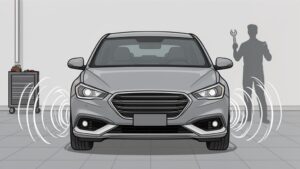
Before grabbing any tools, just use your senses. A simple walk-around inspection can provide a ton of valuable clues for a technician. You don't need to be a mechanic to gather this initial intel; you just need to be observant.
This quick sensory check boils down to three simple things: what you see, what you smell, and what you hear. This flowchart gives you a great way to structure your initial once-over.
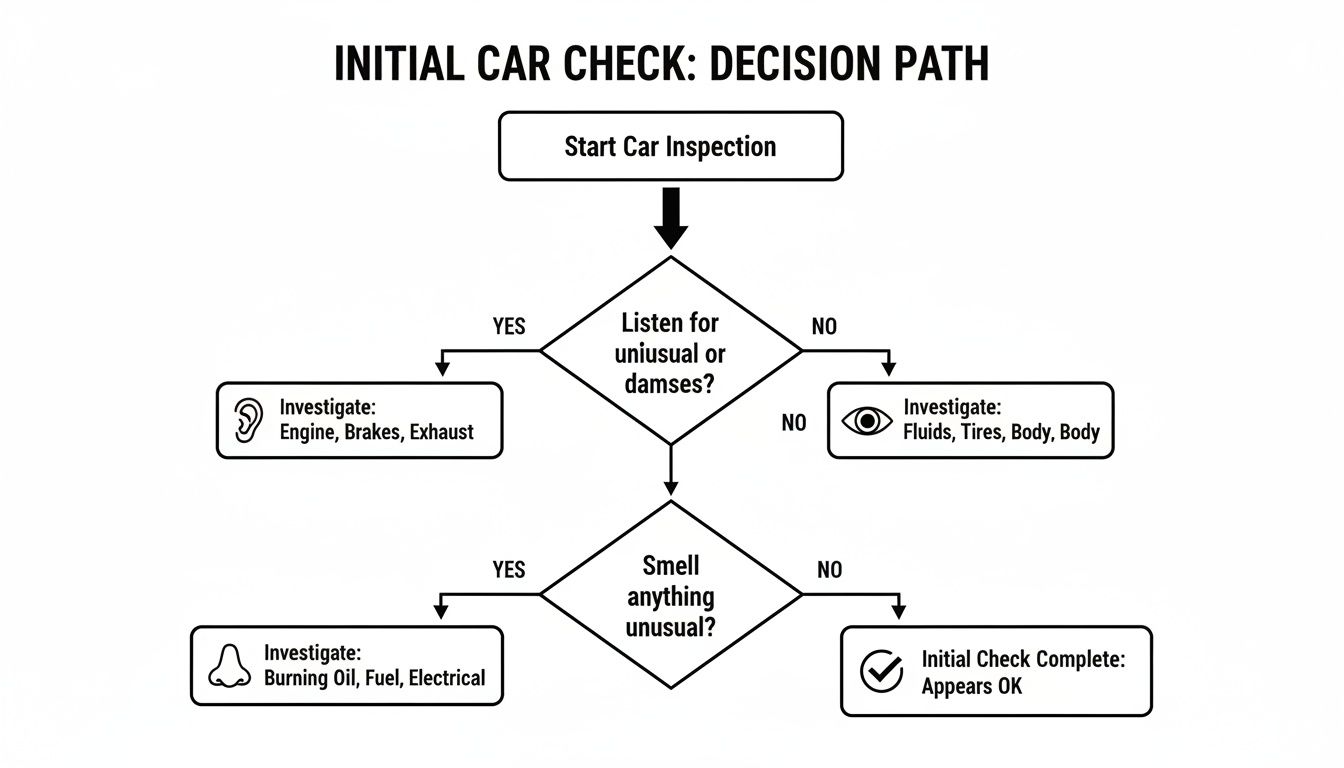
By systematically checking for visual cues, odd smells, and strange sounds, you can start to narrow down the possibilities before you even call for help.
Interpreting What You Find
What you discover during this quick check can point directly to specific systems. A puddle of bright green or pink fluid under the engine bay is a classic sign of a coolant leak. If you see dark brown or black fluid, you're likely looking at an oil leak.
Smells are just as telling. A burning rubber odor could be a slipping belt or a brake dragging, while that distinct, sweet syrupy smell almost always means you’ve got an antifreeze leak. Of course, sometimes the problem isn't mechanical at all—it could be related to your car's security system or ignition, which might require specialized automotive locksmith services.
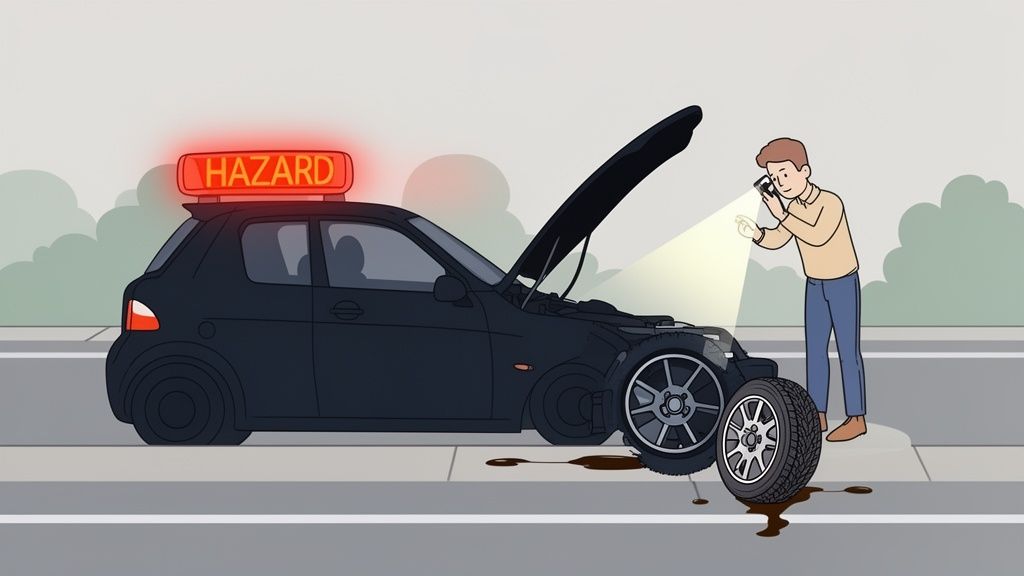
The key thing to remember is that you're collecting evidence, not making a final diagnosis. Giving a mechanic detailed observations—like "I see a small puddle of red fluid on the garage floor"—is infinitely more helpful than a vague guess like, "I think my transmission is broken."
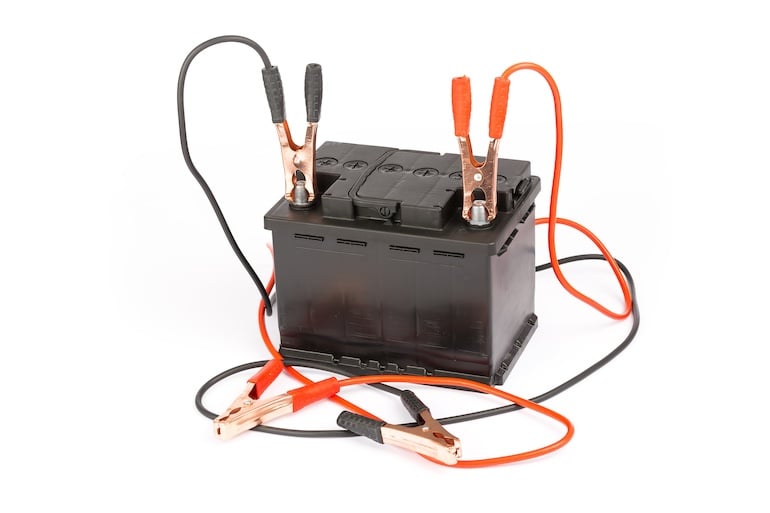
Even something as common as a dead battery has its own diagnostic path. If you suspect an electrical gremlin is keeping your car from starting, you might want to learn a basic diagnostic step. For detailed instructions, check out our guide on how to test a car battery with a multimeter. Documenting these initial findings gives a professional technician a huge head start, saving time and leading to a more accurate repair.
Learning to Speak Your Car's Language
Your car is always talking to you. Every little noise, odd vibration, or new light on the dash is part of a complex language that tells you about its health. Learning to pick up on these signals is the first step in diagnosing car trouble, turning you from a passive driver into an owner who’s in the know.
This isn’t about becoming a master mechanic overnight. It’s about paying attention and connecting the dots. When you can describe the symptoms accurately, you’re already halfway to figuring out the problem before you even step into a shop.
Decoding Engine Troubles
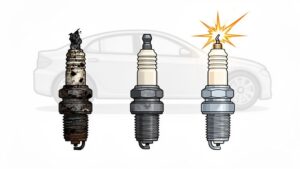
The engine is your car’s heart, so when it acts up, it’s understandably alarming. A rough idle, for instance—that shuddering or stumbling feeling when you’re stopped at a light—can point to a few different things. It might be as simple as a fouled spark plug or a clogged fuel injector.
Hesitation or sputtering when you accelerate is another classic sign. If the engine feels like it's struggling to get going, it might not be getting enough fuel or a consistent spark. We often see this with a failing fuel pump or issues in the ignition system.
A key takeaway for any car trouble diagnosis is that a single symptom rarely has only one cause. Context is everything. Noticing when the problem occurs—only on cold starts, during hard acceleration, or at highway speeds—provides vital clues for an accurate fix.
On the other hand, a sudden loss of power is a much more urgent signal. This could be a major engine problem, a failing transmission, or even a blocked catalytic converter. This is one of those signs that means you need professional help, and fast.
Interpreting Brake and Suspension Noises
Your car's brakes and suspension have their own distinct vocabulary, and it's almost entirely based on sound. Ignoring these auditory warnings can have serious safety consequences. The most common sound drivers hear is a high-pitched squeal when applying the brakes.
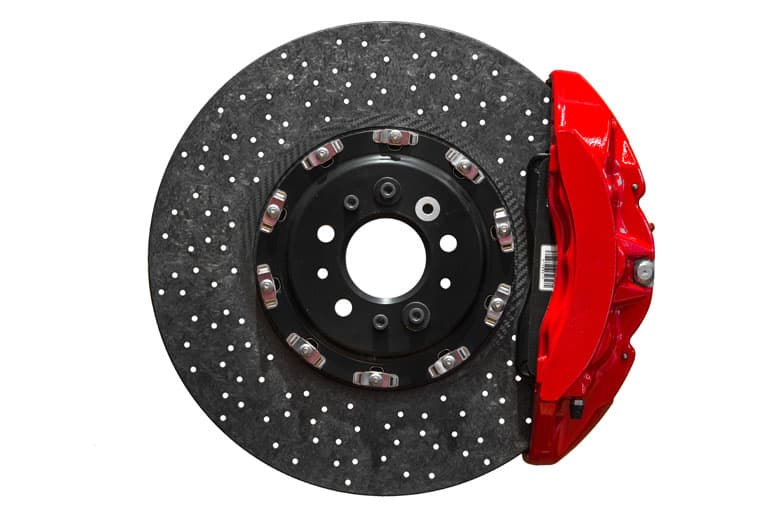
This noise is often caused by the brake wear indicators—small metal tabs designed to make noise when your brake pads are worn down. It’s your car’s built-in reminder system that it’s time for a brake service.
A deep, metallic grinding noise, however, demands more urgent action. This means the brake pads are completely gone, and you've got metal grinding on metal. This not only destroys your ability to stop safely but also damages expensive parts like rotors and calipers. If you hear grinding, pull over and get your brakes checked immediately.
A few other common sounds and their likely meanings include:
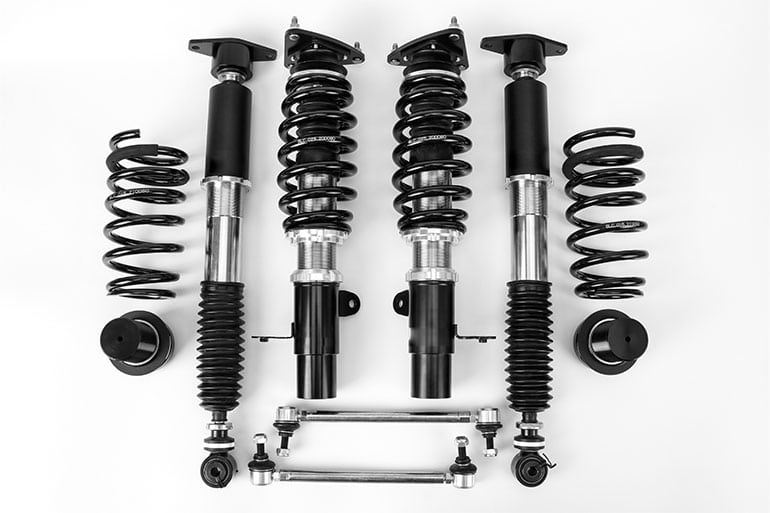
- Clunking over bumps: This often points to worn-out suspension components like shocks, struts, or sway bar links.
- Creaking when turning: Could indicate a failing ball joint or tie rod end, both critical steering components.
- Whirring that changes with speed: This might be a wheel bearing starting to fail, a sound that gets louder as you go faster.
Signs of Electrical System Failure
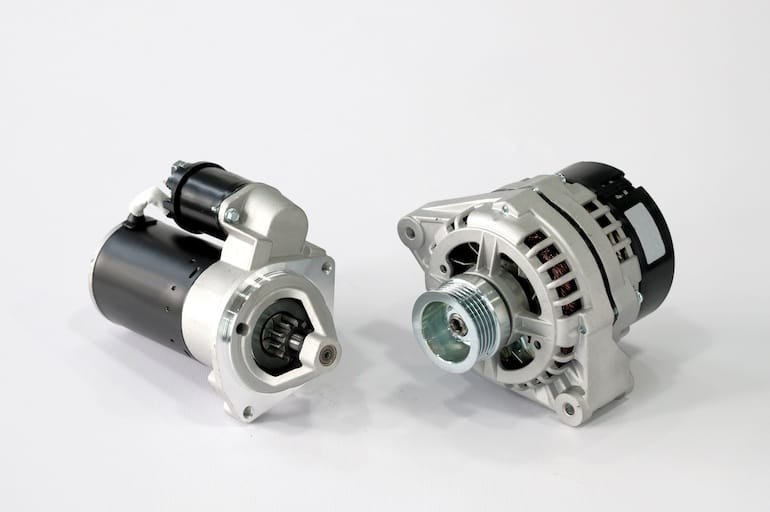
Modern cars are rolling computers, and when the electrical system has issues, the symptoms can get weird. Dimming headlights are a classic sign. If your lights flicker or get weaker when you turn on the AC or use the power windows, it often points to a weak alternator struggling to keep up.
The alternator’s job is to charge the battery and power everything while the engine is running. If it's failing, your battery will eventually drain, leaving you stranded. In fact, over 40% of roadside assistance calls are for battery-related issues, many of which trace back to a failing charging system.
To help you get started, here's a quick reference table to match common car troubles with their likely underlying issues.
Common Symptoms and What They Mean
This table can act as a starting point, helping you connect what you're seeing, hearing, or feeling with a potential cause.
| Symptom | Potential Cause | Immediate Action |
|---|---|---|
| High-pitched squeal from brakes | Worn brake pads (wear indicators) | Schedule a brake inspection soon. |
| Deep grinding noise from brakes | Completely worn pads; metal-on-metal contact | Stop driving immediately and have the vehicle towed for repair. |
| Engine sputters or hesitates | Clogged fuel filter, bad spark plugs, faulty sensor | Note when it happens and seek professional diagnosis. |
| Headlights dim with accessories | Failing alternator or weak battery connection | Have your charging system and battery tested. |
| Vehicle pulls to one side | Misaligned wheels, uneven tire pressure, brake issue | Check tire pressure; if persistent, get an alignment check. |
Use these clues to start a conversation with your mechanic—it makes finding and fixing the real problem much faster.
Understanding Transmission Symptoms
Transmission problems are the ones every car owner dreads because of the potential repair costs, which makes catching them early absolutely crucial. A common symptom is a "slipping" sensation, where the engine revs higher but the car doesn't speed up to match. It might feel like the car briefly shifts into neutral on its own.
Delayed or harsh shifting is another major red flag. If your car hesitates and then "clunks" into gear, whether from a stop or while you’re moving, that’s a clear sign of an internal issue. Sometimes, the problem is just low or dirty transmission fluid, which is an easy fix.
But these symptoms can also point to more serious internal wear. A technician can check the fluid's level and condition—the very first step in diagnosing any transmission issue. If the fluid is dark brown and has a burnt smell, it’s a strong sign of internal damage that needs a much closer look. Ignoring these warnings almost always leads to a bigger, more expensive repair down the road.
Decoding the Check Engine Light and OBD-II Codes
That little amber engine symbol on your dashboard is probably one of the most misunderstood warnings out there. It can cause a wave of panic, but most of the time, it’s just your car’s way of saying, “Hey, something needs a closer look.” Think of it as your vehicle's main communication tool, letting you know its internal computer has flagged a potential issue.
The light has two main modes, and knowing the difference is the first step in a smart car trouble diagnosis. A solid check engine light usually means a non-emergency fault has been detected. This could be anything from a gas cap that wasn't tightened properly to a sensor that's sending back slightly off-kilter readings. You shouldn’t ignore it, but you can typically keep driving to a safe spot or head straight to your trusted auto shop.
A flashing check engine light, on the other hand, is a much bigger deal. This almost always signals a severe engine misfire. When this happens, unburned fuel can get dumped into the exhaust system, which can quickly overheat and destroy your catalytic converter—a repair that can be painfully expensive. If you see that light blinking, pull over as soon as it's safe and get your vehicle towed.
Your Car's On-Board Computer System
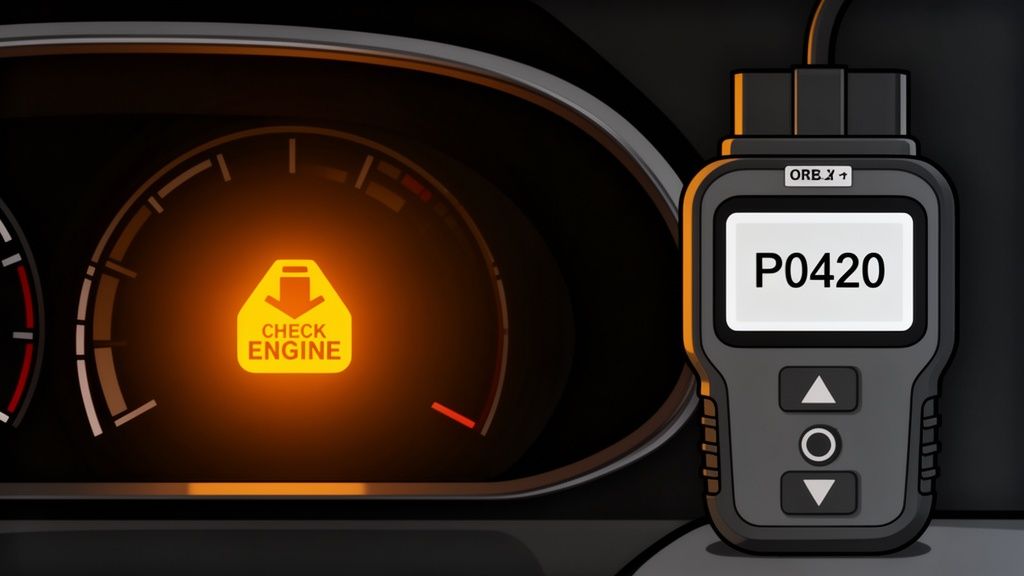
So, what's really happening behind the scenes? Every vehicle built since 1996 has an On-Board Diagnostics (OBD-II) system. This is the central computer network that keeps tabs on your car’s engine, transmission, and emissions. When a sensor reports data that falls outside its normal operating parameters, the OBD-II system logs a Diagnostic Trouble Code (DTC) and turns on the check engine light.
To find out what that code is, you need an OBD-II scanner. These tools used to be for professional mechanics only, but now they're affordable and easy for anyone to buy. You just plug the scanner into the OBD-II port—it's usually under the dashboard on the driver's side—and it will show you the specific code that triggered the light.
Here's the most important thing to remember: a DTC is not a diagnosis. It’s a clue. It tells you which system is having a problem, but it doesn't tell you why. This is where a lot of DIY repairs go sideways.
For example, a common code like P0420 means "Catalyst System Efficiency Below Threshold." A quick online search might tell you to replace the catalytic converter. But the real culprit could be a bad oxygen sensor, an exhaust leak, or even worn-out spark plugs—all of which are much cheaper to fix. If you replace the wrong part, you’ve wasted money and the original problem is still there.
Why a Code Is Just the Beginning
This is exactly why professional diagnostic tools and an expert eye are so crucial. Modern cars are incredibly complex, and that complexity has created a massive industry around diagnostics. In fact, the global market for automotive diagnostic tools is valued somewhere between $40 and $52.76 billion and is expected to keep growing as cars get even smarter. This just goes to show how vital professional-grade equipment is for getting to the root of a problem. You can learn more about the growth of the automotive diagnostic tools market here.
A real diagnosis goes way beyond just reading a code. A professional technician will:
- Look at live data streams: They can watch what the sensors are doing in real-time to spot anything unusual.
- Run functional tests: They can command specific parts to turn on or off to see if they're working correctly.
- Use specialized tools: Things like smoke machines to find tiny vacuum leaks or oscilloscopes to test electrical signals are essential for an accurate diagnosis.
For a deeper dive, you can read our guide on what the check engine light means. Understanding that a code is just the starting point empowers you. It turns you from a worried car owner into an informed partner in your vehicle’s health, ensuring you get the right fix the first time, without wasting time or money.
How to Prepare for a Professional Diagnosis
So, you've done your own initial checks, maybe even plugged in a scanner and pulled a code. Now it's time to hand the keys over to a professional. This handoff is a critical moment in the car trouble diagnosis process, and a little preparation on your part can make a world of difference.
Walking into a shop armed with clear, specific information is the best thing you can do to help a technician. Think of them as detectives trying to solve a mystery—your testimony provides the first and most important clues. Just saying "it's making a weird noise" is a tough place to start and can lead to a longer, more frustrating diagnostic process for everyone.
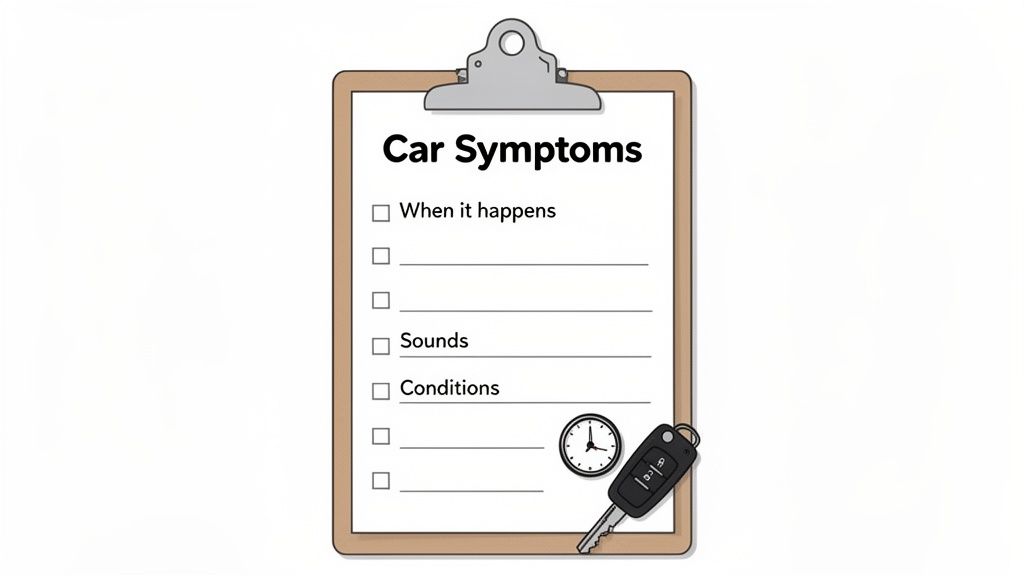
Create Your Symptom Checklist
Before you head our way, take a few minutes to jot down some notes. It’s a lot like preparing for a doctor's appointment; the more detail you can provide, the better. This information helps our technicians recreate the problem, which is absolutely essential for an accurate diagnosis.
A good technician will ask these questions anyway, but having your answers ready saves time and ensures you don’t forget a crucial detail. Your notes can turn what could be hours of guesswork into a focused, efficient diagnostic procedure.
Here's a simple framework to follow:
- When does it happen? Try to pinpoint the specific conditions. Does it only happen on a cold start in the morning? Does it pop up after driving for 20 minutes on the highway? Is the problem constant or does it come and go?
- What does it feel like? Describe what you’re feeling from the driver's seat. Are there vibrations in the steering wheel or brake pedal? Does the car pull to one side when you brake? Can you feel a shudder when the transmission shifts gears?
- What do you hear? Be a sound detective. Is it a high-pitched squeal, a deep grinding, a rhythmic clicking, or a dull thud? Does the noise change with your speed or only when you turn?
- What warning lights are on? Make a note of any lights on the dashboard, especially if they are flashing. Tell us if they stay on constantly or just pop on and off.
By documenting these specifics, you become an active partner in the diagnostic process. A note like, "I hear a clicking sound from the front right wheel, but only when I make a sharp left turn at low speeds," is incredibly valuable.
What to Expect at a Professional Shop
When you bring your vehicle to a certified shop like Kwik Kar, the diagnostic process goes way beyond just plugging in a code reader. While those OBD-II codes give us a starting point, our ASE-certified technicians use that data to run a series of targeted tests.
This process often involves advanced equipment to measure sensor outputs, check fuel pressure, or find tiny, hard-to-see leaks in a vacuum system. A full diagnostic test can take anywhere from an hour to 90 minutes or more, depending on how complex the issue is.
We’re committed to full transparency. Before any repair work begins, we’ll give you a clear, straightforward explanation of what we've found, along with a detailed, itemized estimate for your approval. This ensures you understand the problem and the costs involved, putting you in complete control. To get a better idea of what a professional check-up covers, take a look at our comprehensive vehicle inspection checklist.
Occasionally, a thorough diagnosis reveals that repair costs are going to be extremely high. In these unfortunate cases, it helps to understand how to tell if your car is totaled and what your next steps might be. This knowledge can help you make a financially sound decision when facing a significant repair bill.
Why an ASE-Certified Technician Is Your Best Bet
Today's vehicles are more computer than machine, which means the person handling your car trouble diagnosis matters more than ever. It's not just about finding someone with a good set of wrenches anymore. You need a professional who understands the complex web of sensors, software, and electronic modules that keep your car running.
This is exactly why professional certification is so critical. Looking for a shop with ASE-certified technicians isn't just a nice-to-have; it's your best defense against a wrong diagnosis, unnecessary repairs, and bigger headaches down the road.
What ASE Certification Really Means
When you see that blue and white ASE (Automotive Service Excellence) logo, you're looking at a seal of quality. It means the technician has passed a tough specialty exam and has at least two years of documented, hands-on experience in the field.
And it’s not a one-and-done deal, either. Technicians have to re-certify every five years to keep their credentials. This proves they're staying on top of the constant changes in vehicle technology.
This commitment to ongoing learning is what separates the pros from the amateurs. Modern cars are packed with intricate systems that require way more than a basic code reader to figure out. An ASE-certified tech knows how these systems talk to each other and can interpret the data to find the root cause of the problem—not just slap a bandage on a symptom.
Trusting your vehicle to an ASE-certified professional is the single best way to ensure the diagnosis is based on expertise and proven knowledge, not guesswork. It’s peace of mind on wheels.
This technological shift is happening everywhere. In fact, the Asia-Pacific region is now leading the automotive diagnostic tools market, partly because of a 50% spike in China's EV production and the push toward autonomous driving. As you can read in this report on global automotive diagnostic trends, this means cars sold right here in Richardson have increasingly complex tech from all over the world. Having certified technicians who can service these advanced systems is non-negotiable.
The Kwik Kar Diagnostic Advantage
At Kwik Kar, our promise to you is built on the expertise of our ASE-certified technicians. We invest in our people and our equipment to make sure we can handle whatever your vehicle needs, whether it's a brand-new model or a trusty older car with high mileage.
Here’s what that certification means when you bring your car to us:
- Accuracy: Our technicians have the training to pinpoint the real issue, so you don't end up paying for parts or repairs you don't actually need.
- Efficiency: Expertise leads to faster, more effective diagnostic work. We’ll get you back on the road sooner.
- Confidence: You can drive away knowing the job was done right the first time by a professional who has proven their skills.
Choosing a certified technician isn't just about fixing what’s broken today. It’s about building a relationship with a professional you can trust to help maintain your vehicle's health, safety, and value for years to come.
Common Car Diagnosis Questions Answered
To wrap things up, let's go through some of the most common questions we hear from drivers about diagnosing car trouble. Getting straight answers can make a world of difference when you’re facing a vehicle issue, giving you the confidence to make the right call. Think of this as a quick reference to clear up any confusion and get you ready for what’s next.
How Long Does a Professional Diagnostic Test Take?
A lot of people think a diagnostic test is just a quick five-minute code scan, but a real, professional diagnosis goes much deeper. While pulling a basic code might only take a few minutes, a truly comprehensive diagnostic test usually takes between 60 and 90 minutes.
Why so long? That time allows a certified technician to do more than just read the code. They'll run targeted tests, visually inspect the related parts, and look at live data streaming from your car’s computer to see how everything is working together. For those really tricky, intermittent electrical problems that only pop up under certain driving conditions, it could even take a few hours as the tech works to replicate the exact fault. A good shop will always give you a time estimate after their initial look.
Is It Safe to Drive with the Check Engine Light On?
This is one of the most critical questions we get, and the answer completely depends on how the light is behaving.
A solid check engine light: If the light is on and staying steady, and your car feels like it's driving normally, you can generally drive it to your trusted repair shop. The problem is likely related to an emissions system or sensor issue that needs to be addressed soon, but it isn't an immediate crisis.
A flashing check engine light: This is a much bigger deal. A flashing light is a direct warning of a severe engine misfire. This can dump unburned fuel into your exhaust system, which can rapidly overheat and destroy the catalytic converter—a very expensive part to replace. If you see that light flashing, pull over as soon as it's safe and call for a tow. Don't risk it.
Why Pay a Diagnostic Fee If I Can Read the Code Myself?
With affordable OBD-II scanners now widely available, it’s tempting to pull a trouble code and think you’ve got the problem figured out. But a diagnostic code isn't a final answer; it’s just the first clue. The diagnostic fee you pay at a shop covers a certified technician's expertise and their access to advanced equipment to find the root cause behind that code.
Think of it this way: a code pointing to an oxygen sensor doesn't automatically mean the sensor itself is bad. The real culprit could be a vacuum leak, a failing fuel injector, or even an exhaust leak that’s tricking the sensor into sending bad data. Paying a pro for a proper car trouble diagnosis keeps you from throwing money away on parts you don’t need and ensures the actual problem gets fixed right the first time.
What Is the Difference Between a Diagnosis and an Inspection?
While both involve a technician looking over your vehicle, a diagnosis and an inspection serve two totally different functions.
An inspection, like the annual Texas state inspection, is a routine check-up. Its goal is to verify that a specific list of safety and emissions components are present and working correctly, all based on state regulations. It’s a simple pass/fail assessment against a standardized checklist.
A diagnosis, on the other hand, is a problem-solving mission. It starts when there's a specific symptom—a weird noise, a drop in performance, or a warning light. The whole point is to investigate that specific issue with targeted testing and analysis to pinpoint the exact cause of the failure. One is a routine health screening; the other is figuring out what's causing the pain.
When your car needs answers, don't leave it to guesswork. The ASE-certified technicians at Kwik Kar Oil Change and Auto Care have the expertise and advanced tools to perform an accurate, reliable car trouble diagnosis. Schedule your appointment today and drive with confidence. https://www.kkrichardson.com