That high-pitched squeal from your brakes is an unnerving sound, and for good reason. The primary cause of squeaky brakes is almost always a vibration somewhere in the system. This can come from something as simple as morning moisture or as serious as completely worn-out brake pads.
While some squeaks are harmless, a persistent one is your car's built-in safety alert. It’s a sound you definitely shouldn't ignore.
What Do Squeaky Brakes Mean for Richardson Drivers
Hearing a strange noise from your car is always a bit stressful, but it's especially concerning when it's coming from your brakes. For drivers in Richardson who deal with a mix of stop-and-go city traffic and open highway speeds, knowing what these sounds mean is key to staying safe.
Think of your brake noises like a traffic light. A faint squeak on a damp morning that goes away after a few stops is a 'yellow light'—it's just a temporary heads-up caused by a little surface rust. But a loud, sharp squeal that happens every single time you hit the pedal? That's a 'red light,' telling you it's time to pull over and get a professional diagnosis.
Temporary vs. Persistent Brake Noise
The good news is that not every squeak spells disaster. Environmental factors, especially the humidity we get here in Texas, can create temporary noises that fix themselves. The real trick is learning to tell the difference between these harmless sounds and the ones signaling a real mechanical issue.
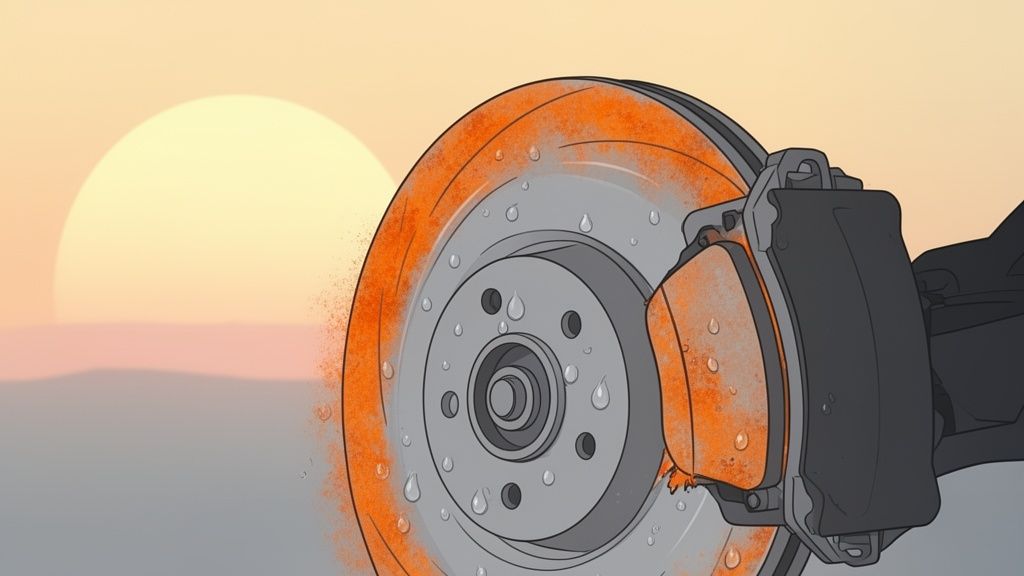
- Temporary Squeaks: These are usually caused by morning dew or light rain creating a super-thin layer of "flash rust" on your brake rotors. This type of squeak almost always disappears after the first few times you use your brakes, as the pads wipe the rotors clean.
- Persistent Squeaks: A consistent, high-pitched squeal is the classic sign that your brake pads have worn down to their metal wear indicators. Ignoring this can quickly lead to more serious (and expensive) damage to other parts of your brake system.
This infographic gives you a simple way to trace the source of the noise and decide if it’s a temporary issue or something that needs a mechanic's attention.
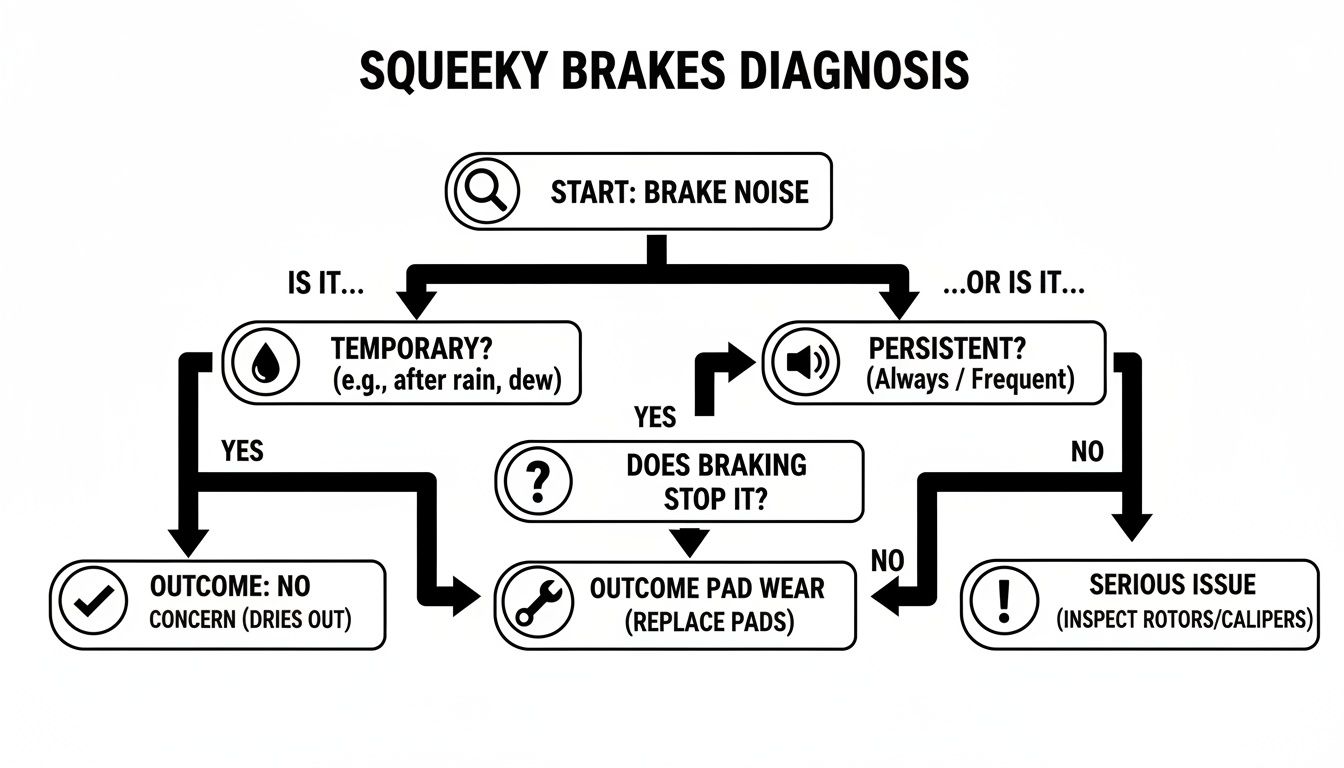
As the chart shows, if the noise is temporary and seems related to the weather, it's probably nothing to worry about. But if it's constant or you're hearing other sounds like grinding, it's time for an inspection.
A squeaky brake is your car’s way of communicating. A brief morning squeal is a simple "hello," but a constant screech is a cry for help.
If you ever have any doubt about what's causing your brakes to squeak, the safest move is always to get a professional opinion. Here at Kwik Kar, our ASE-certified technicians can find the problem fast, give you a clear explanation, and make sure you drive away with confidence and peace of mind.
The Number One Cause of Squeaky Brakes: Worn Pads
If you're hearing a persistent, high-pitched squeal from your wheels every time you touch the brake pedal, there’s a good chance your car is trying to tell you something important. This isn't just some random noise; it's a built-in alert system kicking in. More often than not, the cause of squeaky brakes is simply that your brake pads have reached the end of their useful life.
Think of your brake pads like the soles on your favorite pair of running shoes. With every mile you drive, they gradually wear down. To keep you from wearing them down to a dangerously thin level, car manufacturers include a clever little device called a wear indicator.
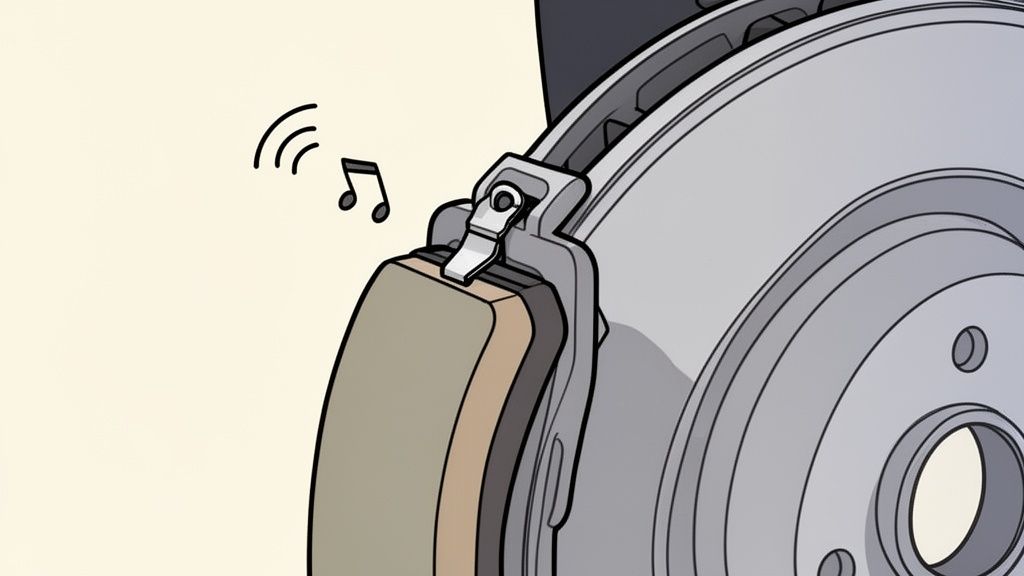
This indicator is just a small metal tab attached right onto the brake pad. As the pad's friction material wears away, this metal tab eventually makes contact with the spinning brake rotor. The result? That unmistakable, high-frequency squeal you’re hearing. It’s an audible warning system, all by design.
The Engineered Tattletale
That squeal from a wear indicator is intentionally annoying—it’s designed to grab your attention before minor wear spirals into major damage. Worn brake pads are the undisputed champion of squeaky brake complaints, responsible for about 60% of all cases we see in the shop.
Once the pads wear down to less than 3mm (about 1/8 of an inch), the wear indicator starts scraping the rotor, creating a shrill sound in the 3,000-5,000 Hz range. It's your car’s way of saying, “Hey, time for a brake check!” You can find more great insights on how to handle this brake safety feature over at Synchrony.com.
For drivers here in Richardson, the mix of stop-and-go city driving and open highway cruising means brake pad life can vary quite a bit, typically landing somewhere between 30,000 and 70,000 miles.
Key Takeaway: The high-pitched squeal from worn brake pads is not a sign of failure but a deliberate warning. It’s your vehicle’s way of asking for a necessary and routine maintenance check.
Ignoring this warning is a gamble that rarely pays off. If you keep driving, that squeal will eventually turn into a much harsher, grinding noise. That's the sound of metal-on-metal—the pad's backing plate grinding directly against the brake rotor.
This isn't just a safety disaster that drastically reduces your ability to stop; it also chews up your brake rotors in a hurry. A routine brake pad replacement is a fairly affordable service. But waiting until the rotors are damaged turns it into a much more expensive repair, requiring you to replace both the pads and the rotors.
Ultimately, acting on that initial squeal is the smartest move you can make for both your wallet and your safety. It keeps your car safe on the road and stops a simple maintenance task from becoming a major, costly problem. If these sounds are becoming familiar, take a look at our guide on when to replace your brake pads to learn more about what to expect next.
How Morning Moisture Causes Temporary Squeaks
Ever hop in your car on a humid Richardson morning, pull out of the driveway, and get greeted by a high-pitched squeak from your brakes? You’re not alone. It’s a common sound that often disappears just as fast as it showed up, leaving you wondering what just happened. The culprit is usually nothing more than a little overnight moisture.
Think of it as a brief 'rusty handshake' between your brake pads and rotors. Your rotors are made of cast iron, which is quick to form a little surface rust when it gets wet. On a damp night or after it rains, a very thin, perfectly normal layer of rust builds up on the rotor’s surface.
This is often called "flash rust" because it appears quickly and is only skin-deep. It’s not the same as the deep, flaking rust that signals a real problem. When you first hit the brakes in the morning, the pads have to wipe this light, rusty film off the rotors to get a clean grip.
Why Flash Rust Creates Noise
That initial squeal you hear is just the sound of your brake pads scraping away those fine, abrasive rust particles. As automotive experts explain, this is a temporary issue that fixes itself. Overnight condensation causes this light rust to form, especially when a car sits idle. When you first brake, the pads scrape it off, creating that squeak. You can read more about how AAA explains this common brake noise issue.
Fortunately, it’s usually gone after about 5-10 initial stops. The sound might be startling, but it's a normal part of how a brake system works in our changing Texas weather. After a few taps of the pedal, the pads have polished the rotors clean, and your brakes go back to their usual quiet operation.
The morning brake squeak is like your car clearing its throat. It’s a temporary noise that goes away once the system warms up and shakes off the overnight condensation.
When Moisture Becomes a Long-Term Concern
While a little morning squeak is typically harmless, constant exposure to moisture can cause issues down the road. Cars that are frequently parked outside in rainy or humid weather may see slightly faster wear on their brake components.
Here’s what you should keep an eye on:
- Persistent Noise: If the squeaking doesn’t stop after a few minutes of driving, it might point to another problem, like worn-out hardware or glazed brake pads.
- Pitting and Corrosion: Over months and years, constant moisture can lead to deeper pitting on the rotor surface. This can cause vibrations when you brake and reduce your stopping power.
A quick visual check of your brakes during a routine oil change at Kwik Kar is a great way to catch any potential issues early. Our technicians can easily spot signs of excessive rust or uneven wear, making sure a simple case of morning moisture doesn't turn into a bigger, more expensive problem. It’s a small, proactive step that keeps your brakes ready to perform safely.
Understanding Deeper Issues Like Rotors and Hardware
If that annoying brake squeak sticks around long after the morning dew has dried up and you know your brake pads are still in good shape, it’s time to look a little deeper. Often, the real cause of squeaky brakes isn't the pads themselves but the supporting components—namely, your brake rotors and the small but mighty hardware holding everything together.
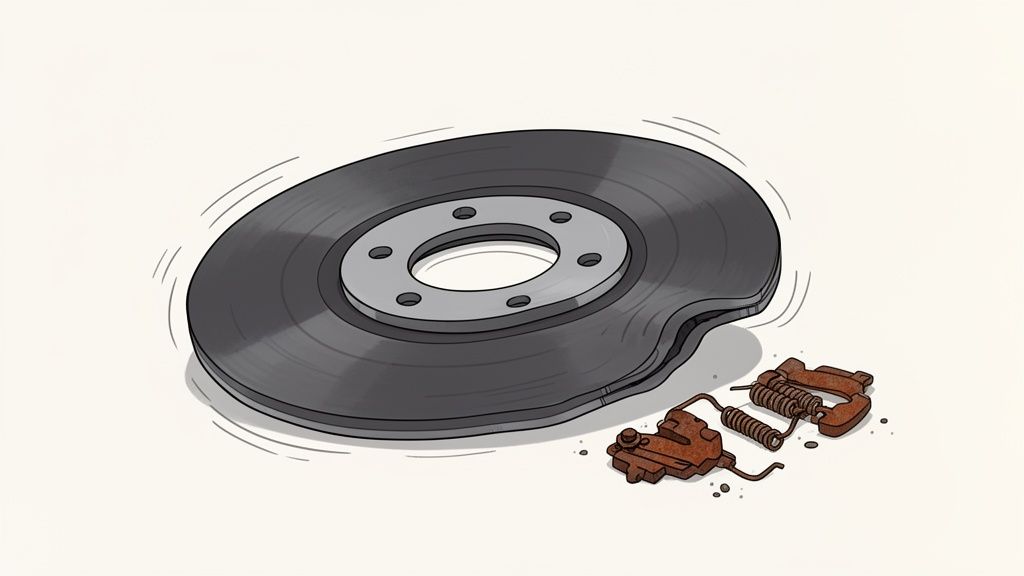
Think of your brake rotor as a perfectly smooth surface. The brake pad glides across it silently to stop your car. But if that surface becomes uneven or "warped," things get noisy. It’s a lot like a record player needle skipping across a scratched vinyl record.
Warped or Uneven Rotors
"Warping" is the common term for when a rotor develops an uneven thickness across its surface. This usually happens from extreme heat caused by hard braking, or when a hot rotor cools down too fast—like hitting a big puddle after a long downhill stretch.
When a rotor is no longer perfectly flat, the brake pads can't apply consistent pressure. They end up gripping and releasing against the high and low spots as the rotor spins. This creates a vibration you hear as a squeak and often feel as a pulse or shudder in the brake pedal. It’s not just an annoying sound; it's a sign that your stopping power is compromised. For a closer look, you can read our guide on how to inspect brake rotors and what to watch for.
The Supporting Cast: Brake Hardware
Your brake pads don’t just float in place. They’re held securely by a whole team of clips, springs, and shims that make sure they stay perfectly aligned and move freely. This hardware essentially acts as a suspension system for your brake pads.
A squeak from failing hardware is like a rattle from a loose engine part—it’s a sign that crucial components are no longer secure and are vibrating under pressure.
These little metal pieces have a tough life, constantly battling extreme heat, moisture, and road salt. Over time, they inevitably rust, get brittle, or lose the tension they need to do their job.
When this hardware gives out, it allows the brake pads to vibrate every time you press the pedal. This micro-vibration is a very common source of a persistent, high-pitched brake squeak, especially in vehicles that have seen a lot of miles.
These deeper issues aren't as simple to spot as worn-out brake pads. They require a professional eye to diagnose correctly, but catching them early is key. Addressing a rotor or hardware problem stops a minor squeak from becoming a major safety issue and keeps your brakes working exactly as they should.
Your Guide to Kwik Kar Brake Services in Richardson
So, you’ve heard that dreaded squeak or grinding noise. Your next move should be getting a professional to take a look. Here at Kwik Kar in Richardson, we’ve built our entire process around being transparent and earning your trust. We want you to understand exactly what’s going on with your vehicle and what we’re doing to fix it. We’re not just here to replace parts; we’re here to give you back your peace of mind on the road.
Our approach always starts with a comprehensive, no-strings-attached brake inspection. An ASE-certified technician will get your car on the lift and remove all four wheels to get a clear, unobstructed view of your entire brake system. We don’t just peek at the pads. We meticulously measure their thickness, check the rotors for any signs of warping or heat damage, test the calipers to ensure they’re moving freely, and inspect all the little hardware pieces for rust or wear. This full-system checkup is absolutely vital, as the true cause of squeaky brakes is often something you can’t spot with a quick glance.
Our Brake Service Process
After we pinpoint the problem, we’ll bring you back to the shop, show you the worn-out or damaged parts firsthand, and clearly explain what we recommend. We believe in empowering you with knowledge, not overwhelming you with technical jargon. Our goal is always to provide the right service your car needs—nothing more, nothing less.
Here’s a look at our most common brake services:
- Brake Pad Replacement: This is the bread and butter of brake work. We’ll swap out your old, worn pads with high-quality new ones that meet or exceed your car manufacturer’s specs. This ensures quiet, confident stopping power. We also take the extra step of lubricating all the metal-to-metal contact points to head off any future noises.
- Rotor Resurfacing or Replacement: If your rotors are warped but still have enough metal on them, we can often resurface them to create a perfectly flat, smooth surface again. However, if they’re too thin or badly damaged, we’ll recommend replacing them with premium new rotors to guarantee your safety and your car’s performance.
- Brake Fluid Flush: Over time, brake fluid naturally absorbs moisture from the air, which can cause corrosion inside your brake lines and give you a spongy-feeling pedal. A full fluid flush removes all that old, contaminated fluid and replaces it with fresh, clean fluid, protecting the entire system from the inside out.
You can get more details on our commitment to quality by exploring our brake service options in Richardson. We rely on state-of-the-art equipment to make sure every job is done to the highest standard.
At Kwik Kar, we treat your vehicle's safety as if it were our own. Every single brake service ends with a rigorous quality check and a road test by a senior technician to confirm your brakes are performing flawlessly.
Kwik Kar Brake Service Menu & Estimated Timelines
To give you a clearer picture of what to expect, here’s a quick overview of our common brake services, what’s included, and the typical time commitment at our Richardson shop. We always aim to get you back on the road safely and efficiently.
| Service | Description | Estimated Cost Range | Estimated Service Time |
|---|---|---|---|
| Brake Inspection | A thorough visual and physical inspection of pads, rotors, calipers, and hardware on all four wheels by an ASE-certified tech. | Free | 20-30 minutes |
| Brake Pad Replacement | Includes new premium brake pads, lubrication of caliper slide pins and hardware, and a system check. | $150 – $300 per axle | 60-90 minutes |
| Rotor Replacement | Includes new premium rotors and pads. Recommended for warped, damaged, or below-spec rotors. | $350 – $600+ per axle | 90 minutes – 2 hours |
| Brake Fluid Flush | A complete exchange of old, contaminated brake fluid with new fluid that meets manufacturer specifications. | $90 – $150 | 30-45 minutes |
Please note: Costs are estimates and can vary based on your vehicle's make and model and the specific parts required. We will always provide a precise, written estimate for your approval before any work begins.
Our Commitment to You and Our Community
We get it—your time and your budget are important. A standard brake pad replacement usually takes us about 60-90 minutes. If the job also involves replacing rotors, it might be closer to two hours. No matter what, you’ll get a clear, upfront estimate for both the time and cost before we ever pick up a wrench.
As a proud local business, we’re deeply rooted in the Richardson community and honored to give back to our local heroes. We happily offer service discounts for military personnel, first responders, and healthcare workers as a small thank-you for all you do. Our commitment is simple: provide dealership-quality work with the personal care and trust of your neighborhood auto shop.
Common Questions About Squeaky Brakes
Even after digging into all the reasons your brakes might be making noise, you probably still have a few questions. We get it. Here are some quick, straightforward answers to the most common concerns we hear from drivers around Richardson.Our goal is to give you the confidence to know what your car is telling you and make smart decisions about its safety.
Is It Safe to Drive My Car if the Brakes Are Squeaking?
This really depends on the kind of squeak you're hearing. A faint noise on a damp morning that goes away after a few stops is usually no big deal. That's just a little bit of surface rust getting cleaned off the rotors by the brake pads.
However, a loud, persistent, high-pitched squeal is a clear warning sign. This is often the sound of the built-in wear indicator, telling you the brake pads are getting dangerously thin and need to be replaced right away.
If you hear a harsh, loud grinding noise, that's an emergency. It means you've got metal-on-metal contact, which is extremely unsafe and is actively destroying your brake rotors.
When in doubt, the safest move is always to get your brakes checked. A quick, professional look can tell the difference between a minor annoyance and a serious safety risk.
How Often Should My Brakes Be Inspected?
As a general rule, we recommend a complete brake inspection at least once a year or every 12,000 miles. A great habit to get into is simply asking for a brake check every time you bring your car in for an oil change. It's an easy way to stay ahead of problems before they start.
If you do a lot of stop-and-go driving in Richardson traffic, you might want to have them checked every six months. All those frequent stops lead to faster wear, and a little extra vigilance gives you a lot more peace of mind.
What Is the Difference Between Resurfacing and Replacing Rotors?
This is a great question we get all the time, and the answer comes down to the rotor's thickness and overall condition.
Resurfacing, sometimes called "machining," is a process where we shave a very thin layer of metal off the rotor's surface. This makes it perfectly smooth and flat again, which is a great fix for minor warping or light glazing, as long as the rotor is still thick enough to meet safety standards.
Replacing the rotor means we install a brand-new one. This is the only option when a rotor is too thin to be safely resurfaced, has deep grooves, is cracked, or is severely warped. Our technicians always measure your rotors with precision tools to figure out the safest and most cost-effective solution for your car.
Why Are My New Brakes Squeaking?
It can be unsettling, but it’s surprisingly common for new brakes to make a little noise at first. Most new brake pads have what’s called a "break-in" or "bedding-in" period, which usually lasts for the first 300-500 miles.
During this time, a thin, even layer of the new pad material is transferring onto the rotor's surface. This process creates a perfectly matched surface between the pad and rotor, which is essential for maximum stopping power.
Some light squeaking during this window is completely normal. But if the noise is loud, constant, or doesn't go away after 500 miles, it could point to a problem with the installation, low-quality parts, or another issue that wasn't addressed during the service.
If your brakes are making any noise that has you concerned, don't wait and hope it goes away. The ASE-certified experts at Kwik Kar Oil Change and Auto Care are here to provide a free, thorough inspection and give you honest answers. Schedule your appointment today and get back on the road with confidence.