Swapping out your car's air filters is one of those simple, satisfying maintenance jobs that has a direct impact on your engine's health and the quality of the air you breathe inside. It’s a quick task, often taking less than 15 minutes, but it goes a long way in preventing expensive repairs and just making your daily drive more pleasant.
Why Changing Your Air Filter Is a Smart Move
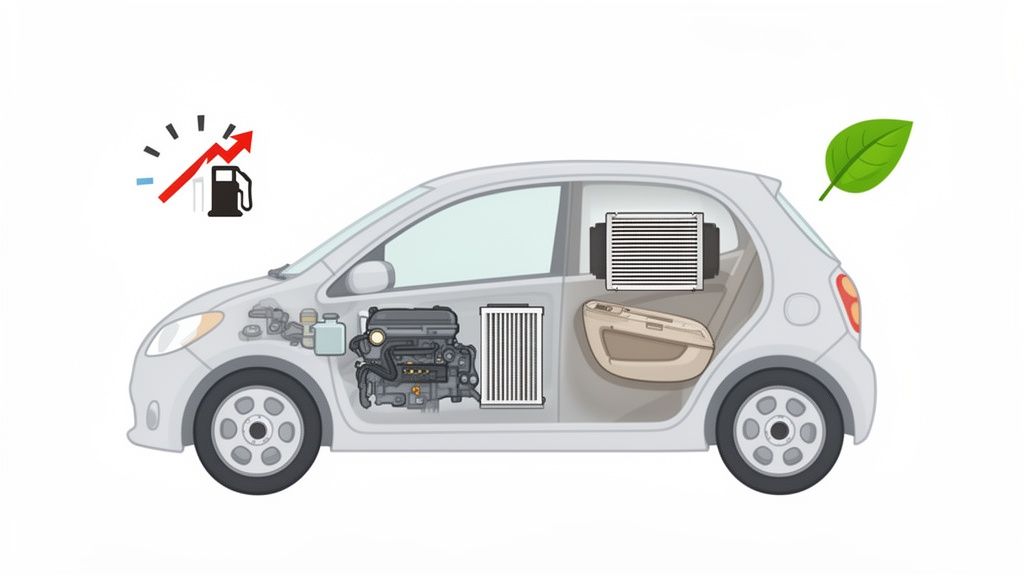
Think of your car's air filters as its lungs. Your vehicle relies on these filters to breathe clean air, just like we do. It’s a small component, but it’s one of the most critical parts of your car’s routine upkeep—and one of the most frequently overlooked.
Most people don't realize their car actually has two important air filters, each with a very different job. The engine air filter is the guardian of your engine, while the cabin air filter protects you and your passengers.
The Engine's First Line of Defense
The engine air filter’s job is to stop dust, road grime, insects, and other abrasive gunk from getting sucked into your engine. For your engine to run efficiently, it needs a precise mix of air and fuel. When that filter gets clogged with debris, it chokes off the airflow and forces the engine to work much, much harder.
This strain isn't just a hypothetical problem; it has real-world consequences. A dirty filter can slash your fuel efficiency by up to 10%, which can mean hundreds of extra dollars spent on gas every year. The growing awareness of this is huge—the automotive air filter market is projected to skyrocket to $10.2 billion by 2033.
A clean engine air filter is one of the easiest and cheapest ways to preserve your engine’s power and longevity. It’s a small investment that prevents big, expensive problems down the road.
Breathing Easier Inside Your Car
The second filter, the cabin air filter, is all about your comfort and health. It purifies the air that blows through your car's heating and air conditioning vents, trapping pollutants before they ever reach the inside of your car.
A clean cabin filter is responsible for:
- Filtering out allergens like pollen, dust, and mold spores.
- Blocking exhaust fumes and other nasty odors from the road.
- Maintaining strong airflow from your AC and heating system.
Putting off a replacement is why you might start noticing musty smells or weak AC performance, which is the last thing you want during a Texas summer.
To help you keep track of these two essential components, here's a quick breakdown of what makes them different and why both are so important.
Engine Filter vs Cabin Filter At a Glance
| Feature | Engine Air Filter | Cabin Air Filter |
|---|---|---|
| Purpose | Protects the engine from contaminants | Purifies the air you breathe inside the car |
| Location | In a plastic housing in the engine bay | Behind the glove box or under the dashboard |
| Impact of Neglect | Reduced fuel economy, poor acceleration, potential engine damage | Bad odors, weak AC/heat, allergens circulating in the cabin |
| Replacement Signs | Dirty appearance, decreased MPG, engine sputtering | Musty smell, reduced airflow from vents |
Keeping both filters clean is a fundamental part of responsible vehicle ownership and a key item on any complete car maintenance checklist. While changing a car air filter is a manageable DIY task for many, having a professional service handle it ensures it’s done right every time.
Spotting the Signs of a Clogged Air Filter
Your car has a way of talking to you, sending little hints when something isn't quite right. Before a clogged filter snowballs into a bigger problem, your vehicle will start showing some telltale symptoms. Learning to read these signs is the key to proactive maintenance, saving you from future headaches and surprise repair bills.
The clues your car gives you depend entirely on which filter is struggling. A dirty engine air filter messes with performance and fuel economy, while a clogged cabin air filter directly impacts the air you breathe inside the car.
When Your Engine is Crying for Help
Think of your engine needing to take a deep, clean breath to do its job. A clogged filter is like trying to run a marathon while breathing through a coffee stirrer—it just can’t get enough air to perform.
You'll probably feel the difference during your daily commute. Does your car feel sluggish or hesitant when you try to merge onto the highway? That lack of power is a classic sign. The engine is struggling to pull in enough oxygen to properly burn fuel, which leads to poor performance.
That inefficiency also hits you right in the wallet. Other common symptoms include:
- A Drop in Fuel Economy: If you're suddenly making more trips to the gas station, a restricted air filter could be the culprit. Your engine is burning extra fuel to make up for the lack of air.
- Unusual Engine Noises: When your car is idling, you might hear it sputtering or feel it vibrating more than usual. That’s the engine fighting for air.
- Check Engine Light: Modern cars are smart. When the air-fuel mixture is off because of low airflow, it can trigger a sensor and light up that dreaded check engine light on your dashboard.
A quick visual check is often all it takes. A new engine filter is usually a clean white or off-white. If you pull yours out and it’s dark gray or caked in dirt, leaves, and bugs, it’s long overdue for a replacement.
Signs Your Cabin Air Quality is Suffering
The red flags from a clogged cabin air filter are less about performance and more about your comfort and health inside the vehicle. Have you noticed the airflow from your vents feels weak, even with the fan cranked to the max? That’s a telltale sign the filter is physically blocked.
Picture this: it's a scorching Texas summer day, and your AC is blowing, but the car just won't cool down. A clogged cabin filter is a frequent cause, as it literally blocks the cool air from getting to you. You might also notice a funky, musty smell, which often comes from mold and bacteria building up in the old, damp filter.
Replacing it on time makes a huge difference. In areas with a lot of dust or pollution, regularly changing your car air filter can stop up to 90% of airborne contaminants from getting inside your vehicle. You can explore more on the importance of this market through data on automotive air filter market trends.
How to Change Your Engine Air Filter
Believe it or not, tackling your engine's air filter is one of the easiest and most satisfying DIY jobs you can do for your car. It takes just a few minutes, requires minimal tools, and gives you a direct hand in boosting your vehicle's performance and even its fuel economy. You definitely don't need to be a seasoned mechanic for this one.
At its core, the job is simple: you're just opening a plastic box, swapping an old part for a new one, and closing it back up. The only real tricks are knowing where that box is and being gentle with the clips or screws holding it together.
Gathering Your Supplies
Before you pop the hood, let's get your gear lined up. The great news is you won't need to raid the tool chest. For most cars, this is a quick job with just a few basic items.
Here’s what you'll typically need to get it done:
- The New Air Filter: This is the most crucial part. Make sure you have the exact filter for your car's make, model, and year. A filter that's even a little off won't seal properly, letting dirty air sneak past.
- Screwdriver or Socket Wrench: The air filter box is usually held shut with simple Phillips or flathead screws, or sometimes small bolts. A quick glance under the hood will tell you what you're working with.
- Gloves (Optional): Engine bays are grimy. A pair of gloves isn't essential, but it'll keep your hands clean.
- A Rag or Shop Towel: Perfect for wiping out any dust, leaves, or other junk from inside the filter housing before you put the new one in.
Once you have your new filter and the right tool, you're ready to go.
Locating and Opening the Air Filter Housing
With the hood safely propped open, your first job is to find the air filter housing. It's almost always a big, black plastic box sitting near the top of the engine, often toward the front. The easiest way to spot it is to find the large, thick air intake hose—follow it from the front of the car toward the engine, and it will lead you right to the housing.
This box is held shut in one of two ways: either with sturdy metal clips you can usually pop open by hand, or with a few screws around the edge. If it's clips, just pull them back to release the lid. If it's screws, grab your screwdriver or wrench and loosen them up.
A good habit to get into is putting the screws somewhere they can't roll away and get lost in the engine bay. A small magnetic tray is a lifesaver for this. You don't need to take the lid completely off; just lift it enough to get to the filter inside.
Swapping the Old Filter for the New One
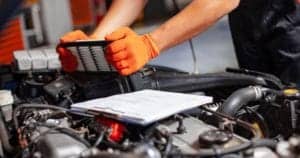
Once the housing is open, you'll see the old filter sitting right there. Go ahead and lift it straight out. This is the fun part—take a second to compare the old, dirty filter to your clean new one. It's always surprising to see just how much dirt, dust, bugs, and even leaves the old one has trapped.
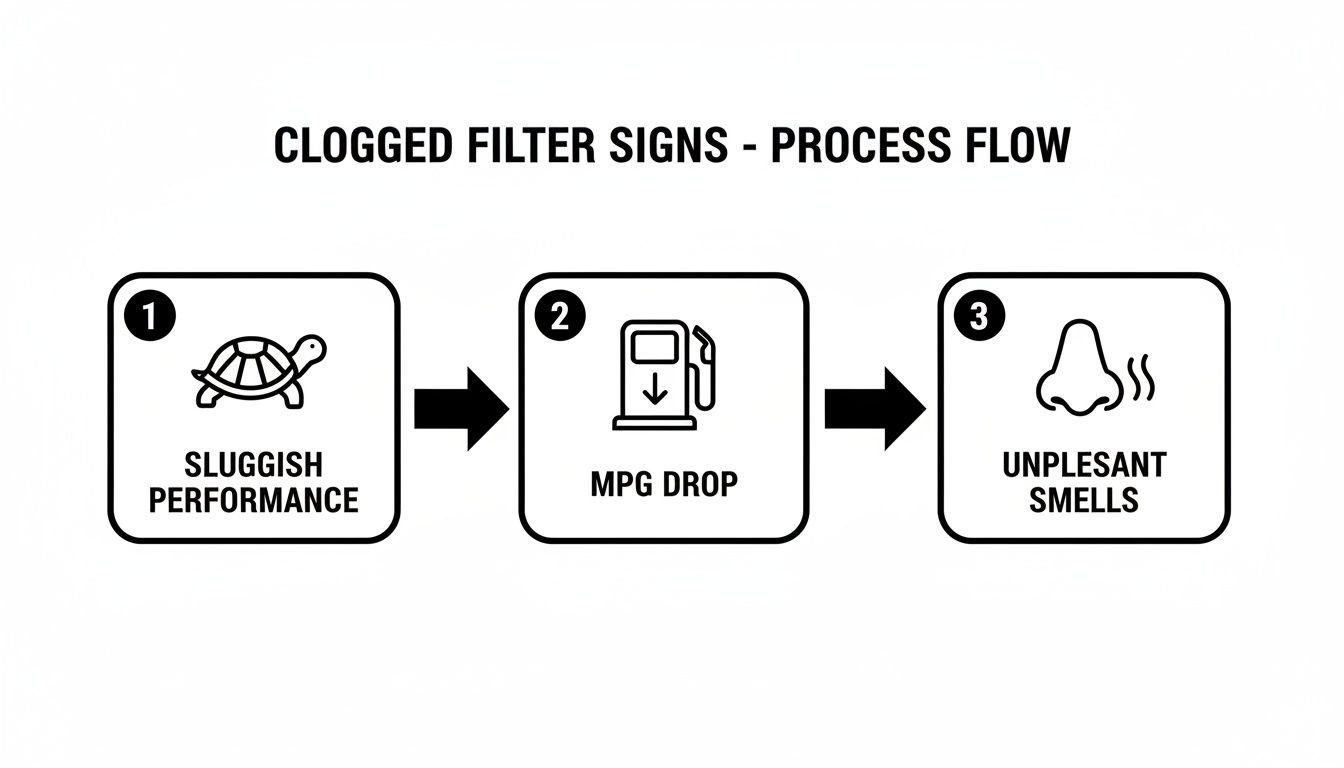
Every one of those symptoms—poor performance, dropping MPGs, weird smells—comes from starving your engine of the clean air it needs to run right.
Before you drop the new filter in, grab your rag and give the inside of the housing a quick wipe. You want to clear out any loose debris so it doesn't get immediately sucked toward your engine.
Pro Tip: When you set the new filter in place, pay close attention to the rubber or foam rim. It needs to be seated perfectly all the way around the housing. If there are any gaps, unfiltered air can get around it, which completely defeats the purpose of having a new filter.
With the new filter sitting snugly, just lower the lid back into position. Re-fasten the clips or tighten down the screws, making sure the lid is on evenly and securely. And that’s it—you’re done! You've successfully changed your car's engine air filter.
A Guide to Replacing the Cabin Air Filter
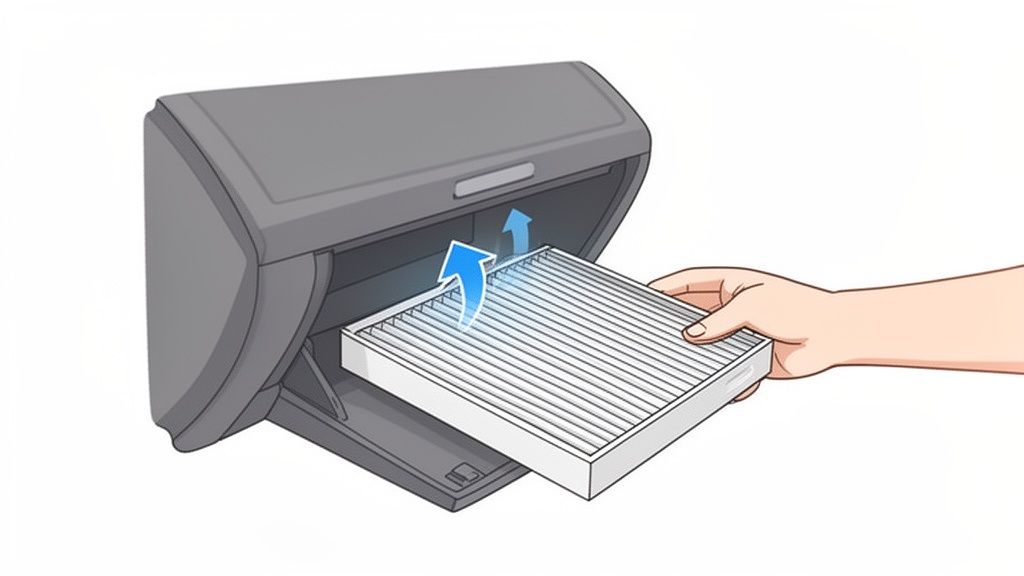
While the engine air filter keeps your car healthy, the cabin air filter is all about keeping you healthy. It's the unsung hero that scrubs the air circulating inside your vehicle, but most people forget it even exists—at least until their AC starts smelling a little funky.
The good news? Swapping out your cabin air filter is one of the easiest DIY jobs you can do. Unlike the engine filter under the hood, this one is almost always tucked away inside the passenger compartment, typically right behind the glove box.
Finding and Accessing the Filter
First things first, open up that glove box and clear it out. We all know it’s a black hole for old receipts, napkins, and insurance cards. Get everything out of the way so you have room to work and nothing gets lost or damaged.
Once it's empty, you'll need to detach the glove box to get to the filter housing. Most cars make this pretty simple:
- Look for retaining tabs. You'll likely see plastic stoppers on the inner sides of the glove box. Just gently squeeze the sides of the box inward, and it should swing down past those stoppers.
- Check for a support arm. Some vehicles have a small dampening arm, usually on the right side, that lets the glove box open smoothly. This typically unhooks with a simple push or slide.
With the glove box hanging down, you should see a flat, rectangular plastic cover. That’s the door to the filter housing, usually held shut by a couple of clips.
The Swap: Getting the Airflow Right
Pop the clips on the cover, and the old cabin filter should slide right out. Don’t be shocked by what you find. It’s probably caked with dust, leaves, bugs, and who knows what else. It’s a pretty good visual of all the junk you could have been breathing.
Before you slide the new one in, stop and look at the old filter. You should see an arrow printed somewhere on the frame. This indicates the proper direction of airflow, and getting this right is critical.
Installing a cabin air filter backward can seriously mess with your HVAC system. It restricts airflow, forcing your AC and heat to work overtime and perform poorly. The arrow should almost always point down, following the natural path air takes from the intake fan into your car's cabin.
Slide the new, clean filter into the slot, making sure that airflow arrow is pointing the right way. Snap the cover back on, reattach the glove box, and put all your stuff back. The whole process usually takes less than 10 minutes, but it makes a massive difference in your car's air quality and heating and cooling performance.
DIY or Professional Service: Which Is Right for You?
So, should you tackle your air filter replacement yourself or hand the keys to a pro? It really just comes down to a simple trade-off between your time, money, and confidence level.
For a lot of people, changing an air filter is the perfect gateway into DIY car maintenance. There's a real satisfaction that comes from learning a new skill and, of course, saving a few bucks on labor is always a nice bonus.
But the argument for professional service is pretty compelling, especially when you think about what you get beyond just a new filter. It’s not just about letting someone else get their hands dirty; it’s about tapping into real expertise and getting some peace of mind.
The Case for Going Pro
When you have a certified technician handle the job, you know it's going to be done right. They’ve got the specific tools and experience for any vehicle, from a basic sedan to a complex European model where just finding the filter housing can be a challenge.
There are a few key advantages to think about:
- Guaranteed Parts: A professional shop uses high-quality, OEM-equivalent filters that are guaranteed to fit your vehicle perfectly, which is critical for a proper seal.
- Expertise on Hand: If a plastic clip snaps or a screw gets stripped—common frustrations for first-timers—a technician can solve it on the spot without a second thought.
- A Second Set of Eyes: While your car is in for a simple filter swap, a technician might spot an early sign of another issue, like a fraying belt or a small fluid leak you hadn't noticed.
This quick, informal health check is an invaluable part of the service. For a closer look at what these checks involve, our guide on how to check car fluids provides some great context.
Making the Right Choice for Your Situation
So, how do you decide? If you're a busy professional, the time you save by dropping your car off for a quick service is probably worth more than the money you'd save doing it yourself. Your time is valuable, and a professional gets you back on the road fast.
For owners of newer or more complex vehicles, professional installation eliminates the risk of accidentally damaging sensitive components near the filter housing. It's a small price to pay for confidence that the job is done right.
On the other hand, if you genuinely enjoy working on your car and you drive a common model, the DIY route is a fantastic way to connect with your vehicle and build your skills.
If you decide that a DIY approach isn't for you, turning to professional auto repair shops and dealerships is the best way to ensure your car's air filter is changed correctly. Ultimately, the best choice is the one that fits your comfort level, schedule, and vehicle.
Common Air Filter Questions Answered
Even after a successful filter change, it's totally normal to have a few questions lingering in the back of your mind. You want to be sure you did everything right, and a little extra confirmation goes a long way.
Think of this section as your quick-reference guide. We'll tackle some of the most common uncertainties that pop up, giving you the final pieces of the puzzle for total confidence in your work.
How Often Should I Change My Filters?
The old rule of thumb is to replace your engine air filter every 12,000 to 15,000 miles, but that’s not a hard-and-fast rule. The real answer depends entirely on your driving environment. If you're constantly on dusty backroads or live somewhere with heavy pollen, you'll need to check your filters far more often—maybe every time you get an oil change.
Your owner's manual gives you the baseline, but nothing beats a quick visual inspection. If the filter is dark gray and visibly clogged with dirt and debris, it's time for a new one, no matter how many miles are on it.
For a more detailed breakdown of replacement schedules and why they matter, a simple guide on how often to change your air filter can help you create a plan that fits your car and driving habits perfectly.
Can I Clean and Reuse My Air Filter?
For the standard disposable paper filters that come in the vast majority of cars, the answer is a firm no. A common mistake is trying to blow them out with compressed air, but this can create tiny, microscopic tears in the filter material. Those little holes are big enough to let grit and dust slip right past, sending damaging particles straight into your engine or your lungs.
Some high-performance aftermarket filters are designed to be washed and reused, but they're the exception. These types require special cleaning kits and oils to work correctly. For most drivers, the safest, easiest, and most effective choice is simply to swap the old, dirty filter for a fresh one.
What Happens If I Install a Filter Incorrectly?
Getting the installation right is critical, because even a small mistake can cause big headaches down the road. If an engine air filter isn't seated perfectly in its housing, it can't create a proper seal. This tiny gap allows unfiltered air—and all the abrasive gunk in it—to sneak around the edges and get sucked into your engine's most sensitive components, leading to premature wear and tear.
With the cabin air filter, the most frequent error is putting it in backward. Every cabin filter has an arrow printed on the side to show the correct direction of airflow. If you install it against the flow, you'll severely restrict the air coming through your vents and kneecap your AC and heating performance. It also means the filter can't trap pollutants effectively, defeating the whole purpose of having one in the first place.
Still have questions, or just prefer to let an expert handle it? The ASE-certified technicians at Kwik Kar Oil Change and Auto Care are here to help. We can perform a quick filter inspection or handle the entire replacement for you, guaranteeing it's done right. Visit us today for professional service you can trust. https://www.kkrichardson.com