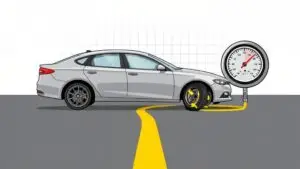
When your steering wheel is off-center but your car is tracking straight, it’s not just an odd quirk—it's your car trying to tell you something isn't right underneath. This is almost always a classic symptom of bad wheel alignment. Ignoring it is like trying to walk in a straight line while constantly leaning to one side; you're forced to overcorrect just to keep moving forward.
What a Crooked Steering Wheel Really Means
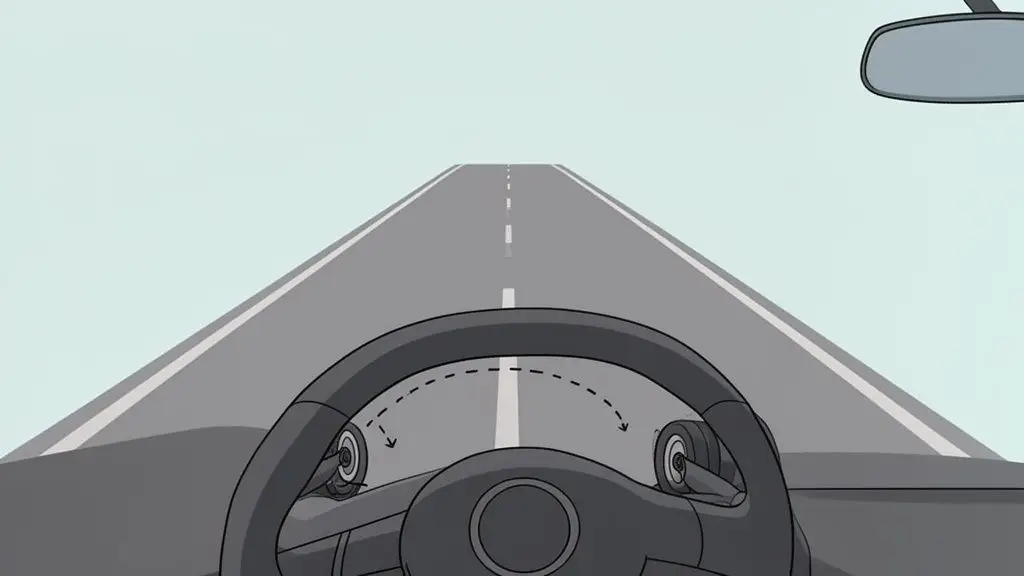
A crooked steering wheel means the intricate system that points your tires has been knocked out of its proper "centered" position. Your car's steering and suspension are engineered with incredible precision to keep your wheels pointing straight ahead when the steering wheel is level. When that calibration gets thrown off, you have to turn the wheel to compensate, even on a perfectly straight road.
This is a far more common issue than most drivers think, and it usually develops from normal, everyday driving.
Believe it or not, up to 80% of vehicles might have some degree of misalignment after just 10,000 miles. This is typically caused by routine road hazards like hitting potholes or bumping into curbs.
The cumulative effect of these small impacts adds up quickly. The American Automobile Association sees over 2.5 million pothole-related claims every year, and alignment problems make up about 40% of those cases. You can learn more about how everyday road hazards can affect your vehicle in this comprehensive guide on wheel alignment symptoms.
While it's a completely fixable problem, you'll want to get it looked at sooner rather than later. A crooked wheel is more than a simple annoyance; it's a clear warning sign of underlying issues that can impact your safety and lead to much more expensive repairs down the road.
To help you get a clearer picture, we've put together a quick summary of what's going on, what's at stake, and what the fix involves.
Crooked Steering Wheel At a Glance
The table below breaks down the key aspects of a crooked steering wheel, from the most likely culprits to the risks you face by ignoring it.
| Symptom | Common Causes | Potential Risks | Recommended Solution |
|---|---|---|---|
| Crooked Steering Wheel | Poor wheel alignment, impact damage (potholes, curbs), worn suspension parts. | Uneven and rapid tire wear, poor vehicle handling, decreased fuel efficiency. | Professional Wheel Alignment |
Ultimately, a crooked steering wheel is a direct message from your car's suspension system. Addressing it promptly with a professional alignment not only fixes the immediate problem but also protects your tires, your safety, and your wallet.
The Top 3 Causes of a Crooked Steering Wheel
When your steering wheel isn’t straight, it’s not just a weird quirk. It's your car's way of telling you something is off in the steering or suspension system. Think of it like a complex chain connecting your hands to the road; if even one link is out of place, the whole thing won't work as it should.
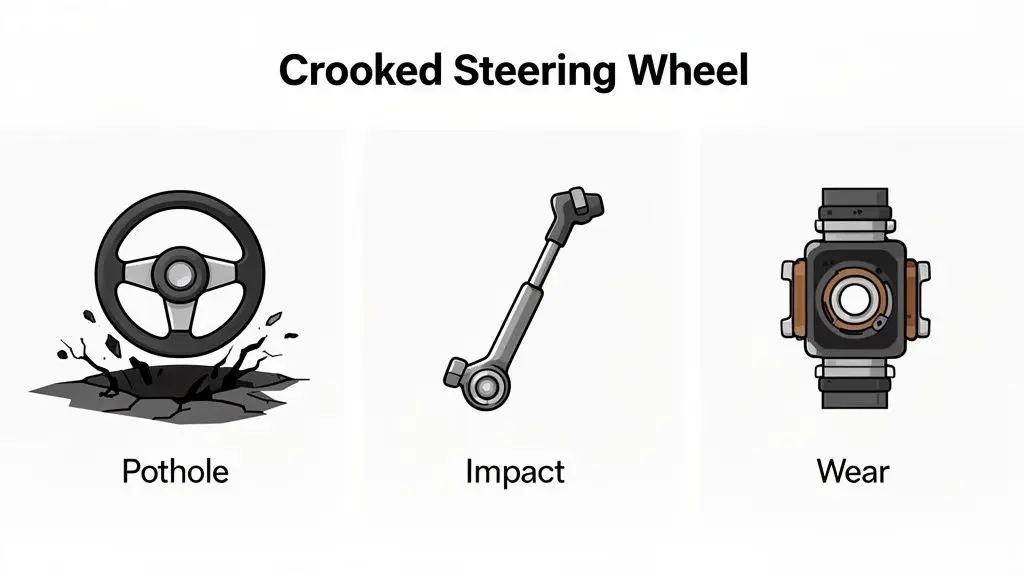
A crooked steering wheel is almost always a symptom of a deeper issue. More often than not, the problem can be traced back to one of three common culprits. Getting familiar with them can help you figure out what’s going on and why a professional diagnosis is the best next step.
1. Poor Wheel Alignment
This is, by far, the most frequent reason for a crooked steering wheel. Your vehicle's alignment is all about the specific angles—caster, camber, and toe—set by the manufacturer. These angles are precisely calibrated to make sure your tires sit perfectly flat and point straight ahead.
Of course, daily driving can easily throw those settings out of whack. A nasty pothole, a scrape against a curb, or even just navigating rough roads can be all it takes. When the alignment is off, your car will naturally want to drift to one side. To keep it going straight, you find yourself holding the wheel at a slight angle, which is why it looks crooked. This is especially noticeable if your car pulls to the right or left on what should be a straight road.
2. Impact Damage
While poor alignment can happen gradually, a single hard hit can cause immediate problems. This doesn't have to be a major accident. A minor fender-bender, a hard bump into a parking block, or hitting a deep pothole at speed can be enough to bend a key part in your steering system.
The most vulnerable components are usually the tie rods, which are the links connecting your steering system to your front wheels. A bent tie rod will instantly change a wheel’s direction, forcing you to turn the steering wheel off-center just to drive straight. Problems with other mechanical parts, like the wheel ends, can also contribute to these issues.
You’re not alone if you suspect impact damage. It’s a huge issue, responsible for an estimated 70% of crooked steering reports. According to U.S. DOT data, roughly 40 million drivers hit potholes or curbs each year. About 25% of them end up with alignment shifts, costing a collective $3 billion in repairs.
3. Worn Suspension Components
Your car's suspension is a tough but complex system. It’s made up of many parts like ball joints, control arms, and bushings that all work together to give you a smooth, controlled ride. But over thousands of miles, these parts inevitably wear down.
As they get older, rubber bushings can crack and dry out, and ball joints can develop looseness, or "play." This introduces slack into the entire steering and suspension system. Instead of feeling tight and responsive, your steering might feel vague, and the wheel won't return to the exact same center position every time. This wear and tear lets the alignment slowly drift, causing the steering wheel to settle at an off-center angle when you're driving straight.
The Hidden Dangers of Ignoring an Off-Center Wheel
Driving with a crooked steering wheel might seem like a small quirk you can just learn to live with, but it's a major red flag signaling deeper issues with your car. Ignoring it is like putting a piece of tape over a warning light on your dashboard; you're not fixing the problem, you're just ignoring the symptom.
The real trouble isn't cosmetic. An off-center wheel points directly to a bad alignment, which forces your car to constantly fight itself just to go straight. This creates a chain reaction of problems that only get worse—and more expensive—the longer you wait.
Compromised Handling and Driver Fatigue
The most immediate risk of a crooked steering wheel is a loss of control. When your alignment is off, your car will naturally want to pull to one side. To keep it straight, you have to constantly apply a little bit of force on the steering wheel.
This isn't just annoying; it's a safety hazard. That constant correction makes you tired on long drives and slows down your reaction time if you need to swerve to avoid something in the road. A car that doesn’t track straight is less stable in emergencies and can be harder to control in bad weather. Simply put, you're always fighting your own vehicle, which increases driver fatigue and makes you less alert.
An off-center steering wheel is more than an inconvenience; it's an active safety risk. A car that requires constant correction is a car that is not fully under your control, increasing the likelihood of an accident, especially during unexpected situations.
Accelerated and Uneven Tire Wear
One of the most expensive consequences of a bad alignment is what it does to your tires. When your wheels aren't pointing in the right direction, they don't roll cleanly. Instead, they get dragged and scrubbed against the pavement, creating intense friction on certain spots.
This causes some classic signs of uneven tire wear you can look for:
- Feathering: The tread blocks on your tire will feel sharp on one edge and smooth on the other.
- Edge Wear: You'll see the inside or outside shoulder of the tire wearing down much faster than the center.
- Premature Baldness: Your tires can wear out up to 50% faster than they should, forcing you to spend hundreds on a new set way too soon.
Not only does this hit your wallet hard, but it's also incredibly dangerous. Worn-down, uneven tires have less grip on the road and are far more susceptible to blowouts, which can be disastrous at highway speeds.
Decreased Fuel Efficiency
Finally, that crooked steering wheel is costing you money every time you visit the gas station. Because your misaligned tires are being dragged instead of rolling freely, your engine has to work much harder to move the car forward. This added friction is known as rolling resistance.
Think of it like pushing a shopping cart that has a bad, wobbly wheel—it takes a lot more effort to keep it going in a straight line. That extra effort comes from burning more gas. While it might only be a small amount on a single trip, it adds up over thousands of miles. For a daily commuter, this could easily mean losing one or two miles per gallon, which is real money you're wasting at the pump.
How to Perform a Basic Steering Self-Check
Before you head to the shop, there are a couple of quick and safe checks you can do yourself to get a better idea of what’s happening with your steering. This isn't about trying to fix it on your own, but about gathering some useful information. Think of it as playing detective—the clues you find will help your mechanic solve the case that much faster.
The first thing to do is a simple road test, but it’s vital you do this somewhere safe.
Find an empty parking lot or a straight, quiet road with absolutely no traffic. The goal here is to see how the car behaves naturally, without you having to worry about other drivers or the slope of the road. Your safety is always priority number one.
Once you’ve found a good spot, you can see how your steering is actually behaving.
The Straight Road Test
- Center the Wheel and Drive: Gently accelerate to about 10-15 mph on a straight path.
- Observe the Position: While you’re driving in a perfectly straight line, take a look at your steering wheel. Is it tilted to the left or right?
- Check for Pulling: For just a moment, carefully loosen your grip on the wheel. Does the car instantly try to drift to one side, or does it keep tracking straight? A car that consistently pulls is a classic symptom of an alignment problem.
After your road test, the next place to look for clues is your tires. They can tell you a whole story about the health of your car’s alignment.
Visual Tire Inspection
Your tires are designed to wear down evenly across the tread. But when the alignment is off, they get pushed against the road at the wrong angle, creating some very specific wear patterns. Get down and take a close look at your front tires for these tell-tale signs:
- Edge Wear: Is the very inside or outside edge of the tire worn down way more than the center? This is a dead giveaway for a camber alignment issue.
- Feathering: Try running your hand across the tread blocks. If one side feels sharp while the other feels smooth, you're feeling "feathering." This almost always points to a problem with your car's toe alignment.
- Cupping: If you see scalloped-out dips or "cups" on the surface of the tire, it often means worn-out suspension parts are making the tire bounce up and down as it rolls.
These visual hints, combined with what you felt during the road test, give you a much clearer picture. Uneven tire wear isn't just a side effect; it's a direct result of that crooked steering wheel and the alignment issue causing it. To learn more about keeping your tires in top shape, check out our guide on how often you should rotate your tires.
How a Professional Wheel Alignment Is Done
So, you've done a quick check on your own, and something still feels off. The next step is to let a professional take a look. When you bring your car in for a wheel alignment, you're not just getting a quick tweak—you’re getting a highly precise service that uses advanced technology to get your car’s handling back on track and straighten out that crooked steering wheel for good.
The whole process starts with your vehicle being positioned on a specialized alignment rack. From there, one of our certified technicians will attach sophisticated laser sensors to each of your four wheels. These sensors talk to a central computer, measuring your suspension’s current angles—camber, caster, and toe—down to a fraction of a degree.
Understanding the Alignment Process
Once we have the initial readings, our technician compares them against the exact specifications from your vehicle’s manufacturer. Any differences are what’s causing that crooked wheel, the pulling you feel on the road, or the uneven tire wear you might have spotted.
The technician then makes precise adjustments to different suspension components to bring every angle back into perfect harmony. This ensures all four wheels are parallel to each other and perfectly perpendicular to the ground, allowing your car to drive straight with a centered steering wheel.
A common misconception is that a crooked steering wheel always points to a problem with the front wheels. More often than not, the real issue is something called thrust line misalignment, where the rear wheels aren't pointing in the same direction as the front.
The Importance of the Thrust Line
The thrust line is simply the direction your rear wheels are pointing. If this line is off, the rear of your car is essentially trying to steer itself, forcing you to turn the steering wheel just to keep the car moving straight. It's the reason you find yourself holding the wheel at an odd angle on a perfectly straight road.
In fact, industry data shows that up to 60% of crooked steering wheel cases can be traced back to shifts in the rear suspension. This is exactly why a comprehensive, four-wheel alignment is the only correct fix for most modern vehicles. Even a tiny 1-degree misalignment can speed up suspension wear, potentially leading to over $1,000 in premature part replacements within just two years.
The infographic below shows the simple checks you can perform before bringing your vehicle in for a professional diagnosis.
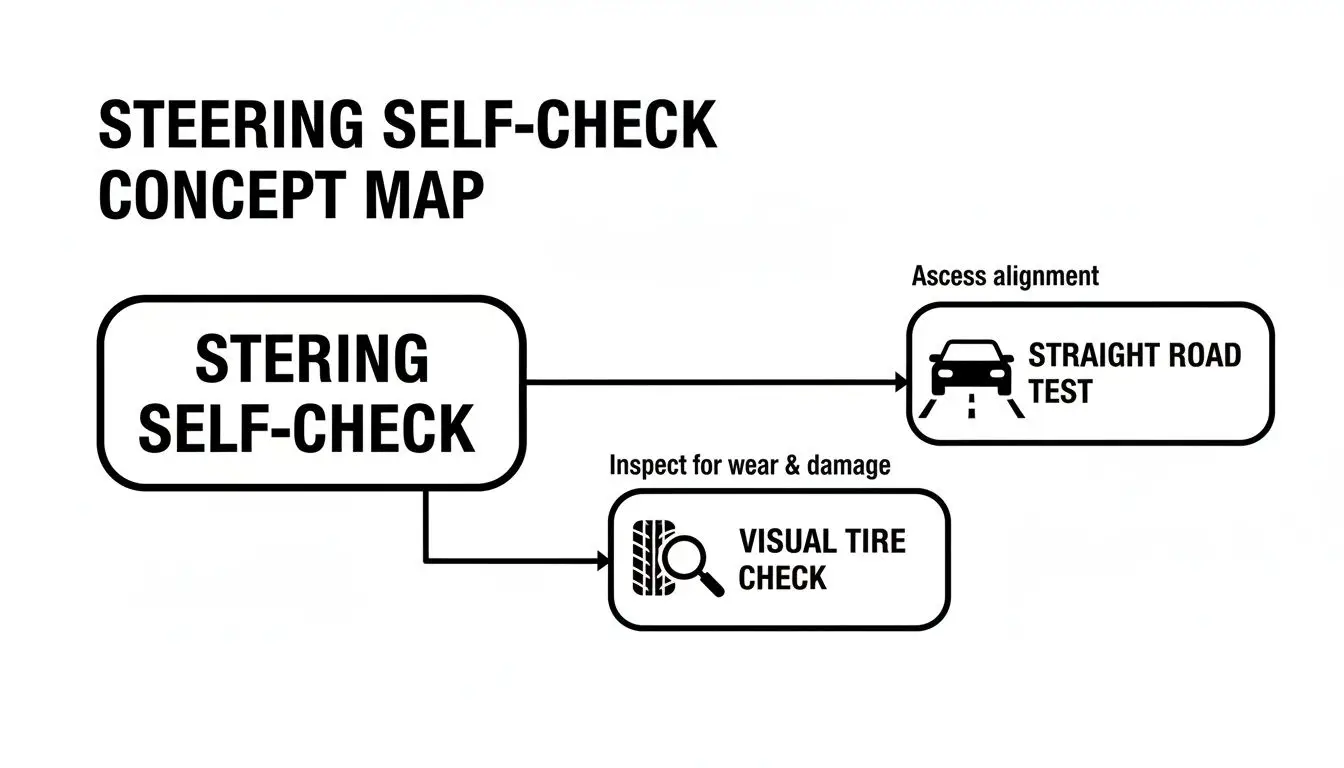
This guide highlights the key diagnostic steps—the straight road test and a visual tire check—that help you spot alignment issues early. By understanding the technology and expertise involved, you can feel confident that our professional wheel alignment services are the definitive solution for restoring your vehicle's safety and performance.
Why Trust Kwik Kar for Your Alignment in Richardson
When your steering wheel is off-center, you need more than just a quick fix—you need a team you can genuinely trust. Here at Kwik Kar, we're not just another auto shop in Richardson; we're your neighbors. We blend the high-tech precision you'd expect from a dealership with the honest, personal service of a local garage. Our focus isn't just on repairing your vehicle, but on earning your confidence for the long haul.
We know that car trouble is stressful. That’s why we’ve designed our entire process to be straightforward and transparent. From easy online booking and clear, upfront quotes to a comfortable waiting area, we’re here to make your visit as painless as possible. Our ASE-certified technicians use the latest alignment equipment to diagnose and correct the problem with pinpoint accuracy.
Service and Savings for Our Community
Being an active part of the Richardson community means a lot to us, and we believe in showing our appreciation for the people who make this city great. To say thank you, we proudly offer special discounts for our local heroes.
- Military Personnel: We honor your service with special pricing.
- First Responders: Your dedication to our safety is valued here.
- Healthcare Workers: We appreciate your commitment to our community’s well-being.
When you choose Kwik Kar, you're not just getting a repair; you're choosing a partner dedicated to your vehicle's safety. We are a CARFAX Top-Rated Service Center, a RepairPal Certified shop, and a NAPA AutoCare Center, so you can drive away confident in our work.
Whether you need a precise four-wheel alignment to fix that crooked steering wheel or it's just time for your annual Texas state inspection, our team is ready to help. You'll get dealership-level skill without the dealership price tag. Come see the Kwik Kar difference for yourself and find out why so many of your Richardson neighbors trust us to keep their cars running safely. Schedule your appointment today and let’s get you driving straight again.
Frequently Asked Questions About Steering and Alignment
Even with a good grasp of what causes a crooked steering wheel, a few common questions always seem to pop up. Let's tackle them head-on so you can feel completely confident about your car's steering health and when it needs a professional look.
How Often Should I Get My Wheel Alignment Checked?
It's a good practice to have your wheel alignment checked every 10,000 to 12,000 miles or at least once a year. Think of it as a regular check-up for your car's suspension.
However, don't wait for that interval if something happens. You should get it inspected right away if you hit a big pothole, smack a curb, or even just after you get a fresh set of tires.
Can a Tire Rotation Fix a Crooked Steering Wheel?
No, a tire rotation won't fix a crooked steering wheel. While rotating your tires is a fantastic way to get more life out of them by ensuring they wear down evenly, it doesn't change any of the suspension's angles.
The off-center wheel is an alignment problem, not an issue with where your tires are located on the car.
A four-wheel alignment is often needed to correct the vehicle's thrust angle—the direction the rear wheels are pointing. Adjusting only the front wheels won't solve the problem if the rear is misaligned.
How Long Does a Wheel Alignment Take?
A full four-wheel alignment at a professional shop like Kwik Kar usually takes about an hour. That gives our certified technicians the time they need to get precise measurements, make the right adjustments, and double-check that your car drives perfectly straight with a centered steering wheel.
When you need reliable, expert service in Richardson, trust the team at Kwik Kar Oil Change and Auto Care. We’ll get your vehicle diagnosed correctly and safely back on the road. Schedule your appointment today.