A CVT fluid change is a make-or-break service for your vehicle, swapping out the old, worn-out oil in your Continuously Variable Transmission. For most cars, this needs to happen every 30,000 to 60,000 miles. This isn’t just any old fluid—it’s the one thing standing between you and a transmission repair bill that could easily hit $3,000 to $8,000.
Understanding Your CVT and Its Lifeblood

Think of a regular automatic transmission like a 10-speed bicycle. You feel definite, clunky shifts as you click through the gears. A Continuously Variable Transmission (CVT) is a whole different ballgame. It’s more like a dimmer switch for a light, offering smooth, seamless power without any distinct "steps" or shifts.
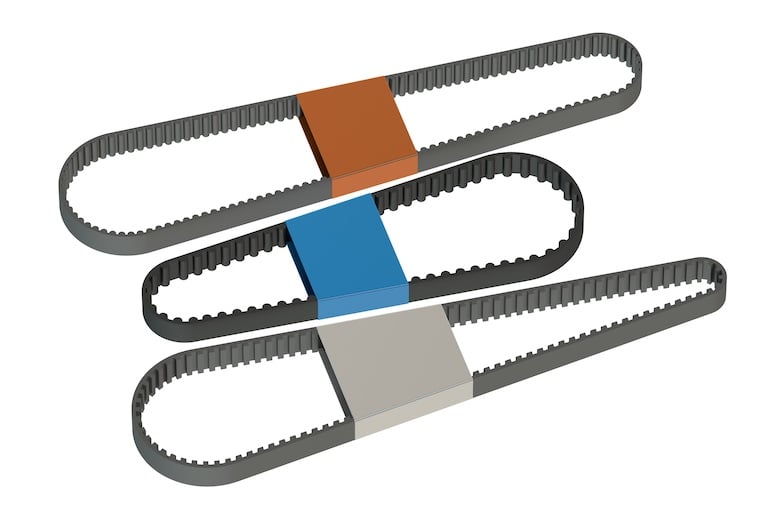
Instead of a complex set of gears, a CVT uses a heavy-duty steel belt running between a pair of pulleys that can change their size. This clever setup constantly adjusts the gear ratio on the fly, keeping your engine right in its sweet spot for power and efficiency. That’s why cars with CVTs are known for their great gas mileage and incredibly smooth acceleration.
The Unique Role of CVT Fluid
Unlike the fluid in a traditional automatic, CVT fluid is a highly specialized formula designed to do three critical jobs at once. It’s the lifeblood of the entire system.
- Lubrication: It keeps the metal belt and pulleys from grinding themselves into dust.
- Cooling: It pulls intense heat away from the transmission, preventing it from overheating and failing.
- Hydraulic Pressure: It creates the precise pressure needed for the pulleys to adjust, allowing the belt to grip firmly and send power to the wheels.
Without clean, effective fluid, that belt will start to slip, parts will overheat, and the whole transmission will wear out far sooner than it should.
Why You Cannot Ignore a CVT Fluid Change
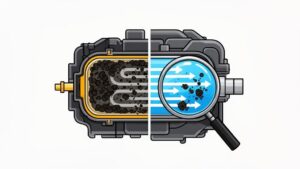
Over time, the intense heat and pressure inside the transmission break this hardworking fluid down. It gets contaminated with tiny metal particles and loses its ability to cool and lubricate properly. The special frictional properties it needs to work also degrade, which is why a routine CVT fluid change is absolutely non-negotiable.
Ignoring this service is a direct path to transmission trouble. Fresh fluid restores the system's ability to operate as designed, ensuring reliability and helping you avoid the most expensive repairs a car owner can face.
Most carmakers recommend changing the CVT fluid every 30,000 to 60,000 miles. Sticking to this schedule is crucial because the entire system depends on that fluid being in top condition. Pushing it too long can lead to slipping, shuddering, and eventually, catastrophic failure—a problem that costs thousands more than a simple, preventative fluid change. Find out more about CVT service needs and why they are so important.
Warning Signs Your CVT Fluid Is Failing
Your car has its own way of telling you when something’s not right, and the signals from a struggling Continuously Variable Transmission are too important to ignore. When that specialized fluid inside starts to break down, it can't do its job anymore, leading to a bunch of noticeable problems. Catching these signs early is the key to getting a CVT fluid change before a small headache turns into a massive repair bill.
The most common thing drivers feel is a change in how the car accelerates. You might notice a shuddering, jerking, or hesitation when you step on the gas. This happens because old, worn-out fluid loses its unique friction properties, causing the transmission's belt to slip on the pulleys instead of grabbing them like it should. What used to be a smooth, seamless ride suddenly feels rough and unpredictable.
Sounds and Smells to Watch For
It's not just about how the car feels—your ears and nose can also pick up on trouble. A new or louder whining or humming noise that gets higher in pitch as you speed up is a classic red flag. This sound often points to increased friction and heat because the parts aren't getting the lubrication they need from the failing fluid.
Another sign you can't miss is a burning smell. CVT fluid is built to handle high temperatures, but when it breaks down, it can overheat. This creates a sharp, acrid smell, almost like burnt toast, that you might notice inside or outside your car. That smell is a serious warning that the fluid isn't cooling the transmission properly, a dangerous situation that needs immediate attention.
Operational Red Flags
How your car acts when you first shift into gear can tell you a lot. Pay attention if there’s a new delay or a clunk when you move the shifter from Park to Drive or Reverse. This lag means the hydraulic pressure, which is completely dependent on the fluid, is weak or inconsistent.
A healthy CVT should engage smoothly and almost instantly. Any hesitation suggests that the fluid is failing to build pressure correctly, which can lead to significant internal wear over time.
These symptoms aren't just minor annoyances; they're direct messages from your vehicle that its most complex component is in trouble. If you're noticing any of these issues, it's a good idea to look into the different signs of transmission problems. Ignoring them usually leads to one outcome: a very expensive repair that a simple, timely fluid change could have easily prevented.
When to Schedule Your CVT Fluid Change
When it comes to your Continuously Variable Transmission, being proactive is always smarter than being reactive. Instead of waiting for a problem to pop up, preventative maintenance is your best strategy for keeping that complex system running smoothly. The first step is knowing your vehicle manufacturer's recommended service interval for a CVT fluid change.
Think of it as your best defense against expensive, premature wear and tear.
Manufacturer Recommendations and Real-World Driving
For most cars with a CVT, this critical service is recommended somewhere between 30,000 and 60,000 miles. That's not just a random number; it's a carefully calculated guideline based on how long the fluid is expected to last under what manufacturers call "normal" driving conditions. Following this schedule means you’re replacing the fluid before it breaks down and starts causing damage.
But here's the catch: what's "normal"? Your personal driving habits can seriously shorten that timeline. Your owner's manual will mention "severe" driving conditions, which can often cut the recommended service interval in half.
Do You Drive Under Severe Conditions?
It's easy to assume your driving is normal, but many of us unknowingly fall into the "severe" category. These conditions create extra heat and put more stress on your transmission, causing the fluid to degrade much faster. You're likely a severe-duty driver if your daily routine includes:
- Heavy Stop-and-Go Traffic: If you navigate rush hour in areas like Richardson, that constant starting and stopping puts a huge strain on your transmission.
- Towing or Hauling: Pulling a trailer or even just loading up the car with heavy equipment generates a ton of heat.
- Driving in Extreme Heat: Those brutal Texas summers are the perfect example of an environment that cooks your transmission fluid, accelerating its breakdown.
- Lots of Short Trips: Regularly driving for less than five miles at a time prevents the transmission from reaching its ideal operating temperature. This can lead to condensation buildup inside the unit, which contaminates the fluid.
If any of these sound familiar, you need to pay closer attention to your CVT fluid. In fact, it’s a good habit to keep an eye on all your vehicle's fluids. You can learn the basics from our guide on how to check car fluids.
Telltale Signs Your CVT Needs Help
Beyond the mileage sticker, your car has ways of telling you it needs attention. If your CVT fluid is already breaking down, you might start to notice some obvious warning signs.

These are the feelings, sounds, and smells that signal degraded fluid. Catching them early can be the difference between a simple service and a catastrophic failure.
Common CVT Fluid Change Intervals by Manufacturer
To give you a clearer picture, here are some general service intervals for popular brands that use CVTs. Remember, these are just guidelines—always check your owner's manual and consider your driving habits.
| Manufacturer | Normal Driving Interval (Miles) | Severe Driving Interval (Miles) |
|---|---|---|
| Honda | 30,000 | 15,000 |
| Nissan | 30,000–60,000 | 15,000–30,000 |
| Toyota | 60,000 | 30,000 |
| Subaru | 60,000 | 30,000 |
| Mitsubishi | 30,000 | 15,000 |
As you can see, driving under tough conditions can dramatically shorten the life of your CVT fluid.
Time is Just as Important as Mileage
Don't be fooled into thinking low mileage gives you a free pass. Even if a car spends most of its life in the garage, time is still the enemy. CVT fluid degrades over time due to oxidation and moisture contamination, losing its protective qualities in about 5 to 7 years, no matter what the odometer says.
There are documented cases where low-mileage cars still needed service. For instance, a 2014 Nissan with only 5,000 miles on the clock required a fluid change after 10 years because diagnostic tools flagged severe fluid deterioration. Time waits for no transmission.
Key Takeaway: A CVT fluid change is an investment in your vehicle’s long-term health. Whether you're tracking miles or years, staying on schedule is essential for preventing costly transmission failures down the road.
This principle applies to other parts of your transmission, too. For a complete picture of transmission care, it's also worth learning When To Change Your Transmission Filter. Staying ahead of maintenance is always the most cost-effective approach.
Choosing Between a DIY or Professional Service

When it's time for a CVT fluid change, you’re faced with a classic choice: roll up your sleeves and do it yourself, or hand the keys over to a professional? The DIY path can look tempting as a way to save a few bucks, but this isn't your average fluid swap. A CVT service is riddled with technical pitfalls that can quickly turn a weekend project into a transmission nightmare.
Unlike a straightforward oil change, a CVT fluid service is an exercise in precision. The absolute most important part of the job is using the exact fluid specified by your car's manufacturer. Grabbing a "universal" or "multi-vehicle" fluid, even a high-quality one, is a recipe for disaster. The wrong fluid can cause the belt to slip, the transmission to overheat, and lead to catastrophic internal damage that can't be reversed.
The Technical Hurdles of a DIY Fluid Change
Even if you track down the right fluid, the procedure itself is surprisingly finicky. Getting the fill level right isn't as easy as pulling a dipstick. Most CVTs are designed to have their fluid level checked and topped off only when the transmission is at a very specific operating temperature.
This isn’t a rough estimate, either. It often requires a diagnostic scan tool plugged into your car's computer to read the fluid temperature in real time. Overfill or underfill it by just a small amount, and you can introduce serious performance problems and cause long-term harm.
Without the right tools to measure temperature and ensure the precise fill level, a DIY CVT fluid change becomes a high-stakes gamble. A professional service eliminates this guesswork, protecting your transmission from simple but costly mistakes.
Why a Professional Service Offers Peace of Mind
Taking your car to a trusted shop like Kwik Kar turns a risky job into a routine maintenance task. Our certified technicians deal with these sensitive systems every day. They have the right diagnostic equipment and the hands-on experience to get the job done correctly and quickly.
Here’s what really sets a professional service apart:
- Guaranteed Correct Fluid: We use the specific OEM-grade fluid your transmission was engineered for, period. There's no guesswork or risk of using a harmful substitute.
- Proper Tools and Procedures: Our technicians use professional scan tools to monitor fluid temperature and follow the manufacturer's exact procedure to nail the perfect fill level.
- Expertise and Efficiency: A job that could take a DIYer hours of careful research and work is usually done by a pro in under an hour.
- Warranty on Work: We stand behind our service. If any issue pops up related to the fluid change, you’re covered.
The cost difference between DIY and professional service is often much smaller than you'd think, especially once you add up the price of the right fluid and any special tools. Our guide on transmission fluid change costs breaks down the numbers further. In the end, it really comes down to how comfortable you are with risk. A professional CVT fluid change is an investment in certainty and the long-term health of your vehicle.
What to Expect From a Kwik Kar CVT Service

When you bring your car to Kwik Kar for a CVT fluid change, you’re getting more than just a simple top-off. You're getting a careful, transparent service designed to protect one of your car's most important—and expensive—components. We like to pull back the curtain on our process so you know exactly what our ASE-certified technicians are doing under your vehicle.
Our process starts with one non-negotiable rule: using only the correct fluid for your specific make and model. We exclusively use Original Equipment Manufacturer (OEM) specified fluid. This ensures it has the exact frictional properties and additives your transmission was engineered to run on, eliminating the risks that come with generic or "multi-vehicle" fluids.
Our Meticulous Drain-and-Fill Process
We stick to the manufacturer-recommended “drain-and-fill” method for almost every CVT we service. Why? Because it’s the safest and most effective way to care for your transmission. Unlike a high-pressure flush that can stir up settled debris and clog sensitive internal passages, our approach is gentle yet thorough.
Here’s what that looks like:
- We start by carefully draining all the accessible old, degraded fluid from the transmission pan.
- Next, we take a close look at the old fluid, checking for signs of excessive metal shavings or other red flags that might point to a bigger issue.
- Then, we refill the transmission with the precise amount of fresh, OEM-spec CVT fluid.
- Finally, we bring the transmission up to the exact operating temperature required by the manufacturer to verify a perfect fluid level. This final check is critical for proper CVT function.
This precision is key. It’s what ensures your transmission operates smoothly and efficiently long after you drive away.
What’s Included in Your Service
A CVT fluid change at Kwik Kar is an all-in-one package designed to give you complete confidence on the road. We believe in providing total value and peace of mind, not just a single service.
Every CVT service we perform includes a complimentary multi-point vehicle inspection. Our technicians will check other critical systems—from your brakes to your battery—to catch any potential issues before they become serious problems.
You can expect the entire service to take between 30 and 60 minutes. The cost for a professional CVT fluid change at Kwik Kar generally ranges from $200 to $400, depending on your vehicle. It's a small upfront investment to protect yourself from a potential transmission replacement that could easily cost thousands. We deliver reliable, dealership-quality service without the dealership price tag.
Common Questions About CVT Maintenance
When it comes to modern cars, especially with parts like a Continuously Variable Transmission, it's natural to have a few questions. We get it. To help clear things up, we’ve put together answers to the most common questions we hear from drivers about their CVT fluid change.
Our goal is to give you simple, direct answers so you can feel confident about taking care of your vehicle. Think of this as the final piece of the puzzle for protecting your transmission.
Can I Use Regular Transmission Fluid in My CVT?
Let's make this crystal clear: absolutely not. Pouring standard Automatic Transmission Fluid (ATF) into a CVT is one of the quickest ways to cause catastrophic, wallet-draining damage. It's like putting diesel in a gasoline engine—they just aren't built to work together.
CVT fluid is a highly specialized formula designed with very specific friction properties. This is what allows the transmission’s steel belt to grip the pulleys without slipping. Standard ATF doesn't have these critical additives, which will cause the belt to slip, overheat, and lead to a total transmission meltdown.
Always, always use the exact fluid your car's manufacturer specifies. At Kwik Kar, our technicians double-check to ensure the correct OEM-spec fluid is used every single time. It's the only way to protect your investment and keep your car running the way it was designed to.
What Is the Difference Between a Fluid Drain-and-Fill and a Flush?
While they might sound like the same thing, these two services are worlds apart in how they're performed and what they do to your transmission. The "drain-and-fill" is the manufacturer-recommended method for most vehicles, and it's the service we trust and perform at Kwik Kar.
- Drain-and-Fill: We drain the old fluid from the transmission pan and refill it with fresh, new fluid. It’s a gentle process that replaces about 40-60% of the total fluid.
- Fluid Flush: This uses a machine to force all the old fluid out while pumping new fluid in, replacing nearly 100% of the fluid.
So why don't we do a full flush? The high pressure from a flush machine can be too aggressive. It can stir up years of built-up sludge and tiny metal shavings, forcing them into small, sensitive passages inside the transmission. This can cause new clogs and lead to serious shifting problems you didn't have before. That’s why our experts stick with the safer, highly effective drain-and-fill.
My Car Has "Lifetime" Transmission Fluid. Do I Still Need to Change It?
"Lifetime" fluid is one of the most misleading terms in the auto industry. What "lifetime" really means is the manufacturer's expected life of the vehicle under perfect, lab-like conditions—often just 100,000 miles. It definitely doesn't mean the fluid is good forever.
Real-world driving, with its stop-and-go traffic, punishing Texas heat, and heavy loads, puts a ton of stress on that fluid. It breaks down, loses its protective qualities, and gets contaminated over time. Most transmission specialists will tell you to change so-called "lifetime" fluids somewhere between the 60,000 and 100,000-mile mark. A single fluid change can dramatically extend the actual life of your transmission, long after the warranty has expired.
How Long Does a Professional CVT Fluid Change Take?
For an experienced technician with the right tools, a professional CVT fluid change is a surprisingly quick and efficient job that delivers huge long-term benefits.
Here at Kwik Kar, you can expect the entire service to take about 30 to 60 minutes. That gives us time to get your vehicle on the lift, drain the old fluid, refill it with new fluid to the perfect level (at the right temperature), and run a final check to make sure everything is shifting smoothly. It's an easy service to fit into a lunch break, and you'll drive away with peace of mind.
Your transmission is one of the most complex and expensive parts of your car—it’s not something you want to leave to chance. For a professional, reliable CVT fluid change, you can trust the experts at Kwik Kar Oil Change and Auto Care. Schedule your appointment online and drive with confidence.