If you are standing in an auto parts aisle staring at jugs labeled “coolant” and “antifreeze,” you are not the only one. A lot of drivers use those words like they mean the same thing.
They do not.
That mix-up causes real problems in Richardson. Summer heat, long idles, and stop-and-go traffic on US-75 put a cooling system under stress fast. Add the wrong fluid, mix the wrong type, or pour in straight concentrate when the system needed ready-to-use coolant, and you can turn a simple top-off into overheating, corrosion, or a clogged radiator.
I see this misunderstanding most often when someone is trying to do the right thing in a hurry. The engine runs warm, the reservoir looks low, and they grab the first jug that looks familiar. The label matters more than many drivers assume.
Coolant vs Antifreeze Is It Just a Name Game?
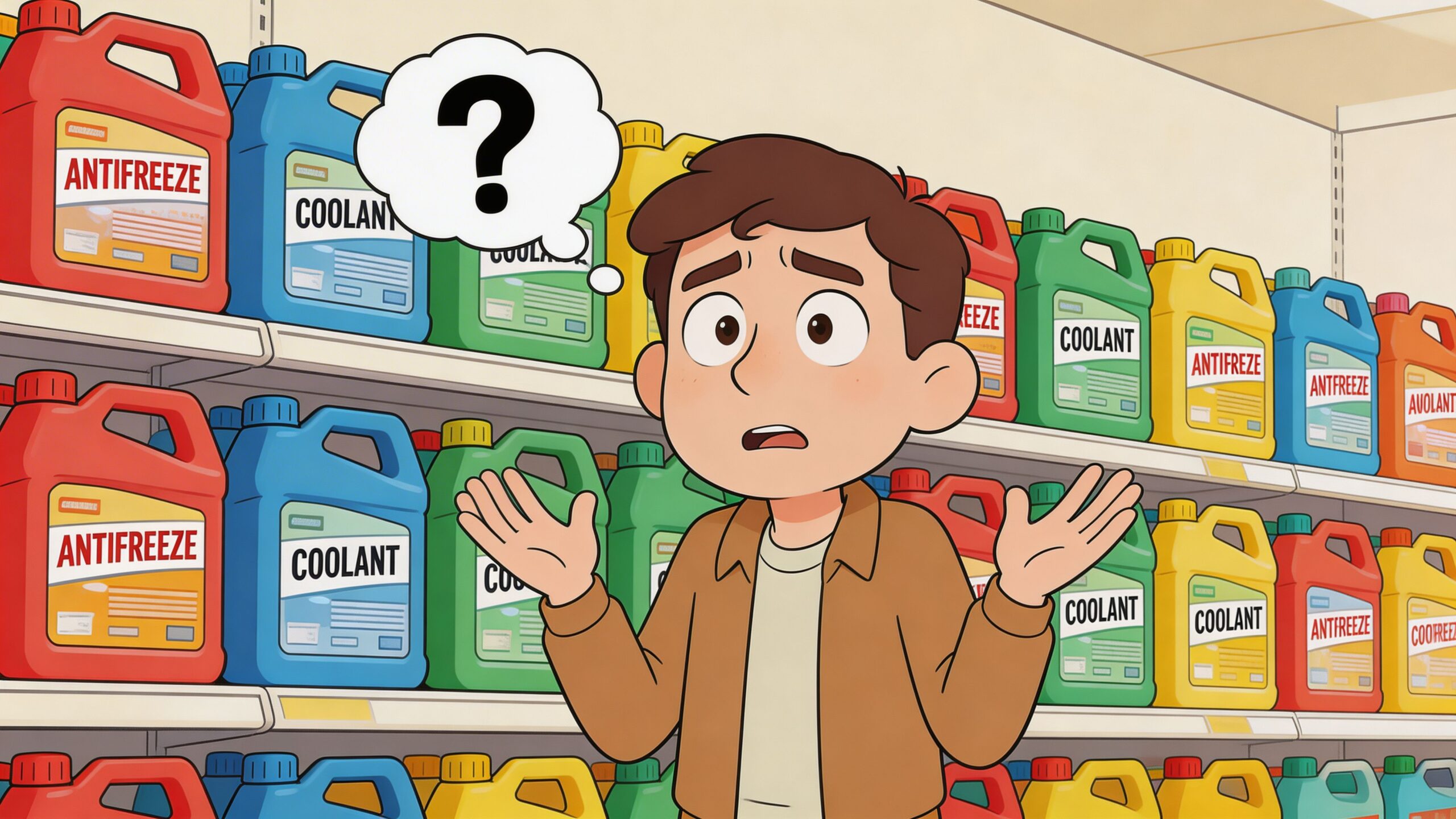
A driver notices the temperature gauge creeping up during the afternoon commute. They stop by a store after work, walk to the fluids section, and find a wall of green, orange, yellow, and pink bottles. Some say antifreeze. Some say coolant. Some say premix. Some say concentrate.
Such misunderstandings often lead to mistakes.
The difference between coolant and antifreeze is not marketing language. It affects how well your engine handles heat, cold, corrosion, and daily wear.
Antifreeze is the concentrate. Coolant is the mixture that is meant to circulate through the engine. If you treat them as interchangeable, you can end up with the wrong protection level or the wrong chemistry for your vehicle.
Why this matters in Richardson
Richardson drivers require more than just freeze protection. They need reliable heat control in traffic, during school pickup lines, and on long summer drives with the A/C running hard.
A cooling system has one job. Keep engine temperature in a safe range. When the fluid inside that system is wrong, everything else starts working harder. The water pump, radiator, thermostat, hoses, and heater core all depend on the right fluid and the right mixture.
Quick comparison
| Item | Antifreeze | Coolant |
|---|---|---|
| What it is | Concentrated glycol-based fluid | Ready-to-use mixture of antifreeze and water |
| Typical use | Mixed before use unless label says otherwise | Poured in as directed if pre-mixed |
| Best for | Controlled mixing when the vehicle and conditions call for it | Simple, correct top-offs for most drivers |
| Common mistake | Pouring it in straight | Assuming any color or type will work |
| Main risk if wrong | Poor heat transfer, wrong freeze protection, compatibility issues | Mixing incompatible formulas |
If the label says concentrate, it is not ready to pour unless you are deliberately mixing it to the correct ratio.
What Is Antifreeze and What Is Coolant?
Consider it this way: Antifreeze is an ingredient. Coolant is the finished drink.
Coffee concentrate is useful, but you do not pour a cup of concentrate and expect it to taste right. Engine fluid works the same way. The concentrate has to be mixed properly before it does its job well.
Antifreeze is the concentrate
Antifreeze is a concentrated glycol-based liquid, usually ethylene glycol or propylene glycol. Its purpose is to lower the freezing point of water and help raise the boiling point once it is mixed into the finished fluid.
That is why the label matters so much. A bottle that says concentrate is not giving your engine the final fluid it needs by itself.
If you are checking multiple fluids at home, this guide on how to check car fluids is a useful starting point before you top anything off.
Coolant is the working mixture
Engine coolant is the ready-to-use 50/50 mixture of antifreeze and water. According to Feldman Chevrolet of Woodhaven, straight antifreeze freezes at 0°F, while a standard 50/50 mix lowers the freezing point to -35°F. The same source notes that the mix raises the boiling point from water’s 212°F to 223°F or higher, which matters because engines regularly operate above 200°F and overheating accounts for about 40% of roadside failures during summer.
This often surprises drivers. A lot of drivers assume straight antifreeze gives more protection. It does not work that way.
One easy label check
When you pick up a jug, look for one phrase first: premix.
If it says premix or ready-to-use, the fluid is already diluted. If it says concentrate, you need to mix it correctly before using it, unless your manufacturer specifies otherwise.
For RV owners, the label lesson applies outside passenger cars too. Products such as RV plumbing antifreeze are for water systems, not engine cooling systems. Similar name. Very different job.
Wrong fluid can look harmless in the bottle and still create major trouble once it starts circulating through an engine.
Comparing Antifreeze Concentrate vs Ready-to-Use Coolant
Here, the practical decision happens. Both products have a place. What works depends on whether you need precision, convenience, or certainty.
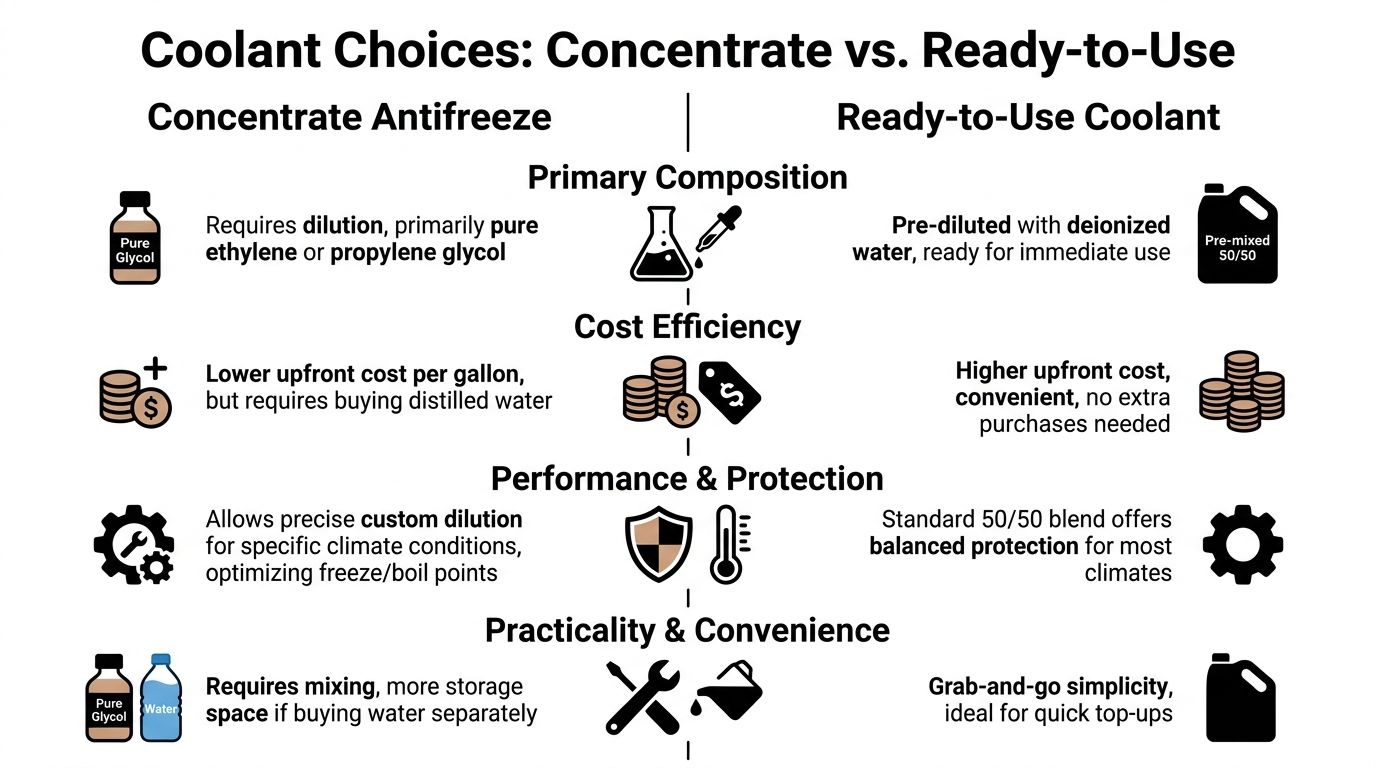
The side-by-side view
| Criteria | Concentrate antifreeze | Ready-to-use coolant |
|---|---|---|
| Composition | Glycol-based concentrate that requires dilution | Pre-mixed 50/50 blend |
| Main advantage | Lets a technician or informed DIY owner control the mixture | Simple and fast for top-offs |
| Main drawback | Easy to misuse if mixed incorrectly | Less flexible if a custom mix is needed |
| Best fit | Full service, known system requirements, careful mixing | Most drivers who want fewer mistakes |
| Biggest danger | Pouring it in straight | Choosing the wrong chemistry for the vehicle |
Purpose is not the same as performance
Concentrate exists for a reason. It gives flexibility. That matters when a vehicle has a specific service requirement, when a shop is doing a full refill, or when the cooling system calls for a carefully controlled mix.
Ready-to-use coolant solves a different problem. It removes one common mistake from the process. No guessing. No separate water purchase. No accidental over-concentration.
For everyday drivers, that convenience often prevents errors.
The more-is-better myth
This point is critical. Some drivers believe pure antifreeze cools better because it sounds stronger.
It does not.
According to IDriveSafely, a standard 50/50 coolant mixture reaches a freezing point of -35°F and a boiling point of 223°F under pressure, and transfers heat 30% to 50% more effectively than pure antifreeze. The same source notes that “premix” indicates ready-to-use coolant and that testing the ratio helps confirm -34°F freeze protection.
A cooling system does not need the “strongest” fluid. It needs the right mixture so the fluid can carry heat away efficiently.
That point matters more in Richardson than many drivers realize. In heavy traffic, heat transfer is everything. If the fluid cannot move heat well, the rest of the system has to make up for it.
What works in practice
Here is the practical trade-off.
- If you want convenience: buy the correct ready-to-use coolant for your vehicle.
- If you are doing a full refill: use the exact approved concentrate and mix it properly with distilled water.
- If you do not know what is already in the system: stop before adding anything.
That last one saves a lot of trouble. A top-off sounds minor, but if you add the wrong formula or wrong concentration, you create a bigger problem than the low level you started with.
When concentrate makes sense
Concentrate works well when the person doing the job knows the vehicle spec and controls the mixing process. That is common during scheduled maintenance, component replacement, or complete system service.
It is less forgiving when someone is rushed in a parking lot and trying to solve a warning light with whatever jug is on the shelf.
When premix is the safer call
For most quick top-offs, pre-mixed coolant is easier to get right. You still have to match the proper type, but you remove the dilution guesswork.
That matters because a cooling system can tolerate very little confusion. Wrong ratio, wrong type, trapped air, old fluid, or contamination all stack up quickly.
Decoding Antifreeze Colors and Types IAT OAT and HOAT
Color gets most of the attention. Chemistry deserves it.
A green jug and an orange jug may both say coolant, but that does not mean they belong in the same radiator. Modern cooling systems are sensitive to additive packages, corrosion inhibitors, and manufacturer requirements.
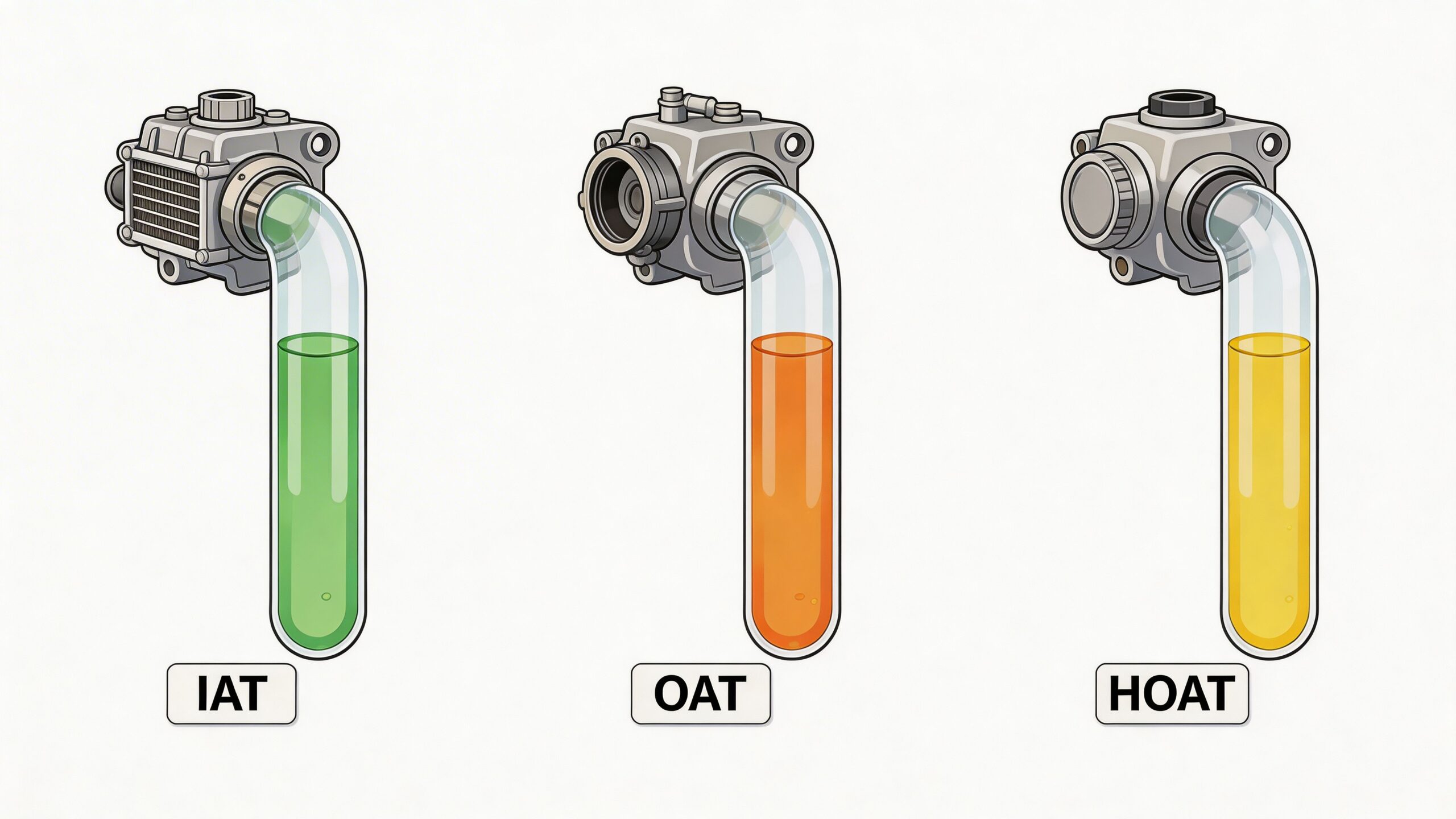
IAT for older systems
IAT stands for Inorganic Additive Technology. This is the older style many people associate with traditional green coolant.
According to GOS Energy, IAT requires replacement every 2 years or 30,000 miles. It is generally used in older vehicles and older cooling system designs.
If you drive an aging vehicle, especially one that has already had cooling system repairs, this shorter service interval matters.
OAT and HOAT for newer applications
OAT means Organic Acid Technology. HOAT means Hybrid Organic Acid Technology.
The same source says OAT extends service to 5 years or 150,000 miles, while HOAT offers 5 years or 100,000 miles. Those are not cosmetic differences. They affect maintenance timing, corrosion control, and compatibility with the metals and seals inside the system.
A newer car may require one specific formula even if another coolant looks similar on the shelf.
Color can mislead you
Color can point you in the right direction, but it should never be your final decision tool.
Manufacturers and brands do not always use dye the same way. The only dependable method is checking the owner’s manual, OEM specification, or service information for your exact engine and model.
If the bottle says “universal,” read that label carefully. Universal claims do not erase manufacturer requirements.
Here is a quick visual if you want a simple overview before reading labels and specs more closely.
Mixing types is where expensive problems begin
The same GOS Energy source warns that mixing IAT and OAT can cause gelling and a 50% loss in cooling efficiency.
That is not a minor issue. Gelled coolant can clog passages, reduce flow through the radiator, and make a healthy water pump look like it failed. The driver sees rising temperature. The root problem is often fluid compatibility.
If you are not sure what coolant type is already in the system, guessing is riskier than waiting.
A simple decision rule
Use this order:
- Check the owner’s manual.
- Match the OEM-approved type.
- If the current fluid is unknown, treat the system as contaminated until proven otherwise.
- Flush and refill correctly instead of mixing and hoping.
That approach prevents the most common cooling system mistakes I see on high-mileage cars and work vehicles.
How to Test Mix and Replace Your Engine Coolant
Coolant service is manageable if you work carefully. It also becomes unsafe fast if you rush it.
Never remove a radiator cap on a hot engine. Hot coolant can spray out under pressure. Let the vehicle cool fully before you touch the cap, reservoir, or hoses.
Start with a visual check
Before testing anything, inspect what you already have.
Look at the reservoir level when the engine is cold. Then look at the fluid itself. Healthy coolant should look like a fluid, not mud. If you see rust color, sludge, oily contamination, floating debris, or a sharp burnt smell, stop there. That vehicle needs diagnosis before a simple top-off.
A low level by itself also means something. Coolant does not “get used up” the way fuel does. Low level usually points to a leak, trapped air, or a prior service issue.
Test the mixture before you add more
A hydrometer or refractometer helps check mixture strength. A refractometer is the more precise tool.
Testing matters because the jug label does not tell you what is already circulating through the engine. Someone may have added water before. Someone else may have topped it off with the wrong product. A quick test gives you a better picture before you make the mix worse.
If the cooling system was recently opened for repairs, trapped air can also affect operation. This guide on how to bleed air from a cooling system is useful if you are dealing with heater issues, temperature swings, or gurgling after service.
Topping off is not the same as replacing
A top-off is appropriate when:
- The type is known: You know exactly what coolant spec is already in the system.
- The fluid looks clean: No sludge, rust, or contamination.
- The loss is minor: You are monitoring a small drop while checking for the cause.
A full replacement is the better move when the coolant is old, dirty, mixed, or unknown.
If you are mixing concentrate
Use distilled water, not tap water.
Tap water can bring minerals into the system. Those minerals can leave deposits inside passages, reduce heat transfer, and create corrosion problems over time. Distilled water keeps the mixture cleaner and more predictable.
When mixing, use a clean container. Mark what you are doing. Keep the work area away from children and pets.
Safety matters more than speed
Ethylene glycol is toxic. Even a small spill needs attention.
Follow these rules every time:
- Work cold: Open the system only after it has cooled.
- Wear protection: Gloves and eye protection are smart, especially around pressurized components.
- Clean spills immediately: Coolant has a sweet smell that can attract animals.
- Dispose of used coolant properly: Never dump it on the ground or down a drain.
Know when DIY stops making sense
If the system has old brown fluid, repeated low level, overheating, or mixed coolant history, the correct move is not another bottle. It is diagnosis, proper flush work, and the right refill procedure.
A cooling system is simple until it is not. Once you add unknown chemistry or trap air inside the system, minor maintenance turns into troubleshooting.
Why Professional Coolant Service Matters
There are times when a jug and funnel are enough. There are also times when adding fluid is the wrong repair.
Bring in a professional when you see any of these signs:
- Rust-colored or sludgy coolant: That points to contamination, corrosion, or incompatible fluid.
- Unknown coolant history: If you bought the car used or someone else serviced it, you may not know what is in the system now.
- Repeated low coolant level: That usually means a leak, pressure issue, or internal problem.
- Overheating after topping off: The cause may be trapped air, restricted flow, a weak cap, thermostat trouble, or a radiator issue.
A proper coolant service is more than draining and refilling. It includes identifying the correct OEM-spec fluid, checking for leaks, confirming system condition, and making sure the engine is not left with air pockets or mixed chemistry.
If you suspect coolant loss, this article on what causes radiator leaks is a good place to understand what may be happening before damage gets worse.
For drivers who want a shop to handle the fluid identification and refill process, Kwik Kar Oil Change and Auto Care is one local option for cooling system inspection and service.
The most expensive coolant mistake is usually not the wrong bottle by itself. It is continuing to drive after the system has already told you something is wrong.
Your Coolant and Antifreeze Questions Answered
Do hybrids and EVs use the same coolant as regular cars
Not always. According to Lipscomb Chevrolet GMC, hybrid and EV systems often require special low-conductivity coolants to protect electronic components. That means the old habit of using whatever is on the shelf is riskier on electrified vehicles.
Is propylene glycol a better choice because it is less toxic
It is less toxic, but that does not automatically make it the better performer. The same source notes that propylene glycol underperforms ethylene glycol in heat transfer by 10% to 15%, which matters in Texas heat.
Do severe-duty vehicles need different service timing
Yes. The same source says vehicles in dusty environments, including first responder and military use, may need coolant flush intervals shortened by up to 20%. Severe conditions change maintenance needs.
Can I choose coolant by color alone
No. Color is a clue, not a confirmation. Always match the required specification for the vehicle.
If you are not fully sure what is in your cooling system, or your car is running hot in Richardson traffic, have it checked before a small issue becomes engine damage. The team at Kwik Kar Oil Change and Auto Care can inspect the system, identify the correct coolant type, and help you avoid the common mistakes that come from confusing coolant with antifreeze.