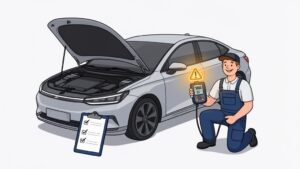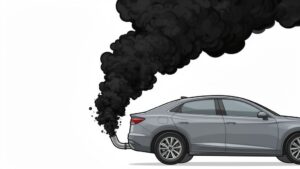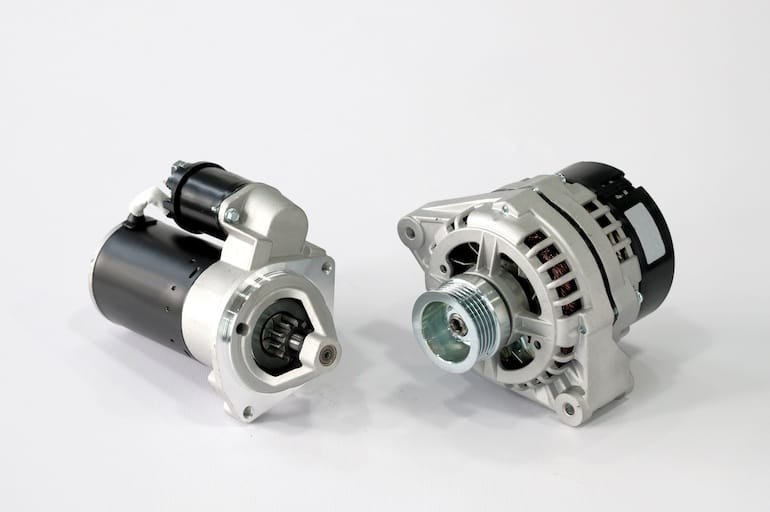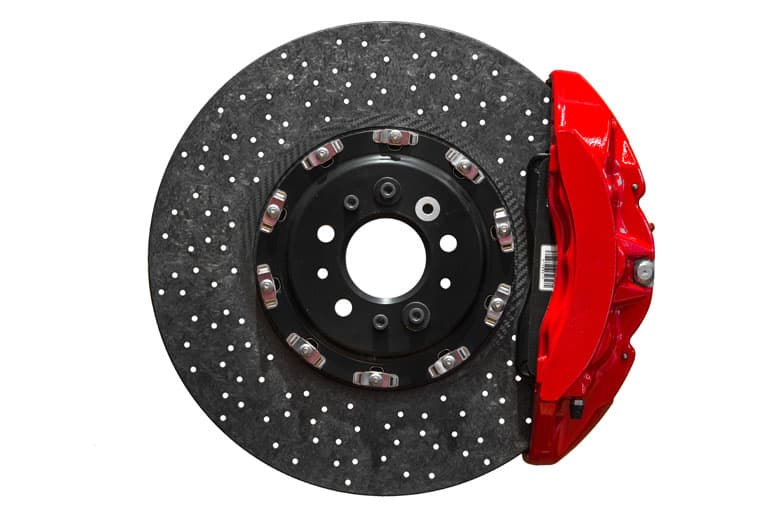
That failed emission test slip in your hand isn't a dead end—it's actually a roadmap. Think of it as your car telling you exactly what needs a little attention before a small issue snowballs into a major repair. It's the first step toward getting a quick, guaranteed pass on your retest.
That Failed Test Slip Is a Roadmap, Not a Roadblock
Getting that notice for a failed emission test can be a real headache, especially when you’re just trying to get through your busy Richardson commute. But that report is more valuable than you think. It's your car's way of communicating that a part in its complex emissions control system needs looking at.
This system is designed to minimize harmful pollutants like unburnt fuel (hydrocarbons), nitrogen oxides (created during high-temperature combustion), and carbon monoxide. A failure just means one of those components isn't doing its job perfectly.
Failing an emissions test is far more common than you might realize, and more importantly, it's always fixable. In fact, data from the Texas Department of Public Safety in 2023 showed that an eye-opening 28% of the 14 million vehicles tested statewide failed their initial emissions test. That's about 3.92 million cars! The numbers get even higher for older cars, with vehicles over 10 years old seeing failure rates climb past 45%. You can discover more insights about these emissions trends from recent studies.
Key Takeaway: A failed test doesn't mean your car is on its last legs. It’s a specific, data-driven alert that guides technicians directly to the source of the problem, often pointing to a straightforward fix.
Common Reasons for a Test Failure
Understanding what usually causes a failure can take a lot of the mystery out of the process and help you have a productive conversation with your mechanic. Most of the time, the problem comes from just a handful of systems that manage your car's fuel, air, and exhaust.
A quick look at the most common reasons reveals a clear pattern.
A Faulty Oxygen (O2) Sensor: This little sensor is a big deal. It measures unburned oxygen in the exhaust and tells the car's computer how to tweak the fuel mixture. When it goes bad, the engine often runs too rich or too lean, which sends emissions through the roof.
A Worn-Out Catalytic Converter: This is the MVP of your emissions system, responsible for converting nasty gases into less harmful ones. A failing converter often gives itself away with a distinct "rotten egg" smell or a P0420 trouble code on the diagnostic tool.
A Loose or Broken Gas Cap: It sounds too simple to be true, but this is a frequent offender. A bad seal on your gas cap lets fuel vapors escape, causing an automatic failure of the EVAP (Evaporative Emission Control) system test.
To make it even clearer, here’s a quick rundown of the usual suspects behind a failed test.
Common Reasons for a Failed Emission Test at a Glance
This table breaks down the most frequent culprits, the systems they're part of, and the symptoms you might notice while driving.
| Common Culprit | Affected System | Typical Symptom |
|---|---|---|
| Oxygen (O2) Sensor | Fuel & Exhaust | Poor fuel economy, rough idle |
| Catalytic Converter | Exhaust System | Rotten egg smell, reduced power |
| Worn Spark Plugs | Ignition System | Engine misfires, poor acceleration |
| Loose Gas Cap | EVAP System | Check engine light, fuel odor |
Armed with this information, you can stop feeling frustrated and start seeing this as a simple problem to be solved. This guide will walk you through the exact steps to get it done.
Decoding Your Vehicle's Failure Report
That piece of paper from the testing station might look like a cryptic puzzle, but it’s actually packed with valuable clues. Think of your vehicle's failure report as the starting point for any repair. Understanding it empowers you to have a much more productive conversation with your technician.
Most cars made after 1996 use an OBD-II (On-Board Diagnostics) test. This is pretty straightforward: the station's computer just talks directly to your car's computer. If your check engine light is on, it's an automatic fail. The test simply pulls any stored Diagnostic Trouble Codes (DTCs) that are pointing to the source of the problem.
Some older vehicles, or those in certain areas, might also get a tailpipe "sniffer" test. This one measures the actual gases coming out of your exhaust to see if they exceed the legal limits for pollutants like hydrocarbons (HC) or carbon monoxide (CO). A failure here points to an active problem with how your engine is burning fuel.
Understanding Common Trouble Codes
When an OBD-II scan is the reason you failed, the report will list specific DTCs. These alphanumeric codes might seem technical, but each one tells a story about what’s going on under the hood.
Here are a few of the usual suspects we see all the time:
- P0420 – Catalyst System Efficiency Below Threshold: This is one of the most frequent codes out there. It means your catalytic converter isn't cleaning the exhaust gases as well as it should. While it could mean the converter itself is shot, it can also be triggered by something simpler, like a bad oxygen sensor.
- P0300 – Random/Multiple Cylinder Misfire Detected: Your engine is literally stumbling. A misfire means at least one cylinder isn't firing correctly, which dumps unburnt fuel straight into the exhaust. This is terrible for emissions and can quickly destroy your catalytic converter. Causes range from old spark plugs to a failing ignition coil.
- P0442 – Evaporative Emission System Leak Detected (Small Leak): Ah, the infamous "loose gas cap" code. The EVAP system is designed to trap fuel vapors before they can escape. Any leak in this sealed system, even from a worn-out gas cap seal, will trigger this fault.
This decision tree helps visualize the path from a failed test to a successful retest.

As you can see, the key is using that failure report to perform targeted diagnostics, which leads right to the fix.
The Check Engine Light Connection
Your check engine light is the car's main way of telling you something is wrong with its engine or emissions systems. When it lights up, it stores a DTC in the computer's memory. If your test slip points to an issue that caused the failure, it often involves diagnosing issues when the engine management light is on, as this is a primary indicator for countless faults.
Expert Tip: Never, ever ignore the check engine light, even if your car seems to be driving just fine. A lot of emissions problems don't have obvious symptoms at first but can snowball into much more expensive damage if you let them go.
For example, a seemingly minor sensor issue can cause the engine to run too rich. Over time, that can completely clog the catalytic converter—turning a relatively cheap sensor replacement into a four-figure repair. You can learn more about this in our detailed guide on what to do when your check engine light comes on.
By taking a few minutes to understand your failure report, you shift from a place of frustration to one of control. You'll know the problem area, you can do a little research on the potential causes, and you can walk into a repair shop like Kwik Kar ready to discuss the issue knowledgeably. This simple step helps ensure you get an accurate diagnosis and a fair price, getting you back on the road and past your inspection with confidence.
Simple DIY Checks to Perform Before the Repair Shop

Before you pick up the phone to schedule a potentially costly repair, just take a deep breath. Sometimes, the solution to a failed emission test is hiding in plain sight and won't cost you a dime to fix.
Running through a few simple at-home checks can absolutely save you time, money, and a trip to the repair shop. So, let’s get started.
Inspect Your Gas Cap and Fuel Door
We'll start with the most common and easily corrected issue: the gas cap. Believe it or not, a loose or faulty gas cap is responsible for a surprising number of failures, triggering EVAP system leak codes like P0442 or P0455.
Your car's fuel system is designed to be completely sealed to prevent gasoline vapors from escaping into the atmosphere. That gas cap is the gatekeeper, and a tiny crack or a worn-out rubber seal is all it takes to break that seal and cause a failure.
Here’s what to do:
- Remove the Gas Cap: Unscrew it and look closely at the rubber O-ring or gasket. It should be pliable and free of any cracks, brittleness, or visible damage.
- Check for Clicks: When you tighten the cap, you should hear at least one or two distinct clicks. If it just spins freely or never feels secure, the ratcheting mechanism is likely broken.
- Clean and Retighten: Wipe down the cap and the filler neck opening with a clean cloth to ensure a good seal. Then, screw the cap back on until it clicks several times.
If you find any damage, a new gas cap is an inexpensive part you can find at any auto parts store. After replacing it, you'll need to drive for a day or two to allow the check engine light to turn off on its own.
Perform a Quick Visual Inspection
Next, pop the hood and take a look around the engine bay. You don't need to be a mechanic to spot something that’s obviously wrong. Focus on looking for any rubber vacuum hoses that look cracked, brittle, or have popped off their connection points.
These small hoses are vital for managing your engine’s emissions. A disconnected hose creates a vacuum leak, which can throw off the air-fuel mixture and trigger a variety of trouble codes. Gently tug on accessible hoses to see if they feel loose or crumbly.
If you find a disconnected hose, simply push it back onto its fitting. If a hose itself is cracked, it’s another cheap and easy part to replace.
Try the 'Italian Tune-Up'
This might sound like a joke, but it’s a legitimate technique that can sometimes make the difference between passing and failing. If your test results were right on the borderline, an "Italian tune-up" could be all you need. This method is especially effective for clearing out minor carbon buildup in the catalytic converter.
The process is simple: take your car out on the highway and drive it at a sustained speed of 60-70 MPH for about 15 to 20 minutes.
This raises the exhaust system's temperature high enough to burn off deposits that might be hampering its performance. It’s a free solution that helps your engine run cleaner, and it might just be enough to get you that passing grade on your retest.
Identifying the Most Common Mechanical Failures

So, the quick at-home checks didn't do the trick. Now it's time to dig a little deeper into the mechanical parts that most often cause a failed emission test. Your car's emissions system is a team of interconnected components, and if one part starts slacking, the whole team's performance goes down.
Getting familiar with these key players will help you spot symptoms and have a much better conversation with the technicians at Kwik Kar. We’ll start with the "big three" culprits our ASE-certified techs see day in and day out. When a car rolls in after a failed test, these are often the first places we look.
The Overworked Oxygen (O2) Sensor
Think of your O2 sensor as your engine's head chef. It's constantly tasting the exhaust to see how much unburned oxygen is flowing out. It then reports back to the car's computer, which adjusts the air-fuel mix to get the recipe just right for perfect combustion.
When an O2 sensor gets old and tired, it sends slow or flat-out wrong information. The computer gets confused and might dump in too much fuel (running "rich") or not enough (running "lean"). That imbalance is a classic recipe for creating more pollution and failing your test.
You might have a bad O2 sensor if you're noticing:
- A sudden drop in your gas mileage.
- Your engine idles rough or bounces around when you're stopped.
- The car feels sluggish or hesitates when you accelerate.
If you're seeing these signs, our guide on recognizing the signs of a bad O2 sensor can give you a more detailed breakdown.
The Clogged Catalytic Converter
The catalytic converter is your car's last line of defense against air pollution. It’s a small, muffler-like device packed with precious metals that trigger a chemical reaction, turning nasty gases like carbon monoxide into harmless water and carbon dioxide.
A catalytic converter can easily last for over 100,000 miles, but it rarely fails on its own. It's almost always the victim of another problem, like an engine misfire that sends raw, unburned fuel into the exhaust. That fuel superheats and literally melts the converter's insides, creating a serious clog.
Expert Tip: A "rotten egg" or sulfur smell from your exhaust is the classic, tell-tale sign of a failing catalytic converter. That smell means the converter can't process the exhaust gases correctly. You might also feel a major loss of engine power, since the clogged converter is creating a bottleneck and choking the engine.
Worn-Out Spark Plugs and Ignition Components
Your spark plugs may be small, but they have a huge job. They create the powerful spark that ignites the air-fuel mixture in each cylinder, creating the explosion that powers your car forward. Over time, spark plugs wear out, and the spark they produce gets weak or inconsistent.
When a spark plug doesn't fire correctly, you get an engine misfire. A whole cylinder's worth of unburned fuel gets shot straight into the exhaust. This instantly spikes your hydrocarbon emissions and, as we just discussed, can quickly destroy your expensive catalytic converter.
Other parts of the ignition system, like coils and spark plug wires, can also wear out and cause the same kind of misfire. If your check engine light has been flashing, your car stutters when you accelerate, or the engine just feels "off," worn ignition parts are a very likely suspect.
Other Common Mechanical Culprits
Beyond those big three, a few other parts often play a role in a failed emissions test. When you bring your car to Kwik Kar for a diagnostic, we’ll check these areas if the usual suspects aren't the problem.
- Dirty Mass Airflow (MAF) Sensor: This sensor measures how much air is coming into the engine. If it gets dirty, it sends bad data, which messes up the fuel mixture and hikes up emissions.
- Malfunctioning EGR Valve: The Exhaust Gas Recirculation (EGR) valve helps lower certain emissions by sending a bit of exhaust gas back into the engine. If it gets stuck open or closed, it can cause rough idling and other performance headaches.
- EVAP System Leaks: We already mentioned the gas cap, but the EVAP system has a whole network of hoses and valves that can crack or fail. Any leak in this system is a guaranteed emissions failure.
Pinpointing the real mechanical issue is the key to getting a permanent fix. With this knowledge, you can better understand what's happening under your hood and feel confident that the expert technicians at Kwik Kar will find the exact cause of your failed test.
Your Action Plan for a Guaranteed Pass on the Retest
So, you’ve pinpointed the likely culprits. Now it’s time to shift gears from diagnosis to action. After a failed emission test, the mission is simple: get a solid repair and nail the retest on the first go. This calls for a smart strategy, and it all starts with finding the right professionals for the job.
Choosing a Certified Emissions Repair Shop
Don't just take your car to any old shop. Emissions problems are complex, and you need technicians who live and breathe this stuff. This is where credentials really matter. In Richardson, that means looking for a facility like Kwik Kar, where our ASE-certified technicians have specialized training in diagnosing and fixing the exact systems that trigger test failures.
When you choose a certified repair center, you’re getting technicians who understand the ins and outs of the Texas emissions program and have the latest diagnostic tools at their fingertips. An expert can pinpoint the root cause quickly and accurately, saving you from a frustrating cycle of paying for parts you don't need or repairs that don't stick.
Vehicle emissions test failures are more common than you might think. Across major markets like the U.S. and EU, failure rates often hover between 20-30%, according to 2024 data. For older cars, evaporative system leaks account for about 15% of failures, and bad EGR valves make up another 12%. At Kwik Kar, we see these issues daily and have the expertise to tackle them head-on.
The Professional Diagnostic Process
When you bring your car to a qualified shop, the first order of business is a professional diagnostic service—and this goes way beyond just pulling trouble codes. A technician will connect an advanced OBD-II scanner to get a deep-dive look at your car's computer data.
Here’s what that process involves:
- Confirming the Codes: First, they'll verify the DTCs that caused the initial failure.
- Analyzing Live Data: Next, they watch real-time data from sensors like your O2 and MAF sensors to see if they're performing within spec.
- Performing Functional Tests: The scanner can command specific components, like an EGR valve, to open and close, allowing the tech to confirm if it's responding correctly.
This detailed analysis identifies the exact point of failure. It’s the difference between guessing your catalytic converter is shot and proving that a faulty O2 sensor was sending it bad information all along.
What to Expect: A professional diagnostic delivers a definitive answer. The technician should be able to walk you through the data and explain precisely why a part needs replacing, giving you total confidence in the repair plan.
Completing a Drive Cycle After the Repair
Once the repair is done, there’s one more crucial step before you head back to the inspection station: the drive cycle. This is probably the most overlooked part of the process, and skipping it is a surefire way to fail the retest, even after a perfect repair.
After a technician fixes the problem and clears the check engine light, your car’s computer resets its internal "readiness monitors." These are self-checks the computer runs to verify every emissions component is working properly. If those monitors aren't set to "Ready," the inspection station will issue an automatic fail. You can get more details on these requirements in our guide on passing your vehicle inspection in Texas.
A drive cycle is just a specific sequence of driving that forces the computer to run its self-tests. The exact procedure varies by manufacturer, but a typical cycle looks something like this:
- Start the car from a cold engine.
- Drive in stop-and-go city traffic for about 15 minutes.
- Hop on the highway and hold a steady speed (around 55-60 MPH) for another 15 minutes.
- Let the car idle for a few minutes before shutting it off.
Completing this process ensures that when you show up for your retest, the computer's monitors will all report "Ready." It's the final, proactive step that turns a frustrating experience into a guaranteed one-trip pass.
Why Richardson Drivers Trust Kwik Kar for Emission Repairs
That dreaded “FAIL” on your emissions test report is frustrating. Now you have to find an auto care center you can trust to get it fixed right, and that can feel like a whole separate challenge. For drivers all over Richardson, Kwik Kar has become the clear choice for honest answers and dependable repairs that get you back on the road and through your retest.
It really comes down to our expertise. Our team is packed with ASE-certified technicians who live and breathe modern emission systems. They don't just mindlessly pull trouble codes; they use advanced diagnostic tools to dig deep and find the real reason behind the failure. This approach ensures we fix the root problem the first time, saving you from repeat visits.
Confidence Through Certification and Community
We know trust isn't given; it's earned. As a CARFAX and RepairPal certified facility, we operate on a foundation of transparency and quality. What that means for you is fair, upfront estimates without any high-pressure sales tactics. You can feel confident knowing every repair meets the highest industry standards—the kind of peace of mind every Richardson commuter and family deserves.
We believe in taking care of those who take care of us. That’s why we proudly offer exclusive discounts for our military, first responders, and healthcare providers. It’s a small way for us to say thank you for everything you do.
At Kwik Kar, we're not just here to fix your car; we're here to build a relationship. Our goal is to make the entire service experience as reliable as our repairs. From the moment you walk through our door, you'll see our commitment to clear communication and expert care.
More Than Just a Repair Shop
What truly sets us apart is how we see the bigger picture. A failed emissions test is often just a symptom of a larger maintenance issue hiding under the hood.
We look at your vehicle as a whole, helping you understand how different services connect to your emissions performance. For example:
- Properly timed oil changes are crucial for keeping your engine running clean and efficiently.
- Fresh spark plugs or a new air filter can dramatically improve your engine’s air-fuel mixture.
- Professional fuel system cleanings can restore lost performance and significantly lower harmful emissions.
This comprehensive view means we don't just get your car to pass the test—we improve its overall health and even its fuel economy. When you drive away from Kwik Kar, you leave with a car that’s not just legally compliant but is running better than it was before.
Common Questions About Failed Emission Tests
Seeing that "FAIL" stamp on your emissions report for the first time can bring up a lot of questions. It's totally normal to feel a bit overwhelmed, but getting clear answers makes everything simpler. Let's tackle some of the most common concerns we hear from drivers around Richardson.
How Long Do I Have for a Retest in Texas?
Here's the deal: In Texas, you can't get your registration sticker until your vehicle passes the state inspection, which includes the emissions test. While there isn't a hard-and-fast state deadline for the retest itself, the real pressure comes from your registration's expiration date. Once that sticker expires, you can't legally drive your car.
The best approach is to get the problem handled right away. At Kwik Kar, we prioritize emissions repairs to get you road-legal as fast as possible. We can often run diagnostics and complete common fixes on the same business day, so you're not stuck without your car.
Important Note: Driving with an expired registration sticker can get you fined. The goal is always to get the repair done and the retest passed before your current registration is up.
Will Clearing My Check Engine Light Help Me Pass?
No, and this is a common myth that actually guarantees another failure. When you clear those diagnostic trouble codes, you also reset your car's internal "readiness monitors." Think of these as self-checks that the car's computer runs to make sure all emissions systems are working properly.
When you show up for a retest, the station's equipment will immediately see that these monitors are not "Ready." That's an automatic fail, even if the check engine light is off. The only real solution is to find and fix the problem that triggered the light in the first place.
Is It Worth Fixing an Older Car or Should I Get a Waiver?
That's a great question, and the answer really depends on what needs fixing. You might be surprised—many times, the fix for an older car is something affordable, like new spark plugs or a bad oxygen sensor. Not only does this solve the emissions issue, but it often gives your fuel economy a nice boost, too.
Texas does offer waivers if repair costs get too high, but there's a catch. You have to prove you've already spent a certain minimum amount on legitimate repair attempts at a recognized facility. Our technicians at Kwik Kar always give you a transparent, detailed estimate upfront. This helps you make a smart financial call on whether to repair or start the waiver process.
Can Regular Maintenance Prevent an Emission Test Failure?
Absolutely. Being proactive with maintenance is your best defense against a failed emissions test. Simple, consistent upkeep keeps your engine and exhaust system running at their best.
A few small things make a massive difference:
- Clean Oil: Fresh oil helps the engine run efficiently with less friction.
- New Filters: A clean air filter is key for the perfect air-fuel mixture.
- Good Spark Plugs: Healthy spark plugs ensure complete combustion, which means less unburnt fuel going out the tailpipe.
This kind of regular care reduces the strain on expensive parts like the catalytic converter and can stop many common failures before they ever happen.
When you need fast, reliable answers and expert service for your emissions repair, Kwik Kar Oil Change and Auto Care is here to help. Schedule your diagnostic appointment online today and let our certified technicians get you back on the road with confidence.