That unsettling vibration you feel through the steering wheel when you brake is more than just an annoyance—it's a clear signal from your car that something is wrong. The number one cause of a front end shaking while braking is warped brake rotors. Putting this off can seriously compromise your vehicle's safety and lead to much more expensive repairs down the road.
Understanding Why Your Car Shakes While Braking
When you press the brake pedal, you're kicking off a complex process designed to bring thousands of pounds of metal to a smooth, controlled stop. Think of it as a perfectly choreographed dance between your brake pads and rotors. If one part is out of step, the whole performance feels jarring, shaky, and downright unsafe.
A front-end shake is your car's way of shouting for help. The issue almost always points to a problem within your braking or suspension systems.
The Usual Suspects Behind Braking Vibration
While several things can cause that shudder, a few culprits are far more common than others. Here’s a quick rundown of what our technicians typically find:
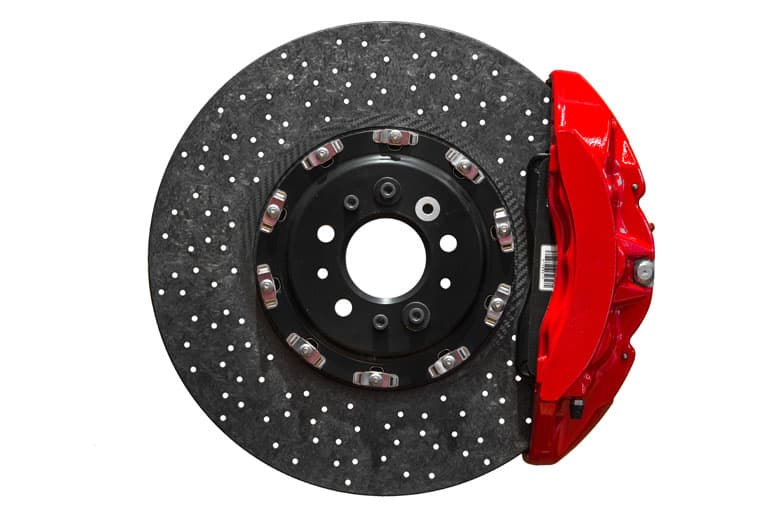
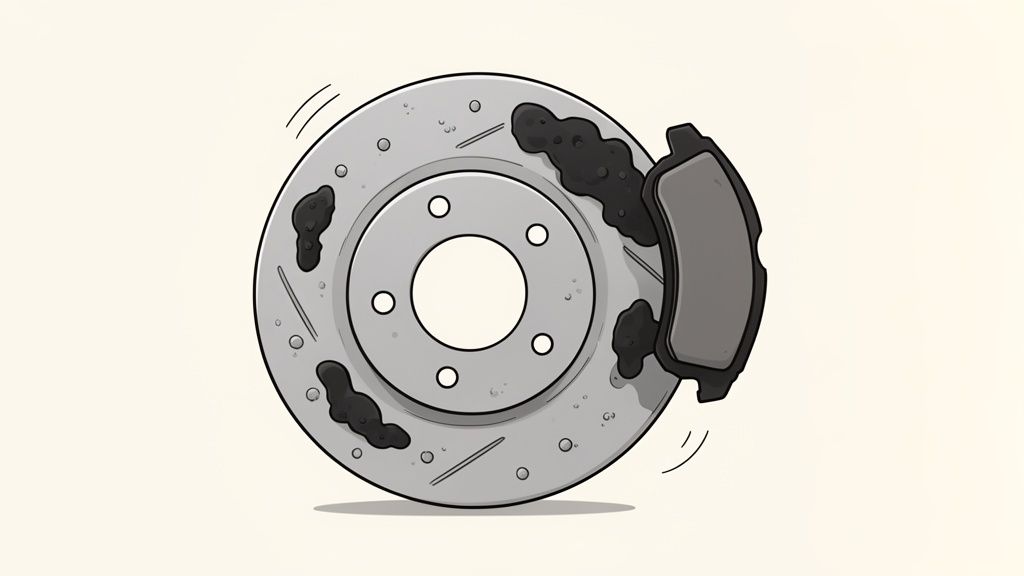
- Warped Brake Rotors: This is, by far, the leading cause. The metal discs (rotors) your brake pads clamp onto can develop uneven surfaces from heat and wear, causing the pads to grab and release inconsistently. That's the vibration you feel.
- Worn or Damaged Brake Pads: When pads wear down unevenly or get "glazed" from excessive heat, they can't apply smooth, consistent pressure to the rotors.
- Sticking Brake Calipers: The caliper is the hydraulic clamp that presses the pads against the rotor. If a caliper gets stuck and doesn't release properly, it causes constant friction, leading to overheating, rotor warping, and that tell-tale shake.
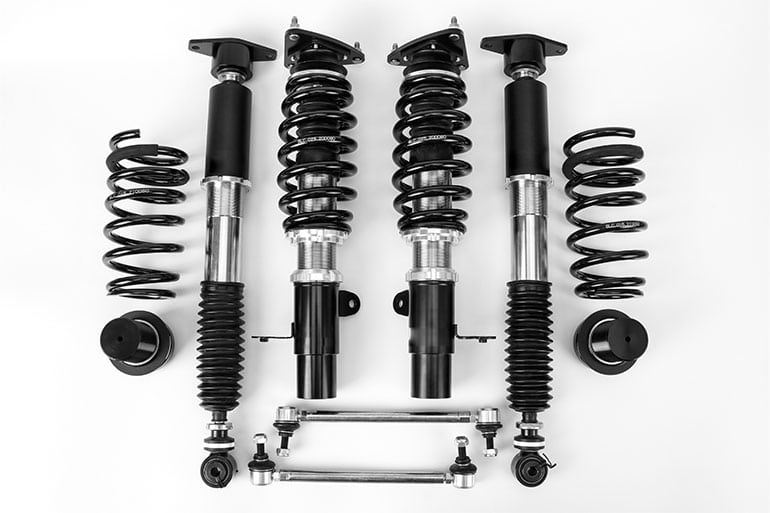
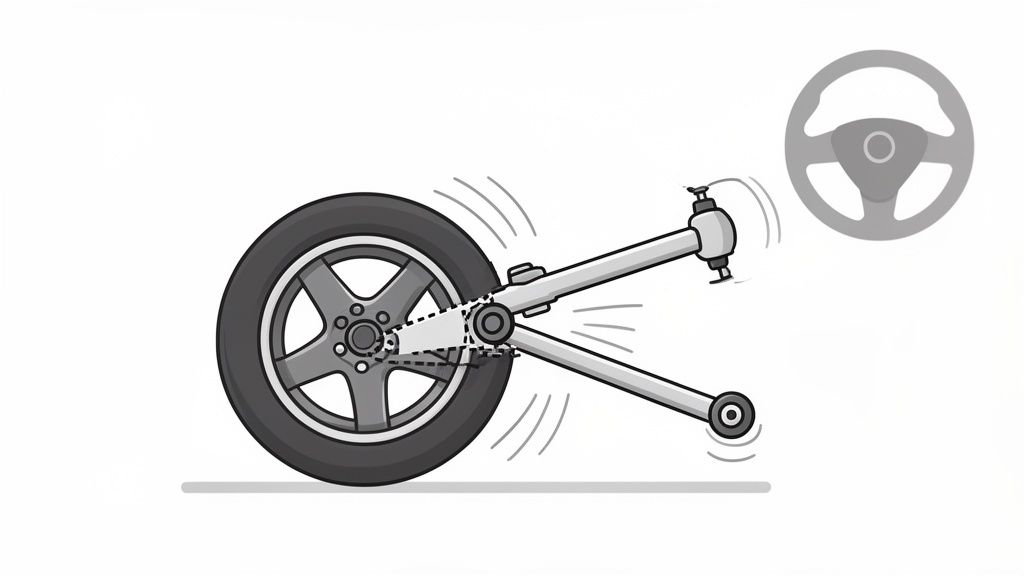
- Suspension and Steering Issues: Sometimes the problem isn't the brakes themselves but worn-out suspension parts like ball joints or tie rod ends. These worn components can't absorb road imperfections properly, and the force of braking amplifies any existing looseness into a noticeable shake.
This handy summary table breaks down the symptoms and causes to help you get a better idea of what might be going on.
Quick Guide to Braking Vibration Causes
| Symptom | Most Likely Cause | What You Should Do |
|---|---|---|
| Steering wheel shakes only when braking | Warped Brake Rotors | Have rotors inspected for runout. They may need to be resurfaced or replaced. |
| Shaking is paired with a grinding noise | Severely Worn Brake Pads | Stop driving immediately. The pads are likely worn to the metal backing plate. |
| A burning smell accompanies the shaking | Sticking Brake Caliper | This is a serious issue. The caliper is likely seized, requiring professional repair. |
| Vibration is constant but worse on braking | Suspension or Tire Issues | Check tire balance first, then have your suspension components inspected. |
This table is a great starting point, but a professional diagnosis is the only way to be certain.
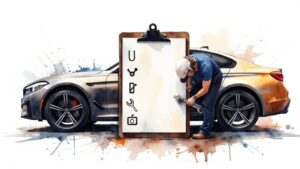
To give you a better idea of how a professional technician approaches this, the diagnostic flowchart below shows the typical steps we take to pinpoint the exact cause of braking vibrations.
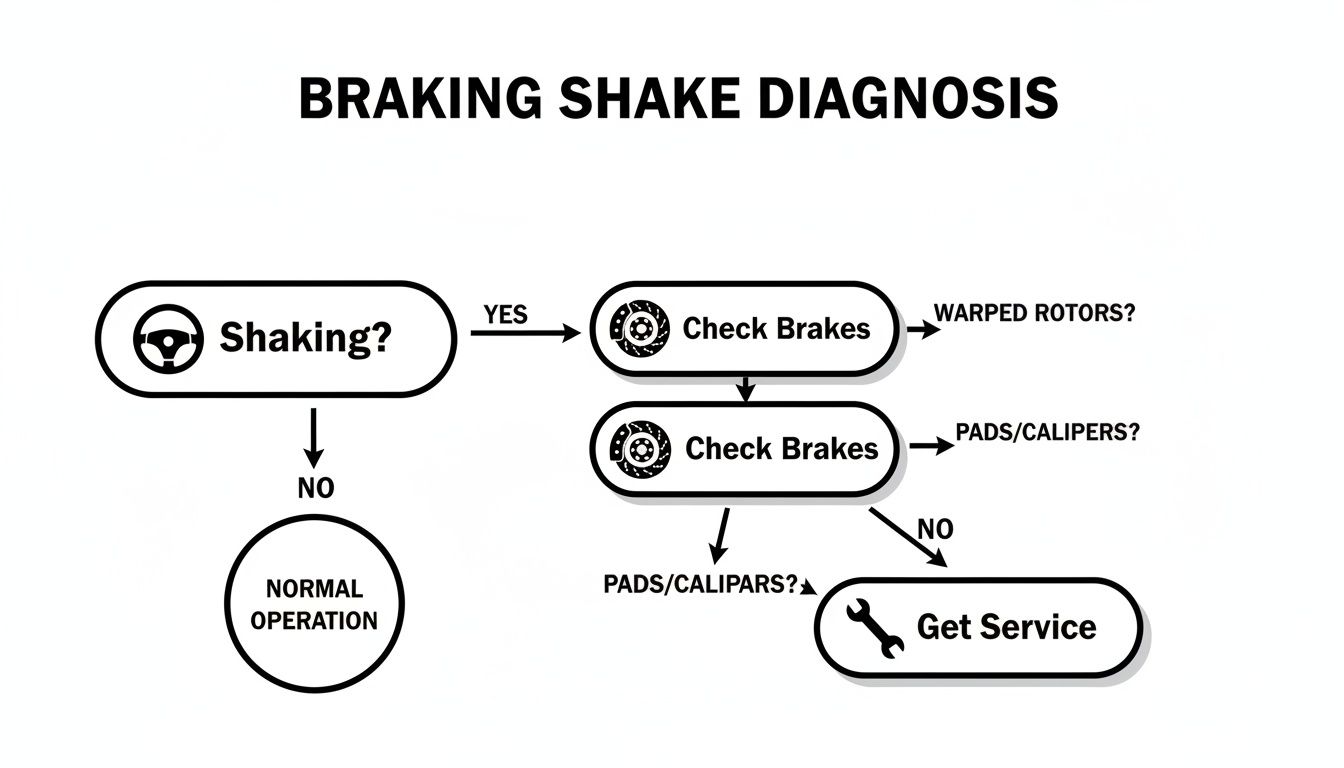
As you can see, diagnosing the shake starts with the brakes but often requires a complete look at the front end to ensure nothing is missed. Shaking is just one of many common brake problem symptoms that you should never ignore.
Key Takeaway: A front end shake during braking is a critical safety warning. It almost always indicates a problem with brake rotors, pads, or calipers that reduces your vehicle's stopping effectiveness and requires professional inspection.
Diagnosing the Number One Cause: Warped Brake Rotors
When you feel that unmistakable shake through the steering wheel as you slow down, the culprit is often hiding in plain sight right behind your wheels. Far and away, the most common reason for a front end shaking while braking is warped brake rotors. Getting to the bottom of how and why this happens is the first step toward a permanent, safe fix.
Think of your brake rotor as a perfectly flat, heavy-duty dinner plate. When you hit the brakes, the brake pads—like a pair of strong hands—clamp down evenly on this plate. The friction is what slows your car, and the whole process should feel completely smooth.
But creating that friction generates an incredible amount of heat.
How Heat Warps Your Rotors
Heat is the absolute worst enemy of your brake rotors. When they get too hot, the metal can actually start to lose its perfectly flat shape, developing tiny high and low spots across its surface. It's a lot like a thick metal baking sheet that twists or warps after you pull it out of a blazing hot oven.
Several common driving situations are notorious for generating this kind of rotor-damaging heat:
- Hard Braking: Frequent, sudden stops from highway speeds create a massive spike in friction and temperature.
- Towing Heavy Loads: That extra weight means your brakes have to work exponentially harder to bring everything to a stop, which means much more heat.
- Driving in Mountainous Terrain: Constantly riding the brakes down long, steep hills keeps them hot for extended periods, never giving them a chance to cool down properly.
Even the slightest imperfection—we're talking thousandths of an inch—is enough to ruin the smooth contact between the pads and the rotor. As the pads pass over these high spots, it creates a rapid "grabbing and releasing" effect. You feel that pulsation directly in your steering wheel and sometimes through the brake pedal itself.
This front-end shaking while braking affects millions of drivers annually, with warped brake rotors cited as the number one culprit in over 70% of cases. Ignoring this can extend stopping distances by up to 10-15 feet from 60 mph, a significant safety hazard. You can discover more insights about braking efficiency tests on Bell Performance's blog.
The Link Between Pads and Rotors
The health of your brake pads is directly tied to the health of your rotors. When pads are worn thin, they can't apply pressure evenly. Worse, if they wear down completely, the metal backing plate of the pad will grind directly into the rotor's surface. This metal-on-metal chaos will chew up a rotor in no time, causing severe vibrations and costly damage.
That’s why knowing when to replace brake pads isn't just about the pads themselves; it's about protecting your entire brake system. Catching worn pads early is one of the best ways to keep your rotors from warping.
Identifying Warped Rotors
So, how can you be sure that warped rotors are your problem? The symptoms are pretty distinct and hard to miss once you know what to look for.
- Vibration Through the Steering Wheel: The shaking is almost always felt most strongly in the steering wheel. It's especially obvious during moderate braking from speeds over 40 mph.
- Pulsating Brake Pedal: You might feel the brake pedal physically pushing back against your foot in a pulsing rhythm as you apply pressure.
- Visible Hot Spots or Grooves: If you peek through your wheel, you might see bluish discoloration or noticeable grooves cut into the rotor's surface. These are tell-tale signs of heat damage and uneven wear.
While these signs point overwhelmingly to warped rotors, only a professional can truly confirm it. A certified technician uses a precision tool called a dial indicator to measure "runout"—the technical term for how much the rotor wobbles off a perfectly flat plane. If that measurement is outside of your vehicle manufacturer's specs, the diagnosis is confirmed. Fixing it isn’t just about making the ride smoother; it’s about restoring your car's critical stopping power and keeping you safe.
Exploring Other Brake System Failures
While warped rotors are the usual suspect, your brake system is a finely tuned machine. When one part acts up, it can cause a chain reaction that results in that dreaded front end shaking while braking. Pinpointing these other potential culprits is the key to a correct diagnosis and getting you back on the road safely.
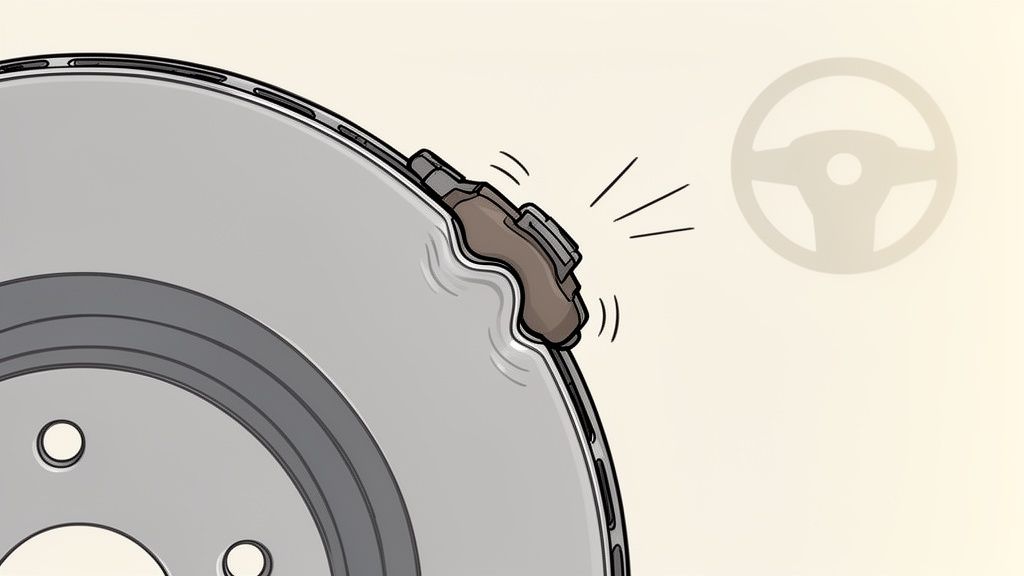
Sometimes, the rotor itself isn't warped at all. The problem is something called brake pad material transfer. Think of it like getting gum stuck to the sole of your shoe—it creates an annoying, uneven bump with every step. The same thing can happen when brake pads overheat. They can "imprint" a thin, inconsistent layer of their own material onto the rotor surface.
As the rotor spins, your brake pads will snag on these tiny high spots of deposited material over and over. This creates a rhythmic pulsation that feels almost identical to a warped rotor, and it's an issue that often gets worse over thousands of miles.
Stuck Calipers and Worn Pads
Beyond the rotor's surface, the mechanical parts that squeeze the pads are just as important. A brake caliper is the hydraulic clamp that presses the brake pads against the rotor when you hit the pedal.
But what if that clamp gets stuck? A stuck caliper is like a handshake that won't let go. It fails to fully release after you take your foot off the brake, keeping the pads in constant, light contact with the rotor. This nonstop friction generates a ton of heat, which can quickly warp a rotor and lead to severe shaking. It also causes your brake pads to wear out incredibly fast and unevenly.
Beyond warped rotors, uneven brake pad material transfer accounts for about 20-25% of these vibrations, as real-world mechanic diagnostics reveal. Worn pads, thinning to under 3mm, exacerbate the issue, and a dragging caliper can reduce braking efficiency by 15-20% in severe cases. You can discover more about these complex brake diagnostics from professional technician insights.
The brake pads themselves can also be the problem. As pads age, they can become "glazed," which means the surface has been heated and cooled so many times that it's become hard and polished. Glazed pads just can't create the consistent friction needed to stop smoothly, making them a prime cause of vibrations.
Here are a few ways brake pads can contribute to shaking:
- Contamination: If oil or grease gets onto the pad surface, it can’t make clean, even contact.
- Glazing: The pad becomes too smooth and hard to properly grip the rotor.
- Uneven Wear: Often a dead giveaway of a sticking caliper, where one part of the pad wears down much faster than the rest.
Each of these problems disrupts the smooth, balanced force your car needs for quiet, effective braking. If any of this sounds familiar, a thorough inspection of your vehicle's brakes is the only way to be sure. A professional technician will look at the entire system—pads, calipers, and rotors—to find the true source of the shake.
How Suspension and Steering Issues Amplify Shaking
If your braking system gets a clean bill of health but you’re still feeling that unnerving vibration, it's time to look beyond the rotors and pads. Your car’s suspension and steering systems act like a steady hand, keeping your vehicle stable and controlled. When these components wear out, they introduce "play" or looseness that braking forces can dramatically amplify, leading to a front end shaking while braking.
Think of it like a wobbly table leg. The table seems fine until you lean on it, and that’s when the instability becomes obvious. Worn suspension parts work the same way—the immense force of braking puts them under stress, exposing their weakness as a shudder or wobble that travels right up to your steering wheel.
Key Culprits in Your Suspension System
Several critical components are responsible for keeping your front end tight and responsive. When they degrade, even a minor imperfection in a brake rotor can feel like a major problem.
- Worn Ball Joints: These are the pivot points connecting your wheels to the suspension. When they get loose, they allow the wheel to wobble slightly, especially under braking pressure.
- Damaged Tie Rod Ends: These parts connect your steering gear to the wheels. Any looseness here can cause erratic steering feedback and amplify vibrations coming from the road or brakes.
- Failing Control Arm Bushings: These rubber or polyurethane components are designed to absorb road shock and control movement. Once they crack or wear out, they can no longer hold the suspension geometry steady when you hit the brakes.
These parts don't fail overnight. It’s a gradual process. For instance, control arm bushings often start to degrade after 60,000-80,000 miles, allowing just enough play to transmit braking forces unevenly and cause a steering wobble. Similarly, loose tie rods or ball joints can make the front end "dive" unstably, magnifying any minor brake rotor imperfections into a full-blown shake.
Important Insight: Worn suspension parts don't just amplify existing brake vibrations—they can be the primary cause. A loose component can create a shimmy on its own that only becomes noticeable under the intense load of braking.
Bad Wheel Bearings and Misalignment
Other issues can also mimic the sensation of a braking problem, which is why a thorough check is so important. A bad wheel bearing, for example, can cause a rumbling or grinding noise that gets worse when you turn. That vibration can easily intensify when you apply the brakes, making you think it’s a rotor issue.
Likewise, poor wheel alignment forces your tires to fight against each other, causing uneven wear and instability. This underlying unsteadiness can easily translate into a noticeable shake when the additional forces of braking are introduced. Because these symptoms often overlap, it highlights the importance of a comprehensive inspection.
Getting a professional suspension repair not only fixes the shake but also restores your vehicle's safety and ride quality. It's also helpful to understand the 8 signs of shock absorber damage, as this can help you identify related issues before they get worse.
Your Next Steps for a Professional Diagnosis
Knowing the potential causes of that front-end shake is one thing, but taking action is what really matters for your safety. Think of that vibration as your car’s most urgent warning signal—it's telling you a critical safety system needs immediate attention.
Putting off a diagnosis is a risky gamble. The longer you wait, the more likely you are to cause further damage, turning a straightforward fix into a much more expensive repair down the road. Bringing your vehicle to Kwik Kar is the safest, surest way to get to the bottom of it and get back on the road with total confidence.
Our Diagnostic Process Explained
When you bring your car to us, our ASE-certified technicians don't play guessing games. We rely on a systematic approach and specialized equipment to pinpoint the exact source of the vibration.
Our inspection is thorough and typically includes:
- Brake System Analysis: We start by meticulously checking your brake rotors for warping using a dial indicator for ultra-precise measurements. We’ll also inspect your brake pads for uneven wear and make sure your calipers are moving freely as they should.
- Suspension and Steering Check: Next, our team examines every key component, from ball joints and tie rods to control arm bushings. We’re looking for any looseness or wear that could either cause the shake or make it worse.
- Wheel and Tire Inspection: Finally, we verify that your tires are properly balanced and look for any damage or uneven wear patterns. Sometimes, the problem starts here or points to an underlying alignment issue.
At Kwik Kar, our diagnosis is backed by industry-leading certifications. As a NAPA AutoCare Center that is also certified by CARFAX and RepairPal, we adhere to the highest standards of quality and ethical service.
Trust and Transparency Guaranteed
We get it—auto repairs can be stressful. That’s why we make clear communication a priority. Before any work begins, we’ll walk you through a detailed, easy-to-understand estimate that explains our findings and recommended repairs. No hidden fees, no surprises. Just honest, professional advice.
Choosing Kwik Kar means choosing a team that is genuinely dedicated to your safety. We have the expertise to accurately diagnose why your front end is shaking while braking and the integrity to fix it right the first time. Don't put your safety on hold; let our certified professionals restore your vehicle's performance and your peace of mind.
Frequently Asked Questions About Shaking Brakes
Even after learning what might be going on, you probably still have a few questions about that front end shaking while braking. It’s a common and pretty alarming problem, so wanting a bit more clarity is completely normal.
Here are some straightforward answers to the questions our technicians hear every single day. We want you to feel confident about what to do next to keep your vehicle safe and reliable.
Is It Safe to Drive If My Car Shakes When I Brake?
The short and simple answer is no. While the car might still come to a stop, that shaking is a direct warning sign that a critical safety system isn't working as it should. The vibration means your brake pads, rotors, or calipers are compromised, which can seriously increase your stopping distance in an emergency.
Ignoring it won't solve anything—in fact, it's guaranteed to get worse. Continuing to drive can cause more severe damage, like a seized caliper or even complete brake failure down the road. For your safety and everyone else's, you need to get it inspected by a certified professional as soon as you can.
Can Unbalanced Tires Cause Shaking Only When Braking?
This is a great question, but the answer is usually no. Unbalanced tires are a classic cause of vibrations, but they typically show up at higher speeds (think 50 mph and up) and are felt whether you're braking or not.
If the shaking starts the second you press the brake pedal and vanishes the moment you let go, the problem is almost certainly inside the brake system itself. Warped rotors are the number one suspect in this scenario.
Expert Insight: Here's a simple way to tell the difference. If the vibration begins as you accelerate past 50 mph, your tires are the likely culprit. If it only happens when your foot is on the brake, start looking at the brake system first.
How Much Does It Cost to Fix a Shaking Front End?
The cost to fix a front end that shakes during braking can really vary, depending on what's causing it and the make and model of your vehicle. Here’s a general idea of what to expect, from the most common and affordable fixes to more involved repairs:
- Brake Pad Replacement: If the pads are just worn out, this is often the most budget-friendly repair.
- Rotor Resurfacing or Replacement: Warped rotors can sometimes be resurfaced (machined flat again), but replacement is far more common today and offers a much longer-lasting solution.
- Brake Caliper Replacement: A stuck or seized caliper is a more complex job and will naturally cost more than just pads or rotors.
- Suspension Component Repair: If a worn ball joint, tie rod, or control arm bushing is the issue, the cost will depend on the specific part and the labor needed to replace it.
Here at Kwik Kar, we always give you a detailed, transparent estimate before we start any work. You'll know exactly what needs fixing and why, allowing you to make an informed decision with zero pressure or surprises. Our goal is to provide a correct, lasting fix.
Can I Fix Warped Rotors Myself?
While some skilled home mechanics might feel comfortable tackling a brake job, it's not something we generally recommend for a few key reasons. First, diagnosing the problem correctly requires specialized tools, like a dial indicator to measure just how warped a rotor is. If you misdiagnose the issue, you could end up replacing perfectly good parts while the real problem remains.
Second, and most importantly, your brake system is your car's number-one safety feature. A small mistake during installation—like not properly torquing the lug nuts or failing to clean the hub surface—can lead to catastrophic failure. Certified technicians have the right equipment and, more importantly, the experience to do the job safely and correctly the first time.
Given how critical the brake system is, professional service ensures the work is done right, giving you priceless peace of mind on the road.
Don't let a shaking front end compromise your safety. The ASE-certified experts at Kwik Kar Oil Change and Auto Care have the tools and experience to accurately diagnose and repair the issue, from warped rotors to worn suspension parts. Schedule your professional brake inspection today and drive with confidence. Learn more and book your appointment at https://www.kkrichardson.com.